













Hari Om

Menu

February 2026

download 9 1
Celestial Collection of Divine Messages - Awakening the Divinity in Man, Swami Sivananda

The Moment of Surrender

The Moment of Surrender Sri N. Ananthanarayanan. A very important reason why man should try to realise God is that it is the only way to get out of the miseries of the cycle of birth and death. There is no second solution. Mark it carefully. There is no second solution. There is no alternative to realising God if you want to escape the miseries you are subject to. The alternative to God-realisation is to suffer the miseries of mundane existence. If you choose to suffer that, well, you are free to do so. But if you want to escape that, there is only one way out, and that is the spiritual way, the way of Sadhana, of Tapasya, of Abhyasa and Vairagya. Not only that. There is no short-cut to God. You have to traverse the whole distance. The gap, the yawning chasm that separates you from God, has to be fully covered. It takes time. Often it is painful. Sometimes it is so painful that one begins to doubt if all that suffering is worth the while. This is particularly so when God tests the spiritual seeker for his worth. It is like Christ’s crucifixion. Every seeker has to bear the Cross; only it is a different kind of Cross with different seekers. It is no use saying, “Oh! I have all the virtues; I have all the divine qualities, except…except…one imperfection, one little weakness”. No. God is still far away from you. You cannot realise God who is Perfection while possessing the slightest imperfection, the slightest taint. That is why Mother Saradamani Devi, the worshipful partner of Sri Ramakrishna Paramahamsa, prayed the way she did. One full moon night, as she looked up at the sky, a spontaneous prayer arose within her heart: “O God! Bless me that I may become spotless like the yonder full moon”. And, as suddenly, she hesitated. “Father-in-Heaven!” she cried, “Even the full moon has flaws. Make me flawless. Make me immaculate”. Immaculate! That is the word. Flawless. Pure. Perfect. Radiant. Spotless. Immaculate. So, even if you possess one single weakness, you cannot realise God. You cannot have Atma-sakshatkara. Remember well that it is no use saying, “I have just this weakness. I lack only in this virtue”. You will be tested by God only in that virtue, precisely in that virtue in which you are wanting. Are you impatient? You will be tested for patience again and again. Do you have a weakness for women? God will send girls, and more girls, to test your mettle. You will have to get over your weakness somehow. Till then you will be faced with the same problem, the same temptation, again and again. Let us see how exactly Maya operates. Suppose, for instance, you succumb at the slightest temptation. Then Maya will confront you with small temptations only, because she is able to achieve her purpose with little effort. But supposing you are morally very strong, though not perfect yet. Then Maya will send powerful temptations, like ravishing damsels, to uproot you from your moral stronghold, as she sent Menaka to Visvamitra. You have to become invulnerable to the most powerful temptation. Then only your spiritual safety becomes foolproof. When the spiritual seeker is thus repeatedly tested, sorely tried, he feels miserable. Every spiritual seeker has to pass through this stage. It is the process of purification. You will be like the ore in the furnace. It is certainly not a pleasant experience. It is very painful indeed. The seeker begins to ruminate. He feels: “If worldly life was like being in the frying pan, here in this spiritual life, I feel as if I have been thrown into the fire”. And he is dazed. “Is this the choice open to me, after all?” he begins to wonder. If he is weak-willed, he begins to curse his Creator. “What kind of God is He” he cries, “to delight in the miseries of all! He is the greatest sadist. Who wants God?” The part tragic, part comic aspect of the whole situation is that even when the seeker curses his Creator, he is aware of his total helplessness, of his own impotence and God’s omnipotence. Ultimately he breaks down and prays to the very God whom he was abusing and cursing but a little while before. This is surrender, total surrender, unqualified surrender. In that moment of surrender, God’s grace rushes into him, consoles him and comforts him. And peace ensues in the troubled heart … and wisdom.

The Moment of Surrender Read Post »

Swami Sivananda writing spiritual teachings surrounded by books
Bhrama Muhurata Meditative Talks at Swami Sivananda Ashram - Rishikesh, Swami Sivananda

Why Do We Not Surrender?

Why Do We Not Surrender? By Sri Swami Atmaswarupananda Early Morning Meditation Talk given in the Sacred Samadhi Hall of Gurudev Sri Swami Sivanandaji Maharaj, Sivananda Ashram, Rishikesh The scriptures tell us that our fundamental error is wrong identification. We, who are universal Spirit, have identified ourselves with that which is actually an object to us–our body and mind. To get over this wrong identification, they have prescribed different yogas that are suitable to the nature of different individuals. However, Lord Krishna makes it very clear that in the final analysis there is only one way to cross this ocean of samsara and that is to take refuge in Him alone. In the last teaching verse of the Gita, He is even more specific. Abandon all dharmas, He tells us–all your ideas of what is right and wrong–and take in refuge in Me alone. Why is it, when Lord Krishna is so specific, and when we know that the essence of the spiritual life–no matter what our yoga–is surrender, that we are unable to do it easily? The truth is, no matter how much we say we want God, most of us are unwilling to let go of control of our own life. Part of us may want to surrender, but another part of us doesn’t want to let go of control. Why is this? If we examine it, we will find that normally there are two reasons. One, we have unfufilled desires. There are things that we want. We are afraid that if we let go of control of our life, if we surrender totally to God, we may not be able to fulfil those desires. This requires sharp discrimination. We have to realise that there is nothing in what we desire that will give us permanent happiness. We have to examine our experience and recognise that there is no real happiness in anything in this world. Unless we do this discrimination, unless we convince ourselves of this truth, then the quality of surrender that is required by Lord Krishna is out of the question. The other reason that we are reluctant to let go of control of our life is fear. We don’t know what might happen if we do. The purpose of all our spiritual practices is, in fact, to give us confidence in God, indeed, to convince us that it is safe to let go, that we have nothing to fear. But if we continue to think that the purpose of our spiritual practices is to get something for the ego, then we are perpetuating our problem. We’re protecting our ego and its desires and fears. We have to recognise that we need to deal with are our desires and our fears. Our desires we deal with by analysis. The way to deal with our fears is to take chances. We have to become vulnerable. We must trust God in spite of our fears. Our fears want us to protect ourselves. Wisdom says, I must conquer this fear, I must trust God in spite of the fear. We think that courage is some great quality, and it is. But it is actually doing the right thing, doing our duty in spite of our fears. Our duty as seekers is to trust God. Our duty as seekers is to take refuge in God alone. That we may have fear, that we may have reluctance is beside the point. We must do what is right, we must do our duty in spite of any reluctance, in spite of any fear. And God is always there to bless our choice and to help us. Therefore, while wrong identification may be our fundamental problem, it can be cured by surrender and trust, by recognising that there is no happiness in anything in this world and that God is safe to trust.

Why Do We Not Surrender? Read Post »

Swami Sivananda spiritual master of Divine Life photo
Celestial Collection of Divine Messages - Awakening the Divinity in Man, Swami Sivananda

What is Health?

What is Health? Sri Swami Sivananda Introduction What is health? It is that state of equilibrium of the three humours of the body, viz., Vata, Pitta and Kapha (wind, bile and phlegm), wherein the mind and all the organs of the body work in harmony and concord and man enjoys peace and happiness and performs his duties of life with comfort and ease. Health is that condition in which man has good digestion, good appetite, a normal breathing and normal pulse, good quantity and quality of blood, strong nerves and a calm mind, a sound mind in a sound body, a free movement of the bowels, normal state of urine, rosy cheeks, shining face and sparkling eyes. Health is that state in which a man jumps, sings, smiles, laughs, whistles and moves about hither and thither with joy and ecstasy. It is that condition in which he can think properly, speak properly and act with alacrity, nimbleness and vigilance. Health is that state in which a man sleeps well, digests his food well, is quite at ease, is free from any kind of disease or uneasiness. When you are in a state of perfect health, all the organs, viz., heart, lungs, brain, kidneys, liver, intestines, work in perfect harmony and concord and discharge their functions satisfactorily. The pulse-rate and the rate of respiration are in perfect order. The bodily temperature is normal. This state is coveted by all. A life with good health is a great blessing indeed. Health is a Great Treasure Good health is a valuable asset to man. It is a great treasure. It bestows happiness and prosperity. Health is essential to happiness. Health is not merely absence of disease. It includes the full development of physical, mental and spiritual powers of a man. Health is a condition of physical and mental well-being: a normal state of body and mind in which all parts and organs perform their functions regularly, easily and satisfactorily and are free from disease, pain and weakness. A person who is endowed with good health, digests his food well, sleeps soundly and does his daily work satisfactorily. He is ever joyful and energetic. You should have a clear idea of what disease is and how it is caused. Only then will you be able to prevent a disease. Diseases can be averted if you understand the biological laws which govern life, the rules of health and hygiene and the importance of cleanliness. A general knowledge of the laws of health would help considerably in preventing sickness and death and improving the health of the people. Of every hundred deaths occurring in India, Europe and other countries, sixty are said to be due to disease, which can be, to a very large extent, if not altogether, prevented, if the people are only wise and will take to those measures advocated by sanitary science. Some persons are born with sound, healthy bodies: unfortunately others are not. How do you account for this? The doctrine of Karma will give you the best answer. Those who did good actions in their previous births get sound, healthy and strong bodies; those who did wicked actions obtain unhealthy weak bodies. Many people make themselves ill by eating too much and by not eating the right thing at the right time. What are the ordinary things around you which help to keep you in good health? They are the Sun, fresh air and pure water. Sunlight helps growth and gives vigour. Breathe pure air, bask in the Sun, eat good nutritious wholesome food, drink pure water and observe cleanliness; you will possess a high standard of health, vim, vigour and vitality. Life here is a continuous battle. It is a never-ending adventure. There are dragons to be destroyed. You will have to wage war with the enemies of health, viz., impure water, bad ventilation, overwork, unwholesome food, disease-germs, domestic pests such as flies, mosquitos, the rats and the fleas. You are surrounded on all sides by invisible foes–pathogens, microbes and bacteria. You should certainly learn all that you can about your enemies, their ways, habits and strength. In some cases you will have to attack them directly. In some other cases you must starve them out. You must adopt the most up-to-date weapons which modern sanitary science and preventive medicines have given you. You must tap your resources in every possible way. Public health is not a matter that solely concerns Sanitaria, Municipalities or Health Departments. Every citizen, every individual, is directly and intimately concerned in the preservation of the health and welfare, not only of himself but, of the community as a whole. Most of the diseases which are preventable are produced by some specific germs which are carried by air or water or food or clothing or other insects. A study of the life-history of these disease-causing germs and of the methods to exterminate them will be extremely helpful for the health and welfare of the community. Impure air, impure water, infected food, uncleanliness of houses and their surroundings, improper or bad disposal of excretion, play a vital part in the dissemination of disease. Every individual must be educated in the science of hygiene and sanitation, so that he may be able to appreciate the value of sanitation, not only for his own health but also for that of the community at large. The child must be protected before birth by antenatal precautions. The health and well-being of the child is the primary foundation of its education. Pregnant and nursing mothers must also be well protected. Maternity and child welfare centres must be established in each taluk and district. People must be protected from diseases like smallpox, plague, cholera, typhoid, etc., by taking recourse to artificial immunity through injection of vaccines. May you all possess good health and vitality by observing the rules of health and hygiene and by the study of the science of sanitation and preventive medicine! Necessity For Good Health What is the earthly use of wealth and

What is Health? Read Post »

Success 1
Bhrama Muhurata Meditative Talks at Swami Sivananda Ashram - Rishikesh, Swami Sivananda

Always Be Positive!

Always Be Positive! By Sri Swami Chidananda One of the favourite sayings of Gurudev, which he both wrote in his writings as well as quoted in his divine talks was, “Never despair. Never despair. Nil desperandum.” And a poet once said, “Hope springs eternal in the human breast.” Another poet said, “Tell me not in mournful numbers life is but an empty dream.” You have come here to strive and attain. Strive on. Do purushartha. “Heart within, God overhead.” Be strong. Be determined and plod on. If thus you do, you will get help from God. That is the meaning of “Heart within and God overhead.” In your heart have the right attitude and plod on. Do exertion and then from God help will come. There are two ways of approaching life. One is diffidence, lack of confidence, negativity: “I don’t think I can. It’s too difficult. I can’t.” Another way is: “I can. Whether I can or can’t, how can I say unless I first of all try? Then only I can know whether I can or can’t.” So to come to a foregone conclusion that I can’t is not rational. It is irrational. “Let me give it a fair trial. I will try my best.” And if after trying your very best, you do not succeed in attaining the objective, I can assure you, you have not failed. Success may not be yours, but you have succeeded. You have fulfilled a human being’s duty. Because you are made in the image of God, you are not a bundle of negativity. God is all that is positive, all that is auspicious, good and beautiful. There is no negativity in God, and you are made in His image. You have potential for all that is positive and positive only. You should not belie your divine nature. At every step, in all things, your life should prove your divine nature. Therefore it behooves you to always take a positive attitude towards life. Always have a positive view of things, not a negative one. Have a positive attitude towards life, and in your daily life always move forward by taking a positive approach to life, never a negative approach. Then your heart is in the state that the poet implied when he said, “Heart within and God overhead.” And it is for such a heart that we should pray to Lord Karthikeyan or Skanda Bhagavan: “I have full trust that You will be my leader, that Your grace will be my guiding force and a leading light in my life day by day. So, with Your help there is nothing that I cannot do. With Your help, O Lord, all things are possible for me. And I will take Your help for granted because You are grace. You are love and compassion. You are ever ready to bestow Your grace upon all sincere seeking sadhakas. Being certain of this, I shall strive, having full trust that You will help where help is needed.” Therefore, of the two attitudes, a positive and negative attitude towards life, of the two approaches, a positive and negative approach to life, and of the two ways of viewing things, a positive and negative view towards all things, the wise sadhaka always takes the positive approach–which is the right approach–and never takes the negative approach which is the wrong approach. Hope is a divine quality. Determination is a divine quality. It is a manifestation of sakti. Therefore, it is our duty to ourselves and to God to always keep our interior in a positive state. It is our duty to always take a positive view of things. It is our duty to always take a positive approach towards life, and it is our duty to always move forward keeping in our heart a positive attitude towards life and actions. This is the right attitude, and this you must adopt. And this will help you to succeed in your life!

Always Be Positive! Read Post »

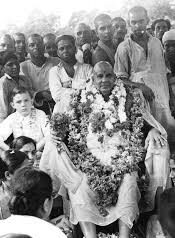
swami sivananda Black-and-white photo of guru with heavy garlands among devotees image
Bhrama Muhurata Meditative Talks at Swami Sivananda Ashram - Rishikesh, Swami Sivananda

We Are the Ultimate Knower

We Are the Ultimate Knower By Sri Swami Atmaswarupananda Early Morning Meditation Talk given in the Sacred Samadhi Hall of Gurudev Sri Swami Sivanandaji Maharaj, Sivananda Ashram, Rishikesh There are many ways of looking at our life on earth. One way would be that it is nothing except experiences. We experience thirst and the satisfaction of that thirst. We experience hunger and the satisfaction of that hunger. We experience being cold; we experience being hot. We experience being loved; we experience being rejected. We experience being well off; we experience being poor. We experience being happy; we experience being sad. We experience being clear in our thinking; we experience being confused. Most of these things we have in common with the animal kingdom. But as human beings we also have another experience. We experience a sense of “I”: “I” am this, “I” am that, “I” am cold, “I” am hot, “I” am clear in my thinking, “I” am confused in my thinking. “I” am this person who was born; “I” am this person who is growing older; “I” am this person who will die. This is who I am. It never occurs to us that this “I” is an experience just the same as being hot or cold, having good thoughts or bad thoughts. If we enquire further, we recognise that something, which we can never find, is knowing this “I”. And if we ask who it is that is knowing this “I”, the only answer we can give is that I am knowing the “I”. This puts us in a peculiar position. If I am something that can never be known, but I am always identifying with something that can be known, that is simply a passing experience, then it must mean that I am divided from myself, separated from myself. This has to be as unenviable position, because happiness is always in wholeness, not in division. Hell means division, to be separated from. Heaven means harmony. Therefore, we need to have a harmony or union between that which I can never know, but is what knows everything else including the experience of an ego–and the ego “I.” We require a union, a harmony between what we are experiencing and the ultimate experiencer. How to bring about that harmony, that union? We have to actually bring into our field of experience a new factor. That factor is the knowledge that who we really are is much vaster, much more subtle than what we have been thinking we are. In other words, we must broaden our consciousness, lift ourselves out of ourselves. That is the purpose of all our spiritual practices. But again, no matter how broad our experience, how sublime our experience, we’ll be caught up in it unless there is a constant reminder that ultimately we are That that knows all experience–no matter how sublime, no matter how universal the experience. This knowledge can only be retained in our consciousness through a spirit of profound humility, of surrender, of knowing that we can never know the ultimate knower. It is this profound humility that is the goal of the spiritual life. It is this profound humility that keeps us in touch with our ultimate truth and that recognises that everything comes from that ultimate, unknowable truth.

We Are the Ultimate Knower Read Post »

swami sivananda Two monks laughing together image
Celestial Collection of Divine Messages - Awakening the Divinity in Man, Swami Sivananda

Pleasure and Pain

Pleasure and Pain Sri Swami Sivananda Introduction Pleasure is a particular mental state. It is a kind of exhilaration. Raga (attraction) causes pleasure. Dvesha (repulsion) causes pain. The mind expands itself in a moment of pleasure. It contracts in a moment of pain. They both are only relative states of mind. Really pleasure and pain have no real, lasting existence. What is really pleasure for one man may be pain to another. What is pleasure to a man at a particular time is pain to the same man at another time. The first two cups of milk give you some pleasure. The third cup induces distaste, and the fourth cup nausea and retching. There is no real, everlasting pleasure in the objects of the world. Pleasure and pain are not two separate entities by themselves. They are the obverse and the reverse sides of the same coin. The difference is not in kind but in the application. They are a pair of the opposites, each interacting differently. Both pleasure and pain are subjective. Both of them can be mentally converted through a strong will, by the change in your Bhavana or mental attitude. Many vegetarian students from India, who go abroad for higher or special studies, become avid meat-eaters. Meat was repulsive to them when they were at their homes. Mere sight of meat would then induce in them disgust. How is it that they are able to relish meat with avidity, now? All this takes place by simple change in the attitude of thinking caused by external influences. Culturing of Emotions There is fluctuation in pleasure and pain. There is no continuous wave of pleasure and pain in the mind. If there is a continuous wave of pain, man will not be able to live even for a few days. The mind cannot always dwell on pain or pleasure. It is a great blessing. If you are in constant anxiety of death, then you may actually die in a short time. The varied objects of the world serve as diverting agents for the mind. Amidst all pleasures of various kinds, fear, foreboding, care and worry blight your happiness and give you pain. There is a wave of pleasure for five minutes, and then it is followed by a wave of pain for the next five minutes. This rhythm continues throughout the life of man. Watch carefully your feelings through introspection. You will find that they are a jumble of mixed emotions. Therefore, on the spiritual path, culturing of emotions constitutes a vital Sadhana. The man who has no control over emotions is like a dry leaf tossed about by the vagaries of the wind. Here self-control and sublimation play an effective role. Little elations should not make you lose your head. Little feelings of depression, caused by little things, should not break your heart. Wrong Identification Most mental sufferings are caused by ignorance. This is due to the identification with the physico-mental personality of man and attachment to the body and to those who are associated with it. When this erroneous notion vanishes, you attain freedom from mental suffering, by identifying yourself with the nameless and formless Reality. Mental suffering is only ignorance. In deep sleep, you do not experience any pain. It is because you had not been aware of your identity with your body, then. When another man’s son dies, you do not grieve. It is because there was no identification of your personality with that of the son of the other man. Pain is caused by the injection of negative emotions into the brain. Absence of light is darkness. Darkness is not a real entity. Darkness has a negative existence. So, too, Maya has a negative existence. When light is brought, darkness vanishes. Similarly when knowledge comes, Maya disappears. Absence of pleasure is pain. Pleasure is the womb of pain. The pleasures that are born from contact with objects are truly wombs of pain. They have a beginning and an end. The really wise men do not rejoice in the pleasures wrought by the senses, nor grieve because of the miseries caused by worldly factors. They are rooted in the consciousness of their spiritual source, which is devoid of pleasure and pain, but is full of supernatural happiness. Pairs of Opposites You can never achieve absolute happiness in a relative, physical plane constituted of the pairs of the opposites. The pairs of the opposites rotate in their turn. Death follows life. Night follows day. Light follows darkness. Pain follows pleasure. If you really want God, you will have to rise above all objects of pleasure-sensation, and eschew the desire for them. If you really want God, you will have to crucify the desires of the flesh. You cannot have God and sensual enjoyment at the same time. It is only those weaklings and hypocrites, who cannot give up attachment to the objects of the world, think that they can realise God by leading a worldly life and doing a superficial type of Sadhana for a few minutes every day. God-realisation is not as easy as that. Happiness comes from peace of mind. Peace of mind comes from a mental state wherein there are no mundane desires, no thoughts of the objects of enjoyment. You would forget all ideas of pleasure-sensation before you enter the actual domain of peace. Happiness is in Sattva. Happiness is also beyond Sattva. Happiness is in Atman. It is in meditation. It is in the study of the Upanishads. The best method of getting rid of mental suffering is through the will-power to dissociate from body-identification, through diversion of the mind, or its withdrawal from the individual personality and fixing it on the limitless, attributeless, nameless, formless, desireless, deathless Atman, the source of real, everlasting happiness, the like of which is never known in this world of limitation. Tattvamasi–Thou art That.

Pleasure and Pain Read Post »

0 136n3Z HfhpJEmBH
Bhrama Muhurata Meditative Talks at Swami Sivananda Ashram - Rishikesh, Swami Sivananda

Persistence and Surrender

Persistence and Surrender By Sri Swami Atmaswarupananda Early Morning Meditation Talk given in the Sacred Samadhi Hall of Gurudev Sri Swami Sivanandaji Maharaj, Sivananda Ashram, Rishikesh The spiritual life is meant to be progressive. It is not meant to be static, it is meant to be progressive. But the fact is, most seekers throughout the ages have known long periods where their spiritual life was anything but progressive. For most of us the spiritual life is progressive in the beginning. If it wasn’t, it would never attract us. Perhaps one way to explain that early progressive period is that it may be a recollection of what we have learned in previous births. However, the unfortunate feature of that part of our spiritual life–no matter how positive it may be from many points of view–is that it is all about us. We are thrilled with what we have found, and very often it gives us a feeling of our own importance. We have been called by God, we are special, we are making unusual progress. It is all about how good we are as an ego. That, of course, is a total contradiction of the truth that we are learning. The truth that we are learning is that all is One, and to realise the truth, the ego has to die. But here, the ego is actually getting fattened by learning and experiencing these truths. This, of course, is a contradiction that has to fall under its own weight. The result is a dry period or even a dark night of the soul. Sooner or later this should be replaced by a progressive period which is usually made possible by the dose of humility we get during the dry period. The dry period is actually a period of purification. Our ego is brought under control. It is humiliated until there is a recognition that we are not so great, and a humble dependence upon God begins to dawn. If the dry period has gone on long enough and the surrender is deep enough, then whether we know it or not, our spiritual life becomes progressive again, but on a different basis. Pujya Swami Chidanandaji once said, “The spiritual life doesn’t really begin until you know who you are.” However, the spiritual life can begin in a real sense without us consciously being aware of who we really are. If surrender is there, if deep surrender and trust is there, then in fact we know who we are without knowing who we are. It is so because we are coming from the right place and our spiritual life is being done on the right basis. Actually, our goal is to be rid of any idea that we are anything. We think that God-realisation means that we can boldly state, “I am That.” Perhaps it is so, but we don’t see the great ones walking around declaring, “I am that.” Rather, there is a deep humility, an emptiness that we see in them. It is these long periods of dryness that help to empty us of “I am this, and I am that,” and lead us towards the emptiness we see in the great ones. What is required of us is two things–persistence and surrender. Never give up, never give up, never give up: “It all belongs to You, O Lord. I will never give up, and I will wait patiently upon Your grace.”

Persistence and Surrender Read Post »

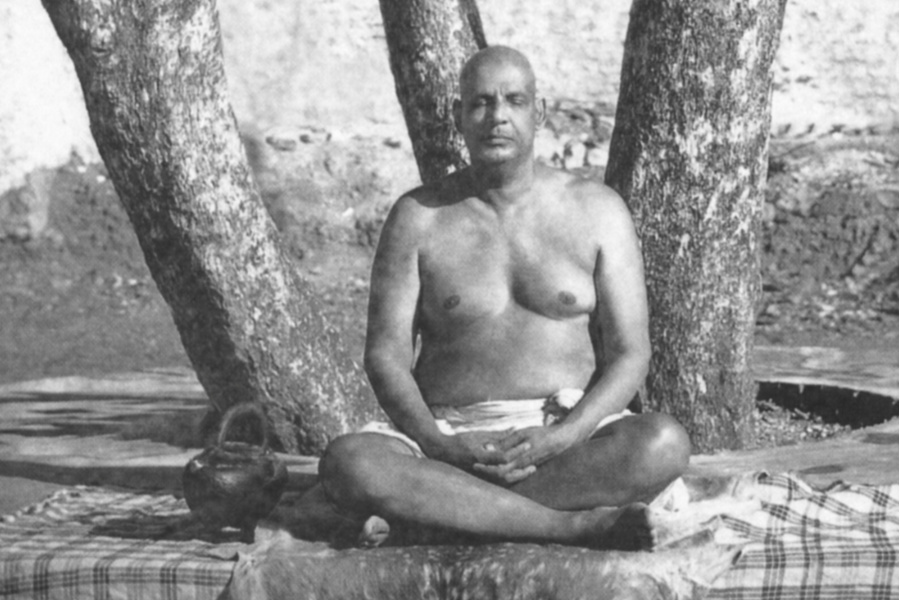
swami sivananda Monk meditating under tree outdoors image
Bhrama Muhurata Meditative Talks at Swami Sivananda Ashram - Rishikesh, Swami Sivananda

Being Real

Being Real By Sri Swami Atmaswarupananda Early Morning Meditation Talk given in the Sacred Samadhi Hall of Gurudev Sri Swami Sivanandaji Maharaj, Sivananda Ashram, Rishikesh There are some people who have been in the spiritual life for many years who can not remember a time when God was not important to them–perhaps the most important thing in their life. But while most of us may have had an interest in God for most of our lives, we can mark some time in our life when we have felt a direct call to the spiritual life. Perhaps it was the meeting with a teacher, perhaps something we read in a book, perhaps a spiritual experience. In any case, the effect has been to make a profound change in our attitude to God. God has become more real. We feel uplifted, and naturally we would like to have more. We want to be with the teacher more, we want to read more, study more, or we want a repetition of the spiritual experience. And while, no doubt, there is merit in wanting more of the spiritual life, there is perhaps a time that comes when what we need most of all is more understanding than we previously had. The reason is that we discover that just being in the presence of the teacher more, studying more or having more spiritual experiences isn’t making a fundamental change in our being. We aren’t really progressing at a basic level. Therefore, we need to ask: What was it about the presence of the teacher or studying or spiritual experiences that made a difference in my life? If we examine it, we will discover that we seemed to be lifted away from the fears and desires of our individual self. We felt something grander, a new dimension entering into our being. We think that we can get that new dimension by having more darshan, more study, more spiritual experiences. But, in fact, through our spiritual practices we have to gradually lift ourselves out of the fears and desires of the ego and abide in a different realm. That is the purpose of all our spiritual practices. But is there a key? Lord Krishna makes it very clear. The key is taking refuge in Him alone. In other words, our spiritual progress ultimately will not depend so much on repeating what originally attracted us to the spiritual life or even our spiritual practices as in taking refuge in the Lord. Taking refuge in the Lord means that we depend upon the Lord. It means that we trust the Lord. It means that we cast all our burdens upon the Lord. The Lord is our goal. He is also the way. We can call it surrender and trust, we can call it taking refuge, we can call it let go and let God. Whatever we call it, it has to be real. We can be in the presence of a teacher, we can study and learn a lot about the spiritual life, we can have many spiritual experiences, but still not be real. Being real is when, from the bottom of our hearts, we depend upon God instead of ourselves or anything or anyone else.

Being Real Read Post »

The Right Relationship with the Mind 1
Celestial Collection of Divine Messages - Awakening the Divinity in Man, Swami Sivananda

Standing Like a Rock, No Matter What Comes

Standing Like a Rock, No Matter What Comes Sri Swami Chidananda The great sages of the past discovered the Supreme Reality. It is the one Being that is eternally present. It is That which is beyond sense perceptions, and which is the depth of your own consciousness. They did not give It any particular name; they only said that it is “That” or Tat. That alone exists; That alone is. It is eternal existence. They said that you are no different from That. The quote in Sanskrit is Tat twam asi, or “Thou art That.” However, the sum totality of the knowledge concerning all things in this material physical universe is comprehended only through the senses. These phenomena, like the flitting shadows upon a cinema screen, come and go, but they are made possible because of the presence of the screen. Without the substratum of the screen, it would be impossible to project any pictures. The screen was there even before the projection of the movie started, it is present throughout the showing, and it remains when the show is over. It alone persists even when the shadow play is finished. But no one ever thinks of that silent screen in the cinema theatre; everyone is interested only in the shadow play. However, that screen is the true Reality, while the pictures are only a play of shadows. The great sages said that the Reality is not the same as this passing show and that it is none of what you have known up till now through the senses. What is the basis of human experiences? Do these experiences really exist outside of you? Have they got an independent existence apart from you? Now let us make it more concrete. Your joys and your sorrows—do these things exist in this world outside of you? Who makes you happy, and who makes you weep? Can you point the finger at someone or something and say, “This is the cause of my happiness, and this is the cause of my sorrow?” This finger pointing is what we all do. We all think we are all wonderful and innocent people, but it is this world outside that puts us through the mill. We are always bothered by this unjust world that gives us such an unfair deal, and we try to find the causes of our unhappiness in the outer things. Is there something at all outside? Is this world capable of giving us experiences? If we think that it is, then we attribute a great deal of power to this world, but does it deserve the power attributed to it? One great sage dismissed the whole thing. He said, just consider what happens every night when you enter into deep sleep. At that very moment of entering deep sleep, all your problems, sorrows and experiences of the outside world are gone. Nothing prevails from your waking consciousness, and everything is bundled away. You don’t have any problems—no worry, no disappointment, no frustration—nothing, nothing, nothing. You go into a serene state where everything is restful and silent. Everything is so very desirable in that deep sleep state, that if you are not able to sleep well for two or three days, then you become terribly upset. You may be a condemned prisoner in his cell, or a panhandling hobo or a multibillionaire, no matter what his outer life is, everyone seeks to enter into a state where this world does not exist. Isn’t this situation very, very interesting? You have to see what it is that makes us want to go off into this state. You can understand, because when you enter into that state, all your problems and anxieties are magically gone. The moment you wake up, all of these things come back to you. Why do they appear when you came back into the state of wakefulness, and why do they once again vanish when you enter into sleep? They vanish because the mind ceases to be active. The moment you enter into the state of deep sleep, the mind is at a standstill, but when you wake up, the mind starts becoming active. The moment mental activity commences, the whole world and all the experiences once again appear. This great sage I mentioned said that the waking state is not the ultimate Reality. So, he says, the kingpin of this entire matter is the activity of the mind. If you are able to change the nature of the activity of the mind, then you have the key to bring about a corresponding change in the nature of the experience you have. If in a particular condition of the mind, a certain quality of experience comes to you, if you bring about a transformation in the inner state of your mind, it means your experience will also be transformed. It is like changing the channel of your TV. You change the channel and immediately that program vanishes and some other programme comes. You Can Make Your Own Happiness We do not want sorrow and pain; we want happiness and joy. That is what everyone is seeking. You create all your experiences-you can make your own happiness and unmake your own misery. This is the truth; please ponder this again and again. If you refuse to allow anything in this world to affect you, then already you have guaranteed what will happen to you and what will not happen to you. It is this decision that can make all the difference between causing you misery or allowing yourself to be able to stand like a rock—no matter what comes. But then, this lightning decision of the moment has behind it the whole background of what you have trained yourself to be, what you have learned as lessons of life, and how you have cultivated yourself. The world cannot shake the person whose background is full of discrimination, enquiry and analysis. If this background is not there, then you are a plaything in the hands of

Standing Like a Rock, No Matter What Comes Read Post »

image 47
Celestial Collection of Divine Messages - Awakening the Divinity in Man, Swami Sivananda

The Heart of The Guru

The Heart of The Guru Sri Swami Chidananda We are now approaching the great annual day of worship of those who bring light to dispel the darkness of spiritual ignorance in our interior, who take us from unrealities to the Reality, who enable us to go beyond the ever-recurring, revolving wheel of birth and death into that realm of everlasting, rebirthless life. The celebration of Guru Purnima pays homage to those beings, those great ones, who having reached that abode, having liberated themselves forever, have turned back and engaged themselves in illumining others, in liberating others. What is in the heart of these great teachers? Why do they act and engage themselves in ceaseless work when they have no motivation for acting, having fulfilled all that has to be fulfilled? They have done everything that has to be done, attained everything that has to be attained. They have no more wishes, no more desires, no more wants, no more intentions, no more sankalpas. They thus revel in a state of supreme satisfaction, contentment, for they know that there is nothing more for them to do. Their hearts are full; they desire nothing. And so, if the Lord were to place before them the bounty of all His countless millions of universes and say, “Take this,” they will reply: “Keep them, for You have blessed me in a far greater manner. You have taken away from me the shackles of desire. You have graced me with the supreme gift of perfect desirelessness, perfect contentment, perfect fulfilment. What greater blessing can you offer me, O Lord?” What could be the motivation for such beings to continue to act when there is no longer any need to act—when they have attained everything and are in a state of supreme plenitude and peace? What does the Indian spiritual genius have to say about the heart of these great ones? It says that if at all one could attribute to them any desire—if you want an explanation from your point of view—then you can say that they do have one thought, one intention, one desire, and that is that all sincere seeking souls who are in quest of the Goal Supreme may attain that goal, that they may be in the same state in which they are. With that one urge from within—a spontaneous urge not arising out of mind, intellect, thought, feeling, emotion or sentiment, because they are established in a state totally beyond, transcending, all these—there is a spontaneous intention of supreme love and goodwill that all may be established in the great state that they have attained by the grace of the Supreme. That is the only intention with which they act. And, therefore, when that is the one urge that moves them to act, the least that we can do is to strive to the best of our ability to become like them, to approximate the ideal that they have placed before us by their own ideal life—to respond to their call, to become liberated here and now in this very life, not in the distant future, not in some post-mortem life, but now, here, so that even while in this body we are yet a liberated being, a jivanmukta. That indeed would be the highest Guru Purnima worship, the highest expression of devotion to the guru. Therefore, striving with all earnestness, all sincerity, ceaselessly try to be like them, aspire to be like them and pray to them: “By my own effort and intention, this will never be possible, because of all my weaknesses, drawbacks and imperfections. May you, therefore, out of your infinite grace, complete it, make it full and whole.” And, they are ready to do it. The great spiritual master, Paramahamsa Ramakrishna, said: “Even if you do one sixteenth of whatever sadhana has been done through this body of mine that will be more than enough. You will attain perfection. You will become a liberated being. You will go beyond all sorrow. You will be established in a state of joy and bliss.” Therefore, let us all be in a state of oneness, let us all join together and collectively make our life a sincere, earnest and grateful response to this great and glorious urge that makes these perfect beings wish to bestow the same perfection upon others, the urge that makes them continue to engage themselves in this great work of awakening the human world into a state of higher awareness of their divine destiny. Be it so! Let this be your highest worship, highest devotion. Then, verily, Guru Purnima will not merely be a religious day upon the outer secular earth plane of your life, but it will be a great spiritual landmark, a spiritual turning point in your interior unto satchidananda-consciousness. That is what life ought to be, and by the grace of God and the loving benedictions of Gurudev, may it be so! God bless you!

The Heart of The Guru Read Post »