Hari Om

Menu

February 19, 2026

swami sivananda Collage of multiple spiritual guru portraits image
Pranayama, Swami Sivananda

Pranayama During Meditation

Pranayama During Meditation If you do concentration and meditation, Pranayama comes by itself. The breath becomes slower and slower. You will practise this Pranayama daily unconsciously. When you are reading a sensational story-book or when you are solving a mathematical problem, your mind is really very much absorbed in the subject-matter. If you closely watch your breath on these occasions, you will find that the breath has become very, very slow. When you see a tragical story being enacted in the theatre or a film-show, when you hear a very sad striking news or some glad tidings, when you shed tears either of joy or sorrow, or burst into laughter, the breath is slackened<197>Pranayama comes by itself. In those Yogic students who practise Sirshasana, Pranayama comes by itself. It is obvious from these examples that when the mind is deeply concentrated on any subject, the respiration slows down or stops. Pranayama is being done automatically. Mind and Prana are intimately connected. If you turn your attention to watch the breath on those occasions, it will regain its normal state. Pranayama comes by itself to those who are deeply absorbed in doing Japa, Dhyana and Brahma-Vichara (enquiry of Atman). Prana, mind and Virya (seminal energy) are under one Sambandha (connection). If you can control the mind, Prana and Virya are controlled by themselves. If you can control Prana, mind and Virya are controlled by themselves. If you control the Virya by remaining as an Akhanda Brahmachari without emission of even a single drop of semen for 12 years, mind and Prana are controlled by themselves. Just as there is connection between wind and fire (light), so also there is connection between Prana and mind. Wind fans the fire. Prana also fans the mind. If there is no wind, fire or light gets steady. Hatha Yogins approach Brahman by controlling Prana. Raja Yogins approach Brahman by controlling mind.In this Pranayama you need not close the nostrils. Simply close the eyes if you practise it in a sitting posture. Forget the body and concentrate. If you practise this during walking, just feel minutely the movement of the air that is inhaled and exhaled.

Pranayama During Meditation Read Post »

Swami Sivananda standing near riverside image
Sadhana, Swami Sivananda

Karma Yoga Sadhana

Karma Yoga Sadhana Service is Essential You must completely engross and saturate yourself in service. It is no use sitting in a closed room or on the bank of the Ganga and meditating for hours together. How long can you meditate? Ask yourself. Say, for half an hour or an hour at the most. Then your mind will begin to wander, innumerable thoughts will crop up, you will begin to imagine so many useless things and start building castles in the air. You will not be able to control your thoughts or concentrate on your object of meditation. What is the reason for this? Because of your bad Samskaras, because you have no serenity and the mind is always ruffled by worldly thoughts, and-because you have not purified your heart by selfless service. You can purge out your bad Samskaras only through intense selfless service. Then peace and serenity will come and you will have perfect, vigorous meditation. I have heard of so many aspirants complaining that they are not able to do sufficient Japa, meditation, etc., because they are always engaged in service. Well, I would ask them to go to some solitary place or shut themselves in a room for a day or two and just see how long they can meditate. It is impossible for a neophyte to meditate twenty four hours a day. The mind wants something to be engaged with. Have you seen any person meditating on the Ganga bank? Watch him for some time. He will perhaps be able to meditate quietly for an hour at the most, then you will see him playing with the pebbles or engaged with similar silly things. That is why I say that service is very essential in the beginning. Because the mind wants variety. You should engage it with some noble, benevolent work for the good of others. Service alone will bestow upon you everything. Through service alone you can have Realisation. Side by side you must also carry on your Japa, meditation and other preliminary Sadhanas. A synthetic practice alone can give you perfection. Truly speaking, this is the best ground for spiritual practices to all aspirants. Because, here you have a beautiful blend of all Sadhanas, very attractive, practicable and suitable even to the most modern mind. You may say that such selfless service is not needed for the advanced class. But how many are they? Indeed, very few. It is only very highly evolved souls who can absorb themselves in meditation day and night. But what about the general class? This synthetic Sadhana alone is best suited for them. Most of the persons renounce their hearth and home in search of peace and some serene atmosphere, and perhaps, a very few renounce for the sake of their quick spiritual evolution. They come to places like Rishikesh and Uttarkashi. But what do they find? The same world wherever they go. Why? It is because they carry their same mind along with them. The mind is saturated with all sorts of impurities. It wants society and its favourite objects. It can never remain peacefully in solitude without any work. That is why Karma Yoga is most suitable for such types of aspirants. One ought to adjust himself with all sorts of circumstances. Suppose, you are capable of doing vigorous meditation; suppose you are a peace-loving, solitude-seeking Sadhaka and you can avoid getting stagnated in repose; then you may, of course, go to Uttarkashi or such other solitary places. But after five years when you come down to the plains, you will not be able to tolerate the secular circumstances, your mind will be very easily disturbed, you will never be able to meditate amidst noise and bustle, and you will be very easily perturbed by secular influence; in short, you will be just like a fish out of water. You will always require a cave or a solitary place for your Sadhana. Is this the result of your five years’ Sadhana? Of what use then is your rigorous meditation, when you have no mastery over your mind, when you get easily upset by a few unpleasant words, when you are unable to bear insult, injury, censure and persecution? Of what use is your remaining in solitude for so long a time, when you are so easily carried away by the petty temptations of creature comfort, when you are unable to withstand the secular atmosphere? You must rigorously train your mind to remain unshaken, unperturbed and peaceful amidst distraction and dissipation. You must be able to move amicably with others and be adaptable, tolerant, sociable and serviceable. You must be able to adjust yourself with all types of people and make yourself useful to others; you should adore, serve and worship the same Lord manifest in the poor, the sick and the suffering, just as you adore and worship Him in the temple of your heart. Therein indeed lies the success of your Sadhana. Suppose, if you go on observing Mouna for five years, afterwards you will begin to stammer, you will not be able to talk properly to others. Is this all you are to gain during your Sadhana? Be wise. Discriminate. Analyse and scrutinise your thoughts. Boldly proclaim, “I would devote my entire life in the service of others, no matter, whether I get salvation or not, that is not my concern; my duty is to serve my Lord in all, to untiringly serve the poor and the sick, to saturate my entire being in the service of others.” This indeed should be the bold proclamation of every Sadhaka. You must go on hammering this to each and everyone with whom you come in contact. If you are a real, sincere Sadhaka, you must be able to enter into Samadhi by merely once repeating “Tat Tvam Asi”-Thou art That-like the great king Janaka. Svetaketu had realised only by repeating “Tat Tvam Asi” nine times. And why not you? Your heart must melt the very

Karma Yoga Sadhana Read Post »

Swami Sivananda looking at a photograph image
Sadhana, Swami Sivananda

Sadhana for the Conquest of Fear

Sadhana for the Conquest of Fear by Swami Sivananda Fear is a very great obstacle in the path of Sadhana. A timid aspirant is absolutely unfit for the spiritual path. One must risk his very life if he wishes to attain immortality. The spiritual wealth cannot be gained without self-sacrifice, self-denial or self-abnegation. Fear is purely an imaginary non-entity. It is a common instinct in every man. Even the elements of nature, animals, insects and practically every creation on earth are subject to fear. You must conquer this worst malady of mind if you wish to succeed in either material or spiritual path. If one conquers fear, he is on the road to success. Freedom from fear can be achieved by liberation from the objects of fear. Re-educating the mind, bringing forth the power of the inner Spirit, dealing with the practical affairs, diligently putting into practice the knowledge that one possesses are all essential factors to overcome fear. It must be felt that there is no object on earth which is to be afraid of or to be feared at. You must essentially be bold, courageous and chivalrous. Fear is generally the result of pain, injury and discomfort. There is a hereditary aspect of this instinct which accounts for its universality and its persistence. Factors of environment and training are also significant. The idea of some external superior power over one’s self is the chief cause of fear. Relatively the mind adopts an entirely different attitude. Vision changes. Glaring perception fails. The mind is not balanced. There is some abnormality in thoughts and actions. Hysteric and neurasthenic convulsions are all due to one form of fear or other. Impulsion and desire to escape or flee from the dangerous situation are the immediate results. But how to conquer fear? Whenever a child is afraid of something, you tell him that there is nothing to be feared at, thus denying the object of fear. Denial is the first step in the procedure. Subsequently you explain to the child the actual thing, the Truth. Thus you convince that it was only his fancy which created the sensation of fear in him. You just positively affirm and assert what is true. You must develop constantly the knowledge that there is nothing in the universe to cause fear. The subconscious mind which is first startled by an unusual sight, or incoherent voice should be kept assured that all such things are only false, the truth behind them being well acquainted with the normal sense and knowledge. When fear is completely removed nothing can hurt you. Mere re-educating the mind will not strengthen the courage. Putting into practice on every occasion is quite essential. Well-developed knowledge coupled with practice alone can relieve men from fear. Denying fear one can overcome the object of fear itself. You should not have dualism in mind. You must always develop cosmic love and universal brotherhood. When there is love and brotherhood there is no enmity. There is no superiority or inferiority of power. There is no pleasure or pain. Ultimately there is no fear. This is the preliminary stage. The final stage is the feeling of oneness of all. All are the manifest forms of Brahman. All merge in Brahman. You can develop this feeling by giving up all attachment to this perishable body and identifying yourself with the Indweller, the supreme Atman. This process entirely uproots fear and brings one into eternal peace. Fear does not emanate from one’s self. It is the knowledge of the Self, the eternal Truth that totally annihilates fear. As regards the Sadhaka of devotional temperament, he should under all circumstances lay his fullest faith in God, take refuge in Him and fully believe that He alone is his sole refuge. You must be very practical. You should first face boldly those which you are afraid of. You should meditate upon the various statements of Truth, that are contained in the scriptures; then your eye of wisdom will open, you will be gifted with right understanding and you will know the truth. This is worship of God. This is adoration to the Lord. It is this which liberates you from all evils. Working mentally and practising physically and at all times dwelling spiritually upon the divine thoughts, remaining in a higher stratum of mind, you not only overcome fear, but merge in the Brahman Itself.

Sadhana for the Conquest of Fear Read Post »

Swami Sivananda Guru teaching disciples by riverside image
Sadhana, Swami Sivananda

Sadhana for Controlling Anger

Sadhana for Controlling Anger By Swami Sivananda Anger destroys all spiritual merits in a moment. It is all-consuming and all-polluting, a great enemy of peace, and a direct gateway to hell. An aspirant must control this anger if he wishes to progress in spiritual path and attain happiness. One who has controlled anger, is verily a Yogin. That is what Sri Krishna says in the Gita, “He who is able, while still here (in this world) to withstand, before the liberation from the body, the impulse born of desire and anger, is a Yogin, is a happy man” (Chap. V-23). Develop patience to a considerable extent. People lose their temper when they become impatient. Allow the mind to dwell constantly on the opposite virtue of anger-patience. This is the Pratipaksha-Bhavana method of the Raja Yogins. Try to control first the small ripple of irritability when it arises in the subconscious mind. Nip it in the bud. Do not allow it to assume the big form of a wave. When you are not able to control anger leave the place at once and take a walk chanting Om. Drink some cold water. Count 1, 2, 3, 4, up to 20. Repeat Om Santi, Om Santi, Om Santi. Do not argue much. Do not retort. Speak sweetly. Speak only measured words. If anyone abuses or insults, keep quiet. Identify yourself with the Atman. Atman is the same in all. It can never be hurt or insulted. Do not give vent to anger. Be regular in your Japa, meditation and Kirtan. This will give you great inner spiritual strength. Food has a great deal to do with irritability. Take Sattvic diet: milk, fruits, curd, spinach, barley, nuts, buttermilk etc. Prohibit carrot, onion, garlic, meat, liquor and other stimulating foodstuffs. Observe Mouna for two hours daily and six hours on Sundays. Occasionally, observe Mouna for a whole day. This will put a check on the impulse of speech. When a man gets excited he speaks anything and everything. He has no control over the organ of speech. Therefore, austerity of speech (Mouna) is very essential to combat irritable impulses. Prana entwines the mind like a creeper. Prana is the overcoat of the mind. Control of Prana leads to the control of the mind. Practice of Pranayama will put a break on the impulse of speech. It will give you abundant energy to check anger. A Vedantin denies the body and the mind as illusory sheaths. He does Vichara, enquires “Who am I?” and practises “Neti-Neti-not this, not this”: “I am not the body, nor am I the mind; Chidananda-rupah Sivoham-I am the blissful Siva or Atman”. He identifies himself with Brahman or Atman, the Eternal. The world is unreal for him. He chants Om, sings Om, does Japa of Om, meditates on Om and derives soul-power and spiritual strength from the perennial source of Om. If you always entertain the Mithya-Drishti or Dosha-Drishti, if you look into the defects of anger and benefits of patience, you will never become angry. The combined practice of these methods will enable you to control anger and bestow upon you spiritual strength, peace and happiness.

Sadhana for Controlling Anger Read Post »

swami sivananda Yoga demonstration by river with group watching
Sadhana, Swami Sivananda

Sadhana for the Subjugation of Hatred

Sadhana for the Subjugation of Hatred by Swami Sivananda Adveshta Sarvabhutanam Maitrah Karuna Eva ChaNirmamo Nirahankarah Samaduhkhasukhah Kshamee A Bhagavata or devotee who has attained God-realisation has no hatred to anything. He is friendly and compassionate. He is without attachment and egoism. He is balanced in pleasure and pain and forgiving.-Gita, Chap. XII-13. Hatred can be removed by the cultivation of virtues such as friendliness, compassion, forgiveness and eradication of egoism and mineness. Positive overcomes negative. An egoistic man is easily upset by trifling things. As his heart is filled with vanity and pride, a little disrespect or harsh word or mild rebuke or censure throws him out of his balance. He hates others on account of his wounded vanity. Hence, removal of pride and egoism will pave a long way towards eradication of hatred. Hatred is born of egoism. Eradication of egoism which is the root-cause will itself lead to the annihilation of hatred. If you are attached to a thing you will hate that man who tries to take away from you the thing to which you are attached. If you remove the ideas of possession and mineness and attain the state of Nirmamata, hatred will vanish. If you are endowed with the quality of forgiveness you will excuse that man who tries to harm you or who has done you any harm, and you will entertain no hatred for anybody. Cultivation of divine virtues like compassion, love, forgiveness, etc., will only thin out or attenuate hatred. Vision of God or God-realisation or the knowledge of the Supreme Being can completely eradicate or burn hatred.

Sadhana for the Subjugation of Hatred Read Post »

Swami Sivananda meditating by riverside image
Sadhana, Swami Sivananda

Sadhana for Annihilation of Arrogance

Sadhana for Annihilation of Arrogance by swami sivananda The Sanskrit word for arrogance is “Darpa”. Arrogance is undue assumption of importance. Arrogance is claiming proudly and unduly. It is a mixture of Rajasa-tamasic egoism, insolence, rudeness, overbearing nature and impertinence or impudence. It is a modification of egoism. It is Ahankara itself. It is born of ignorance. Maya keeps her Lila or play through the arrogance of the deluded souls. A man behaves insolently with an elderly man, treats him with contempt, sneers at him and speaks disrespectful words. This is arrogance. Another man throws a book or a notebook in front of a person in anger and utters vulgar words. This is arrogance. Another person says to another man in anger, “Don’t you know who I am? I will break your jaw. I will break your skull. I will break your teeth. I will drink your blood.” This is arrogance. Another man says, “I cannot be dictated by anybody. I have my own ways. Nobody can question me anything. I cannot dance before him. Why should I go to him? Why should I follow his instruction? Is he more learned than me? Who is he, after all? Who are you to order me? Who are you to question me?” This is arrogance. Generally a thoughtless man who is not practising introspection and self-analysis says, “I have no arrogance at all. I am humble, gentle and kind.” But when the test comes, he hopelessly and miserably fails a thousand and one times. Such is the force and strength of arrogance. A Sadhaka is very good. He is very intelligent. He is a learned man. He delivers lectures. He meditates silently in a solitary room for hours together. And yet he is not free from arrogance. When a man goes against his sweet will or wish, when a man speaks ill of him or criticises, when he is not respected he becomes arrogant and behaves very rudely. Arrogance assumes various forms. One man may be arrogant on account of his great physical strength. He may say, “I will neck you out now. Get thee gone.” Another man may be arrogant on account of his wealth, position and power. Another man may be arrogant on account of his secular learning. Another man may be arrogant owing to his scriptural erudition. Another man may be arrogant owing to his psychic Siddhis, moral virtues, spiritual progress, Sannyasihood, Mahantship etc. A man may renounce his wife, children, property, position, wealth etc. He may renounce the world and live in a cave in the Himalayas for several years, practising Yoga and yet he finds it difficult to renounce arrogance. When he become impulsive he is overpowered by arrogance. He does not what he is exactly doing. He repents afterwards. Impulse is a motive force to make one arrogant. Watch your thoughts, words and actions very carefully. Know the power of words, and use them cautiously. Respect all. Speak sweet measured words. Be kind. Cultivate patience, love, humility. Enquire. Observe Mouna, or the vow of silence. Again and again think, This world is unreal. What will I gain by being arrogant. Think of the immense benefits of the opposite virtue, Humility. You may fail hundred times. But again stand up and strengthen your resolves, “I have failed yesterday. I will be humble, kind and patient today.” Gradually your will-force will develop and you will conquer arrogance-the enemy of your peace, devotion and wisdom. With all your care and vigilance, arrogance will hiss and raise its hood several times daily. Raise the rod of Viveka, discrimination and sword of humility and chop its head. Arrogance is a myriad-headed monster, or Asura like the Raktabeeja who fought with Devi. He will again develop more heads. Continue the battle with more vigour, force and strength. Use combined methods, prayer, meditation, enquiry, Brahmacharya, self-restraint, Japa, Kirtan, Pranayama. Take recourse to the Yoga of synthesis. He will be burnt in toto and reduced to ashes. If an arrogant man remains in a cave or in the room, there is no scope for him to eradicate this Vritti. It will lurk in his mind and harass him. An aspirant must mix with persons of different mentality and temperaments and watch his thoughts, when he is ill-treated, disrespected and persecuted. If he is calm, serene and humble even under worst trying conditions, know that he has eradicated this terrible foe. The more the learning, the more the arrogance. The bigger the position, the greater the arrogance. The more the wealth, the more the arrogance. May you all be free from this evil trait. May you all conquer this demon through humility, patience, kindness and love, and enjoy eternal bliss and immortality.
Sadhana for Annihilation of Arrogance Read Post »

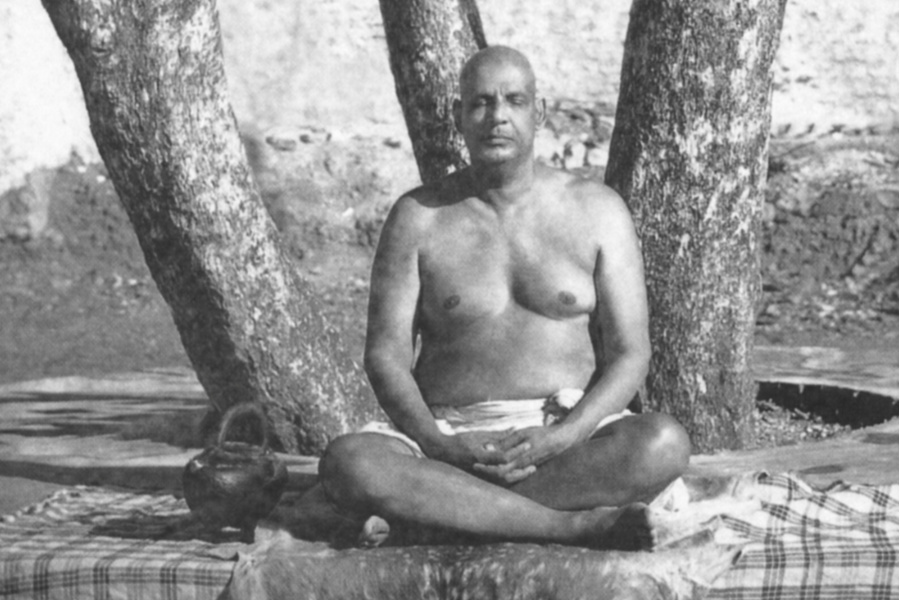
swami sivananda Monk meditating under tree outdoors image
Sadhana, Swami Sivananda

Six Sadhanas for Eradicating Jealousy

Six Sadhanas for Eradicating Jealousy by Swami Sivananda There are six ways of eradicating this emotion of jealousy Rajayogic Method. Vedantic Method. Bhakta’s Method. Karma Yogin’s Method. Method of Vichara of Vivekins. Theosophist’s Method. 1. Rajayogic Method: A Raja Yogi destroys the Vritti by “Yogah Chittavritti-nirodhah.” He destroys all Sankalpas of jealousy by introspection, careful watch and meditation. He adopts another method of “Pratipaksha Bhavana” by cultivating the opposite virtues of jealousy, viz., nobility or magnanimity (Udarata). Jealousy is the result of petty-mindedness. If nobility is supplanted, jealousy will die of itself. Have a meditation room. Sit on Padma or Siddha or Sukha Asana for half an hour in the morning. Meditate on this virtue, nobility. Think of the advantages in possessing this virtue and the disadvantages you derive from jealousy. Think of those great persons who possess this virtue, magnanimity. Imagine when you move in society that you are in actual possession of this quality. Constantly repeat the watch-words “OM Nobility” mentally during the course of the day. Keep this word-image “Nobility” before the mind’s eye. Have this auto-suggestion “I am becoming better and better every day, in every way.” You will doubtless develop this virtue within some months. Even if you fail, it does not matter much. Nil desperandum. Never despair. Go on with the above Sadhana (practice) systematically and regularly. Eventually this virtuous quality, nobility will become part and parcel of your nature. Jealousy will vanish altogether. 2. Vedantic Method: The Vedantin repeats the formulae “I am the All,” “I am in all,” “All is Self.” “There is nothing but my own Self in this whole universe. I see my own Self everywhere. Who is to be jealous of whom?” he says. He tries to identify himself with an enemy, a scavenger, a thief, a drunkard, a murderer, a stone, a snake, a tiger and a scorpion (cosmic identification). Jealousy disappears by this Vedantic Sadhana. 3. Bhakta’s Method: A Bhakta or devotee sees Narayana, Krishna, everywhere. He says: “Sarvam Vishnumayam Jagat”-Everything is Lord Vishnu. By this practice, jealousy dies eventually. 4. Karma Yogin’s Method: A Karma Yogin reduces his wants and slowly controls the Indriyas. He serves all with pure, cosmic love, with Sama Bhavana (equal vision) as manifestation of the Lord. Jealousy vanishes completely in the long run by constant service. 5. Method of Vichara of Vivekins: If your brother is in a high prosperous position you are not jealous. If your thick friend, your chum is in affluent circumstances you don’t evince jealousy. Similarly when a Vritti of jealousy arises with reference to other persons, identify yourself with that man as your best amiable friend. Immediately the Vritti of jealousy will die. By constant practice of this kind, you can slowly eradicate jealousy. 6. Theosphist’s Method: This goes on lines of universal brotherhood. All are equal. All are children of the One universal Father-Isvara. By constant remembrance of this brotherhood idea, you can get rid of jealousy. The Sanskrit term for jealousy is Irshya. Matsarya and Asuya are also synonymous terms. But there is a subtle difference. Jealousy is a particular kind of emotion or Vritti that arises in a Rajasic mind wherein the victim looks upon with a grudging eye on the prosperity or success or higher virtuous qualities o’f others. His heart burns when another man is more prosperous or happy than himself. Hatred and anger are the modifications of jealousy. A man filled with jealousy hates another man if he is in a better position than himself. He gets grief at the sight of another’s success. He tries his level best to pull him down to undermine him by various foul means, by back-biting, tale-bearing or vilification. He tries to injure him. He attempts to annihilate him. He creates dissensions, party-spirit amongst his friends. These are the external physical manifestations of a man of jealousy. A man of Irshya thinks that he should not get any kind of sorrow or discomfort and that those whom he dislikes should be afflicted and should suffer. There can be no worst vile, vicious nature of a man than his jealousy towards others. It is filthy, ignoble and beast-like. The ignorant, deluded souls of a very narrow mind are greatly affected by this deadly cancer. One who gets agitated when another man enjoys his own status is termed as Asuya. A man of Matsarya cannot bear the sight of a man more prosperous and of better qualities than himself. This is the subtle difference between, Irshya, Asuya and Matsarya. Jealousy is the very root of all evils. This is a great obstacle to all aspirants. It is very common among the Sadhu class also. This is one of the prominent reasons for their degeneration. Even highly educated cultured persons are affected by this. It is due to their mean-mindedness and impure, filthy heart. No one can enjoy an iota of real happiness if his mind is filled with jealousy. How can there be peace of mind when the heart burns with jealousy? It can only augment the uneasiness of the mind. Every aspirant must be ever on alert. They should not become slaves of name and fame or physical comfort or the appeasement of his palate. If there is jealousy, he is far from God. One should rejoice in the welfare of others. He must purify his heart first through utter self-dedication for the welfare and good of others. Real renunciation is the most effective way to get rid of jealousy. Discrimination and dispassion are the surest means of eradicating jealousy. You must discriminate every moment of your life between the good and evil, between the real and unreal. Then alone you can get rid of this deadly curse. Remember well that all are the children of the same God and are reaping the fruits of their own Karmas, either good or bad. There is no use of getting jealous at other’s prosperity. You can also achieve the same status, if you do good actions, if you exert your best and


Six Sadhanas for Eradicating Jealousy Read Post »

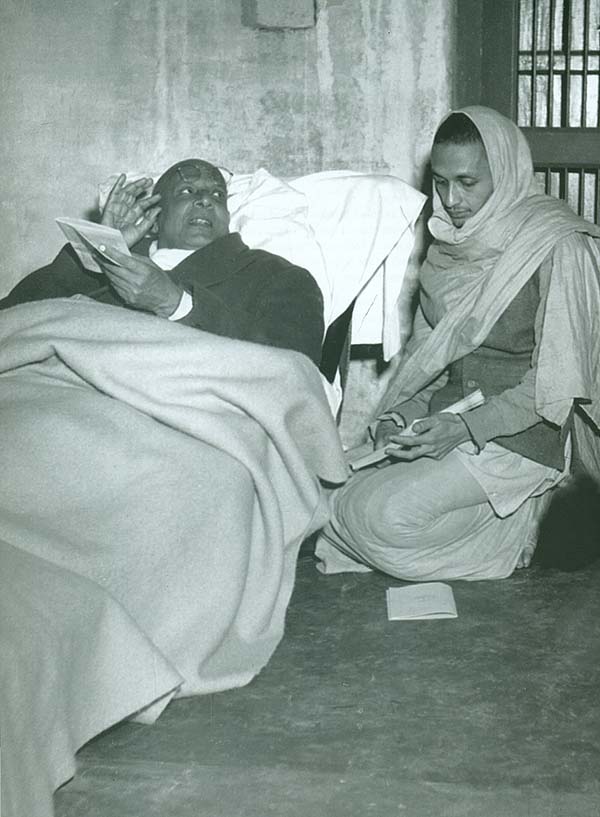
swami sivananda Black-and-white photo of guru resting in bed with disciple reading nearby picture
Sadhana, Swami Sivananda

Sadhana for Elimination of Egoism

Sadhana for Elimination of Egoism by Swami Sivananda I Egoism is the self-arrogating principle in man. It is a Vritti or modification that arises in the mind. Patanjali Maharshi calls it by the name, Asmita. The same mind assumes the form of egoism when man begins to self-arrogate. Ahankara manifests first and then comes Mamata or attachment. This baneful egoism generates actions, desires and pain. It is the source of all evils. It is illusory. It deludes people. Though it is nothing, it is everything for the worldly people. It associates with mineness. It is born of Avidya or ignorance. It springs from the false conceit. Vanity fosters it. It is the greatest enemy of peace. If one renounces this dire Ahankara he will be ever happy. The secret of renunciation is renunciation of egoism. Ahankara has its seat in the mind. It is under the influence of egoism that man commits evils and wrong actions. It is deep-rooted. Anxieties and troubles proceed from egoism. It is a veritable disease. Pride, lust, anger, delusion, greed, jealousy, love and hatred are the attendants of Ahankara. Ahankara destroys the virtues and peace of mind. It spreads the snare of affection to entrap man in it. He who is free from egoism is ever happy and peaceful. Desires multiply and expand on account of egoism. Man’s inveterate enemy of egoism has spread about him the enchantments of his wife, children, friends and relatives, whose spell is hard to break. There is no enemy greater than egoism. He who neither desires, nor dislikes anything, who preserves the serenity of his mind at all times is not affected by the feeling of egoism. There are three kinds of egoism. Of these, two kinds of egoism are beneficial and of superior nature, but the third, is of a vile kind and is to be abandoned by all. The first is the supreme and undivided ego which is eternal and which pervades throughout the world. It is the supreme Soul (Paramatman), besides which there is nothing in nature. Meditate on the formula, “Aham Brahma Asmi-I am the Brahman”. Identify yourself with Brahman. It is Sattvic Ahankara. The knowledge which makes us perceive our own Self to be more subtle than the tail-end of paddy or to be as minute as the hundredth part of a hair and to be ever existent is the second kind of Ahankara. The two kinds of egoism are found in Jivanmuktas or liberated sages. They lead to the liberation of man. They will not cause bondage. Hence, they are of a beneficial and superior nature. The third kind of Ahankara is the knowledge which identifies the ‘I’ with the body, composed of five elements, which takes the body for the Atman. This is the worst or the basest form of egoism. This is found in all worldly persons. This is the cause for growth of the poisonous tree of rebirth. Those who possess this kind of egoism can never come to their right senses. Countless persons have been deluded by this form of Ahankara. They have lost their intelligence, power of discrimination and the power of enquiry. This kind of egoism produces baneful results. People come under the influence of all the evils of life. Those who are slaves of this form of Ahankara are troubled by various desires which induce them to do wrong actions. It debases them to the state of a beast. This kind of Ahankara should be destroyed by the other two kinds of Ahankara. The more you thin out this egoism, the more you will get knowledge of Brahman or the light of the Self. Again there are three sub-forms of Ahankara, viz., Sattvic egoism, Rajasic egoism and Tamasic egoism. Sattvic egoism will not bind a man to Samsara. It will help the aspirant to attain the final emancipation. If you try to assert “I am the servant of the Lord, He is the manifest form in me and I have been given this birth to serve the Lord, manifest in all”. Even in the Jivanmukta there is a slight trace of this Sattvic egoism. He does actions through this Sattvic egoism. “I am a king, I know everything. I am very intelligent”,-this is the form of Rajasic egoism. “I am a fool, I do not know anything” and even with this notion if one is impertinent and arrogant-this is the Tamasic egoism. The literal meaning or Vachya Artha of ‘Aham’ Pada is the Aham Vritti that arises in the mind, the little ‘I’ which identifies itself with the physical body. The indicative meaning or Lakshya Artha of ‘Aham’ Pada is Atman or Brahman or the infinite ‘I’. Mere illusion or Maya is the cause of egoism. Knowledge is the cause of egoism. Knowledge is produced through the illusory objects such as, the body, tree, river, mountain, animals, etc. If the objects do not exist, we can neither think of, nor know anything. If there are no objects, we will have no knowledge of objects at all. Then egoism, the seed of Manas will be absorbed. The idea of ‘I’ which is the nest, containing all frailties is the seed of the tree of mind. The sprout which at first germinates from the seed of Ahankara is Buddhi or intellect. From this sprout, the ramifying branches called Sankalpas take their origin. Through such a differentiation, the mind, Chitta and Buddhi are but the different names or qualities of the one Ahankara. The branches of Vasanas will naturally produce innumerable crops of Karmas, but if, with the sword of Jnana, you sever them from the heart’s core, they will be destroyed. Cut the branches of the dire tree of mind and eventually destroy the tree at its root completely. Cutting the branches is only a secondary thing-the primary being the eradication of the tree at its root. If you through virtuous actions destroy the idea of ‘I’ at the root of the tree (mind), then it will

Sadhana for Elimination of Egoism Read Post »

swami sivananda Spiritual monk seated by riverside wearing shawl and garland photo
Sadhana, Swami Sivananda

Sadhana for Controlling the Ten Senses

Sadhana for Controlling the Ten Senses by Swami Sivananda Repression or suppression brings vehement reaction and the senses become formidable, turbulent and boisterous. What is wanted is sublimation of the senses through proper and good use but not repression or suppression. The senses must be thinned first through the practice of Pranayama. Vairagya (dispassion), Tyaga (renunciation), meditation, reduction of wants, control of desires help a long way in the control of the senses. The senses are very strong and impetuous. They should be controlled gradually by intelligent methods, enquiry and discrimination. Violent Tamasic Tapas will not help much in their control. It is not a day’s or month’s work. It is a patient, continuous struggle. Plod on with patience and perseverance. Satsanga gives strength and helps to control them efficiently. Above all God’s grace is very necessary. Obtain this through surrender, faith and devotion. Jnana Indriyas(Organs of Sensation) Control the ears by hearing the glories, the Lilas and Kirtans of the Lord, by hearing the Anahata sounds by the practice of Yoni Mudra. Control the sense of touch by practice of Brahmacharya, sleeping on a coarse mat and wearing coarse blanket, coarse shirt and coarse clothes. Practise Trataka daily and control the wandering eyes. Feel that every form is the form of the Lord. Put a stamp of the picture of the Lord in every form mentally. Do Trataka on your Ishta-Devata and visualise the picture with closed eyes. Give up those articles which the mind likes best for a week or a month. Give up salt on Sundays. Take sugarless milk. Abandon pickles, chutni. Do not ask extra salt, or sugar for tea or milk. Take very simple, bland food. Eat three things. Fast on Ekadasi, Amavasya, Purnima, Janmashtami, Sivaratri, Vaikuntha Ekadasi and Dassera. Karma Indriyas (Organs of Action) Observe Mouna for two hours daily and 24 hours on Sundays. Speak measured words. Speak sweetly. Speak the Truth. You can control the organ of speech. Serve the sick and the poor. Serve your parents. Serve the Sadhus. Practise Ahimsa or non-injury in thought, word and deed. Do Archana or offer flowers to the Lord. Put up light in the temple. Sweep the floor in the temple. Bring water for Abhisheka. Do other services in the temple. Do charity. You can control the hand. Visit the temple. Visit the holy places of pilgrimage. Perambulate round the temple. Sit on one Asana for 2 or 3 hours. You can control the restlessness of the legs. Practise Brahmacharya. You can control the organ of generation. Eat moderately. Fast. You can control the anus.


Sadhana for Controlling the Ten Senses Read Post »

Swami Sivananda blessing young child during spiritual ceremony photo
Sadhana, Swami Sivananda

Various Methods of Mind-Control

Various Methods of Mind-Control by Swami Sivananda The mind can be controlled by Abhyasa and Vairagya. Abhyasa is constant effort to fix the mind on God or Atman. Vairagya is dispassion or non-attachment to sensual objects. Enquire “Who am I?” Do Vichara. Do mental Japa of Om and meditate on Atman. All thoughts will die by themselves. You will rest in Sat-Chit-Ananda Atman. Sit alone and watch the Vrittis (thought-waves) of the mind. Be indifferent. Remain as a Sakshi (witness). Don’t identify yourself with the Vrittis. The mind will then be under your control. Destroy the fuel of desire, and the fire of thought will be extinguished. With the annihilation of Sankalpa, the reality of Brahman will shine. Cultivate divine qualities such as friendliness, mercy, gladness and indifference towards happiness, pain, virtue and vice. You will get peace of mind. Don’t think of the past. Don’t plan for the future. Don’t allow the mind to build images. Live in the solid present. Do a thing which the mind does not want to do. Don’t do a thing which the mind wants to do. Don’t try to fulfil your desires. Don’t hope. Don’t expect anything. Destroy the vicious desires through virtuous desires and destroy the virtuous desires also through one strong desire for liberation. Practice of Pranayama destroys Rajas and Tamas, makes the mind steady and one-pointed. Study of religious books, Tapas, charity and Satsanga with Mahatmas, Sadhus and Sannyasins overhaul worldly vicious Samskaras (latent impressions) and pave a long way in the control of mind. Japa of any Mantra and Upasana (worship of God) destroy the impurities of the mind, makes the mind inwards, induce Vairagya, help concentration and eventually lead to control of mind and attainment of God-consciousness. “Kalau Kesavakirtanam.” “In this Kali Yuga the easiest way for controlling the mind and attaining Moksha is Kirtan or singing the Name of the Lord.” Food has influence over the mind. Sattvic food (milk, fruits, etc.) calms the mind. Rajasic food (meat, alcohol, etc.) excites the mind. Take Sattvic food; have Mitahara (moderation in diet). Destroy evil habits by establishing new good habits. Control the lower instinctive mind through the higher Sattvic mind. Constant selfless service with Atma-Bhava is highly efficacious in purifying and controlling the mind. Don’t wrestle or struggle with the mind. Be regular in your concentration and meditation.

Various Methods of Mind-Control Read Post »