Hari Om

Menu

February 19, 2026

swami sivananda Black-and-white photo of monk holding books and offering gesture image
Resources, Swami Sivananda

Resources

Resources In this section, you will find articles that are grouped on taking and transcending the first steps in your spiritual practices or sadhana. You have already aspired for more but aspirations need the fuel of effort to move forward. the sub-sections will be grouped as…1. Value System2. Day-To-Day Topics3. Obstacles4. Staying Positive5. Inspiration Each of these sub-sections will have articles on that particular theme and we will continue to add within the sub-sections till this becomes a strong support base with many points of view, all designed to do one thing, take you forward and onward. Each of these sub-sections will have articles on that particular theme and we will continue to add within the sub-sections till this becomes a strong support base with many points of view, all designed to do one thing, take you forward and onward.

Resources Read Post »

Swami Sivananda writing spiritual teachings surrounded by books
Scriptures, Swami Sivananda

Sanskrit Literature

Sanskrit Literature Sanskrit literature can be classified under six orthodox heads and four secular heads. The six orthodox sections form the authoritative scriptures of the Hindus. The four secular sections embody the later developments in classical Sanskrit literature. THE SIX SCRIPTURES ARE Srutis Smritis Itihasas Puranas Agamas Darsanas. THE FOUR SECULAR WRITINGS ARE Subhashitas Kavyas Natakas Alankaras.

Sanskrit Literature Read Post »

swami sivananda Black-and-white photo of monk holding a small child image
Pranayama, Swami Sivananda

Pranic Healing

Pranic Healing Those who practise Pranayama, can impart their Prana in healing morbid diseases. They can also recharge themselves with Prana in no time by practising Kumbhaka. Never think that you will be depleted of your Prana by distributing it to others. The more you give, the more it will flow to you from the cosmic source (Hiranyagarbha). That is the law of nature. Do not become a niggard. If there is a rheumatic patient, gently shampoo his legs with your hands. When you do shampooing (massage), do Kumbhaka and imagine that the Prana is flowing from your hands towards the leg of your patient. Connect yourself with Hiranyagarbha or the Cosmic Prana and imagine that the cosmic energy is flowing through your hands towards the legs of the patient. The patient will at one feel warmth, relief and strength. You can cure headache, intestinal colic or any other disease by massage and by your magnetic touch. When you massage the liver, spleen, stomach or any other portion or organ of the body, you can speak to the cells and give them orders: “O cells! discharge your functions properly. I command you to do so.” They will obey your orders. They too have got subconscious intelligence. Repeat Om when you pass your Prana to others. Try a few cases. You will gain competence. You can cure scorpion-sting also. Gently shampoo the leg and bring the poison down. You can have extraordinary power of concentration, strong will and a perfectly healthy and strong body by practising Pranayama regularly. You will have to direct the power of Prana consciously to unhealthy parts of the body. Suppose you have a sluggish liver. Sit on Padmasana. Close your eyes. Inhale gently till you count Om 3 times. Then retain breath till you count Om 6 times. Direct the Prana to the region of the liver. Concentrate your mind there. Fix your attention to that area. Imagine that Prana is interpenetrating all the tissues and the cells of the lobes of the liver and doing its curative, regenerating and constructive work there. Faith, imagination, attention and interest play a very important part in curing disease by taking Prana to the diseased areas. Then slowly exhale. During exhalation imagine that the morbid impurities of the liver are thrown out. Repeat this process 12 times in the morning and 12 times in the evening. Sluggishness of the liver will vanish in a few days. This is a drugless treatment. This is nature-cure. You can take the Prana to any part of the body during Pranayama and cure any kind of disease, be it acute or chronic. Try once or twice in healing yourself. Your convictions will grow stronger. Why do you cry like the lady who is crying for ghee when she has butter in her hand, when you have a cheap, potent, easily available remedy or agent Prana at your command at all times! Use it judiciously. When you advance in your concentration and practice, you can cure many diseases by mere touch. In the advanced stages, many diseases are cured by mere will. DISTANT HEALING This is known as ‘absent treatment’ also. You can transit your Prana through space, to your friend, who is living at a distance. He should have a receptive mental attitude. You must feel yourself en rapport (in direct relation and in sympathy) with the man, whom you heal with this Distant Healing method.You can fix hours of appointment with them through correspondence. You can write to them: “Get ready at 4a.m. Have a receptive mental attitude. Lie down in an easy chair. Close your eyes. I shall transmit my Prana.” Say mentally to the patient: “I am transmitting a supply of Prana (vital force).Do Kumbhaka when you send the Prana. Practise rhythmical breathing also. Have a mental image that the Prana is leaving your mind when you exhale; it is passing through space and is entering the system of the patient. The Prana travels unseen like the wireless (radio) waves and flashes like lightning across space. The Prana that is coloured by the thoughts of the healer is projected outside. You can recharge yourself with Prana by practising Kumbhaka. This requires long, steady and regular practice.

Pranic Healing Read Post »

Swami Sivananda Rishikesh yoga master spiritual teacher
Pranayama, Swami Sivananda

Importance and Benefits of Pranayama

Importance and Benefits of Pranayama “The illusory Samsaric Vasana, that has arisen through the practice of many lives, never perishes except through the practice of Yoga for a long time. It is not possible on the part of one to control the mind by sitting up again and again except through the approved means” (Muktikopanishad). “How could Jnana, capable of giving Moksha, arise certainly without Yoga? And even Yoga becomes powerless in securing Moksha when it is devoid of Jnana. So the aspirant after emancipation should practise (firmly) both Yoga and Jnana” (Yogatattva Upanishad). “Tatah kshiyate prakasavaranam-Thence the covering of the light is destroyed” (Yoga Sutras-II-52). Tamas and Rajas constitute the covering or veil. This veil is removed by the practice of Pranayama. After the veil is removed, the real nature of the soul is realised. The Chitta is by itself made up of the Sattvic particles, but it is enveloped by Rajas and Tamas, just as the fire is enveloped by smoke. There is no purificatory action greater than Pranayama. Pranayama gives purity and the light of knowledge shines. The Karma of the Yogi, which covers up the discriminative knowledge, is destroyed as he practises Pranayama. By the magic panorama of desire, the essence which is luminous by nature is covered up and the Jiva or individual soul is directed towards vice. This Karma of the Yogi which covers up the Light and binds him to repeated births, becomes attenuated by the practice of Pranayama every moment and is destroyed eventually. The afflictions and sins constitute the cover according to Vachaspati. Manu says: “Let the defects be burnt up by Pranayama.” Vishnu Purana speaks of Pranayama as an accessory to Yoga: “He who wants the air known as Prana by practice is said to have secured Pranayama.” “Dharanasu cha yogayata manasah-The mind becomes fit for concentration” (Yoga Sutras, II-53). You will be able to concentrate the mind nicely after this veil of light has been removed. The mind will be quite steady like the flame in a windless place as the disturbing energy has been removed. The word Pranayama is sometimes used collectively for inhalation, retention and exhalation of breath and sometimes for each of these severally. When the Prana Vayu moves in the Akasa-Tattva, the breathing will be lessened. At this time it will be easy to stop the breath. The velocity of the mind will be slowly lessened by Pranayama. It will induce Vairagya. If you can suspend one inch or one digit of breath inside, you will obtain the powers of foretelling; if you can suspend two inches within, you will get the power of thought-reading; for suspending the breath for three inches, levitation; for four inches, psychometry, clairaudience, etc.; for five inches, moving about unseen by anybody in the world; for six inches, the power of ‘Kaya Siddhi’; for seven inches, entering the body of another man (Parakaya Pravesa); for eight inches, the power to remain always young; for nine inches, the power to make Devatas to work as your servants; for ten inches, Anima, Mahima and other Siddhis; for eleven inches, you will attain oneness with Paramatman. When through great practice the Yogi can perform Kumbhaka for full three hours, then he can balance himself on his thumb. He undoubtedly attains all kinds of Siddhis. Just as fire destroys the fuel, so also Pranayama destroys the bundles of sins. Pratyahara makes the mind calm. Dharana steadies the mind. Dhyana makes one forget the body and the world. Samadhi brings infinite Bliss, Knowledge, Peace and Liberation. During Yogic Samadhi, the flame of the Yogagni (fire of Yoga) extending from navel to the head melts the Amrita in the Brahmarandhra. The Yogi drinks this with joy and ecstasy. He can remain without food and drink for months by drinking this Yogic nectar alone. The body becomes lean, strong and healthy. Too much fat is reduced. There is lustre in the face. Eyes sparkle like a diamond. The practitioner becomes very handsome. Voice becomes sweet and melodious. The inner Anahata sounds are distinctly heard. The student is free from all sorts of diseases. He gets established in Brahmacharya. Semen gets firm and steady. The Jatharagni (gastric fire) is augmented. The student becomes so perfect in Brahmacharya that his mind will not be shaken even if a fairy tries to embrace him. Appetite becomes keen. Nadis are purified. The Vikshepa is removed and the mind becomes one-pointed. Rajas and Tamas are destroyed. The mind is prepared for Dharana and Dhyana. The excretions become scanty. Steady practice arouses inner spiritual light, happiness and peace of mind. It makes him an Urdhvareto-Yogi. Advanced students only will get all the other Siddhis mentioned above.The mind of a man can be made to transcend ordinary experience and exist on plane higher than that of reason known as superconscious state of concentration and get beyond the limit of concentration. He comes face to face with facts which ordinary consciousness cannot comprehend. This ought to be achieved by proper training and manipulation of the subtle forces of the body so as to cause them to give, as it were, an upward push to the mind into the higher regions. When the mind is so raised into the superconscious state of perception, it begins to act from there and experiences higher facts and higher knowledge. Such is the ultimate object of Yoga, which can be achieved by the practice of Pranayama. The control of the vibratory Prana means to a Yogi, the kindling of the fire of supreme knowledge, the realisation of the Self.

Importance and Benefits of Pranayama Read Post »

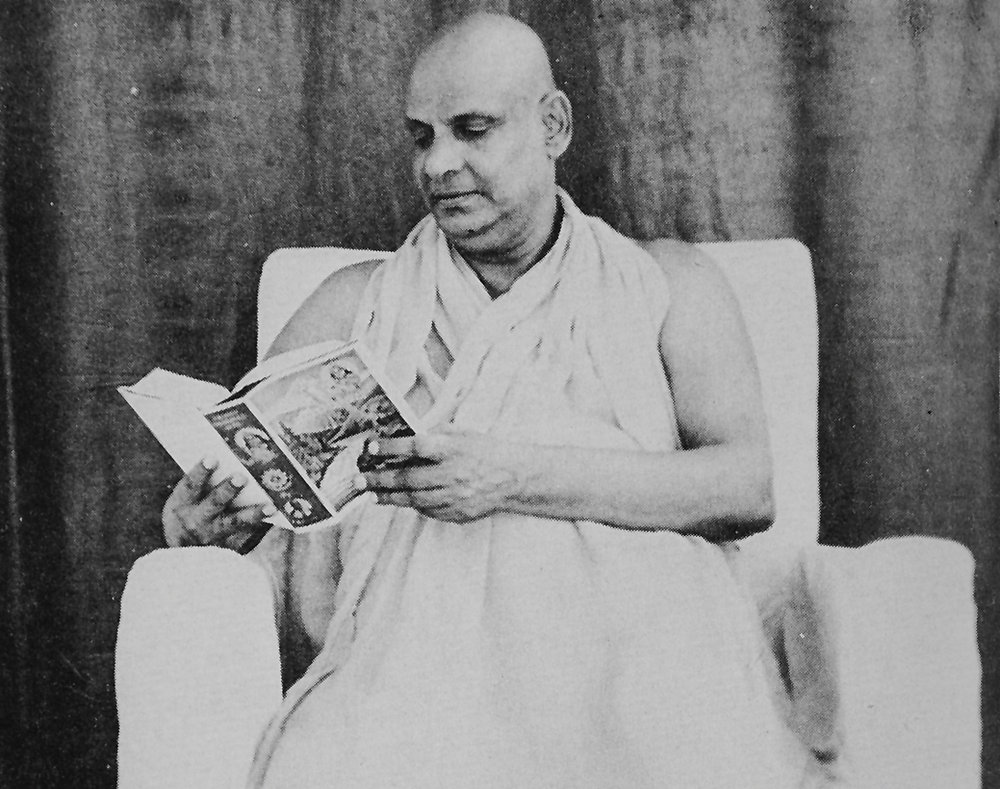
Swami Sivananda reading a book image
Sadhana, Swami Sivananda

Main Obstacles in Yoga Sadhana

Main Obstacles in Yoga Sadhana by Swami Sivananda Real aspirants who thirst for Self-realisation should be absolutely honest in every dealing. Honesty should not be the policy for them but it should be their strict rule of daily conduct. Steya or the pilfering habit is very dangerous. It may develop into a serious crime under suitable conditions and favourable circumstances. He who commits even small thefts will have neither moral strength nor peace of mind. If the aspirant is not established in perfect Asteya or non-stealing, he cannot hope to get an iota of progress in the spiritual path. He may retain his breath for five hours, he may do Trataka in the mid-day sun, he may get himself buried underneath the ground for three months or he may show many other dexterous Yogic feats. These are of no value if he has the pilfering habit. He may be respected and adored for a week or a month. People will treat him with contempt when he starts pilfering. Do not be deceived by external appearances. Just hear this remarkable incidence. A Pundit of vast erudition was a guest of a high personage. The Pundit could recite by heart the whole of the Vedas and the Upanishads and he had done great Tapasya. He was very abstemious in his diet and took only a very small quantity of food. He would never waste unnecessarily a single minute of the day and was always absorbed in the study of religious books, Puja, Japa and meditation. His host held him in very high esteem. This learned Pundit stole one day some articles from his host’s house. They were not valuable at all. In the beginning he totally denied the theft. Later on he admitted it and apologised. Would anybody take such a learned Pundit of severe austerities for a petty thief? The subtle Vritti of pilfering was hidden in the Pundit’s mind; he had not destroyed it through self-analysis and drastic purificatory Sadhana. He had not developed the virtues of nobility and integrity. He had only controlled his tongue to a small extent and crammed some sacred books. The habit of telling lies co-exists with the habit of pilfering. Some aspirants tell lies even for trifling things. We can excuse householders but we cannot excuse aspirants. If the preceptor asks the disciple, “O Ram, have you taken quinine mixture this morning,” he replies, “Swamiji, yes, I have taken already.” Ram tells a lie for this trifling thing and on further strict investigation he is found out to be a liar. Many aspirants pose as great Yogins when they know only a few Asanas and Mudras and pose as great Vedantins when they have read only Vichara Sagara and Panchadasi. This is also another great obstacle in the path. Religious hypocrisy of an aspirant is more dangerous than the hypocrisy of worldly-minded persons. This is an evil quality born of a mixture of Rajas and Tamas. Religious hypocrisy is a great bar to the descent of Divine Light and knowledge. It is very difficult to eradicate religious hypocrisy. What is this religious hypocrisy then? It is pretending to be what one is not. When the aspirant pretends to be a realised soul or a Jivanmukta when he is really otherwise, it is a pure type of religious hypocrisy. A religious hypocrite can never reach the goal of life and will soon be detected by the public though he may hide his face like an ostrich. No Yoga or no union with Atma or Samadhi is possible if one is a victim of hypocrisy. He who says “I am a realised soul” when he is a slave of evil Vrittis is a confirmed hypocrite. Let no such man be trusted. Self-sufficiency is another evil Vritti in the mind-lake. This is also born of a mixture of Rajas and Tamas. It acts as a stumbling block in the spiritual path. The student who is a victim to this evil trait thinks foolishly that he knows everything. He is quite contented with his little knowledge and achievements. He stops his Sadhana. He never attempts for further acquisition of knowledge. He never endeavours to attain the highest knowledge of Bhuma (highest Self). He does not know that there is a vast realm of knowledge beyond. He is like the toad in the well which has no knowledge of the ocean, which thinks that the well is the only illimitable expanse of water. A self-sufficient man foolishly thinks and imagines “I know everything. There is nothing more to be known by me.” Maya spreads a thick veil in his mind. The self-sufficient man has a turbid mind, clouded understanding and a perverted intellect. Self-sufficiency is a strong weapon of Maya with which she deludes people and puts a strong break in the Sadhana of an aspirant. She does not allow him to proceed further or look beyond the veil as he is carried away by false contentment through self-sufficiency. The self-sufficient scientist who has knowledge of the electrons and laws of the physical aspect of nature thinks that there is nothing beyond this. The moralist who has developed some ethical virtues thinks that there is nothing beyond this. The self-sufficient Yogic student who experiences Anahata sounds and flashes of lights thinks that there is nothing beyond this. The self-sufficient Sannyasin who knows the Gita and the Upanishads by heart thinks that there is nothing beyond this. The self-sufficient Yogi or Vedantin who gets experiences of the lower Samadhi thinks that there is nothing beyond this. All are groping in the dark. They know not what perfection is. Maya tests the students in every step, at every stage and appears before the student in various forms or colours like an Asura or a chameleon. It is very difficult to detect Her presence. But he who has obtained the grace of the Mother will experience no difficulty in his onward march. She Herself lifts him up and carries him with

Main Obstacles in Yoga Sadhana Read Post »

Swami Sivananda eating at table image
Sadhana, Swami Sivananda

Light on Yoga Sadhana

Light on Yoga Sadhana by Swami Sivananda Question: In “Practical Lessons on Yoga” it is stated that Bandha Traya can be practised during Pranayama, concentration and meditation, with much advantage. But is not Bandha Traya a strenuous exercise by itself? Will not the combination distract the attention from the Lakshya? Answer: While practising Bandha Traya, the mind should be engaged in meditation. This will help Kumbhaka to be prolonged during Pranayama, concentration and meditation. If the mind is allowed to wander about, Kumbhaka will last for a very short period only. Bandha Traya should be practised at the primary stages of meditation for success in Kevala Kumbhaka. In the advanced stages the combination is not necessary. Q.: Should one do Kumbhaka after inhaling the breath when one does simple Bandha Traya, i.e., without combining it with Pranayama? How many times this Kriya should be performed, especially for the purpose of Brahmacharya? A.: Bandha Traya (particularly Jalandhara Bandha) is a necessity for Kumbhaka only, soon after inhalation. It is just to arrest the involuntary impulse to exhale. Even ten times Bandha Traya during Pranayama practice in the morning and evening will give success in observing Brahmacharya. Much depends, however, on diet and changing the angle of vision towards spiritual values. Q.: I read in a book that a Yogi once gave some magnetised water to a patient. When the boy was asked to take the water, the Yogi touched the glass with his fingers, and the water began to boil. How is it? A.: I have seen many ‘Yogins’ creating water from empty pots, making water boil, and preparing rice in it. This is not associated with Yoga. It is pure jugglery. Healing power can be increased only by spiritual power through purity and intensity of concentration. Yoga confers this power. But no ostentation is resorted to for attracting attention for personal fame or gain or even for creating belief. By mere Sankalpa wonders can be effected by a man of unbroken truthfulness, celibacy and ethical virtues. Even the proper practice of Satya, Ahimsa and Brahmacharya by an ordinary man, irrespective of his past records, can work miracles. Q.: Some one has written that by mastery over Yoni Mudra, Kutastha can be seen. How can the Absolute Consciousness (Kutastha) be seen thus? A.: Yoni Mudra is meant only for developing deep concentration through the avoidance of external distractions. Kutastha or other points relating to the Sukshma Sarira or beyond cannot be seen by the physical eyes. One has to develop the internal divine vision or intuition to perceive the hidden truths of Yoga. Q.: Is Kundalini awakened only through particular Yoga, e.g. the method of Rishi Patanjali? Is it essential for acquiring Siddhis? A.: Raja Yogins awaken Kundalini through Samyama, Hatha Yogins through various Yogic Kriyas, Jnana Yogins through Pure Will, and the Bhaktas through immaculate devotion. Awakening Kundalini through any of these methods will bestow Siddhis. When Kundalini passes through various Chakras, the aspirant attains their respective Siddhis. Intelligent Yogins never demonstrate Siddhis, as in most cases they cause downfall. The ultimate goal is Self-realisation, for which Siddhis are absolutely useless. Misused Siddhis lose their effectiveness and cause untold suffering.

Light on Yoga Sadhana Read Post »

Swami Sivananda writing at desk image
Sadhana, Swami Sivananda

Inner Yogic Discipline

Inner Yogic Discipline by Swami Sivananda I Yoga is the discipline of the mind, senses and the physical body. Yoga helps in the coordination and control of the subtle forces within the body. Yoga brings in Perfection, Peace and everlasting Happiness. Yoga can help you in your business and in your daily life. You can have calmness of mind at all times by the practice of Yoga. You can have restful sleep. You can have increased energy, vigour, vitality, longevity and a high standard of health. You can turn out efficient work within a short space of time. You can have success in every walk of life. Yoga will infuse in you new strength, confidence and self-reliance. Through Yoga you can have complete mastery over the mind, passions, emotions, impulses, temper, tongue, and so forth. The body and mind will be ever at your beck and call. God-consciousness or communion with the Lord is the acme of the ethico-religious discipline of Yoga. This is attended by a remarkable sense of freedom and moral elevation on account of the crumbling down of the false, illusory, little ‘I’. The Yogi is in possession of all Divine Powers now. He enjoys unalloyed eternal Bliss. Power of endurance is a virtue to be possessed by a Yogi, a Jnani and a Bhakta. Many hardships and privations have to be faced by the aspirant in the successful performance of Yoga. Titiksha develops will-power. That is the reason why Lord Krishna says to Arjuna: “The contacts of matter, O son of Kunti! giving cold and heat, pleasure and pain, they come and go, impermanent, endure them bravely, O Bharata! The man whom these torment not, O chief of men, balanced in pain and pleasure, steadfast, he is fit for immortality.”-Bhagavad-Gita: Ch. II-14, 15. Moral excellence or ethical perfection is not, however, the final goal of the Yogi. It is only a means to the attainment of the end of life. Ethical development is more difficult than the attainment of intellectual eminence, because the truth can only be grasped by the Yogi who possesses a pure or untainted heart. The essentials of moral life are straightforwardness, honesty, mercy, humility, respect for life or tender regard for every creature that breathes, absolute unselfishness, truthfulness, celibacy, non-covetousness, absence of vanity and hypocrisy, and cosmic love. The student of Yoga should be abstemious in his diet. He should avoid laziness, ease, habitual languor and excess of sleep. He should observe silence and occasional mild fasts to ensure a good tone to his constitution. He should develop correct habits. He should check all sorts of ambitions and counter-currents of worldly desires by enquiry, thinking and discrimination. He should say unto the deceiving mind: “O mind! I know your tricks. I have got dispassion and discrimination now. Do not wag your tail now. I will snip it off ruthlessly. I have learnt many lessons. It is only ignorance that makes man prefer a transient gain to permanent benefits. I do not want again these sensual enjoyments. They are like vomited matter for me. I have resolved to attain the free, everlasting fruits of Yoga viz., EVERLASTING PEACE, INFINITE BLISS AND SUPREME JOY.” Yoga advocates complete detachment from secular interests for the sake of practising uninterrupted meditation. It recommends meditation on the inner Light of the heart or anything that is pleasing to you. It prescribes that one should withdraw oneself from the ordinary affairs of life for the purpose of practising constant meditation. Yoga can also be practised at home by having well-regulated life. A Yogi claims that he can attain extraordinary powers and knowledge by subduing the passions and appetites and by practising Yama, Niyama and Samyama (or the practice of concentration, meditation and Samadhi at one and the same time). Patanjali Maharshi, the author of YOGA-SUTRAS, clearly warns the students that they should not be carried away by the temptations of powers. The gods themselves tempt the unwary Yogi by offering him a position similar to theirs. Students seek more after Siddhis than after Truth and spiritual attainment despite the clear note of warning. Desire for power acts like puffs of air which may blow out the lamp of Yoga that is being carefully tended. Any slackness in feeding it due to carelessness or selfishness for Siddhis will blow out the little spiritual light that the Yogi has kindled after so much struggle and will hurl him down into the deep abyss of ignorance. He cannot rise up again to the original height to which he had ascended in the Hill of Yoga. Temptations are simply waiting like vultures to overwhelm the unwary student. Temptations of the astral, mental and Gandharva worlds are more powerful than the earthly temptations. Success in Yoga is possible only if the aspirant practises profound and constant meditation. He must practise self-restraint at all times, because all of a sudden the senses may become turbulent. That is the reason why Lord Krishna advises Arjuna: “O son of Kunti! The excited senses of even a wise man, though he be striving impetuously, carry away his mind. For the mind, which follows in the wake of the wandering senses, carries away his discrimination, as the wind (carries away) a boat on the waters.”-Bhagavad-Gita: Ch. II-60, 67). Very often various sorts of obstacles come in the way of the Yogi. Disappointment, despair, sickness, depression, doubt, indecision, lack of physical and mental energy, slothfulness, unsteadiness, craving for sensual objects, blunder, act as stumbling blocks. He should not be discouraged. Patanjali Maharshi prescribes Eka-Tattva-Abhyasa i.e., practice of concentration on one subject to overcome them. This will give him steadiness and strength. He further advocates the practice of friendship between equals, mercy towards inferiors, complacency towards superiors and indifference towards wicked people. This practice will generate peace of mind or composure and will destroy hatred, jealousy, etc. A new life will dawn in him when he practises these virtues. What is needed is perseverance. It is the key-note of Yoga.


Inner Yogic Discipline Read Post »

Swami Sivananda seated with two companions image
Sadhana, Swami Sivananda

Practical Yogic Instructions

Practical Yogic Instructions by Swami Sivananda Control your senses. Calm your mind. Still the bubbling thoughts. Fix the mind on the lotus of the heart. Concentrate. Meditate. Realise Him intuitively this very second and enjoy the Bliss of the Self. Have firm and unshakable faith in the existence of God, the supreme, undying, intelligent Principle or Essence or Substance who exists in the three periods of time-past, present and future. He has neither beginning, middle nor end. He is Sat-Chit-Ananda (Existence Absolute, Knowledge Absolute and Bliss Absolute). O ignorant man! Why do you vainly search for happiness in the perishable external objects of the world conditioned in time, space and causation? You have no peace of mind. Your desires are never fully gratified. You may amass boundless wealth, beget beautiful babies, earn titles, honours, name, fame, power, publicity, and all you want, and yet your mind is restless. You have no real, abiding happiness. You feel you still want something. You have no feeling of fullness. Never, therefore, forget from this moment onwards that this feeling of fullness or eternal satisfaction can be obtained only in God by realising Him through constant practice of self-control, purity, concentration, meditation and practice of Yoga. There is restlessness everywhere. Selfishness, greed, jealousy and lust are playing unimaginable havoc in every heart. Fights, skirmishes and petty quarrels are polluting the atmosphere of the world and creating discord, disharmony and unrest. The bugle is blown and the armies march to the battle-field to destroy their enemies. One nation wages war against another nation for acquiring more dominions and power. Side by side with these bloody wars, peace movement is also working for bringing harmony and peace, for eradicating dire ignorance, the root-cause of all human sufferings and for disseminating Divine Knowledge. The greatest need of the world today is the message of Love. Kindle the light of love in your own heart first. Love all. Include all creatures in the warm embrace of your love. Nations can be united by pure love only. World-wars can be put an end to by pure love only. The United Nations cannot do much. Love is a mysterious divine glue that unites the hearts of all. It is a magical healing balm of very high potency. Charge every action with pure love. Kill cunningness, greed, crookedness and selfishness. It is extremely cruel to take away the lives of others by using poisonous gas. This is a capital crime. The scientist who manufactures the gas in the laboratory cannot escape without being punished for this crime by the great Lord. Forget not the Day of Judgment. What will you say unto the Lord, O ye mortals, who run after power, dominions and wealth? Have a clean conscience and pure love. You will verily enter into the Kingdom of God. Ah, how mysterious is the universe! How mysterious are the silent workings of the unseen Power, who prompts passionate people to wage wars on the one side and pious people to disseminate Divine Knowledge on the other and bring peace and happiness to the suffering humanity at large! As you think, so you become. Think you are a High Court Judge, High Court Judge you will become. Think you are the monarch of the whole world, monarch of the whole world you will become. Think you are a great teacher, teacher you will become. Think you are poor and weak, poor and weak you will become. Think you are a multi-millionaire, multi-millionaire you will become. Think you are a saint of spotless character, saint of spotless character you will become. Think you are God or Atman or Brahman, God or Atman or Brahman you will become. The whole universe is governed by this wonderful Law of Nature. Always think rightly and act rightly. Never try to seize the possessions of others. Never envy your neighbours. Entertain noble and sublime thoughts. Have supreme self-confidence and courage. Whatever you do, do it with a will to succeed. You will by all means succeed in all your endeavours. Success is yours. You will know no failures. This is the Sovereign Secret. Meditate upon this Secret daily in the morning for some time and enjoy the Bliss of the Self. In the Vishnupurana you will find: “If the deluded fool loves the body, a mere collection of flesh, blood, pus, faeces, urine, muscles, fat and bones, he will verily love hell itself! To him who is not disgusted with the nasty smell from his own body, what other argument need be adduced for detachment?” It is a well-known fact that enjoyment cannot bring you satisfaction of desire. On the contrary, it aggravates desire and makes man more restless. The root-cause of all human sufferings and miseries is the craving for worldly enjoyments. The more you hanker after these sensual enjoyments, the more unhappy do you become. The desires also grow, when they are not fulfilled. You can never be happy as long as the craving for enjoyments exists. It is painful to earn money. It is more painful to keep the money that is earned. It is still more painful, if the money gets reduced. And it is extremely painful, if the whole money is lost. Money is the abode of all sorts of pain. That is the reason why in India a Sadhu or a Sannyasin does not possess anything. In his grand vision, he does not possess his body also. He constantly asserts: “The body is not mine; I am not body.” A real Sannyasin is one who feels: “I am bodiless.” These Sannyasins lead a life of perfect dispassion and ruthless renunciation. Renunciation brings in its train supreme Peace. It is very difficult to become absolutely desireless. A liberated sage or a full-blown Yogi alone is entirely free from the taint of desires, for he has completely annihilated his mind and is enjoying the Supreme Bliss of the Self within. How can desires arise in him who is plunged in the

Practical Yogic Instructions Read Post »

Swami Sivananda meditating in lotus pose under tree
Pranayama, Swami Sivananda

Relaxation

Relaxation The practice of relaxing the muscles of the body will bring rest to the body and to the mind also. The tension of the muscles will be relieved. People who know the science of relaxation do not waste any energy. They can meditate well. Take a few deep breaths and then lie down flat on your back as in Savasana. Roll on to one side and then relax as thoroughly as you can do. Do not strain the muscles. Roll on the other side and relax. This is naturally done by all during sleep. There are various exercises in relaxation, for the particular muscles of a particular part of the body. You can relax the head, the shoulders, the arms, forearms, wrist, etc. Yogins know the science of relaxation thoroughly. When you practise these various relaxation exercises, you must have the mental picture of calmness and strength. RELAXATION OF MIND Mental poise and calmness may be brought about by the eradication of worry and anger. Fear really underlies both worry and anger. Nothing is gained by worry and anger, but on the contrary much energy is wasted by these two kinds of lower emotions. If a man worries much and if he is irritable, he is indeed a very weak man. Be careful and thoughtful. All unnecessary worries can be avoided. Relaxation of the muscles reacts on the mind and brings repose to the mind. Relaxation of the mind brings rest to the body also. Body and mind are intimately connected. Body is a mould prepared by the mind for its enjoyment.Sit for 15 minutes in a relaxed and easy comfortable position. Close your eyes. Withdraw the mind from outside objects. Still the mind. Silence the bubbling thoughts. Think that the body is like a coconut shell and you are entirely different from the body. Think that the body is an instrument in your hands. Identify yourself with the all-pervading Spirit or Atman. Imagine that the whole world and your body are floating like a piece of straw in this vast ocean of Spirit. Feel that you are in touch with the Supreme Being. Feel that the life of the whole world is pulsating, vibrating and throbbing through you. Feel that the ocean of life is gently rocking you on its vast bosom. Then open your eyes. You will experience immense mental peace, mental vigour and mental strength. Practise and feel this.

Relaxation Read Post »

Swami Sivananda standing with another monk image
Sadhana, Swami Sivananda

Practice of Yoga Sadhana

Practice of Yoga Sadhana by Swami Sivananda Meditate regularly on your ideal. Strive to live in it. Weed out the vices. Scrutinise your character. Enlarge your capacities. Cultivate mental and moral qualities. Close the doors of the senses. Make the mind steady and calm by silencing the thoughts, subduing the surging emotions and crushing all desires and cravings. Meditate. You will behold now the majesty and the glory of the Supreme Self, the Indweller. Forgive those who slander or speak ill of you. Do not harm anyone who injures you. If anybody from aversion speaks disparagingly of you, greet him courteously without caring for those disagreeable words. Steadily resist the promptings of the lower nature. Gradually it will lose its power over you. You will gain strength. Even if you fail, it is one step nearer to victory or the goal. You will develop your will-power. The will-force will penetrate into the subconscious mind and eradicate all wrong impressions, vicious habits and evil traits. You will encounter various difficulties in the beginning of your Sadhana. You are not conscious of any spiritual progress, but you are only conscious of your failures in your attempts, in meditation, the resistance you meet and your defects and weaknesses. If you persist in your Sadhana vigorously and diligently, if you are regular in your Sadhana you will attain success. Meditation will come without effort. Meditation will become habitual. All resistance will vanish. You will develop strong will-power. You will have triumph at every step. Failure and despair will be unknown to you. Sadhana will go on in great strides. Evil thoughts perish when divine thoughts are entertained. Evil thoughts die when good thoughts are cherished. Evil thoughts and evil desires perish merely from want of nourishment. Abstention from gratification of a desire will cause starvation of desire and then its death. The desire will fade away if you do not indulge in the objects of desire. Do not talk of Samadhi and awakening of Kundalini. The greater things you can begin to do afterwards. Do the smaller things first. Practise, Yama, Niyama first. Be good, do good. Attain ethical perfection first. Eradicate evil traits and develop divine qualities first. Control the senses and purify the heart first. What is the use of talking of Samadhi and awakening of Kundalini when the first steps are not yet taken up and practised? Be abstemious in everything. Abandon fear, anger, cupidity and errors of judgment. Stick to your vows at any cost, even at the risk of your life. Then only you are fit to attain immortality. Sticking to the vows will contribute to your true happiness. Observe the vow with your passions under control, with a pure heart. If you like mangoes very much, if you are longing intensely to eat them, if they are actually in front of you and if you are quite ready to eat them do not eat them. Control the desire through discrimination. Practise this again and again in respect of those things which you like best. Gradually you will be able to control the tongue. Each failure sows the seed of your future success or triumph. Stand up. Do not be afraid of your failures. March forward boldly with undaunted spirit and redoubled energy. If you do a wrong action, when you do not wish to do it, your weak will has been overpowered by the strong force of past habit. Do more virtuous actions daily. You will develop a strong will. Then you will not repeat wrong actions. Strong will-power consists in overcoming desires, irritability, anger, impurities, evil emotions and in possessing serenity, self-possession, presence of mind, balanced mind in success and failure, censure and praise, honour and dishonour, gain and loss.

Practice of Yoga Sadhana Read Post »