Hari Om

Menu

February 19, 2026

Swami Sivananda spiritual master of Divine Life photo
Pranayama, Swami Sivananda

Nadis

Nadis Nadis are astral tubes made up of astral matter that carry Pranic currents. They can be seen by the astral eyes only. They are not the nerves. They are 72,000 in number. Ida, Pingala and Sushumna are the important ones. Sushumna is the most important of all. IDA AND PINGALA There are two nerve-currents one on either side of the spinal column. The left one is called Ida and the right is known as Pingala. These are Nadis. Tentatively, some take these as the right and the left sympathetic cords, but they are subtle tubes that carry Prana. The Moon moves in the Ida and the Sun in the Pingala. Ida is cooling. Pingala is heating. Ida flows through the left nostril and the Pingala through the right nostril. The breath flows through the right nostril for one hour and then through the left nostril for one hour. Man is busily engaged in worldly activities, when the breath flows through Ida and Pingala. When Sushumna operates, he becomes dead to the world, and enters into Samadhi. A Yogi tries his level best to make the Prana run in the Sushumna Nadi, which is known as the central Brahman Nadi also. On the left of Sushumna is situated Ida and on the right is Pingala. The moon is of the nature of Tamas and the sun is that of Rajas. The poison share is of the sun and the nectar is of the moon. Ida and Pingala indicate time. Sushumna is the consumer of time. SUSHUMNA Sushumna is the most important of all the Nadis. It is the sustainer of the universe and the path of the universe and the path of salvation. Situated at the back of the anus, it is attached to the spinal column and extends to the Brahmarandhra of the head and is invisible and subtle. The real work of a Yogi begins when Sushumna begins to function. Sushumna runs along the centre of the spinal cord or spinal column. Above the genital organs and below the navel is the Kanda, of the shape of a bird’s egg. There arise from it all the Nadis 72,000 in number. Of these, seventy-two are common and generally known. Of those the chief ones are ten and they carry the Pranas. Ida, Pingala, Sushumna, Gandhari, Hastijihva, Pusa, Yusasvini, Alambusa, Kuhuh and Sankhini are said to be the ten important Nadis. The Yogis should have a knowledge of the Nadis and the Chakras. Ida, Pingala and Sushumna are said to carry Prana and have Moon, Sun and Agni as their Devatas. When Prana moves in Sushumna, sit for meditation. You will have deep Dhyana. If the coiled-up energy, Kundalini, passes up along the Sushumna Nadi and is taken up from Chakra to Chakra, the Yogi gets different sorts of experiences, powers and Ananda. PURIFICATION OF NADIS Pranayama is said to be the union of Prana and Apana. It is of three kinds-expiration, inspiration and retention. They are associated with the letters of the Sanskrit alphabet for the right performance of Pranayama. Pranava(OM) only is said to be Pranayama. Sitting in Padmasana (Lotus-posture) the person should meditate that there is, at the tip of his nose, Devi Gayatri, a girl of red complexion, surrounded by numberless rays of the image of the moon and mounted on Hamsa (Swan) having a mace in her hand. She is the visible symbol of the letter A. The letter U has as its visible symbol Savitri, a young lady of white colour having a disc in her hand, riding on an eagle (Garuda). The letter M has as its visible symbol Sarasvati, an aged woman of black colour, riding on a bull, having a trident in her hand. He should meditate that the single letter, the supreme light-the Pranava(OM) is the origin or source of these letters-A, U and M. Drawing up the air through Ida (left nostril) for the space of 16 Matras, he should meditate on the letter A during that time; retaining the inspired air for the space of 64 Matras he should meditate on the letter U during that time; he should then exhale the inspired air for the space of 32 Matras, meditating on the letter M during that time. He should practise thus in the above order again and again. Having become firm in the posture and having preserved perfect self-control, the Yogi should, in order to clear away the impurities of the Sushumna, sit in Padmasana, and having inhaled the air through the left nostril, should retain it as long as he can and should exhale through the right. Then drawing it again through the right and having retained it, he should exhale it through the left, in the order that he should draw it through the same nostril by which he had exhaled it before and had retained it. To those who practise it according to these rules, through the right and left nostrils, the Nadis become purified within three months. He should practise cessation of breath at sunrise, at midday, at sunset and at mid-night, slowly, 80 times a day, for 4 weeks. In the early stage, perspiration is produced; in the middle stage the tremor of the body; and in the last stage, levitation in the air. These results ensue out of the repression of the breath, while sitting in the Padma posture. When perspiration arises with effort, one should rub his body well. By this, the body becomes firm and light. In the early course of practice, food with milk and ghee is excellent. One, sticking to this rule, becomes firm in his practice and gets no Taapa (burning sensation) in the body. As lions, elephants and tigers are gradually tamed, so also the breath, when rigidly managed, comes under control. By the practice of Pranayama, the purification of the Nadis, the brightening of the gastric fire, hearing distinctly of spiritual sounds and good health result. When the nervous centres have become purified

Nadis Read Post »

Swami Sivananda garlanded portrait with message image
Swami Sivananda, Yoga

The Yoga Of Synthesis

The Yoga Of Synthesis by Swami Sivananda Some maintain that the practice of Karma Yoga alone is the only means for salvation. Some others hold that devotion to the Lord is the only way to release. Some believe that the path of wisdom is the sole way to attain the final beatitude. There are still others who hold that all the three paths are equally efficacious to bring about perfection and freedom. Man is a strange, complex mixture of will, feeling and thought. He wills to possess the objects of his desires. He has emotion and so he feels. He has reason and so he thinks and ratiocinates. In some, the emotional element may preponderate, while in some others, the rational element may dominate. Just as will, feeling and thought are not distinct and separate, so also work, devotion and knowledge are not exclusive of one another. The Yoga of Synthesis is the most suitable and potent form of Sadhana. In the mind there are three defects, viz., Mala or impurity, Vikshepa or tossing and Avarana or veil. The impurity should be removed by the practice of Karma Yoga. The tossing should be removed by worship or Upasana. The veil should be torn down by the practice of Jnana Yoga. Then only is Self-realisation possible. If you want to see your face clearly in a mirror, you must remove the dirt in the mirror, keep it steady and remove the covering also. You can see your face clearly in the bottom of the lake only if the turbidity is removed, if the water that is agitated by the wind is rendered still, and if the moss that is lying on the surface is removed. So too is the case with Self-realisation. The Yoga of Synthesis alone will bring about integral development. The Yoga of Synthesis alone will develop the head, heart and hand and lead one to perfection. To become harmoniously balanced in all directions is the ideal of religion. This can be achieved by the practice of the Yoga of Synthesis. To behold the one Universal Self in all beings is Jnana, wisdom; to love this Self is Bhakti, devotion; and to serve this Self is Karma, action. When the Jnana-Yogin attains wisdom, he is endowed with devotion and selfless activity. Karma Yoga is for him a spontaneous expression of his spiritual nature, as he sees the one Self in all. When the devotee attains perfection in devotion, he is possessed of wisdom and activity. For him also, Karma Yoga is a spontaneous expression of his divine nature, as he beholds the one Lord everywhere. The Karma-Yogin attains wisdom and devotion when his actions are wholly selfless. The three paths are in fact one in which the three different temperaments emphasise one or the other of its inseparable constituents. Yoga supplies the method by which the Self can be seen, loved and served.

The Yoga Of Synthesis Read Post »

Swami Sivananda Indian yoga guru and saint picture
Swami Sivananda, Yoga

Hints For Aspirants

Hints For Aspirants by Swami Sivananda You can learn many spiritual lessons from the baby. The baby has a message to give to all. You will find in the baby the revelations of the Upanishads, the inspiring experiences of the seers, sages and Rishis. You will find in the baby a new practical religion. The baby imparts the message of yore, peace, harmony, freedom and bliss. Watch the baby carefully. Learn the spiritual lessons and become wise. A new-born baby is always in Samadhi or blissful union with the Lord. How steady are his eyes. He is Brahman himself. Maya enters in him only when he begins to look steadily at his parents, recognises them and smiles. Sin is expiated by auspicious acts, by publishing it widely, by repentance, by alms-giving, by penances, by sojourns to Tirthas or holy places of pilgrimage after renunciation of everything, by constant meditation on the scriptures. He who has practised renunciation is incapable of committing sins anew. “Those Brahmins who are superior to us-they should be comforted by thee with seats, etc. Give with faith. Do not give without faith. Give with joy, with modesty, with fear, with kindness. Then if there be any doubts as to any action or conduct, in that case conduct thyself as Brahmins who possess good judgment conduct themselves therein, whether they are appointed or not, as long as they are not cruel, but devoted to duty. Then in respect of persons accused of sin, conduct thyself as Brahmins who possess good judgment conduct themselves therein whether they are appointed or not, as long as they are not cruel, but devoted to duty. This is the rule. This is the teaching. This is the purport of the Veda. This is the command. This should be followed-this verily should be followed.” This is real education. Even the most healthy, young man cannot get that sweet deep sleep for more than an hour. The Western psychologists also have agreed on this point. Sleep for six hours is quite sufficient for an adult. Go to bed at 10.00 p.m. and get up at 4.00 a.m. If two things are compared, they are so only with respect to some particular point or a particular feature they have in common. Examples illustrate on one point only. You cannot find entire similarity in all respects. Entire equality of the two can never be found. We need not be one another�s enemies because we have different ideas or different politics or different ideals or different opinions. When you write letters write legibly, giving long full space between lines. Do not be a great miser. If you write illegibly, if you scribble, if you write the contents of an envelope in a post card, you do a very bad Karma. The reader has to strain his eyes. He is annoyed. He has to waste much of his precious time. If you constantly think of the spirit, you will also become a ghost in accordance with the immutable law or theory that the future birth is determined by the last thought of a man when he leaves the body. The last thought is the resultant product of the strong thoughts he entertains in his life. Think of God or Brahman always, your last thought will be that of God or Brahman and you will attain immortality and freedom. Communication with the spirits and their messages have established the fact or truth that there is life beyond. But you will not gain much by trying to be in communication with departed souls. You can help the departed souls to enjoy peace and you can comfort them by your prayer and Kirtan by doing oblations and Sraddha. By your attempt to have communication with them you will make them earth-bound souls. You will not allow them to move to higher spiritual regions. They will get attached to you and you also will get attached to them. Further the thoughts of spirits will trouble you in your dream. The message of the spirits do not turn out to be true always. Try your level best to realise your own Self. All the worlds will rejoice. You will help the whole world. All your ancestors will get peace. He who purifies himself purifies the whole world and his forefathers. Do not run after the conch or shell. Get hold of the priceless Atmic pearl that is within you. The spring has come with all its beauties. Enjoy the spring of life. Let there be a spring in your life-a life of sweet communion with the Lord, with the flowers and fruits of Self-realisation, devotion, Brahma Jnana, freedom, immortality, peace and bliss. People do not throw away old things. Old sugar, old rice, old pickles, old sugar-candy, old ghee that is kept for fifty years are all highly valuable because they are of high potency. They can eradicate many diseases. So people keep them with perfect safety. Even so, an old wife is very dear to a husband with a Vedantic turn of mind who beholds the Self in all bodies, an old honest servant is dear to the sensible master; old sincere friends are very dear to some conscientious people. You are surrounded on all sides by microbes and germs. Your body is filled with microbes and germs. Yet you live. This is a great mystery. This is the greatest of all wonders. Individuality is different from personality. There is no harm in developing one’s individuality. A man of strong individuality is a fit person for practice of Vedanta or Jnana Yoga. “Aham Asmi”-I exist. This is individuality. It is Sattvic. Personality is one�s own mental creation. It is Rajasic. Personality is a great thing in the West. It is nothing for a Hindu. Titles, honours, position, rank, prestige, hang about one’s personality. Extinction of personality is a death-blow for a Westerner. Extinction of personality is a joy for a Hindu. A Hindu exerts himself to destroy his little personality to

Hints For Aspirants Read Post »

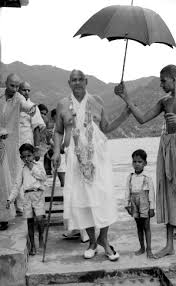
Swami Sivananda walking with umbrella and devotees image
Swami Sivananda, Yoga

Vedanta And Other Schools

Vedanta And Other Schools by Swami Sivananda According to Sankhya philosophy there is no Prana Tattva. Prana is combined function of all organs. Proposition, reasoning, example, application, conclusion are the five Avayavas or members of a syllogism in Nyaya philosophy (Indian logic of Gautama Rishi). There are three Vadas or doctrines viz., Parinama Vada of Sankhya Philosophers, e.g., like milk changing into curd, Vivarta Vada of Sri Sankaracharya, e.g., snake in the rope, and Ajati Vada, the theory of non-evolution of the universe of Sri Gaudapada. The first Vada is the lowest. Vivarta is in the middle. Ajati Vada is the highest. Dravya (substance), Guna (attribute), Karma (action), Samanya (severality), Visesha (particularly) and Samavaya (co-inherence) are the six categories of Vaisheshika philosophy of Kanada Rishi. There are no Pranas in Sankhya system. There is no Chitta also. That is the difference. Vedanta is only amplification and fulfilment of Sankhya. There are many Purushas in Sankhya, whereas there is only one infinite (Akhanda) indivisible Atman in Vedanta. In some states, the Prime Minister is all-in-all. He can do and undo things. The Maharaja is in name only. Even so, the Purusha of Sankhya is a nominal head only. His presence only is necessary. Prakriti is all-in-all. She does the whole creation. By the attributes, Sat-Chit-Ananda, you really understand that there is no Asat or untruth, Avidya or ignorance, Duhkha or pain in Brahman. The opposite attributes of Sat-Chit-Ananda cannot be found in Brahman. Similarly the attributes Ananta, Amritam, indicates that the opposites Anta (end), Mrityu (death) cannot be found in Brahman. This is known as Vyavritti in Vedanta. Satta-Samanya is another name for Nirguna Brahman. Turiyatita is that state in which the individual soul merges himself in Para Brahman and becomes identical with the highest Self. How can there be Parinama (modification) in Brahman? Brahman means the Great or Infinity or Absolute. Milk becomes curd. This is Parinama. There can be Parinama only in Saavayava substance. Saavayava means “with members” like the body of a man with hands, legs, feet, etc. Brahman is Niravayava (without parts or members). There cannot be any Parinama in Brahman. Understand this point well. You will be saved from many mental torments, anxieties and worries. The Kalyana Gunas of the Savishesha Brahman of Sri Ramanuja are only an Amsa of the Atanta Gunas or Nirvisesha Brahman of Sri Sankara. By Nirguna it does not mean that the Suddha Brahman or Para Brahman is totally bereft of Gunas. It means that Nirguna Brahman is the storehouse. Some followers of Sri Ramanuja out of ignorance and spite pass a remark: “Sri Sankara’s Nirguna Brahman is a mass of stone, a void. He is quite dry. There is no Rasa in such a Nirguna Brahman.” This is ignorance only. Sri Sankara’s Nirguna Brahman is ‘Raso Vaisaha-Anando vai saha’, full of Rasa and Ananda. He is not all-knowing. He is knowledge itself. He is not all-beautiful. He is Beauty itself. This is Svarupa. This is essence. He is an embodiment of all Rasas.

Vedanta And Other Schools Read Post »

Swami Sivananda
Swami Sivananda, Yoga

Vedantic Lore

Vedantic Lore by Swami Sivananda The Infinite is Bliss. The Infinite only is Bliss. The Infinite is Brahman or Atman or the Supreme Self. The Infinite is the Absolute. The Infinite is Bhuma or the unconditioned that is beyond time, space and causation. The infinite is Immortality. Where one sees nothing else, hears nothing else, understands nothing else there is Infinity. The Infinite abides in its own greatness. The Infinite is Supreme Peace. The Infinite is fearlessness. The Infinite is Existence Absolute, Knowledge Absolute, Bliss Absolute. The Infinite is all-full and indivisible. The Infinite is self-existent, self-contained and self-luminous. The Infinite alone is Real. The Infinite alone exists in the three periods of time. You must search, understand, and realise the Infinite. Whatever you see is Bhava Padartha. Padartha is a thing. That which exists is Bhava. When you say, “It is very, very big. It is very, very sweet. London is a very big city,” this ‘very’ indicates “Abhava Padartha.” It cannot be conceived by the mind. Brahman or the Absolute comes under the category of “Abhava Padartha” because it is Infinite. As there is no language to describe Brahman or the Self to aspirants, sages generally compare the quietude of the various states previously described, to Brahman, just as Akasa is compared to Brahman. They take examples from the worldly experience to explain the nature of Brahman to the aspirants. Brahman is Satchidananda. Brahman is self-luminous. Brahman is changeless and deathless. Brahman is not simply this, but something far higher and far different. It is something transcendental. Vedantins put it as “Vastu”. Brahman cannot be defined. The above is only a provisional definition. Because we experience Asat, Jada, Duhkha (unreality, insentience and pain) in this universe, we give the opposite attributes of Sat-Chit-Ananda to Brahman. This is Atadvya-vritti Lakshana in Vedanta. Srutis declare “Brahman is indeed below. Brahman is above. Brahman is in front. Brahman is behind.” “Brahman is all this.” “He who knows this Brahman attains Immortality.” “The blower of the Self crosses over grief.” Here is a conversation between Yajnavalkya and Sakalya: “Which deity art thou in the eastern quarter?” “The Sun.” “Where is the Sun located?” “In the eyes.” “Where has the eye its locality?” “in colours.” He said, “In the heart; for colours are produced by the heart; the heart (the Supreme Self) therefore is the locality of colours.” In Brihadaranyaka Upanishad II-4. 13 you will find, “Then by what should he see whom?” This clearly indicates that Atman is not an object of perception. It is always the knowing subject. There is neither an agent nor an object of action, nor an instrument. In the physical plane only there is the Triputi or the triad, viz., seer, sight and seen. Who can know the knower? How should one know Him by whom He knows all this? You could not see the seer of sight; you could not hear the hearer of the hearing; you could not perceive the perceiver of perception; you could not know the knower of knowledge. There are six Padarthas or categories in Vaiseshika philosophy. They are Dravya (substance), Guna (quality), Karma (activity), Samanya (genus), Visesha (difference) and Samavaya (intimate relation). The Antahkarana is made of subtle matter. The subtle elements or rudiments of matter, viz, the Tanmatras go to constitute the mind. The mind is formed out of the Vayu Tanmatra and so it is wandering like air. The intellect is formed out of the five Tanmatras. Chitta is constituted out of the water-Tanmatra. Ahankar is formed out of the earth-Tanmatra. Ullam is made of the Akasa-Tanmatra. Indra killed many Sannyasins who were ignorant. Their killing does not affect him at all. He had the fire of knowledge, to destroy the Karmas. He knew he was Akarta, Abhokta, Asanga (non-doer, non-enjoyer and unattached). Raja Janaka put many learned persons in jail, when they were unable to answer his question on Brahma Vidya. He was not in the least affected. He was a Jnani. That is the reason why the Gita says: “He who is free from the egoistic notions, whose reason is not affected, though he slays these people, he slayeth not. nor is bound.” Everybody has got a world of his own. The monkey or the dog has got its own world. A deaf man, a blind man, a mad man, a savage, a fashionable man, a child, an aspirant, a rogue, a thief, a king and a peasant-all have their own respective worlds. ‘Trial or luck’ ‘Purushartha or Prarabdha’ ‘Free will versus Necessity’, ‘Tagdhir or Tagdhil’ are synonymous. The man who is bitten by the serpent of ignorance will be cured by the Garuda-mantra called Jnana, or knowledge of Brahman. The real ‘I’ is the eternal soul. The real ‘I’ is destitute of change, whereas the body is constantly changing. The body is full of impurities. How can then the body be the ever pure Atman? Just hear this wonderful story. Having bathed in the waters of the mirage, crowned with a garland of sky flowers, this son of barren woman is going, armed with a bow made of hare’s horn. How true it is! This world also is as real as this story. There is neither absolute good work nor absolute bad work, the Gita says, “All undertakings indeed are clouded by defects as fire by smoke” (Chapter XVIII�48). Aham is of two kinds viz., Samashti Aham or collective egoism and Vyashti Aham or individual egoism. The collective egoism is Ishvara and the individual egoism is the Jiva or the human being. The Jiva develops egoism first-begins to feel ‘Aham Jivam-I am Jiva’ and then only he begins to cognise the world and the Ishvara. But for the Vyashti Aham, there cannot be any Samashti Aham or Ishvara and the world. As soon as you realise that you are not this body you become free from matter and death, you are free from the bondage of Karma, from the fetters of desires, from the mirage

Vedantic Lore Read Post »

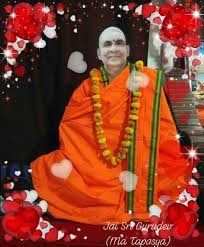
swami sivananda Monk in red robes with garland in decorative floral frame image
Swami Sivananda, Yoga

Nature of Brahman

Nature of Brahman by Swami Sivananda Ananta, Nirakara, Nirguna, Nirvisesha, Adrishta are His negative attributes. Satchidananda, Satyam, Santam, Jnanam are His direct, positive attributes. This is a description of the nature of Atman in Isavasya Upanishad “Atman pervades all, is resplendent, bodiless, scatheless, having no muscles, pure, untouched by sin; far-seeing, omniscient, transcendent, self-sprung; he duly allotted to the various eternal creatures their respective functions”-Mantra 8. Objects with forms only have origin and destruction (Utpatti and Nasa). It is absurd to say that Chaitanya or Brahman without form has origin and destruction. He is Nirakara (formless). It is pure consciousness. You may ask any boy the following questions. He will give answers that explain the true nature of the Imperishable Self. “Oh boy, what is your name?” “My name is Ram.” “Does this name belong to your body or your self?” Ram replies, “This name belongs to my body.” “Whose is this cap?” Ram says, “It is mine.” “If this cap is destroyed will you also perish?” Ram replies, “No.” If your body is destroyed will you also perish? Ram says: “No. Self or Atman is immortal.” “satyam, jnanam, anantam brahma-Truth, knowledge, Infinite is Brahman” (Tait. Upanishad II-1). This is very often quoted by Vedantins during discussion. Himalayas, ocean, expansive sky and the sun are the four representatives on earth of the infinite, unmanifested, hidden Brahman. Srutis emphatically declare about the nature of Brahman. “akasavat sarvagata nitya-like the ether, He is omnipresent, eternal.” Akasa and the ocean are the two objects in this world which can be compared to Brahman in a way with reference to His infinite nature, Akasa is subtle, all-pervading and without any support. Brahman, also is subtle, all-pervading and without any support (Niralamba). Hence the comparison between the Akasa and Brahman. Smile, laughter, singing, dancing, are expressions of one’s joyful condition. They give the clue that you are in essence an embodiment of bliss. They indicate that bliss is an attribute of the soul. They denote that Brahman is an embodiment of Ananda (Anandaghana). Brahman is a mass of intelligence-(Chidghana, Vijnanaghana, Prajnanaghana). He is destitute of any other characteristics. He is entirely without any sort of difference. In Brihadaranyaka Upanishad Ch. IV. 13, you will find “As a mass of salt has neither inside nor outside, but is entirely a mass of taste, thus indeed has that Self neither inside nor outside, but is altogether a mass of knowledge.” Just as a lump of salt has inside as well as outside one and the same saltish taste, not any other taste, so also that Brahman has inside as well as outside one and the same intelligence. Inside and outside are mental creation only. When the mind melts in the silence, ideas of inside and outside vanish. The sage cognises one illimitable, homogeneous mass of consciousness only. The reflected image of the Sun expands when the surface of the water expands; it contracts when the water shrinks; it shakes when the water is agitated; it gets divided when the water is divided. It participates in all the qualities and conditions of the water, while the real sun is unchanging throughout. Even so, Brahman although never changing participates, as it were, in the attributes and conditions of the body and the other Upadhis or limiting adjuncts or vehicles within which He dwells, He grows with them, as it were, and so on, but not in reality. Brahman is destitute of all duality. He is without exterior or interior. He is one homogeneous, indivisible, immortal essence. He is free from the three states viz., Jagrat, Svapna and Sushupti. He is neither round nor pointed. He is neither short nor tall, neither thick nor thin. Brahman is subtler than the subtlest. He is beyond good and evil. He is tranquil, eternal and immutable. He is free from motion and inertia. He is free as the space. He is immaculate and absolute. He is beyond existence and non-existence. Brahman is replete with Peace inherent in Himself. He is devoid of death. Death means departure of the vital breath from the body. This is possible only in the case of the Jiva who is associated with the vital air, not in the case of the Paramatman, who is not associated with the vital air. The Sruti says, “Brahman is without Prana, without mind, pure.” Atman has no connection with Karma. He is not an Anga or Karana. Atman is not an effect or product or modification. He is neither a thing to be attained nor a thing to be refined. He is neither a doer nor an enjoyer. He is always the silent witness or Sakshi. The eye cannot perceive Him. The mind cannot reach Him. The gross worldly intellect cannot grasp Him. The speech cannot describe Him. The speech returns back along with the mind, as it is not able to describe Him in adequate terms. Sages declare, “We are baffled in our efforts to describe Him. His glory is indescribable. To describe Him is to deny Him.” How can a finite mind grasp the infinite? But He can be directly realised by that aspirant who is equipped with the four means of salvation, who does constant meditation, who has sharp, subtle and pure intellect.

Nature of Brahman Read Post »

Swami Sivananda wearing garland near riverbank picture
Pranayama, Swami Sivananda

The Lungs

The Lungs It will not be out of place here to mention a word on lungs and their functions. The organs of respiration consists of two lungs, one on either side of the chest and the air passages that lead to them. They are located in the upper thoracic cavity of the chest, one on each side of the median line. They are separated from each other by the heart, the greater blood vessels and the larger air-tubes. The lungs are spongy, porous and their tissues are very elastic. The substance of the lungs contain innumerable air-sacs, which contain air. After post-mortem, when it is placed in a basin of water, it floats. They are covered by a delicate serous membrane called the pleura which contains serous fluid to prevent friction of the lungs, during the act of breathing. One wall of the pleura closely adheres to the lungs. The other wall is attached to the inner wall of the chest. Through this membrane the lungs are fixed to the wall of the chest. The right lung consists of three lobes. Each lung consists of an apex and a base. The base is directed towards the diaphragm, the muscular septum, the dividing wall between throat and abdomen. The apex is situated above, near the root of the neck. It is the base that gets inflamed in Pneumonia. The apex of the lung which does not get proper supply of oxygen gets affected by consumption. It affords favourable nidus or breeding ground for Tubercle Bacilli (T.B.). By the practice of Kapalabhati and Bhastrika Pranayama and deep breathing exercises, these apices get good supply of oxygen and thus phthisis is obviated. Pranayama develops the lungs. He who practices Pranayama will have a powerful, sweet, melodious, voice. The air-passage consists of the interior of the nose, pharynx or throat, larynx or the wind box, or sounding box, which contains two vocal cords, trachea or windpipe, right and left bronchi and the smaller bronchial tubes. When we breathe, we draw in the air through the nose and after it has passed through the pharynx and larynx, it passes into the trachea or windpipe, thence into the right and left bronchial tubes, which in turn, subdivide into innumerable smaller tubes called bronchioles, and which terminate in minute subdivisions in the small air-sacs of the lungs, of which the lungs contain millions. The air-sacs of the lungs when spread out over an unbroken surface, would cover an area of 1,40,000 square feet. The air is drawn into the lungs by the action of the diaphragm. When it expands, the size of the chest and lungs is increased and the outside air rushes into the vacuum thus created. The chest and lungs contract, when diaphragm relaxes and the air is expelled from the lungs. It is through vocal cords that are located in the larynx that sound is produced. Larynx is the sounding box. When the vocal cords are affected by too much straining, as in singing and continuous lecturing, the voice becomes hoarse. In females these cords are shorter. Hence they have a sweet melodious voice. The number of respiration per minute is 16. In pneumonia it is increased to 60, 70, 80 per minute. In Asthma, the bronchial tubes become spasmodic. They contract. Hence there is difficulty in breathing. Pranayama removes the spasm or constriction of these tubes. A small membranous flat cap covers the upper surface of larynx. It is called Epiglottis. It prevents the food particles or water from entering into the respiratory passage. It acts the part of a safety valve. When a small particle of food tries to enter the respiratory passage, cough comes in and the particle is thrown out. Lungs purify the blood. The blood starts in its arterial journey, bright-red and rich-laden with life-giving qualities and properties. It returns by the venous route, poor, blue-laden with the waste matter of the system. Arteries are tubes or vessels that carry pure oxygenated blood from the heart towards the different parts of the body. Veins are vessels or tubes that carry back impure blood from the different parts of the body. The right side of the heart contains impure venous blood. From the right side of the heart the impure blood goes to the lungs, for purification. It is distributed among the millions of tiny air-cells of the lungs. A breath of air is inhaled and the oxygen of the air comes in contact with the impure blood through the thin walls of the hair-like blood-vessels of the lungs called pulmonary capillaries. The walls of the capillaries are very thin. They are like muslin cloth or sieve. Blood oozes out or exudes readily. Oxygen penetrates through the walls of these thin capillaries. When the oxygen comes in contact with the tissues, a form of combustion takes place. The blood takes up oxygen and releases carbonic acid gas generated from the waste products and poisonous matter, which has been gathered up by the blood from all parts of the system. The purified blood is carried by the four pulmonary veins to the left auricle and thence to the left ventricle. From the ventricle it is pumped into the biggest artery, aorta. From aorta, it passes into the different arteries of the body. It is estimated that in a day 35,000 pints of blood traverses the capillaries of the lungs for purification. From the arteries the pure blood goes into the thin capillaries. From the capillaries the lymph of the blood exudes, bathes and nourishes the tissues of the body. Tissue respiration takes place in the tissues. Tissues take up the oxygen and leave the carbon dioxide. The impurities are taken by the veins to the right side of the heart.Who is the creator of this delicate structure? Are you feeling the invisible hand of God behind these organs? The structure of this body bespeaks undoubtedly of the omniscience of the Lord. The Antaryamin or the Indweller of our hearts supervises

The Lungs Read Post »

Swami Sivananda in orange robes with garland and decorative hearts frame picture
Swami Sivananda, Yoga

What Is Brahman?

What Is Brahman? by Swami Sivananda Brahman or the Supreme Self is beyond time and space, causation. He is limitless. He is tranquil. He shines with equal effulgence in all bodies. He cannot be any particular thing. He is Chaitanya or pure consciousness. He is Vastu, Atman or Brahman or the Supreme Self is the hidden treasure. It is the jewel of jewels. It is gem of gems. It is the imperishable, inexhaustible supreme wealth, which no dacoit can rob. It is Chintamani of Chintamanis that will give man whatever he wishes. Who Himself sees all, Whom no one beholds, Who illumines the intellect, etc., but Whom they cannot illumine-that is Brahman. That is Atman. The self-shining pure being, Who is the support of this universe, Who is consciousness itself, Who is Bliss Absolute, Who is changeless is Brahman. A supreme principle exists. It is Atman. It is Para Brahman. It is imperishable, unborn, undecaying and undying. It is ancient. It is one. It is a mass of wisdom and bliss. Brahman is the biggest ocean of Satchidananda. Brahman is surrounded by an ocean of mind, an ocean of Prana and an ocean of ether and Tanmatras. That unheard hearer, that unseen seer, that unthought thinker, that unknown knower is Brahman. That unborn, undecaying, undying, immortal, fearless (Ajam, Ajaram, Amritam, Abhayam) essence is Brahman. That from which this world has come out, That in which this world exists, That in which it gets dissolved is Brahman. Atman is eternal (Nitya). It is unchanging (Nirvikara). It is one mass of knowledge (Prajnana Ghana, Chidghana, Vijnanaghana). It is imperishable (Akshara). Atman or the pure spirit is timeless, spaceless, placeless and endless. It is full of Jnana (Jnana Maya). It is Santa and self-luminous (Svayam Jyoti). It is Jyotirmaya (full of light). All students of Vedanta seek this Atman to get Brahmanubhava. It is called Parama Vastu (supreme thing). It gives immortality. That in which there is neither East nor West, neither light nor darkness, neither pleasure nor pain, neither hunger nor thirst, neither Harsha nor Soka, neither gain nor loss is Brahman. Atman is Niravayava (without limbs, without hands and feet). So He is Akarta (Akriya, Nishkriya). How can you attribute agency to Niravayava Atman? The Atman has no body. It is Atanu, Nirakara. How can there be then Jara (old age) and death for Atman? Atman is Ajara, Amara, Avinasi (undecaying, immortal and indestructible). The Soul (Atman) is not a product like mind, body or sugar-candy. Eternal intelligence constitutes its very nature. The individual soul is identical with the Highest Self (Brahman). Atman (Highest Self) is always the witnessing subject in all cognition, because it is infinite and self-luminous. It is not manifested either by itself or by anything else. It is known or revealed through direct perception or immediate intuitional knowledge, Aparokshatvat. The intellect can conceive of Brahman as Sat-Chit-Ananda. That is the reason why these attributes are ascribed to Him. But Brahman is different from Satchidananda also. This does not mean that Brahman is non-entity or zero, a negative concept or metaphysical abstraction. He is the only Reality or living Truth. He is Being. He is essence. Mind always runs after pleasure because it is born of Ananda (Brahman). You love a mango because it affords you pleasure. Amongst all things, you love your own Self most. This love of the Self gives the clue to the fact that Ananda or bliss must be the nature of the Self. That secondless Supreme Being who resides in the chambers of your hearts as Antaryamin or Inner Ruler or controller or Sutradhara or Sakshi (silent witness), Antaratma (inner Self) who has no beginning, middle or end, who is the source for this world, Vedas, body, mind, Indriyas and Pranas, who is All-pervading, who is unchanging, who is the One homogeneous Essence (Ekarasa), who exists in the past, present and future, who is Self-existent Svayambhu, who is Svatantra (independent) and who is self-luminous (Svayam Jyoti) is God or Atman or Brahman or Purusha or Chaitanya or Purushottama. Atman is different from the knowable. He is beyond the unknowable also. He is incomprehensible. This does not mean that he is a non-entity or void or a negative concept or a metaphysical abstraction. He is a mass of knowledge or pure consciousness. Consciousness is more dense than stone or platinum or gold. He is the only real, living entity, the substratum for everything. Atman is the immortal substance or essence in man. Atman is the origin of thoughts, desires, reasonings. Atman is spiritual because it is beyond matter and mind. It must be immortal, because it is beyond time, space and causation, it is beginningless, endless and causeless and infinite. Soul or Supreme Self or Atman or Brahman is that abiding, constantly existing and imperishable entity which is the basis for this world, which is indivisible self-luminous, unchanging and all-pervading, which is the silent witness or Sakshi of the three states viz., waking, dreaming and deep sleep. The knower of this Soul or Atman attains immortality and enters the abode of bliss and nectar. Brahman is known also by the names Atman or Purusha. Purusha is so-called because of His lying in the body, or because He is full in Himself, or because all that we see is pervaded by Him. Atman or the Self is the ultimate Reality. It is the ultimate philosophical principle. It is the substratum for everything. It is the only living Truth. It is the Brahman of the Upanishads. It is the support of this world. It is the prop of this body and Prana. It is the Impersonal, Absolute. Brahman or Atman or the Supreme Self is self-luminous. Brahman cannot be manifested anything else. Brahman manifests everything. The doctrine of self-luminosity is one of the foundational tenets on which the entire edifice of Vedanta is constructed. Atman gives light to the sun, the moon, the stars, the lightning, the fire, the intellect and the senses. By the

What Is Brahman? Read Post »

Swami Sivananda seated with musical instrument image
Swami Sivananda, Yoga

The Path of Spiritual Insight

The Path of Spiritual Insight by Swami Sivananda Jnana Yoga is the path of knowledge. Moksha is attained through Knowledge of Brahman. Release is achieved through realisation of the identity of the individual soul with the Supreme Soul or Brahman. The cause for bondage and suffering is Avidya or ignorance. The little Jiva foolishly imagines, on account of ignorance, that he is separate from Brahman. Avidya acts as a veil or screen and prevents the Jiva from knowing his real, divine nature. Knowledge of Brahman or Brahma-Jnana removes this veil and makes the Jiva rest in his own Sat-Chit-Ananda Svarupa (Essential Nature as Existence-Consciousness-Bliss Absolute). SPIRITUAL INSIGHT AND INTELLECTUAL KNOWLEDGE The Jnana-Yogin realises that Brahman is the Life of his life, the Soul of his soul. He feels and knows that God is his own Self. He realises that he is one with the Eternal through spiritual insight or intuition, Aparoksha Anubhuti or divine perception, but not through mere study of books or dogmas or theories. Religion is realisation for him now. It is not mere talk. He plunges himself in the deep recesses of his heart through constant and intense meditation�Nididhyasana�and gets the wonderful pearl of Atman, a wonderful treasure much more valuable than all the wealth of the world. Jnana is not mere intellectual knowledge. It is not hearing or acknowledging. It is not mere intellectual assent. It is direct realisation of oneness or unity with the Supreme Being. It is Para Vidya. Intellectual conviction alone will not lead you to Brahma-Jnana (Knowledge of the Absolute). The student of Jnana Yoga first equips himself with four means, viz., discrimination (Viveka), dispassion (Vairagya), the sixfold virtues (Shat-Sampat)�viz., tranquillity (Sama), restraint (Dama), satiety or renunciation (Uparati), endurance (Titiksha), faith (Sraddha) and concentration (Samadhana)�and strong yearning for liberation (Mumukshutva). Then he hears the scriptures by sitting at the lotus-feet of a Guru, who is not only learned in the sacred scriptures (Srotriya), but is also one who is himself well-established in Brahman (Brahma-Nishtha). Afterwards, the student practises reflection, which completely dispels all doubts. Then he practises deep meditation on Brahman and attains Brahma-Sakshatkara. He becomes a Jivanmukta or liberated sage. He is released even while he is in this body. There are seven stages of Jnana or Knowledge: viz.; Aspiration for the Right (Subhechha), Philosophical enquiry (Vicharana), Subtlety of mind (Tanumanasi), Attainment of Light (Sattvapatti), Inner Detachment (Asamsakti), Spiritual Vision (Padarthabhavana) and Supreme Freedom (Turiya). THE ANALOGY OF THE TWO BIRDS There are two birds on the same tree. One is perched at the top and the other below. The bird which is sitting on the top is perfectly serene, silent and majestic at all times. It is ever blissful. The other bird, which is perching on the lower branches, eats the sweet and bitter fruits by turns. It dances in joy sometimes. It is miserable at other times. It rejoices now and weeps after some time. Sometimes it tastes an extremely bitter fruit and gets disgusted. It looks up and beholds the other wonderful bird with golden plumage which is ever blissful. It also wishes to become like the bird with golden plumage, but soon forgets everything. Again it begins to eat the sweet and bitter fruits. It eats another fruit that is exceedingly bitter and feels very miserable. It again tries to become like the upper bird. Gradually, it abandons eating the fruits, and becomes serene and blissful like the upper bird. The upper bird is God or Brahman. The lower bird is Jiva or the individual soul who reaps the fruits of his Karmas, viz., pleasure and pain. He gets knocks and blows in the battle of life. He rises up and again falls down as the senses drag him down. Gradually he develops Vairagya (dispassion) and discrimination, turns his mind towards God, practises meditation, attains Self-realisation and enjoys the eternal bliss of Brahman. It again tries to become like the upper bird. Gradually, it abandons eating the fruits, and becomes serene and blissful like the upper bird. The upper bird is God or Brahman. The lower bird is Jiva or the individual soul who reaps the fruits of his Karmas, viz., pleasure and pain. He gets knocks and blows in the battle of life. He rises up and again falls down as the senses drag him down. Gradually he develops Vairagya (dispassion) and discrimination, turns his mind towards God, practises meditation, attains Self-realisation and enjoys the eternal bliss of Brahman.

The Path of Spiritual Insight Read Post »

Swami Sivananda writing spiritual teachings surrounded by books
Pranayama, Swami Sivananda

Prana and Pranayama

Prana and Pranayama Pranayama is an exact science. It is the fourth Anga or limb of Ashtanga Yoga. “Tasmin Sati Svasaprasvasayor- gativicchedah Pranayamah”-Regulation of breath or the control of Prana is the stoppage of inhalation and exhalation, which follows after securing that steadiness of posture or seat, Asana. Thus is Pranayama defined in Patanjali Yoga Sutras, Ch. II-49. ‘Svasa’ means inspiratory breath and ‘Prasvasa’ is expiratory breath. Breath is the external manifestation of Prana, the vital force. Breath, like electricity, is gross Prana. Breath is Sthula, gross. Prana is Sukshma, subtle. By exercising control over this breathing you can control the subtle Prana inside. Control of Prana means control of Mind. Mind cannot operate without the help of Prana. The vibrations of Prana only produce thoughts in the mind. It is Prana that moves the mind. It is Prana that sets the mind in motion. It is the Sukshma Prana or Psychic Prana that is intimately connected with the mind. This breath represents the important fly-wheel of an engine. Just as the other wheels stop when the driver stops the fly-wheel, so also other organs cease working when the Yogi stops the breath. If you can control the fly-wheel, you can easily control the other wheels. Likewise, if you can control the external breath, you can easily control the inner vital force, Prana. The process by which the Prana is controlled by regulation of external breath is termed Pranayama. Just as a goldsmith removes the impurities of gold by heating it in the hot furnace, by strongly blowing the blow-pipe, so also the Yogic student removes the impurities of the body and the Indriyas by blowing his lungs, i.e., by practising Pranayama.The chief aim of Pranayama is to unite the Prana with the Apana and take the united Prana-apana slowly towards the head. The effect or fruit of Pranayama is Udghata or awakening of the sleeping Kundalini.

Prana and Pranayama Read Post »