Hari Om

Menu

February 14, 2026

Swami Sivananda Three monks standing together image
Raja Yoga, Swami Sivananda

Cultivation of Virtues

Cultivation of Virtues By Swami Sivananda Maitri (friendliness), Karuna (compassion), Daya (sympathy), Visva-Prema (cosmic or universal love), Kshama (forgiveness), Dhriti (spiritual patience), Titiksha (power of endurance, forbearance) and tolerance are Sattvic qualities of the mind. They contribute to the peace and happiness of human beings. They should be cultivated to a very high degree. Love and pity make the mind soft. Pity has the characteristic feature of evolving the mode of removing pain; the property of not being able to bear seeing others suffer; the manifestation of not harming; the proximate cause of seeing the need of those overcome by pain. Its consummation is the suppression of harming; its failure is the production of sorrow. Patience, tenacity, Utsaha (perseverance) and determination are indispensable for success in Self-realisation. They should be developed to a maximum degree, particularly by spiritual aspirants. When you meditate on OM, when you assert yourself as Brahman in the morning meditation, you will gain a lot of strength. That will help to give you courage that is needed for the progress in the spiritual path. Many difficulties on the path of Truth are to be overcome through the help of fortitude and endurance (Titiksha). These qualities are the forms of courage. Fortitude is mental power of endurance. It is firmness in meeting danger. It is power of resistance. The Ten Lakshanas Of Dharma “Dhritih kshama damo’steyam saucham-indriyanigrahahDheer-vidya satyam-akrodho dasakam dharmalakshanam”(Manusmriti, VI-92) Patience, forgiveness, control of mind, non-stealing, external and internal purity, control of Indriyas, knowledge of Sastras, knowledge of Atman, truthfulness and absence of anger are the ten Lakshanas of Dharma according to Manu. Your thoughts must agree with the word. This is Arjava (straightforwardness). Practise this. You will derive wonderful benefits. If you practise Satya for twelve years, you will get Vak-Siddhi. Whatever you speak will come to pass. Chinta (anxiety) will vanish. You will be free from committing many evil actions by speaking the truth. Patience, perseverance, application, interest, faith, zeal, enthusiasm, determination are necessary during Sadhana. Sraddha and Bhakti are noble Vrittis that help a man to free himself from bondage. These virtues have to be cultivated. Then only is success possible. Look at the various difficulties that crop up in the way. The spiritual line is, therefore, difficult. Very few take to the path, one in thousands (according to the Gita). Out of them very few succeed. Many give up Sadhana when they are half-way, as they find it difficult to pull on till the end is reached. It is only the Dhira (firm) with Dhriti, Dhairya and Utsaha that reaches the goal of Sat-Chit-Ananda state. Hail, hail, to such rare noble souls!

Cultivation of Virtues Read Post »

Swami Sivananda Monk with garland sitting peacefully picture
Bhakti Yoga, Swami Sivananda

More on Bhakti

More on Bhakti by Swami Sivananda In the Sivananda Lahari, Sri Sankaracharya explained the nature of Bhakti in the beautiful verse: Ankolam Nijabijasantatir-ayaskantopalam Suchika, Sadhvi Naijavibhum Lata Kshitiruham Sindhuh Saridvallabham; Prapnotiha Yatha Tatha Pasupateh Padaravindadvayam, Chetovrittirupetya Tishthati Sada Sa Bhaktirityuchyate Here the Bhakta’s intense love for God is compared to five well-known examples. The Ankola fruits fall to the ground and the seeds are liberated. But they are instantly and powerfully attracted to the trunk of the mother tree. They move in the direction of the trunk and stick to it. The needle flies to the magnet, attracted by an irresistible force. A devout and chaste wife lives constantly in the thought of her husband and his service. A creeper restlessly searches for a tree to entwine itself; and once it has caught a tree it winds itself round it inextricably as it were, with great affection and love. Even if the creeper is violently pulled away from the tree, the instant it is released it will rush back to the tree and wind itself around it. The river bouncing towards the ocean surmounts all obstacles and flows ceaselessly till it attains the ocean. Such should be the devotion of the Bhakta to the Lordconstant, intense and powerful. NAVAVIDHA-BHAKTI Sravanam kirtanam vishnoh Smaranam padasevanam; Archanam vandnam dasyam Sakhyam-atmanivedanam. Sri Vishnu-Sravane Parikshidabhavad-Vaiyasikah Kirtane, Prahladah Smarane Tadanghribhajane Lakshmih Prithuh Pujane; Akrurastvabhivadane-tha Hanuman Dasye-tha Sakhyerjunah, Sarvasvatmanivedane Balirabhut Kaivalyamesham Padam. Hearing the Lord’s stories, singing His glories, remembering Him always, serving at His feet, worshipping Him, adoring Him, being His humble servant, being His friend and dedicating one’s all to Him, these are the nine ways of attaining Him. Parikshit attained Him by hearing His stories; Vyasa’s son by singing His glories; Prahlada by constantly remembering Him. Lakshmi by serving at His feet; Prithu by worshipping Him; Akrura by adoring Him; Hanuman by being His humble servant; and Bali by dedicating his all to Him. All attained salvation equally, though by different methods.

More on Bhakti Read Post »

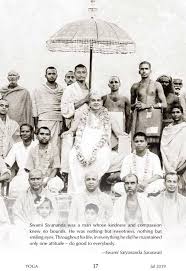
Swami Sivananda Large group of monks with guru picture
Raja Yoga, Swami Sivananda

Vairagya and Tyaga

Vairagya and Tyaga By Swami Sivananda What Is Vairagya? If the mind is constantly thinking of tea and if it gets pain when you do not get it, it is said that you have got ‘Aasakti’ (attachment) for tea. This ‘Aasakti’ leads to bondage. The practice of ‘Vairagya’ (dispassion) demands you to renounce this ‘Aasakti’ for tea. Mere giving up of taking tea does not constitute the essence of ‘Vairagya’. Study Vairagya-Prakarana in Yoga Vasishtha. You will have a comprehensive understanding of the real Svarupa of Vairagya. A clean description of the actual dispassionate mental state of Sri Rama is given. Palatable dishes, refreshing beverages, affectionate father and mother, brother, dear friends, diamonds, pearls, flowers, sandal, ornaments, soft beds, gardens had no attraction for him. On the contrary, their very sight gave him intense pain. In Vairagya, Brahmacharya is Antargata (hidden). Vairagya includes celibacy in thought, word and deed. Two Kinds Of Vairagya Vairagya (dispassion, indifference, non-attachment) is of two kinds, viz., (i) Karana Vairagya (Vairagya on account of some miseries) and (ii) Viveka-Purvaka Vairagya (Vairagya on account of discrimination between real and unreal). The mind of a man who has got the former type of Vairagya is simply waiting for a chance to get back the things that were given up. As soon as the first opportunity offers itself, the man gets the downfall and goes back to his former state. Vishaya does havoc in him with a vengeance and redoubled force from reaction. But the other man who has given up the objects on account of Viveka, on account of illusory nature of objects, will have spiritual advancement. He will not have a downfall. How Vairagya Dawns Note how Vairagya arises in the mind. The transitory and perishable nature of all things creates a sort of disgust in all minds and, in proportion to the depth and subtlety of nature, this reaction from the world works more or less powerfully in the mind of every individual. An irresistible feeling arises in our mind, viz., that the finite can never satisfy the Infinite within us, that the changing and perishable cannot satisfy the changeless and deathless nature of ours. When you are not impressed with the idea of rich living, rich style of living cannot attract you. When you are impressed with the idea that meat and wine are not at all pleasurable, they cannot tempt you. In that case, if you do not get meat and wine or rich living, you will not be agonised at all in your mind. Why are you attracted towards a young, beautiful lady? Because, owing to your ignorance, you vainly think you will get pleasure through her. If you have got Viveka, it will at once tell you that you will get immense pain through her. Then the mind will recede or withdraw from the object, woman. Sadhana Without Vairagya Goes To Waste When Vairagya appears in the mind, it opens the gate to Divine Wisdom. From dissatisfaction (with the sense-objects and worldly sense-enjoyments) comes aspiration. From aspiration comes abstraction. From abstraction comes the concentration of the mind. From the concentration of the mind comes meditation or contemplation. From contemplation comes Samadhi or Self-realisation. Without dissatisfaction or Vairagya, nothing is possible. Just as cultivation in a stony land or saltish earth becomes absolutely fruitless, so also Yogic practices and Atma-Vichara (enquiry of the Soul) done without Vairagya (dispassion and indifference to the sensual enjoyments) becomes fruitless. Just as water, when it leaks into the rat-holes, instead of running into the proper channels in agricultural fields, becomes wasted and does not help the growth of plants, grains, etc., so also, the efforts of an aspirant become a wastage if he has not got the virtue Vairagya. He gets no spiritual advancement. Intense Vairagya Necessary For Moksha There must be intense (Tivra) Vairagya in the minds of the aspirants, throughout the period of their Sadhana. Mere mental adhesion will not do for success in Yoga. There must be intense longing for liberation, a high degree of Vairagya plus capacity for Sadhana (spiritual practice). Then only they will get Nirvikalpa Samadhi and Moksha. It was only Raja Janaka and Prahlada who had Tivra Vairagya (intense dispassion). This kind of Vairagya is necessary for quick realisation. It is very difficult to cross the ocean of Samsara with a dull type of Vairagya. The crocodile of sense-hankering (Trishna) for sense-enjoyments and sense-objects will catch the aspirants by the throat and, violently snatching away, will drown them half-way. Enemies Of Vairagya The Curse of Affection Delusion proceeds from affection. It is a common observation that a person is distressed if the cat eats his domestic fowl; but when his affections are not touched, for instance, if the cat eats a sparrow or a mouse, he expresses no sorrow. You must, therefore, root out affection, which is the cause of vain attachment. The body generates numerous germs which people are anxious to remove; but to one variety they give the name “children,” for which their lives are wasted away. Such is the delusion of the world. At the back of affection and love, there is grief and sorrow. Affection is mixed with sorrow. At the back of pleasure, there is pain. Pain is mixed with pleasure. Man sows the poisonous seed of sorrow under the name of love, from which quickly spring up shoots of affection which contain a fire dangerous as lightning; and from these shoots, grow trees of sorrow with innumerable branches which, burning like a heap of covered straw, slowly consume the body. The knot of affection is strengthened by long indulgence. Affection has entwined its threads around the hearts of men. The principal means to get rid of affection is to consider that this is a fleeting existence. In this wide world, how many millions of parents, wives, children, uncles and grandfathers have passed away. You should consider the society of friends as a momentary flash of lightning and, revolving this often in your

Vairagya and Tyaga Read Post »

images 33
Bhakti Yoga, Swami Sivananda

Philosophy of Bhakti

Philosophy of Bhakti by Swami Sivananda Bhakti is devotion or unselfish love. This is the literal meaning of the word. It comes from the root ‘Bhaj’to serve or be deeply interested in. ‘Bhaj Sevayam’ is the Sanskrit root. Bhakti is, therefore, an intense attachment to God or deep interest in God and things concerned with God. The innate nature of all beings is to love an external object. We cannot but love or cherish something in the heart. For, truly, the Absolute alone is existent. Man is only an ego apparently separated from it. Love for external things is an unconscious internal urge to become unified with everything. For, in reality, man is everything, the Absolute Itself. He wants everything. Love is the forerunner of Experience. Love is the craving. Experience is the fulfilment of it. None can live without love for something. The creator pierced the senses with outward activity, and that rule applies to one and all here. The mind is the main sense of perception, for it is only the mind that perceives through the various channels of the senses. The senses do not work when the mind does not. But it is folly on our part to allow the mind to run extrovert in all directions. The dissipated rays of the mind take interest in countless objects of the universe, seen and heard equally. Yogins have come to the conclusion that the mind that is centred in one point of space at all times can do and undo things with supernatural force. It is the concentrated ray of the sun passing through a lens that burns things focussed through it, and not so much the rays that are scattered here and there. Mind has to be concentrated on one Substance, be it this or that. The mind should not jump from one thing to another. This is the way of Samsara. This should be stopped by controlling the mind through one-pointedness of it. Concentration is done either on a point in space (Bhakti Marga), or on the entire existence (Jnana Marga). The annihilation of thought is the death of individuality which is the experience of Absoluteness. But man can concentrate his mind on any object. He can concentrate his mind on his wife and children as he usually does. But this is not the concentration or love that is meant here. Meditation on and love towards the objects of earthly pleasure are binding chains which hurl down the Jiva to many cycles of birth and death. We mean here concentration on and love for God. This love of unselfish origin is a ladder to Final Emancipation Emotions are generally considered as a hindrance in perfect Realisation. But only certain emotions are of a binding nature while certain others will liberate the Jiva from bondage. The conception of God does not rouse in man any binding emotion. It is pure emotion devoid of carnality and attachment. One cannot develop earthly love towards God. The conception of God and love for God rouses the purest of emotions and it is far better than evil emotions which overpower man day and night. Those who cannot still all emotions must have at least pure emotions. This is the significance of divine emotion in Bhakti-Marga. Love for God can never be the type of love cherished towards wife, children and property. There is much difference, though, even love for God is given on earthly colouring like that of son, husband, father, friend etc., by some devotees who find it difficult to break all earthly connections at a stretch. How, then, does love for God gives us Liberation from Samsara? Man is an egoistic entity. His only enemy is the ego. He feels that he is entirely different from other things of the world. He is convinced that he is sharply marked off from the universe by his physical body. He is sure that he is only the body even though he may try to deny it in any way. When he says ‘I’ he always points out to his chest and not to the yonder tree. Many unfortunate Vedantins also feel that when they assert I am Brahman, they mean only that the body is Brahman. It is very difficult to separate the ‘I’ from the notion of the body. When one says I am Ramakrishna he means only that the body is Ramakrishna. None can get rid of this notion of the body as the real Self. The ideal of all Yogas is to root out this sense of ego. And Bhakti Yoga is a method to kill the sense of separateness or egoism. It annihilates the modifications of the mind and fills the individual with Universal Consciousness. A Bhakta says: O Lord! I am Thine. All is Thine. I am not a separate entity. I have no power to do anything. You are doing everything taking myself as an instrument. O Lord! You are everywhere. I cannot even move, for You are everywhere. I am walking over Your Body. I am not able to live separately for I am seeing You everywhere. You appear as the man and the woman, and as the old man that totters with a stick on the road. You have become everything. I have no independence. I am Your slave. A slave has no optional views. He can do only what the Master commands him to do. I am doing nothing. You only are doing through me. You are the Doer. You are the Enjoyer. I am nothing. Thy Will be done. This is the highest type of Love. This is Divine Love. The ego cannot assert itself for God alone is everywhere. The mind cannot modify itself into Vrittis of sense-objects for, to him, there is no object except God. Who is there to be loved or hated? The Bhakta is therefore blissful at all times. The mind cannot think of anything. For, everything is God. Yatra yatra mano yati tatra tatra

Philosophy of Bhakti Read Post »

Swami Sivananda Guru teaching disciples in gathering image
Raja Yoga, Swami Sivananda

How to Find Peace of Mind

How to Find Peace of Mind by Swami Sivananda PRAYER AND DEVOTION FOR PEACE OF MIND Pray for him who has done you harm. Send thought- currents of peace and good-will to him and the whole world at large when you sit for meditation or prayer. Satsanga or association with sages and wise men, is indispensable for attaining peace. Also you cannot rest in peace without Rama. How fortunate and happy is the man who remembers God and sings His names! The devotee of God is free from all cares, worries, fears, sorrows, pains and tribulations. God takes care of him. He enjoys peace. In his very presence everyone will enjoy peace. Hear the divine whisper in silence. Realise the power of faith. Feel God’s sustaining grace. Know the way of escape. Build the shrine of love or temple of devotion in your heart. Enter the glorious silence. Enjoy the life transcendent. Live within. Merge in the soul. Know the Self. Become That. Be free and move about happily. ROOT CAUSE OF RESTLESSNESS The cause of all restlessness, quarrels, fights, dissensions, is Ignorance. Selfishness, greed, pride, egoism, hatred are all born of Ignorance; they are products or modifications of Ignorance. The person who has realised the oneness of life, the unity of consciousness will never engage himself in strife or quarrel. The removal of ignorance alone can stop all dissensions and restlessness. Spiritual culture, ethical education and all those methods that are best calculated to instil love and a sense of unity in men and women, can prevent nations from resorting to quarrels and fights. Every man or woman should have a clear and comprehensive understanding of the good or purpose of life. All people should get spiritual training and ethical culture. PEACE OF THE SELF WITHIN – MANY METHODS FOR FINDING IT Peace is the very nature of the innermost Self of man – Shanto-ayam atma. Even he who strives to realise this Self, has begun to direct his attention towards this Self, enjoys this peace that prevails in the Self. Even as the nuclear explosion spreads destruction for miles around, this superphenomenal experience of the Peace of the Self generates the powerful current of Peace that dispels the darkness of ignorance and disharmony from the heart of those that attune themselves to the Yogi of such experience. Even a few Yogins of inner spiritual experience, of Self-realisation, Yogins who have attained this inner Peace, can transform the whole world and bring peace, plenty and prosperity. For, millions devoted to them will share the spiritual treasures acquired by them; they will begin to feel that the One Self dwells in all, the one Life lives in all, the One Cosmic Will expresses itself through countless beings. They will begin to see that all distinctions are man-made and that all boundaries are imaginary. They will begin to think in terms of humanity, to practise the universal religion of cosmic love. This is the road to peace. Therefore, turn the gaze within. Shut the doors of the senses. Restrain the turbulent mind. Slay the doubting intellect. Fill your heart with the nectar of faith and devotion. Serve humanity selflessly. Do Japa. Concentrate. Meditate. Pray and wait. Seek the Peace within. Realise the Self. Shine as a Yogi, the greatest benefactor of humanity. May God bless you all with health, long life, peace, prosperity and Self-realisation. PEACE OF MIND THROUGH MANY-SIDED SELF-CULTURE Remove suspicion, hatred, ill-will, jealousy, selfishness. Establish peace in your heart by meditating on the ever peaceful self or the Atman that dwells in the chambers of your heart. Then alone will you be able to establish peace in the world. Individual peace alone can lead to the establishment of universal peace. It is the vanity of man that goads him to reform society without first reforming himself. Vanity rules the world; when two vain people meet, there is friction and quarrel. Your heart should expand; you should cultivate cosmic love. That is the secret of peace, harmony and unity. Serve all; love all;� be good and do good. Think no evil, see no evil, hear no evil, speak no evil. Introspect regularly. Meditate. Remove your own defects. Realise your essential Sat-chit-ananda Svarupa, not in the unknown future, but right now, this very second. Find peace within at first through discipline and meditation, and then disseminate peace outside, in the world. Peace is the divine flame that is fed by the fuel of pure love. Love alone can bring peace on this earth. WORLD-PEACE AND PEACE OF MIND THROUGH SPIRITUAL AWARENESS Spiritual awareness is the prerequisite for individual and world peace. The key to world peace rests with the spiritually conscious leaders of the world. Selfishness will naturally create discord, disharmony and destruction. Materialism has man’s selfishness as its motive power. Let all cultivate goodness and love. There will then be peace in the world. Peace can be established through love, goodwill, mutual understanding and sympathy. The way to peace is the way of truth, non-violence, love, purity, right conduct, tolerance and understanding. God is peace. Root yourself in peace or God. Now you are fit to radiate peace. The transient nature of the world and all bodies and the unceasing inner aspiration for perfection and peace show that there must be that unending Perfection which is Peace and Joy and which must be underlying this perishable, objective world. This Eternal Conscious Perfection is God, and the method of reaching Him is Religion. MEDITATE AND BRING PEACE TO THE WORLD Do not feel that you are only an ordinary individual, one in millions. Do not think that unless you have co-operation from thousands and thousands all over the world, nothing of real importance will be done. No, you forget that every thought sent out by you, you the humble individual that you think you are, every thought sent in the proper manner with full trust in God, for pure unselfishness, has behind it the support of all well-wishes, embodied and

How to Find Peace of Mind Read Post »

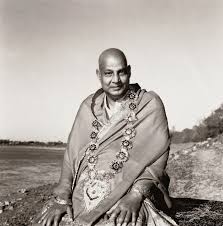
Swami Sivananda Monk seated near riverbank calmly image
Bhakti Yoga, Swami Sivananda

What is Bhakti?

What is Bhakti? by Swami Sivananda Bhakti is the slender thread of Prem or love that binds the heart of a devotee with the lotus feet of the Lord. Bhakti is intense devotion and supreme attachment to God. Bhakti is supreme love for God. It is the spontaneous outpouring of Prem towards the Beloved. It is pure, unselfish, divine love or Suddha Prem. It is love for love’s sake. There is not a bit of bargaining or expectation of anything here. This higher feeling is indescribable in words. It has to be sincerely experienced by the devotee. Bhakti is a sacred, higher emotion with sublime sentiments that unites the devotees with the Lord. Sandilya defines Para Bhakti or preliminary devotion as supreme attachment to God. “Sa paranuraktir ishvare.” “Para Anurakti” is intense attachment or love for God. The Narada Pancharatna defines it as realisation of God alone as “mine” accompanied by deep love for Him without attachment to any other object in the world. It is undivided love for God in which He alone is felt as “mine”. A distinction is drawn by some later devotional literature between Bhakti and Prem. Bhakti is spontaneous attachment to God. The devotee is entirely possessed by Him. He is absorbed in Him. Prem is the crowning consummation of Bhakti. It is the most concentrated love for God which is full of the most intense attachment and purifies the heart thoroughly. Love of God is the completion and perfection of devotion. Love between husband and wife is physical, selfish and hypocritical. It is not constant. It is carnal passion only. It is sexual appetite. It is tinged with lower emotions. It is of a bestial nature. It is finite. But Divine Love is infinite, pure, all-pervading and everlasting. There is no question of divorce here. There is no internal union between husband and wife in reality in the vast majority of cases. Savitri and Satyavan, Atri and Anusuya are very, very rare in these days. As husbands and wives are extremely united only for selfish ends there is only some show of smile and external love, it is all mere show only. As there is no real union in their heart of hearts, there are always some kind of friction, rupture, wry faces and hot words in every house. If the husband does not supply his wife with the necklace and silk sari she demands and take her to the cinema, there will be regular tug-of-war and fighting in the house. Can you call this real love? It is mercenary, commercial, business. On account of lust men have lost their integrity, independence and dignity. They have become slaves of women. What a pitiable spectacle you see! The key is with the wife and even for few rupees the husband has to stretch his hands to her. Still he says under delusion and intoxication of passion: “I have a sweet, loving wife. She is really a Mira. She can be really worshipped. “ Robert J. Ingersoll, the great philosopher defines Love as follows: “Love is the only bow on life’s dark cloud. It is the Morning and the Evening Star. It shines upon the cradle of the babe and sheds its radiance upon the quiet tomb. It is the mother of art, inspirer of poet, patriot and philosopher. It was the first to dream of immortality. It fills the world with melody, for Music is the voice of Love. It is the perfume of the wondrous flower-the heart. Without it we are less than beasts but with it earth is heaven and we are gods in embryo. “

What is Bhakti? Read Post »

Swami Sivananda Group of monks with spiritual leader image
Raja Yoga, Swami Sivananda

The Mental Faculties

The Mental Faculties By Swami Sivananda The Power Of The Human Mind If you closely study the action of mind upon mind, of mind over matter, of mind over the human body, you will find that each man is a power in himself. You will have to develop the potential faculties by self-restraint and mastery over the passions. When mind is so much powerful, what to speak anything of the glory of Atman, who is the storehouse of everything, who is the infinite, inexhaustible central magazine of power, knowledge and bliss from whom the little mind borrows its light and power! Illustrations Of The Power Of Mind Whenever any fire-accident or any other kind of accident occurs, how agile and nimble you are! Do you not exhibit wonderful powers? You jump over a huge wall, save many children, run amidst fire boldly and carry things. All psychic faculties, memory, imagination, will, etc., are at play. Chivalry, intrepidity, undaunted spirit, mercy and various other noble virtues are exhibited by you. Wherefrom did you draw these faculties and powers? From this, you can conclude that you are, in reality, all-powerful. There is a big, magnanimous magazine of power inside. Go to the source by meditation and tap it. You will get everything. Rely on the Self within. If you get a telegram at 12 a.m. on a hot day in summer, which informs you that your father is seriously ailing in your native village which is twenty miles distant, at once you leave even your food and begin to gallop. Though you yourself are not in good health at that time, you do not mind anything as you are very anxious to see your loving father. You even run the whole distance and reach the place within a couple of hours. Then you begin to wonder, “What! I was myself very sick. The day was very hot. I have covered a distance of twenty miles within two hours. What a marvel it is!” This clearly shows that you are, in reality, all-powerful. The mind possesses various kinds of powers and faculties. They lie dormant. You will have to awaken them. The Six Important Powers Of Mind There are three Saktis (powers, potencies) in the mind, viz., Ichha Sakti (Will), Kriya Sakti (Action) and Jnana Sakti (Knowledge). A desire arises in the mind. This is Ichha Sakti. The mind exerts to have this desire gratified. This is Kriya Sakti. It plans, schemes and finds out methods, etc., for the achievement of the desired object. This is Jnana Sakti. Vedana-Sakti (power of perception), Smarana-Sakti or Smriti-Sakti (power of memory), Bhavana-Sakti (Power of imagination), Manisha-Sakti (power of judgment), Ichha-Sakti or Sankalpa-Sakti (will or volition) and Dharana-Sakti (power to hold) are the six important powers of the mind. Vedana-Sakti Vedana-Sakti is power of cognition or sensation or power of perception and knowing through Indriyas or senses (Indriya-Jnana or sense-knowledge). Smriti-Sakti The Smriti-Sakti does three things. It grasps. It holds. It brings to memory whenever a thing is needed. Though the power of grasping is done by the Vedana-Sakti of the mind (power of perception or cognition), the Smriti-Sakti also participates in the act of grasping. Suppose you hear the sound of a bell in the temple. The memory Sakti grasps it. Then it retains it through Dharana. When you hear again the sound of the temple bell, it at once reminds you, “This is the temple bell. This is not the hostel bell.” In Dhyana, the mind grasps and takes possession of its perceptions or judgments. It makes the content of the idea its own. It strengthens the Samskaras so that a voluntary recall is rendered easy. Bhavana-Sakti You have never seen an elephant riding a cycle. When a man, who has actually seen it, gives you a description, your mind forms a mental picture at once. This is done by the Bhavana-Sakti (power of imagination) of the mind. Manisha-Sakti Power of comparing and contrasting, drawing inferences, discussion, conclusion, all belong to Manisha-Sakti of the mind. The Manisha-Sakti (power of judgment) has got two subdivisions, viz., Nirnaya (ascertainment) and Tarka (logical reasoning). A is mortal. B is mortal. C is mortal. Again, all men are mortal. Mr. Choudhary is a man. Therefore, Choudhary is mortal. These sorts of drawing conclusions through inductive and deductive logic with major and minor premises and middle term or through the five parts of syllogistic reasoning of Gautama Rishi’s Indian Logic (Nyaya) are done by Manisha-Sakti of the mind with the help of Nirnaya and Tarka. Tarka has got two other subdivisions, viz., Anumana (inference) and Paramarsa (discussion). When you see a river in full flood in the morning, you infer that there ought to have been rain during previous night. When you see smoke on the hills, you infer that there ought to be fire also on the hill. This is due to Anumana. Ichha-Sakti Will is Atma-Sakti. It is the dynamic aspect of Brahman. Will is Brahman in motion. In Vedanta, will plays a very conspicuous part. Much has been said about the power of imagination in the West-that it is the most tremendous power in the human mind and that in a conflict between the will and the imagination, the imagination would invariably win the day. Some people say that the will is greater than imagination. In the East, amongst the Vedantins, will is regarded as a greater faculty than imagination. What would the imagination do without the impelling power of the will to execute with dynamic power the desires, wishes and ideals? There is correlation, co-ordination and co-operation between the different principles in the mind. Therefore, who can say which is great or small, important or unimportant when each depends upon the other for its power? It cannot be truly said that the one is greater than the other, for their independence and power are derived from one another. Dharana-Sakti Dharana-Sakti (power to hold) is really a part of memory or Smarana-Sakti. In common parlance, we
The Mental Faculties Read Post »

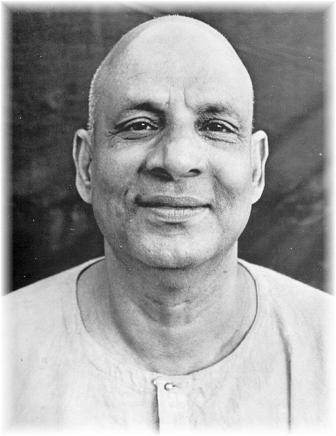
Swami Sivananda Close-up portrait of smiling monk image
Bhakti Yoga, Swami Sivananda

Who is God?

Who is God? by Swami Sivananda God is Truth. God is love. God is Light of lights. He is an embodiment of eternal bliss, supreme peace and wisdom. He is all-merciful, omniscient, omnipotent and omnipresent. He has neither beginning nor end. He is the Supreme Being or Paramatma. The Gita styles Him as Purushottama or Supreme Purusha or Mahesvara. He knows everything in detail (Sarva-vit). He is the support for this world, body, mind, Indriyas and Prana. Without Him not an atom can move. He is the womb for the Vedas. Indra, Agni, Varuna, Vayu and Yama are His assistants. Earth, water, fire, air and ether are His five powers. Maya is His illusive Sakti. Brahma, Vishnu and Siva are the three aspects of God. Brahma is the creative aspect; Vishnu is the preservative aspect; and Siva is the destructive aspect. There are three other aspects: Virat is the manifested aspect; Hiranyagarbha is the immanent aspect; and Isvara is the causal aspect. Virat is the sum total of all physical bodies; Hiranyagarbha is the sum total of all minds-He is the cosmic mind; and Isvara is the sum total of all causal bodies (Karana Sarira). Srishti (creation), Sthiti (preservation), Samhara (destruction), Tirodhana or Tirobhava (veiling), and Anugraha (grace) are the five kinds of activities of God. God is the exquisite taste in vimto. He is the sweetness in the words of a beautiful, young lady. He is the strength in a Pahilvan (wrestler). He is the beauty in the Himalayan landscape. He is the thrilling melody in music. He is the fragrance in jasmine and Champaka. He is the softness in a velvety cushion and silk-cotton. He is the Prana in body, and intelligence in Antahkarana. Earth denotes His all-supporting nature. Water proclaims the message of His purity and sanctity. Fire indicates His self-luminous nature. Air signifies His omnipotence. Ether heralds His all-pervading nature. Maya is under His perfect control. This is the Upadhi or subtle body of Isvara. He has the six attributes of divine wisdom (Jnana), dispassion (Vairagya), powers (Aisvarya), strength (Bala), wealth (Sri) and fame (Kirti). Hence He is called Bhagavan. He is the absentee landlord of this world. He is the wire-puller (Sutradhara) of all these physical bodies of beings. He is the inner Ruler (Antaryamin) of all beings. He dwells in your heart. He is in you and you are in Him. He is quite close to you. You were thinking in the beginning that He could be found only in Mount Kailasa, Ramesvaram, Mecca, Jerusalem, sky or Heaven. You had very vague ideas. This body is His moving temple. The sanctum sanctorum is the chambers of your own heart. Close your eyes. Withdraw your Indriyas from the sensual objects. Search Him there with one-pointed mind, devotion and pure love. You will surely find Him. He is waiting there with outstretched arms to embrace you. If you cannot find Him there, you cannot find Him anywhere else. God-realisation alone can put an end to the Samsaric wheel of birth and death with its concomitant evils such as birth, growth, disease, death, sorrow, pain etc. Eternal happiness can be had only in God. That is the reason why sages and saints, scriptures and Srutis make a very emphatic statement and lay great stress on the importance and necessity of God-realisation. Bhakti or devotion can help one in the attainment of this God-realisation. So I have described in this book the various methods to cultivate Bhakti and come face to face with God, taste the nectar of God-consciousness which alone is the summum bonum of human life and human endeavour. Purify. Control the Indriyas. Sing His Name. Feel His Presence everywhere. Repeat His Mantra. Meditate on His form. Realise Him. Rejoice in Him. Attain peace, bliss and immortality.

Who is God? Read Post »

Swami Sivananda Monks walking together by riverside image
Raja Yoga, Swami Sivananda

The Psychic States

The Psychic States By Swami Sivananda Sit in silence in a solitary room and watch the various mental phenomena, mental states, moods, impulses, emotions, sentiments, whims, fancies that occur in the mind. It will be of absorbing interest to study the subtle states of the inner psychic world. Instincts There are two powerful instincts in the human beings and animals too. They are the instinct of self-preservation and the instinct of reproduction. Hunger is a manifestation of the self-preserving instinct. Lust is a manifestation of reproductive instinct. An instinct is an involuntary prompting to action. The Jiva or the individual soul with egoism wants power, name and fame. This is for self-aggrandisement. Exploitation is greed. It is the act of using for selfish purposes. Domineering is to command haughtily. The Jiva wants to exercise power over others. This is Jiva-Bhavana. The root cause for industries, business, commerce, etc., is greed and self-preservation. If you want to have constant Brahma-Bhavana, you will have to give up exploitation and domineering. There is another third instinct, viz., the herding instinct (the instinct for company). Woman take delight in the company of men. Men take delight in the company of women. The root cause for this is reproductive instinct. Another reason is that a weak man gains strength in the company of a strong man. But, a man who wants to realise God should shun ruthlessly company-particularly, the company of women and worldly-minded persons. He should live alone. Then he will become very powerful and strong. He will develop a strong individuality. One will find difficulty in the beginning in the practice of living alone. Fear will come in. You will have to overcome all difficulties, one by one, if you want to attain immortality (Amritatva). The reward is very great: Brahmavit Paramapnoti (A Knower of Brahman gets the Highest); Amritamasnute (He drinks the nectar of immortality). Impulses An impulse is a sudden propelling force. There are three kinds of impulses, viz., impulses of thought, impulses of speech and impulses of action. Mouna (silence) checks the impulse of speech. Meditation checks the impulse of wrong thinking and wrong action. There are two important impulses. They are the sex-impulse and the impulse of speech. There is an intimate relation between impulse and imagination. Imagination induces the impulse. Impulses must be controlled by reason and will and meditation on God. Emotions An emotion is a combination of thought and desire. Every idea is charged with emotion. Emotions are desires which are penetrated by the thought element. In other words, emotion is desire mingled with thought. The vibrations of emotions will arouse corresponding excitement in purely mental matter and all the man’s thoughts will be disturbed and distorted. There is emotion-desire. There is emotion-feeling also. If the desire element is predominant, it is emotion-desire. If the pleasure element is predominant, it is emotion-feeling. Raga and Dvesha (love and hatred) are the two important emotions of the mind and all the different emotions can be classified under these two headings. Wonder is a compound emotion. It is admiration and fear combined. Reverence is a compound emotion. It is awe and respect combined. Amarsha is a compound emotion. It is anger and jealousy combined. As soon as the man is pulled down to a lower level, the anger of the inferior man who was jealous vanishes. Pleasure is a particular kind of emotion in the mind. The mind expands during pleasure. Coolness prevails in the mind. What takes place of the mind when pleasure feeling arises is not exactly understood by the western psychologists. It is incapable of being understood also by ordinary persons. Only a Yogi or a Jnani knows this psychic phenomenon. During pain, the mind contracts. Considerable heat is produced in the mind. Many of the physical desires and emotions in man are akin to those of the lower animals. Anger and sex-impulse in man are the brutal instincts. In the undeveloped man, these desires and emotions which belong to the lower nature (Aparaprakriti) predominate and overpower the higher nature (Paraprakriti). It is a symptom of weakness to have emotions in the mind. They should be controlled by the intellect and the will. How To Control Emotions And Impulses When emotions and impulses trouble you much, be indifferent (Udasina). Say to yourself: “Who am I? I am not the mind. I am Atman (all-pervading Spirit, Suddha Sat-Chit-Ananda. How can emotions affect me? I am Nirlipta (unattached). I am a Sakshi (witness) of these emotions. Nothing can disturb me.” When you repeat these suggestions of Vichara, the emotions will die by themselves. This Jnana method of controlling emotions is easier than the Yogic method of driving the emotions and struggling with the mind (Yogas-chittavritti-nirodhah). Sentiments Religious sentiment, moral sentiment, aesthetic sentiment (or sentiment for the sublime and the beautiful) are the three important sentiments of the mind. Feeling and sentiments are illusory. They are not in Atman. They are deceptions created by the mind. Moods Mood is a mental state. The Sanskrit term is Bhava. This term also does not express the true significance of the word ‘mood’. We say, “Mr. Naidu or Mr. Atkinson is a moody gentleman.” This means he becomes a slave of the mood quickly. We also say, “That gentleman is in ‘good mood’ or ‘happy mood.’ “I can approach him now for a short interview or talk” or “He is in a very ‘angry mood.’ I should not see him now.” The English people, during the course of their conversation, use the term ‘mood’ in a broad sense. They say: “He is in a talking mood”; “He is in a silent mood”; “He is in a mood of hatred”; “He is in a mood of love”; “He is in a mood of selfishness”; “He is in a mood of jealousy”; “He is in a mood of separateness”; “He is in a mood of unity.” In the light of Vedanta, these are all Vrittis (thoughts or emotions) only. Dr. Bhagavan Das, the

The Psychic States Read Post »

Swami Sivananda Guru teaching disciples in garden image
Raja Yoga, Swami Sivananda

Thought Creates The World

Thought Creates The World by Sivananda Thought, The Origin Of Everything Everything in the material universe about us had its origin first in thought. From this, it took its form. Every castle, every statue, every painting, every piece of mechanism-in short, everything-had its birth, its origin, first in the mind of the one who formed it before it received its material expression or embodiment. Mind has got various preoccupations. When an artist begins to draw a picture on the canvas, he draws the picture out of the material preconceived by the mind. After all, the world is merely an idea or thought. Just as a seed begins to germinate at its proper time and place, so also the seer (knower) appears as the visible through the Sankalpa of the mind (the visible being no other than the seer itself). When the mind ceases to think, the world vanishes and there is bliss indescribable. When the mind begins to think, immediately the world reappears and there is suffering. “Cogito, ergo sum-I think, therefore I am.” This is Descartes’ fundamental basis of philosophy. This is in accordance with Sri Sankara’s statement that the Atman cannot be illusive; for he who would deny it, even in denying it, witnesses its reality. The universe is rendered visible by mind. But, it is a pity that nobody has seen the mind save a seer. When you seriously and unceasingly think over the nature of the mind, it is nothing. When you begin to analyse mind, it is nothing. It dwindles to airy nothing. It is a bundle of thoughts and the thought ‘I’ is the root of all thoughts. This ‘I’ is a false idea, a non-entity. When the root of all thoughts vanishes into nothing, where is the boasted mind? The first thought that arose in your mind was ‘Aham’, ‘I’. The last thought or Vritti that will arise in the mind before it is absorbed in Brahman will be Brahmakara Vritti which is produced by your feeling that you are Infinity. Universe, A Creation Of The Cosmic Mind The universe is not mental creation of Jiva. One single, organised thought of the Cosmic Mind (Hiranyagarbha) has materialised as the seeming universe. This phenomenal universe is but an outcome of the Divine Will, seeming to be real through the workings of the mind. Before you write out a drama, you have a vivid mental picture of the whole drama in your mind. Then you write it out in succession in four acts. When it is staged, it is acted in succession, part by part. Similarly, the universe with its movements is a vivid mental picture in the Cosmic Mind-in the mind of Isvara. There is neither past nor future for Him. Everything is ‘Present’ for Him. There is neither ‘near’ nor ‘far’ for Him. Every place is ‘here’. Every time is ‘now”. The events come out in succession on the stage of the long world-drama as Time rolls on. Atoms rotate continuously. Old becomes new and new becomes old. In reality there is no such thing as old; there is no such thing as single. The Jivas with individual minds are witnessing the events in succession. But Isvara knows all events at one sweep. He is Sarvajna (all-knowing). He is Sarvavit (all-understanding) also. He knows every detail of His creation. The Cosmic Mind creates the Maya. Individual minds receive things under delusion. This universe is nothing but a mode of the mind, self-evolved from Brahman, the cause of the universe. All the universes which appear only through Manas are no other than its modes. The mind is subjectively consciousness and objectively it is this universe. Hence, this all-pervading world is nothing but consciousness itself. 1. The Jiva and the universe are Brahman in their innate condition only. Isvara And Maya All the Samskaras float in Maya. Suppose there is a very big mirror. You can see in the mirror the reflection of all persons who move in the street, all carts, cars, all carriages which pass along the road. You can be simply watching these movements from a distance in the mirror without being affected in the least. Even so, the movements of this whole universe take place in the biggest mirror of Maya. Isvara or the Lord of the universe is simply witnessing everything. He is the silent Sakshi. When the Adrishta (the hidden power in Karmas) of the Jivas ripens, Isvara simply wills and the universe is projected. Reality Of The Universe Lies In Sankalpa Of Manas This ever-agitated Manas (mind), having come into existence out of the ineffable Brahman, creates the world according to its own Sankalpa (thoughts). This legerdemain of the universe springs out of the Sankalpa of your Manas. It is through the Sankalpa of your Manas that the universe appears to be and it is this Sankalpa that is asked to be given up by you if you wish to soar to the One Reality beyond the universe. “Sarvasankalpasannyasi Yogarudhastadochyate-He is said to be established in Yoga who has renounced all his Sankalpas.” (Gita, VI-4) With the growth of a paltry Sankalpa, there will arise the universe; with the extinction of the former, the latter also will disappear. With the annihilation of Sankalpa, all conception of differences between the seer and the seen will vanish and then the Reality of Brahman will begin to shine uninterrupted. Then the shadow of all the universe-movable and fixed-will be found absorbed in It in a non-dual state. With the contemplation of ‘I’, all the train of ideas of the universe will set in; otherwise, all the universe will vanish as instantaneously as darkness before the sun. Mind and ‘I’ are one. Destroy the ‘I’, then the mind is destroyed. “Manah-kalpitam Jagat-(Creation of) world is an imagination of the mind” (Yogavasishtha). This legerdemain of the world is enacted by the mind and the mind alone- “Manomatram Jagat. What you call world is the mind only.” Mind is world. The mind manifests

Thought Creates The World Read Post »