













Hari Om

Menu

February 13, 2026

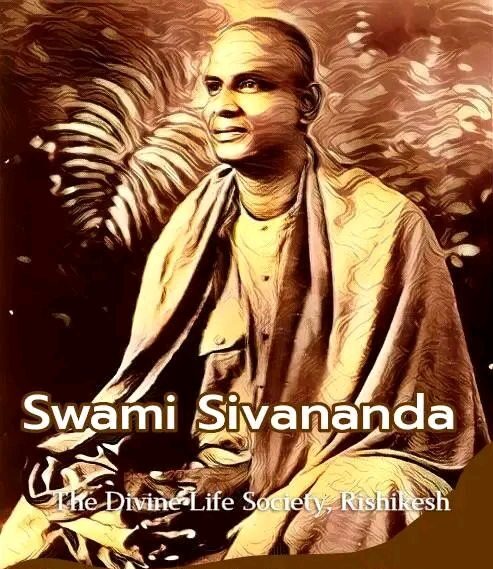
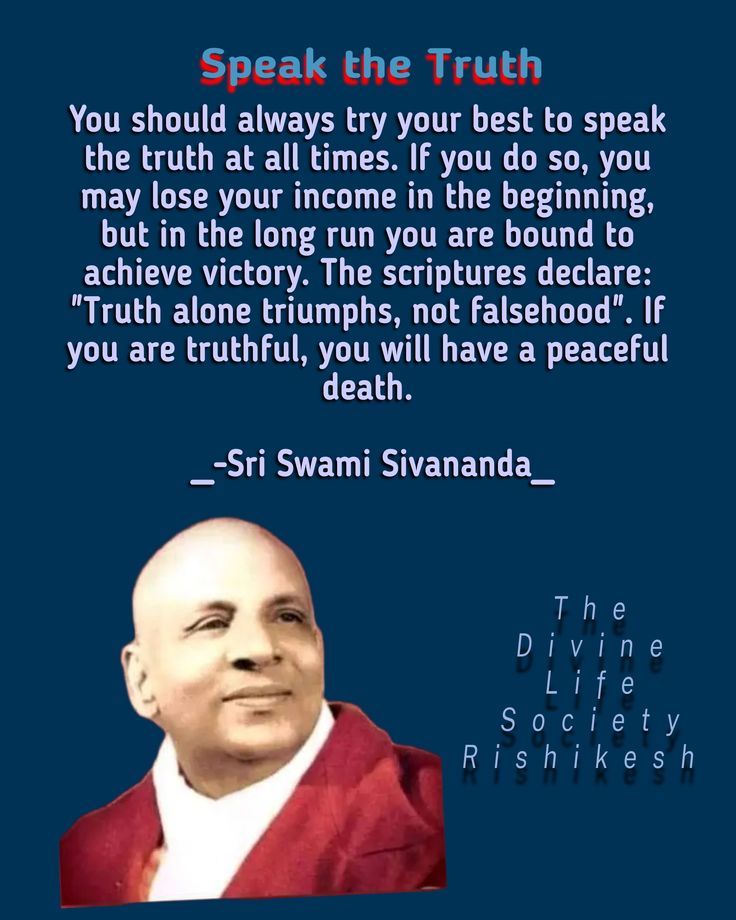
Swami Sivananda truthfulness quote poster photo
Karma Yoga, Swami Sivananda

The Three Gunas

The Three Gunas A clear understanding of the three Gunas and their operations is very necessary for a Karma Yogi. He who has knowledge of the three Gunas can do his work in a better and more efficient manner. Prakriti is composed of the three Gunas or forces, namely, Sattva, Rajas and Tamas. Sattva is harmony or light or wisdom or equilibrium or goodness. Rajas is passion or motion or activity. Tamas is inertia or inaction or darkness. During Cosmic Pralaya these three Gunas exist in a state of equilibrium. During Srishti or projection a vibration arises and the three qualities are manifested in the physical universe. The three qualities bring bondage to the Jiva or the individual soul. Though Sattva is a desirable quality, yet it also binds a man. It is a golden fetter. Rajas is the source of attachment and thirst for life. It causes attachment to action. Tamas binds man to heedlessness (Pramada), laziness (Alasya) and sleep (Nidra). These three qualities are inseparable. No one is absolutely Rajasic or Sattvic or Tamasic. Sometimes Sattva prevails in man. He is calm and serene. He sits quietly and entertains sublime, soul-elevating thoughts. He studies religious scriptures. He talks on divine topics. When Sattva prevails, the other two qualities are overpowered for the time being. At other times Rajas prevails. He does action. He moves about. He plans, schemes, speculates. He craves for power, wealth and action. When Rajas prevails, Sattva and Tamas are overpowered for the time being. Sometimes Tamas prevails and the man becomes slothful. He feels lazy, indolent and lethargic. He is dull and feels sleepy. When Tamas prevails, Sattva and Rajas are overpowered for the time being. In some people Sattva is predominant; in others Rajas is predominant; and in some others Tamas is predominant. When the wisdom-light streams forth from all the gates of the body, then it may be known that Sattva is increasing. Greed, outgoing energy, undertaking of action, restlessness and desire-these are born of the increase of Rajas. Darkness, delusion, stagnation, heedlessness-these are born of the increase of inertia. If Sattva is predominant at the time of one’s death, then he goes to the spotless world of sages. If Rajas is predominant at the time of one’s death, he will doubtless be born among those that are attached to action. If one dies when Tamas is predominant, he will be born in the womb of the senseless. The fruit of a Sattvic action is harmonious and spotless; the fruit of a Rajasic action is pain, and of a Tamasic action is ignorance. Those who are established in Sattva rise upwards. The Rajasic people occupy a middle place and the Tamasic people go downwards, shrouded in the vilest of qualities. Intense Rajas takes a Sattvic turn. A man who is immersed in deep Rajas will take to Nivritti Marga or the path of renunciation. He will, as is the law, be fed up with activities. In the Gita you will find: Arurukshormuneryogam karma karanam uchyate,Yogarudhasya tasyaiva shamah karanamuchyate. “For a sage who is seeking Yoga, action is called the means; for the same sage when enthroned in Yoga, serenity is called the means.” Ch. VI-3. It is impossible to rise or jump to Sattva all of a sudden from Tamas. One should convert Tamas into full Rajas first. Then he can reach Sattva. Sattva is intense activity. Just as the wheel of an engine appears to remain stationary when it moves very swiftly, so also a Sattvic man appears to be calm through his self-restraint or control. A Sattvic man is most active. He can turn out tremendous work within the twinkling of an eye. He has full concentration. Prakriti does all action. It is the Gunas that operate. Owing to ignorance the body is mistaken for the Self. Egoism of man asserts at every step, nay, at every second. Just as the motion of the clouds is falsely attributed to the sun, so also the movements of the body and the Indriyas are falsely attributed to the Self. The Self is always silent and is the witness of all actions. He is Nishkriya or Akarta. You will find in the Gita: “All actions are wrought by the qualities born of nature only. The self, deluded by egoism, thinketh: ‘I am the doer.’ But he, O mighty-armed, who knoweth the essence of the divisions of the qualities and functions, holding that the qualities move amid the qualities, is not attached.” Ch. III-27, 28. “‘I do not do anything’ should think the harmonised one, who knoweth the essence of things. Seeing, hearing, touching, smelling, eating, moving, sleeping, breathing, speaking, giving, grasping, opening and closing the eyes, he holdeth: ‘The senses move among the objects of the senses.’” Ch. V-8, 9. “The Lord of the world produceth not the ideas of agency, nor actions, nor union together of actions and their fruit; nature, however, manifesteth:” Ch. V-14. “He who seeketh that Prakriti, verily performeth all actions, and that the Self is actionless, he seeth.” Ch. XIII-29. “When the seer perceiveth no agent other than the qualities and knoweth That which is higher than the qualities, he entereth into My nature.” Ch. XIV-19. The mind and the five organs of knowledge, viz., ear, skin, eye, tongue and nose, are formed out of the Sattvic portion of the Tanmatras or rudiments of matter. The Pranas and the five organs of action, viz., tongue, hands, feet, genitals and anus are formed out of the Rajasic portion of the Tanmatras. This physical body is formed out of the Tamasic portion of the Tanmatras. By meditation on the significance of the above Slokas of the Gita, one can transcend the three Gunas. The Atman or Brahman is beyond the three Gunas (Trigunatita). One should increase his Sattva Guna by development of virtuous qualities, by taking Sattvic food, doing charity, practising austerities, doing Japa and meditation, controlling the Indriyas, and studying religious books. Then he should go beyond Sattva

The Three Gunas Read Post »

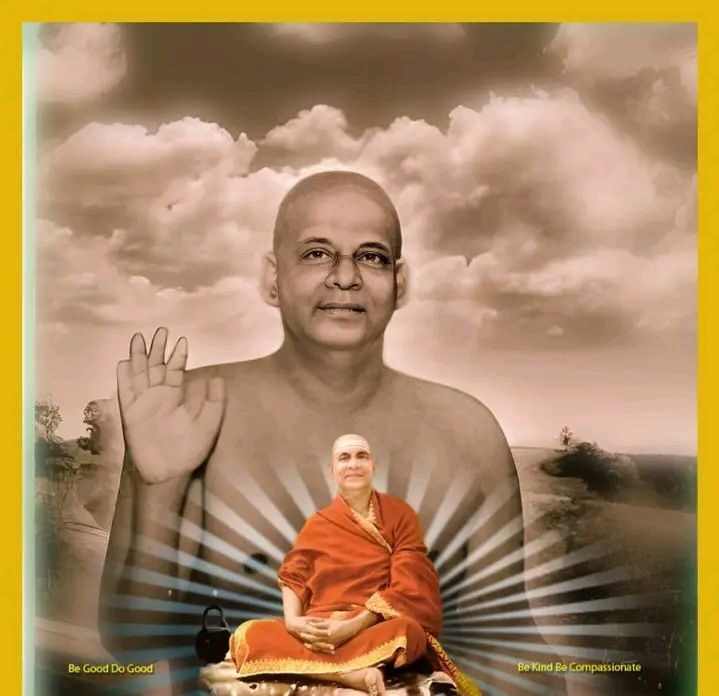
Swami Sivananda blessing pose holding symbol
Karma Yoga, Swami Sivananda

Duties of Man

Duties of Man Man has certain important duties and responsibilities in life. He has to evolve morally and spiritually by performing these duties in the right manner. He has to act and live according to the law of God. He has to find out the rules of conduct and the measure of his responsibilities. He must have a thorough knowledge of the moral code of Manu or Yajnavalkya and must act according to the rules laid down therein. Then only can he be rightly called a man. Man has duties towards parents, children and other family members. He has duties towards society and the country. He has duties of the Varnashrama. He has duties to his own self, and, last but not the least, he has important duties towards God. He must fulfil all these duties of his life. Then only he can find progress in his life. Then only will he enjoy real peace of mind. He must serve his parents who have given him this physical body with great Shraddha and Bhava. In the Taittiriya Upanishad you will find: Matrudevo bhava, pitrudevo bhava. The parents should be worshipped as visible representatives of God on earth. Sri Ashutosh Mukerji of Calcutta, late Vice-Chancellor of the Calcutta University used to worship his mother and drink her Charanamrita daily before going to his office. Modern educated people do not pay any proper regard to their parents. If the father is uneducated and if the son is an England-trained man, he will say that his father is a servant of the house when anybody puts the question: “Who is this old man?” He must train his children in the proper manner. He must give them good education in Sanskrit, English and in technical subjects. He must train them in the path of spirituality from the very childhood. He must be devoted to his wife who is his partner in life, and who occupies the left half of his body (Ardhangini). No religious rite is valid without her presence. He must regard her as a real helper in the path of spirituality. As soon as a son is born she becomes his mother. The Srutis declare: ‘Atma vai jaayate putrah-the soul is born as a son.’ He must give up all ideas of relationship as wife as soon as a son is born. He must give up sexual intercourse. Both should lead a spiritual life. The husband should not regard his wife as a machine for procreation only. There is some higher spiritual purpose. She has to help the husband in his spiritual evolution. She has to attend to his wants. She has to serve him nicely in all possible ways. Man must serve society according to his temperament, taste and capacity. This will help in the purification of his mind. He must serve with Nishkamya Bhava as an honorary member. He should not get any remuneration. He must develop the spirit of patriotism. He must serve the country. Service of the country is service of Mother Kali. It is pure Mother-worship. He must perform the duties of his Varnashrama. A Brahmin should observe serenity, self-restraint, austerity, purity, forgiveness, uprightness, wisdom, knowledge and belief in God. A Kshatriya should manifest prowess, splendour, firmness, dexterity, bravery, generosity, and the nature of a ruler. The Vaishya should engage in agriculture, trade and protection of cattle. Sudras should serve the other three castes. A Brahmachari should study religious books till he reaches the age of twenty-five. If he has taken the vow of lifelong celibacy, if he wants to become a Naishthika Brahmachari, he need not enter the stage of a householder. He should have real lasting dispassion and discrimination. Then only will he be really benefited. He can devote his whole life to spiritual pursuits. If a Brahmachari does not want to take up the course of lifelong celibacy, he can become a householder. He can marry after finishing his education. He can visit his wife occasionally for bringing progeny to keep up the line and not for sensual gratification. He will be styled as a Brahmachari, if he strictly adheres to the above rule. After he has finished the stage of a householder and after fixing up his son in a proper position, he can become a Vanaprastha either alone or with his wife. He should not remain in the house till the end of life. He will be having various anxieties and Moha for children if he remains in the house. If he finds it difficult to leave he can remain in a cottage outside the house. If he finds this also difficult, he can remain upstairs or in a solitary room and can have interview with the visitors and members of the house in the evening between 4 and 5. If a Vanaprastha wants to take Sannyasa, he can do so. Vanaprastha is only a preparatory step to Sannyasa. The glory and freedom of a Sannyasin can hardly be described. A Sannyasin only can cut off all sorts of attachments. Otherwise some sort of subtle connection will always remain. When once one takes Sannyasa, he becomes a dead man to the family members. Otherwise they always think of getting something from him. The subtle attachment in the mind still remains in both parties. This is quite sufficient to bring one back to the wheel of birth and death. The very colour of the orange robe gives strength and purity. I do not believe those people who say: ‘We have given colouring to our hearts.’ This is timidity and hypocrisy. There are still Moha, Raga and Vasanas lurking in them. If there is internal change, the external change is bound to come. I do admit that eradication of egoism, Sankalpas and Ashrama-Bheda is absolutely necessary. Why then did Sri Sankara and Sri Ramakrishna take Sannyasa? What is the necessity for this order at all? Sannyasa has got its own advantages. Lord Krishna says in the Gita: ‘The four castes were emanated by

Duties of Man Read Post »

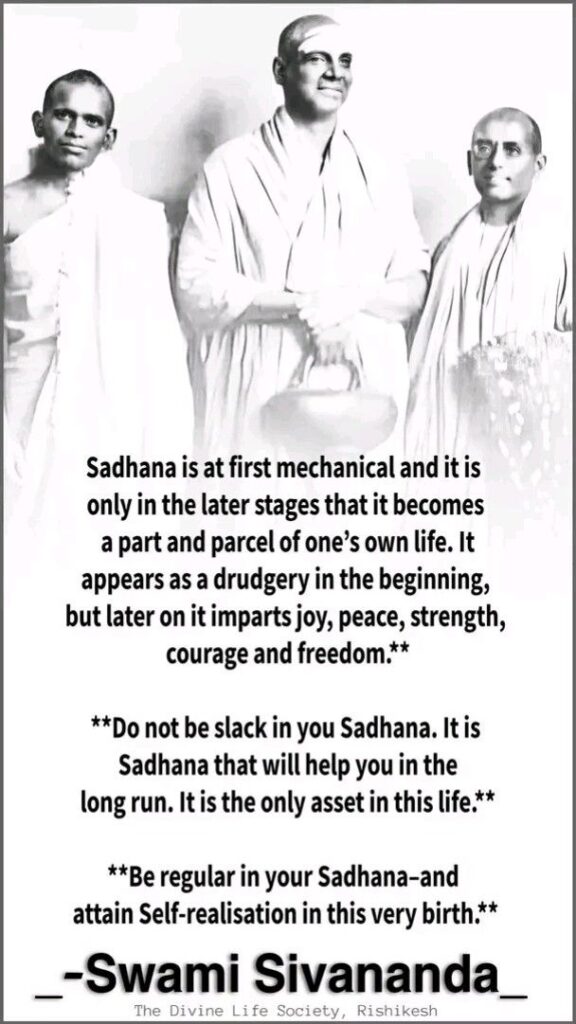
Swami Sivananda sadhana teaching quote image
Karma Yoga, Swami Sivananda

What is Svadharma?

What is Svadharma? There is no proper equivalent in English for the Sanskrit term ‘Dharma’. It is generally rendered as ‘duty’, ‘righteousness’. Any action that is best calculated to bring Sreyas (liberation) and Abhyudaya (exaltation) is Dharma. That which brings well-being to human beings is Dharma. The word Dharma comes from the root ‘Dhri’ which means ‘to support’ or ‘to hold on’. That which upholds is Dharma. By Dharma people are upheld. As it supports and holds together it is called Dharma. That which secures preservation of being is Dharma. ‘Svadharma’ means one’s own duty in accordance with the Varnashrama or caste and order of life which are founded according to the Gunas or qualities born of the nature of man. God, religion and Dharma are inseparable. Man evolves through the practice of Dharma according to his caste and order of life, and eventually attains Self-realisation, the ultimate goal of life, which brings infinite bliss, supreme peace, unbroken joy, highest knowledge, eternal satisfaction and immortality. The mark of Dharma is Achara (good conduct). Achara is the mark of the good. Higher than all the teachings, is Achara. From Achara, Dharma is born; and Dharma enhances life. By Achara man attains fame, power and strength here and hereafter. Achara is the highest Dharma. Achara is the root of all Tapas. Dharma tops the list of the four Purusharthas, viz., Dharma, Artha, Kama and Moksha. Dharma gives wealth, satisfaction of desires and liberation in the end. “The Brahmana was Brahma’s mouth; the Rajanya was made His two arms; His two thighs the Vaishya; the Sudra was born of His two feet.” The four castes are Brahmana, Kshatriya, Vaishya and Sudra. Self-restraint, serenity, patience, austerity, purity, belief in God, forgiveness, self-sacrifice, uprighteousness, truthfulness, wisdom, teaching and studying the Vedas, doing sacrifices, and also guiding others in offering sacrifices and gifts and receiving gifts are the duties of a Brahmana born of his own nature. Courage, generosity, vigour, prowess, splendour, firmness, dexterity, not fleeing from battle, the nature of a ruler, protection of the people, gifts, doing sacrifices and study of the Vedas are the duties of a Kshatriya born of his own nature. Ploughing, protection of cattle, trade, charity, doing sacrifice, study of the Vedas, engaging in commerce, finance and agriculture are the duties of a Vaishya born of his own nature. To serve ungrudgingly all these castes is the duty of a Sudra born of his own nature. Much of the evil has grown through men of one caste grasping at the work of the other castes, and thinking more of the rights his caste gives him than of the duties it imposes. The Brahmana and Kshatriya have claimed their privileges ardently and have shrunk from the heavy burden belonging to their castes. Naturally their attitude has provoked opposition, and antagonism has replaced mutual goodwill and service. Consequently caste has become a social bitterness, instead of being a framework maintaining all in happy order. If people of different castes practise their Dharmas, caste confusion will pass away and abundant peace and joy will prevail. The Ashramas or stages in life are four, viz., Brahmacharya, the stage of studentship, Garhasthya, the stage of householdership, Vanaprastha, the stage of forest-dwelling or seclusion, and Sannyasa, the order of total renunciation. Each order of life has its own duties. In none of these stages must a man grasp at the special duties of the other three. At the present moment it is difficult to maintain or observe the exact details of the ancient rules, as the conditions have changed very much. But, if we can have a clear idea of the fundamental duties of each, we shall still be able to shape the life to a regulated course of development and steady growth. The life of the student starts with the Upanayana ceremony, his second birth. You will find in the Manu Smriti: “Let the student ever engage in the study of the Vedas and in doing service to his preceptor. Let the student refrain from wine, meat, perfumes, tasty dishes, garlands, company of women, and from injury to sentient creatures. Let him give up lust, anger, greed, dancing, singing and playing on musical instruments, dice play, gossip, slander and untruth.” “Let the student always sleep alone and let him not waste his seed; he who from lust destroyeth his seed, destroyeth his vow. He should develop the spirit of service, humility and obedience. He should mould his character properly. He should be chaste in thought, word and deed.” Then comes the stage of the householder. The student, after finishing his duties enters the order of Garhasthya, when he is ready to take up the duties and responsibilities of the householder’s life. Of all Ashramas, that of the householder is the highest, as it verily supports the other three. As all the streams and rivers flow to rest in the ocean, so all the Ashramas flow to rest in the householder. This is the field for developing various virtues such as mercy, love, generosity, patience, tolerance, purity, prudence and right judgment. It is highly lamentable to note that the grandeur, solemnity and dignity of this stage of life is lost now owing to the confusion of its duties with those of the student, caused by the modern evil of child-marriage. There is no ideal in the life of the householder. That is the reason why the number of Sannyasins is now increasing. The central teaching of the Gita and Yoga Vasishtha is that Self-realisation should be attained in and through the world. Let me remind you of one important teaching of the Gita which will give you peace of mind and bliss: ‘Better one’s own duty, though destitute of merit, than the duty of another well discharged. Better death in the discharge of one’s duty; the duty of another is full of danger.’ There is another important point. You will clearly understand that the right performance of the duties of any station in life without

What is Svadharma? Read Post »

swami sivananda Framed portrait of garlanded spiritual guru
Raja Yoga, Swami Sivananda

Yama

Yama by Swami Sivananda 1. Eight Accessories of Yoga Restraint, religious observances, posture, control of breath, abstraction of Indriyas, concentration, meditation, superconscious state or trance, are the eight accessories of Yoga. NOTES The eight accessories of Yoga described above are like the eight steps in the path of Raja Yoga. They all should be practised in the order given. You will not be benefitted if you take to the practice of Asanas, Pranayama without practising Yama, Niyama. Yama and Niyama are the very foundation of Yoga. The practice of Yama gives tremendous ethical power. If you want to take up M.Sc. course, you will have to start from the infant standard, pass through the different stages of first standard, second standard and so on and then enter the college course. Even so, you will have to go stage by stage, step by step, in the Yogic courses also. 2. Benefits of the Accessories On the destruction of the impurities through the practice of the (eight) accessories of Yoga, arises the light of wisdom, leading to the discriminative knowledge. NOTES Yama is the practice of Ahimsa, Satyam, Asteya, Brahmacharya and Aparigraha. Niyama is the observance of the five canons, viz., Saucha, Santosha, Tapas, Svadhyaya and Ishvarapranidhana. By practising Yama and Niyama, the Yogic student purifies his mind. By practising Asana, he gets steadiness and firmness of body. By practising Pranayama, he removes the tossing of mind and destroys Rajas and Tamas. By practising Pratyahara, he gets mental strength, peace of mind and inner life. By the practice of Dharana, he gets Ekagrata (one-pointed) state of mind. By practising Dhyana, he fills the mind with divine thoughts. By practising Samadhi, he destroys the seeds of births and deaths, and gets immortality and Kaivalya, the final beatitude, the highest end of human life. By the practice of the eight Angas of Yoga, dirt of the mind – Explained in the chapter on ‘MIND’, (five Klesas) is removed and discrimination of Prakriti-Purusha comes by itself. Then the Yogi attains Kaivalya. 3. What Is Yama (Among these accessories) abstinence from injury and killing, truthfulness, abstinence from theft or falsehood, continence, abstinence from avariciousness or greed, are the restraints. NOTES Yama is the very foundation of Yoga, without which the superstructure of Yoga cannot be built. Practice of Yama is really the practice of Sadachara (right conduct). The noble eightfold path of Buddhists deals with the practice of Yama only. In every religion you will find this to be the foremost. Manu says: Ahimsa satyasteyam sauchamindriya nigraha – harmlessness, truth speaking, refraining from theft, control of senses; this is the essence of Dharma. Great emphasis is given in every chapter of the Gita on the practice of Yama. Patanjali Maharshi mentions the above five chief items for practice in Yama. According to Sandilya Rishi, the practice of Saucha, Daya, Arjava, Dhriti and Mitahara is included in Yama. Saucha is external and internal purity. Washing the hands, taking baths, etc., are for external purity. Filling the mind with pure divine thoughts is internal purity. Daya is mercy or compassion, in all places, for all creatures. Arjava is the keeping up of balance of mind while doing actions. Dhriti is fortitude or mental power of endurance. Mitahara is moderation in eating. 4. Universal Vows (These restraints) are the Great Vows, universal, not limited by class, place, time and circumstances. NOTES The restraints are Ahimsa, Satya, Asteya, Brahmacharya and Aparigraha. This Sutra refers to all the above restraints. Some may have certain conditions and exemptions in observing certain restraints. One may have a principle not to kill anything on new moon day. When such conditions and exemptions are laid down, then the practice of restraints are not considered to be perfect. They should not be limited by class, place, time or circumstances. The restraints should be practised at all times, in all places, by one and all, in all circumstances. They should be practised in thought, word and deed. 5. Ahimsa Abstinence from injuring and killing, being established, all hostilities are given up in the presence of the practitioner. NOTES Ahimsa is not causing of pain to any creature in any way, at any time, in thought, word and deed. The other restraints that follow have their origin in this. These are meant to make this restraint perfect. You will not be benefitted much by taking to the practice of the other four restraints without the practice of Ahimsa. Giving up of animal food also comes under Ahimsa, because it is not obtainable without Himsa of some kind. If you hurt another man or cause another to commit injury to others or even approve of another doing so, it is equally sinful. Action and reaction are equal and opposite. If you injure another, it is bound to react on you whether in this moment or at a future date. You will have to suffer anyhow in return. If you remember this law, you will not commit any injury. According to Tilak’s school of thought, if by the murder of a dacoit thousands of lives could be saved, it is not considered as Himsa. Ahimsa and Himsa are relative terms. Some say that one can defend himself with instruments and use a little violence when he is in danger and this also is not considered to be Himsa. A Sannyasi should not defend himself and use violence even when his life is in jeopardy. English people generally shoot their horses and dogs when they are in acute agony, and when there is no way of relieving their sufferings. They wish that the soul should be immediately freed from the physical body. Motive is the chief factor. It underlies everything. The term ‘hostilities are given up’ means, that all beings, men, animals, birds and poisonous creatures would approach the practitioner without fear and would do no harm to him. Their hostile nature disappears in them in his presence. The rat and the cat, the snake and the mongoose and others

Yama Read Post »

Swami Sivananda Artistic portrait image
Raja Yoga, Swami Sivananda

Object of Raja Yoga

Object of Raja Yoga by Swami Sivananda Then, the seer rests in his own nature. Notes Although the mind is one, it passes into many conditions or states, as it is made up of three qualities, Gunas, viz., Sattva, Rajas and Tamas. All these qualities enter into a variety of combinations. So, the modifications or Vrittis of the mind are also various. Peace of mind (Santa Vritti) is a Sattvic Vritti. Lust is a Rajasic Vritti. Laziness is a Tamasic Vritti. Anger is a Ghora Vritti. Internal fight is ever going on between Gunas, Sattva, Rajas and Tamas; between good Vrittis and evil Vrittis. This is the internal warfare between Suras and Asuras. When the lake is in a boisterous state on account of the turbulent waves, you can hardly see the bottom of the lake. When the waves subside, you can clearly see the bottom of the lake. Even so when the mind is in an agitated condition on account of various Vrittis, you can hardly rest in your own nature. You cannot see or realise your own Self. But when the Vrittis subside, you can rest in your own state. You do not identify yourself with the Vrittis now. Then means when all the Vrittis subside or done through Chitta Vritti Nirodha. By suppressing the transformations of the mind, the Sadhaka acquires great Siddhis. He becomes an adept or a great Siddha. Yoga is a complete suppression of the tendency of the mind to transform itself into objects, thoughts, etc. It demands continuous and steady practice. Then comes unlimited strength, peace, bliss and knowledge. This leads to Asamprajnata Samadhi and Kaivalya, the highest stage of Raja Yoga.

Object of Raja Yoga Read Post »

Swami Sivananda blessing pose spiritual collage image
Karma Yoga, Swami Sivananda

Law of Resistance

Law of Resistance If you eat a mango, if you do any kind of work, it produces an impression in the subconscious mind or Chitta. This impression is called Samskara or tendency. Whatever you see, hear, feel, smell or taste causes Samskaras. The acts of breathing, thinking, feeling, and willing produce impressions. These impressions are indestructible. They can only be fried in toto by Asamprajnata Samadhi. Man is a bundle of Samskaras. Mind is a bundle of impressions. It is these Samskaras that bring a man again and again to this physical plane. They are the cause for rebirths. These Samskaras assume the form of very big waves through memory, internal or external stimulus. The sum-total of these impressions constitutes the character of a man. If you do virtuous actions, the Chitta will contain good impressions and you will possess a good character. If you do evil deeds there will be evil impressions in the subconscious mind, and you will have a bad character. Good Samskaras force a man to do good actions and vice versa. If you have a great asset of good Samskaras, you will not do any evil action at all. You will have an established good character. Mara or Satan can have no influence upon you. Actions produce Samskaras or impressions or potencies. The impressions coalesce together through repetition and form habits. Tendencies develop into habits and character. The sum-total of the tendencies of a man is his character. Karmas manufacture character and character manufactures will. If the character is pure and strong, the will also will be pure and strong, and vice versa. It is said that habit is second nature. I always say that habit is all nature. Control of habits is control of nature. Old, evil habits can be changed into healthy and desirable habits through the force of the pure irresistible will. A weak, impotent man is a slave of habits. He always imagines that habits are innate and that they cannot be changed in one’s lifetime. This is a mistake. If you want to change the old, morbid evil habits and establish new, healthy and good habits, you will have to struggle hard. The old habits will try to return, resist, persist and recur. Internal fight will go on between the old and new Samskaras, between old and new habits. You will have to be very vigilant, careful and circumspect. You will have to be on the alert like a soldier who is on patrol duty at a magazine in a military cantonment. The old habit asserts itself and says: “O friend! You gave me a seat in your body and mind for twenty long years. You enjoyed several things through me. Why do you try to drive me off now? You are very cruel. I have every right and privilege from Nature, my kind mother, to remain here. Maya works through me only. The entire world runs through habits only. Man clings to tea, coffee, alcohol, tobacco, smoking, cinema, novels, gambling and playing cards through the force of habits. The whole world will dwindle into airy nothing but for me. The Lila of the Lord will stop had it not been for my presence in your system. I will not leave my seat in your body.” This is the law of resistance. If the man who is attempting to eradicate an evil habit is careless, the old habit will recur again. In the beginning it may recur less frequently and last for a long time. Or it may recur less frequently and last for a short time. But you will gain strength and gradually it will perish altogether and the new good habits will gain supremacy eventually. If a new healthy habit is introduced even once and if you make even a single attempt in planting a new good habit, the good habit will grow gradually. It will also assert itself to gain a seat in the body and mind. It will work itself till it gets perfect success and defeats the old, morbid habit. This is also another law of Nature. There is always a double life in Nature, the Asuric and Daivic. The fight between the Asuras and the Devas is always going on in the body and the mind. If you struggle very hard, the new good habits will establish themselves quickly. You will have rapid progress in the spiritual path. The pure, strong, irresistible will is bound to succeed ultimately. It can do anything. Its powers are ineffable and wonderful.

Law of Resistance Read Post »

swami sivananda Black-and-white photo of monk with garland holding flowers image
Jnana Yoga, Swami Sivananda

What is yoga?

What is yoga? by Swami Sivananda Yoga is the suppression of the modifications of the mind-stuff. NOTES The term ‘Yoga’ comes from the root ‘Yuj’, which means ‘to join.’ In its spiritual sense, it is the process by which the identity of the Jivatma and Paramatma is realised by the Yogin. The Jivatma is united with Paramatma by the practice of Yoga. Yoga means union with the Lord. This is the goal of human life. It is the be-all and end-all of human existence. It is the summum bonum. Yoga also means ‘addition.’ When Jivatma is added to Paramatma, the restless Jivatma finds eternal rest and supreme satisfaction. The science that teaches us the way of acquiring this occult knowledge is called Yoga Sastra. Yoga is the Adhyatmic science that teaches the method of joining the human spirit with God. Yoga is the Divine science which disentangles the Jiva from the phenomenal world of sense-objects and links him with the Absolute, whose inherent attributes are Ananta Ananda, Parama Santi, infinite knowledge, unbroken joy and eternal life. Yoga in a generic sense refers to Karma Yoga, Bhakti Yoga, Raja Yoga, Jnana Yoga, Hatha Yoga, Mantra Yoga, Laya Yoga or Kundalini Yoga. In a restricted sense it means the Ashtanga Yoga or Raja Yoga of Patanjali Maharshi. The word Yoga is also applicable in a secondary sense to all those factors that go to constitute Yoga that are conducive to the final achievement or fulfilment of Yoga, and as such indirectly lead to final freedom or perfection. A Yogi is one who has reached the final Asamprajnata Samadhi. One who is attempting to get perfection in Yoga is also called a Yogi. How this Yoga is attained, is given in the subsequent pages. Now we shall see the next word ‘Chitta Vritti.’ ‘Chitta’ means ‘mind-stuff’ or subconscious mind. It takes forms or shapes. These forms constitute Vrittis. It gets transformed or modified (Parinama). These transformations or modifications are the thought-waves, whirlpools or Vrittis. If the Chitta thinks of a mango, the Vritti of a mango is formed in the lake of the Chitta at once, then and there. This will subside and another Vritti will be formed when it thinks of milk. Countless such Vrittis are rising and subsiding in the ocean of the Chitta. These Vrittis are the cause of the restlessness of the mind. Here, ‘Chitta’ corresponds to Antahkarana of Vedanta. It is a separate faculty or category in Vedanta. In Vedanta, when the mind does the function of Smriti, Anusandhana and Dharana (memory, enquiry and concentration), it assumes the name Chitta. The functions of Chitta are Smriti or Smarana, Anusandhana and Dharana. When you repeat the Mantra during Japa, it is the Chitta that does the Smarana. It does a lot of work. Much of your subconsciousness consists of submerged experiences, memories thrown into the background but easily recoverable. Sometimes, you go to sleep at 10 p.m. with the thought: I must get up at 2 a.m. to catch the train. This message is taken up by the subconscious mind and it is this subconscious mind that wakes you up unfailingly at the exact hour. Subconscious mind is your constant companion and sincere friend. You repeatedly fail at night to get a solution in Arithmetic or Geometry. In the morning when you wake up, you get a clear answer. This comes like a flash from the subconscious mind. Even in sleep it works without any rest. It arranges, classifies, compares, sorts all facts and works out a proper satisfactory solution. With the help of the subconscious mind you can change your vicious nature by cultivating healthy, virtuous qualities that are opposed to the undesirable ones. If you want to overcome fear, mentally deny that you have fear and concentrate your attention upon the ideal of courage. When courage is developed, fear vanishes away by itself. The positive always overpowers the negative. This is an infallible law of nature. This is Pratipaksha Bhavana of Raja Yogis. You can establish new habits, new ideals, new ideas, new tastes and new character in the subconscious mind by changing the old ones. The Pratipaksha Bhavana method is dealt with in the subsequent Sutras. The term ‘memory’ is used in two senses. We say: Mr. John has got a good memory. Here, it means, that Mr. John’s capacity of the mind to store up its past experiences is very good. Sometimes we say: I have no memory of that incident. Here you cannot bring up to the surface of the conscious mind the incident in its original form that took place some years ago: It is an act of remembering. If the experience is fresh you can have a complete recall of your past experience through memory. You do not get any new knowledge through memory. It is only a reproduction. Suppose, you have received a nice fan from your amiable friend. When you use the fan, it sometimes reminds you of your friend. You think of him for a short time. This fan serves as Udbhodaka or Smriti-hetu (cause for memory). If your brother is a tall man, the sight of a similar man in another place will bring to your mind the memory of your brother. This is memory due to the similarity of objects (Sadrisyata). Suppose, you have seen a dwarf at Madras. When you see a very tall man or Patagonian, this will remind you of the dwarf whom you saw at Madras. The sight of a big palace will remind you of a peasant’s hut or a Sannyasin’s grass-hut on the banks of the Ganga. This memory is due to dissimilarity in objects (Vipareetata). The following are the four good characteristics of good memory: (1) If you read a passage once and if you can repeat the same nicely, it is a sign to indicate that you have a good memory. This is termed Sugamata. (2) If you can reproduce the same thing without increase or decrease, it

What is yoga? Read Post »

swami sivananda Seated spiritual guru with garland and disciple standing beside image
Raja Yoga, Swami Sivananda

Introduction to Raja Yoga

Introduction to Raja Yoga by Swami Sivananda What is Raja Yoga Raja Yoga is the king of all Yogas. It concerns directly with the mind. In this Yoga there is no struggling with Prana or physical body. There are no Hatha Yogic Kriyas. The Yogi sits at ease, watches his mind and silences the bubbling thoughts. He stills the mind and restrains the thought-waves and enters into the thoughtless state or Asamprajnata Samadhi. Hence the name Raja Yoga. Though Raja Yoga is a dualistic philosophy and treats of Prakriti and Purusha, it helps the student in Advaitic Realisation of oneness eventually. Though there is the mention of Purusha, ultimately the Purusha becomes identical with the Highest Self or Brahman of the Upanishads. Raja Yoga pushes the student to the highest rung of the spiritual ladder, Advaitic Realisation of Brahman. The Author Patanjali Maharshi is the exponent of Yoga Philosophy. Now Patanjali is regarded as the last of the Avataras. You will find in Yajnavalkya Smriti that Hiranyagarbha was the original teacher of Yoga. Patanjali Maharshi is only a compiler or explainer of the Yogic precepts, doctrines and tenets taught by Hiranyagarbha. Yoga Sutras Patanjali Yoga Philosophy is written in Sutras. A ‘Sutra’ is a terse verse. It is an aphoristic saying. It is pregnant with deep, hidden significance. Rishis of yore have expressed the philosophical ideas and their realisation in the form of Sutras only. It is very difficult to understand the meaning of the Sutras without the help of a commentary, a gloss or a teacher who is well-versed in Yoga. A Yogi with full realisation can explain the Sutras beautifully. Literally, Sutra means a thread. Just as various kinds of flowers with different colours are nicely arranged in a string to make a garland, just as rows of pearls are beautifully arranged in a string to form a necklace, so also Yogic ideas are well arranged in Sutras. They are arranged into Chapters.

Introduction to Raja Yoga Read Post »

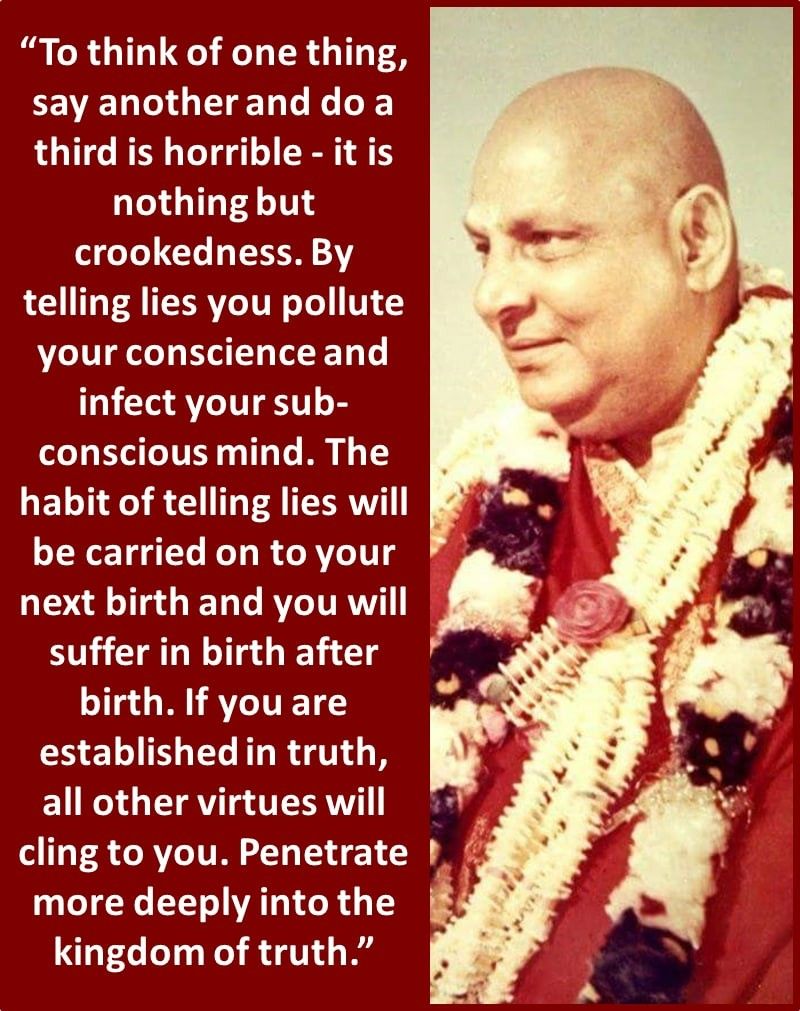
Swami Sivananda speak the truth quote image
Karma Yoga, Swami Sivananda

Law of Retribution

Law of Retribution Every wrong action or crime brings its own punishment, in accordance with the law of retribution. The law of causation, the law of action and reaction, the law of compensation and the law of retribution-all these operate together. He who robs another man robs himself. He who hurts another man hurts himself first. He who cheats another cheats himself first. Every wrong action causes punishment first in the inner nature or soul and externally in circumstances in the form of pain, misery, loss, failure, misfortune, disease, etc. Man is ignorant. He is swayed by impulses, wrath, passion, attachment, pride and repulsion. He does various sorts of wicked actions. His intellect becomes perverted. He loses his memory. His understanding gets clouded by selfishness and greed. He does not know what he is exactly doing. Later on he repents. Discipline of the Indriyas is necessary. He should remember the law of causation, the law of action and reaction, and the law of retribution at every step, at every moment of his daily life. He should control his emotions and impulses through the practice of Pranayama and meditation. Then only will he not do any wrong action. Remember that God is neither partial nor unjust. You suffer on account of your own wicked actions. Sow the seeds which will bring pleasant fruits and which will make you happy herein and hereafter. Do not sow the seeds which will bring unpleasant fruits and which will make you miserable and unhappy in this life or hereafter. Be cautious in doing your daily duties. Watch every thought, word and action. Go to the root and purify the thoughts first. Prayer, Japa, meditation, study of philosophical books, pure food, Vichara and Satsanga will purify your mind and eradicate ignoble and wicked thoughts. Observe the vow of silence, you will then be able to control your speech. Practise Yama and Niyama, Ahimsa, Satyam, Asteyam, Brahmacharya and Aparigraha. Develop Sattvic qualities. Slowly eradicate negative qualities. By these practices you will not be able to do any wrong action. The force of Sattvic habits will goad you on to do virtuous actions only. Orthodox Christians and theologians believe that God settles and fixes the destiny of a man before his birth. This is not logical and tenable. The hypothesis falls to the ground on account of its unsound nature. Man becomes like a piece of straw that is tossed about hither and thither in the wind. He has no independence and freedom. This makes God partial, unjust and whimsical. The moral responsibility and liberty of a man are destroyed. The man becomes like a prisoner whose hands and legs are tied with chains. Why should God make one happy and another unhappy? Is He so whimsical and eccentric? Why should one get His Grace before he is born? Is he so biased? If God is all-merciful why can He not make all equally noble, virtuous, happy, good, moral and spiritual? Why is one born blind? Why should a sinner be responsible for his actions? Is he pre-ordained to sin? Why should he suffer owing to the whim of such a Creator? Questions like these remain a puzzle if you accept the theory of ‘pre-ordination and Grace’. The doctrine of Karma alone will give satisfaction. It is sound. It appeals to reason. It throws a flood of dear light. Everyone reaps the fruits of his own actions. Man can do and undo his destiny by his own thoughts and character. He is a free agent. He may be a bad man in this birth, but he can change his thoughts, habits, tendencies and character and can become a good man or a saint in the next birth. He has free will. He can choose between two alternatives at every step. The theory of ‘preordination and Grace’ cannot be accepted. It falls to the ground as it is unsound and untenable. The doctrine of Karma only can explain the mysterious problem of good and evil in this world. The doctrine of Karma only can bring solace, contentment and strength to the afflicted and the desperate. It solves our difficulties and problems of life. It gives encouragement to the hopeless and the forlorn. It pushes a man to right thinking, right speech and right action. It brings a brilliant future for that man who lives according to this universal law. If all people understand this law correctly and discharge their daily duties carefully they would rise to sublime heights in the ladder of spirituality. They will be moral and virtuous and have a happy, peaceful and contented life. They can bear the burden of Samsara with patience, endurance and strength of mind. There will not be any room for complaint when they see inequalities in birth, fortune, intelligence and capacities. There will be heaven on earth. All will rejoice even in suffering. Greed, jealousy, hatred, anger and passion will vanish. Virtue will reign supreme everywhere. We will have a glorious Satyayuga now with peace and plenty everywhere. Blessed is the man who understands and lives in the law, for he will soon attain God-consciousness and become one with the Law-giver. Then the law will no longer operate on him.

Law of Retribution Read Post »

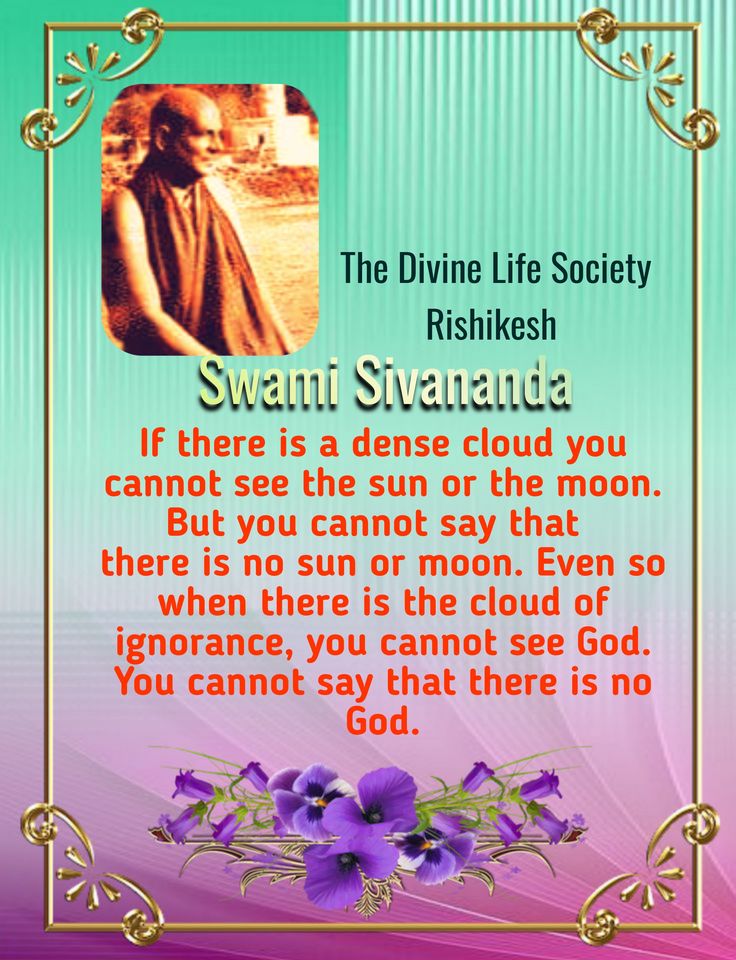
Swami Sivananda ignorance cloud quote poster picture
Karma Yoga, Swami Sivananda

Law of Action and Reaction

Law of Action and Reaction The grand law of causation includes the law of action and reaction, the law of compensation and the law of retribution. All these laws come under one general, all-embracing heading Doctrine of Karma. If there is an action, there must be a reaction. The reaction will be of equal force and of a similar nature. The recent Great War has brought out a strong reaction. There is depression in trade. There is no peace in the country. People are not happy. The money market is tight. Many lives have been lost. The death of a just king brings immediate, strong reaction. Every thought, desire, imagination and sentiment causes reaction. Virtue brings its own reward; vice brings its own punishment. This is the working of the law of reaction. If I radiate joy to others, if I relieve the sufferings of others, I will doubtless get joy. This is the law of reaction. If I hurt another man, if I cause misery and pain to another, I will in turn get misery and pain. God neither punishes the wicked nor rewards the virtuous. It is their own Karmas that bring reward and punishment. It is the law of action and reaction that brings the fruits. No one is to be blamed. The law operates everywhere with unceasing precision and scientific accuracy. The law of action and reaction operates both in the physical and mental planes. A tennis ball strikes the ground and rises up with equal force. This is the law of action and reaction. If I strike against a pillow, the pillow is bound to react upon me with equal force. This is the law of action and reaction. If I speak sweet loving words to anyone, the man returns the feeling of love and speaks sweet words to me also. This is the law of action and reaction. Why does a man behave in a rude manner? Why is another man courteous, civil and polite? Why does one man possess good moral character? Why does another possess evil character? Why does one man possess good health, strength and vitality? Why is another man sickly and miserable? Why is one joyful and cheerful while another is depressed and cheerless? These things can be easily explained by the law of action and reaction. Nobody is to be blamed. It is our own Karma that brings joy, misery, pleasure, pain, gain, loss, success and defeat. Every one of us is governed by the law of action and reaction. The character of an individual is subject to the law of action and reaction. Each character or personality is the total result or collective totality of previous mental action. Thoughts change, habits change, character also changes. Our present character is the outcome of our past, and our future will be shaped by our present acts. Man creates his own character and destiny. He can do and undo his thoughts, habits, character and destiny. The law of action and reaction operates everywhere. He who thoroughly understands this grand law of action and reaction will never do any wrong action, because he knows that it will react upon him and bring misery and pain. He will always be doing virtuous actions as they will bring peace, joy, strength and unalloyed felicity. Dear friends! Understand this law. Never violate it. Act according to the law and rest in peace. May that silent Law-giver who is hiding Himself behind these names and forms guide you in all your thoughts, speech, and actions! Glory to the law and the Law-giver!

Law of Action and Reaction Read Post »