













Hari Om

Menu

February 13, 2026

swami sivananda Framed portrait of monk with garland image
Raja Yoga, Swami Sivananda

What is the Mind?

What is the Mind? by Swami Sivananda “He who knows the receptacle (Ayatana) verily becomes the receptacle of his people. Mind is verily the receptacle (of all our knowledge).” (Chhandogya Upanishad, V-i-5) That which separates you from God is mind. The wall that stands between you and God is mind. Pull the wall down through Om-Chintana or devotion and you will come face to face with God. The Mind-a Mystery The vast majority of men know not the existence of the mind and its operations. Even the so-called educated persons know very little of the mind subjectively or of its nature and operations. They have only heard of a mind. Western psychologists know something. Western doctors know only a fragment of mind. The afferent nerves bring the sensations from the periphery or extremities of the spinal cord. The sensations then pass to the medulla oblongata at the back of the head, where the fibres decussate. From there, they pass on to the superior frontal gyrus or superior frontal convolution of the brain in the forehead, the supposed seat of the intellect or mind. The mind feels the sensations and sends motor impulses through the afferent nerves to the extremities-hands, legs, etc. It is a brain-function only for them. Mind, according to them, is only an excretion of the brain, like bile from liver. The doctors are still groping in utter darkness. Their minds need drastic flushing for the entry of Hindu philosophical ideas. It is only the Yogins and those who practise meditation and introspection that know the existence of the mind, its nature, ways and subtle workings. They know also the various methods of subduing the mind. Mind is one of the Ashta-Prakritis. “Earth, water, fire, air, ether, mind, reason and egoism-these constitute the eightfold division of My Nature” (Gita, VII-4). Mind is nothing but Atma-Sakti. It is brain that wants rest (sleep), but not the mind. A Yogi who has controlled the mind never sleeps. He gets pure rest from meditation itself. How The Mind Originated Mind is Atma-Sakti. It is through mind that Brahman manifests Himself as the differentiated universe with heterogeneous objects. Brahma thought, “There, indeed, are the worlds; I shall create the protectors of the worlds.” He gathered the Purusha (Hiranyagarbha) from out of the waters only and fashioned him. He heated him by the heat of meditation. When he was thus heated, his heart burst out. From the heart, the mind came; from the mind the moon, the presiding deity of the mind. (Heart is the seat of the mind; so, the mind came out when the heart burst out. In Samadhi, the mind goes to its original seat, i.e., heart. In sleep also, it rests in the heart with a veil of ignorance between it and Brahman) (Aitareya Upanishad, 1-3-4). Cosmic Mind And Individual Mind Hiranyagarbha, otherwise known as Karya Brahman and Sambhuti, is cosmic mind. He is the sum total (Samashti) of all the minds. The individual mind is connected with the cosmic mind. Cosmic mind, Hiranyagarbha, superconscious mind, infinite mind, universal mind are synonymous terms. Different authors have used different terms. Do not be puzzled. Do not be confused. It is Sabda-bheda only. Hiranyagarbha is cosmic Prana also. He is the Sutratman (thread-like Self). He represents the electric, cosmic, power-house. The different Jivas represent the different, small bulbs. Electricity from the power-house flows through the insulated copper wires into the bulbs. Similarly, the power from Hiranyagarbha flows into the Jivas. The mind, being very subtle, is in close apposition or contact with other minds, though the human skull intervenes between them. As mind evolves, you come into conscious relation with the mental currents, with the minds of others- near and distant, living and dead. The individual mind of A, although separated from the mind-substance used by other individuals, B, C, D, E, X, Y, etc., by a thin wall of very finest kind of matter, is really in touch with the other apparently separated minds and with the universal mind of which it forms a part. If A is a friend of B, A’s mind is connected with B’s mind. The minds of friends, relatives, brothers of A are attached to A’s mind. Several minds are similarly linked to B’s mind also. The minds of those who are attached to A’s mind are, therefore, connected, in turn, with the minds of those who are hanging on B’s mind. In this manner, one mind is in touch with all minds in the whole world. This is the Vibhu theory of mind of Raja Yoga. Mind In Sankhya Philosophy In Sankhya philosophy, Mahat is the term used to denote “cosmic mind” or “universal mind.” It is the first principle that is derived from Avyakta. It is the first principle that is manifested out of the unmanifested Avyakta. The wheel of the bullock-cart rests on the spokes. The spokes rest on the nave. Even so, the mind rests on Prakriti and Prakriti rests on Brahman. From Mahat comes Ahankara. From Sattvic Ahankara comes mind; from Rajasic Ahankara comes Prana; from Tamasic Ahankara, Tanmatras; from Tanmatras, gross elements; from gross elements, the gross universe. Mind is no other than Ahankara, the idea of ‘I’. It is, indeed, difficult to eschew this idea of ‘I’. Mind always attaches itself to something objective (Sthula). It cannot stand by itself. It is only this mind that asserts itself as ‘I’ in this body. The idea of ‘I’ is the seed of the tree of mind. The sprout which first springs up from this seed of Ahankara is Buddhi. From this sprout, the ramifying branches called Sankalpas have their origin. Linga Sarira And Antavaha Sarira Mind is the most important Tattva of Linga Sarira. Linga Sarira is the astral body or Sukshma Sarira that is linked to the physical body through physical Prana. It separates itself at death from the physical body and travels to Svarga or heaven. It is this body that does Avagamana (coming and going).

What is the Mind? Read Post »

Swami Sivananda teaching disciples by river image
Raja Yoga, Swami Sivananda

Mind-Conquest by Pranayama

Mind-Conquest by Pranayama by Swami Sivananda To bring about control of mind, two things are essential, viz., Prana-nirodha (control of Prana) and Sanga-tyaga (renunciation of Sanga or association). By the latter is meant dissociation, not with the world, but only with the longing after or the attraction towards the objects of the world. Pranayama or control of breath checks the velocity of the mind and reduces the quantity of thinking. It removes the dross (impurities) in the form of Rajas and Tamas from the mind. For control of the mind, Kumbhaka (retention of breath) is indispensable. You will have to practise Puraka, Kumbhaka and Rechacka (inhalation, retention and exhalation of breath) regularly and rhythmically. Then the mind will become Ekagra. The period of Kumbhaka will increase by systematic practice, with regulated died and proper dietetic discipline (light, nutritious Sattvic food). This is the Hatha-Yogic method. The practice of Kumbhaka must be done under the guidance of a Guru who is a developed Yogi. Prana and mind stand to one another in the relationship of the supporter and the supported. Both these are only like the flower and its odour or a sesamum seed and the oil in it. If either of them is slain, then the other also will cease to exist. If the mind and Prana cease to exist, then thoughts will not arise at all. The destruction of both will confer Moksha on all. Ekagrata (one-pointedness) and Nirodha (controlled state) are two Avasthas of the mind. Spanda (subtle or Sukshma) and Nirodha are two Avasthas of the Prana. When the mind becomes one-pointed, Spanda Avastha of the Prana comes by itself. If the mind is purified with true Sattva Guna, the Prana will be distributed freely throughout the body. The food will be digested thoroughly.

Mind-Conquest by Pranayama Read Post »

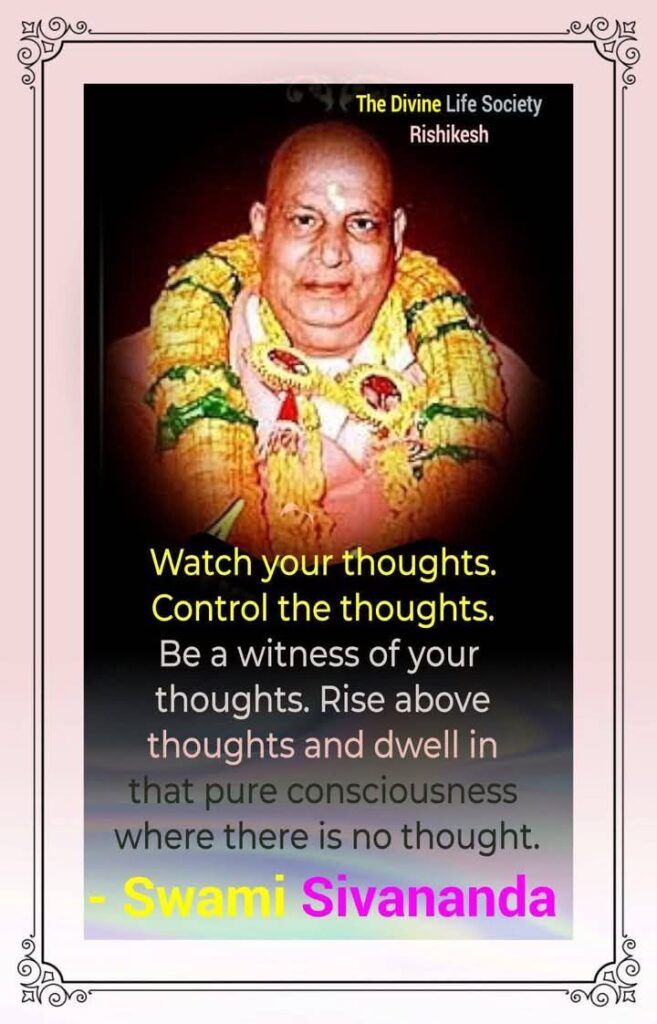
Swami Sivananda watch your thoughts quote poster image
Karma Yoga, Swami Sivananda

Instructions to Aspirants

Instructions to Aspirants Pride, self-sufficiency, arrogance, irritability, self-assertive Rajasic nature, curiosity about the affairs of other people and hypocrisy are all obstacles to the practice of meditation. Subtle forms of these Vrittis lurk in the mind. They operate as oceanic undercurrents. Under pressure of Yoga and meditation various kinds of impurities in the mind come out, just as the dirt of a room that has been shut up for six months, comes out when you carefully sweep. Aspirants should introspect and watch their minds. They should remove their weaknesses one by one by applying suitable effective methods. Pride is inveterate. Its branches ramify in all directions in the regions of the Rajasic mind. Again and again it manifests although the wave subsides temporarily for some time. It asserts when opportunities arise. If the aspirant has the nature of being offended easily over trifling things, he cannot make any progress in meditation. He should cultivate an amiable, loving nature and adaptability. Then this bad quality will disappear. Some aspirants easily get offended if their bad qualities and defects are pointed out. They become indignant and begin to fight with the man who points out the defects. They think that the man is concocting them out of jealousy and hatred. This is bad. Other people can very easily find out our defects. A man who has no life of introspection, whose mind is of outgoing tendencies (Bahirmukha Vritti) cannot find out his own mistakes. The self-conceit acts as a veil and blurs the mental vision. If an aspirant wants to grow he must admit his defects if they are pointed out by others. He must try his level best to eradicate them and must thank the man who points them out. Then only can he grow in spirituality and meditation. It becomes a difficult task to eradicate the self-assertive nature. Every man has built his personality from Anadi Kala (beginningless time). He has also given a long rope to the Rajasic mind to have its own ways. This personality has grown very strong. It becomes difficult to bend this personality and make it pliable and elastic. The man of self-assertive nature wants to dominate over others. He does not want to hear the opinions and arguments of others, even though they are logical and reasonable. He has a pair of jaundiced eyes with Timira also. He will say: “Whatever I say is correct. Whatever I do is correct. The actions and views of others are incorrect. I am infallible.” He will never admit his mistakes. He will try his level best to support his own whimsical views by crooked arguments and reasonings. If arguments fail he will take to vituperation and hand to hand fight also. If people fail to show respect and honour to him he is thrown into a state of fury. He is immensely pleased when someone begins to flatter him. He will tell any number of lies to justify himself. Self-justification goes hand in hand with the self-assertive nature. This is a very dangerous habit. He can never grow in spirituality and meditation so long as he has the self-assertive nature with the habit of self-justification. The self-assertive man should change his mental attitude. He must develop the habit of looking at matters from the viewpoint of others. He must have a new vision of righteousness and truthfulness. An aspirant should treat respect and honour as offal and poison, and censure and insult as ornaments and as nectar. Man finds it difficult to adjust to the ways and habits of others. His mind is filled with prejudice of caste, creed and colour. He is quite intolerant. He thinks that his views, opinions and ways of living are right and that the views of others are incorrect. The faultfinding nature is ingrained in him. He jumps at once to find faults in others. He has morbid eyes. He cannot see the good in others. He cannot appreciate the meritorious actions of others. He talks of his own abilities and actions. That is the reason why he fights with people all around and cannot keep up friendship with others for a long time. Aspirants do not make progress in the path because they too have these defects to a great degree. They should eradicate them by developing tolerance, pure love and other Sattvic qualities. Introspect. Look within. Try to remove all your defects. This is real Sadhana. This is the most difficult Sadhana. You will have to do it at any cost. Mere intellectual development is nothing. It is easy. Sit in the Central Library at Baroda or in the Calcutta Library for six years with a dictionary at your side, you can develop your intellect. But the former needs a great deal of struggle for many years. Many old vicious habits will have to be rent asunder. There are many famous and learned Sannyasins and Pandits who can deliver lectures for a week on one Sloka of the Gita and the Upanishads. They command respect and yet they are disliked by the public because they still have great defects. They have not done any drastic Sadhana to remove their defects. They have developed only their intellect to a high degree. What a great pity! The old Samskaras of vanity, cunningness, crookedness, arrogance, petty-mindedness, fighting nature, pride, self-esteem or thinking too much of one’s self, speaking ill of others, belittling others, may be still lurking in your mind. You cannot shine unless you remove them thoroughly. Success in meditation is not possible without eradication of these undesirable negative qualities of the lower nature. Those who engage themselves frequently in hot debates, vain discussions, wrangling, lingual warfare and intellectual gymnastics cause serious damage to the astral body. Much energy is wasted. Hostility is the result. Time is wasted. The astral body gets actually inflamed by heated discussions. An open sore is formed in the astral body. The blood becomes hot. It bubbles like milk over the fire. Ignorant people have

Instructions to Aspirants Read Post »

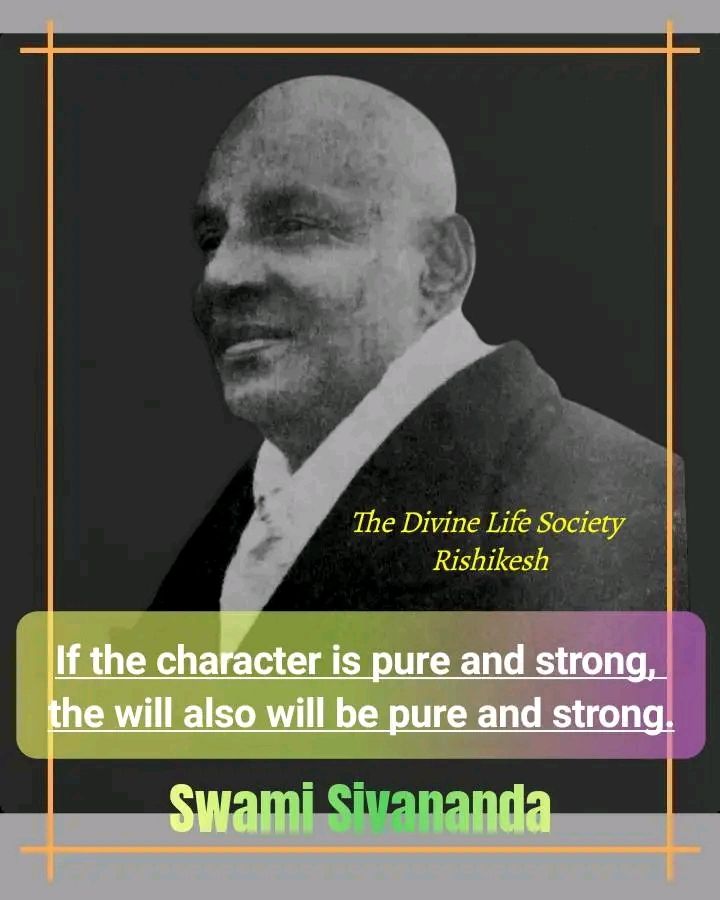
Swami Sivananda character and will quote image
Raja Yoga, Swami Sivananda

Pranayama

Pranayama by Swami Sivananda 1. What is Pranayama That (Asanajaya) being acquired, follows Pranayama or the control of breath – the cessation of the movements of inspiration and expiration. NOTES Pranayama is said to be the union of Prana and Apana. Pranayama, in the language of Yoga, means the process by which we understand the secret of Prana and control it. He, who has grasped this Prana, has grasped the very core of cosmic life and activity. He who has conquered and controlled this very essence, has not only subjected his own body and mind, but every other body, mind and power in this universe. Thus, Pranayama or the control of Prana is that means by which the Yogin tries to realise in this little body the whole of cosmic life, and tries to attain perfection by getting all the powers in the universe. His various exercises and training are for this end. A comprehensive knowledge of Prana and its function is absolutely necessary for Pranayama. Here, I will give you a short description. For detailed information and different exercises, refer to my book Science of Pranayama. 2. What is Prana He who knows Prana knows the Vedas, is the important declaration of the Srutis. You will find in the Vedanta Sutras, For the same reason, breath is Brahman. Prana is the sum total of all energy that is manifest in the Universe. It is the sum total of all the forces of nature. Heat, light, electricity, magnetism are all the manifestations of Prana. All forces, all powers and Prana spring from the fountain or common source – Atman. Whatever you behold in this sense-world, whatever moves or works or has life, is but an expression or manifestation of Prana. The Prana is related to the mind and through mind to the will and through will to the individual soul, and through this to the Supreme Being. If you know how to control the little waves of Prana working through the mind, then the secret of subjugating universal Prana will be known to you. That which moves the steam engine of a train and a steamer, that which makes the aeroplane glide in Akasa, that which causes the motion of breath in lungs, that which is the very life of this breath itself is Prana. Pranavadins or Hatha Yogins consider that Prana-Tattva is very superior to Manas-Tattva, the ‘mind-principle.’ They say, Prana is present even when the mind is absent during slumber. It is through the vibrations of psychic Prana that the life of the mind is kept up and thought is produced. You see, hear, talk, sense, think, feel, will and know through the help of Prana. Prana is the very essence of cosmic life, that subtle principle which evolves the whole universe into its present form and which is pushing it towards its ultimate goal. The Prana may be defined as the finest vital force in everything which becomes visible on the physical plane as motion and action and on the mental plane as thought. Though Antahkarana is one, yet it assumes four names, viz., Manas, Buddhi, Chitta and Ahamkara according to the different functions it performs. Likewise, though Prana is one, it assumes five forms, viz., Prana, Apana, Samana, Udana and Vyana according to the different functions it performs. This is termed as Vritti Bheda. The principal Prana is called Mukhya Prana. The function of Mukhya Prana is respiration; Apana does excretion; Udana does deglutition; Vyana performs circulation of blood; and Samana does digestion. 3. Yoga Nadis Nadis are the astral tubes made up of astral matter that carry the subtle Prana. It is through these Nadis that the vital force of Pranic current moves. Since these are made up of subtle matter, these cannot be seen by the naked eyes. These Yoga Nadis are not ordinary nerves, arteries and veins that are known to Vaidya Sastra. The body is filled with innumerable number of Nadis that cannot be counted. Nadis play a vital part in this Yoga. These subtle tubes – Yoga Nadis – have influence in the physical body. 4. Chakras Wherever there is an interlacing of several nerves, arteries and veins, that centre is called as Plexus. Similarly there are plexuses or centres of vital forces in the Sukshma Nadis. These are called as Chakras or Padmas. All Nadis spring from Kanda. It is in the junction where the Sushumna Nadi is connected with the Muladhara Chakra. Of the innumerable Nadis, Ida, Pingala and Sushumna are the most important. Ida and Pingala Nadis are on the two sides of the spinal cord and Sushumna is within the spinal cord. Ida operates through the left nostril and Pingala through the right nostril. When the breath operates through Sushumna, the mind becomes steady. This steadiness of mind is termed Unmani Avastha, the highest state in Raja Yoga. If you sit for meditation when Sushumna is operating, you will have wonderful meditation. When the Nadis are full of impurities, the breath cannot pass through the middle Nadi. So, one should practise Pranayama for the purification of Nadis. 5. Prana and Mind The mind of a man can be made to transcend ordinary experience and exist on a plane higher than that of reason known as superconscious state of concentration and gets beyond the limit of concentration. He comes face to face with facts which ordinary consciousness cannot comprehend. This ought to be achieved by proper training and manipulation of the subtle forces of the body, so as to cause them to give an upward push to the mind in the higher regions. When the mind is so raised into the superconscious state of perception, it begins to act from there and experience higher facts and higher knowledge. Such is the ultimate object of Yoga. The control of the vibratory Prana, means to a Yogin, the kindling of the fire of Supreme Knowledge, the realisation of the Self. 6. Prana and Breath That which travels in the

Pranayama Read Post »

Swami Sivananda with disciple by riverside picture
Raja Yoga, Swami Sivananda

Asana

Asana 1. What Is Asana Asana is steady, comfortable posture. NOTES Patanjali Maharshi does not lay much stress on either Asanas or Pranayama. He has not mentioned about Kundalini also in any of the Sutras. Hatha Yogins have developed Asanas and Pranayama as a separate branch of Yoga later on. They pay much attention to Asanas and Pranayama to open the Kundalini. Hatha Yoga is a physical Yoga. Raja Yoga is a mental Yoga. Where Hatha Yoga ends, there Raja Yoga begins. Hatha Yoga and Raja Yoga cannot be separated. They are interdependent. Asana is the third Anga of Raja Yoga. In Svetasvatara Upanishad (II-8), you will find: Keeping the upper parts, the chest, neck and the head erect and equal to the other parts of the body, subduing within the heart the senses together with the mind, let the wise by the raft of Brahman cross over all the fearful torrents of the world. Again in the Gita (VI-13) it is mentioned: Let him firmly hold his body, head, neck erect and still, gazing at the tip of his nose, and not looking around. Greater emphasis is given in all the scriptures for keeping up the head, chest and body erect and steady. In the beginning stages of practice of concentration and meditation, the Sadhakas are particular to see that the head, neck, chest and body are erect. But later on, after a few minutes, the body begins to shake. Whenever the body is tossed, the mind also is disturbed. The trunk also begins to form a curve even without the knowledge of the Sadhakas. To avoid this trouble, the Rishis of yore have formulated four Asanas, viz., Siddhasana, Padmasana, Svastikasana and Sukhasana for practising Pranayama and Dhyana. Of the four Asanas, Siddhasana and Padmasana are very, very useful. Padmasana Sit on the ground over a blanket or a seat made of Kusha grass or a deer skin or a tiger skin. Spread the legs forward. Slowly bring the right foot and keep it over the left thigh. Then bring the left foot and carefully place it over the right thigh. Keep the head, neck and the trunk erect. Keep the hands on the knees. Or you can make a finger-lock and keep the locked hands over the left ankle. This is very convenient for some persons. Or you can place the left hand over the left knee and right hand over the right knee, palms facing upwards and the index finger touching the middle portion of the thumb. This is Chinmudra. If this posture, Padmasana, is not suitable, you can take recourse to Siddhasana. Siddhasana Place one heel at the anus. Keep the other heel on the root of the generative organ. The feet or the legs should be so nicely arranged that the ankle joints should be in a line or touch each other. Hands can be placed as in Padmasana. This is Siddhasana. There are some other varieties in Siddhasana. Difference lies in keeping the heels. Refer to my book: Yoga Asanas. 2. How to Get Asanajaya By mild and steady practice and meditation on the Infinite. NOTES When you meditate on the Infinite, the mind is taken away from the body. Asana will become quite steady. If the mind becomes steady, the body also will become steady. Some take the word Ananta as the great serpent with 1000 heads which upholds the earth. If you meditate on the great serpent, then also the Asana will become steady. In Sutra 25 of Chapter III, you will find that a man gets the strength of an elephant by contemplating on the elephant. By contemplating on Hanuman, one gets the power of Hanuman. In the same way, if you contemplate on the steady Ananta that holds the earth, you will get the steadiness in posture. If you can sit firmly in one Asana, then you have attained Asanajaya, mastery over posture. You will have to practise this gradually. First start with half an hour and then gradually increase the period. In three month’s steady, regular practice, one can attain Asanajaya. When the Asana becomes steady you will not feel the body at all. You will experience great pleasure. If you sit in a posture that is not comfortable, then you may feel pain and the mind gets disturbed. Therefore in the previous Sutra a comfortable posture is prescribed. 3. Benefits of Asana Then (when Asanajaya is obtained), (the practitioner) is free from the disturbance of the pairs of opposites. NOTES The pairs of opposites are heat and cold, pleasure and pain, etc., which constitute all our worldly experiences. If you get mastery over one Asana, then only you are fit for taking up lessons in Pranayama and Dhyana. Asana checks the wandering habits and removes Rajas and cures many kinds of diseases. One can easily concentrate and nicely meditate when the Asana has become firm and steady. 4. Instructions on Asanas When you sit on the posture, think: I am as firm as a rock. Nothing can shake me. Give these suggestions to the mind a dozen times. Then the Asana will become steady soon. You must become a living statue when you sit for Dhyana. Then only you will be able to sit for three hours or even more at a stretch. If there is pain in the legs after some time, stretch the legs and shampoo them for five minutes and again sit on the Asana. When you advance, you will not experience any pain. You will experience on the other hand immense joy. Never change the Asana like Padmasana for a few days and then Siddhasana for another few days and so on. Stick to one particular Asana and practise it regularly. There are some other Asanas that are very useful such as Sirshasana, Sarvangasana, Paschimottanasana, Matsyendrasana, etc. Beginners should neglect all these because they are described in Hatha Yoga books. They are excellent Asanas for the preservation of good health and Brahmacharya. Without

Asana Read Post »

images 2026 02 16T154723.929
Karma Yoga, Swami Sivananda

Mithyachara

Mithyachara Mere physical control of the organs of action (Karma Indriyas such as speech, hands, feet, genitals and anus) will not do. You must not think of the objects of the senses. If you observe fasting during Ekadasi days to propitiate Lord Hari, and if your mind constantly thinks of various kinds of delicious food, you will not get the benefits of fasting. You will be regarded as a self-deluded man or hypocrite, i.e., a man of sinful conduct (Mithyachara). That is the reason why Lord Krishna says in the Gita: Karmendriyani samyamya ya aste manasa smaran,Indriyarthan vimudhatma mithyacharah sa uchyate. “Who sitteth, controlling the organs of action, but dwelling in his mind on the objects of the senses, that bewildered man is called a hypocrite.” Ch. III-6. The actions of the mind are the real actions. Thought is the real action. You must utilise the energy that is conserved by the control of organs for higher purposes at the altar of God. This will constitute Yoga. That passionate man who visits his legal wife frequently is more immoral than the man who occasionally goes to the house of ill-fame. That man who constantly dwells on sexual thoughts is highly immoral even though he observes physical Brahmacharya by controlling the body. He is the worst man. It is the thought that sways the body. Lord Krishna says to Arjuna: “But who, controlling the senses (of knowledge) by the mind, O Arjuna, with the organs of action, without attachment performs Yoga by action, he is worthy.” Ch. III-7. Then the Lord praises action and further adds that one cannot keep up even his health if he remains inactive. So He says: “Perform then, right action, for action is superior to inaction, and even the very maintenance of the body would not be possible by inaction.” Ch. III-8. It is also wrong to think that actions lead to bondage, and that they should not, therefore be performed. Karma Yoga is performance of action with Sankhya understanding or poised reason that is not affected by loss or gain, success or failure. Lord Krishna gives valuable direction to Arjuna in the performance of action. He says: “Unattached thou perform action.” Ch. III-9. This is the secret of Karma Yoga.

Mithyachara Read Post »

Swami Sivananda meditating by river image
Raja Yoga, Swami Sivananda

Bhakti in Yoga

Bhakti in Yoga by Swami Sivananda 1. Who is Isvara God is a particular soul unaffected by afflictions, works, fruition and vehicles. NOTES Yoga of Patanjali Maharshi is a complement of Sankhya philosophy of Kapila. Kapila denies the existence of an Isvara. He says that Prakriti can do everything. Patanjali Maharshi admits the existence an Isvara. This philosophy hence derives its significant name Sa-Isvara Sankhya. Isvara of Patanjali is neither the personal God of the Bhaktas nor the impersonal Brahman of the Vedantins. His God is a peculiar Purusha, completely free from all afflictions, works, fruition and vehicles. 2. Source of Knowledge In Him is the highest limit of the seed of omniscience. NOTES The nature if Isvara is described in Sutras 24, 25 and 26. The way to develop devotion for Isvara is described in the Sutras 27 and 28. The fruits of devotion are described in Sutra 29. Infinite knowledge is God. Vayu Purana says: Omniscience, eternal satisfaction, eternal knowledge, independence, non-decreasing power, infinite power – these six are said to be the Angas of the Great Lord. Knowledge, non-attachment, Aisvarya, Tapas, truth, forgiveness, Dhairya or endurance, power of endurance, Atma Svarupajnana or knowledge of the Self and being the Adhishthana or substratum for everything and of all activities – these are the ten unchangeable (Avyayas) qualities that always exist in God. 3. The Guru of All He (God), being unconditioned by time, is the teacher of even the ancients. NOTES The ancient teachers were conditioned by time. But this Isvara is Adi-Guru, who is not conditioned by time. The magazine of knowledge and power is within. The help of a Guru is very necessary to awaken this knowledge. No spiritual progress is possible without the aid of a Guru. That Guru who removes the veil of aspirants and obstacles and throws light on their path, who is omniscient, who exists in the past, present and future, who is independent is God or Isvara. 4. Name of Isvara The sacred syllable Om connotes Him (Isvara). NOTES Study Mandukya Upanishad. You will have a detailed, elaborate explanation of this sacred syllable Om. Om is everything. In the Bible you will find: In the beginning there was the word; the word was with God. The word itself is God. This word is Om. This world and the Vedas take their origin from Om. In the Gita you will find: Om, the one-syllabled Brahman, reciting, thinking upon Me, he who goeth forth, abandoning the body, he goeth on the highest path. Lord Krishna says: I am Omkara. I am Pranava in all Vedas. Of speech, I am Ekakshara, the one-syllable. In the Upanishads you will find: Om is the bow; the mind is the arrow. Brahman is the target; know this Brahman with concentration; hit the target with Ekagrata; just as the arrow becomes one with the target, the individual soul will become identical with Brahman. Om has got four feet: Akara, Ukara, Makara and Ardhamatra; representing Visva, Taijasa, Prajna and Turiya. A Sankalpa arose in Brahman. He wished: May I become many. The physical vibration of Om in the physical plane corresponds to the original vibration in God when Srishti began. All the trinities, Sattva, Rajas and Tamas; Brahma, Vishnu and Siva; preservation, creation and destruction; Jagrat, Svapna and Sushupti; A, U and M; etc., are contained in Om. The glory of Om cannot be adequately described. The syllable Om is the most appropriate name of the Supreme Self. Just as a man is pleased when addressed by a name dear to him, so also God is pleased when this name Om is used. The greatness of this monosyllable is further proved by the fact of its being frequently used in the beginning and end of Japa, sacrifice and study of the Vedas. A Mantra has no life without Om. The first Mantra of the first chapter of the Chhandogya Upanishad is: One ought to meditate upon the syllable Om. Lord Yama says to Nachiketas: The goal which all the Vedas uniformly extol, which all acts of Tapas speak of, and wishing for which men lead the life of celibacy, the life of a Brahmacharin, that goal I tell you briefly. It is this Om. ‘Pranava’ means that which is always new. Pranava is unchanging and eternal. The relation between Sabdha and its meaning is Parinama Nitya and not Kutastha Nitya. Purusha only is Kutastha Nitya. Parinama Nitya is changing eternal. Kutastha Nitya is unchanging eternal. There are three factors in the comprehension of a word, e.g., milk. (1) the word ‘milk.’ (2) the object ‘milk’ and (3) the idea of ‘milk’ in the mind. Languages are different in different countries, but the ideas are the same. Sound-symbols vary. The idea of water is the same in all persons, but the sound-symbols are different viz., water in English; Pani in Hindi; Jal in Bengali and so on. Om is the basis for all sounds. All languages emanate from Om. The sound ‘Om’ starts from Nabhi (navel) and ends by closing the lips. Amen is only a modification of Om. You analyse and dissect any word. You will find Om there. All sound-symbols are centered in Om. That is the reason why Om is recognised as a common name for God by all religionists. The vibrations of Om can blow up a big mountain. Such is the power of Om. Every word has a corresponding object in the world. All words emanate from Om. Therefore in Om the world exists; in Om it is dissolved in cosmic Pralaya; and in Om it subsists. Om is the highest flower or offering for God. 5. Japa of Om Its repetition and its meditation with meaning (should be practised). NOTES The aspirant gets one-pointed mind by the repetition of Om. Avarana and Vikshepa slowly vanish. Japa is of three kinds, viz., Vaikhari (verbal), when the Japa is done loudly; Upamsu (semi-verbal), when the Japa is done in a whisper or humming mild tone;

Bhakti in Yoga Read Post »

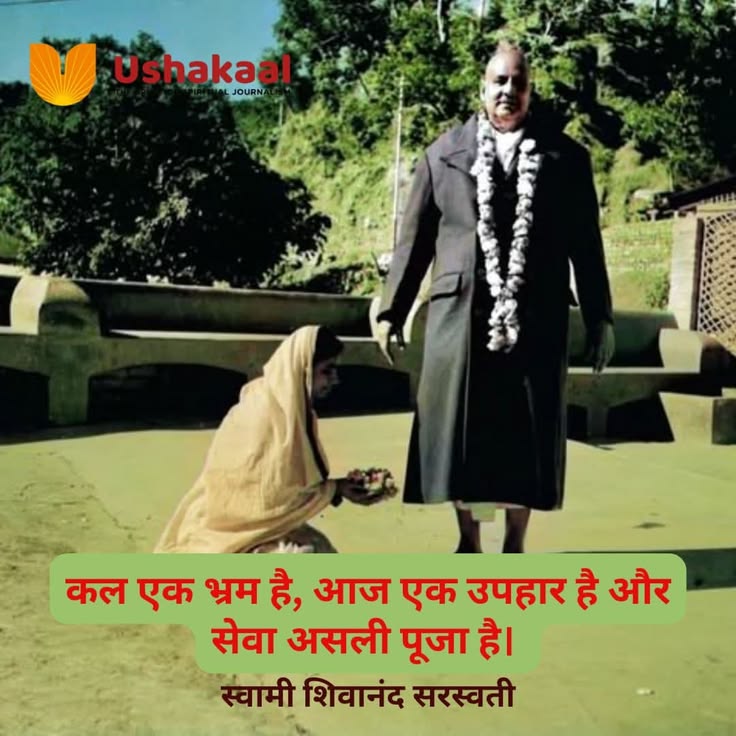
Swami Sivananda blessing devotee with Hindi quote image
Karma Yoga, Swami Sivananda

The Pseudo Karma Yogi

The Pseudo Karma Yogi A man puts on Khaddar clothes and dons a Khaddar cap. He will not have any of the qualifications or attributes of the man who has introduced Khaddar. He will not follow his instructions even. He may not have the least tinge of self-sacrifice. He may have a big almirah of mill-made clothes. He may do a little charity and feed some poor people just for the sake of name and fame. He himself will write to the papers about his charitable act in the name of a correspondent. He may donate a small sum to a public cause. He will eagerly watch in the newspapers whether his name is published or not. He will be restless till he sees his name in the papers. Such a man is called a pseudo-Karma Yogi. The world abounds now in such sort of Karma Yogis. A landlord or a money-lender sucks the blood of poor peasants and builds a palace. He gives a donation of several thousands of pounds to a Hindu university out of his reserve fund of a hundred thousand. He builds a temple for a few thousands and puts his name on the marble slab in front of the temple in bold letters. This is not Karma Yoga. This is pompous advertisement for acquiring name and fame. On the other hand an ordinary labourer who earns a few shillings at the sweat of his brow may offer his money in charity by feeding a few starving or sick people, and may himself starve on that day. This is real self-sacrifice. This is real Karma Yoga. In olden days, Madura in South India was ruled by Pandian kings. One of the Pandian kings spent two lakhs of rupees in doing Utsava of Lord Soma Sundareshvar in a certain year. He had a great deal of ego or Abhimana. He thought within himself: “I am a great devotee of Lord Siva. I have spent a large sum of money in the worship of the Lord. Thousands of Brahmins, Sadhus and the poor have been fed. I have given rich presents to Brahmin Pandits. There is no king who is so pious as myself.” Lord Siva appeared in his dream that night and said: “O king! Do not be proud of your piety, devotion and charity. I am not pleased with you in any way. Wherever there is pride, there cannot be any real devotion and holiness. Just go and see My humble devotee, the wood-cutter, who lives in a small hut on the banks of the Vaighai, and who offers to Me a little Kheer made of broken rice and a little black sugar on Mondays. Learn from him what real devotion is.” The king was greatly vexed. The next morning he proceeded to see the wood-cutter in his hut. He asked the wood-cutter: “How do you worship Lord Siva?” The man replied in a meek voice: “O king! I earn two annas a day. I spend one anna for my food, distribute nine pies in charity and save three pies daily. Every Monday I prepare a little Kheer with some broken rice and black sugar and offer it to Lord Siva. Whenever I cut wood, I always repeat ‘Siva, Siva, Siva.’ I always remember Him. This is my devotion to the Lord. I do not know anything else.” The king was very much pleased with the humility, simplicity, loving nature, devotion and purity of the wood-cutter. He erected a small building for him and made arrangements for his food till the end of his life. He learnt many practical lessons from his life and in turn became a real, humble devotee of Lord Siva. He destroyed his pride, vanity and egoism. Lord Jesus says: “Your left hand should not know what the right hand does. Be meek when you serve. Die unknown. Let nobody know your name. But work and serve others. Do not expect approbation and applause. Then only real fragrance of your soul will come out.” Dear friends who tread the path of Karma Yoga! Be sincere at heart. Do not run after the shadowy toys of name and fame. Name and fame are illusory. They are mere vibrations in the air. Nobody can earn an everlasting name in this Mayaic plane. Does anybody remember Sri Vyasa, Vasishtha, Vikramaditya, Yajnavalkya, Vama Dev and Jada Bharata now? Many great souls have come and gone. At the present time the names of one or two political leaders are remembered. After a few years their names also will disappear. Treat name and fame as offal, poison or vomited matter. This world is unreal. Care not for little perishable things. Care for the everlasting Reality only. Do constant selfless service silently with thoughts of God and Bhava within, and realise the indwelling presence. Become a true Karma Yogi.

The Pseudo Karma Yogi Read Post »

swami sivananda Monk seated wearing garland outdoors image
Raja Yoga, Swami Sivananda

Niyama

Niyama by Swami Sivananda 1. What is Niyama The observances are (the practice of) internal and external purity, contentment, mortification, study of scriptures and worship of God or self-surrender NOTES Niyama is the second accessory of Yoga. It is the practice of purity, contentment, mortification, study and worship. Patanjali Maharshi mentions these five observances under Niyama. According to Sandilya Rishi, Tapas, Santosha, Astikya, Dana, Isvara Pujana, Siddhanta Sravana, Hrih, Mati, Japa and Vrata come under Niyama. Through the practice of Krichara and Chandrayana Vratas, in accordance with Sastric injunctions, one purifies himself. His body gets emancipated. The sins are destroyed. The Indriyas are controlled. The passion-nature of the mind gets subdued. This is Tapas. Contentment with whatsoever one obtains of its own accord without effort is Santosha. Astikya is firm, unshakable belief in the existence of God, in the words of the Guru, in the truths inculcated in the Vedas and the merits or demerits of actions stated in the Vedas. Dana is the distribution of money, cloth, food, grains, etc., earned lawfully at the sweat of the brow, with faith, to deserving persons without expectation of fruits and without the idea of agency. Isvara Pujana is the worshipping of Lord Hari, Siva, Krishna or Rama with pure love, intense faith and single-minded devotion. Siddhanta Sravana is the enquiry into the right significance of Vedanta. It is the study and reflection of the nature of Brahman and the right significance of ‘Tat Tvam Asi’ Mahavakya. Hrih is the feeling of shame one experiences when he does certain actions which are not in accordance with the injunctions of the Vedas and rules of society. Mati is the faith in the paths prescribed by the Vedas for the attainment of God-consciousness or Self-realisation. Japa is the repetition of the Mantra into which one is duly initiated by the Guru or spiritual guide and which is not contrary to the rules of the Vedas. Vrata is the regular observance of or refraining from the actions prescribed or prohibited by the Vedas. The practice of Krichara, Chandrayana Vratas come under this heading. Krichara Vrata is fasting for 12 days. The observer of the Vrata drinks only some water. Many sins are destroyed by the practice of this Vrata. 2. Kriya Yoga Mortification, study of scriptures, self-surrender are the Yoga of purificatory action. NOTES In the previous Sutra, Saucha, Santosha, Tapas, Svadhyaya and Ishvarapranidhana are described under Niyama. Here in this Sutra, three observances of the five are taken under the heading Kriya Yoga. Every one of the item will be considered separately in the subsequent Sutras. 3. Benefits of Purification (Kriya Yoga is practised) for acquiring Samadhi and for attenuating the afflictions. NOTES The practice of Tapas, Svadhyaya and Ishvarapranidhana are intended to attenuate the afflictions and for preparing the mind for entering into Samadhi. They are for the purpose of purifying the mind of its impurities and for destroying distractions. Purification is of two kinds. They are internal (mental) and external (physical). Mental purity is more important. Physical purity is also needed. Cleanliness is next to godliness. Physical, external purity alone is of no value. Much time must not be wasted in attending to external washing. By so doing, you forget the eternally pure Atman. The afflictions of the mind mentioned in this Sutra are described under Sutra II-3. 4. Benefits of External Purification By the purification, comes disgust for one’s own body and cessation of contact with others. NOTES The purity referred to here is physical or external purity. When the body is impure, one purifies it. Again it gets impure. Again he purifies it. He wants to keep the body always pure but it constantly gets impure. Gradually he gets disgust over the body which is full of impurities. Since the same dust and impurity is in the body of others, he ceases contact with others. Slowly the body idea drops as he always thinks of the ever pure Atman. Moha and Mamata for the body vanish. Lust disappears. The next Sutra refers to the benefits of the internal purification. 5. Benefits of Internal Purification On the purity of Sattva, arise cheerfulness of mind, conquest of the senses or organs, and fitness for the realisation of the Atman. NOTES The fruits of mental purity are described here. The mind becomes Antarmukha, inward, as a result of the conquest of senses. As the distractions drop away, there is concentration of mind. By getting Antar Saucha, the mind becomes fit for the realisation of Atman. Increase in Sattva causes cheerfulness. Tamas produces gloom. If there is always cheerfulness, remember that you are progressing in Yoga. This is an important sign of spiritual growth. Many Yogic practitioners put on ‘Sunday faces’ or castor oil faces when they come outside to give interview to the visitors. They are under delusion that people will take them for advanced Yogis. There must be always joy and smile in the face of Yogis. Then only they can radiate joy to others. Sri Ramanuja also puts down cheerfulness as an important measure for developing Bhakti. Joy is the very essence of Purusha. In the Gita (XIV-2) you will find: When the wisdom light streameth forth from all gates of the body, then it may be known that Sattva is increasing. Prakasha on the face is Santosha. The means for getting Santosha is given in the next Sutra. 6. Santosha Supreme happiness is obtained through contentment. NOTES You will find in Yoga Vasishtha that Santosha, Santi, Vichara and Satsanga are the four sentinels at the door of Moksha. If you have Santosha, the other three will come by themselves. Santosha, contentment, is one of the important virtues for an aspirant. Riches and poverty are not counted by the amount of wealth one keeps. A king, if he keeps too many desires and if he wants more, is considered to be a beggar. A beggar, if he is contented with what he has, is really a king. From contentment comes

Niyama Read Post »

Swami Sivananda divine nature quote image
Karma Yoga, Swami Sivananda

Karma Indriyas

Karma Indriyas A description of these organs will not be out of place here. A Karma Yogi should have a detailed knowledge of the nature and workings of these Indriyas. Vak (organ of speech), Pani (hands), Pada (feet), Upashtam (organ of generation) and Payu or Guda (anus, the organ of excretion) are the five organs of action. The real Indriyas are in the astral body (Linga-Sarira). They are very subtle (Sukshma): They have corresponding centres or counterparts in the brain (nerve centres). What you see outside-mouth, hands, feet, organ of reproduction and anus are mere Bahya-Karanas or external instruments. The Karma Indriyas are located in the Pranamaya Kosha or vital sheath of the astral body. The Karma Indriyas are the five soldiers. The commander-in-chief is the mind. The mind extracts work from these soldiers when it desires to get sensual objects for its gratification. Mind also works in unison with these five organs. Mind is the leader or the big dacoit. These five organs are his assistants. These Karma Indriyas execute the commands of their leader (mind) immediately. The Karma Indriyas cannot work independently without the healthy and willing co-operation of the mind. It is the mind that really works through these organs. It is the mind that really plans, schemes and suggests in all activities. During sleep these Indriyas get Laya (involution) in the mind temporarily. During Samadhi or the superconscious state they are absorbed in the mind. The Karma Indriyas are born of the Rajasic portion of the Tanmatras. They are moved by Prana. Without the Prana, they cannot move even a fraction of an inch. The Jivatma or the individual soul, a reflection of Chaitanya in the mind-mirror is a constant companion of the mind. It is he who reaps the fruits of actions, pleasure or pain. You will find in the Gita: “These five causes, O mighty-armed, learn of Me as declared in the Sankhya system, for the accomplishment of all actions. The body, the actor, the various organs, the diverse kinds of energies and the presiding deities, also, the fifth-whatever action a man performeth by his body, mind and speech, whether right or the reverse, these five are the cause thereof.” Ch. XVIII-13, 14, 15. “That being so, he verily, who owing to untrained reason looketh on his Self, which is isolated, as the actor, he of perverted intelligence seeth not.” Ch. XVIII-16. “He who is free from the egoistic notion, whose reason is not affected though he slay these people, he slayeth not, nor is he bound,” says the Lord. Krishna is known as a Nitya Brahmachari though He lived with Sri Radha, Rukmini, Satyabhama, etc., and had children. He was fully resting in His own Svarupa-Nirguna Brahman. Lord Krishna separated Himself from the body, mind and Indriyas and identified Himself with Satchidananda Svarupa. So He was called a Nitya Brahmachari. Durvasa ate a large quantity of food at a feast and proclaimed to his disciples: “I have eaten nothing. I am Nitya Upavasi. Tell this to the River Yamuna, she will give way to you all. You can cross the river without a boat.” Tiruvalluvar, a sage of South India gave the same instructions to his wife to cross a river as Durvasa did. She was quite astonished to see that the river gave way when she uttered the words of her husband. The state of Jnanis is indescribable and incomprehensible. The presiding deity of the Vak Indriya is Agni; that of the hand is Indra; that of the feet is Upendra or Vishnu; that of Upastham is Prajapata; and that of Payu or anus is Mrityu. You will find again in the Gita: “Knowledge, the knowable and the knower form the threefold impulse to action; the organ, the action and the actor form the threefold constituents of action.” Ch. XVIII-18. You will find in Nyaya philosophy the terms Jnana, Iccha and Prayatna. Jnana is knowledge of objects. Iccha is desire. Prayatna is effort to obtain the desired objects. At first the Jiva or the individual soul has knowledge of the objects. Then a desire arises in the mind to get possession of the objects for his enjoyment. Then he applies himself diligently and exerts to obtain these objects. Desire is the motive force that moves the mind to action. Man muses or thinks of the objects of the senses. Then he develops attachment to them. From attachment there springs desire. Thought is the fuel. Desire is the fire. If you can stop the Sankalpas, the fire of desire will be extinguished by itself, just as a lamp is extinguished when the supply of ghee or oil is withdrawn. There is at first attraction for objects. Then comes attachment. Even if the attraction dies, the longing (Kamana or Spriha) or hankering for the object will continue to remain. This is Trishna-tantu or the thread of hankering. Then there is the preference for objects. This is still more difficult to be eradicated. Destroy attachment first. Then the longing and preference will slowly die. There are three kinds of impulses, viz., the impulse of thinking, the impulse of speech and the impulse of action. A Karma Yogi should not be impulsive. He must not be carried away by emotions. He must calm the surging, bubbling emotions and the impulses. He must purify the emotions. Then he can turn out real solid work. He must destroy all unnecessary, useless or vain thoughts. This will add to his reserve energy. This will conserve his energy. Energy is wasted in useless thinking. Energy is also wasted in idle talking and worldly gossiping. A Karma Yogi should observe Mauna or silence for two hours daily and for six hours on Sundays and holidays. Mauna will destroy impulses of speech. He who observes Mauna can use measured words during speaking. He can control anger and falsehood. He will be peaceful. He will have a strong will. There are people who talk like a machine at a tremendous speed, without

Karma Indriyas Read Post »