













Hari Om

Menu

February 13, 2026

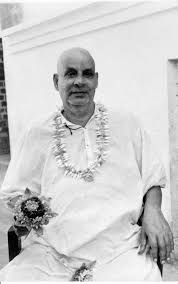
Swami Sivananda seated wearing flower garland picture
Raja Yoga, Swami Sivananda

Mind is Not Atman

Mind is Not Atman by Swami Sivananda In the West, the psychologists make a serious mistake in saying that consciousness is a function and attribute of the mind. It is Chit or Atman only that is Pure Consciousness Itself. Mind borrows its light from time to time from its source-Atman, the Light of lights or the Sun of suns and glitters temporarily like consciousness, like the golden gilt in brass. Mind borrows its light and power from Brahman, the source (Yoni), just as the iron-rod borrows its heat and effulgence from fire. Mind is Jada or non-intelligent, but appears to be intelligent by borrowing light from Brahman, just as water exposed to the sun borrows heat from the sun. Mind can do only one thing at a time. It is finite (Parichhinna). It is Jada. It is the effect (Karya) of Sattva Guna. It is Vinasi (perishable). It is Chanchala (ever-fluctuating). It is a bundle of ideas, Samskaras, habits, impulses and emotions. It borrows light from the Adhishthana (the underlying substratum), Brahman. You can control the mind. The thinker is different from thought. There is no functioning of the mind in deep sleep. You always say, “My mind”, as if mind is one of your instruments just like your walking-stick or umbrella. Therefore, mind is not the self-shining Atman. Even in cases of delirium or in cases where there is paralysis of the mental functions, where a man loses his memory and other faculties partly or wholly, ‘He’ remains. The ‘I’ exists (Aham Asmi). The mind seems to be as much your property and outside of you as the limbs, the dress worn or the building you dwell in. Therefore, mind is different from ‘I’. Mind gropes in darkness. It forgets every moment. It is changing every second. If food is withdrawn for a couple of days, it cannot think properly. There is no functioning of the mind during deep sleep. It is full of impurities, Vasanas and Trishnas (cravings). It gets puzzled during anger. In fear, it trembles. In shock, it sinks. How can you take the mind, then, as the pure Self? Manas is an organ of sensation and thought. This instrument must be under the control of someone who uses it. The Jiva or human soul is not the director of the mind, because we see that ordinary men cannot control their minds. They are simply swayed hither and thither by petty Raga-Dvesha, emotion and fear. Therefore, there must exist some other Being, who is Director of the mind. Who is that Being? He is the Manasah pati (Lord of mind), Antaryamin, Kutastha Brahman. Just as you see the tree in front of you, there must be somebody to see and know what is going on in the mind of Jivas. That somebody is Kutastha. Kutastha is Brahman Himself. There is a tumbler in front of you. It cannot see itself. An instrument, eye and a seer are needed. If you say that the tumbler can see itself, then there will be Karmakartritva-bhava-virodha. It is a logical absurdity. Therefore, you have to admit that there is a silent Sakshi of the mind, who is eternal, unchanging, eternal knower, always the knowing subject. He is witnessing the motives and modifications that arise in the minds of Jivas. Isvara or Saguna Brahman (Personal God) has full consciousness of Nirguna Brahman. That is His Svarupa- Lakshana. At the same time, he has full cosmic consciousness. He knows what is going on in every mind. Consciousness per se or the Absolute Consciousness is common in all. This pure consciousness is one. It is Kutastha Chaitanya. All the workings of the mind, all modifications that arise in the minds of all are presented to the one common consciousness which is the witness of the mental Vrittis. Even though consciousness is one, when Rama is stung by a scorpion, only Rama feels and not his friend Krishna who is standing near him. Antahkarana or mind is different in every individual. It is Antahkarana that limits a man who is, in reality, identical with the Brahman or Supreme Soul! This identity is realised when the Avarana or veil of ignorance is removed. The mind is an object of perception for Brahman. Atman directly cognises all the phenomena of the mind, viz., desire, imagination, doubt, belief, disbelief, shame, intelligence, fear, etc. He remains Himself quite unattached and unaffected like the omnipresent ether, like the crystal which reflects different coloured objects, like the sun. Atman – the Source For The Mind Manas, which expands through Sankalpas and Vikalpas, is generated with Brahman as its cause. The form which the endless Atman (Supreme Spirit) assumes through Sankalpa is Manas (mind). It first turned its back to discrimination and hence entangled itself in the folds of Vasanas of objects. The underlying substratum, Adhishthana of the mind, the source or basis for mind is Atman or Brahman or Absolute Consciousness. The Power of powers who gives power to the mind, the Light of lights who sheds light on the mind, the Seer of seers who witnesses the motives of and movements in the mind, the Support of supports on which the mind rests in sleep is BRAHMAN. “Om Keneshitam Patati Preshitam Manah-Willed and directed by whom does the mind go towards its desired objects?” (Kenopanishad). To that Power of powers I bow with folded hands. That Power of powers I am (Soham, Sivoham). That Secondless Supreme Being who resides in the chambers of your hearts as Antaryamin or Inner Ruler or Controller or Sutradhara or Sakshi (silent Witness), Antaratman (Inner Self), who has no beginning, middle or end, who is the source of this world, the Vedas, body, mind, Indriyas and Prana, who is all-pervading, who is unchanging, who is One Homogeneous Essence (Ekarasa), who exists in the past, present and future, who is self-existent (Svayambhu), who is independent (Svatantra) and who is self-luminous (Svayam- jyotis) is God or Atman or Brahman or Purusha or Chaitanya or Bhagavan

Mind is Not Atman Read Post »

Swami Sivananda reading book by riverside mountains image
Karma Yoga, Swami Sivananda

Free Will versus Fatalism

Free Will versus Fatalism The controversy between free will and fatalism is still going on in the West and no one has come to any definite conclusion. It is a great pity that the doctrine of Karma is mistaken for fatalism. Fatalism is the doctrine that all events are subject to fate and happen by unavoidable necessity. Fate is otherwise known as luck or fortune. That indefinable mysterious something which brings trials, successes and failures to man, which shapes and moulds him by teaching lessons of various sort, which takes care of him like a mother, which brings various sort of experiences, which brings cloudy days and days of bright sunshine, which raises a beggar to the level of a landlord and hurls down a mighty potentate to the level of a street-beggar, which gives different kinds of fruits and experiences to two people of equal talents and capacities, which made Napoleon at one time a terror in the eyes of the people and at another time a prisoner, and which makes a certain portion of the life of a man quite stormy and another portion quite smooth, is called fate. Fate educates and instructs man. However whimsical the fate may appear to operate, it works in harmony with the law of causation. Fate is one’s own creation. Man acts and thinks and develops his own character. He creates a web like the spider or a silk-worm and entangles himself in its meshes on account of the three knots, viz., Avidya, Kama and Karma. He himself has enthroned fate to the level of a king and obeys its order owing to his ignorance and its effects. The doctrine of Karma is diametrically opposed to the doctrine of fatalism. Fatalism causes inertia, lethargy, weakness of will and bondage. Fatalism annihilates faith. It induces terrible fear in the people. It destroys ethics. It checks growth and evolution, whereas the doctrine of Karma is an incentive to action to better one’s condition. It is a source of solace. It gives man an assurance of a broader and happier life. It presupposes freedom of the will. Freedom is the essence of Karma. It gives opportunities for growth and evolution. The doctrine of Karma affords a most rational and scientific explanation of what is called fate. It gives a positive definite word of assurance that, although the present of which he himself is the creator or the author, is unalterable and irrevocable, he may better his future by changing his thoughts, habits, tendencies and mode of action. Herein lies great comfort, strength, encouragement and consolation to the desperate man. Herein lies a strong impetus for the man to struggle and exert for improving himself. Even a forlorn and helpless man is made cheerful when he understands this doctrine of Karma. The doctrine of Karma brings hope to the hopeless, help to the helpless, joy to the cheerless and new strength to the weak. It braces up a sunken man. It is an ideal “pick-me-up” for the depressed and gloomy. The doctrine of Karma teaches: “Do not blame anybody when you suffer. Do not accuse God. Blame yourself first. You will have to reap what you have sown in your previous birth. Your present sufferings are due to your own bad Karma in your past life. You are yourself the author of the present state. The present is unchangeable. Do not weep. Do not cry over spilt milk. There is no use. You will not gain anything by so doing. Instead of weeping over the failure of crops during last year, go on ploughing this year. You will get abundant rain this year and rich harvest. Do virtuous actions now. Think rightly. Act rightly. You will have a brilliant and a glorious future.” How beautiful and soul-stirring is this magnanimous doctrine of Karma! The doctrine of Karma develops faith and supports ethics. It says: “If you hurt another man, you hurt yourself.” Every act produces in the performer a double effect, one in the inner nature in the form of a tendency, good or bad, and the other in the form of fruit, reward or punishment. The past Karma influences the present life in two ways, first in the form of character or tendency internally and as fate externally. If you do an action, it creates a Samskara or subtle impression in the subconscious mind or Chitta. The Samskara causes a tendency. Tendency develops into a habit by repetition of the actions. The habit manifests as character. Character develops into destiny. This is the order: Samskara, tendency, habit, character, and destiny. The faculty of choosing is termed will. This will is free by its own nature. Man has a free will by his birthright. It asserts itself at every moment of our lives. Bear in mind that every small act that you perform is the resultant of triple conjoint forces, viz., freewill, character and fate. The sphere of activity varies according to the nature of your Karma and the character formed by it. If you have done virtuous actions in your previous birth and if you have developed an exemplary character, your will have a wider field of activity and vice versa. Determinism is the doctrine that all things, including the will, are determined (limited) by causes. This is the converse of free will. It is otherwise known as necessitarianism. Man has power to choose between the alternatives which fate brings before him. In choosing between them he may either follow his tendencies produced by his past actions or struggle against them. The will of a man is ever free. The arguments which are advanced by determinists in saying that human will is determined are not sound and tenable; they fall to the ground. Dear friends! Man is the master of his destiny. Wake up now from the deep slumber of ignorance. Never become a fatalist. Think rightly. Act rightly. Lead a virtuous life. Never hurt the feelings of others. Mould your character. Purify your

Free Will versus Fatalism Read Post »

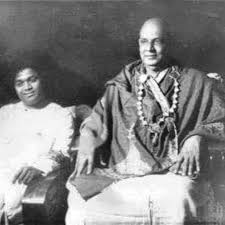
Swami Sivananda seated with disciple standing image
Raja Yoga, Swami Sivananda

The Dynamics of the Mind

The Dynamics of the Mind by Swami Sivananda I. PURE AND IMPURE MIND Suddha Manas or pure mind leads to liberation. Asuddha Manas or impure mind causes bondage. Suddha Manas is filled with Sattva or purity and divine virtues. Asuddha Manas is filled with impurities such as lust, greed, jealousy, hatred, etc. II. FUNCTIONS OF THE MIND It is actions of the mind that are truly termed Karmas. The functions of the mind are Sankalpa-Vikalpa, thinking and doubting. It is the mind that really sees, hears, smells, tastes and feels. Mind can do the five functions of the five senses of perception or Knowledge. Mind connects itself with the five senses of perception and enjoys all sense-objects. III. POWER OF THE MIND The mind had the potency of creating or undoing the world in the twinkling of an eye. Mind creates the world according to its own Sankalpa or thought. It is the mind that creates this Universe, (Manomatram Jagat; Manah-Kalpitam Jagat). Through the play of the mind, a Kalpa is reckoned by it as a moment and vice versa. Like a dream generating another dream in it the mind having no visible form generates existent visibles. IV. PLAY OF THE MIND The Mind assumes the form of any object it intensely thinks of. Through the play of the mind in objects, nearness appears to be a great distance and vice versa. In introspection a portion of the mind studies another portion of the mind. The senses can do nothing without the co-operation of the Mind. It is the Mind that causes bondage and release. Devoted to sense-objects it causes bondage; devoted to the Lord it creates freedom and release. With the growth of the Mind, the pains increase, with its extinction, there will be infinite bliss. Mind can do or attend to only one thing at a time. V. THE MISCHIEVOUS MIND Mind is the slayer of Atman or the Supreme Self. Mind is the birth place of desire. Mind ever whirls far and wide in vain in sensual objects, like a strolling street dog. This puerile mind which ever rises and falls with the ebb and flow of desires, fancies this illusory universe to be true through its ignorance. Ever thirsting after fresh Vishayas or sense-objects the mind is more restless than monkeys.

The Dynamics of the Mind Read Post »

images 92 1
Karma Yoga, Swami Sivananda

Man Can Outgrow Environments

Man Can Outgrow Environments It is often said that man is the resultant of his environmental forces. This is not true. We cannot believe this, because the facts always prove the contrary. Many of the world’s greatest men have been born in poverty and in adverse circumstances. Many who have been born in slums and filthy surroundings have risen to the highest status in the world. They have won laurels of fame and distinguished themselves in politics, literature and poetry. They have become brilliant geniuses and beacon-lights of the world. How do you account for this? Sri T. Muthuswamy Aiyer, the first Indian High Court judge in Madras was born in absolute poverty. He had to study at night under municipal lanterns. He had insufficient food. He was clad in rags. He struggled hard and achieved greatness. He rose above the environmental forces by his strong will and iron determination. In the West sons of cobblers and fishermen have risen to high positions. Boys who did polishing of boots in the streets and who were selling beer in bars and were cooking in hotels became famous poets and able journalists. Johnson was placed in quite adverse environments. Goldsmith was “passing rich with forty pounds a year.” Sir Walter Scott was very poor. He had no place to live in. The life of James Ramsay Macdonald is worth mentioning. He was a man of great Purushartha. He rose from poverty to power, from a field-labourer to the status of Prime Minister of Britain. His first job was addressing envelopes for ten shillings a week. He was so poor to buy tea that he drank water instead. His main meal every day for months was a three-penny beefsteak pudding. He was a pupil-teacher. He took great interest in politics and science. He was a journalist. Gradually, through right exertion (Purushartha), he rose to the position of a Prime Minister. Sri Sankaracharya, the exponent of Advaita philosophy, a spiritual giant and a brilliant genius was born in very poor, unfavourable environment and circumstances. There are thousands of instances like these. It is quite obvious, therefore, that unfavourable environments cannot annihilate the potential greatness and excellence of the future geniuses and that one can outgrow environments through diligent application, integrity, sincerity of purpose, iron will and strong determination. Every man is born with his Samskaras. The mind is not a Tabularasa or a blank sheet of paper. It contains the impressions of thoughts and actions of the previous births. Samskaras are the latent potentialities. These good Samskaras are valuable assets for a man. Even though he is placed in unfavourable environments, these Samskaras give him protection against extraneous, undesirable, hostile influences. They help his growth and evolution. In the Gita Lord Krishna says: “There he recovereth the characteristics belonging to his former body and with these he again laboureth for perfection, O joy of the Kurus.” Ch. VI-43. Miss not any opportunity. Avail yourself of all opportunities. Every opportunity is meant for your uplift and development. If you see a sick man lying down on the roadside in a helpless condition, take him on your back or tonga to the nearest hospital. Nurse him. Give him hot milk or tea or coffee. Shampoo his legs with divine Bhava. Feel the all-pervading, all-permeating, interpenetrating indwelling God in him. See divinity in the glow of his eyes, in his cry, in his breath, in the pulsation and motion of his lungs. God has given this opportunity to you to develop mercy and love, to purify your heart and to remove Ghrina, hatred and jealousy. Sometimes if you are very timid, God will place you in such circumstances wherein you will be forced to exhibit courage and presence of mind by risking your life. Those world figures who have risen to eminence have utilised all opportunities to the best advantage. God shapes the mind of human beings by giving them opportunities. Remember that in your weakness lies the strength, because you will be always on your alert to safeguard yourself. Poverty has its own virtues. Poverty infuses humility, strength, power of endurance and the spirit of struggle and perseverance, whereas luxury begets laziness, pride, weakness, inertia and all sorts of evil habits. Do not grumble, therefore, of bad environments. Create your own mental world and environments. That man who tries to evolve or grow in adverse environments will be a very strong man indeed. Nothing can shake him. He will be of a sterner stuff. He will have strong nerves. Man is certainly not a creature of environments or circumstances. He can control and modify them by his capacities, thoughts, good actions and right exertions (Purushartha). Theevra Purushartha can change the destiny. That is the reason why Vasishthaji and Bhishma have placed Purushartha above destiny. Therefore, dear brothers, exert, conquer nature and rejoice in the eternal Satchidananda Atman.

Man Can Outgrow Environments Read Post »

Swami Sivananda seated with companion portrait image
Raja Yoga, Swami Sivananda

The Many Phases of the Mind

The Many Phases of the Mind by Swami Sivananda I. FOURFOLD ANTAHKARANA When the mind does Sankalpa-vikalpa, it is called mind. When it discriminates and decides it is called Buddhi or intellect. When it self-arrogates it is Ahamkara, egoism. When it remembers and recollects it is Chitta. II. STRATA OF MIND Conscious mind is the objective mind. It thinks of objects. Subconscious mind is Chitta. It is the storehouse of impressions. Superconscious mind is the cosmic mind. III. THE THREE AVASTHAS In the waking state (Jagrat) the Mind experiences the external objects. In dream, mind itself creates the dream-creatures out of the material supplied by waking experiences. In deep sleep the mind rests in causal body or Avidya. In Turiya-avastha the mind is absorbed in Brahman or the Absolute. There is Nirvikalpa Samadhi or superconscious state. IV. THE THREE FORMS OF MIND The Sattvic mind is calm and harmonious, it intuits, meditates, renounces, enquires and moves towards the Atman. The Rajasic mind is passionate. It wants power, possessions and dominion. It wants to rule over others. The Tamasic mind is heedless. It sleeps, it is full of inertia and darkness. When the Yogi attains Samadhi he rises from the stream of the Gunas and the limitations of the body and mind. V. THE SATTVIC GUNA When Sattva is increased a peculiar feeling of coolness, calmness, contentment and luminosity are experienced by the aspirant. When Sattva Guna works in the mental sheath, there is a wonderful calmness. The tossing of the mind stops and concentration develops. When the Sattva Guna powerfully vibrates in the Vijnanamaya sheath of intellect, there is understanding of complex problems. The three Gunas constitute your individuality. They cover your mental, moral, intellectual and spiritual life. by Swami Sivananda

The Many Phases of the Mind Read Post »

Swami Sivananda meditating outdoors on mat image
Karma Yoga, Swami Sivananda

Philosophy of Right and Wrong

Philosophy of Right and Wrong Right and wrong, Dharma and Adharma, are both relative terms. It is very difficult to define these terms precisely. Even sages are bewildered sometimes in finding out what is right and what is wrong in some special circumstances. That is the reason why Lord Krishna says in the Gita: “What is action, what is inaction? Even the wise are herein perplexed. Therefore I declare to thee the action by knowing which thou shalt be liberated from evil. It is needful to discriminate action, to discriminate unlawful action, and to discriminate inaction; mysterious is the path of action. He who seeth inaction in action, and action in inaction, he is wise among men, he is harmonious, even while performing all actions.” Ch. IV-16, 17, 18. I shall try to explain the terms right and wrong. Rishi Kanada, the author of Vaiseshika philosophy says in the opening Sutra: “That which brings Nisreyasa and Abhyudaya (supreme bliss and exaltation), is Dharma. That which elevates you and brings you nearer to God is right. That which takes you down and away from God is wrong. That which is done in strict accordance with the injunctions of the Sastras is right, and that which is done against the injunctions of the Sastras is wrong.” This is one way of defining these terms. To work in accordance with the Divine Will is right; to work in opposition to the Divine Will is wrong. It is very difficult to find out by the man in the street what exactly the Divine Will is in certain actions. That is the reason why wise sages declare that people should resort to Sastras, learned Pandits and realised persons for consultation. A pure man who has done Nishkamya Karma Yoga for several years and who has done worship of Isvara for a long time can readily find out the Divine Will when he wants to do certain actions. He can hear the inner shrill, small voice. Ordinary people should not attempt to hear this Divine Voice, the voice of God-they may mistake the voice of the impure mind for the voice of God. The lower instinctive mind will delude them. That work which gives elevation, joy and peace to the mind is right; that which brings depression, pain and restlessness to the mind is wrong. This is an easy way to find out right and wrong. Selfishness clouds understanding. Therefore if a man has even a tinge of selfishness he cannot detect what is right and wrong. A very pure, subtle, sharp intellect is needed for this purpose. The Gita describes the nature of Sattvic, Rajasic and Tamasic natures in chapter eighteen as follows: “That which knows the path of work and renunciation, what ought to be done, fear and fearlessness, bondage and liberation-that intellect is Sattvic (pure), O Arjuna. That by which one wrongly understands Dharma and Adharma and also what ought to be done and what ought not to be done-that intellect, O Arjuna, is Rajasic. That which, enveloped in darkness, sees Dharma as Adharma, and all things perverted-that intellect is Tamasic.” Various other definitions are given by wise men to help the students in the path of righteousness. In the Bible it is said: “Do unto others as you would be done by.” This is a very good maxim. The whole gist of Sadachara or right conduct is found here. If one practises this very carefully he will not commit any wrong act. Ahimsa Paramo Dharmah-non-injury is the highest virtue. If one is well established in Ahimsa in thought, word and deed, he can never do any wrong action. That is the reason why Patanjali Maharshi has given Ahimsa great prominence in his Raja Yoga philosophy. Ahimsa comes first in the practice of Yama or self-restraint. To give pleasure to others is right; to spread misery and pain to others is wrong. One can follow this in his daily conduct towards others and can evolve in the spiritual path. Do not perform any act that brings shame and fear. You will be quite safe if you follow this rule. Stick to any rule that appeals to your reason and conscience and follow it with faith and attention. You will evolve and reach the abode of eternal bliss. Now I shall talk to you on another important point. I have already pointed out in the beginning of this chapter that ‘right’ and ‘wrong’ are relative terms. They vary according to time, special circumstances, Varna and Ashrama. Morality is a changing and relative term. To kill an enemy is right for a Kshatriya king. A Brahmin or a Sannyasin should not kill anyone even for protecting himself during times of danger. He should practise strict forbearance and forgiveness. To speak an untruth to save the life of a Mahatma or one’s Guru who has been unjustly charged by an unjust officer of a state is right. Untruth becomes a truth in this particular case. To speak a truth which brings harm to many is untruth only. To kill a dacoit who murders wayfarers daily is Ahimsa only, Himsa becomes Ahimsa under certain circumstances. There are special Dharmas during critical and dangerous circumstances. They are called Apat-Dharma. Rishi Vishwamitra took forbidden meat from a Chandala when there was severe famine and offered this in his sacrifice to the Devas. Ushashti, a learned sage took the Ucchishta beans from the hands of an elephant-driver when he was suffering from acute hunger and when he was not able to get food from anyone. Performance of one’s own duties brings happiness, quick evolution and freedom.

Philosophy of Right and Wrong Read Post »

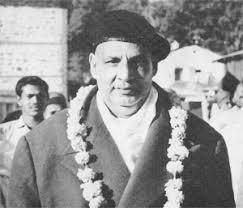
Swami Sivananda wearing garland and cap image
Raja Yoga, Swami Sivananda

States of Mind and Principles of Mental Discipline

States of Mind and Principles of Mental Discipline by Swami Sivananda I. THE FOUR STATES OF MIND Sleepiness (Laya), distraction (Vikshepa), taintedness (Kashaya) and equipoise (Samata) are the four states of the mind. Turn the mind away from the objects. Bear in mind that all is pain and suffering. Remember the blissful, eternal Brahman, that is the substratum for all objects. Rouse the mind when it gets sleepiness; if it gets distracted, bring it back to its peaceful condition through Pranayama, Trataka, self-restraint and abstraction. Be detached when you taste the bliss of Savikalpa Samadhi (Rasasvada). When the mind gets tainted through Kashaya or Vasana raise the rod of discrimination and the sword of dispassion. When the mind is in a state of poise, disturb it not on any account. Enter into Nirvikalpa Samadhi. II. WAKING, DREAMING AND SLEEP Desire keeps up life. Prana functions because of desire. Desire is the cause of Samsara. Desire says: – O sense-organs! do as I tell you. In the evening, the sense-organs say to the desire: – O desire! We are tired; we can’t do anything now. The objects have lost their charm for us. Desire goes to mind; mind fulfils desire. By dreaming, without the help of sense-organs some time later, mind says to desire: – O desire! I am tired; my energy is exhausted. Good-bye. Desire now goes deeper for more energy. It approaches the Atman. Atman is veiled by ignorance, because desire does not want to annihilate itself and merge in Atman. Desire goes into ignorance and gets more strength and vitality, returns to the mind and the senses, and rejuvenates them. Man wakes up and commences activity. III. SLEEP-WALKERS Sleep-walkers or somnambulists swim in sleep without being aware of it. One in California swam for two miles down a river. A boy of eleven committed expert burglaries in his sleep. A sleep-walker robs himself also. Sleep-walkers ride horses, drive cars, go mountaineering and walk for miles. An Irishman swam one and a half mile in the sea. He did not remember anything. Sleep-walkers lose their sense of sight and hearing. They retain their sense of touch. Their sense and limbs are controlled by the subconscious mind. Lead the sleep-walker back to bed without waking him. IV. VIKALPA VRITTI This is one of the five kinds of Vrittis according to Patanjali Maharshi in Raja Yoga. It does great havoc indeed. Vikalpa Vritti is imagination. Maya havocs through this Vritti. Fear, worry, co-exist with this Vritti. There is a rumour that there is cholera in George Town, Madras, the man in Park Town falsely imagines that he will get cholera. He worries and actually gets cholera out of fear. Your friend did not talk to you, as he was running in haste to catch the train. You imagine that he was offended. There was a rumour that a riot broke out in London. You falsely imagine that your son who was studying in London, might have died. Eradicate these Vrittis through Vichara. Do not Identify yourself these Vrittis through Vichara. Do not identify yourself with any Vritti. Identify yourself with the Vritti-less Brahman and rest peacefully forever. V. MENTAL DISCIPLINE The ever-restless mind becomes quiescent when all desires vanish. Desire raises Sankalpas (thoughts). Man performs actions for acquiring the desired objects. Thus he is caught in the wheel of Samsara. The wheel stops when the Vasanas perish. Just as there are doors in a bungalow between the outer and inner rooms so also there are doors between the lower and the higher mind. When the mind is purified by the practice of Karma Yoga Tapas, right conduct or the practice of Yama, Niyama, Japa; meditation, etc., the doors between the lower and the higher mind are opened. Discrimination between the real and the unreal dawns. The eye of intuition is opened. The practitioner gets inspiration, revelation and higher Divine knowledge. It is extremely difficult to have calm and pure mind. But you must have such a mind, if you want to have progress in meditation, if you desire to do Nishkamya Karma Yoga. Then only you will have a perfect instrument – a well-controlled mind – at your disposal. This is one of the most important qualifications for an aspirant. You will have to struggle hard for a long time with patience and perseverance. Nothing is impossible for a Sadhaka who has an iron will and a strong determination. Just as soap cleanses the physical body, so also Japa of a Mantra, Dhyana, Kirtan and practice of Yama cleanse the mind of its impurities. Who is free? The man who has controlled his mind. True freedom is freedom from the thraldom of mind and matter. True freedom is Self-realisation. Victory over the mind makes a man divine. Realise the emptiness of earthly victories. Conquest of mind is better than conquests in the battlefield. Become a man of peace. The body conquers the worldly man, whereas the Yogi conquers the body. When Prana, vital force, is conquered, mind is conquered. Control of mind is self-restraint. Through your higher Sattvic mind, control that part of the mind which runs in the direction of objects. The proper means to control the mind is Jnana or the development of spiritual wisdom. The pure and serene mind alone can know Brahman. When the mind becomes pure through spiritual discipline you will attain Self-relisation. You will realise Brahman as a homogeneous, pure, non-dual Consciousness. When the mind is rendered calm and deprived of its association with the objects it becomes fit for the study of Vedantic literature and meditation on Atman or the Supreme. Where the mind becomes inaccessible to evil thoughts, and keeps away from the lure of sense-objects, it grasps the eternal truths and becomes the abode of everlasting peace. The purified mind is your best friend and the impure mind is your worst enemy. Do away with the impure mind through the pure mind. Make friendship with the pure mind and make your

States of Mind and Principles of Mental Discipline Read Post »

Swami Sivananda portrait wearing coat image
Jnana Yoga, Swami Sivananda

Mind – its Features, Nature and Conquest

Mind – its Features, Nature and Conquest by Swami Sivananda I. PHILOSOPHY OF THE MIND Mind is made up of subtle matter. It is through mind that God manifests as the universe. Mind is a subtle force. Prana vibrates on mind and mind generates thoughts. Mind is a bundle of impressions, thoughts, Vasanas (desires) and cravings. The seed of mind is egoism. Mind can do five functions of the five senses of perception or knowledge (Jnana Indriyas). There are three Gunas or qualities, viz., Sattva, Rajas and Tamas in the mind. Lust, anger, greed, jealousy, pride, delusion, egoism, likes and dislikes are waves in the mind. The ever-restless mind becomes quiescent when all desires perish. The mind is purified by the practice of selfless service, Japa, Tapas, right conduct or practice of Yama (self-restraint) and meditation. The mind filled with Sattva is Suddha Manas or pure mind. The mind filled with Rajas and Tamas is Asuddha Manas or impure mind. Relaxation of mind, Japa, prayer, meditation, cheerfulness, Sattvic food, study of religious books, are necessary for keeping up mental health. The mind assumes the form of any object it intensely thinks of. If it thinks of an apple, it assumes the form of an apple. If it thinks of the form of Lord Jesus, it assumes the form of Lord Jesus. As you think, so you become. This is an immutable psychological law. In waking state mind has its abode in the brain. In dream state it has its abode in the throat. In deep sleep it rests in the heart. Prana is the connecting link between body and mind. If you control Prana or sex-energy, you can control the mind. If you can control the mind, you can control Prana also. Through control of breath you can control the mind. Cosmic mind is the universal mind of the Lord. It is superconscious mind. Conscious mind operates through the brain in the waking state. Subconscious mind is Chitta. All impressions are imbedded in the subconscious mind. Practice of Pranayama helps to attain mental equipoise. It can hear and see at the same time. Mind is the dividing wall between soul and body. Mind is the commander-in-chief. The senses are the soldiers. Egoism, greed, jealousy, vanity, etc., are the attendants of the mind. Man says, – My mind was elsewhere; I did not see. My mind was elsewhere; I did not hear. Man sees with his mind and hears with his mind. Steadying or fixing the mind in one point is called Abhyasa. II. CONQUEST OF THE LOWER BY THE HIGHER You can control the mind through Abhyasa or practice and Vairagya. You can be established in Samadhi or superconscious state only by long practice, with zeal and faith. Without dispassion or non-attachment or indifference to sensual enjoyments no spiritual progress is possible. Annihilate the impure mind or the lower mind with the help of the pure or the higher mind and transcend the higher mind also. The senses cannot do anything without the cooperation of the mind. Do not try to drive away impure thoughts. The more you try, the more they will return. Fill the mind with divine thoughts. The impure thoughts will gradually vanish by themselves. Do not try to control the mind through violent methods. You will miserably and hopelessly fall. Use the approved and intelligent methods. You can control the mind easily. III. MIND AS THE BASIS OF THE WORLD-PROCESS The mind is at the root of Samsara or world-process. Desire is the fuel. Thought is the fire. Withdraw the fuel of desire, the fire of thought will be extinguished. Mind is like an ocean; thoughts are the waves. Mind is the organ of sensation and thoughts. Mind thinks, intellect determines, egoism self-arrogates, subconscious mind memories. When the mind is Sattvic, calm and pure, you will get glimpses or flashes of intuition. Mind and Prana are interdependent. Prana is the overcoat of the mind. Wherever there is Prana, there is mind; wherever there is mind, there is Prana. Waking state, dream state and deep sleep state are the three states of the mind. Mental actions are the real actions. Thought is the real action. A Rajasic mind wants variety and new sensations. It gets disgusted with monotony. Change of work is change for the mind. Mind is a gatekeeper. It allows only one thought at a time to enter the mental factory or the mental palace.

Mind – its Features, Nature and Conquest Read Post »

Swami Sivananda Collage of portraits picture
Karma Yoga, Swami Sivananda

Free Will

Free Will How far a man is a free agent of his actions must be intelligently understood in the light of Vedanta. Then only can one get a satisfactory answer and solution. In the West, various competent men have discussed this matter from various standpoints. They have not yet come to any definite conclusions. They have taken the present only into consideration. This is a sad mistake. The present is only a fragment of infinity. If the infinite past and infinite future are also taken into consideration, they will surely arrive at a definite conclusion that will bring peace and solace to the restless mind. Just as the man who has seen one side of the shield only fights with another man who has seen the other side of the shield only, so also people who know partial truths only fight amongst themselves and engage in useless controversies and debates. Just as the man who has seen the two sides of the shield can easily settle the dispute of two persons who have seen one side of the shield only, so also a Vedantin alone, who has full knowledge of the whole truth can settle the dispute of those people who are trying to find out whether and how far man is a free agent of his actions. Determinists say that the will of a man is as much bound by the law of causation as the rest of the phenomena of the universe. Ethics will fall down to pieces if there is no freedom for a man. There cannot be surely any moral responsibility where there is no freedom. How could a man he made to account for his action, unless he is a free agent of his deeds? How could reward or punishment be meted out with justice to a man if he has done an action out of compulsion, but not out of free choice? Man will be like an automaton or block of wood, his hands and feet being chained down tightly. The consciousness of the Self makes a man feel that he is ever free. This idea of freedom is ingrained in the mind of every man. It is hidden in the consciousness of the Self. Though he has nothing to eat, though he is in very adverse circumstances, there is a peculiar instinct in man that prompts him to think that he is always free. Because the Nitya-Mukta (ever free) Atman is at the back of his mind, sentiments and feelings, he feels that he is free. He knows that he is bound and that he is encased in this tabernacle of flesh. He is fully aware that he is a slave of Maya and Avidya: and yet something inside tells him that he is free at the same time. He has this double feeling because in essence he is the all-pervading mass of wisdom (Vijnanaghana Atman). He gets these flashes or glimpses of freedom even while he labours under straitened circumstances. There are encouragements for the struggling soul that come from within. He is in a dying condition. Doctors have pronounced the case as absolutely hopeless. Yet there is a shrill inner voice from within that says: ‘I am immortal, I am free.’ He cherishes an inherent feeling: ‘I am free though I appear to be apparently bound. This bondage is illusory.’ Let me repeat here the words of Lord Krishna in the Gita, that bespeak of the freedom of man in doing Karma: Uddharet Atmana Atmanam Natmanam AvasadayetAtmaiva Hyatmano Bandhuratmaiva Ripuratmanah. “Let a man raise himself by himself, let him not lower himself; for he alone is the friend of himself, he alone is the enemy of himself.” Ch. VI-5. Bandhuratmatmanastasya Yenatmaivaatmana JitahAnatmanastu Satrutve Vartetatmaiva Satruvat. “To him who has conquered himself by himself, his own self is the friend of himself, but to him who has not (conquered) himself, his own self stands in the place of an enemy like the (external) foe.” Ch. VI-6. The Upanishads also echo the same idea: Uthisthita Jagrata Prapya Varan Nibodhata. “Awake, arise, and, having approached a learned teacher, learn.” (Katha Upanishad). In conclusion I wish to point out once more that man is a free agent. He is Svatantra or independent in doing actions. Whatever his present condition may be, he can have a glorious future through right exertion and right thinking. Many have achieved success and greatness, many have reached the goal of life through right exertion. This holds good for all. Man is ever free. May freedom be the goal of thy life! May all of us exert in the right direction to achieve freedom, the birthright of man! May that supreme Being, the Antaryamin, guide us in all our actions!

Free Will Read Post »

Swami Sivananda Autobiography of book cover image
Raja Yoga, Swami Sivananda

Mind – Studies in its structure

Mind – Studies in its structure by Swami Sivananda I. WHAT IS MIND? Now then an exposition of the mind, its nature and control. Mind is Atma Sakti. Mind is Maya. Mind is born of Prakriti. It is through mind that Brahman manifests Himself as the universe with heterogeneous objects. Mind is inert. It cannot by itself illumine the objects. It borrows its light from Atman or the Self. The body with its organs is no other than the mind. II. MIND AS THE UNIVERSE All the visible objects do not really exist. The mind alone shines as the cause of all the manifold created objects. This universe is no other than the mind itself. The Self-light of Para Brahman alone is appearing as the mind or this Universe. Mind alone is the Universe. III. MIND AS SANKALPA The form of the mind is Sankalpa alone. The expansion of the mind alone is Sankalpa (thought, imagination). Wherever there is Sankalpa (thought) there does the mind exist. Sankalpa, through its power of differentiation generates this Universe. The Sankalpas and Vasanas which you generate enmesh you as in a net. Man is subject to bondage through his own Sankalpas and Vasanas, like a silkworm in its cocoon. If the mind turns its back upon discrimination, it entangles itself in the folds of Vasanas, or desires. IV. STOREHOUSE OF IMPRESSIONS Mind is a collection of Samskaras or impressions. The mind goes into modifications according to the latent impressions of the past. These impressions are called Samskaras. Mind is a bundle of Vasanas, Sankalpas and likes and dislikes. If you free yourself, from these, the mind dwindles into an airy nothing. Mind is nothing but a bundle of habits, desires and cravings. The mind which is the conditioning vesture of the soul is a storehouse of impressions. It is attached to the pleasure of senses and is tossed about by three Gunas, and hence is liable to disturbance in the form of lust, anger, etc. The true nature of the mind is Vasanas or subtle desires. V. STUFF OF THE MIND Mind is atomic according to the Nyaya School. Mind is all-pervading according to the Raja Yoga School. It is of middling size, same size as that of the body according to the Vedantic School. Mind is made up of subtle Sattvic matters. It is formed out of the subtlest portion of food. Mind is termed the sixth sense.

Mind – Studies in its structure Read Post »