





Hari Om

Menu

February 11, 2026

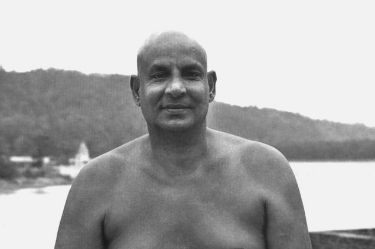
Swami Sivananda standing outdoors with river and hills background image
Jnana Yoga

Brahman Exists

Brahman Exists by Swami Sivananda Salutations to that non-dual Brahman which is the causeless cause, which is the source for this world and the activities of the sense-organs, mind and Prana! Salutations to the Indweller of our hearts, who is cognised by means of the Vedic method of Sravana, Manana and Nididhyasana by men of purified intellect whose faith in the Sastras as well as in the spiritual preceptor is great and whose devotion to them is as great as to the Lord! It is suggested that Brahman does not exist for the following reasons: Whatever exists is capable of being perceived through the medium of the senses by its peculiar attributes, as a pot, etc. Whatever that does not exist is not so apprehended, for instance, the horn of a hare, sky-lotus, etc. Brahman cannot be apprehended as it cannot be apprehended by its peculiar attributes; it does not exist. This argument is unsound and untenable, because Brahman is the cause of ether, etc. It cannot be said that Brahman does not exist: for ether etc., of which the cause is Brahman is perceived by the senses. It has been observed in the world that from which anything proceeds exists; for instance, clay, seed, etc., which are the material cause of pot, tree etc. Therefore Brahman exists because it is the cause of ether, etc. Nor do we in the world perceive by our senses anything born out of nothing. If name, form, etc., be the product of nothing, they could not be perceived by the senses. But they are perceived as such. Therefore Brahman exists. The Sruti also declares, How can existence be born of non-existence? How could something be perceived out of nothing? It also stands to reason that something could not he produced out of nothing. It therefore stands to reason to say that there is Brahman. You have great love for your hair on the head. You daily comb it nicely and apply hair oil but you throw the same hair if it falls in a cup of milk. You dislike to touch it. In loving the hair, you love your own Self only. The hair appears to be beautiful and attractive because of its association with the body of the Jiva and with the Chaitanya or consciousness that is at the back of this body. If you see a silk saree in a shop, it is not attractive, but when it is on the body of a lady it is very attractive and beautiful, because it is connected now with the Chaitanya. This gives the clue that the Atman exists and that the Atman is an embodiment of beauty. The great king cannot be seen by the ordinary persons or the agricultural peasants. But they are seen daily by the Dewan, the Tahsildar and other officials. Through this they know that there is a king who is the supreme Ruler of the state. Even so, the Supreme Self who is the source for everything, who is the Inner Ruler of all beings cannot be seen. And you can infer His existence by looking at the sun, the moon, the stars, and other marvellous objects of this universe which bespeak of His supreme glory and ineffable splendour. In order to point out that Brahman exists, even as the source of our physical activity, breathing, etc., and sensual pleasure, the Sruti proceeds to show that Brahman is the cause of both. Brahman also exists on account of this. For what reason? Because of the breathing and other kinds of activities that are seen. There is breathing in and out in this body by the help of Prana and Apana. The functions of the vital airs and the senses are carried on by the body and the senses combined. This conjunction in mutual dependence for the benefit of one single entity is not possible without an independent intelligent being, for we have not seen it otherwise. For instance, sand, lime, bricks do not combine together without an intelligent being who is outside them all, who is to occupy the house as its Lord. The combination of different elements must necessarily be for an entity quite different from all composing elements. As for instance, a house built by different composing materials is meant for the dwelling of man or any other living being quite different from the materials of composition; so the body which is composed of different materials must necessarily be meant for the purpose of one quite different from the composing elements. This is one of the arguments adopted by the Sankhya school to prove the existence of Purusha, the pure principle of intelligence who is dwelling in, yet quite different from, the body which is composed of the different modifications of Prakriti or matter. The Atman is signified here as a monarch residing in the palace of this body and for whose purpose the different functionaries, the senses, are performing their respective duties. The Sruti declares that Brahman, who is an embodiment of bliss and joy (Rasa), who is the very core of our being, is the source of our life and the activities of our senses. Without Brahman, the eye cannot see, the ears cannot hear, the Pranas cannot perform their respective functions. The end and aim of existence or the goal of life is to attain eternal bliss of Brahman. Man wants lasting happiness. On account of ignorance, he seeks it in external objects. He fails in this direction. Then he employs discrimination, searches within, turns his mind inwards and finds the undying bliss in his own Self or Atman through meditation. The path in which a sensualist treads is only a zigzag route towards the abode of supreme bliss. Every movement of life is towards the Satchidananda Brahman only. If this Ananda (bliss) does not exist in the supreme ether in the cave of the heart, who indeed in the world can breathe? Therefore Brahman exists. Even as the cause of
Brahman Exists Read Post »

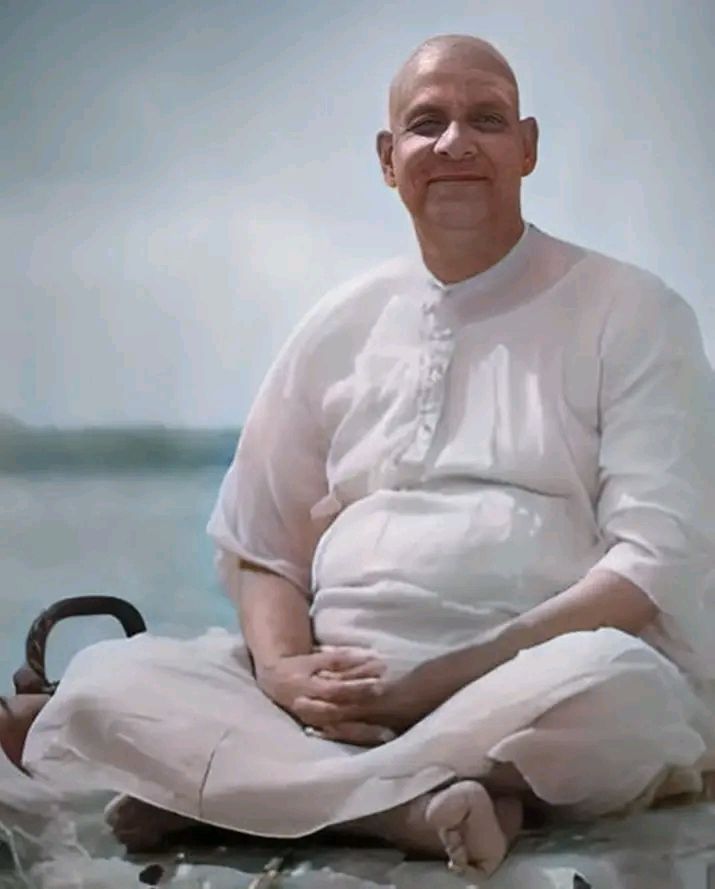
Swami Sivananda sitting cross-legged near river in white attire. image
Jnana Yoga

Brahman

Brahman by Swami Sivananda You dream sometimes that you are dead and that your relatives are weeping. Even in that supposed death state, you see and hear them weeping. This clearly indicates that even after apparent death, life really persists. You exist even after the physical sheath is thrown out. That existence is the Atman or the big I. In Brihadaranyaka Upanishad II-4,13, you will find: Then by what should he see whom? This clearly indicates that Atman is not an object of perception. It is always the knowing subject. There is neither an agent nor an object of action, nor an instrument. In the physical plane only, there is the Triputi or the triad, viz., seer, sight and seen. Who can know the Knower? How should one know Him by whom he knows all this? You could not see the seer of sight; you could not hear the hearer of the hearing; you could not perceive the perceiver of perception; you could not know the Knower of Knowledge. What you see is Bhava Padartha. Padartha means a thing. That which exists is Bhava. When you say; It is very, very big, it is very, very sweet, London is a very, very big city, this very indicates Abhava Padartha. It cannot be conceived even by the mind. Brahman or the Absolute comes under the category of Abhava Padartha because it is infinite. All differences are due to Upadhis or limiting adjuncts. As the limiting adjuncts are illusory or false, the differences caused by them are also false. Therefore Brahman alone, who is one without a second, is the balance left behind. He alone exists in the three periods of time. You will realise that the Lord whom you in ignorance worship as separate from yourself is not far from you, is not dwelling outside. He is the Self or Atman residing in the chambers of your heart. He is the Inner Ruler. Call it by whatever name you like, rest or peace, perfection or freedom, fullness or life or Nirvana, Nirvikalpa Samadhi or Sahaja Avastha, Kaivalya or Moksha, towards it you strive in all activities unconsciously as these transient mundane objects do not give you full satisfaction. Every movement of the foot is towards Satchidananda Brahman. Even a rogue or a vagabond is marching towards that immortal city of Brahman though he is in a circuitous or zigzag path.

Brahman Read Post »

Swami Sivananda writing spiritual teachings surrounded by books
Swami Sivananda, Yoga of Synthesis

Where Everyone is Welcome and Cared For

Where Everyone is Welcome and Cared For As qualification for first class aspirants, Viveka, Vairagya, Shat-sampat and Mumukshutva are prescribed by the scriptures. Some orthodox cults have caste-restrictions and insist on the students passing through the four stages of life, viz., Brahmacharya, Grihastha, Vanaprastha and then Sannyasa. When students come to me, I do not enquire anything about their qualification, position, parentage, caste or capacity. I welcome even thieves and rogues, persons of tender age and those who are sickly and old also. I know very well that they will all become dynamic Yogis when they are put in the company of sages and saints or when they are allowed to stay in a place charged with marvellous spiritual vibrations. PERFECT FREEDOM The spiritual vibrations of the Ashram have a great beneficial effect in moulding people in the path of Yoga. Thousands have felt this. I do not impose any rules or restrictions on the aspirants who desire to stay in the Ashram. Any number of persons can come and stay here as long as they like and they can go out the moment they wish. I do not demand any work, service or help from them. I permit them to carry on their own study and Sadhana and help them in all possible ways. The highly devoted aspirants who appreciate selfless service for their own evolution spend all their time in carrying out useful works and manage the affairs of the Society nicely. It is all Yoga for them. They are all Yoga Bhrashtas, living examples and models for the world. Thousands of aspirants have come to the Ashram. Several hundreds have gone out, after proper training, either for intense Sadhana in seclusion or dynamic work in cities; and yet the Ashram is always full and every day at least a dozen highly educated candidates crave permission to live in the Ashram. The students are mysteriously helped by attending the Satsanga and taking bath in the holy Ganga. Through some work, they all come in close touch with me and learn a lot in a short period. Quickly they develop all divine qualities without much effort and become great Yogis. MIRACLE OF MIRACLES How is it possible to run an ideal Ashram under the above circumstances? It is a great puzzle for many. It looks like a miracle to the world. People are staggered. I do not worry even a bit if the Secretaries and Managers of the Ashram come to me frequently with a big list showing a statement of debts extending to a lakh of Rupees. People’s wonder knows no bounds when, in spite of such debts, I sanction the purchase of several automatic printing machines for the University Press, or latest model high class Cameras, Enlargers and Projectors for the Studio, or the construction of big halls, temples and Ghats by the side of the Ganga. People complain that here they get more food and facilities than they need for their living. The inmates feel very rich and happy. Some may look as ordinary villagers; a few may not have had much education. But I find that every one who lives in the Ashram is a great saint with wonderful hidden faculties and talents. Prominent persons who visit the Ashram are stunned to see the wonderful development in the inmates, admire their capacities and enquire: “Dear Swamiji Maharaj, how do you find so many people of talents?” Is there any instance of my having asked any inmate of the Ashram to go out or expressed ill-feelings or used harsh words to him? None at all. When I have serious complaints that a particular Sadhaka disturbs the peace of the Ashram or interferes with the smooth working of the institution, I ask the man to go out and live independently in some other suitable place. I give him enough money for travelling expenses and a note of introduction to devotees for helping him. I give him spiritual advice at the time of his departure and pray for his welfare and enlightenment. In a few days or weeks, the man feels the Ashram as his own sweet home and comes back with a changed angle of vision and heart. I heartily welcome him. I forget the past easily. I do not have a vindictive nature. I permit useless persons, pessimistic people and even those who criticise me and attack the management to stay in the Ashram. After a short stay, they are transformed miraculously. I see joy and bliss in their face. HOW ASPIRANTS SHOULD BE CARED FOR I have unlimited, spontaneous generosity, love and affection for all the students of Yoga, irrespective of their age or sex, qualifications or abilities. I am highly pleased with those who do Japa, or a little meditation or some kind of service for the society, the sick and the poor. I give ample scope for all types of people to remain in the Ashram and evolve through Sadhana or work for the spiritual uplift of mankind. I take special care of the old people, young aspirants and the helpless sick persons. I distribute sweets and fruits first to all of them and then take a small portion. I remember now how I carried milk and curd to the old Sadhus in Swargashram and shampooed their legs and gave them medicine when they were sick. Even now I send a portion of my own food first to some Sannyasi students and visitors in the Ashram. For some years I myself carried a portion of my own food to a few hard workers who were taking a meagre diet and had very poor health. Later on, when the work increased in all directions, I kept two young Brahmacharis by my side always to distribute fruits and biscuits to all the inmates of the Ashram. These were not thrown into the rooms in the way in which worldly people haughtily give charity. I had the Bhav that I served the Lord in that

Where Everyone is Welcome and Cared For Read Post »

Swami Sivananda wearing garland walking with followers. image
Jnana Yoga

Brahman – One Without a Second

Brahman – One Without a Second he Vedas exclaim from time immemorial, Ekam Sat Vipra Bahudha Vadanti, Existence is One, Sages call it by different Names Rig Veda, 1-164-146. God, Brahman, Allah, Isvara, Jehovah, Ahuramazda, etc., are one. I offer my worship to that Supreme Being the One eternal homogeneous essence, indivisible mass of bliss and intelligence whom sages describe in a variety of ways through diversity of intellect. In the beginning Brahman who is One without a second alone existed. When darkness was rolling over darkness there was Existence only. Nobody knows how this universe came into being. You will find in Rig Ved: Who knows here, who can here state whence came all this multifarious Universe? Even the Devas are posterior to its creation, who then knows whence this came out? Rig Veda VIII-17-6. Atman alone exists. It appears as the objects which we cognise just as a rope appears as a serpent. Atman puts on the appearance of these phenomenal objects. That Brahman is the Self within all beings. That Brahman is without cause and without effect, without anything inside or outside, without defect or impurity, without length or breadth, without colour, shape or form. That Brahman is without limbs, parts, without name or caste, without hands and legs. That Brahman is an embodiment of wisdom, peace and bliss. It shines by Itself. It is self-luminous. All the objects that you cognise outside really exist in the highest Self. All the objects shine after them i.e., they borrow their light from the self-effulgent Atman. The whole world exists within Brahman. It appears as external through the force of Maya, just as your body appears in a mirror. How can one describe the glory and greatness of the Brahman! Even the Vedas have sung in praise of Him according to their limited capacity. No one has been able to find out His beginning or end. He walks without feet, grasps without hands, hears without ears, sees without eyes, tastes without a tongue, smells without a nose, feels without a skin, talks without a mouth, because He is a mass of pure Consciousness. He is all-pervading. He has hands, feet, eyes, heads, faces everywhere. He is a wonderful entity. He is beyond the reach of mind and speech. You cannot see Him with these physical eyes, but you can realise Him with the help of your pure sharp, subtle intellect after purging the mind of all evil tendencies. The eye cannot perceive Him. The mind cannot reach Him. The gross worldly intellect cannot grasp Him. The speech cannot describe Him. The speech returns back along with the mind, as it is not able to describe Him in adequate terms. We are baffled in our attempts to describe Him; His glory is indescribable. To describe Him is to deny Him. How can a finite mind grasp the Infinite? But He can be directly realised by that aspirant who is equipped with the four means of salvation, who does constant meditation, who has a sharp, pure intellect. Saints emphatically declare that Brahman or the Eternal is That which is above the undifferentiated, That which is unborn either as cause or effect, That from which speech and mind turn back baffled, That which is not this, not that, Neti, Neti, etc. He is the real unconditioned Sat. He is the reality of realities (Satyasya Satyam). Brahman is a mass of intelligence (Chidghana, Vijnanaghana, Prajanaghana). He is destitute of any other characteristics. He is entirely without any sort of difference. In Brihadaranyaka Upanishad IV-13, you will find: As a mass of salt has neither inside nor outside, but is entirely a mass of taste, thus indeed, has that Self neither inside nor outside but is altogether a mass of Knowledge. Just as a lump of salt has inside as well as outside one and the same saltish taste, not any other taste, so also that Brahman has inside as well as outside one and the same intelligence. Inside and outside are mental creation only. When the mind melts in silence, ideas of inside and outside vanish. The sage cognises one illimitable, homogeneous mass of consciousness only. Akasa or ether is subtle, all-pervading and unattached. So it is compared to the Brahman. Srutis emphatically declare: Akasavat Sarvagata Nitya i.e., like ether all-pervading and eternal. If the pot is broken the pot-ether is not in any way affected. So it is unattached (Asanga). Just as a house exists for somebody’s use, so also the ears, eyes, hands, legs exist for the use of the Director of the ears, eyes, etc., who is entirely distinct from the ears etc. That Director is the real infinite I. He is the Inner Ruler. He is Immortal. He is pure consciousness. The capability of the ears to hear sounds, of the eyes to cognise objects depends upon the intelligence of this Director. Just as the moon borrows its light from the Sun, these senses borrow their lights, intelligence and power from the source, viz., Atman, who is the Director. Therefore it is quite appropriate to say that the Atman is the Ear of ears, Eye of eyes, Prana of Pranas, Mind of minds. Atman is different from the knowable. He is beyond the unknowable also. He is incomprehensible. This does not mean that He is a non-entity or void or a negative concept, or a metaphysical abstraction. He is a mass of knowledge or pure consciousness. Consciousness is denser than stone or platinum or gold. He is the only real living entity, the substratum for everything.

Brahman – One Without a Second Read Post »

Swami Sivananda seated outdoors wearing ceremonial garland. image
Jnana Yoga

Gist of Vedanta

Gist of Vedanta It is the nature of man to strive for happiness but all the happiness which he can gain by his actions is only of limited duration. The enjoyments of the senses are transient and the senses themselves are worn out by too much enjoyment; further, sin generally accompanies these enjoyments and makes man unhappy beyond comparison. Even if the pleasures of the world are enjoyed as much as their nature permits, if they are as intense, as various and as uninterrupted as possible, yet old age approaches and with it death. And the enjoyments of heaven are in reality not more enviable than these pleasures of senses; they are of the same nature although more unmixed and durable. Moreover they come to an end; for they are gained by actions and as these latter are finite, their effect must also be finite. In one word there is necessarily an end to all those enjoyments and what avails us to strive for pleasure which we know cannot sustain us beyond the moment of enjoyment. It is therefore in the nature of man to look out for an unchangeable, infinite happiness (Ananta Sukha) which must come from a ‘being’ in which there is no change if such a ‘being’ can be found, it is only from Him that man attains an unalterable happiness and if this be so, this ‘being’ must become the sole object of all his aspirations and actions. This ‘being’ is not very far. He resides in your heart. He is the Sakshi Chaitanya who witnesses the activities of your Buddhi. He is the Nirguna Brahman of the Upanishads who is highly eulogised in a variety of ways by the Rishis and seers of the Upanishads. Whatever it be, it is in reality one. There truly exists only one universal Being called Brahman or Paramatman, the Highest Self. This Being is of an absolutely homogeneous nature (Ekarasa). It is a pure Being or pure intelligence (Chaitanya Jnana). Intelligence is not to be predicated of Brahman as its attributes but it constitutes its substance. It is its Svarupa or essence. Brahman is not a thinking being, but thought itself. He is not all-knowing but knowledge itself (self-knowledge). He is not all-powerful but power itself. He is not all-beautiful but beauty itself. He is Bliss itself. Do you see the difference now? That is termed Svarupa or essence of everything. He is absolutely destitute of qualities; whatever qualities or attributes are conceivable, can only be denied of it. But if nothing exists but one absolutely simple Being, whence the appearance of the world by which we ourselves are surrounded and in which we ourselves exist as individual beings? Brahman is associated with certain power called Maya or Avidya to which the appearance of this world is due. Oh how deep, unfathomable and marvellous is this Maya, the inscrutable (Anirvachaniya) power of Brahman! Every human being, though in essence he is really Brahman, does not though instructed grasp the truth I am Brahman but feels convinced, without any instruction, that he is such a person’s son mistaking for the Atman and is only perceived like a stone or pot. Indeed, these worldly-minded persons wander in this miserable Samsara repeatedly deluded by the Maya of Brahman alone. The idea of Brahman, when judged from the viewpoint of intellect, is an abstraction, but it is concretely real for those who have the direct vision to see it (Aparoksha Anubhuti or Sakshatkara). Therefore, the consciousness of the reality of Brahman has boldly been described to be as real as the consciousness of an Amalaka fruit held in one’s palm. Even intellect can grasp only a little of the Truth. Brahman has positive attributes such as Sat-Chit-Ananda, purity, perfection, Satyam, Jnanam, Anantam, etc., They are not really attributes. They are all synonymous terms for Truth or Brahman. Sat-Chit-Ananda also is a mental Kalpana. These are the highest qualifications of Brahman which the human intellect can grasp, generally Brahman is described by negation of qualities such as Nirakara, Nirguna, Nirvikalpa, etc. Are we not driven to take the same course ourselves when a blind man asks for a description of light? Have we not to say in such a case that light has neither sound, nor taste, nor form, nor weight, nor resistance, nor can it be known through the process of analysis? Of course it can be seen but what is the use of saying this to one who has no eyes? He may take the statement on trust without understanding in the least what it means, or may altogether disbelieve it, even suspecting in us some abnormality. Does the truth of the fact that a blind man has missed the perfect development of what should be normal about his eye-sight depend for its proof upon the fact that a large number of men are not blind? The very first creature which suddenly groped into the possession of its eye-sight had the right to assert that the light was reality. In the human world there may be very few who have their spiritual eyes open, but in spite of the numerical preponderance of those who cannot see, their want of vision must not be cited as an evidence of the negation of the light. In the Upanishads we find the note of certainty about the spiritual meaning of existence. In the very paradoxical nature of the assertion that we can never know Brahman but can realise Him there lies the strength of conviction that comes from personal experience (Anubhava). The variety of experience is not real, nay even experience itself is nowhere from the point of view of the Absolute. To lead the life wherein the variety of experience does not affect, either our weal or woe, is the highest practical rule of conduct in accordance with the proper aim of existence. The variety of experience creates distinction and sets up false limits where there exists none. Pain and pleasure, good and

Gist of Vedanta Read Post »

Swami Sivananda seated on chair outdoors in simple attire. image
Swami Sivananda, Yoga of Synthesis

Spirit of Accomodation

Spirit of Accomodation When one of my students had left the Ashram for some reason, I at once felt that his valuable experience and faculty should not be lost for the service of humanity. So I wrote thus:- “I was sending you money for your pocket expenses. The money was returned with the remark: ‘Left the Place.’ I am always at thy feet to serve you at all times. You only refuse it. Why should you depend on anybody, when I am here to serve you in all ways? Why should you live in cities with worldly persons? There are various sections here in which you can work, gently, mildly, slowly, a little, without mixing with anybody, independently, having connections with me only. “All sections of work suffer for want of people and proper supervision. Even if you look after a little work in the correspondence section, it will be a great help to the world. You can assist me in a hundred ways. Do not work hard as before. You do a little work without any responsibility. This is God’s Blessing and Grace. Take plenty of rest and do a little work. You can remain away from the Ashram. Your food will be placed in your room. I shall give you money for your expenses. “There is no dearth for food for you here. I do not refuse food to any one. Why should you live in cities? Gradually you will lose all your faculties when you are not in touch with work. The worldly atmosphere is not congenial to spiritual progress. Therefore come at once to Rishikesh. May I send you train fare? If you like, you can live here for six months and six months in cities. “If you change your outlook, vision, imagination and attitude a bit, you can be happy here and everywhere. Man suffers on account of his own imagination and his old habit of thinking. He never allows himself to be changed. This is Maya. Adjust and adapt. Be happy and cheerful at all times. Evolve quickly and become a dynamic Yogi and bring Light and Knowledge to the whole world.” WHO CAN START ASHRAMS An Ashram is a Glorious centre to ensure World Peace. Many enthusiastic persons start Ashrams with a fine letterhead. That is not enough. The starting of new Ashrams by beginners will not bring good results to the world. It needs special faculties to run an Ashram successfully. For beginners, that will be a hindrance, and for advanced students that will be a downfall. Many years ago some Sannyasins wrote to me for financial help and advice for improving the activities of their Ashrams, and the reply I gave to one of them is reproduced below. That clearly explains my attitude and principles: “Beloved Swamiji, Your achievements, ambitions, aims and objects are laudable, indeed. O Swamiji, aspire not for Gurudom, comforts, name and fame when you start an Ashram or a religious Society. Generally those who start Ashrams are humble in the beginning and do some service. When they become rich and well established, they care not for public service or individual evolution. They become arrogant and autocratic. Beware of temptations and work as a meek Sevak always. Even after Self-realisation, leave not the daily routine of Sadhana. “I do not know any rich Rajah or Zamindar. I have no disciples. Some aspirants who want real spiritual training, consider me as their Guru. I take great care of them. That is all. I cannot help you with money. I am serving the world by a variety of ways and work through all Ashrams, Mutts and religious institutions. “If you do public service with a selfless spirit, if people see the spirit of renunciation in you, then they themselves will volunteer to help you in every way. Do not move heaven or earth for money. Try not your luck through Derby Sweep. It is a pity for Sadhus to think of such schemes. “Nowadays aspirants do not care to look to their spiritual progress. They shave their head, colour their clothes and remain at Rishikesh for some time and then pass for great Yogis. They begin to collect money for starting Ashrams for leading comfortable life. “There are enough Ashrams and Mutts in India. Sincere, selfless workers are rare. Before one starts an Ashram, one must have been leading an exemplary life. His very presence must give peace, power and bliss to all. Only then can one successfully run the institution. IDEALS MUST NOT BE FORGOTTEN “Before starting an Ashram, the mottoes, ambitions and aims are no doubt grand, charming and attractive. As soon as a little fund and fame come, the ideal is forgotten. The spirit of selfless service dwindles away. The objects are abandoned. The Founders want to lead a comfortable life with some chosen disciples and followers. Even granting that the founders are able to live an ideal life, their disciples will not be able to manage it with the same spirit later. It becomes a place of quarrel or a business-house. The head of the Ashram and the inmates there should lead a life of Vairagya, absolute renunciation. The Ashram run by such people stands as a centre, a nucleus of perennial peace, bliss and joy. It attracts everyone. Millions all over the world derive inspiration. The world is always in need of such Ashrams. “Every Sannyasi, every Yogic student has got some defect or other. It is only a full-blown Yogi who will be absolutely free from evil qualities and defects. All are in the path of evolution. Everybody is likely to err sometimes, even very often. Become tolerant. See good in everything. Slight rupture or friction is bound to come between friends and workers, at times between Sannyasins, too. One must excuse the other, must reunite and forget the past. You must have a tendency to grasp only the good in others and try to emphasise it in your everyday life. No one

Spirit of Accomodation Read Post »

Swami Sivananda seated outdoors wearing flower garland. image
Jnana Yoga

Introduction to Vedanta

Introduction to Vedanta by Swami Sivananda Vedanta is the culmination of the Vedas. It is entering into the study of Brahman. It is the science which raises man above the plane of worldliness. It is the rational method of meditating on the Supreme Absolute, the Eternal, the Infinite. Vedanta is the culmination of human experience and is the end of the faculty of thinking. It is the greatest and the highest knowledge. This wisdom was revealed to the ancient sages. The Rishis and sages of yore have made experiments and researches in meditation and given to the world their spiritual experiences. These are all authoritative. You must not spend much time in making the preliminary experiments once more. Your whole life-time is not sufficient for making these experiments and researches. The experiences of sages are like ready-made compressed tablets. You will have to simply follow their instructions implicitly with perfect, unswerving faith and devotion. Then alone can you make any progress in the spiritual path and attain the goal of life. In order to practise Sadhana for the attainment of absolute freedom, you should know in the beginning itself its technique and method. You should know the nature of bondage, the cause of bondage and the way of getting rid of bondage. You have to make a searching study of life and know its mysteries. Karma You are born on this earth-plane on account of your Karmas (actions) done in previous births. This body and this condition of mind are both the results of effects of past Karmas. What is Karma? A Vasana or desire arises. Then you exert to possess the object. This is Karma. Thought itself is the real Karma. Physical action is only its manifestation. Then you enjoy the object. This is Bhoga. This Bhoga strengthens and fattens the Vasana. The Chakra or wheel of Vasana, Karma, Bhoga, is ever revolving. Give up Bhoga. Practise renunciation, discrimination and dispassion. Destroy the Vasanas by eradicating ignorance (Ajnana) through Brahma-Jnana, the Knowledge of the Imperishable. Then alone the wheel which binds a man to this Samsara will stop revolving. Then alone you become an Atmavan or Knower of the Self. Who is a Killer of Atman? Forgetting the Self by indulging in sensual pleasures, is killing of Atman. Even after somehow getting this rare human birth, with an innate tendency for Nivritti, he who does not strive for the liberation of his soul, is a killer of Atman. He is not an Atmavan but an Atmaha. Renunciation The Atman can be realised only through renunciation. You have enjoyed sensual objects in millions of births. You have enjoyed sensual objects for so many years in this birth. If there has not come satisfaction in you till now, when will it come, then? Do not run after the mirage of sensual objects. The senses are deluding you. Develop dispassion and renunciation. Realise your Atman. Then only you will get eternal satisfaction, everlasting peace and immortal bliss. Wake up from your slumber of ignorance, O worldly fool! If your body-clothes catch fire, with what celerity you want to run towards water for cooling you? You must feel like this from the burning fire of Samsara. You should feel that you are roasted in the fire of Samsara. Vairagya (dispassion) and Mumukshutva (strong yearning for liberation) should dawn in you. You should run to the Guru for saving you. Enjoyment of objects strengthens the Vasanas or Trishnas (cravings) and makes the mind more restless. Enjoyment cannot bring satisfaction of desires. Further, Trishna drains the energy and weakens the senses. When you dream, you see the events of fifty years within an hour. You actually feel that fifty years have passed. Which is correct, the time of one hour of waking consciousness or the fifty years of dreaming consciousness? Both are correct. The waking state and the dreaming state are of the same quality or nature. They are equal (Samana). The only difference is that the waking state is a long dream or Deerghasvapna. It will be realised that this life on earth is only a fantastic dream of the mind when the Supreme Absolute or Para-Brahman is realised. Upasana Practise Upasana for acquiring concentration of mind. Upasana is of various kinds, viz., Pratika Upasana, Pratima Upasana (worship of idol), Panchakopasana (worship of the five deities: Ganesha, Siva, Vishnu, Durga and Surya), worship of Avataras like Rama and Krishna, and Ahamgraha Upasana. Ahamgraha Upasana is Nirguna Upasana. The aspirant meditates on his own Self as Brahman. He identifies his individual self with the Supreme Self or Brahman. He tries to take out the Self that is hidden, within the body of five sheaths. Hence the significant name, ‘Ahamgraha’ Upasana. ‘Food is Brahman’. ‘Akasa is Brahman’. ‘Surya (Sun) is Brahman’. ‘Mind is Brahman’. ‘Prana is Brahman’. – All these are Upasana-Vakyas of the Upanishads. These are all Pratika Upasanas. Pratika is a symbol of Brahman. All these are symbols of Brahman. You can realise Brahman through worship of these Pratikas. You will have to feel that Brahman is hidden in these Pratikas. You will have to think that the Adhishthana or substratum of these Pratikas is Brahman. These are some of the ways of doing the Upasana of Brahman. Control of the Senses The senses should be perfectly controlled in order to be able to concentrate on Brahman. The eyes and ears also are as much turbulent and mischievous as the tongue. The eyes always want to see new forms, new scenes, new pictures and new places which the mind has heard of during conversation with other people. If you have not seen Kashmir, if you hear from those who visited Kashmir, Kashmir is a lovely place. The springs and sceneries are wonderful, the eyes helped by the mind will agitate you again and again till you actually see Kashmir. The eyes and the ears should cease from desiring. The two most troublesome of the senses are the tongue and the genital. One who

Introduction to Vedanta Read Post »

Swami Sivananda sitting cross-legged by river in meditation pose. image
Jnana Yoga

What is Vedanta

What is Vedanta by Swami Sivananda VEDANTA is no creed, no ceremony or form of worship. It is the science of the Reality: It boldly proclaims with emphasis that you are the immortal, all-pervading Atman, the universal soul or supreme Brahman in essence, in reality. The preliminary qualifications for a student of Vedanta is an earnest desire to search for the Truth. He must always keep alive this desire for Truth. Then alone he will be able to tread the path of Truth easily. Man is in essence a soul. He is fundamentally a spirit. He has put on this body to find out the Atman who is hidden in the chambers of his heart, to attain eternal bliss and to serve humanity with Atmabhava. This body is like a cart or motor car. It is without intelligence. Atman is the real driver of this body. The all-wise Atman dwells in this body. So this body has been made intelligent by this Atman. This Atman or Brahman is pure, calm, self-luminous, invisible, imperishable, eternal and independent. He is bodiless, birthless and endless. He stands in his own greatness. He is without support. He shines in his own glory. The drift of the Srutis or Upanishads cannot be understood even in a hundred years by persons who are conceited and think themselves very learned. Therefore abandon conceit and become humble. Knowledge of Brahman or Brahma Jnana alone can free us from the clutches of ignorance and death. This knowledge should come to us as a direct realisation through meditation. Mere scholarship or intelligence or study of religious books cannot help us to attain the summum bonum. It is a matter for direct experience, not for argument or reasoning. The cave of the heart is to be sought after by every aspirant for Self-realisation. The Supreme Self which is full of bliss abides in the cave. ‘I’ and ‘Mine’ are the causes of this baneful worldly experience. But the pure Sattvic ‘I’ which is no other than the Atman is the goal of human life. Friend, for a little while, concentrate thy attention and fix thy mind and hearing on thy inner soul. Abandon all worldly pleasures. Take to the path which is trodden by the righteous. Live on milk and fruits for a week. Endure cold and heat, hunger and thirst. Do not injure any creature even to the slightest degree. Live contentedly. Regard censure and applause equally. Derive happiness from thy soul. Do not jeer at any one. Do not frown at anybody. Restrain all your senses. But cheerful always. Do not look back. Divest yourself of desire and wrath. Cast off pride. Turn your gaze inwards. Contemplate. You will enjoy true happiness. Break the bonds of desire. Preserve equanimity in success and failure. Do not manifest any liking for life or dislike for death. Do not wish evil to the man who beats you or good to the man who smears your body with sandal paste. Take as much food and drink as will barely keep up life. Purify the mind. Free yourself from all attachments. Tear off mentally all bonds and ties and live as free as the wind. You will surely attain eternal happiness. This wheel of life is continually turning like the wheel of a car. This worldly course of life is really a fleeting illusion although it looks real and eternal. It is afflicted by birth, death, decrepitude, disease, sorrow and pain. Live in God. Realise Him through worship and meditation. All miseries will come to an end. You will attain immortality. Attain the permanent and unchanging place. Then alone you will be happy for ever. You will find such a place in Atman or Brahman only. Tread the fearless path of wisdom. Restrain the senses. Be frank and simple. Abandon the desire of bettering your position by acquisition of wealth. Seek the company of sages. Remove the faults or taints of the mind. Meditate regularly on the immortal resplendent Self. You will attain the everlasting place of happiness. Brahman or the Supreme Self is beyond space, time and causation. He is limitless. He is tranquil and shines with effulgence in all bodies. He cannot be any particular thing. He is Chaitanya or pure consciousness. He is Vastu. Atman or Brahman or the Supreme Self is the hidden treasure. It is the Jewel of jewels. It is the Gem of gems. It is the imperishable, inexhaustible supreme wealth, which no dacoit can rob. It is Chintamani of Chintamanis that will give man whatever he wishes. Adhyasa is the way of the mind to mistake one thing for another, the unreal for the real. It is not the cause of the appearance of this world. It is the cause of mistaking it as the real. It is born of ignorance. You mistake the body for the real Self. You identify yourself with the body. You are attached to it. You cling to it. This is Deha-adhyasa. Knowledge of the Immortal Self will destroy the Adhyasa. Start the anti-current and always try to identify yourself with the pure all-pervading Atman or Brahman. Identification with the body or attachment to the body is the cause for fear. Think constantly of the immortal, fearless Atman which is your innermost Self. This fear will take to its heels. Think of courage. Fear cannot stand. Positive always overcomes the negative. May you become fearless! May you attain that fearless Brahman! It is only when Deha-adhyasa vanishes by knowledge of the Self that one becomes fearless. Abhayam (fearlessness) is the highest fruit of Self-realisation. The state of illumination and realisation of that Infinite Bliss eludes your grasp by delusion set up by the vehicles and vestures in which the soul is encased and their activities with which it identifies itself through accumulated Vasanas of countless births. But constant meditation and enquiry will remove all obstacles and help you in attaining the summum bonum. If the mirror is dirty, you cannot see

What is Vedanta Read Post »

Swami Sivananda side profile seated near water. picture
Jnana Yoga

Essence of Jnana Yoga

Essence of Jnana Yoga What is Ajnana? To identify oneself with the illusory vehicles such as body, mind, Prana, senses, etc., is Ajnana. To say: I am the doer, I am the enjoyer, I am a Brahmin, I am a Brahmachari, this is mine, he is my son, is Ajnana. What is Jnana? Abheda Darshanam Jnanam. To know Brahman as one’s own Self is Jnana. To see: I am Brahman, I am pure, all-pervading consciousness, I am non-doer, I am non-enjoyer, I am always the silent witness, is Jnana. To behold the one Self everywhere is Jnana. The Brahman, the Supreme Self is neither the doer of actions nor the enjoyer of the fruits of actions. The creation, preservation and destruction of the world is not due to Him. They are due to the action of Maya or Avidya which is the Lord’s own energy that manifests itself as the world-process or Samsara. Just as there appear to be three kinds of space, viz., absolute space, space as limited by a jar and space as reflected in the water that is in the jar, so also there are three kinds of Chaitanya or intelligence, viz., Absolute Intelligence or Para Brahman, Intelligence or Chaitanya reflected in Maya or Isvara and Intelligence or Chaitanya reflected in Avidya or Jiva. The notion of the doer which is the function of intelligence as reflected in the Buddhi or intellect together with the notion of Jiva or the individual soul is superimposed on the limitless, pure Brahman, the silent witness, by the foolish. The illustration of space Absolute, space as limited by a jar and space as reflected in the jar is given to convey the idea that in reality Brahman is one but appears or expresses to be threefold owing to Maya. The reflection of the intelligence is an erroneous belief or notion. It is due to Anadi Avidya or beginningless ignorance. Brahman is without limitations. Limitation is a super-imposition (Adhyasa or Kalpana) on Him. The unity of the Supreme Self with the reflected self or Jiva is established through the saying or the great sentence of the Upanishads, Thou art That (Tat Tvam Asi). When this Knowledge of the identity of the two selves arises through the great saying, Thou art That, then Avidya or ignorance with all its offshoots and the world problems are destroyed. Thus there is no doubt at all. Self-realisation or direct intuitive perception of the Supreme Self is necessary for attaining perfection or freedom. Mere study of scriptures even through hundreds of births will not confer the final emancipation. Maya is also called Prakriti, Prarabdha, Avyaktam. It is said to be neither existence nor non-existence. It is neither Sat nor Asat. It is indescribable (Anirvachaniya). It is Sat-Asat-Vilakshana, Anadi Bhavarupa Anirvachaniya. For a sage or Jivanmukta, there is neither joy nor sorrow, neither birth nor death. He has crossed the ocean of Samsara or worldly course of life and reached the other shore of fearlessness and immortality. He has become Brahman himself. Brahmavit Brahmaiva Bhavati. The Knower of Brahman becomes Brahman. This is the emphatic declaration of the Srutis or Upanishads. The aim of Jnana Yoga is the destruction of the notion of duality and the establishment of the unity of the individual self with the Supreme Self. This is a compendium of all the Vedanta. This is a great purifier and destroyer of all sins. This is a great secret. He who attains Self-realisation is worshipped by all gods. He attains the status which even Yogis cannot attain.

Essence of Jnana Yoga Read Post »

Swami Sivananda sitting on chair outdoors near building. image
Swami Sivananda, Yoga of Synthesis

Role of The Divine Life Branches and Spiritual Aspirants

Role of The Divine Life Branches and Spiritual Aspirants My message to individual spiritual aspirants and to the Branches of the Divine Life Society is as follows: “You have come to this earth to attain spiritual perfection. You have come here to attain supreme and unalloyed Bliss. The purpose of human birth is the achievement of Divine Consciousness. The Goal of life is Self-realisation. Man is not a sensual animal. Man, in his essential nature, is an ever free, ever pure, ever perfect, immortal, spiritual being. Feel that you are the Immortal Self. You are Satchidananda. Remember ‘Ajo nityah sasvatoyam puranah,’-you are unborn, eternal, imperishable and ancient. To live in this exalted Consciousness is to experience indescribable joy every moment of your life, to experience a limitless freedom in the Spirit. This is your birthright. This is the aim of your life. This is the goal. To realise this through a life of truth, purity, service and devotion is the chief purpose of the Divine Life Movement. “Fear dominates in this era of nuclear weapons of mass destruction. Hatred rules the policies of vast sections of the so-called enlightened and civilised mankind. This age of advancement has been exposed to be in reality an age of degeneracy in the views and values, the ideals and morals of the greater masses of mankind. At this juncture, cultured men and women all over the world look to the sacred land, India, for light and knowledge. It is your noble task to spread this light of spiritual knowledge and spiritual Idealism to all corners of the globe.” ONENESS OF HUMANITY “The Upanishads say: ‘All this is verily the Atman. The One, blissful Self indwells all beings.’ The spiritual oneness of all humanity is a great lesson man needs today. Whatever has been and whatever will be in the future, all this is verily the one, eternal Being alone. The Message of Divine Life is: ‘See God in all faces. Serve all. Love all. Be kind to all. Be compassionate. Feel everyone to be your own. Serve your fellow beings in the spirit of worship offered to the Divine which indwells them. Service of man is truly the worship of God.’ Let this message ring freedom from end to end in every land. Let this message enter into every home and into the heart of everyone. “All great religions of the world do verily declare this divine message of the spiritual basis of man’s life. They do verily declare the universal brotherhood of man under the fatherhood of the Almighty Lord. Know well that the heart of the Vedas, the heart of the Bible, the holy Koran, the sacred Gathas and all the world scriptures are in truth one and sing in unison the sweet message of love and concord, goodness and kindness, service and worship. Discard the barriers of name and form. Seek the oneness at the heart of all beings. Include within your spiritual embrace entire humanity. Live for peace. Live for universal love. Live in the Life Divine.” THE CLARION CALL OF DIVINE LIFE “A Divine Life Branch is a great blessing to man in the present age. It is a veritable boon from the Divine. It is a field of dynamic Yoga, a field of practical Vedanta. Spread of Divine Life is the hope of mankind. Through Divine Life shall man free himself from ignorance, pain and suffering and go beyond sorrow into the realms of peace and bliss now and here, in this very life. Divine Life brings peace and brotherhood to mankind. It purifies man, ennobles his nature and unfolds his glorious, hidden, divine personality. Divine Life is the gift of India to the world at large. “Let the clarion call of the Upanishads ring through every village, town and city. Let the glorious chant of divine Name fill all quarters. Let virtue be implanted in every heart and Dharma and the good life be seen in every walk of life. Divine Life must be practical. Ideals of Divine Life must shoot up into practical realisation. Divine Life must be made vigorously manifest in the lives of the people. This is important. Be sincere. Work with concord. Be adaptable. Adjust, adapt and accommodate. Remember always that work is the important thing, not personal views and individual opinions. Therefore dissolve all differences and work together for the cause of a pure life and spiritual perfection. “Perfection of the individual leads to the perfection of mankind ultimately. Spread the doctrine of selfless service. Inspire all to follow the path of Yoga and attain the Goal of life, fine health and long life.” It is not through rules and regulations and restrictions that I tried to help the seekers after Truth. Stage by stage, I gave instructions through letters, periodicals and valuable publications to all the students for creating some spiritual vibrations through collective prayers, common meditation, Bhajans and Kirtans. For spiritual progress, it is not number that counts. Even a single sincere student can move the world and bring light and knowledge to the world. The following letters written to my students between 1936 and 1940 will clearly explain how I started a dynamic campaign all over the world and established over 300 Branches of the Divine Life Society. (1) IMPORTANCE OF COLLECTIVE SADHANA “Evolution is quicker through collective Sadhana, mass prayers and common meditation. The purpose of Divine Life Branches is not amassing wealth, name or fame. It is just to bring peace and harmony to the world by creating spiritual vibrations at various centres. Organise weekly meetings. Invite friends who are spiritually-inclined. Clear the doubts of the devotees. You can have a library with philosophical books. Invite learned men of your place to give discourses. Occasionally print my “Twenty Important Spiritual Instructions” and other leaflets for free distribution. Thus you can lay the seed for a Divine Mission. It will grow slowly and bring spiritual good to the world. This will contribute a lot to your own

Role of The Divine Life Branches and Spiritual Aspirants Read Post »