













Hari Om

Menu

February 10, 2026

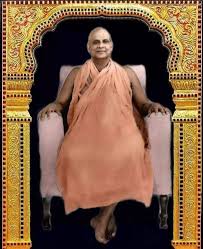
Swami Sivananda seated in chair with ornate frame. image
Swami Sivananda, Yoga of Synthesis

How God Care Into My Life

How God Care Into My Life It would be easy to dismiss the question by saying: “Yes, after a prolonged period of intense austerities and meditation, while I was living at Swaragashram and when I had the Darshan and blessings of a number of Maharishis, the Lord appeared before me in the form of Sri Krishna. But that would not be the whole truth, nor a sufficient answer to a question relating to God, who is infinite, unlimited and beyond the reach of speech and mind. Cosmic Consciousness is not an accident or chance. It is the summit, accessible by a thorny path that has steps-slippery steps. I ascended them step by step the hard way; but at every stage I experienced God coming into my life and lifting me easily to the next stage. My father was fond of ceremonial worship in which he was very regular. To my child-mind the image he worshipped was God; and I delighted in helping father in the worship by bringing him flowers and other articles of worship. The deep inner satisfaction that he and I derived from such worship implanted in my heart a strong conviction that God was in such images devoutly worshipped by His devotees. Thus did God first come into my life and place my foot on the first rung of the spiritual ladder. As an adult I was fond of gymnastics and vigorous exercises. I learnt fencing from a teacher who belonged to a low caste. He was a Harijan. I could go to him only for a few days before I was made to understand that it was unbecoming of a caste-Brahmin to play the student to an untouchable. I thought deeply over the matter. One moment I felt that the God whom we worshipped in the image in my father’s worship room had jumped over to the heart of this untouchable. He was my Guru all right. So I immediately went to him with flowers, sweets and clothes and garlanded him, placed flowers at his feet and prostrated myself before him. Thus did God come into my life to remove the veil of caste distinctions. How very valuable this step was I could realise soon after this, for I was to enter the medical profession and serve all, and the persistence of caste distinctions would have made that service a mockery. With this mist cleared by the light of God, it was easy and natural for me to serve everyone. I took keen delight in every kind of service connected with the healing and alleviation of human misery. If there was a good prescription for malaria, I felt that the whole world should know it the next moment. Any knowledge about the prevention of diseases, promotion of health and healing of diseases I was eager to acquire and share with all. Then in Malaya, God came to me in the form of the sick. It is difficult for me now to single out any instance, and perhaps it is unnecessary. Time and space are concepts of the mind and have no meaning in God. I can look back now upon the whole period of my stay in Malaya as a single event in which God came to me in the form of the sick and suffering. People are sick physically and mentally. To some, life is lingering death; and to others, death is more welcome than life; some invite death and commit suicide, unable to face life. The aspiration grew within me that if God had not made this world merely as a hell where wicked people would be thrown to suffer, and if there is (as I intuitively felt there should be) something other than this misery and this helpless existence, it should be known well and experienced. It was at this crucial point in my life that God came to me as a religious mendicant who gave me the first lesson in Vedanta. The positive aspects of life here and the real end and aim of human life were made apparent. This drew me from Malaya to the Himalaya. God now came to me in the form of an all-consuming aspiration to realise Him as the Self of all. Meditation and service went apace; and then came various spiritual experiences. The body, mind and intellect as the limiting adjuncts, vanished, and the whole universe shone as His Light. God then came in the form of this Light in which everything assumed a divine shape and the pain and suffering that seem to haunt everybody appeared to be a mirage, the illusion that ignorance creates on account of low sensual appetites that lurk in man. One more milestone had to be passed in order to know that “everything is Brahman.” Early in 1950-on the 8th of January-the Lord came to me in the form of a half-demented assailant, who disturbed the night Satsang at the Ashram. His attempt failed. I bowed to him, worshipped him and sent him home. Evil exists in order to glorify the good. Evil is a superficial appearance. Beneath its veil the one Self shines in all. A noteworthy fact ought to be mentioned here. In this evolution nothing gained previously was entirely discarded at any later stage. One coalesced into the next, and the Yoga of Synthesis was the fruit. Idol-worship, service of the sick, practice of meditation, the cultivation of cosmic love that transcended the barriers of caste, creed and religion, with the ultimate aim of attaining the state of Cosmic Consciousness, was revealed. This knowledge had to be shared immediately. All this had to become an integral part of my being. The mission had been gathering strength and spreading. It was in 1951 that I undertook the All-India Tour. Then God came to me in His Virat-Swarupa-as multitudes of devotees-eager to listen to the tenets of divine life. At every centre I felt that God spoke through me, and He Himself in His cosmic form spread out

How God Care Into My Life Read Post »
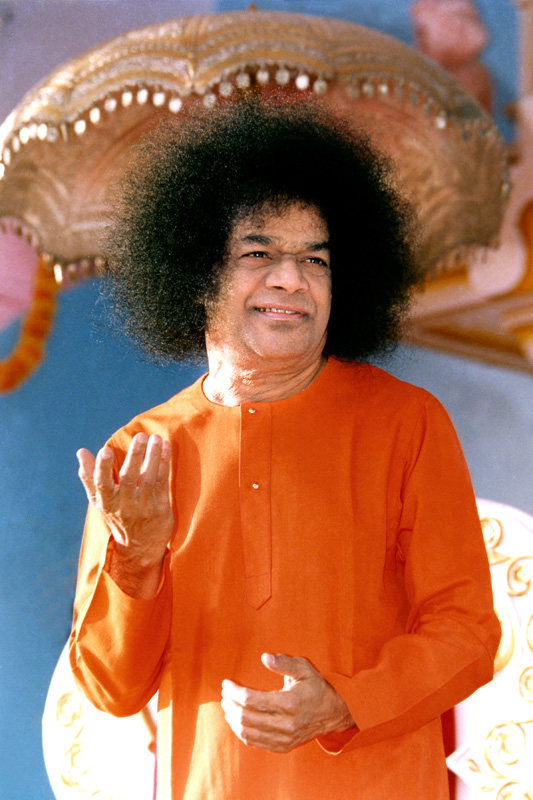
Bhagwan Shri Sathya Sai Baba Blessing Gathering Image
Prayers by Bhagavan Sri Sathya Sai Baba

Om Jai Jagadeesha Harey

Om Jai Jagadeesha Harey Om Jai Jagadeesha Harey Swami Sathya Sai Harey Bhaktha Jana Samrakshaka Bhaktha Jana Samrakshaka Parthi Maheshwara Om Jai Jagadeesha Harey Sashi Vadana Srikara Sarva Prana Pathey Swami Sarva Prana Pathey Aashritha Kalpa Latheeka Aashritha Kalpa Latheeka Aapadh Bandhava Om Jai Jagadeesha Harey Mata Pitha Guru Dhaivamu Mari Anthayu Neevey Swami Mari Anthayu Neevey Naada Brahma Jagan Natha Naada Brahma Jagan Natha Nagendra Shayana Om Jai Jagadeesha Harey Omkaara Roopa Ojaswi Om Sai Mahadeva Sathya Sai Mahadeva Mangala Arathi Anduko Mangala Arathi Anduko Mandhara Giridhari Om Jai Jagadeesha Harey Narayana Narayana Om Sathya Narayana Narayana Narayana Om Narayana Narayana Om Sathya Narayana Narayana Om Sathya Narayana Narayana Om Om Jai Sadguru Deva 1. Victory to Lord of Universe, Lord Sathya Sai, Who destroys grief, evil, and miseries of life and Who guards and protects devotees. Victory to Lord of Lords – Lord of Parthi. 2. O Graceful and Charming as a full moon! O Auspicious One! O Lord Sai! Thou art the Indweller and life-force of all Beings; the wish-fulfilling divine creeper to those who have surrendered to Thee; and kinsman, protector, and friend in times of distress and calamities. Victory to Lord of Universe. 3. O Lord Sai! Thou art Mother, Father, noble Teacher, Supreme Divinity, and everything to us. O Lord Universe! Thou art Primeval Sound and art reclined on coiled serpent. 4. O Splendorous One! O Lord of Lords — Lord Sai! Thy Form is Pranava. We pray Thee to accept the auspicious waving of flame of light (signifying the removal of ignorance). Victory to Thee, O Lord of Universe, Resident of Mandhar mountain – Lord Giridhari. Chant the name of Lord Sathya Sai Narayana, Whose Form is Pranava. Victory to Noble Teacher and Supreme Lord Sai, Sathya Sai.

Om Jai Jagadeesha Harey Read Post »

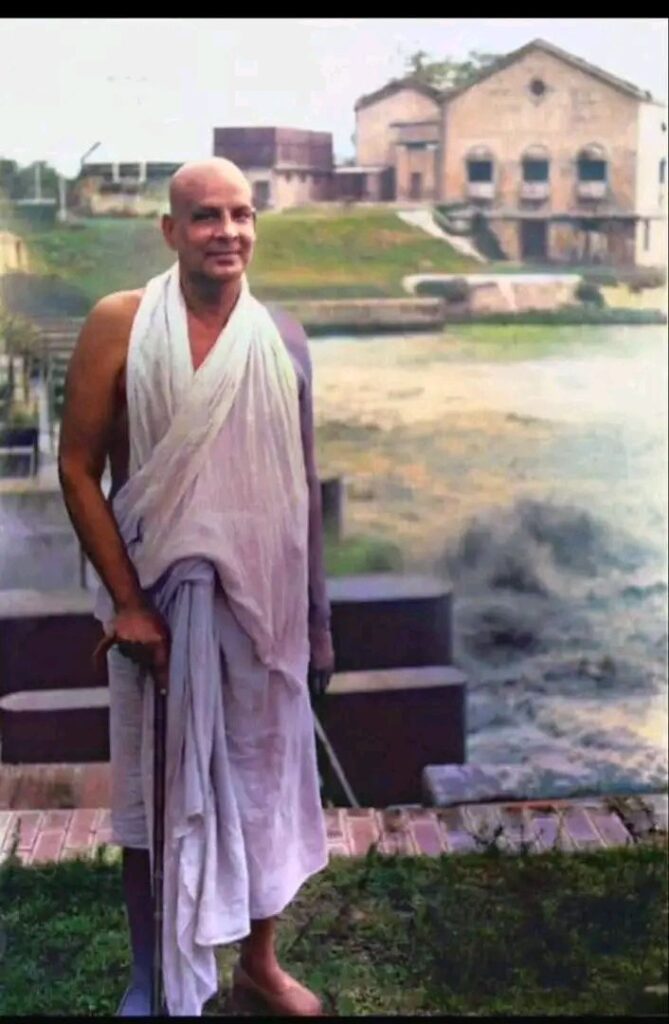
Swami Sivananda Spiritual guru standing near riverside holding walking stick image
Swami Sivananda, Yoga of Synthesis

Sivananda Yoga, Talk-fourth

Sivananda Yoga, Talk-fourth In this Integral Yoga, is these a goal? Is there some way by which I can know, or I can reassure myself that I am on the right path, that I am progressing, that I have nearly reached the goal, that I have reached the goal, or I did reach the goal the day before yesterday! How does one know? How does one ever know whether one is on the right track or not? We never discussed this with Shri Gurudev himself, but on rare occasions he gave some kind of a hint that what is called Self-realisation or enlightenment is neither for the mind to describe nor for speech to describe, that one who has reached Self-realisation is touching Brahman. He didn’t suggest that this is the goal. He didn’t even suggest whether such a person would have special vision or other such phenomena. We started these talks by narrating an incident where Gurudev said, “One who is enlightened or who has Self-knowledge is ever in bliss, and in peace,” which again is not easy to understand. What does peace mean to us? Does peace mean a state of inertness, dullness, stupidity? What is the distinction between tamas and sattva? Once again you are at a loss. Such expressions as, “One must have peace, one must have bliss,” raise more questions than answers. When you forget all this and look at his life, what sort of clue do we get as to the state of a siddha, a perfected, being, one who had reached siddhi? It was obvious that in his case there was this cosmic vision-a vision in which there was no division. What does this mean? Does it mean that a sage does not know that this is a towel and this is a key? Would he try to open his door using a towel, and start wiping himself with a key? What does it mean? There is an expression in the Bhagavad Gita that has been grotesquely interpreted to mean that the sage wouldn’t know the difference between a stone and a nugget of gold. I’m not sure it means that. I’ve watched Shri Gurudev very carefully, and I have seen him pick up clips and pins from the roadside and put them into his bag, and I have at the same time seen that he took theft, cheating, calmly, as though nothing had happened. Great loss meant nothing, but one pin or a clip lying on the roadside had to be picked up. If someone cheated him of ten thousand rupees, that’s all right. So there again, did he walk with his eyes turned into his eyebrows as though he were not interested at all in life? No, he was deeply interested in life, and that again is the Bhagavad Gita’s definition. Saarva bhutahi divata. He would not even allow his own devoted disciples to kill the bugs that were keeping him awake at night. When we were using some insecticide Gurudev said, “No, no, don’t do that, take the can, put it in the forest. Let the bugs go away, but don’t kill them.” So once again we are where we started. What are the signs of enlightenment. Are there any signs at all? What are the signs of total egolessness? Are there any signs at all? If there are signs, they must manifest themselves, and not be produced by the sage. Is that right? ‘If this person is egoless, he is not going to produce signs and proofs for you to admire and give him a testimonial.’ He is not interested in all that. And so, whenever they who were very close to him were watching him, occasionally they would get glimpses of what egolessness may mean. But then before you tried to grasp and admire it, it changed. I don’t know if I must submit for your consideration that the surest sign of an enlightened person is unpredictability, which does not mean that all unpredictable characters are enlightened. There is a description in some scriptures of the sage. “The sage behaves like a child, or a madman or a goblin,” but that does not mean that all madmen are sages. In his case we found this unpredictability. That is, there was no ego-sense to determine or predetermine an action, and direct the action towards the attainment of a certain goal-the people’s admiration, more and more disciples, more and more name, more and more glory, and so on. When that goal is set up, it is easy for you to guide your life in such a way that that goal is reached. There was one swami who didn’t belong to Gurudev’s ashram but stayed there doing tremendous tapasya. What was the goal? He said, “I am going to have rajas and ranis as my disciples. That’s all I want.” He had rajas and ranis as his disciples. He did achieve that! So the goal-oriented practice of austerities, of yoga and meditation is easy. Then it is possible to know that this is the goal and this I have reached. I know also how far I am from that goal and when I have reached that goal. But in this practice of yoga that we have been discussing, whose aim is aimlessness and the total eradication of the ego-sense, what are the signs? Practically none at all. Now comes the crux. Since there are no goals, there is the continuing goal, which is to be vigilantly watchful for any sign of the resurrection of the ego. And here Gurudev used to insist upon this vigilance: be vigilant till the end that the ego does not come up. The ego-sense shouldn’t start to play again, whether that play is superficially diagnosed as worldly or otherworldly, sacred, secular or even spiritual. Spiritual vanity is as good or as bad as vanity of wealth or pedigree. It’s all the same. “I am so and so” is the devil, is the obstacle. Can that

Sivananda Yoga, Talk-fourth Read Post »

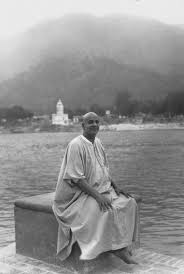
Swami Sivananda Black and white photo of guru sitting by river with mountains image
Swami Sivananda, Yoga of Synthesis

Sivananda Yoga, Talk-THREE

Sivananda Yoga, Talk-THREE We have been considering the principal aspects of sadhana as expounded by Gurudev and illustrated in his life. I think we should remind ourselves once again that neither the teachings nor the illustrations in his life could be positively described as “this is it”. Then you miss it-it is neither/nor; it is the extremely subtle middle path. What is considered the middle path is imperceptible and, if we invent a new word, ‘inconceptable.’ Not only imperceptible but it is inconceptable. You cannot form a concept with it. Gurudev had supreme renunciation but not as a concept. Gurudev had the highest form of karma yoga, but not as a concept, not limited to it, not only this. Why do we slip into specialisation instead of following the subtle middle path, the path of neither/nor? Because in this neither/nor yoga, in pursuing this subtle middle path, one has to be constantly vigilant. One little wink or nod and you slip on one side or the other. Of course by God’s grace you wake up and go on, because the subtle middle path is neither this nor that, but something which partakes of both. That is what we have to bear in mind throughout our study of the life as well as teachings of Shri Gurudev. If we forget this, then we become fanatic, and that is almost contrary to what Gurudev was. So far we have gone over his teachings concerning what we call karma yoga and what we call bhakti. And it was pointed out that even the essential raja yoga sadhana of meditation was made to flow on from the bhakti practice of japa. ‘Flow on’ reminds me of a beautiful thought which I would like to share with you. These yogas – karma yoga, bhakti yoga, jnana yoga, and hatha yoga and what have you-these are not separate watertight compartments, but can be compared to the seasons. This is an example which is given in the Yoga Vasishtha. One season flows into the other, it is not as though one fine morning winter comes to an end and spring commences. One season flows, it is an unceasing flow; in the same way one yoga blends into another. Karma yoga blends with bhakti yoga etc. If it does not, there is something wrong somewhere. You are chewing the words, hoping that you might get enlightened or illumined. Gurudev’s as well as Krishna’s is an intelligent practice of yoga, not a bland ritual, not a superstitious, repetitive, mechanical set of practices, nor a set of dogmas to which we could give our intellectual assent-it is intelligence in operation, it is intelligence alive. Previously jnana yoga was isolated from the rest on the understanding that first we practise karma yoga, and once our heart becomes purified, then we go to the temple, and once we develop a little devotion, then we sit down and practise a little raja yoga. All this may take some two hundred years. Never mind, we come back again and again and pursue, and then we will go to the forest, go to a guru and learn the Upanishads from him. The sanyasins in Rishikesh sit and listen to the Upanishads at the feet of Swami Krishnanandaji Maharaj, because Shri Gurudev insisted that these too shall form part of our daily sadhana. This aspect of jnana yoga was introduced into our life as swadhyaya. I don’t know what this word swadhyaya literally means, but to me the first two syllables suggest something. ‘Swa’ means self, ‘dhya’-dhyana or meditation. Maybe it is swadhyaya – someone sitting alone and reading a scripture-I don’t know. It is also possible to see that while I am reading it, there is contemplation. It is not a mechanical reading of the scripture but an intelligent reading of the scripture. Gurudev often repeated, “Study daily a chapter of the Gita”. Why must I go on studying this? We ask this question only when it comes to the Bhagavad Gita or the Upanishads. You do not ask this question when it comes to a physics textbook or Shakespearean drama. We read these again and again; we even memorize them. Why? In order that the message may be inscribed on the tablet of one’s heart. These words are also Gurudev’s. This swadhyaya or daily reading (I’m deliberately avoiding the use of the word study) of the Gita, Ramayana, Upanishads or other scriptures, the Bible or the Koran, is like the continuous flow of a river. You have heard it said that you cannot take a bath in the same water twice. Every moment the water is flowing, as you dip and come up and dip again, it’s fresh water-not the water in which you had your previous dip. Something has happened. Here it’s the other way round. The scripture seems to be the same, but you who read the scripture-you are not the same. You are not the same as you were last year. Something has happened, and therefore keep on reading this and it is possible you will discover that newer and newer facets of meaning are revealed to you. That is the beauty of swadhyaya. That sounds mechanical, perhaps and therefore Gurudev said, swadhyaya is important, but not the mechanical type. Keep your heart open, keep your mind open, be alert and vigilant as you read this, whether you understand the meaning or not. Let your heart be open. How did he achieve that? I was particularly interested in this because as Vaishnava Brahmins of South India we had become accustomed to this routine, mechanical reading of at least Valmiki’s Ramayana. We didn’t read the Gita or the Upanishads. But we were asked to recite at least one chapter of Valmiki’s Ramayana before breakfast, otherwise we wouldn’t get our coffee. I still remember the delightfully jet-age speed with which we read the Ramayana! Why? The mind was on the coffee, not on the Ramayana. We weren’t interested in the Rama story

Sivananda Yoga, Talk-THREE Read Post »

bhagwan Shri Sathya Sai Baba divine message image
Prayers by Bhagavan Sri Sathya Sai Baba

Lingashtakam

Lingashtakam 1. Brahma Muraari Suraarchita Lingam Nirmala Bhaashitha Shobhitha Lingam Janmaja Dhukha Vinaashaka Lingam Tatpranamaami Sadaashiva Lingam 2. Devamuni Pravaraarchitha Lingam Kaama Dahana Karunaakara Lingam Raavana Darpa Vinaashaka Lingam Tatpranamaami Sadaashiva Lingam 3. Sarva Sugandha Sulepitha Lingam Buddhi Vivardhana Kaarana Lingam Siddha Suraasura Vandhitha Lingam Tatpranamaami Sadaashiva Lingam 4. Kanaka Mahaamani Bhooshitha Lingam Phanipati Veshtitha Shobitha Lingam Daksha Suyajna Vinaashaka Lingam Tatpranamaami Sadaashiva Lingam 5. Kunkuma Chandhana Lepitha Lingam Pankaja-Haara Sushobhitha Lingam Sanchitha Paapa Vinaashaka Lingam Tatpranamaami Sadaashiva Lingam 6. Deva Ganaarchita Sevitha Lingam Bhavair Bhakhi Bhirevacha Lingam Dinakara Koti Prabhaakara Lingam Tatpranamaami Sadaashiva Lingam 7. Ashta Dalo Pari Veshtitha Lingam Sarva Samud Bhava Kaarana Lingam Ahshta Daridra Vinaashaka Lingam Tatpranamaami Sadaashiva Lingam 8. Suraguru Suravara Poojitha Lingam Suravana Pushpa Sadaarchitha Lingam Parama Padam Paramaatmaka Lingam Tat Pranamaami Sadaashiva Lingam (3x) 9. Lingashtakam Idam Punyam Yah Pateth Shiva Sannidhau Shivaloka Mavaapnoti Shivena Saha Modatheh 1. I bow before that Lingam, which is the eternal Shiva, Which is worshipped by Brahma, Vishnu and other Devas, Which is pure and resplendent. And which destroys sorrows of birth. 2. I bow before that Lingam, which is the eternal Shiva, Which is worshipped by great sages and devas, Which destroyed the god of love, Which showers mercy, And which destroyed the pride of Ravana. 3. I bow before that Lingam, which is the eternal Shiva, Which is anointed by perfumes, Which leads to growth of wisdom, And which is worshipped by sages, devas and asuras. 4. I bow before that Lingam, which is the eternal Shiva, Which is ornamented by gold and great jewels, Which shines with the snake being with it, And which destroyed the Yagna of Daksha. 5. I bow before that Lingam, which is the eternal Shiva, Which is adorned by sandal paste and saffron, Which wears the garland of lotus flowers, And which can destroy accumulated sins. 6. I bow before that Lingam, which is the eternal Shiva, Which is served by gods and other beings, Which is the doorway for devotion and good thought, And which shines like billions of Suns. 7. I bow before that Lingam, which is the eternal Shiva, Which is surrounded by eight petals, Which is the prime reason of all riches, And which destroys eight types of poverty. 8. I bow before that Lingam, which is the eternal Shiva, Which is worshipped by the teacher of gods, Which is worshipped by the best of gods, Which is always worshipped by the flowers, From the garden of Gods, Which is the eternal abode, And which is the ultimate truth. 9. Any one who chants the holy octet of the Lingam, In the holy presence of Lord Shiva, Would in the end reach the world of Shiva, And keep him company.

Lingashtakam Read Post »

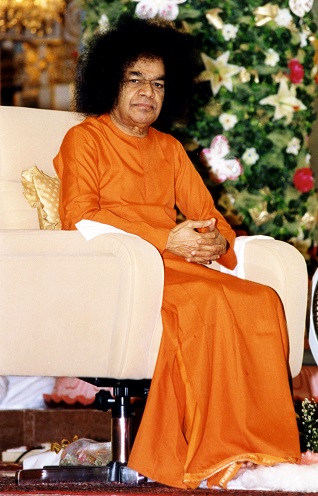
Person seated in orange attire.
Prayers by Bhagavan Sri Sathya Sai Baba

Gloria a Ti, mi Señor

Gloria a Ti, mi Señor Gloria a Ti, mi Señor, hacedor de toda la vida. Como la luna tranquila, con Tu dulzura iluminas, la luz de nuestro corazón. Gloria a Ti mi Señor. Eres Padre y Madre de la alegría, el Señor de toda armonía, el Señor de toda armonía, mi Dios, mi Maestro y mi Guía, mi Dios, mi Maestro y mi Guía. El néctar de la compasión. Gloria a ti mi Señor. Manantial de gracia y consuelo, Eres el Padre Supremo, eres el Padre Supremo, que nos envuelve en su juego, que nos envuelve en su juego. Eres nuestro protector. Gloria a Ti mi Señor. Salvador de los afligidos, ante Tus Pies nos rendimos, ante Tus Pies nos rendimos, y con amor Te pedimos, y con amor Te pedimos, que nos des Tu bendición, Oh, mi Dulcísimo Señor. Alabado seas Señor, alabado seas mi Señor, te entrego todas mis faltas, te entrego todas mis dudas, para que Tú las consumas en el puro fuego de tu amor. Om Paz, Paz, Paz

Gloria a Ti, mi Señor Read Post »

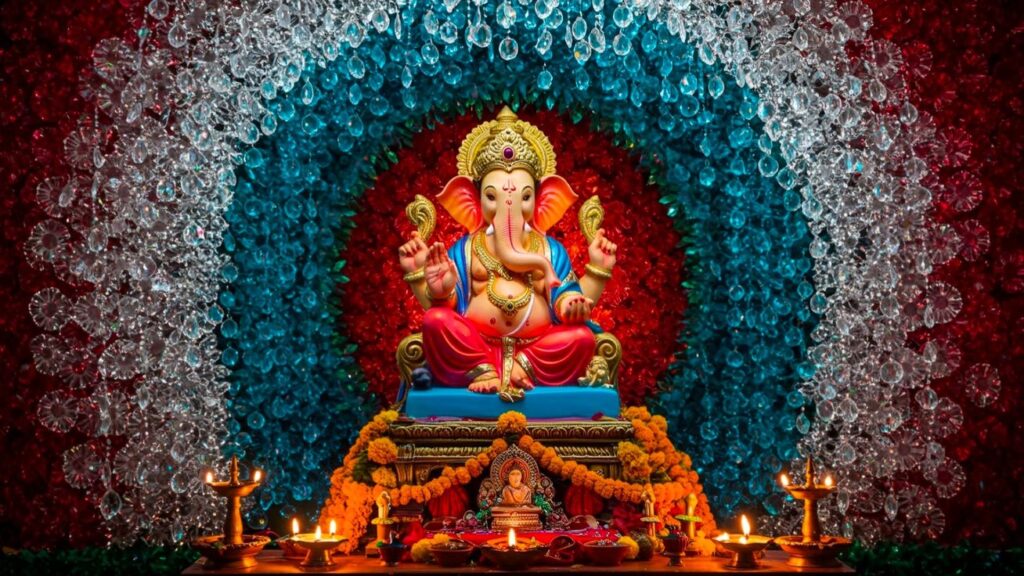
Lord Ganesha idol on decorated stage with crystal arch and lamps. image
Prayers by Bhagavan Sri Sathya Sai Baba

Ganesha Stotram

Ganesha Stotram Ēkadantaṃ mahākāyaṃ taptakāñcana sannibhaṃ | Lambōdaraṃ viśālākṣaṃ vandē’haṃ gaṇanāyakam | | Mauñjikṛṣṇājinadharaṃ nāgayajñopavītinaṃ | Bālendu vilasanmauliṃ vandē’haṃ gaṇanāyakam | | Ambikāhṛdayānandaṃ mātṛbhiḥ paripālitaṃ | Bhaktapriyaṃ madōnmattam vandē’haṃ gaṇanāyakam | | Citraratnavicitrāṅgaṃ citramālāvibhūṣitaṃ | Citrarūpadharaṃdevaṃ vandē’haṃ gaṇanāyakam | | Gajavaktraṃ suraśreṣṭhaṃ karṇacāmara bhūṣitaṃ | Pāśāṅkuśadharaṃ devaṃ vandē’haṃ gaṇanāyakam | | Mūṣikōttamamāruhya dēvāsura mahāhavē | Yōddhukāmaṃ mahāvīryaṃ vandē’haṃ gaṇanāyakam | | Yakṣa kinnara gandharva siddha vidyadharai sadā | Stūyamānaṃ mahātmānaṃ vandē’haṃ gaṇanāyakam | | Sarvavighnaharaṃ dēvaṃ sarvavighnavivarjitaṃ | Sarva siddhi pradātāraṃ vandē’haṃ gaṇanāyakam | | Gaṇāṣṭakaṃ idaṃ puṇyaṃ bhaktyā yaḥ paṭhennaraḥ Vimuktasarvapāpebhyo śivalokaṃ sa gacchati | | ——— Ganesha Stotram / Ganashtakam ——-–– 1. I salute the Lord of Ganas, who is one-tusked, having a huge body resplendent like molten gold, who has a huge belly, and big beautiful eyes. 2. I salute the Lord of Ganas who is seated on the three-striped antelope’s skin, wearing a snake as His sacred thread and having a face glowing like the moon. 3. I salute the Lord of Ganas, who delights the heart of the Divine Mother Ambika, is protected by the Divine parents and is intoxicated by the love of His devotees. 4. I salute the Lord of Ganas, whose body is decorated with colourful jewels, has a beautiful garland around His neck and who can manifest in any form. 5. I salute the Lord of Ganas, the best among Gods, who has the face of an elephant, is adorned with fan-like ears, and who holds a noose and a goad. 6. I salute the Lord of Ganas, who having mounted the best mouse, displayed immense valour in the great battle between the Gods and the demons. 7. I salute the Lord of Ganas, who is always revered by the Yakshas (nature spirits), Kinnaras (attendants of Kubera), Gandharvas (celestial singers), Siddhas (magical beings) and scholars as the Greatest One. 8. I salute the Lord of Ganas, the remover of all obstacles, who is untouched by obstacles and bestows success. 9. Whoever chants this meritorious “Ganashtakam” (eight verses glorifying Lord Ganesha) with devotion, will be redeemed of all sins and will attain the abode of Lord Shiva.

Ganesha Stotram Read Post »

Swami Sivananda Three black and white portraits of spiritual guru side by side image
Swami Sivananda, Yoga of Synthesis

Sivananda Yoga, Talk-TWO

Sivananda Yoga, Talk-TWO Gurudev’s Integral Yoga rests on two fundamentally vital factors: one, to see God in every face, and two, to ensure that the body-mind complex, which has somehow been considered an individual personality, becomes a free-flowing channel for the divine will, grace, or power. Therefore the whole thing appears to be one of selfless service, nishkarma seva, and it has to partake of the vital elements of what we usually consider other yogas. In Gurudev’s mind there was no ‘other yoga.’ There was only one yoga, Integral Yoga-yoga means ‘integration,’ so “Integral Yoga” is already a redundant expression. Gurudev often used to liken the best devotee and the best yogi to Krishna’s flute. The emptier it is, the more divine the music. So, the first part involves what we have come to regard as bhakti yoga, and the second part involves what we leave come to regard as raja yoga – dhyana yoga – jnana yoga. Therefore he included in his sadhana vital elements of the bhakti sadhana. Why do I say vital elements and not just bhakti? When we think (“think” is the most important word in the sentence) of bhakti, we have an image, and the image is made up of largely showy emotionalism. One must wear some kind of a tilak and some kind of a cloth around one’s shoulders; whether the man repeats “Om Namah Sivaya” once or twice a day or not, he has a whole shirt and shawl made of Om Namah Sivaya. Or he must sing and shout and do all kinds of things. All these practices may have their own benefits, but these according to Gurudev’s life and teachings are of secondary importance. There were some vital practices in his sadhana. First and foremost of these was Murthi Puja. Amongst Gurudev’s initial devotees were great Arya Samajis who don’t like Murthi Puja at all. As a matter of fact Gurudev even attended the wedding in the house of one such devotee. He mixed freely with them and even sang the maha mantra. Gurudev himself has said somewhere that when he presided over sankirtan conferences, even Arya Samajis who came to criticise and disrupt the proceedings, later joined in and started dancing! When he performed murthi puja, it was not as many of us do it, regarding the statue as a statue as a stone, but as a living presence. There was this deep-seated realisation, not conviction but realisation, that it is God l am worshipping-not a stone. He did not even use the expression, ‘through this I am worshipping God. Through this stone image, which somehow represents Lord Krishna, I am worshipping God.’ No. I am worshipping Krishna here. This is Krishna. I used to be pujari in the temple for quite a number of years, and Gurudev used to come three times a day, and every time with some flowers or bael leaves he entered the temple, it was an unforgettable and indescribable sight. I used to stand with my back towards the window and watch Gurudev’s face. He used to look up, and in that look there was definitely the unmistakable look of greeting a friend. During Shivratri particularly there used to be puja in the evening, and after the arati some people used to be given bael leaves. It was customary to drop some leaves on the Nandi, the bull, as a token of seeking the bull’s permission for worshipping Siva. Then they used to offer a few bael leaves or flowers on the Siva lingam. I have never seen Gurudev throw a flower or a leaf-he placed it so softly. Why? Because it is a living thing, it is a living divine presence. If I throw flowers at your face, I don’t think you will appreciate it very much. When he looked at Krishna, it was friendship, supreme intimate friendship. “Hello, how do you do?” You could almost read it in his eyes. “Ah, how are you, alright today?” Just as he used to ask me and you and everybody, “What would you like to have, some tea or some coffee?” – that same blissful look of intimate friendship. In the office where he used to sit, a few pictures hung in front of him from the ceiling, and those pictures had to be there in that order. They were not pictures at all. They were living beings, the divine presence. As soon as he walked into the office he tossed a glance at them. If somebody meddled with them, “hmm, what has happened to that!” Because, he thought, my friends have gone, they are my friends and assistants here in my work, and they have been disrupted. In all this there was absolute and total naturalness, there was no showiness at all. We greet each other, laugh at each other, make fun of each other – “Narayana!” He would never do that. And sometimes we shout while stretching or when we hurt ourselves, “Hare Ram, Hare Ram”. All that showiness was completely absent, but deep within him he believed, he taught and his life was a continual demonstration of the fact that this bhakti is a totally intimate love affair between your soul and God. No one need know, you don’t have to parade it; you don’t have to exhibit it to anyone else. I mentioned a minute ago that he used to look at those pictures. Even that was done in a very subtle almost imperceptible way. Unless you were very carefully watching, you couldn’t have noticed it. Sometimes he would close his eyes, and just with one eye, lift it up and take a look and close the eyes again. In those five seconds some magic thread was re-established. Very often we think that we are so highly advanced that worship is unnecessary. He never forgot his worship. Only when he could not come to the temple did he confine himself to the worship in his own room. He was very fond

Sivananda Yoga, Talk-TWO Read Post »

Bhagwan Shri Sathya Sai Baba sacred peaceful portrait photo
Prayers by Bhagavan Sri Sathya Sai Baba

Bilva Stothram

Bilva Stothram 1. Tridalam Trigunaakaaram Trinetran Cha Triyaa Yudham Trijanma Paapa Samhaaram Eka Bilvam Shivaarpanam 2. Trishaakhair Bilva Patraishcha Achidrai Komalai Shubhaih Thava Pujaam Karishhyaami Eka Bilvam Shivaarpanam 3. Koti Kanyaa Mahaadaanam Thila Parvatha Kotayaha Kaanchanam Shailadaanena Eka Bilvam Shivaarpanam 4. Kashi Kshetra Nivaasam Cha Kaala Bhairava Darshanam Prayaage Maadhavam Drishtvaa Eka Bilvam Shivaarpanam 5. Induvaare Vratam Sthitvaa Niraahaaro Maheshvaraha Naktam Houshyaami Devesha Eka Bilvam Shivaarpanam 6. Raamalinga Pratishtaa Cha Vaivaahika Krutham Thathaa Tataakaa Nicha Sandhaanam Eka Bilvam Shivaarpanam 7. Akhanda Bilva Patram Cha Aayutham Shivapoojanam Krutham Naama Sahasrena Eka Bilvam Shivaarpanam 8. Umayaa Saha Devesha Nandi Vaahana Meva Cha Bhasmalepana Sarvaangam Eka Bilvam Shivaarpanam 9. Saalagrameshu Vipraanaam Tataakam Dashakoopayo Yagnakoti Sahasrashcha Eka Bilvam Shivaarpanam 10. Dantikoti Sahasreshu Ashvamedha Shatakratau Kotikanyaa Mahaa Dhaanam Eka Bilvam Shivaarpanam 11. Bilvaanaam Darshanam Punyam Sparshanam Paapa Naashanam Aghora Paapa Samhaaram Eka Bilvam Shivaarpanam 12. Sahasra Veda Paateshu Brahmastaapanam Uchyate Anekavrata Koteenaam Eka Bilvam Shivaarpanam 13. Annadaana Sahasreshu Sahasropanayanam Tathaa Aneka Janma Paapaani Eka Bilvam Shivaarpanam 14. Bilva Stothram Idam Punyam Yah Pateth Shiva Sannidhau Shiva Loka Mavaapnoti Eka Bilvam Shivaarpanam 1. I offer one leaf of Bilva to Lord Shiva, Which has three leaves, Which is the cause of the three qualities, Which are like the three eyes of Shiva, Which is like the triad of weapons, And which destroys sins of three births. 2. I offer one leaf of Bilva to Lord Shiva, Which has three shoots, Which do not have holes, Which are good and pretty, And worship Lord Shiva. 3. Offering of a single Bilva leaf has the merit of performing the marriage of a million maidens, a million mountains of sesame seeds. 4. Offering of a single Bilva leaf has the merit of staying at the holy city of Kasi, and having the darshan of the Lord Kalabhairava, visiting Prayag and having darsan of Lord Madhava. 5. Offering of a single Bilva leaf has the merit of fasting an entire night by the Devas fixed in the thought of the Almighty. 6. Offering of a single Bilva leaf has the merit equivalent to the Ramalinga worshipped by Rama to destroy Ravana who wanted to marry (vaivahit) Sita 7. Offering a whole triad of the Bilva leaf in the worship of Shiva has the merit equal to the chanting of the 1008 names of the Lord 8. Offering a single Bilva leaf has the merit of having darshan of Shiva anointed with Sacred ash, with His wife Uma, with Nandi as his Vahana, accompanied by all the Devas 9. Offering of a single Bilva leaf has the merit of offering a saligramam to a devotee of Lord Shiva, and is equivalent to attending a 1000 Yagnas (sacrificial rites) 10. Offering of a single Bilva leaf has the merit of equal to gifting of thousand elephants, attending 100 Ashwameda Yagnas, the merit of performing the marriage of a million maidens, 11. The sight of a single Bilva leaf provides merit Touching a Bilva leaf destroys sins The offering of a single Bilva leaf to Lord Shiva destroys immeasurable sins 12. Offering of a single Bilva leaf is equivalent to learning all the known Vedas, Staying fixed in the consciousness of the Brahman, And undertaking millions of fasts 13. Offering of a single Bilva leaf is equivalent to, Offering food to thousands of needy, Initiating thousands of children into the the knowledge of the Gayathri mantra, And destroys the sins of thousands of lifetimes 14. This sloka of Bilvashtakam carries merit on its recital in the presence of Lord Shiva. The reciter will reach the abode of Lord Shiva.

Bilva Stothram Read Post »