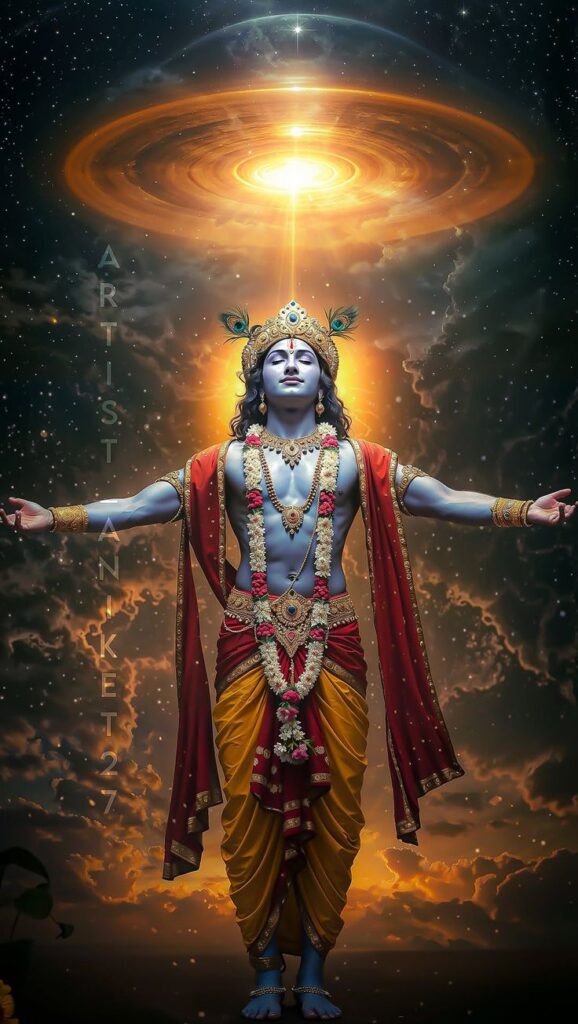
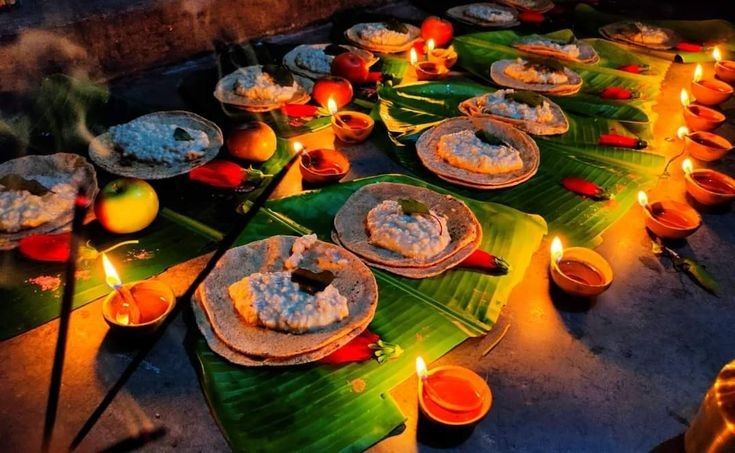
Goverdhan Puja Vidhi Govardhan Puja, also known as Annakut, is a sacred Hindu festival celebrated on the fourth day of Diwali. The festival commemorates the divine leela of Shri Krishna, who lifted the mighty Govardhan Hill to protect the people of Vrindavan from the wrath of Indra Dev. It is a celebration of gratitude and humility, reminding devotees that nature and divine grace together sustain life. On this day, devotees honour Govardhan Hill, cows, and Shri Krishna by offering prayers, preparing a variety of vegetarian dishes, and performing rituals that symbolize devotion and thankfulness. The festival is especially significant in Mathura, Vrindavan, Gokul, and the Braj region, where Krishna spent his childhood, but it is also celebrated with devotion across India. At its core, Govardhan Puja teaches that true prosperity lies in harmony with nature, respect for animals, and surrender to the divine. By worshipping Shri Krishna as Giriraj (the lifter of Govardhan Hill), devotees express their faith in his eternal protection and blessings. Govardhan Puja 2026: Date, Time & Muhurat In 2026, Govardhan Puja will be celebrated on Monday, November 9, 2026 . Devotees will perform rituals in the morning and evening muhurat, offering gratitude to Shri Krishna, Govardhan Hill, and cows. Govardhan Puja on Monday, November 9, 2026 Govardhan Puja Sayankala Muhurat – 03:46 PM to 06:02 PM Duration – 02 Hours 16 Mins Dyuta Krida on Tuesday, November 10, 2026 Pratipada Tithi Begins – 12:31 PM on Nov 09, 2026 Pratipada Tithi Ends – 02:00 PM on Nov 10, 2026 Special Note: As per ancient Hindu texts, if the moon rises or is visible during the stipulated Govardhan Puja Shubh Muhurat, the puja should be performed on the next day. Govardhan Puja Vrat Katha In the sacred land of Vrindavan, the villagers once prepared a grand yajna to honor Indra Dev, the god of rains. Young Shri Krishna, seeing the preparations, asked Mother Yashoda about the rituals. She explained that the people worshipped Indra to ensure timely rains and fertile harvests. Hearing this, Krishna gently questioned the need to worship Indra. He reminded the villagers that their cows, crops, and lives were actually sustained by Govardhan Hill, which provided fresh grass, herbs, and pure water. Krishna taught that true gratitude should be directed toward nature and Govardhan, not Indra. Moved by Krishna’s wisdom, the villagers decided to worship Govardhan Hill instead of Indra. They prepared a grand Annakut (mountain of food) with countless vegetarian dishes and offered it with devotion to Govardhan. Shri Krishna Himself revealed a divine form, accepting the offerings and blessing the people. When Indra learned of this, he became furious. Blinded by pride, he unleashed torrential rains and storms upon Vrindavan, determined to punish the villagers. Thunder roared, lightning struck, and floods threatened to destroy their homes and cattle. Terrified, the villagers ran to Krishna for protection. Smiling with compassion, Krishna lifted the mighty Govardhan Hill on his little finger, holding it like an umbrella. Under its shelter, the people of Vrindavan, along with their cows and belongings, remained safe and dry. For seven continuous days and nights, Krishna stood firm, shielding His devotees from Indra’s wrath. Realizing Krishna’s divinity and his own arrogance, Indra eventually stopped the storm. Overcome with shame, he came before Krishna to seek forgiveness. Along with Surabhi, the celestial cow, Indra performed an abhishek (ritual bathing) of Krishna with milk and sacred waters. From that day, Krishna was given the name Govinda, protector of the cows and provider of prosperity. Since then, devotees celebrate Govardhan Puja each year by preparing Annakut, offering 56 varieties of food (Chappan Bhog), worshipping cows, and expressing gratitude to Shri Krishna, Govardhan Hill, and nature for sustaining life. How to Perform Govardhan Puja (Vidhi) Govardhan Puja is performed with deep devotion as an expression of gratitude to Shri Krishna, Govardhan Hill, cows, and nature. The rituals may vary slightly across regions, but the essence remains the same. Here are the key steps: 1. Making the Govardhan Mound 2. Offering Chappan Bhog (56 Dishes) 3. Worshipping Cows (Godhan Puja) 4. Mantra Japa & Meditation Recite the Hare Krishna Mahamantra:Hare Krishna, Hare Krishna, Krishna Krishna, Hare HareHare Rama, Hare Rama, Rama Rama, Hare Hare Meditate on Shri Krishna’s Govardhan Leela, surrendering with faith and gratitude. 5. Visiting Temples & Aarti Govardhan Puja History The history of Govardhan Puja, also known as Annakut, stretches back over five thousand years to the Dwapara Yuga and is closely tied to the divine childhood pastimes (leelas) of Shri Krishna. Its roots are found in the Bhagavata Purana, Vishnu Purana, and other sacred texts, which describe how this festival came to be. In Vrindavan, the simple cowherd community depended on rains for their crops and cattle. Out of tradition, they offered prayers and sacrifices to Indra Dev, the king of the heavens and god of rains. But the young Krishna, barely seven years old, questioned this practice. He taught that it was not Indra but Govardhan Hill and nature itself that sustained them- providing grass for the cows, fertile soil for crops, and pure water. Persuaded by Krishna’s wisdom, the villagers shifted their devotion from Indra to Govardhan Hill. Angered at being ignored, Indra unleashed a devastating storm to punish them. To protect His devotees, Krishna lifted Govardhan Hill on His little finger and held it aloft like an umbrella for seven days and nights. All the people and animals of Vrindavan took shelter beneath the hill, safe from Indra’s fury. Finally, realizing Krishna’s divinity as none other than Bhagwan Vishnu Himself, Indra bowed down, his pride shattered. Along with Surabhi, the celestial cow, he performed an abhishek (ritual bathing) of Krishna, glorifying Him as Govinda — the protector of cows and provider of prosperity. Since that miraculous event, devotees have celebrated Govardhan Puja every year, offering Annakut (a mountain of food) to Krishna and Govardhan Hill in gratitude. Over time, this tradition spread far beyond Vrindavan and became an integral part of the Diwali festivities across India. At its heart, Govardhan Puja is not only a commemoration of Krishna’s divine leela but also a timeless lesson in humility, gratitude, and harmony