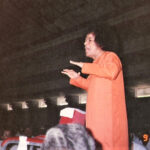
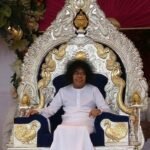
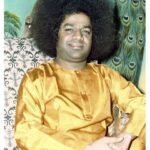
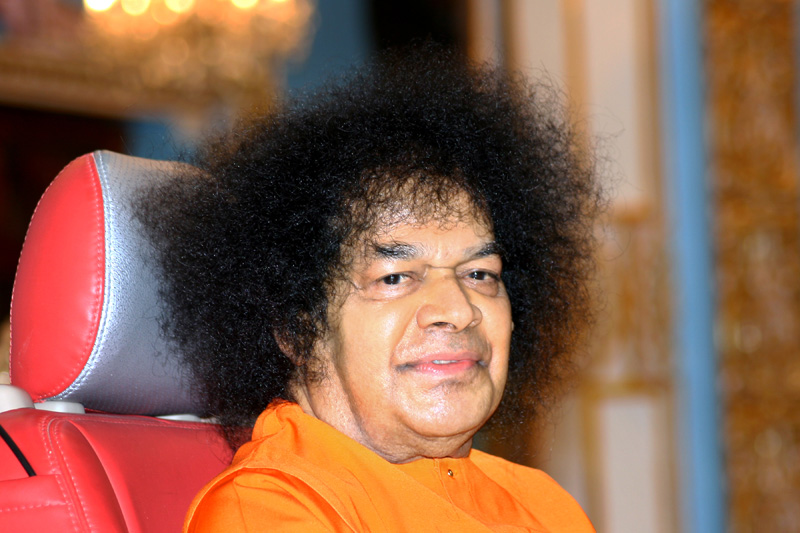
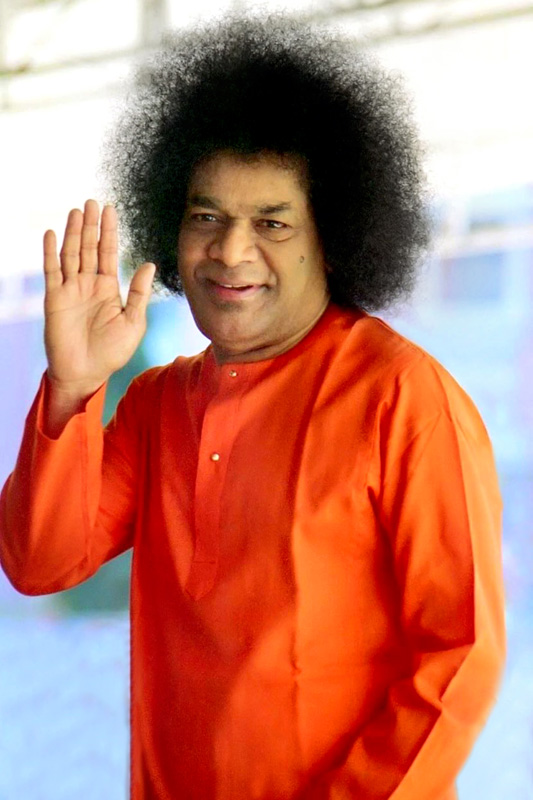
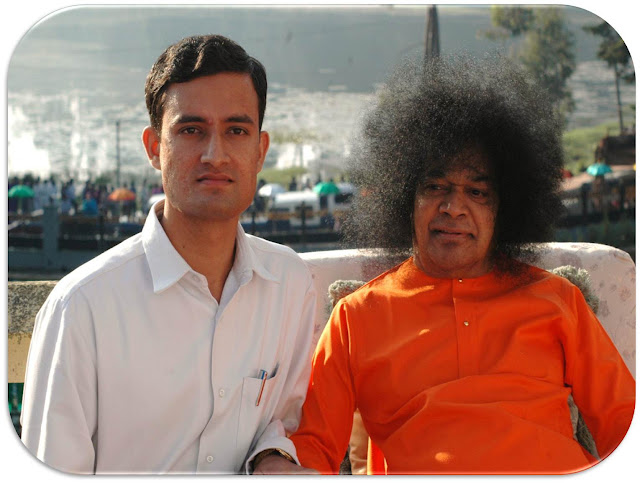
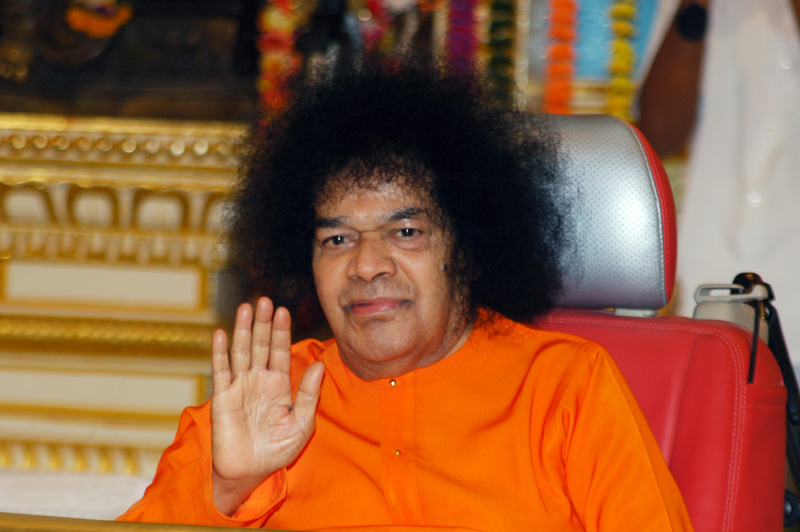
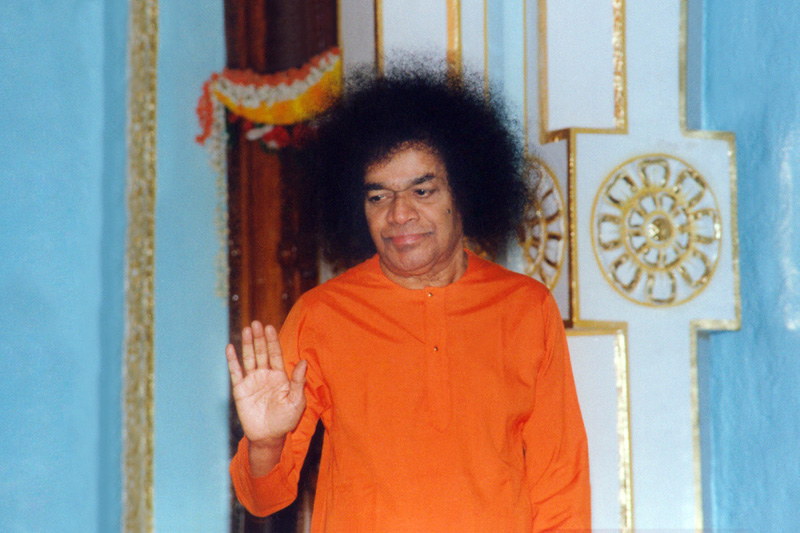
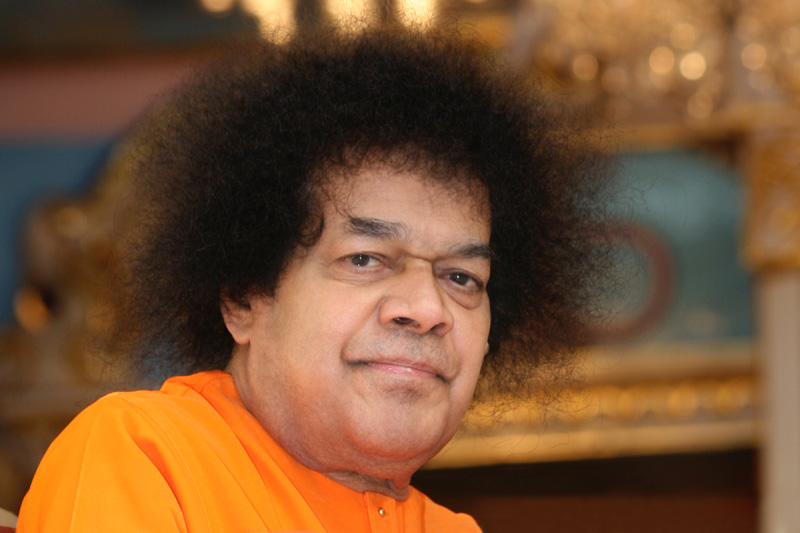
Message to Bangalore during the 60th Birthday Celebrations at Vrindavan The Sri Sathya Sai Organisation of Karnataka State organised at Brindavan, a week-long celebrations observing the 60th Birthday of Bhagavan from the 7th to the 15th of December 1985. Bhagavan reached Brindavan on 7th December where He was accorded a traditional welcome. The members of the Karnataka Trust, members of the Organisation, the staff and the students of the Brindavan Campus of SSSIHL, led Bhagavan in a procession to the Mandir amidst Vedic chants. The Governor of Karnataka and his wife, Sri A. N. Banerjee and Smt. Banerjee, Sri Jagannatha Setty, Chief Justice of Karnataka and Prof. V. K. Gokak were present at the felicitation function held at Brindavan on the 9th. The veteran violin maestro Prof. V.C. Jog gave a recital. The well-known dance troupe ‘Prabhat Kala Vidari’, presented a dance drama in the college auditorium on 10th. Bhagavan addressed the elite of Bangalore city at the Chowdaiah Memorial Hall in Bangalore, on the 11th. The Chief Justice of Karnataka, Sri Jagannatha Setty, was the Chief Guest on this occasion. He expounded on the meaning if real equality, which the systems of socialism and communism cannot provide. Bhagavan said: “Real equality among men has to be achieved not by the equal distribution of material things but by the cultivation of love, which promotes a sense of the Divinity that is inherent in all beings. In this land of Bharat, through all the vicissitudes of history, Truth has been regarded as the highest value to be cherished by man. This is the essence of the cultural heritage that has been given down to us as Sanatana Dharma. The ancient sages emphasized the importance of Karma Yoga, the discharge of one’s duties in life in a dedicated spirit. Through Karma Yoga man achieves control of the senses and develops the qualities of universal love, forbearance and compassion. Everyone should realise that the body has been given to us for performing selfless service. It should also be realised that nothing in creation is intended for the exclusive use of any one person. We should therefore discard the feeling: “These things have been given for my exclusive use, they are my own.” There has been talk of achieving equality in society. The equal distribution of wealth through socialism is declared as the ideal, but is it possible to bring about such equality? Even if material wealth is distributed equally, can you ensure equality in desires and aspirations? Only when you have equality in terms of desires and aspirations can you get true equality. By taking away a part of a rich man’s property and giving it to a poor man, you may give satisfaction to the latter, but what about the dissatisfaction caused to the man who has been deprived? You must look beyond material things to the Supreme Being who is the provider of all things. When you recognise the One as present in all beings and respect everyone as a manifestation of the Divine, you will achieve equality in the true sense of the term. All those who claim to be Bharatiyas should strive to bring about this kind of equality through love for all beings. A life without love is meaningless. The more you love, the more it grows. True love should be distinguished from attachment either to persons or things. Attachment is based on selfishness. Love is based on selflessness. Love is the fruit which is born from the flower of your good deeds. Only when we engage ourselves in selfless service can we experience the essence of this pure love. There is considerable progress today in various fields – scientific, economic, political and so on, but all man’s actions are motivated by selfishness. Man has become a plaything in the hands of his own selfishness. There is no unity among men. Unity can come only through Tyaga (sacrifice), not through the pursuit of desires and comforts. You must cultivate charity, which does not mean giving some money to a person in need or to an organization. Charity calls for the removal of all evil thoughts that are within you and development of a largeness of spirit. Charity will confer Purity, and through Purity, Unity will be achieved. Once you have Purity and Unity, you can realise Divinity. When you look around today you find that there is little evidence of sacrifice for the sake of society. A person may call himself a great devotee, or Sadhaka or scientist, but without a spirit of sacrifice there is nothing great in him. Seva (service) is the salt which lends savour to life. The spirit of sacrifice imparts fragrance to living. One may live for 60, 70, or 80 years but it will have no meaning unless his life has been devoted to the ennobling of one’s character and rendering devoted service to others. What you must aspire for are not buildings, positions, factories or industries. A good character is the greatest wealth you can acquire. More vital than the five Pranas (life breaths), Satya, Dharma, Shanti, Prema and Ahimsa are the vital life-breaths for every one. Of these the greatest is Prema (Love). Fill yourself with love. Love should express itself in service to society. You should look upon society this way. We exist for society and society exists for the good of all. Try to sanctify your life by doing service and spreading joy and comfort all around.” Narayana Seva was organised at Brindavan on the 12th morning. The Bal Vikas students presented a cultural programme that evening. The singers Smt. B.K. Sumitra and Smt. Vani Jayaram performed before Bhagavan. Bhagavan was the Guest of Honour in a function held at the Raj Bhawan (Governor’s residence) on the 13th December. Ashoknath Banerji the Honourable Governor of Karnataka hosted Bhagavan. Later, Bhagavan addressed the concluding session of a two day seminar at the College Auditorium in the Brindavan Campus on the 14th. This seminar was arranged by the Directorate of College Education of Karnataka. Bhagavan said: “Educational institutions have the responsibility to give to society well educated persons who are competent and who are men of integrity and who can be relied upon to serve society with devotion and competence. The crisis in the