



















Hari Om

Menu

January 23, 2026

Shri Sathya Sai Baba universal brotherhood image.
Glory Beyond Borders

Places Hold Vibrations

Places Hold Vibrations “Follow winding road to the next Pocono Picnic Company sign and make a right onto Camp Akiba Road ….” These were the directions to the 20th Annual Regional Conference of the Sri Sathya Sai Baba Organization of the Mid-Atlantic Region in the United States. The conference began on Friday, May 26, and ended on Monday, May 29, 1995. Camp Akiba was named for Rabbi Akiba, who lived in the belief that everything God does is for the best, even though at the time it may seem like one catastrophe after another. He was a renowned teacher and was deeply loved. When the Mid-Atlantic Region called the Pocono Picnic Company to arrange the conference, another group was already scheduled. The owners offered to see if the group would rearrange its dates. After a number of months and a series of miscommunications, it was concluded that the camp would not be available. As another site was being investigated, one member of the planning team went to Prasanthi Nilayam. The day he arrived, there was a message on his answering machine back in the U.S. saying that the owners could accommodate the Sai group. It would seem that Swami had a hand in this decision. On the first day, there were the usual challenges of registration, with additional ones being thrown at the seva dals and officers working with the camp owners. The latter were constantly changing what they wanted from the Sai group, putting out more demands while backing down from their own commitments. Their behavior seemed to indicate a belief that people would take material advantage of them, so a good offense was the best defense. The building for registration was not available when originally promised, so delaying the process for hours. The land they were to till for the seeding of the butterfly garden was not ready. Yet the flowers they had asked us to plant were waiting there, all 4,300 of them! To aggravate things further, the cabins and toilets did not meet our standards for cleanliness. One wise seva dal sighed and then reflected, there was a reason Swami wanted us to be at this particular camp. Four different coupon collecting systems were tried at the dining halls for as many meals. The original agreement for counting was no longer acceptable to the owners. An atmosphere of tension existed at the doors, with everyone anxious to begin eating. On Saturday evening when the final ticket system was introduced on the women’s side, two additional seva dals were watching along with the owner and his employee. These additional people were an indication of how little trust existed at this time between the owners and the Sai Organization. The seva dals taking tickets felt the need to change the atmosphere. One began saying, “Sai Ram” to everyone, and the other called on Swami, asking, “What do You want me to do?” She saw Him, with her inner eye, standing at the side of the line. He told her to smile and welcome people into the dining hall, and not to worry about the tickets. So, she too said, “Sai Ram, Sai Ram.” The atmosphere was becoming more relaxed. Another glitch: The stage curtain once closed would not reopen! When the children’s play was to begin on Sunday evening, it was delayed as an eight-foot ladder was brought in to open the curtain. It seemed like all the other frustrations could be accepted with resignation, but when it came to the children, everyone wanted the best for them. The costumes, the script, the songs, the scenery, the rehearsals, all were to support the children learning human values. In some ways, the whole retreat seemed a vehicle for this Bal Vikas play. It was an example of what the region could accomplish when it pulled together in a group effort. The audience reacted with smiles and tears, giving the children a standing ovation. On Monday morning at breakfast, there were only two people present to take tickets on the women’s side: the owner and the seva dal. Once again, this seva dal greeted people with, “Sai Ram, Sai Ram.” Then, Swami’s leela (Divine play), the owner did the same! He had awakened that morning humming a bhajan and now he realized he liked the feeling of saying, “Sai Ram” and seeing people smile. Someone had given his wife a book on Sai Baba, which she had left at the camp. She called her husband that morning, reminding him to bring the book home. She wanted so much to read it. Later, one of the speakers shared her experience of Swami. Her childhood was one of physical and emotional abuse, broken homes, running away, and teenage years of drug and sexual overdoses in the glittering, yet empty, lifestyle of the rich and destitute in Hollywood, California. Many in the audience were touched, even as they were uncomfortable absorbing the reality of her life. She shared how Sai Baba helped her transform into the person we saw. It became obvious what finding God can mean in a troubled youth’s life, a young life where human values of self-worth and dignity had not been taught. Swami’s leela was standing before us, showing that help is available, even when hope seems impossible. And a final piece! An employee mentioned that soon 300 disadvantaged children would be coming to the camp. These children do not have the same opportunity that the Bal Vikas students do to learn human values. The regional play was about Harriet Tubman, who worked to free slaves in the United States in the 1850s. Poverty is a very real threat to freedom and human values in the United States in 1995. Equally threatening is material wealth without love and respect for each other. Why was the Mid-Atlantic Region to meet at this site? Sai Baba says that places hold vibrations from the thoughts of people who have been there. Perhaps we were there to help these children feel help is available, even when hope seems impossible. Over 500 people sang bhajans throughout the weekend, changing the vibrations at Camp Akiba. Many

Places Hold Vibrations Read Post »

Sathya Sai Baba love and compassion image.
Glory Beyond Borders

Mid-Atlantic Regional Conference

Mid-Atlantic Regional Conference From May 23-26, 1997, amid the natural splendors of the Pocono Mountains in Pennsylvania, more than 700 devotees gathered at Camp Akiba to concentrate on the conference theme “Dharma (right action)—Our Way of Life.” Swami tells us that “Love in action is dharma.” And certainly love in action was the common thread running throughout the weekend’s activities, from the first arrivals of the volunteers who came early to set up the main bhajan hall and Baba’s room to the young adults who spontaneously began directing traffic in the parking lot to the many loving hands that prepared the meals to the joyous voices raised in song to the enlightening words of the workshops and guest speakers to the last departing Sai Ram, love was clearly the unifying theme that brought us together as a Sai family. On Saturday morning, our guest speakers, Jack and Louise Hawley, spoke about the six landscapes of love. They reminded us that we need to move ourselves from the non-loving state of wanting love through the worldly levels of feeling love, doing love and giving love to the spirituality of being love. From the Hawley’s work with various groups in many different countries around the globe, they have found that love is the single energizing force moving us from community to unity, then on to purity, and finally arriving at Divinity. During the day on Saturday, we all basked in the warm glow of Sai’s sunshine and love. The scenic landscape, the soothing greenery, and the clear mountain air renewed our bodies as we refreshed our spirits and shared the insights of the workshop speakers. Some workshops focused on the individual aspects of love in action through meditation, self-inquiry, namasmarana (reciting the name of God) and personal health, while others emphasized the interactive dimensions of love in organizational behaviors, developing unity, bhajan singing, and the guru-disciple relationship. The highlight of Saturday evening’s activities was a thoroughly enjoyable musical drama, lovingly presented by the young adults, on the power of positive thinking and love for God. The presence of children of all ages added to the joy and purity of the weekend. A full range of activities—including stories, drama, mask making, creating book marks and singing, as well as learning bhajans—was offered during the three days. The youngest of the children enjoyed the playground and arts and crafts activities in the loving care of volunteers. The older children, among other activities, shared comments on a film that presented many opportunities to identify what right action is, which characters were acting in a manner that was consistent with right action and what leadership really meant. Outdoor activities included a challenge course and boating. When we awoke Sunday morning, we found that Sai was showering His love on us in the form of life-giving rain. Although the cool rainy weather may have dampened our enthusiasm for outdoor activities, the downpour also brought us closer together when we moved inside to escape the wet weather. Our Sunday morning guest speaker, Dr. Raghvendra Prasad mentioned briefly the j unifying aspect of the rain as he expounded on the transforming power of love in his personal life and on his work at the overseas devotees medical camps in Prashanti Nilayam. Throughout the weekend, Swami provided us with many chances to realize love in action. Lastminute schedule changes, inclement weather and unexpected events were only a few of the ways in which our Lord gave us frequent opportunities to put His teachings into practice. Surrounded by the atmosphere of love and devotion, sometimes it was easy to saturate our actions with love. But as we reflect on the experiences of the weekend, let us renew our firm resolve to carry that loving environment within us as we returned to the hurry and worry of our daily lives. Let the still small voice within us become a silent mantra repeating love in action, love in action. ~Marion ChewBethesda, Maryland, USA

Mid-Atlantic Regional Conference Read Post »

Sri Sathya Sai Baba Mahasamadhi at Sai Kulwant Hall
Glory Beyond Borders

Easwaramma Day Celebrations, 1997

Easwaramma Day Celebrations, 1997 Annual Easwaramma Day Celebrations were held this year on May 10, as the first faint breath of springtime was felt in Morganville, New Jersey. A record-breaking number of devotees (400-500) of all ages from across the Mid-Atlantic Region participated in the festive event. Coinciding with Mother’s Day, and commemorating the samadhi (attainment of ultimate peace) of Swami’s own beloved mother and her great love of children, this year’s Easwaramma Day was an occasion for all to bask in the unspeakable love of our Divine Mother Sai. A spirit of appreciation pervaded the day—appreciation for mothers, through whom Swami nurtures e and guides us, and appreciation for the precious children whom he has entrusted to our care, as parents and teachers. A sense of family was also strongly felt, both in the presence of large numbers of families attending together and in the feeling of brotherhood evident among the members of the larger Sai family. The day commenced with bhajans, delightfully sung with the children’s characteristic innocence of heart. The young people then competed in a rousing game of Sai jeopardy, which showcased “Baba facts,” as well as their innate playfulness. The highlight of the afternoon was a cultural program presented by the Centers. The duties of Master of Ceremony were shared by Joan Riggi and Michael Kaufman, who brought levity to their roles. Between performances, several devotees shared personal Sai experiences, often delighting the audience with examples of Baba’s inimitable sense of humor. The presentations were of an exceptionally high quality, with themes ranging from classical Hindu stories, folk singing and a play written by Swami as a child to moral fables, dramatic reenactments and Native American legend. Costumes and scenery were colorful, creative and professional. Musical accompaniments displayed considerable talent. It was obvious to the audience that both SSE teachers and students had responded to the challenge of bringing a higher level of discipline to this year’s celebration. As the number of participants grows each year, teachers and students find themselves stretched to express their creativity within limited parameters. That challenge seemed to spur further creativity, as the cultural program was presented with alacrity, to the delight of all. The program’s effort, preparation, discipline and cooperation were greatly appreciated. The children also displayed their creativity in the visual arts. An abundant Sai Darshan Art Exhibit decorated the auditorium with beautiful and inspiring examples of Swami’s teachings and spiritual themes expressed in paintings, drawings, collages and shoe-box scenes. The artwork was later displayed at the annual retreat. The finale of the day was a spirited SSE rally, filling the auditorium with song, motion and color. The rally culminated with each child receiving a T-shirt bearing Swami’s exhortation to “Be good, see good and do good.” The T-shirts were created and presented by the Sri Sathya Sai Baba Center of Central Park, New York. The full and active day was brought to a close by Regional President Rajen Ghayal, who declared that “This was, by far, our best Easwaramma Day ever.” He acknowledged “the very high vibrations of the day and the spirit of cooperation and discipline, which was very evident.” All participants went home happy and very grateful to Swami for providing such a joyful occasion. ~Pru KaufmanNew Jersey, USA

Easwaramma Day Celebrations, 1997 Read Post »

Sathya Sai Baba divine presence
Glory Beyond Borders

Sai Spiritual Education (SSE)—Workshop on Values

Sai Spiritual Education (SSE)—Workshop on Values On September 19, devotees interested in Sai spiritual education attended a workshop called Activities for Teaching Human Values. The program featured presentations on drama, arts and crafts, role-playing and games—all with a view toward sharing creative ideas on activities for children in SSE classes. As Anne Sohani led the arts and crafts unit, the room full of adults was transformed into children hunting for leaves, glue, ribbons and miniature Teddy bears. The group constructed a WATCHman as a reminder that we should always watch our words, actions, thoughts, characters and hearts. While we worked, we sang together, “Watch your words, watch your actions, watch your thoughts.” The song gave real meaning to the figure we were building. We also made finger puppets and Halloween leaf magnets, reinforcing the lesson that nothing is useless. Even insects use dead leaves to float over a body of water. We also shared ideas for a Gratitude Journal, in which children or adults write five things each day that they are grateful for. Tom Roepke led us through the world of drama. Radio Reading was the title of our first dramatization. A moderator announced the radio station and students played various roles in stories and prose readings. This idea could be expanded, using sound effects, then taped and given to old-age or nursing homes for great listening opportunities. Poetry is another tool that can serve as a springboard for dramatic scenes. Similarly, an adult can lead an imaginary adventure story where both teacher and students add elements to the journey as they go along. This helps children get involved and open themselves to new feelings and situations. Suchita Nayak talked about the value of role-playing in which a child invents a situation or adapts a known story. We divided into groups and each group received two slips of paper, one with the name of a value and one with a sub-value. We then developed plays to illustrate the values assigned. When children do this exercise, they automatically concentrate on values and get a deeper understanding of them. Role-playing stirs the hearts of children and helps motivate them to choose appropriate values in their own lives. It also gives them practice in applying their personal beliefs and values in difficult situations. Children, with the help of their teachers, can be inspired to think about right action. Piyush Ghayal presented a game that highlighted individual and group behavior and the effects of teamwork and cooperation. It is easy to be insensitive to a newcomer. When we enter an existing group, we expect to be welcomed and absorbed. But how do we actually behave when we see a new person enter our own group? Piyush led us in a thought-provoking discussion of these situations as illustrated by our behavior in the games we played. Swami talks about triple purity—unison in thought, word and deed. With this in mind, Kusuma Rao and Rajani Kanukollu presented an activity on the unity of thought, word and deed. After listening to Swami’s quote on the subject, the participants began with a pre-story game, the purpose of which was to find out how it feels to communicate without words. As the principle activity, two stories about the lives of Helen Keller and Anne Sullivan were given to two groups. Each group read its story and tried to understand how the two women used thought, word and deed in their individual roles—one as teacher, the other as student. Participants stretched to think, understand and reflect on how a deaf, blind and mute person rose to such imminence. Lessons that emerged were that the power of love, patience and tolerance can overcome the most difficult situations and that unity in thought, word and deed is essential for all levels of knowledge. Deepa Awal emphasized the importance of creating an environment for discussion. Placing a quotation before the group, Deepa encouraged each of us to express our understanding of it. The quotation: “It is good to be born in a religion, not good to die in one.” Group discussions are useful because both children and teacher can learn from listening to each other. Even though children are younger, they have all the necessary information stored within their consciousness. Swami says that our age refers only to our body’s age. Our souls are ageless. We, as teachers, must help children reveal the wisdom from within them. In order to create an environment for free discussion, we must encourage dialogue, not arguments, remembering always that there are no right or wrong answers, only different ways of looking at the same thing. One needs to be aware of shy children and encourage those who are not talking to participate. The idea is to set up situations in which group members can learn from one another. When conflicts arise, as they so often do, we need to remember that although there may be differences in opinion, at the level of the heart, differences disappear. Love is the great equalizer. This is exactly what we experienced during the workshop, coming to it, as we did, with different ideas, but imbued by the same love of Swami that poured out through each activity presented. ~Rajani KanukolluHolmdel Center, New Jersey, USA

Sai Spiritual Education (SSE)—Workshop on Values Read Post »

1644585424main idol of shri laxmi narayan
Glory Beyond Borders

Readers Respond

Readers Respond The following are reactions to Swami ‘s Sankranti Discourse which was published in last month’s Sai Sarathi. Ifound Swami’s Sankranti Discourse profound. Swami shows us a brief glimpse of how He works and the reasons why it is so important for us to follow His commands, even if we do not understand them. The discourse inspired me to do more inner searching each day and to reflect on how I have and have not listened to Him, and consequently, whether or not I have felt happy. ~Sandra Duggan One day about a couple of weeks ago, I was in my apartment, feeling sorry for myself because me periodontist had just told me that he thought I had a cracked tooth that would have to be pulled. As I sat there, building this domestic nuisance into a terrible tragedy, the phone rang. A Sai sister from the Manhattan Center had called to tell me about Baba’s accident. Needless to say, after I heard about Baba’s terrible injuries, my own crisis paled by comparison. My tooth-engendered depression soon turned to concern for Baba and then to relief when I found out He was alright. After I got off the phone, I resolved to follow Baba’s example and not take bodily concerns so seriously, and although I plan to do whatever dental work is necessary, I haven’t had any anxiety about my tooth since. ~Judy Wechsler I first read Swami’s Sankranti discourse in the February Sanathana Sarathi. I’m glad you also published it in the Sai Sarathi. My first reaction was to cry–I felt ashamed somehow that I presumed Our Lord is above our pain and suffering. But in reaching for the higher message, as you suggest, upon the second reading the next day, this is how I was inspired: Swami so loves us that He revealed how His Thoughts, Words, and Deeds are in perfect harmony. He described the way He dealt with His Dharma in great detail—”Saying this to Myself, I conducted Myself accordingly.” He has thus blessed us with a sterling example and model of exactly what to think, do and say to give up body attachment, especially when in physical pain. ~Felicia Gironda The main lesson I learned from reading Swami’s Sankranti Discourse is how important it is that I follow Swami’s instructions implicitly. Oftentimes, when things are out of whack, I find myself complaining or becoming discouraged. But after reading how Baba allowed His body to withstand pain and suffering, I came to the realization Who am I to complain   things don’t go the way I would like them to? Instead, I am to count my blessings, one by one. If I am able to stay centered on God and not become discouraged during my challenges, I will be okay. When I realized that the Lord himself suffered such agonizing pain and endured it with such dignity, it encouraged me to be stronger during my adversities. It reassured me of the importance Baba places on His faithful devotees. I felt pain reading the discourse, but, even more, I felt loved in an enormous way. I could feel Baba’s love oozing out of the pages. I am diligently working on becoming a better devotee, trusting in Baba’s love to get me through. ~Melba Roberson God’s extravagant love for each of us and all creatures is absolutely awesome! To contemplate Baba God (my name for Swami) taking on my suffering and being concerned for my happiness, loving me without condition or expectation, floods my whole being with gratitude, praise, and an intensity of love beyond words. Knowing and loving Baba has helped me know love, understand more fully Jesus, his truth, suffering, and death, as well as his resurrection. I have grown in my own faith since I was introduced to Sai Baba four years ago. I minister with women inmates and I share Baba’s teachings and the Christian Scriptures with them. They are beginning to realize and become more aware of their own divinity! I am most grateful to God for these blessings. ~Barbara

Readers Respond Read Post »

Bhagwan Shri Sathya Sai Baba teachings photo.
Glory Beyond Borders

Vision for the Twenty-first Century

Vision for the Twenty-first Century This is Sai’s message to you: May you develop Divine Love and stand out as harbingers of a new age free from selfishness, greed, hatred, and violence. Let each of you be a light unto himself or herself and thereby be a light unto others.  ~BABA Amid the natural splendors of the Pocono Mountains, devotees from every corner of the Mid-Atlantic Region gathered together at Camp Akiba for the 24th Annual Regional Conference during Memorial Day Weekend, May 28th-31st. Everyone from senior citizens to the youngest SSE children put aside their usual worldly routines and shifted their attention from ordinary mundane concerns to focus their energies on our Beloved Lord. The theme of this year’s conference, A Vision for the Twenty-first Century was an invitation for each person to become a part of the new age. On Saturday morning, Regional President Marion Chew reminded everyone that Swami’s upcoming 75th Birthday Celebration occurs just a few short weeks before the beginning of the new millennium on January 1, 2001. She encouraged everyone to prepare for these momentous events by creating a “gift of love” for our Lord Sai. This birthday offering would consist of each person’s efforts to practice Swami’s teachings in a pre-designated area of her/his life. This emphasis on putting Sai’s teachings into practice was echoed by the guest speakers Robert and Barbara Bozzani. They inspired listeners of all ages with accounts of the lessons that they had learned from their personal encounters with Swami over the past twenty-five years. Sometimes, the experiences involved being ignored by Swami while at other times, they were given the opportunity for close interaction with His physical form. Barbara emphasized the necessity for the practical application of Swami’s teachings when she recounted an incident that had happened at Kodaikanal. One morning as she was standing with Swami, He gazed on the devotees who were gathering outside for darshan and said, “Look at them! If they’re not putting My teachings into practice, I can’t waste My power on them!” The afternoon hours were given over to the exploration of ways to further one’s spiritual development through various avenues. Discussions on the Nine Point Code of Conduct, and Work as Worship alternated with informative sessions on Better Health Through Ayurveda, and Swami’s Key Words for Success including phrases like Hear Everything, Say Nothing. Many devotees stopped by the dining hall where they created artificial flowers, greeting cards, and other messages of love for hospital patients and nursing home residents. For many attendees, the Wellness Program was an unexpected benefit. Originally developed to serve those who do not have access to regular medical care, the battery of medical screenings and follow-up counseling encouraged everyone to heed Swami’s words about taking care of our physical bodies. From people who have been too busy to pay attention to themselves to the senior citizens who may have been shy about consulting a western doctor as well as the many physicians who volunteered their time, energy and expertise, the Wellness Program brought devotees together in a spirit of selfless service and sharing. In the evenings, the focus shifted to the young people within the region. On Saturday night, the Young Adults presented a play illustrating the various ways in which discipline has an impact on our lives. Every aspect of our daily existence, whether it is work, school, family life, or Sai activities requires the concentration, commitment, and consistency that come from following a disciplined lifestyle. Their program concluded with brief descriptions of the Young Adult service projects, including the distribution of food to the homeless, visiting handicapped or retarded children, making blankets, and mentoring troubled adolescents. Sunday evening was entirely devoted to the children who participated in the Sai Spiritual Education program. Despite warm weather and late-afternoon fatigue, everyone crowded into the main hall and joined in singing the evening bhajans which were led with great fervor by the SSE children. Later, Group I children presented a Sai Spiritual Quiz in which they questioned the adults about events in Swami’s childhood and early life. Group II children contributed readings from their personal journals in which they shared their thoughts about themselves, their spiritual growth, and their families. Although there was not enough time to hear each child’s essay, every  journal article will be included in a volume that will be published at a later date. The Group III youngsters entertained everyone with episodes from a futuristic radio program describing life fifty years from now. All the events described above were markers in the passage of time during the days, hours and minutes of the Memorial Day weekend. Yet, the real spirit of the weekend conference transcended the physical setting and the temporal plane. For a brief moment, a summer camp in Pennsylvania became a Prasanthi Nilayam, an Abode of Highest Peace. This happened because of the love and selfless service offered by the many nameless devotees who worked tirelessly at the registration tables, labored under the hot sun in the parking lot, lovingly prepared meals in the steamy kitchen, and smilingly presented the food in the dining halls. They transformed an ordinary cabin into a Divine residence, and they raised an altar of love and devotion in a place where revelry and amusement had reigned. From the early morning sonorous chanting of omkar and the gentle sounds of Suprabhatam to the last devotional song at the late night bhajans, vibrations of peace and harmony reminded everyone that the new age is almost upon us. When it was time to leave, families lingered, and friends stopped for one more farewell. No one was willing to admit that the weekend had come to an end, but each participant carries within her/his heart the memories of what occurred, the resolve to move forward into the golden age, and the hope that this weekend was our introduction to the twenty-first century.

Vision for the Twenty-first Century Read Post »

Sathya Sai Baba spiritual wisdom photo.
Glory Beyond Borders

Sathya Sai Education in Human Values: An Update

Sathya Sai Education in Human Values: An Update The report presented here is based on two talks by Sathya Sai Education in Human Values Advisory Board member, Ronne Marantz, at the Mid-Atlantic Regional Conference in May 2000. Recently, Dr. Goldstein, as Chair of the SSEHV Foundation, felt that regional conferences taking place around the country would offer a good chance to bring people up-to-date on Sathya Sai Education in Human Values. He asked all the members of SSEHV Foundation Advisory Board to speak at retreats around the country. Service, education, and devotion are all the same. Now we will have the opportunity to take our devotion and service into the realm of working with children. Sathya Sai Education (SSE) and Sathya Sai Education in Human Values (SSEHV) are two wings of one bird. Baba says SSEHV will take you to goodness; SSE will take you to God. It is important to call the program by its complete name, SSEHV (Sathya Sai Education in Human Values), not just EHV. Sometimes people are tempted to leave the name off. It seems that so much could be done without the name. But it’s essential to keep the name. It is only prejudice and ignorance that creates hesitation to use this program with its full and appropriate name. How do we bring the program into secular education for children? How did we develop a program that could be used in public schools? First, we examined what we could not do in the public schools: We can’t speak of the unity of faiths. We can’t speak of Sathya Sai as an avatar. We can’t foster devotion. We can’t use prayer. On the other hand, we examined the function and role of prayer. Prayer takes your consciousness to the highest level. It brings awareness of higher ideals and noble aspirations. We use quotations and thoughts in place of prayer. We emphasize the unity of the human family, reverence for life under God and the five human values. The values are rooted in aspects of Western psychology and the development of human potential: physically, emotionally, intellectually, morally and spiritually. The words moral and spiritual can be used in schools in this country. The most important part of SSEHV is life application—the connection between home and school at the end of each lesson. We should remember that 3HV—head, heart, and hand—is the essence of what the program needs to communicate. SSEHV in the United States In 1981 there was a Bal Vikas Guru Training Camp in Prasanthi Nilayam, where the concept of SSEHV was introduced. In 1983 we established the SSEHV Foundation, established committees and began writing a curriculum. The first draft of a SSEHV Curriculum was published and sold at the bookstore in Prasanthi Nilayam. Sai devotees, who were professional teachers, began using SSEHV in their classrooms. In the late ’80s to early ’90s, there were many regional trainings for devotees. We also gave training programs in public and private schools in: Arizona; Nevada; California, New Jersey; Florida; New Mexico; Georgia; New York; Hawaii; Missouri; Illinois; and Texas. We went into individual schools when we were invited. We do not simply call a principal or a superintendent of schools. Connections were made in natural and “organic” ways. On one occasion a Sai devotee was an active and respected member of the PTA. On another a Sai devotee was a member of the school board. We only go if we’re invited, if there is an open and wholehearted desire to receive, and a willingness to use the full name. When l was doing my doctorate in the late 1980s, I had the good fortune to do research on the SSEHV Curriculum in eleven public schools in Chicago, Long Island, and San Diego. Thirty-five teachers took part in the study with the full support of their principals. They were not Sai devotees. The results showed that the program changed their teaching and the climate of the class changed for the better. They became more committed to teaching human values and saw that the program could affect character development in their students. “l’m kinder,” said one. “It is what I thought teaching would be when l first became a teacher,” said another. ln the 1990s, the SSEHV Curriculum has been undergoing revisions. The final edition will be available in the Sathya Sai Bookstore in Tustin, California, in late August. Three years ago the SSEHV Foundation formed an SSEHV Advisory Board, with 4 committees: Elementary, Secondary, Post-Secondary, and SSEHV for the Community. This year a fifth committee, the Sathya Sai School Committee, was formed. The School Committee is developing national guidelines for Sai Schools in this country. If an individual or group wants to start a Sai School and believe they have sustainable resources, they will be able to submit a proposal to the School Committee. The Sathya Sai School Committee (SSSC) is developing guidelines that will shape the mission of the school, the legal requirements, program, facilities, staff development and other essential aspects of a model Sai School. Any school using the name Sathya Sai will need to be supervised under the auspices of the SSEHV Foundation. A group of devotees in New York and Connecticut are currently working to start a school. It is hoped that it will open in September. The Sathya Sai School Committee is guiding and supporting them in their effort to conceptualize an appropriate framework and foundation. Most importantly, in March of this year, Swami blessed this project. The school will be tuition-free for children of non-Sai devotees who experience economic hardship. It will be called the Sathya Sai School of Greater Hartford. At this time there is going to be a new wave of SSEHV Regional Workshops with more opportunities for people to become involved. Coming up in the next year will be the SSEHV 75th Birthday Initiative. Workshops will be held in every region. The dates and locations are still to be determined. A group of 20 core trainers are meeting in August

Sathya Sai Education in Human Values: An Update Read Post »

Shri Sathya Sai Baba peaceful presence
Glory Beyond Borders

Resolve and Implement

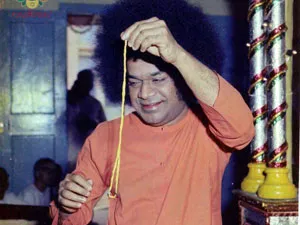
Resolve and Implement Hal Honig, the National Sai Service Coordinator, spoke to the devotees at the Manhattan Sai Center and shared some experiences from a visit with Swami in Puttaparthi. He spoke about Baba’s teachings and shared ideas how we can start to incorporate them into our lives. We were with Swami for a few weeks in the summer [Hal had taken a group of young adults]. Unusually, during our stay, Swami asked me almost every day, “When are you leaving? When are you leaving?” I replied that we were leaving on September 7th. “Very happy!” said Swami. In one of our interviews, He asked me, “Do you do japa (reciting the Lord’s name)?” I said, “No Swami, I don’t.” Suddenly, He made a very wide circle with His hand, and the next thing I saw was a beautiful japamala (rosary) made from crystal beads connected by little bits of silver. It was amazing and very impressive to see how the beautiful rosary materialized from nowhere. He first put it around my neck, then took it off and said, “Do you know how to use it?”  I had a vague idea, but very wisely I said, “No.” He held the japamala between His thumb, index finger, and middle finger and said, “Well, these three fingers represent the three qualities of a human being. What are the three qualities? [They are] satwic (pure), rajasic (very active) and tamasic (sluggish). The index finger represents mankind and the thumb represents the Divine. So when you do japa, the human and the Divine join together and move the beads one by one while you repeat the name of God. You can choose any name that you love, [like] Sathya Sai, Jesus, or Buddha. The important thing is that you should know what you are saying and say it with feeling.” I realized the significance of that message in hindsight. We left Puttaparthi on September 7th 2001, got back to New York on the 9th, and the World Trade Center incident happened on the 11th.  Swami, later commenting on the events of September 11th, said that we should all be courageous, and that this is the time, more than any other, when we should develop the habit of repeating the name of God. The lesson for us is to strengthen ourselves in times of difficulties and tribulations by repeating the Lord’s name. The other important message comes from the September 11th incident itself. About two years ago, in His New Year’s discourse, Swami said that a time will come when there will be change of feeling and realignment in the world. That is really what is happening. Look how the feelings between Russia and the United States have changed. All this indicates that His mission is accelerating, for He has only 20 years left before He leaves His present form. In those 20 years, the world will become vastly different and better than it is today, although the process looks painful. We are going through a period of enormous change. Change is crucial because it is an opportunity for us to do some very important work on ourselves. After the September 11th incident, about 80,000 low-income people lost their jobs and are struggling with whatever money they have to live a decent life. They depend on soup kitchens, churches, and groups such as ours for their food. Swami says that when you start any service project, first determine what the need is. What is the need here? It is very clear. People need food, housing, and guidance. These people are not only hungry, but they are homeless, desperate, demoralized, and depressed. We cannot solve all their problems, but we can set an example, which will be meaningful and helpful. This is the situation not just in New York but throughout the U.S. It is a national emergency and we, as Sai devotees, must address it as best as we can. A beautiful aspect of humanity emerged after the September 11th incident. We saw a lot of people with very good intentions coming to the city to try and help. Some of these people did not possess the skills needed at that time. As a result, their good hearts and good intentions could not be put to use. That has led us in the Sai Service Organization to encourage our members to acquire a variety of extra skills, such as Cardio-Pulmonary Resuscitation (CPR), by attending courses that city governments, the Red Cross, and others organize. As the National Sai Service Coordinator [U.S.], I have asked the regional service coordinators to inform their members of the extra skills they can acquire, so that for future use we can form a computerized national list of members with specific skills. Swami is giving us ample opportunity to use our hands and our time in a manner He would like. What does that mean? It means that we must love all and serve all. We have to increase our efforts with diligence and love and we must do it now. At the same time, many things are happening in the world that are really shocking and disturbing. So it is equally important for all of us to develop a correct attitude toward life. That begs the question: What is life all about? What do we expect from it? Very few of us really believe that pain and pleasure go together. We always feel that life should be pleasurable, fun, but it is not like that. We have all experienced the fact that any happy period will come to an end, and pain will automatically follow. Swami says, “Pain is a period between two pleasures.” If you study the Gita [a Hindu Scripture], it does not say not to seek pleasure. It says that when you seek pleasure, know that you are also seeking pain. They are two sides of the same coin. It is through our experiences that we learn and grow. Only by meeting the challenges in our life do we really evolve and change for the better. The right way to approach life is to regard everything that happens to

Resolve and Implement Read Post »

Bhagwan Sathya Sai Baba peaceful temple darshan picture
Glory Beyond Borders

A Report

A Report Devotees from U.S.A., U.K., and Poland jointly presented a musical performance to our beloved Lord Bhagavan Sri Sathya Sai Babaon 11th September, 2004. The people from the three groups joined hands and created a musical program that highlighted the ‘Unity in Diversity’ aspect of Swami’s teachings. There were many challenges to creating a program for Swami at short notice. Challenges ranged from finding the required instruments to gaining the approval with the rigid standards of the music academy, from finding suitable practice locations to dealing with the uncertainties of Swami’s schedule. With single-minded devotion and faith, the team worked diligently and patiently to overcome every obstacle thrown in its way. It all started in an interview on 9th September, when Swami asked the leaders of the U.S.A. group about the musical program and told the group to perform on the 11th of September—a day of significance for devotees from the western hemisphere. The united team held rigorous and ongoing practice sessions to meet the standards and approval of the music academy. It was indeed a miracle how the whole program came into form with just three days of practice so that it could be placed at the lotus feet of our Lord. On that day, just after the afternoon darshan, the united group—U.K., U.S.A., and Poland—presented a beautiful program to Swami in the Sai Kulwant Hall. The hall was packed with devotees. The musical program commenced with a Hebrew prayer, an invocation to Lord Ganesha and consisted of a wonderful mix of Polish poems, odes from different faiths and several languages, bhajans rendered in Hindi and English, and instrumental music. Swami watched very intently and listened with full concentration. Later He expressed His happiness about the program when he granted an interview to the women of the U.K. and U.S.A. group. He stated that in the future, too, devotees should work together in a united manner for such programs and seva [service] activities. The program was followed by a few devotional songs rendered by the college students and arati [the closing rite] performed by the leaders of the U.S.A. and U.K. group of devotees. This event is yet another example of how Swami’s unseen hand helps us when we set out to accomplish something with faith, devotion, and unity. ~Ramesh K. and Sheela Nayak, USA~Daksha and Pradip Trivedi, UK

A Report Read Post »

What is Antahkarana
Glory Beyond Borders

How the Lord Transforms

How the Lord Transforms Two and half years have passed since Bhagavan Baba’s guidance re­solved what was to me a serious moral dilemma. The growing number of hun­gry and homeless people begging on the streets of New York City left me feeling helpless, sad, and guilty. His guidance changed all this very quickly. Never leaving home without carrying food to give has become for me a way of life that immediately began to eliminate the problem. To each needy person I say, “Excuse me, would you like to have a sandwich?” This has become a habit as ingrained as saying, “Good Morning!” and “How are you?” but with vastly different and surprising results. I sought relief from a disturbing problem. What I received was a pro­found, gradual, ongoing character trans­formation. It did not come from a deeper study of the Lord’s teachings or from some miraculous revelation. It came almost imperceptibly, like a child’s growth. It came as His sure and unfail­ing grace comes when we listen to and apply His instruction and example. In this case, it came through the daily, steady practice of giving food to the hungry. It happened like this: The first morning that I prepared sandwiches was most unusual. There were simply no homeless people around on the streets, on the subway, and not even one person during my lunch hour. I began to wonder if I had exaggerated the problem. This was not at all what I expected. By mid‑afternoon, I was so perplexed that I decided to take a walk around the office block. There was no one. As I was about to re‑enter my build­ing, I caught sight of the first person with a paper cup in his hand, and I went up to him and said, “Excuse me, would you like to have a sandwich?” His clear eyes held mine with a strong and steady gaze. He spoke very slowly and distinctly, with a long pause between each of his four words: “Thank … you … very … much” he said, and smiled and took the sand­wich and cookies. Although his words were common enough, the cadence and feeling with which they were spoken stunned me. “Thank…you…very… much” were the last four words that my mother spoke before she died. Her words were spoken with the same slow cadence! I could not help but feel strongly that this was Bhagavan’s clear confirmation and blessing. It has proven to be just that. From that point on, with each sandwich given, I have combined the service with the saying of His name and the seeing of His form. The food I give is His food and it is given to Him whom I see before me. Before speaking, I say silently within, “Swami,” and only then out loud, “Excuse me, would you like to have a sandwich?” The results are un­failing. Although on a rare occasion the food is refused, there is never any un­pleasantness, but rather a notable sweet­ness that is very uplifting. The Lord’s presence, the Lord’s example, has in­spired the giving of the food and the act of giving the food has strengthened my practice of namasmarana, saying His name. The practice of one supports the practice of the other, for they are one. He is One and there is no other. Lessons from service I am learning that it is not possible to love God without loving and serving Him in other people and serving other people binds us closer to Him, for the nature of love is expansion. The simple act of giving food daily did just that. Very close to my apartment in New York City, clusters of homeless live in cardboard boxes. The local residents feel resentful, for they look dirty and smell bad. The commercial interests complain that they ruin tourist business. The newspapers complain that many are mentally unstable, alcoholics, and drug ad­dicts. Most people keep away from them, fearing that they may be dangerous. I had always avoided these temporary commu­nities. The police continually move them from one place to another. They are so­ciety’s throwaways. Gradually, I came to know several of the homeless on the streets by name. I found that some were part of these cardboard cluster commu­nities and so I began to cross over and deliver food to them. “Pop” introduces me as his “Sandwich Man” and the name has stuck. Although the turnover in the groups is high, there are a few who are less transient. Over a period of time, all of them have taught me a great deal. I do not want to glamorize their serious plight but only to look at what has been gained from the experience. This is what I have learned: They are so grateful for any simple act of kindness. I am grateful to the Lord for giving me this opportunity to serve. They remind me how very little we really need to survive. I am determined to diminish my desires and to be thank­ful for what I have been given. They are lost and confused. They remind me to make even greater efforts to fulfill the potential that He has given me. Saint Francis said, “While we have time, let us do good.” I must use His precious time to benefit society. They live one day at a time. Their concern is now. I remind myself that the past is dust and the future is a product of today’s right action. Dedicating to Him what I think, say and do today is all that matters. Remembering that, all is always very well. They share generously with each other. It has frequently happened that one person will say that others have not had food and their need is greater. “Give it to them.” Selfishness is reduced by the shared common experience. I try to remember to give more generously, for what I have is not mine but His. They teach me humility, for they are constant reminders that I have much good

How the Lord Transforms Read Post »