Hari Om

Menu

December 2, 2025

hq720 3 e1772884016805
veda pushpanjali part 2

Sandhyavandana Mantra with meaning

Sandhyavandana Mantra with meaning 1.आपे: पुनन्तु पृथिवीं पृथिवी पूता पुनातु माम् । पुनन्नु ब्राह्मणस्पति-ब्रह्मपूता पुनातु माम् । यदुच्छिष्ट-मभौज्यं यद्वा दुश्वरितं मर्म । सर्वं पुनन्तु मामापर्योऽसतां चे प्रतिग्रहुन् स्वाहाँ ॥ १ ॥Apah punantu prthivīm pṛthivī pūtā punātu mām. Punantu brahmanaspatirbrahmapută punătu mām. Yadu cchistamabhojyam yadvå duścaritam mamá. Sarvam punantu mämäpo’satăm cả pratigrahagg svāha.This hymn is chanted by the aspirant to consecrate the water that is used for Achamana, a sacred ritual. It is a prayer to Lord Varuna (representing Water) to cleanse us of all impurities. This prayer is normally chanted at noon. May this water cleanse my physical body made up of earth, and also my mind. May the water purified by the Supreme, purify me. May I be absolved of the sins of eating impure food, accepting gifts from impure persons or any other such misconduct. अग्निश्व मा मन्युश्च मन्युपतयश्च मन्यु॒कृतेभ्यः । पापेभ्यों रक्षन्ताम् । यदह्वा पार्षमकार्षम् । मनसा वार्चा हस्ताभ्याम् । पद्भचामुदरेण शिश्ना । अहुस्त-देवलुम्पतु । यत्किञ्चं दुरितं मर्चि । इदमहं माममृतयोनौ । सत्ये ज्योतिषि जुहौमि स्वाहा ॥ २ ॥Agnisca ma manyuśca manyupatayaśca manyuk Papēbhyo raksantām. Yadahnä papamakársam. Ma vaca hastābhyām. Padbhyāmudarėna śiśna. Ahastad valumpatu. Yatkiñca duritam mayi. Idamahan mamamitayõnau. Satyē jyötişi juhomi svāhā.This hymn is chanted by the aspirant as part of his evening (Sayam Sandhya) oblations. It is a prayer to Lord Agni (representing Fire) to cleanse us of all impurities including sins that may have been committed by us. May Agni (the Fire) burn down all anger in me so that I do not commit any sins due to my anger. Let Ahah, the Day efface the sins committed by me in thought, word and deed and through all organs of my body during the day. I offer myself along with all the sins as oblation into the immortal and effulgent Truth(so as to be purified सूर्यश्च मा मन्युश्च मन्युपतयश्च मन्यु॑कृतेभ्यः । पापेभ्यों रक्षन्ताम् । यद्रात्रिया पाप॑मकारुषम् । मनसा वार्चा हस्ता-भ्याम् । पद्भयामुदरैण शिश्ना । रात्रि-स्तद॑वलुम्पतु यत्किञ्चं दुरितं मयिं । इदमहं माममृतयोनौ । सूर्ये ज्योतिषि जुहोमि स्वाहा ।। ३ ।।Süryaśca má manyuśca manyupatayaśca manyúkrtëbhyah. Pāpēbhyo rakşantām. Yadrātriyā pāpamakärşam. Manasa vāca hastābhyām. Padbhyāmudarėna śiśnā. Rātrista dávalumpatu. Yatkiñca duritam mayi. Idamaham mamamstayõnau. Süryë jyötişi juhomi svāhā.May Lord Surya (Sun) burn down all anger in me so that I do not commit any sins due to my anger. May Rathri the Night efface the sins committed by me in thought, word and deed and through all my organs during the night. I offer myself along with all the sins as an oblation into the immortal and supremely luminous Sun(so as to be purified).Bhagawan Sri Sathya Sai Baba says that true ‘Tapas’ (highest penance) is unity of thought, word and deed. A person who achieves this unity is a ‘Mahatma’ (great one) and one who does not possess the unity of thought, word and deed is a ‘Duratma’ (wicked one).

Sandhyavandana Mantra with meaning Read Post »

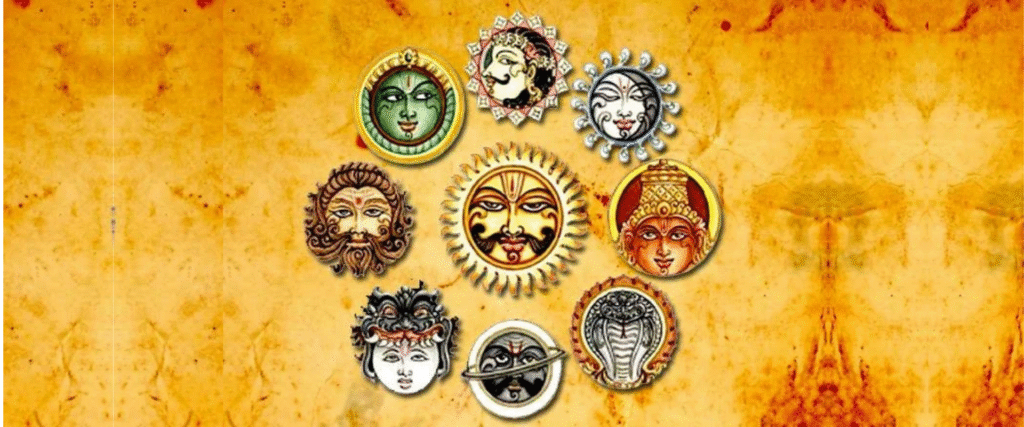
Navgrah background
Sūktam, veda pushpanjali part 2

Navagraha Suktam with meaning

Navagraha Suktam with meaning ॐॐॐ आसत्येन रजसा बर्तमानो निवेशनमृतं मल्लदै हिरण्ययेन सविता रथेनाऽऽदेवो यांतिभुव॑ना विपश्यन् । अडि येषामीशें पशुपर्तिः पशूनां चतुष्पदामुतचे द्विपदांम् । दूतं वृणीमहे होतार विश्वर्वेदसम् । अस्य यज्ञस्य॑ सुक्रतुम् । निष्क्रीतोऽयं यज्ञियं भागमैतु रायस्पोषा यज॑मानस्य सन्तु ॥ ॐ अधिदेवता-प्रत्यधिदेवता-सहिताय आर्दित्याय॒ नम॑ः।।॥Om asatyena rajásä vartámänō niveśayannamrtam martyañca. Hiranvayena savitä rathënā dēvõ vắtibhuvana vipaśyan. Agnim dütam vrnimahe hotaram viśvavedasam Asya yajñasya sukratum. yēsāmiśe paśupatih pašūnām catuspadamuta cá dvipadam. Nişkrito’yam yajñiyam bhāgamětu räyaspösä yajamānasya santu. Om adhidēvatäpratyadhidevatāsahitāya ädityāya namaḥ. Our salutations to Lord Aditya (Sun) who emerges with the brilliance of the effulgent Truth and moves in a golden chariot through the worlds inhabited by the mortals and the immortals. We welcome the All-knowing Lord Agni (Fire) as our Messenger as He is the master in performing sacrifices. May Aditya, Lord of all beings, accept the sacrificial offering and grant us glorious wealth. ॐ अग्रिमूर्द्धा दिवः ककुत्पतिः पृथिव्या अयम् अपाग्रेतासि जिन्वति । स्योना पृथिवि भर्वाऽनृक्षरा निवेर्शनी । यच्छांनश्शर्म सुप्रथाँः । क्षेत्रस्य॒ पर्तिना व्यग॑हिते नैव जयामसि । गामश्व पोषयित्वा स नौ मृडातीदृशैं ।। ॐ अधिदेवता-प्रत्यधिदेवता-सहिताय अङ्गारकाय नमः ॥॥ ३॥Om agnirmürddhā divaḥ kakutpatiḥ pṛthivyā ayam. Apāgamrētāgamsi jinvati. Syönä pṛthivi bhava’nṛkṣarā niveśani. Yacchanaśśarmá saprathah. Kşētrasya patinä vayagamhitë neva jayāmasi. Gamaśvam pöşayitnvă sa no mrdatidrse.Our salutations to Lord Angaraka (Mars) who rules over the earth and heaven and sets in motion waters that sustain life. May this vast earth become a happy abode for us. May You graciously bless us with knowledge and energy. ॐ उध्यस्वाने प्रति॑िजागृह्येनमिष्टापूर्ते संस॑जेथामयचे । पुन कृण्वस्त्वां पितरं युर्वानमन्वातासीत्त्वयि तन्तुमेतम् । उन विष्णु-विच॑क्रमे त्रेधा निर्दधे पदम् । सर्मूढमस्यपां सुरे। विष्पों ररार्टमसि विष्णौंः पृष्ठम॑सि विष्णोश्श्नप्त्रैस्थो विष्णोस्स्यूर॑स॒ विष्णयो॑ध्रुवम॑सि वैष्णवम॑सि॒ विष्ण॑वे त्वा ।। ॐ अधिदेवता-प्रत्यधिदेवता-सहिताय बुर्धाय॒ नम॑ः ।। ४।॥Om udbudhyasvägnē pratijägṛhyēnamistäpürte sagamsrjethämayañcá. Punah kenvaggstvå pitaram yuvanamanvätägamsittvayi tantumētam. Idam vişnurvicákramë trëdhā nidadhë padam. Samudhamasya pagam sure. Vişnó rarătamasi vişnoh prsthamasi vişnöśśnaptresthö vişnössyūrasi vişnördhruvamási vaişnavamási vişnavë tvă. Om adhidëvatäpratyadhidēvatāsahītäya budhaya namah. Our salutations to Lord Budha (Mercury). May You be pleased with our offerings in the Yajna brought to You by Lord Agni. The Yajna represents the very essence of the immortal Vishnu who sanctified the three worlds with the dust of His feet. May You bestow upon our fathers eternal youth. (The importance of the performance of Yajna is highlighted by comparing the Yajna with Lord Vishnu). ॐ प्रर्वश्शुक्रार्य भानवें भरध्वर्ग हव्यं मतिं चाग्नये सुप॑तम् । यो दैव्यांनि मानुषा जनूंषि अन्तर्विश्वा॑नि वि॒द्म ना जिगोति । इन्द्राणीमासु नारि॑िषु सुपीम॒हम॑श्रवम् । न ह्यस्या अपरंचन जरसा मरते पर्तिः । इन्द्रं वो विश्वतस्परि हर्वामहे जर्नेभ्यः । अस्माकंमस्तु केर्बलः ।।ॐ अधिदेवता-प्रत्यधिदेवता-सहिताय शुक्राय नमः ।॥ ६ ॥ Om pravaśśukräyȧ bhānave bharadhvagam. Havyam matim căgnayë supütam. Yō daivyani mănuşā janügamși. Antarviśvani vidma na jigáti. Indrānīmāsu nārişu supatnímahamaśravam. Na hyasyä aparañcana jarasă marátě Our salutations to Lord Sukra (Venus); be gracious to us. We offer our oblations into Agni who reaches them from earth to heaven. Indra, who has become invincible and immortal by the power of chastity of his most blessed consort, brings our oblations to You. ॐ शनौ देवीरभिष्टय आपो भवन्तु पीतयें । शंयोरभिसंवन्तु नः । प्रजापते न त्वदेतान्यन्यो विश्वर्धा जातानि परिता र्बभूव । यत्कोमास्ते जुहुमस्तनों अस्तु व्यग्ग्स्या॑म॒ पत॑यो रयीणाम् । इमं येमप्रस्तरमाहि सीदाऽङ्गिरोभिः पितृर्भिस्सं-विदानः । आत्वा मन्त्राँः कविशस्ता वहन्त्वेना राजन् हविर्षा मादयस्व ।ॐ अधिदेवता-प्रत्यधिदेवता-सहिताय शनैश्चराय नम॑ः ॥७॥ Om śanno dēvīrabhistaya apo bhavantu pītayč. Samyorabhisravantu nah. Prajapatě na tvadētānyanyö viśva jātāni parită babhūva. Yatkamāstē juhumastanno astu vayaggsyama patayo rayīņām. Imam yamaprastaramähi sīdā’ngirōbhih pitrbhissamvidānaḥ. Ätvä mantraḥ kaviśastă vahantvēnā rajan havişa mādayasva. Om adhidēvatäpratyadhidēvatāsahitāya śanaiścarāya namah. Our salutations to Lord Sanaishchara (Saturn) who grants us the water of life (spiritual sustenance), which endows on us divine bliss. (Here, Sani (Saturn) is addressed as Sanaishcara, meaning one who moves slowly. In this hymn, Lord Sani is also addressed by the names of Prajapati and Yama). O Prajapati, You are the eternal One from whom the whole universe has emerged. May You grant our prayers for abundant wealth. O Yama, may You come and preside over the Yajna along with our manes and joyfully accept our offerings. ॐ कयां नक्षत्र आभुषदूती सदावृधस्सखा । कया शर्चिष्ठया बुता । आज्यन्नीः प्रश्निंरक्रमीदसंनन्मातरं पुर्नः । पितरेन प्रयन्त्सुर्वः । यत्तै देवी निर्ऋतिराव॒बन्ध॒ दाम॑ ब्रीवास्य॑ विचर्त्यम् । इदन्ते तद्विष्याम्यायु॑षो न मध्यादोजीवः पितु-मंद्धि प्रर्मुक्तः ॥ ॐ अधिदेवता-प्रत्यधिदेवता-सहिताय राहवे नर्मः ॥ ८ ॥Om kaya našcitra ābhuvadūtī sadāvṛdhassakha. Kaya śačisthayā vṛtä. Ä’yangauh prśnirakramīdasananmātaram punah. Pitarañca prayantsuvah. Yatte devī nirrtiräba bandha dămå grīvāsvavicartyam. Idantë tadvisyāmyāyuşə na madhyādathajīvah pitumaddhi pramukttah. Om adhidëvatäpratyadhidevatāsahitāya rähavē namaḥ. Our salutations to Lord Rahu, our wonderful and abiding friend who helps Lord Indra bring us the knowledge that leads us to heaven; this knowledge also releases us from the bondage of material existence, so that we can partake of the divine nectar of bliss even during the prime of our life. ॐ केतुङ्गुण्वच॑केतवे पेशों मर्या अपेशर्स । समुषद्भिर जायथाः । ब्रह्मा देवानां पदवीः क॑वा॒नामृषिर्विप्राणां महिषो मृगाणाम् । श्येनो गृना॑पा॒ग्र्वधि॑िति॒र्वता॑नां सोम॑ः पवित्रुमः त्यैति रेभं । सचित्र चित्रं चितयन्तम॒स्मे चिच॑क्षत्र चित्रर्तम बयोधाम् । चन्द्रं रयिं पुरुवीरँ बृहन्तुं चन्द्र॑च॒न्द्राभि॑िर्गृपने युवस्व ।।ॐ अधिदेवता-प्रत्यधिदेवता-सहितेभ्यः केतु॑भ्यो नमः ॥९॥ ।। ॐ आदित्यादि नवग्रह देवताभ्यो नमो नमः ।।Om Acrunkenvannaketavé péső marya apesas Samusadbhirajayathah. Brahmā dēvānam padavis kavinämrsirvipranam mahisö mrganam. Syên grdhranägsvadhitirvananāgam somah pavitramatyêu rebhan. Sacitra citram citavantamasmē citraksatra citratamam vayōdham. Candram rayim puruvirambrhantam candracandrabhirgrnate yuvasva. Om adhidevatāpratyadhidevatāsahitēbhyaḥ këtubhyö namah.Orm ädityadi navagraha dēvátābhyō namo namah. Our salutations to Lord Ketu; the One born in the dawn of knowledge and whose rays awaken life in the lifeless and endows form to the formless. May You grant us the power of intuition so that we can express abstract and sublime ideas in delightful words.O Lord, You are the Supreme One who has become Lord Brahma among gods, the wordsmith among poets; the seer among the aspirants; the buffalo among animals; the kite among birds; the axe among the tools used in the forest and nectar ‘Soma’ among the sacrificial offerings.

Navagraha Suktam with meaning Read Post »

dbb6caedf873fd69840a5379aacffcbb
veda pushpanjali part 2

Suryanamaskara Mantra with meaning

Suryanamaskara Mantra with meaning ४. सूर्य नमस्कार मन्त्राः (भाग: अ) ओम् अग्निमाळे पुरोहितं यज्ञस्य॑ देवमृत्विजम् । होला राधात्र्तमम् ॥ ऋग्वेदात्मने सूर्यनारायणस्वामिने नमः ॥ १ Om agninile purohitam yajñasya dēvamṛtvijam. Hotaras ratnadhatamam. Rgvedätmanë sūryanārāyanasvamin namah. Salutations to Lord Suryanarayana who is the Soul of Rig Veda (Lord who is adored in the Rig Veda) इषे त्वोर्जेत्वा॑ वा॒यव॑स्स्थोपा॒यव॑स्स्थ दे॒वो व॑स्सवि॒ता प्रापैय श्रेष्ठतमाय कर्मणे ॥ यजुर्वेदात्मने सूर्यनारायणस्वामित ॥२॥ rva vāyavassthōpāyavasstha dēvō vássavita prarp.. Sresthatamaya karmaņē. Yajurvēdātmane sūryanārayanasvaminë namaḥ. Salutations to Lord Suryanarayana who is the Soul of Yajur Veda (Lord who is adored in the Yajur Veda) अग्र आर्याहिवीतये॑ गृणानो ह॒व्यया॑तये । निहोर्ता सत्सि बर॒हिर्षि ।। सामवेदात्मने सूर्यनारायणस्वामिने नमः ॥ ३॥ Agna āyahivītayể gọņānō havyadataye. Nihōta satsi barhişi. Sāmavēdātmanē sūryanārāyaņasvamine nanch Salutations to Lord Suryanarayana who is the Soul of Sama Veda (Lord who is adored in the Sama Veda) शन्नों देवीरभिष्टय आपो भवन्तु पीतयें । शंयोरभिस्रवन्तु २ अथर्ववेदात्मने सूर्यनारायणस्वामिने नमः ॥ ४ ॥ Šanno dēvīrabhiştaya apo bhavantu pītaye. Samyon bhisravantu nah. Atharvavēdātmanē sūryanārāyan svāminē namaḥ. Salutations to Lord Suryanarayana who is the Soul of Atharava Veda (Lord who is adored in the Atharva Veda) (भागः – आ) घृणिस्सूर्य आदित्यो न प्रर्भा वात्यक्षरम् । मधु क्षरनि तद॑सम् । सत्यं वै तद्रसमापो ज्योतीरसोऽमृतं ब्रह्म भूर्भुवस्स वरोम् । छायासुवर्चलाम्बा-समेत-श्री सूर्यनारायणस्वामिः नमः ।। १ ।। Ghrnissurya ādityō na prabha vatyaksaram. Madhu kşaranti tadrasam. Satyam vai tadrasamāpō jyōtīrasō’mṛtaṁ brahma bhūrbhuvassuvarom. Chāyāsuvarcalāmbāsamēta śrī sūryanārāyaņasvāminë namaḥ. Section B: Lord Surya as the Supreme Brahman Salutations to Lord Sri Suryanarayana, who is accompanied by his consorts Chaya (Shadow) and Suvarchalamba (Effulgence). त॒रण॑वि॒श्वद॑र्शतो ज्योति॒ष्कृद॑सि सूर्य । विश्वमार्भासि रोच॒नम् । उप॒या॒मनु॑हीतोऽसि॒ सूर्यांय त्वा॒ भ्राज॑स्व॒त ए॒ष ते॒ योन॒स्सूर्यांय त्वा॒ भ्राज॑स्वते । छायासुवर्चलांबा-समेत-श्री सूर्यनारायणस्वामिने नमः ।॥ २ ॥ Taranirviśvadarśatō jyotiṣkṛdasi sūrya. Viśvamābhasi rocanam. Upayamagṛhītō’si sūryaya tvā bhrājasvata ēṣa tē yōnissūryaya tvā bhrājasvate. Chāyāsuvarca- lāmbāsamēta śrī sūryanārāyaņasvāminē namaḥ (भागः – इ) ओं हाम् । उद्यन्नद्य मित्रमहः । मित्राय नमः ॥ १ ॥Öm hrām. Udyannadya mitramahah. Mitrāya namah ओं ह्रीम् । आरोहन्नूत्तरां दिवम् । रवये नमः ॥ २ ॥ Öm hrīm. Arohannuttarām divam. Ravayē namah. औं हूम् । हृद्रोगं मम॑ सूर्य । सूर्याय नमः ।। ३ ।। Öm hrüm. Hrdrögam mama sūrya. Sūryāya namaḥ. औं हैम् । हरिमाण॑ञ्च नाशय । भानवे नमः ।। ४ ।।Auam hraim. Harimānanca nāśaya. Bhānavē namaḥ. ओं ह्रौम् । शुकॆषु मे हरिमाणम् । खगाय नमः ।। ५ ॥ Öm hraum. Śukeșu mē harimānam. Khagāya namaḥ. ओं ह्रः । रोप॒णावा॑सु॒ दध्मसि । पूष्णे नमः ।। ६ ।।Ôm hrahah. Rōpanākasu dadhmasi. Pūsnē namaḥ. ओं ह्राम् । अर्थो हारिद्रवेषु मे । हिरण्यगर्भाय नमः ॥ ७ ॥ Ôm hrām. Athổ hāridravēsu mē. Hiranyagarbhāya namaḥ. औं ह्रीम् । ह॒र॒िमाण॒न्निद॑ध्मसि । मरीचये नमः ।। ८ ।।Auam hrīm. Harimānannidadhmasi. Marīcayē namaḥ. Section C: The four steps in doing the Prostrations In the following hymns, Lord Surya is addressed by twelve names starting from Mitra to Bhaskara. Aum Mitraya namah Aum Ravayé namah Aum Suryaya namah Aum Bhanavé namah Aum Khagaya namah Aum Pushné namah Aum Hiranyagarbhaya namah Aum Marichayé namah Aum Adityaya namah Aum Savitré namah Aum Arkaya namah Aum Bhaskaraya namah Mantras that are recited while doing a physical prostration have four parts: Step 1: In the first step, the chanting takes the following form: Aum + 1 Beejakshara + 1 Pada of a Rucha + 1 particular name of Sun God i) Aum: Aum signifies the powerful Pranava Mantra. ii) Beejakshara: The six basic sounds are Aa, Ee, Eu, Ae, Ow, Aha – also known as the long vowels are the vital roots from which all other sounds are derived. Hence, they constitute the Beejaksharas or basic letters (sounds) of Surya namaskara Mantras. These six Beejaksharas are pronounced as Hraam, Hreem, Hruum, Hraim, Hrawm and Hrahah. iii) Rucha: Each Mantra in the Veda is referred to as a Rucha. There are three Ruchas, each of them having four Padas being chanted as part of the Suryanamaskar Mantras (Each of these twelve padas are chanted in conjunction with the twelve names of the Sun) ओं हूम् हैम् । उदंगादयमर्मादित्यः । विश्वेन सहसा सद आदित्य-सवितृभ्यां नमः । Öm hrüm hraim. Udagādayamadityah. Viśvena saha saha. Ādityasavitrbhyām namaḥ. औं हौम्, ह्रः । द्विषन्त॒ मम॑ र॒न्धयं । मो अ॒हं ि र॑थम् । अर्क-भास्कराभ्यां नमः । Öm hraum, hrah. Dvişantam mama randhayan. Mõ ahar dvişatō ratham. Arkabhāskarābhyām namah. ओं हाम्, ह्रीम्, हूम्, हैम् । उद्यन्न॒द्य मिंत्रमहः आरोह॒नुत्र्त्तरां दिवम् । हृद्रोगं मम॑ सूर्य । हर॒िमार्णञ्च नाशय। मि॒त्र-रवि-सूर्य-भानुभ्यो नमः ।। Öm hrām, hrīm, hrüm, hraim. Udyannadya mitramahah. Āröhannuttarām divam. Hrdrögam mama sūrya. Harimāņañca nāśaya. Mitraravisūryabhānubhyō namaḥ. ओं हौम्, हः, हाम् ह्रीम् । शुकैषु मे हरिमाणम् । रोप॒णावा॑सु॒ दध्मसि । अर्थो हारिद्र्वेषु मे । ह॒रिमाण॒ग्निर्द- ध्मसि । खग-पूष-हिरण्यगर्भ-मरीचिभ्यो नमः ।। Ôm hraum, hrahah, hrām hrīm. Šukeșu mē harimānam. Rōpaņākasu dadhmasi. Athö haridravēșu mē. Harimāna- nnidadhmasi. Khagapūşahiranyagarbha-marīcibhyo namah The chanting of the first twelve Mantras as described above constitutes the first step. Step 2: In the second step, the chanting takes the following form Aum + 2 Beejaksharas + 2 padas + 2 names of the Sun God Step 3: In the third step, the chanting takes the form of: Aum + 4 Beejaksharas + 4 padas + 4 names of the Sun God Step 4: In the fourth and the final step, the chanting is Aum + All 6 Beejaksharas + All 12 padas (3 ruchas) + 12 names of the Sun God Thus after all the four steps, twenty-two Mantras are chanted and with each Mantra one Suryanamaskara (physical prostration) is performed. This cycle is repeated three times to complete one Trucha Kalpa Namaskara (with sixty-six physical prostrations being performed) Coming to the purport of these Mantras, it is necessary for us to understand the meaning of the three ruchas recited as part of Suryanamaskar and the significance of the twelve names of the Sun God. ओं हूम्, हैम्, होम्, ह्रः । उर्दगादयमर्मादित्यः । विश्वे सहंसा सह । द्विषन्तं मर्म रन्धयन् । मो अहं द्विषतो रथम आदित्यसवित्रर्क-भास्करेभ्यो नमः ।। Viśvena sahasā saha. Dvişantam mama randhayan. M Öm hrüm, hraim, hraum, hrahah. Udagādayamadityah aham dvişatō ratham. Adityasavitrarkabhāskarēbhy namah. ऑ हाम्, ह्रीम्, हुम्, हेमू, ह्रौम्, ह्रः । उद्यन्नद्य मित्रमहः आरोह॒त्रुत्त॑रा॒ दिवम् । हृद्रोगं मम॑ सूर्य ।


Suryanamaskara Mantra with meaning Read Post »

b29bd29b363db98eb3d4c8fdcfc806b0
veda pushpanjali part 2

Iśāvāsyopanisat with meaning

Iśāvāsyopanisat with meaning २. ईशावास्योपनिषत् ॐ पूर्णमदः पूर्णमिदं पूर्णात्पूर्णमुच्यते । पूर्णस्य पूर्णमाया॒य पूर्णमेवावशिष्यते । Om pūrņamadaḥ pūrņamidam pürņātpürņamudacyatē. Pūrņasya pūrņamādāya pürņamēvāvaśiṣyatē. ॐ शान्ति शान्ति शान्तिः । Om śānti śānti śāntih That (Transcendental Brahman) is complete. This (phenomenal universe) is also complete since, this phenomenal universe has emerged from that Transcendental Brahman. Even after emergence of this phenomenal universe, that Transcendental Brahman remains complete. According to Bhagawan Sri Sathya Sai Baba, universe is the projection of God; therefore, the universe is as perfect as God himself. In continuation, Bhagawan says that when one’s Drishti (vision) is filled with Prema (love), Srishti (creation) is filled with Brahma (God). ॐ ईशा वास्र्यमिदं सर्वं यत्किञ्च जर्गत्यां जग॑त् । तेर्न त्यक्तेन॑ भुञ्जीथा मा गृधः कस्य॑स्विद्धनम् ॥ १ ॥ Om isä väsyamıdagam sarvam yatkiñca jagátyám jagat. Tena tyaktična bhunjitha må grdhah kasyasviddhanam. According to Bhagawan Sri Sathya Sai Baba, the Truth (Sathya) is that the universe is the Lord Himself. One has to practise Dharma (Righteousness) in order to attain Sathya (Truth). The essence of Dharma is to enjoy with detachment what belongs to you without desiring for what belongs to others. कुव॑ने॒वेह कर्मीणि जिजीविषेच्छ्रतं सौः । एवं त्वय॒ नान्यथेर्तोऽस्ति न कर्म’ लिप्यते नरै Kurvannēvēha karmaņi jijīvişēcchatagam samaḥ. Evam tvayi nănyathēto’sti na karma lipyatē nare. According to Bhagawan Sri Sathya Sai Baba, detachment means to act without the sense of ego and not seek any reward for action. When the reward comes, one should learn to enjoy it without the sense of possessiveness by realising that whatever comes is the gift of God (God’s prasadam). This is the essence of Karma Yoga. Bhagawan Baba further explains that, Karma Yoga is to involve in Karma (work) with Bhakthi (worship) for Jnana (wisdom). असु॒या॒ नाम॒ ते लोका अन्धेन॒ तम॒साऽऽर्वृताः । तांस्ते प्रेत्या॒भिर्गच्छन्ति॒ि ये के चाँत्महतो॒ जनाँः ॥ ३ ॥ Asuryā nāma të lökā andhēna tamasä”vrtah. Tagatiste prétyabhigacchanti yë kë catmahanó janah According to Bhagawan Sri Sathya Sai Baba, the spiritual way of life will lead to bliss and enlightenment, whereas the materialistic way of life would lead one to misery. अनॆजदेकं मन॑सो जीँयो॒ नैन॑दे॒वा आँध्रुव॒न्पूर्वमर्षंत् ।तद्धाव॑तो॒ऽन्यानत्यैति तिष्ठत्तस्मिन्न॒पो मा॑त॒रिश्वा॑ दधाति ||४|| Anejadēkam manásō javīyō nainaddēvā apnuvanpūrvamarşát. Taddhāvatō’nyānatyeti tişthattasminnapō matariśva dadhāti Bhagawan Baba gives the example of the road and the vehicles moving on the road. The moving tyres are supported by the road which is stationary (the road is permanent and does not move). The road is like the Brahman; the vehicles are the ever changing world. Brahman (who is eternal) supports the ever changing universe. तद॑जति॒ तन्नेज॑ति॒ तद्दूरे तद्वंन्तिके । तद॒न्तर॑स्य॒ सर्वस्य॒ तदु सर्वस्यास्य बाह्यतः ।। ५ ।। Tadejati tannējati taddūrē tadvantikë. Tadantarásya sarvasya tadu sarvasyāsya bāhyataḥ According to Bhagawan Sri Sathya Sai Baba, “Yath Bhavam, Tad Bhavathi,” i.e, “As is the feeling, so is the result.” God cannot be either described or understood. Hence Bhagawan Baba says that one should not try to understand Him, but should only experience and enjoy the Divine company. The only way to attain God is to experience Him through the heart and not by analysing Him through the head. यस्तु सर्वाणि भूतान्या॒त्मन्ये॒वानुपश्य॑ति । स॒र्वभूतेषु चात्मानं ततॊ न विर्जुगुप्सते ।। ६ ।। Yastu sarvani bhūtānyātmanyēvānupaśyati. Sarvabhūtēşu cātmānam tatō na vijugupsatē. According to Bhagawan Sri Sathya Sai Baba, “Ekatma Sarvabhootantaratma”. There is only one Atma and the same is reflected in all beings. यस्मिन्सर्वैणि भूतान्या॒त्मैवार्भूद्विजान॒तः । तत्र को मोहः कः शोर्क एकत्वम॑नुपश्य॑तः ।। ७ ।। Yasminsarvani bhūtānyātmaivābhüdvijānataḥ. Tatra kō mōhaḥ kaḥ śōka ēkatvamanupaśyataḥ. According to Bhagawan Sri Sathya Sai Baba, Agnyani (Ignorant man) sees the multiplicity in unity, whereas a Jnani (Wise man) sees the unity in multiplicity. Hence, a Jnani does not have either grief or attachment. स पर्यंगाच्छुक्रम॑वा॒यम॑व॒णम॑स्त्रावि॒रं ग्रुद्धम쀼पविद्धम् । क॒विर्मा ‘नीषी प॑र॒भूः स्व॑य॒म्भू-थातथ्य॒तोऽर्थान् व्य॑दधाच्छाश्व॒तीभ्यः समा॑भ्यः ॥ ८ ॥Saparyagācchukramákāyamávraņamásnāviragam śuddhamapapaviddham Kavirmānīşī paribhūḥ svayambhūryathātathyatō’rthān vyadadhācchāśvatībhyaḥ samabhyaḥ अन्धं तमः प्रर्विशन्ति॒ि येऽव॑द्यामुपास॑ते । ततॊ भूय॑ इव॒ ते तो य उ॑ वि॒द्यार्यांं र॒ताः ।। ९ ॥ Andham tamaḥ praviśanti yē’vidyāmupāsátē. Tatō bhūya iva të tamō ya u vidyāyāgam ratāḥ. According to Bhagawan Sri Sathya Sai Baba, those individuals who have gained the knowledge and do not practise are worse than those who have not attained the knowledge and hence cannot practise. Bhagawan explains that there are five types of knowledge and they are: a) Superficial knowledge b) Bookish knowledge c) General knowledge d) Discriminatory knowledge and e) Practical knowledge. One would attain true Vidya when one has not only attained bookish knowledge but also practical knowledge. अ॒न्यदे॒वाहुवि॒द्यया॒ऽन्यदाँहु॒रव॑द्यया । इति॑ि शुश्रुम धीराणां ये न॒स्तर्द्विचचक्षिरे ।। १० ।। Anyadēvāhurvidyayā’nyadahuravidyayā. Iti śuśruma dhīraņām yē nastadvicacakșirē 10 & 11. This is what we have heard from the wise (those who have realised their divine nature). Avidya and Vidya would lead to different outcomes when one practises the knowledge he has gained. Then, Avidya will lead one to misery and Vidya would lead one to immortality According to Bhagawan Sri Sathya Sai Baba, Lord Rama was a good man and King Ravana was a great man. Ravana was accomplished in 64 forms of knowledge but Lord Rama was accomplished in only 32 forms of knowledge. The difference between the two was just being able to put into practise all knowledge gained – Lord Rama put his knowledge into practice, but King Ravana did not. विद्यां चाव॑िद्यां च यस्तद्धेोभय॑ं स॒ह । अव॑िद्यया मृत्युं ती॒त्वा॑ वि॒द्यया॒ऽमृत॑मश्नुते ॥ ११ ॥ Vidyām cāvidyāṁ ca yastadvēdōbhayagam saha. Avidyayā mṛtyum tīrtvā vidyayā अन्धं तमः प्रवि॑िशन्त॒ येऽसम्भूतिमुपास॑ते । ततो भूय॑ इव॒ ते तो य उ सम्र्भूत्यां रताः ।। १२ ।। Andham tamaḥ praviśanti yē’sambhūtimupāsátē. Tatō bhūya iva të tamō ya u sambhűtyāgam ratāḥ {In Sanskrit, there are four meanings for the word Sambhoothi. One of the meanings is Union or Unity (Advaitha); therefore the opposite word Asambhooti would represent Duality (Dwaitha)} According to Bhagawan Sri Sathya Sai Baba, “A man with dual mind is half blind.” Bhagawan explains the above with an example of a seeker of Truth who ‘attempted’ to see the Lord in everything. One day as he was walking on the road, he noticed an elephant rushing towards him.He thought that this elephant

Iśāvāsyopanisat with meaning Read Post »

lord sun gayatri mantra meaning in hindi
veda pushpanjali part 2

Süryopanisat with meaning

Süryopanisat with meaning 1.ॐ भुद्रं कर्णेभिः शृणुयाम॑ देवाः । Om bhadram karnēbhiḥ śrnuyāma dēvāh…. Every Vedic Suktam has six key aspects and an objective with which it is chanted. The first is the Rishi or seer who gave the Suktam to the world. The second is the Chandas (metre); the third is the Devata (presiding deity), fourth is the Beejam (seed word); fifth is Shakthi (power) and sixth is Keelakam (kingpin). 2.ॐ अथ सूर्याथर्वाङ्गिरसं व्याख्यास्या॒मः । ब्रह्मा ऋषिः गाय॑त्री छन्दः । आर्दत्यो दे॒वता । हंस॑ः सोऽहमग्निः नारायणर्युक्तं वी॒जम् । हृल्लेखा शक्तिः । वियदादिसर्गसंयुक्तं कीलकम् । चतुर्विधपुरुषार्थ सिद्धयर्थे विनियोगः ॥ १ ॥ Om atha sūryātharvāngirasaṁ vyakhyāsyāmaḥ. Brahmā rsih. Gayatri chandah. Adityō dēvatā. Hamsah sō’hamagninārāyanayukttam bījam. Hrllekhā śakttih Viyadādisargasamyukttam kilakam. Caturvidhapuruṣārtha siddhyarthë viniyōgaḥ Now we shall expound the Mantras (hymns) of Atharva Veda in relation to Surya (Sun). The Rishi (sage) is Brahma; the Chandas (metre) is Gayatri; Devata is Aditya (Surya); Beejas (seed words) are Hamsa, Soham, Agni and Narayana. Shakthi is Hrillekha (light and illumination). Keelakam is sky and heaven. The objective is to attain the four goals of human life – Dharma, Artha, Kama and Moksha. According to Bhagawan Baba: Among the four goals of human life; Artha and Kama (Wealth and desire) are like a train while Dharma and Moksha (Righteousness and liberation) are like the rails. If the train has to run successfully, it should firmly stay on the rails all the time. Similarly human pursuit of wealth and desires should be based on righteousness and with the goal of liberation in mind. One has to enjoy wealth and pleasures of the world with a spiritual outlook; a purely materialistic approach to life will lead one to misery. 3.षट्स्वरारूढेन बीजेन षर्डनं रक्ताम्बुज संस्थितं सप्ताश्व॑रथिनं हिर॑ण्यव॒र्णं च॑तुर्भुजं पद्मद्वयाऽभयवरदहस्तं कालचक्रप्रणेारं श्रीसूर्यनाराय॒णं य एवं वेद स वै ब्राह्मणः ।। Şațsvarārūdhena bījēna şadangam raktāmbuja samsthitam saptāśvarathinam hiranyavarnam cáturbhujam padmadvayā bhayavaradahastam kalacakrapraņētāram śrīsūryanārāyaņam ya evam vēda sa vai brahmanah. Whoever realises that Supreme Lord Suryanarayana, the impeller of time and the One who rides a chariot with seven horses, and the One seated in the red lotus having six petals and each petal having the six Beejaksharas inscribed (representative of the six sounds) is verily the wise one (Brahmana). (This is an allusion to the Suryanarayana Chakram which an aspirant meditates upon). This golden hued Suryanarayana having four hands has two lotuses in two hands and the third hand raised in Abhayahasta (raised above in blessing) and the fourth hand (facing below) bestowing boons on beings. 4.ॐ भूर्भुवः सु॒र्वः । तत्स॑वि॒तुर्वर॑ण्य॒ भर्गो दे॒वस्य॑ धीमहि । धियो॒ यो न॑ः प्रयो॒दया॑त् । सूर्य॑ आ॒त्मा जग॑तस्त॒स्थुष॑श्च । सूर्याद्वै खल्व॒मान भूता॑नि॒ जाय॑न्ते । सूर्याय॒ज्ञः पर्जन्यौऽन्नमात्मा ।।l Om bhurbhuvah suvah. Tatsaviturvarenyam bhargo dēvasya dhīmahi. Dhiyō yō nah pracodayắt. Sūrya ātmā jagátastasthuşaśca. Sūryādvai khalvimāni bhūtāni jāyantë. Sūryadyajñaḥ parjanyőʼnnamātmā We meditate on the supreme light of that effulgent creator of the three worlds. May He inspire our intellect to attain the Truth. (Lord Surya is also known as Pratyaksha Devata – since the Sun God is visible to the naked eye). Surya (the Sun) is the soul of everything in this world. He is the source of all sacrifices and rain which help produce food and sustain all beings. Hence, Lord Surya is the source of all sustenance in this world. 5.नमस्ते आदित्य । त्वमेव प्रत्यक्षं कर्म कर्तासि । त्वमेव प्रत्यक्ष ब्रह्मांसि । त्वमेव प्रत्यक्षं विष्णुरसि । त्वमेव प्रत्यक्ष रुद्रौऽसि । त्वमेव प्रत्यक्षं ऋर्वसि । त्वमेव प्रत्यक्षं यज॑रसि । त्वमेव प्रत्यक्षं सार्मासि । त्वमेव प्रत्यक्षमर्थर्वासि । त्वमेव सर्वं छन्दोऽसि । आदित्यायुर्जायते । आदित्याद्भूमिर्जायते । आदि॒त्यादाौजाय॒न्ते । आदि॒त्याज्योर्तिर्जाय॒ते । दि॒त्याद् ब्योम दिशों जायन्ते ॥ Namaste äditya. Tvameva pratyakşam karma kartāsi, Tvameva pratyakşam brahmasi. Tvameva pratyakşam visnúrasi. Tvameva pratyakşam rudro’si. Tvameva pratyakşam rgåsi. Tvameva pratyakşam yajurasi. Tvameva pratyakşam sāmasi. Tvameva pratya- kşamatharvasi. Tvameva sarvam chando’si. Adityad- váyurjayatë. Adityadbhamirjāyatë. Adityādāpojāyantē. Adityājjyötirjäyatë. Adityād vyöma diśo jayantë. Our Salutations to Lord Aditya (Sun). You are the One and only doer of all actions. You are in reality – Brahma, Vishnu and Rudra. You verily indeed are Rig, Yajur, Sama and Atharva (Four Vedas) and also the Chandas (metre). The five elements (Earth, water, fire, air and sky) emerge from You as also the directions. 6.आदित्याद् दैवा जायन्ते । आदित्याद्वैदा जायन्ते आदित्यो वा एष एतन्मण्डलं तर्पति । असावादित्यो ब्रह्मा आदित्योऽन्तःकरण-मनोबुद्धि-चित्ताहङ्काराः । आदित्यो ३ व्यानस्समानोदानोऽपानः प्राणः । आदित्यो वै श्रोत्र त्वक्चक्षूरस॑नघ्राणाः ।। Ādityād devā jāyantē. Ādityādvědā jāyantē. Adityō v ēșa ētanmandalam tapati. Asāvadityō brahma Aditya nahkaragaman buddhicittahankarah. Adityö va vyānassamānōdānō’panah pranah. Adityō śrōtratvakcakşūrasanaghrānāḥ. vaj All the gods and Vedas emerge from Aditya (Sun). Aditya who is the Supreme Brahman illumines this earth. Aditya Himself is the Anthahkarana (inner instruments) mind, intellect, consciousness and ego. Aditya Himself is the five life breaths (Prana, Apana, Vyana, Udana and Samana) and the five senses of perception (vision, hearing, smell, taste and touch) the Pancha Pranas and Pancha Indriyas. 7.दि॒त्यो वै वाक्पाणिपादपा॑यूप॒स्थाः । दि॒त्यो वै शब्द- स्पर्शरूपर॑सन्धाः। दि॒त्यो वै वचनादानागमन विस॑र्गा- नन्दाः । आनन्दमयो विज्ञानमयो विज्ञानघन॑ आदि॒त्यः । नमो मित्राय भानवे मृत्यौर्मा पा॒हि । भ्राजिष्णवे विश्वहेर्तवे न॒मः । सूर्याद्भवन्ति॑ि भूता॒न सूर्येण पार्लितानि॒ तु ।। ६ ॥ Ādityō vai vākpāņipādapayūpasthāḥ. Ādityō vai śabda sparśarūparásagandhāḥ. Ādityō vai vacanādānāgamana visargānandāḥ. Ānandamayō vijñānamayō vijñānaghana ādityah. Namō mitrāya bhānavē mṛtyormā pāhi. Bhrājişņavē viśvahētavē namaḥ. Sūryādbhavanti bhūtāni sūryēņa pālitāni tu. Aditya Himself has become the five organs of action. He is verily the words, the pauses between the words and the flow of the chant; He is verily the bliss that arises out of the chant. He pervades the Anandamaya Kosha (sheath of bliss) and Vijnyanamaya Kosha (sheath of intellect). Salutations to the Lord Sun who is the effulgent cause of the world with all its beings; may You save us from death. 8. सूर्ये लयं प्राप्नुवन्ति यः सूर्यः सोऽहमेव च । चक्षुनी देव संविता चक्षुर्न उत पर्वतः । चक्षु-र्धाता दधातु नः। आदित्यार्य विद्महे सहस्रकिरणार्य धीमहि । तन्नैः सूर्यः प्रचोदयात् ॥ ७ ॥ Süryē layam prapnuvanti yaḥ sūryaḥ sō’hamēva ca Cakşurnō dēvaḥ savită cakşurna uta parvatah. Caksur dhātā dadhātu nah. Ādityāya vidmahe sahasrakiranaya dhīmahi. Tannaḥ sūryaḥ pracodayat. O Lord, You are the source of all


Süryopanisat with meaning Read Post »

91a742ea15be0f73d1def69a6e524cae
veda pushpanjali part 2

Gayatri Manträh With Meaning

Gayatri Manträh With Meaning 1. ॐ भूर्भुवः सुव॑: तत्स॑वि॒तुर्वरि॑ण्य॒ भर्गो दे॒वस्य॑ धीमहि । धियो यो न॑ प्रयो॒दया॑त् ।। १ ॥Om bhūrbhuvaḥ suvaḥ tatsaviturvarenyam bhargo dēvasya dhīmahi. Dhiyō yō naḥ pracodayat. We meditate on the effulgence of the Supreme Lord of the three worlds the gross, subtle and causal. May He inspire our intellect. Bhagawan Sri Sathya Sai Baba has explained the gross world to be the material manifestation of the Supreme Brahman, the subtle world to be the vibration and the causal world the radiation of the Supreme Brahman. 2. ॐ समा॒या॑व॒राय॑ वि॒द्मर्हे सत्य दे॒वाय॑ धीमहि । तन्न॑ः सर्वः प्रयो॒दया॑त् ।। २ ॥ Om sāyīśvarāya vidmahe satya dēvāya dhīmahi. Tannaḥ sarvaḥ pracōdayät. We meditate on the Supreme Lord Sayeeshwara who is the embodiment of Truth. May He inspire us to tread the path of ultimate enlightenment. (One who attains the ultimate enlightenment obtains all that is good and beneficial) Bhagawan Sri Sathya Sai Baba has explained the power of Gayatri as follows: At the basic (lower) level, when a young Bramachari (student) is initiated into Gurukula he prays to the Lord to inspire his intellect so as to grasp, analyse and assimilate both the Apara Vidya (Material Education) and Para Vidya (Spiritual Education). At the advanced (higher) level, the aspirant who prays to the Lord to inspire his intellect a) is able to distinguish between right and wrong b) has the willingness to practice the right and c) has the willpower to practise the right. Hence, chanting of the Gayatri Mantra will inspire young students attain education and good character in Gurukula (school); and inspire seekers achieve enlightenment.

Gayatri Manträh With Meaning Read Post »