






























Hari Om

Menu

November 10, 2025

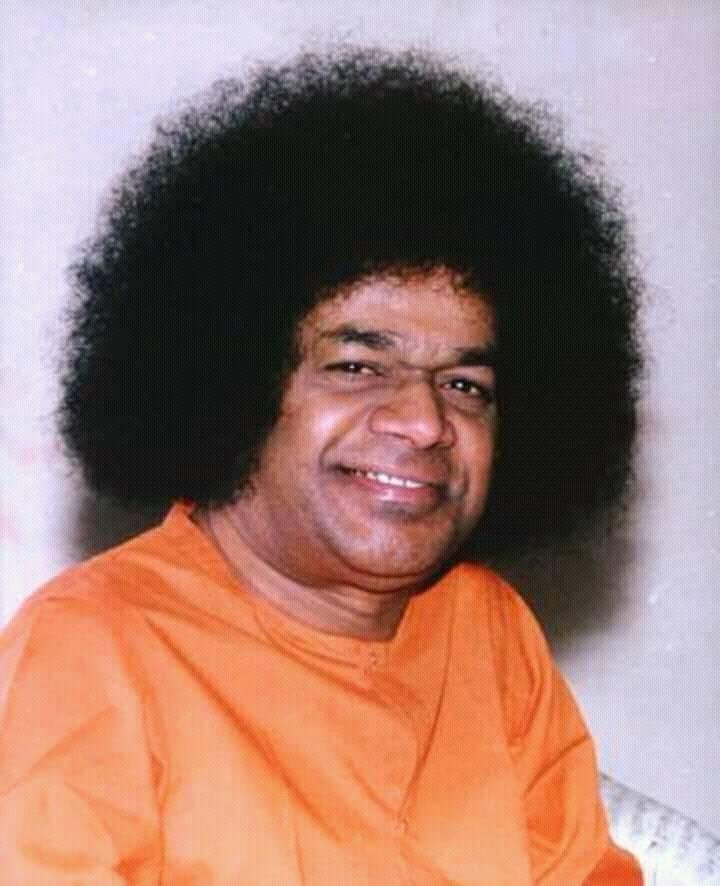
shri sathya sai baba divine smiling portrait
His Life is His Message topics

Divine Words of wisdom by Sathya Sai Baba – On Mahabharata

Divine Words of wisdom by Sathya Sai Baba – With Mahabharata 1. All Indians must be united: Analogy of Dharmaja Your browser does not support the audio element. 1988-09-03 Document Download Audio Social Share Facebook Twitter Youtube Instagram Description Develop only good ideas. What ever you do, do it selflessly. This is what Krishna did. He conquered a lot of kingdoms, He entered into political life. He freed people from all types of cuningness. He put down people who were on the wrong path. He gave power and authority to all people who would be able to manage. However many kings He defeated, He remained a king without a crown. After killing Kamsa, the people of the city prayed to him, ‘Swami, you can become the king of this Madhurapuri and rule’. He said, ‘If I become the king I may have only this kingdom, I would rather be a king-maker than a king. I should be the one who makes kings. I do not want this kingdom. I would rule the kingdom of your hearts. That is enough’. Such are the great and broad feelings of God. We are basing our understanding of Krishna on the basis of the cinemas and the dramas that we see.   4. Man creates his own problems: Analogy from Mahabharatha Your browser does not support the audio element. 1996-06-27   Document Download Audio Social Share Facebook Twitter Youtube Instagram Description Others do not give either pleasure or pain. Man’s thoughts, words and deeds are solely responsible for the pleasure or pain that he experiences. Devudanaga veru desamanduna ledu, Devudanaga kaladu dehamande, Papamanaga veru paradesamuna ledu, Taanu cheyu panula tagili yundu!! God is not present in a foreign land, He is present in one’s body!! Sin is not present in any foreign country, It is attached to one’s deeds!! But without realising this truth, blames others for his pain and pleasure and thinks that he is subjected to pain and pleasure due to others actions. At times man is subjected to many troubles due to the bad actions resulting from bad thoughts. During the Mahabharata war, Arjuna pressurised Krishna in many ways. He prayed to Krishna, “O Krishna! You as our emissary and ambassador go there and find out whether they are for peace or for war.” The youngest of Pandavas, Sahadeva, was an ardent devotee of Krishna. Dharmaja, Bhima and Arjuna agreed to send Krishna as an emissary. But Sahadeva did not agree to it because of his intense love and attachment to Krishna. He was reluctant to send him to the wicked Kauravas and was worried about His safety. He did not drink water till Krishna returned from Hasthinapura and spent his time in continuous remembrance of Krishna. Krishna returned from Hasthinapura and said, “Arjuna, be ready for the war, do not retreat now. They are fixed on war.” Sahadeva went to Krishna and held His hands tightly and said, “I felt that sending my beloved brother-in-law to Hasthinapura was not proper. I could not muster courage to voice my disapproval. But I prayed inwardly for the safety of my brother-in-law. I prayed that everything auspicious should happen to Krishna. Krishna has returned safe and secure. That in itself is enough for me.” The thoughts and behaviour of ardent devotees are very sacred. How were the thoughts of Arjuna? Arjuna too had love and affection towards Krishna but he loved to fight. Krishna offered to go again to Hasthinapura for the second time. Arjuna could not bear this. He said, Kuracha buddhula aakauravulamarathakaligi mana potthukothura? Yudhdhamu sidhdhamanaka kaala haranamika yela? “Krishna, the mean minded fellows that the Kauravas are, will they want peace? Let’s be ready to fight. Why waste time? Krishna, tell them to be ready for the battle. Why try to put fragrant jasmines in fire? Why talk to foolish people? Will they listen to the words of wisdom? O Gopala, why this talk of peace? Let’s stop these talks. Will the North and South poles ever meet? Be ready to fight, why waste time? Will the north ever meet the south? East and west come in between them. Hence, these two will never meet. Get ready for war tomorrow.” So saying Arjuna blew his conch. Krishna was the charioteer of Arjuna. He stopped the chariot in between the two army troops. The heart of Arjuna, who spoke so valiantly and courageously, melted at the sight of the friends and relatives on the other side. Indari bandhu, mitru guruputralu champi bharinchutetulo?? Krishna!! Naa kannulu tiruguchunnavi ika kaalamu gadapaka kadalu intikin!! How to bear the pain of killing so many friends, teachers and relatives? My head is reeling, let’s go home without delay. Did Arjuna not know that the people in opposite side were his relatives and friends prior to the war?!! But the young blood and chivalry in Arjuna made him speak so. It is the heart of the young and trend of the hot blood. Youth is like the passing cloud. The stage of youth comes in between and passes off. Why pride on the youth that comes in the middle and goes away? At the time of the war Krishna was seventy six years old. And Arjuna was seventy four. In those days seventy four year old were considered to be in the prime of their youth!! Eighteen years old are considered to be youth in the present day!! In Tretha yuga this age of eighteen was considered to be childhood. Till fifty years of age they were considered to be in childhood. The stage of youth started at the age of seventy five!! The commander-in-chief, Bhishma, was hundred and twelve years old!! The hundred and twelve year old person was the commander–in-chief!! What is the reason? The food and eating habits were the reason for their strength. Man ages early due to the modern food habits.  

Divine Words of wisdom by Sathya Sai Baba – On Mahabharata Read Post »
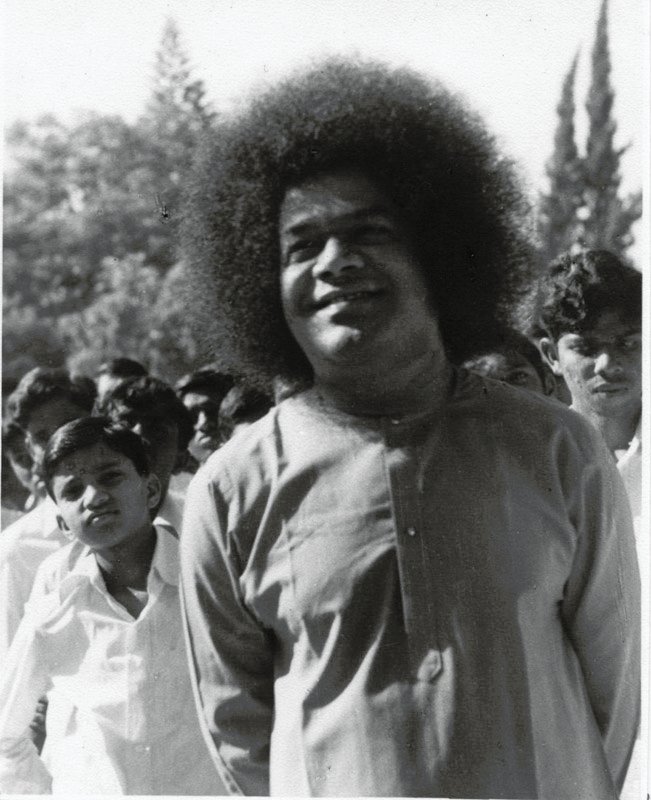
Shri Sathya Sai Baba sacred smiling spiritual photo
His Life is His Message topics

Divine Words of wisdom by Sathya Sai Baba – On India

Divine Words of wisdom by Sathya Sai Baba – With India Document Download Audio Social Share Facebook Twitter Youtube Instagram 2. India always prayed for the welfare of all Your browser does not support the audio element. 1996-06-22 Description From time immemorial the culture of Bharath by its spiritual strength has been bringing peace and security to all countries. It is only in Bharath that one prays for the peace and prosperity of all in the world, “Lokasamastha sukhino bhavanthu”. Everyone must be happy, all the countries should be happy. One should not be selfish by wishing for the welfare of only one’s country. All countries are parts of Bharath.   2. The greatness of India is forgotten by Indians today Your browser does not support the audio element. 1996-06-22 Document Download Audio Social Share Facebook Twitter Youtube Instagram Description Isn’t Savitri, who could win her dead husband’s life back a woman of Bharath?! Isn’t Chandramati, who could put off the wild fire by the strength of her truth a woman of Bharath?! Isn’t Sita who could prove her chastity by entering the fire, the daughter of Bharath?! Isn’t Damayanti, who could burn the evil one to ashes by her anger a woman of Bharath?! Isn’t this land that is surrounded by the seven seas, fertile with the purity and sanctity of the Bharathiya race?! This treasury of great thoughts and feelings, Isn’t this a teacher for all nations?!! Bharath holds a place of a teacher to all other countries of the world. Such sanctity and greatness of Bharath is not known to the Bharathiyas today. A small progress of foreign countries is being considered as great achievement by the people of Bharath today. This is the plight of Bharath today. It is like the saying that one underplays the fresh and delicious home cooked food but relishes neighbour’s rotting food!! That is why people are after foreign countries without recognising the worth of homeland. What is this trend?    3. Swami on India and its culture; Analogy Your browser does not support the audio element. 1996-07-19 Document Download Audio Social Share Facebook Twitter Youtube Instagram Description One must develop good thoughts. This is called “Vyaktigata Seelamu”, individual character. One can become a leader when one has individual character. People must develop the individual character for it gradually leads to national character. Individual character and national character both are important. One must develop the spirit of patriotism. But the youth today does not have the spirit of nationality. They do not know what nationality is. They only travel to the extent of “I, my people and my family”. No, it must include the country as “My Country”, Idi naadu matrudesamu, Idi naadu matrubhasha, Idi naa matamanchu, Yadagotti nudavanerani brathikina Peenugungokandu vasudhanu kalada?? “Is there anyone on earth who would declare With all pride that this is my motherland, this is my mother tongue, this is my religion?” Without the love for one’s motherland one would become a walking corpse. Hence one must develop the love and affection for one’s motherland. Attachment to one’s motherland is as important as one’s attachment to one’s body. Motherland is a reflection of one’s own body. Deha, the body and Desha, the country are but the object and its reflection.   9. Swami on ancient and modern culture Your browser does not support the audio element. 1979-05-25 Document Download Audio Social Share Facebook Twitter Youtube Instagram Description When Brahma manifests with the four faces, the devotee looks at the manifestation and gets absorbed and lost in contemplation. But if a tiny ant begins to crawl on the back, we whack it with our palm. There is a great difference between what we profess and what we practice. When you believe that God is present even in the ant and when you feel that the ant is giving you trouble, you can brush it aside instead of killing it. It is necessary that we follow these paths in little things. We must learn to show and realise the presence of God. The ancient people have demonstrated several methods which proved this great truth. One small example. In ancient times women never stirred out of their homes. They did not have the opportunity to come out of their homes and take part in service activities. There was a strong desire in the hearts of the women confined to their homes to render service to creatures and to satisfy them. Then they adopted a very beautiful method. With the rice flour they used to make patterns in their courtyard. These patterns served dual purposes. One, it beautified the courtyards rendering them auspiciousness and secondly it served as food for the insects like the ants and bugs and satiated them. These patterns fed not only the ants and insects but also some birds. During the festive time of Sankranthi, ‘Dakshinayana’ (when the Sun traces its path from North to South), women used to fill the streets with these beautiful patterns. They used to consider Dakshinayana as the auspicious period for attainment of enlightenment. Crows, pigeons and other birds used to consume these grains of rice and felt happy and satisfied. This is the inner significance of the white patterns. Today’s modern women are also decorating their homes with patterns but they are using lime instead of rice flour which is not consumed by any creatures. It is only a pattern which appears beautiful, but it does not provide any opportunity to satisfy any creature. From times immemorial India has taught to the world at large the great ideals of sacrifice and service.   10. India has proclaimed that truth is one Your browser does not support the audio element. 1996-06-25 Document Download Audio Social Share Facebook Twitter Youtube Instagram Description However, the same Atma was present in both of them. Truth is one and age becomes irrelevant where Truth is concerned. Truth is always one and there is no such thing as different truths for different castes such

Divine Words of wisdom by Sathya Sai Baba – On India Read Post »



