



Hari Om

Menu

October 2025

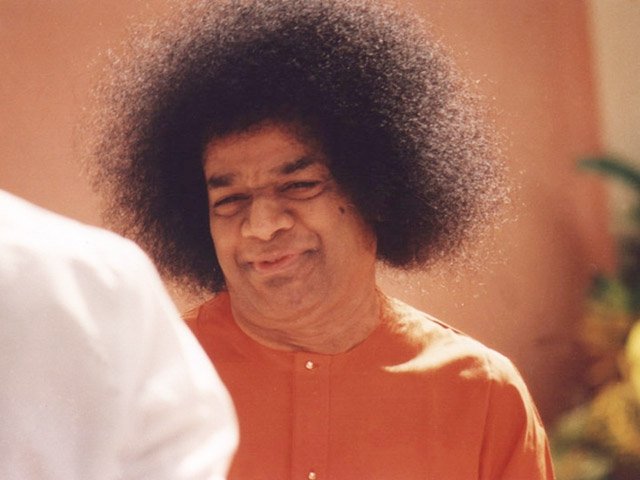
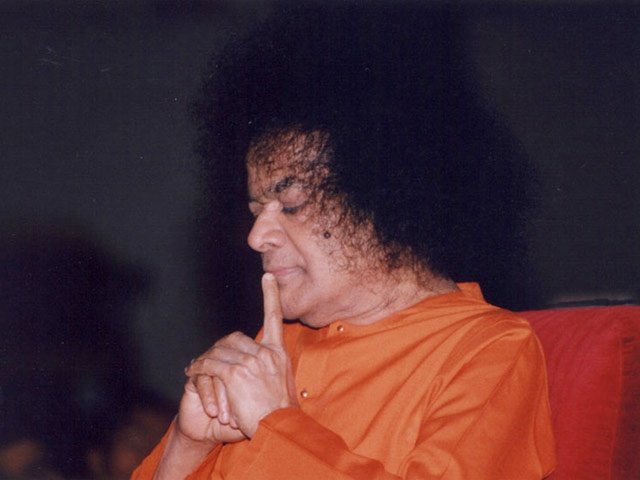
shri sathya sai baba Man in orange robe with finger on lips in thoughtful pose image
Miracle

He showed them His form…

He showed them His form… Many years ago, Swami took a small group to the forest in Bandipur, not far from the hill-station Ooty. The group consisted mostly of students, but a few elders also were there in the party. It was a lovely outing, one grand picnic with the Lord. The boys had their full – games, sightseeing, looking out for wild-life, and lots of goodies to eat. Only one thing remained – a photo with Bhagavan, a treasure, and something to remember this memorable event by. One of the members of the party had a Polaroid camera, and taking photos was therefore no problem. One by one the boys went, stood next to Swami, and had their picture taken. After everyone had been photographed, the boy who was doing the clicking prayed to Swami that He should pose for one picture all by Himself. Baba agreed, and the picture was duly clicked. The picture got instantly developed and was lovingly offered to Bhagavan who was sitting on a slab. Swami looked at the photo for a while – it was a beautiful picture – and then asked the boys, “Do you want to know who I am?” Everyone was now seated around Him on the ground; they did not know what to make of the question; so there was no response. After a while, Swami again asked, “Do you want to know who I am?” There was an unusual glow in His eyes, and there was also immense power in His voice. Everyone sensed that something extra-ordinary was about to happen and therefore did not dare to give any kind of a reply. Swami then held up the photo He had in His hand so that everyone could see it. It showed the lovely picture of Swami. He then placed the photo face down and then started rubbing it against His thigh. At this juncture, one of the elder members of the party noticed that the lower edge of Baba’s robe was a bit crumpled. Instinctively, the person leaned forward to straighten the robe, but Swami in an unusually harsh and commanding voice said, “Stay away; don’t touch!” The devotee who tried to adjust the robe was taken aback by the severity of the tone and instantly withdrew. Swami continued rubbing the photo a few times more. He then slowly lifted it and held it up for all to see. What the gathering saw was not the picture of Swami; that beautiful picture had vanished. In its place was the majestic picture of Lord Dattatreya, who embodies the Divine Trinity [i.e., Brahma, the Creator, Vishnu, the Sustainer and Protector, and Maheshwara, the Dissolver of the Universe], complete with four dogs, representing the four Vedas. Baba then looked with compassion at the devotee to whom He had spoken harshly a little earlier and said, “I was charged with Divine Energy when I was revealing Myself as Dattatreya in the picture. It at that time you had come into contact with even My robe, you would instantly have been reduced to ashes. That is why I spoke sternly; it was entirely for your safety!” On another occasion, Baba explained that when Krishna as a young lad lifted the Mandaragiri mountain [to protect the villagers from downpour], He had advised all the villagers to remain indoors and not come out. Swami added that this warning was necessary. Krishna had to invoke enormous Divine Power for lifting the mountain, and if anyone had accidentally touched Him then, that person would have been reduced on the spot to ashes. Avatars are packed with Infinite Power. However, they rarely use it. If at all the Power is used, only a tiny portion of it is. And the use is always for the benefit of others. In this case, the demo helped to reinforce the devotion of those who had followed Baba to the forest.

He showed them His form… Read Post »

f686ef55cd6e312c7f7fb8dd34ce76d2
state wise

Mandirs in Arunachal Pradesh

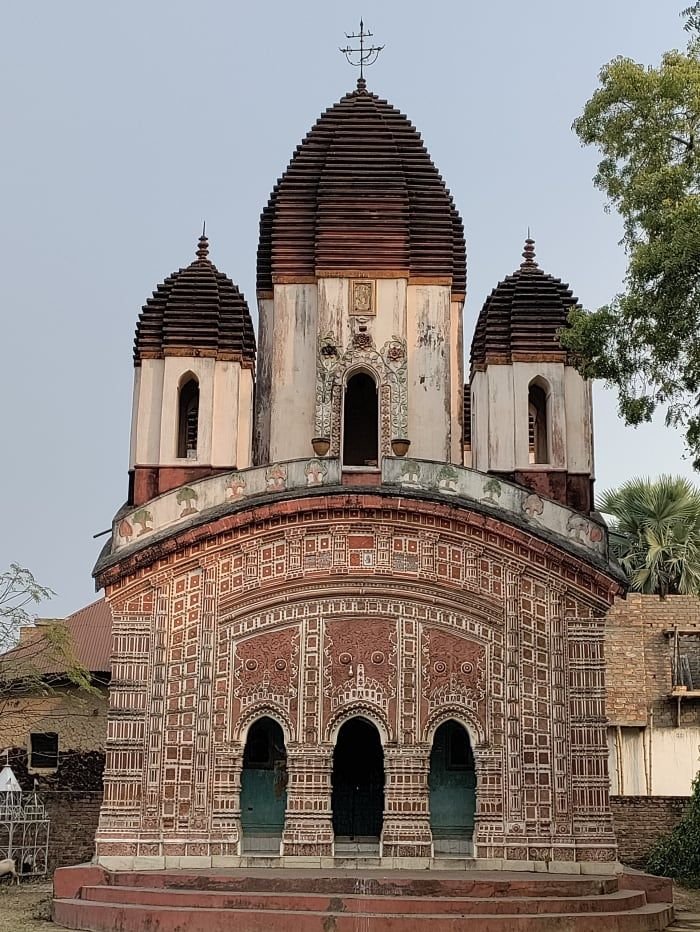
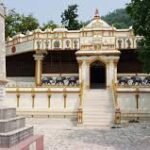
Mandirs in Arunachal Pradesh Arunachal Pradesh, known as the “Land of the Rising Sun”, is a state of breathtaking natural beauty, snow-capped mountains, and diverse tribal cultures. While the majority of the population follows indigenous faiths and Buddhism, Hinduism also has a deep-rooted presence in the state. Many sacred mandirs here are associated with legends from the Mahabharata, Ramayana, and ancient Vedic traditions. The temples of Arunachal Pradesh not only attract Hindu devotees but also reflect the blending of tribal customs with classical Hindu worship. One of the most famous shrines of the state is the Parasuram Kund, situated on the Brahmaputra plateau in the Lohit district. According to legend, this is the place where Sage Parasurama, after killing his mother under his father’s command, came to wash away his sins. He bathed in the holy waters of this kund (lake), and it is believed that anyone who takes a dip here is freed from sins. Every year, during Makar Sankranti, thousands of pilgrims from across India visit Parasuram Kund to take the holy dip and offer prayers. Another significant pilgrimage site is Malinithan Temple, located in the West Siang district. Dedicated to Goddess Durga in her form as Malini, this temple is associated with the story of Lord Krishna and Rukmini. According to tradition, when Krishna eloped with Rukmini, they were welcomed here by Goddess Durga. The temple is now in ruins, but its beautifully carved stone sculptures of deities, animals, and flowers reflect its ancient grandeur. Malinithan remains an important Shakti site and is a major attraction for devotees and historians alike. The Akashganga Temple, near Malinithan, is another holy site where a natural spring flows down from the mountains. It is considered sacred because it is believed that drops of Goddess Sati’s body fell here, making it part of the Shakti Peeth tradition. Devotees come here to collect the holy water, which is said to have purifying powers. Temples in Arunachal Pradesh

Mandirs in Arunachal Pradesh Read Post »

55ad69a4c7baa663547fc84306912b33
state wise

Mandirs in Andhra Pradesh

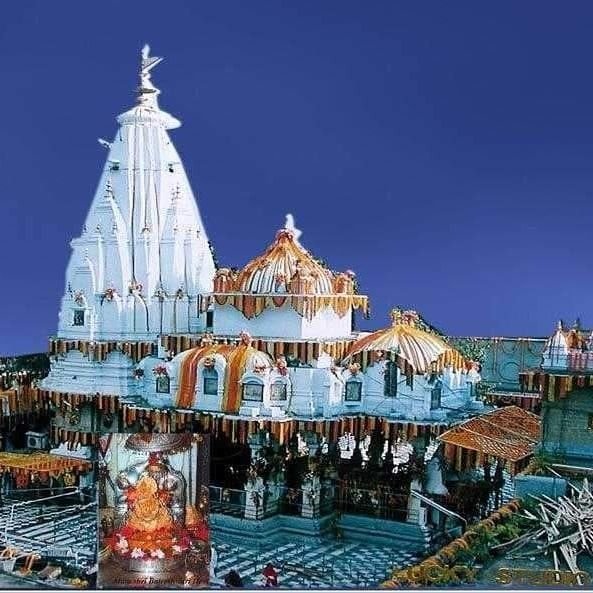
Mandirs in Andhra Pradesh Andhra Pradesh, situated along the southeastern coast of India, is one of the most spiritually rich states in the country, often referred to as the Land of Temples. It is home to countless mandirs dedicated to Lord Vishnu, Lord Shiva, Goddess Durga, and many other deities. These temples are not only places of devotion but also masterpieces of architecture, history, and culture that attract millions of pilgrims every year. The most renowned temple of Andhra Pradesh is the Sri Venkateswara Swamy Mandir in Tirumala, popularly known as Tirupati Balaji Temple. Dedicated to Lord Venkateswara, an incarnation of Vishnu, it is one of the richest and most visited temples in the world. Pilgrims from across the globe come here to seek the blessings of Balaji, and offering hair as a sign of surrender is a unique ritual performed here. The temple’s grandeur, rituals, and spiritual energy make it the crown jewel of Andhra Pradesh’s religious heritage. Another significant temple is the Kanaka Durga Mandir in Vijayawada, dedicated to Goddess Durga in her powerful form. Located on the Indrakeeladri Hill, it is one of the most revered Shakti Peethas of South India. The temple becomes the center of devotion during Dasara Navaratri, when thousands of devotees visit to offer prayers to the Goddess, who symbolizes strength, protection, and victory over evil. The Simhachalam Temple near Visakhapatnam is dedicated to Lord Varaha Narasimha, a combined form of Vishnu’s boar (Varaha) and man-lion (Narasimha) avatars. The deity here is covered with sandalwood paste throughout the year, and only on Akshaya Tritiya is the original idol revealed to devotees. This temple is considered one of the eighteen Narasimha Kshetras of India. In Anantapur district lies the Lepakshi Temple, dedicated to Lord Veerabhadra, a fierce form of Shiva. This temple is famous not only for its sanctity but also for its Vijayanagara-style architecture, detailed carvings, fresco paintings, and the legendary hanging pillar that amazes visitors with its engineering marvel. The temple is also associated with episodes from the Ramayana. The Srisailam Mallikarjuna Temple, located on the banks of the Krishna River, is one of the twelve Jyotirlingas of Lord Shiva and also a Shakti Peetha dedicated to Goddess Bhramaramba. This makes it one of the holiest sites in India, revered by both Shaivites and Shaktas. Pilgrims from all over the country visit Srisailam, especially during Shivratri. Temples in Andhra Pradesh

Mandirs in Andhra Pradesh Read Post »

9e5792e4 1722 438c 9fe7 2d6da95bbe51
Miracle

He knows how to rescue his devotees

He knows how to rescue his devotees Sairam. This is a true story happened to me last year. The house next to my house has cut off tow big trees and i am sure they have snake of the big venom like mamba a definite poisonous killer was there. When they cut the tree, I think in all my opinion that I framed which later Swami confirmed to me in my dream, the snake entered to my house through the gate and found itself in my rock garden. Normally I go to my garden to pick up flowers and do some gardening in the evening hours and all saturday. One fine morning Swami said while picking up flowers, where radiant Swami appeared before me and said please wear the chappels (footwear), and he didn’t tell me why. From that day I was wearing the chappels (footwear) and go to the garden. After a gap of some days when we came from dinner and got out of the car and when my wife got out of the car the snake passed under the car but slightly edge between the legs. We saw it, before I could park the car the snake went inside the garden. Immediatley I have to call the casuals men of the local tribe and told them to find where the snake could have hidden. Then after a whole hunt, the snake was beneath the rock garden and they took it out and they told us it is dangerous snake of African variety worst than cobra. We pray to swami that day and thanked Swami for saving us. Swami said that night in my dream that he knows best at what time he should help the devotees and bless me and disappear. The next day vibuthi was there in my house in all the photos. I have only video coverage and not photos and I do not know how to clip into the computer. This illustrate Swami is omnipotent, omni presence, and wherever we are he will be there. What he wants our faith and love, once we surrender to him he will take care of us.

He knows how to rescue his devotees Read Post »

55ad69a4c7baa663547fc84306912b33
state wise

Mandirs in West Bengal

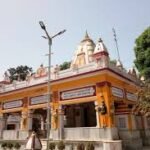
Mandirs in West Bengal West Bengal, often called the cultural heart of India, is also one of the most spiritually vibrant regions of the country. The state is dotted with thousands of temples that reflect its deep devotion to gods and goddesses, especially to Goddess Durga, Kali, Shiva, and Vishnu. Known for its grand Durga Puja celebrations, Bengal has a long history of temple building that goes back to ancient dynasties, the Bengal Sultanate, and later the influence of kings, zamindars, and saints who left their mark on the religious life of the land. One of the most famous temples of West Bengal is the Dakshineswar Kali Mandir, situated on the banks of the Hooghly River near Kolkata. Built in the 19th century by Rani Rashmoni, a pious philanthropist, this temple is dedicated to Goddess Kali as Bhavatarini, the savior of the world. The temple gained even greater prominence due to the spiritual presence of Sri Ramakrishna Paramahamsa, who served here as a priest and whose teachings inspired the Ramakrishna Mission. The temple complex also houses shrines dedicated to Lord Shiva and Radha-Krishna. Another renowned temple is the Kalighat Kali Mandir in Kolkata, one of the 51 Shakti Peethas of Goddess Sati. According to legend, the right toe of Sati fell at Kalighat, making it an immensely powerful and sacred site. The temple is always alive with the sounds of bells, mantras, and devotional chants, and thousands of devotees visit it every day. Kalighat has also been a center of Tantric worship, reflecting Bengal’s strong connection with Shakti traditions. In the town of Tarapith, located in Birbhum district, lies another famous Shakti temple dedicated to Goddess Tara, a fierce form of the Mother Goddess. Tarapith is not only a temple but also a major center for Tantric sadhana. Saints, ascetics, and spiritual seekers from all over India come here to meditate and perform rituals, making it a place of mystical energy. Apart from these Shakti temples, Bengal also has some important Vaishnavite shrines. The Sri Mayapur ISKCON Temple in Nadia district is a globally renowned spiritual center dedicated to Lord Krishna and Sri Chaitanya Mahaprabhu, who was born here in the 15th century and initiated the Bhakti Movement. Mayapur attracts thousands of international devotees every year and has become a hub for spiritual tourism. Temples in West Bengal

Mandirs in West Bengal Read Post »

shri sathya sai baba in orange robe waving while seated before audience photo
Miracle

Heart patient wakes up to mystery surgery

Heart Patient Wakes Up to Mystery Surgery Saturday, December 14, 2002 HINDUSTAN TIMES, Kolkata (Calcutta) HEART PATIENT WAKES UP TO MYSTERY SURGERY Amitava Banerjee, Darjeeling, December 13 You may have heard about telepathic healing and psychic cure, but a heart patient who had undergone “Divine Surgery” is drawing huge crowds in Takdah. Sarala Chhettri (25) was to leave for Puttaparthi on December 12 for heart surgery.  But Sarala’s parents claim that they woke up to find their daughter already “operated” upon. Nobody was seen or heard entering the house in the night though. The Chhettri home has been swarming with believers and sceptics since then. People from across Darjeeling , Kurseong and Kalimpong flocked to witness the “miracle” and the blessed patient. The Chhettris are disciples of Sai Baba and they believe the operation was a “Divine Intervention.” Sarala was diagnosed having a heart ailment last year. She was being treated by a doctor from Vellore , who visits Siliguri once a month. He asked Sarala to go to Vellore for surgery. But neither her father, Madan Kotwal, nor her husband, Hari Karki, could afford the treatment. So they sought Sai Baba’s help. “We decided to take her to Puttaparthi, as the surgery would be free at Sai Baba’s hospital, with minimal cost to us,” said Mt. Kotwal . On the morning of December 12, when Sarala’s father went to wake her up, she did not respond to repeated calls. So he pulled away the blanket to find her chest was bandaged and there was post operative surgical dressing, complete with gauze and leucoplast. Her wrists had marks like those made by IV drips for saline or blood.  There were about 36 stitches running down the middle of her chest to abdomen. Sarala showed some signs of recovery from her “sleep” only the following night, (Thursday 12 December), when she could not speak, but gestured for some water. The following morning, Friday, the family found that Sarala’s dressings had been changed overnight, and the old dressings left behind on the table next to her bed, while Sarala was still not fully conscious. “An X-ray will reveal whether a surgery had been performed or not. A metal wire is used to tie the sternum together after cardiac surgery and that will be revealed in the X-ray,” a doctor said. 

Heart patient wakes up to mystery surgery Read Post »

363126131c477bb9e5e5fbadb3d6488c
state wise

Mandirs in meghalaya

Mandirs in Meghalaya Meghalaya, meaning the “Abode of Clouds”, is one of the most picturesque states in North-East India, blessed with rolling hills, dense forests, and countless waterfalls. While the state is predominantly Christian today, its history, culture, and geography also hold a sacred place for Hinduism. The Hindu population, though smaller in number compared to the indigenous tribes and Christians, has preserved its rich spiritual heritage through mandirs scattered across the state. Many of these temples are centuries old, linked to Shakti worship, Vaishnavism, and Shaivism, while others have developed as local centers of devotion for communities living in Shillong, Jaintia Hills, and Garo Hills. These mandirs not only serve as places of worship but also reflect the state’s multicultural fabric where ancient tribal customs and Hindu rituals often merge. They are especially significant during major Hindu festivals like Durga Puja, Janmashtami, Kali Puja, and Shivratri, which are celebrated with great enthusiasm in towns and villages. Hinduism reached Meghalaya primarily through two channels – the migration of Bengalis and Assamese into the region, and the influence of ancient kingdoms such as the Jaintia Kingdom. The Jaintia kings, who ruled parts of Meghalaya before British rule, were great patrons of Hinduism, especially Shakti worship. As a result, several temples dedicated to Goddess Durga, Shiva, and Vishnu were established. Over centuries, the Khasi, Garo, and Jaintia tribes also assimilated certain Hindu practices into their belief systems. The Jaintias strongly identified with the worship of Goddess Durga and Kali. This unique blend of tribal spirituality and Hindu traditions gave birth to temples that carry both local and pan-Indian significance. Among all the sacred temples in Meghalaya, the Nartiang Durga Mandir in the Jaintia Hills stands out as the most important. Believed to be around five hundred years old, this temple is considered one of the fifty-one Shakti Peethas of Goddess Sati. According to legend, the left thigh of Goddess Sati fell here, making it an immensely sacred site. The temple was established by the Jaintia King Jaso Manik, who embraced Hinduism and promoted Shakti worship in his kingdom. The temple still preserves traditional weapons like swords and shields, which are said to have been used in sacrifices during earlier times. Today, animal sacrifice has been replaced by symbolic offerings, but the devotion remains as strong as ever. During Durga Puja, the temple attracts thousands of devotees from across Meghalaya and neighboring states like Assam, making it one of the most vibrant religious festivals in the region. Temples in Meghalaya

Mandirs in meghalaya Read Post »

shri sathya sai baba in orange robe smiling gently with curly hair image
Miracle

Halagappa’s nectar ring

Halagappa’s Nectar Ring By Indra Devi When Dr. Dakshinamurti was attending a Conference of the International Atomic Agency in Ankara. He was unexpectedly asked to preside. Not being prepared for this, he prayed to Bhagavan for help. As he took the chair he saw before him Baba’s raised palm with some important points for this speech written on it. Another visitor brought to my room by my ‘Big brother’ Mr. Kasturi, was a man in whose house Baba’s photo was producing vibhuti. Formerly a thief, Halagappa had reformed when Swami spotted him in a crowd and told him to give up his ‘profession’ and take a job which would be provided for him. He was now working as a mechanic in a sugar factory. When Halagappa come to my room bringing with him a large coffee can full of vibhuti, he gave a heaped spoonful to every one of the ten people sitting in my room. Closing the can, he turned it upside down several times, murmuring something. When he lifted the lid again, we looked at each other in amazement, for the can was full to the top! The next day I wrote down an account of what had happened and asked all those who had seen it with me, to sign in verification. I felt sure, that otherwise, no one at home would believe this had actually happened. In the evening Halagappa returned with yet another can – this time with sweet vibhuti in it. He told us that he used to gather the ashes from Baba’s picture in his house and mix it with sugar before offering it to people when they flocked to his humble dwelling. One day his wife remarked that they couldn’t afford the sugar so they decided to do without it. The next morning when, as usual, they took a pinch of vibhuti from the photo they were surprised to find that it was sweet. Again he gave a liberal portion to each one of us and again the container mysteriously replenished itself. We were very grateful to him for sharing his experience and gift with us and wishing to thank him we pulled out some money and heaped it in front of him. ‘No, no, no,’ he shook his head when we offered it to him, tears rolling down his cheeks. Feeling very uncomfortable about our well-meant offer, we quickly took back the money. The same day Halagappa bought a cheap, plastic ring in the bazar with Baba’s image on it. After wearing it for a while he felt that his hand had become wet and sticky. He was thunderstruck upon finding that it was amrita, the nectar which Bhagavan gives to His devotees on some festival days. He was shaken by this act of Baba’s grace, bestowed on him probably because he had withstood the temptation of money by not accepting ours. He placed the ring in an empty jar and the nectar began to increase in volume. A few days later he gave us all small bottles full of it to take home.

Halagappa’s nectar ring Read Post »

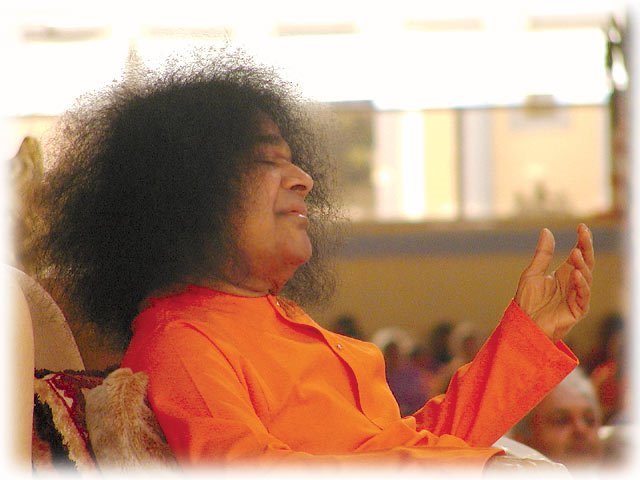
shri sathya sai baba in orange robe with eyes closed and hand raised image
Miracle

Good olden days

Good olden days Smt. G. Sujatha Devi – India I had darshan of the Swamy [Bhagavan Sri Sathya Sai Baba] for the first time in the year 1954 in the company of my husband, Sri Govindu Ramachandra Rao, to whom I was married just then. We travelled from Hyderabad to Dharmavaram by train and from there by bus to Bukkapatnam, enroute to Puttaparthi, as there was no direct bus connection then from Dharmavaram as at present. From Bukkapatnam our journey had to be continued by the only bullock cart available in the village. It was night fall and raining when we reached Bukkapatnam. Being strangers we did not know of any place to go. We took shelter from the rain in the covered space in front of a shop that was closed. It was pitch dark. There was no movement of persons. There was absolute silence. Then we were startled to hear a voice, “Why are you standing in the rain? Hot, Hot ‘Senagalu’ (Bengal Gram) are available there”. Pleasantly shocked, we looked around but could not see any person. My husband the proceeded a little ahead. In fact a person was selling ‘hot, hot’ groundnuts and ‘senagalu’. Wondering at this unexpected but very welcome situation, we bought these, ate them and spent the night in the verandah (of a house) offered to us. We got into the single bullock cart (of the village) in the morning and reached Puttaparthi. The journey to Puttaparthi by the bullock cart took one and half hours, part of being through the Chitravati river. In those days Puttaparthi was accessible from Bukkapatnam, and the single bullock cart in the village owned by a maternal uncle of Swamy was the only method of transport. This was our first trip to Puttaparthi. Bhajan was in progress in the “Paata Mandiram” (Old Temple). Swami was present there. We had our first glimpse of Him while circumambulating the temple. Swamy did not look at us but looking elsewhere, He said, “Were the ‘Senagalu’ tasty?” It did not immediately occur to us that Swamy was actually reminding us the meal we ate the previous night at Bukkapatnam! It struck us later that Swami was reminding us about ‘Senagalu’. During the Darshan, He spoke to us very affectionately. Thus started our first experience with the Swami. About the miracles performed by Swami in those days, some times Swami used to take us to the ‘Kalpa Vriksha’, the Tamarind tree on the banks of Chitravati river, make us sit around Him, ask us to hold the tamarind leaves of the tree in our closed fists. Lo and behold! The sweets wished for by us were in our open palms! The sweets were not materialized by Him in his hands; instead the leaves in our palms got transformed into sweets! He would keep the petals of some flower in the hands of women and ask them to wish for flower they liked; the flower wished for was there in their palms immediately! Swami would gesticulate by His empty hands as though throwing something at us. When we tried to catch hold of it, we got either an apple of an orange! It is similar to the present practice of Swami showering ‘Akshatas’ (sacred rice used for blessing) on all. About Prema Sai, once before commencement of Bhajan, the women-folk were gossiping and one of them said that some thought that the Baba was playing dramas, and there was another Baba at Shirdi who was endowed with many supernatural powers. Suddenly the passing voice of Swami was heard announcing that ‘Another Baba also would be appearing”. Later He presented to my mother a locket which contains the pictures of all the three Babas. This is still preserved in my mother’s house. He once told us that Shirdi Baba was not a fakir; He was born in a Brahmin family and nurtured by Muslim fakirs. The miracles of Swami are infinite and can be talked about endlessly. Smt. G. Sujatha Devi – IndiaAndhra Pradesh, India. Housewife. A longtime devotee of Bhagawan Sri Sathya Sai Baba

Good olden days Read Post »

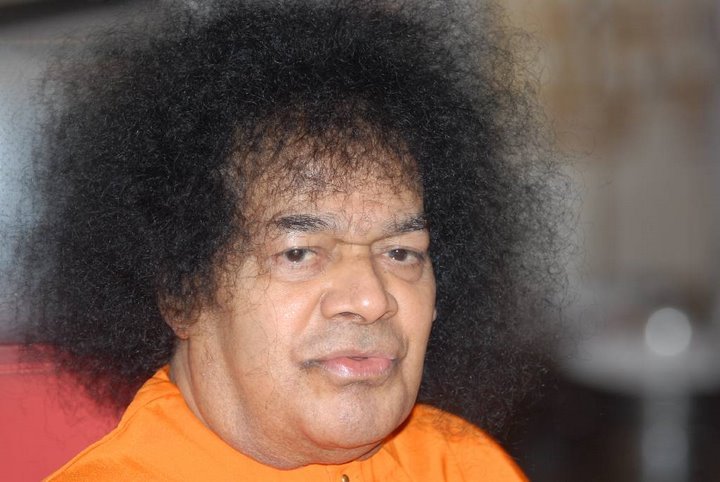
shri sathya sai baba Close-up of man in orange robe with voluminous curly hair image
Miracle

God in a rock

God in a rock If God can be in a rock… then why not in man? A noted geologist who heads the Geology Department of a major University was witness to one of Baba’s materializations. Baba picked up a rough piece of granite to ask the scientist what it contained. The geologist mentioned some minerals. Baba insisted, “I don’t mean those, but something deeper.” He continued, “Well molecules, atoms, electrons, protons…” Baba wasn’t satisfied, “No, no, no, go deeper still.” The geologist professed his ignorance. The Baba took the rock, blew on it, and gave it back to the geologist. The geologist was flabbergasted, for the rock had been transformed into a statue of Krishna playing the divine flute. Baba admonished him, “You see, beyond your atoms and all, God was in the rock, God is sweetness and joy. Break off Krishna’s foot and taste it”. The geologist found no difficulty in breaking the statue and tasting the foot. It was candy with a sweetness all its own. No wonder Howard Murphet one of Baba’s biographers, has said, “Science gives but the first word; the last word is known only to the great spiritual scientists like Sai Baba.” If Baba can transform rock into God… and we have the geologist’s word for it – then why not the human being already charged with the divine afflatus or divinely imparted knowledge? Apart from his own prodigious spiritual image which encompasses millions of devotees, Baba uses the 3000 and more Sai spiritual educational, and social service institutions throughout the world to spread His message with the objective of transforming the common people into a race of enlightened Godmen and Godwowen.

God in a rock Read Post »