




Hari Om

Menu

shri

baba gorakhnath ji devotional india
Mahatmas

Guru Goraknath

Guru Goraknath Gorakhnath was born. Great scholars like William Croocks and Giyarsan in their creations have mentioned about a tradition where it is said that Shri Gorakhnath was born in Peshawar in Punjab in Satyug, in Gorakhpur in Treta Yug, Hurmuj near Dwarka in Dwapar Yug and Gorakhmadhi in Kathiawad in Kaliyug. It is believed in Bengal that Gorakhnath was born in Bengal. Stories in Nepal proclaim that he walked down to Nepal from Punjab. One more opinion is that Guru Gorakhnath had come to Gorakhpur from Tila (Zhelam-Punjab) but Yogis from Nashik believe that he first went to Punjab from Nepal and later went to Nashik. Giyarsan has presumed that Gorakhnath possibly was a native of Western Himalayas and he diverted Nepal from the influence of others and made it a Shaiv state. As far as Gorakhnath’s cast and family is concerned, according to Hajari Prasad Dwivedi he was definitely born in a Brahmin family and grew up in Brahmin atmosphere. There are many granths (books) in the name of Gorakhnath for which it can be only said that Shri Gorakhnath’s original books with different views are being altered and expanded and are still going on till date.  Out of these, few are Gorakhnath’s creation for sure but not all of them are genuine. From the yog-margiya granths inspired by Gorakhnath, it is obvious that Gorakhnath has given a proper form to Yog-marg. On the principles of Shaiv Darshan he has regularized the solutions of Kaya-yog. Gorakhnath was a great religious leader of his time. He had a great power to confederate. When he was born, that time Indian religious practice was in a bad state. There was less of pure life, pious mannerism and observing celibacy. He invoked a consciousness for religion in the Indian society and assaulted all wrong activities with great strength. Shri Gorakhnath was a gyan-margi saint. He was not in favour of perplexed gist of devotion. He believed that if Akhand Sachhidanand was real then what was the need of getting impatient in the name of devotion to get him? This way, he was true follower of Gyan-marg depending on pure sense. Under his guidance, crores of followers of Naath Sampraday today are moving ahead on Gyan-marg.Guru Gorakhnath was visibly a strong glorious form. He was a form of visible God. search for Gurus and mentors ended with my deep silence and speaking nil words. God sent my brother in my 13th life as my Guru. He was later Machendranath for the world and my Guru in my last birth which was only 5000 years ago. He was my affectionate and helping brother from the very start in my first birth in Vajreshwari. We spent many lives as Guru Shishya.   He, Machendranath was born for the first time during the 12th Earth 9,98,629 years ago. (nine lakh, ninety-eight thousand, six hundred and twenty-nine) He was looking for partnership in sadhana to finish his resolve of reviving his Soul and have God realization at the earliest. He never wished to become a Guru, but it was Ishwar Ichcha. We never wanted to have tamas so he took to body building very early and always had a very fit body, while I remained very quiet to ward off all the tamasic thoughts of the people. Together we both were a mighty force and finished our journey in the shortest time as Guru Shishya.”  Gorakhnath, through his wisdom, compassion and spiritual might managed to bring home the message of inner divinity not just amongst sections of Yogi monks but also into the minds and hearts of the laypeople. He was a powerful organizer and established monasteries and study centers across Indian sub-continent. His reform work spanned across the length and breadth of India, Nepal stretching upto the boundaries of regions that now fall in the vicinity of Afghanistan. His is a living tradition because his teachings have been translated and disseminated through widely available literature, stories, poems, prose, songs and a thriving saint tradition that has kept his message extant in the hearts and minds of Indian people. Sadly enough, vast amount of literary works ascribed to Gorakhnath and his life that are available in Sanskrit, Prakrit and other local Indian languages have hardly been translated in English and that’s why the awareness of Gorakhnath and his work in the West, especially in the main stream modern Yoga culture is minimal. Gorakhnath through his writings exclaimed his philosophical premise in a well-defined manner. Some of the books that he is said to have authored are, Siddha Siddhanta Paddhati, Mahartha Manjari, Yoga Bija, Yoga Martanda, Goraksha Paddhati and Goraksha Samhita. Gorakhnath may not have actually written these books himself but the books may have been ascribed to him by later authors. Whoever the author may be, it is evident that the philosophical thread is common amongst all these scriptures and in line with the core teachings of the Nathas, especially Gorakhnath himself. Even a brief glance through scriptures like Mahartha Manjari and Amaraughashasana indicates Gorakhanth’s astute scholarship based on personal experience of Self Realization. Saint Dnyaneshwar, a great Yogi himself describes Gorakhnath with two adjectives, “Yogabjinisarovar” and “Vishayvidhvansekveera”. A close look at these two adjectives can gives us more detail on Gorkahnath’s spiritual work. [Source: Dnyaneshwari chapter 18] By the 10-11th Century the influence of occult leftist Tantra on Indian spiritual systems reached its helm. Even though this influence was percolating into the fabric of Indian spiritual thought since the 6th Century, by the 11th century it reached its peak. The spiritual fabric was being dominated by diverse sects like Tantric Baudha, Shakta, Kapalika, especially the ones that advocated the Pancha-Makara method of using and indulging in wine, fish, meat and sexual intercourse as a method of spiritual liberation. Yogic principles based on realizing the True-Self by cleansing the mind, sense control, detachment and devotion were replaced by perverse techniques that advocated overt body cultivation, alchemy, black magic, sacrificial killings and sexually hedonistic practices that were far
Guru Goraknath Read Post »

51f0bed2a1e3104c1908eb3a2bf2b4e2
Mahatmas

Shri Aurobindo

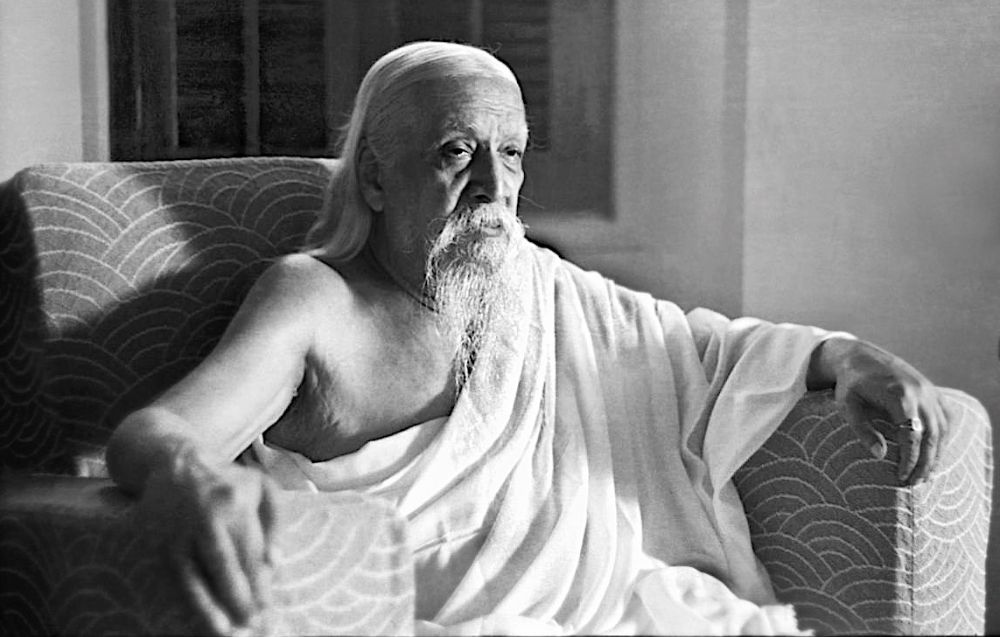
Shri Aurobindo The next step of the evolution must be towards the development of Supermind and Spirit as the dominant power in the conscious being. For only then will the involved Divinity in things release itself entirely and it become possible for life to manifest perfection. Sri Aurobindo’s Teaching and Spiritual Method. Sri Aurobindo’s advanced world vision, the backbone of Auroville, takes one into wider areas relating to the self, and to life. The spiritual path – or sadhana – as developed by him, works with a combination of a voluntarily adopted psychological discipline and various yogic practices. Already a century ago he declared “All life is Yoga”. The text below was written by Sri Aurobindo himself, in 1934. Sri Aurobindo’s teaching and method of Sadhana  The teaching of Sri Aurobindo starts from that of the ancient sages of India that behind the appearances of the universe there is the Reality of a Being and Consciousness, a Self of all things, one and eternal. All beings are united in that One Self and Spirit but divided by a certain separativity of consciousness, an ignorance of their true Self and Reality in the mind, life and body. It is possible by a certain psychological discipline to remove this veil of separative consciousness and become aware of the true Self, the Divinity within us and all. But while the former steps in evolution were taken by Nature without a conscious will in the plant and animal life, in humans Nature becomes able to evolve by a conscious will in the instrument. It is not, however, by the mental will that this can be wholly done, for the mind goes only to a certain point and after that can only move in a circle. A conversion has to be made, a turning of the consciousness by which the mind has to change into the higher principle. This method is to be found through the ancient psychological discipline and practice of Yoga.  The psychological discipline of Yoga can be used to that end by opening all the parts of the being to a conversion or transformation through the descent and working of the higher still concealed supramental principle. During this time he had a number of fundamental spiritual experiences which convinced him of the truth of the “Sanatana Dharma” – the ancient spiritual knowledge and practice of India. A Conscious Death In the later stages of spiritual development, Sri Aurobindo suggested that even death can become conscious. The yogi, aware of their eternal nature, may pass from the body not with fear or attachment, but with clarity, surrender, and grace. Beyond Death: The Promise of Transformation Ultimately, Sri Aurobindo envisioned a future where death itself may no longer be necessary. As human consciousness evolves, and as the soul fully inhabits the body, even the need for physical death could dissolve. This is not a fantasy, but a spiritual aspiration: the divinisation of life itself, where matter becomes a perfect vehicle for the soul, and the boundaries between life and death dissolve into a seamless unity of being. ‘All parts of creation are linked together and interchange their influences. The balanced rhythm of the universe is rooted in reciprocity. In his human aspect, man has to combat two sets of forces — first, the tumults within his being, caused by the admixture of earth, water, fire, air, and ethereal elements; second, the external disintegrating powers of nature. So long as man struggles with his mortality, he is affected by the myriad mutations of heaven and earth. Final Thoughts Sri Aurobindo’s vision of life after death invites us to live not in fear, but in faith—to see each moment, each challenge, and each ending as part of a much greater divine design. Death is not the opposite of life. It is the gateway to new beginnings, a sacred moment in the soul’s eternal journey. Let us walk it with awareness, courage, and the deep inner knowing that we are never lost—only becoming. “Death is but a passage; not an end, but a new beginning.” — Sri Aurobindo

Shri Aurobindo Read Post »

images 1 2
Mahatmas

Shri Mahavatar Babaji

Shri Mahavatar Babaji By Mahavatar Babaji’s limitless divine power, Lahiri Mahashaya entered the deepest level of God-realization, the state of nirvikalpa samadhi. Crossing the successive stages of Self-knowledge, he remained anchored for seven days in the deathless realm of brahma loka. The compassionate Babaji Maharaj instructed him to go back to the world and perform his worldly duties as an ideal yogi householder, blazing the path of liberation for worldly people and sannyasis alike who earnestly sought God-realization. In this way Babaji taught that liberation was no longer the monopoly of a few select sannyasis, and that worldly people could attain godhood without abandoning their duties. By seeking the soul at every moment during all activities, we can achieve God-realization. Babaji Maharaj tested the depth of love and determination of an American devotee who was searching for him along the inaccessible crags of the Himalayas. Glimpsing Babaji Maharaj, the devotee’s face lit up with joy, and tears streamed down his face. The devotee implored Babaji Maharaj to accept him as his disciple. Babaji Maharaj sternly declined, and the American devotee suddenly jumped from the cliff into a rocky chasm below the ledge. Babaji Maharaj instructed his disciples to collect the corpse. With Babaji’s divine touch, the American devotee came back to life and was accorded the rare privilege of being Babaji Maharaj’s disciple. Like a director who remains in the background instructing the actors, Shri Babaji Maharaj oversees the worldly stage, appearing only rarely. At Kumbha Mela, he addressed Priyanath (Swami Shriyukteshwar), the dear and close disciple of Lahiri Mahashaya, as “Swamiji,” to Priyanath’s utter astonishment. He instructed Priyanath to write a book combining the essence of Indian metaphysics with that of the West, promising to meet him the day it was finished. True to his word, Babaji Maharaj visited him on the day the assigned work was completed, as Priyanath exited his bath in the Ganga at Shri Rampur. Lahiri Mahashaya, Babaji Maharaj, and his sister, Mataji, appeared from a flash of light at the Dasahwamedha bathing ghat to Ramgopal, who had been told go there by his guru, Lahiri Mahashaya. When Babaji Maharaj desired to shed his body, his sister Mataji said, “As there is no difference between being ensconced in Brahma and the deathless form, pledge before me that you will never relinquish your body form for the liberation of the entire human race.” Listening to her prayer, as a hallmark of his great compassion, he promised it would be so. Babaji Maharaj’s divine majesties and the cosmic enactment of his dream are endless. He roams forever in the vast ethereal canvas of divinity, transcending limitations of worldly distinctions such as caste, class, religion, culture, history, and geography. He brought the message of Kriya Yoga to the West through Paramahamsa Yogananda and Paramahamsa Hariharananda, who were brought by his direction into close contact with Swami Shriyukteshwar for spiritual grooming and stewardship. He appeared before Paramahamsa Yogananda before Yoganandaji’s voyage to the West.

Shri Mahavatar Babaji Read Post »

b01697dbbde5d0ac53d83e8cdb3dc48b
Mahatmas

Shri Lahiri Mahasaya

Shri Lahiri Mahasaya This whole thing of doing more Kriya is such an interesting thing – I want to touch on it, because sometimes I think we think too often that Kriya is some magical thing – that it’s like you are putting some money in a machine and pulling the lever and the answer comes out if we just mechanically do some Kriyas, but it’s much more than that. What Kriya does is it puts us into the uplifted state of consciousness. If we do it correctly, that’s where all answers are where solutions are found. That is why Swami Kriyananda talked about the superconscious state as a solution state because it’s the intuitive state and through intuition we find answers. Lahiri Mahasaya Arrives in Ranikhet After several days of travel, Shyamacharan reached Ranikhet, a secluded and serene location. At the time, the Public Works Department, under British governance, was engaged in road construction projects to improve communication in the region. Enchanted by the pristine environment, snow-capped peaks, and tranquil surroundings, Shyamacharan would often take evening walks after finishing his work. The First Meeting with the Babaji One evening, while on his usual stroll with sepoys and peons, Shyamacharan heard someone calling his name from a distance. He soon saw a young Sadhu standing atop a small mountain, beckoning him. The sadhu descended and said, “I knew you would come this way, so I have been waiting for you. My cave is at the top of this mountain. Come to my cave tomorrow after your office work.” Memories from a Past Life That night, Shyamacharan could not stop thinking about the encounter with the Sadhu. Although he had heard stories of robbers disguised as sadhus, he was puzzled by how the monk knew his name. The next day, after finishing his work, Shyamacharan set out alone to meet the sadhu, walking through a dense forest. However, he lost his way and, unsure of where to go, sat on a rock in confusion. Suddenly, he heard the monk’s voice calling, and following the sound, he reached the cave. The sadhu asked, “Shyamacharan, do you recognize me? This is where you practiced intense meditation in a previous life. This tiger skin mat and water pot belong to you. Don’t you remember?” Though intrigued, Shyamacharan could not recall anything and asked for forgiveness. The sadhu responded, “Mahamaya has made you forget, but don’t worry, you will remember everything.” He touched Shyamacharan, and a thunder-like energy coursed through his body, awakening memories of his past lives. Shyamacharan recognized the sadhu as his Guru from a previous birth. Shyamacharan was initiated into Kriya Yoga by his Guru in a cave in the Dronagiri mountain, under the Dwarahat range, 15 miles from Ranikhet. This initiation marked the beginning of a new era in the world of self-realization, as the ancient science of Kriya Yoga, previously hidden, was now destined to benefit millions of householders and ascetics alike. After his meeting with his Guru in Ranikhet, Shyamacharan was transferred to various places, eventually settling in Danapur. During his time there, he practiced rigorous Kriya Yoga in secret, ensuring that no one knew of his nightly routine. He continued his Kriya practice diligently, never allowing laziness to take hold, and despite his intense meditation, he remained physically strong. One day, Shyamacharan noticed that his superior officer (Sahib) was distressed and inquired about his troubles. The Sahib explained that his wife, who was in England, was gravely ill. Moved by compassion, Shyamacharan entered a room and began intense meditation. After some time, he emerged and assured the Sahib that his wife would recover, and he would soon receive news confirming this. The Sahib, skeptical, dismissed the prediction.

Shri Lahiri Mahasaya Read Post »

Sri Yukteswar Giri devotional india
Mahatmas

Shri Yukteshwar Giri

Shri Yukteshwar Giri For a man of serious convictions like Priyanath, it wasn’t possible to leave his stand at any cost, and he left the class and the college for good. Yogananda attributed Sri Yukteswar’s small number of disciples to his rigorous training methods, which Yogananda said ‘cannot be described as other than drastic.’ Sri Yukteswar Samadhi Temple. Sri Yukteswar Giri samadhi mandir (burial place temple) in the garden of the Puri ashram. Paramahansa Yogananda had his younger brother Sananda build this temple over the burial site of Sri Yukteswar’s body and supervised all the details of the construction through regular correspondence with his brother. Yoganandaji was highly pleased with his brother’s inspired design of the gleaming white marble structure topped with its golden lotus made of polished copper. Construction of the samadhi temple was completed in 1952. ‘The astral body is an exact counterpart of the last physical form. Astral beings retain the same appearance which they possessed in youth in their previous earthly sojourn; occasionally, an astral being chooses, like me, to retain his old age appearance.’ Master, emanating the very essence of youth, chuckled merrily. ‘Beauty in the astral world is known to be a spiritual quality and not an outward conformation,’ Sri Yukteswar replied. ‘Astral beings, therefore, attach little importance to facial features. However, they have the privilege of costuming themselves at will with new, colourful, astrally materialised bodies. Just as worldly men don a new array for gala events, so astral beings find occasions to adorn themselves in specially designed forms. ‘Joyous astral festivities on the higher astral planets like Hiranyaloka take place when a being is liberated from the astral world through spiritual advancement and is therefore ready to enter the heaven of the causal world. Sri Yukteswar was originally initiated into the Swami order, later initiated by Sri Lahiri Mahasaya into Kriya Yoga. Kriya Yoga Sri Yukteswar dedicated his life to disseminating the practice of Kriya Yoga. He was followed by thousands of disciples and was known for his great sincerity and strict discipline. Regarding the role of the Guru, Sri Yukteswar said, ‘Look, there is no point in blindly believing that after I touch you, you will be saved, or that a chariot from heaven will be waiting for you. Because of the Guru’s attainment, the sanctifying touch becomes a helper in the blossoming of knowledge, and being respectful towards having acquired this blessing, you must yourself become a sage and proceed on the path to elevate your Soul by applying the techniques of sadhana given by the Guru.’ ‘All parts of creation are linked together and interchange their influences. The balanced rhythm of the universe is rooted in reciprocity. In his human aspect, man has to combat two sets of forces — first, the tumults within his being, caused by the admixture of earth, water, fire, air, and ethereal elements; second, the external disintegrating powers of nature. So long as man struggles with his mortality, he is affected by the myriad mutations of heaven and earth. ‘Astrology is the study of man’s response to planetary stimuli. The stars have no conscious benevolence or animosity; they merely send forth positive and negative radiations. Of themselves, these do not help or harm humanity but offer a lawful channel for the outward operation of cause-effect equilibriums which each man has set into motion in the past. In his earthly manifestation, Chaitanya Mahaprabhu immersed Himself in divine ecstasy as an ardent devotee lost in Krishna’s glories.

Shri Yukteshwar Giri Read Post »

swami samarth ji devotional
Mahatmas

Swami Samarth

Swami Samarth In a place called Karanja Nagar (Karnataka State) in Southern India, there lived a pious Brahmin couple, Madhava and Ambabhavani, in the 13th century. To this God-fearing & religious couple, was born a son around 1275 A.D. This child was the incarnation of Lord Dattatreya and came to be known as the great sage Shrimad Nrusimha Saraswati. The child was unique in the sense that, he was chanting only ‘Aum’ (the Hindu holy chant) since his birth. The parents were concerned about his dumbness till his ‘Vratabandha’ (the sacred thread bearing ceremony), when this child was merely eight years old, he started reciting all the four Vedas (the Holiest Hindu scriptures) to the great astonishment of all the learned people.After the aforesaid incident, the child left for Kashi (Uttar Pradesh State, Northern India) for Tapas [penance]. Pleased with his rigorous tapasya [penance], a learned ascetic named Shree Krishna Saraswati Swami, initiated him into Sanyasashram (Ascetism) and gave him the name, Shrimad Nrusimha Saraswati. Swami Samarth taught that God does not reside merely in temples or rituals but dwells within the heart of every being. According to him, ignorance of one’s true nature is the root cause of suffering. He constantly reminded his devotees that attachment to the body, ego, and desires binds the soul to misery, while surrender to the Divine leads to freedom and peace. His teachings emphasized the harmonious path of karma (selfless action), bhakti (devotion), and jnana (knowledge). Through simple yet profound words, he urged people to recognize the Atman within and realize their unity with the Supreme Reality. Many miraculous incidents are associated with Swami Samarth, including healing the sick, protecting devotees from danger, and revealing hidden truths. However, he never encouraged the pursuit of miracles. He often stated that miracles distract the seeker from the ultimate goal of self-realization. For Swami Samarth, inner transformation was far more important than outward displays of divine power. His methods of teaching were unique—sometimes gentle, sometimes strict—designed to break the ego of the disciple and instill humility, faith, and courage. Even today, the name “Shri Swami Samarth” is a powerful mantra for millions of devotees. His blessings are believed to provide strength in adversity, clarity in confusion, and peace in inner turmoil. The temple at Akkalkot continues to be a sacred center of devotion and faith. Swami Samarth’s life and teachings remind humanity that a true guru does not merely give comfort but transforms consciousness. He remains a living presence in the hearts of devotees, guiding them toward truth, fearlessness, and eternal bliss. gives us the details of his work in guiding the devotees and the various miracles he performed to help the devotees. He stayed at Ganagapur (Karnataka State, Southern India) for a long time and then gave his “Nirguna Padukas” to his disciples and devotees, The biography of Shrimad Nrusimha Saraswati “Shree Gurucharitra”, before leaving for the Kardali forests to perform Tapas [penance]. His disciples prepared a floating seat of flowers for him on which he sailed against the current of the river Patalganga and disappeared.He performed rigorous tapasya [penance] on the Shree Shail mountain in the Kardali forests for nearly 150 years. After this he took an extensive pilgrimage, covering even places, now known as Jawa, Sumatra, Indonesia, China, Japan, Australia etc., relieved many people from their miseries, and guided them on the spiritual path. Finally, he came to the ranges of Himalayas where he enlightened many devotees. Later he sat under a Deodar tree for tapasya [penance]. This Tapasya [penance] in the Himalayas lasted for nearly 250 years, but a woodcutter unknowingly axed the anthill enveloping the body of Shrimad Nrusimha Saraswati. This resulted in the break in Tapasya [penance] and Shrimad Nrusimha Saraswati then left for an extensive travel throughout the Indian sub-continent guiding the devotees. Swami Samarth, also known as Shri Swami Samarth of Akkalkot, was one of the greatest spiritual masters of Bharat and is revered as an incarnation of Lord Dattatreya. He appeared in the nineteenth century and spent much of his divine life in Akkalkot, Maharashtra. Swami Samarth lived as an avadhuta, beyond social conventions and worldly attachments. His outward behavior often appeared stern, unconventional, and unpredictable, yet behind this seemingly harsh exterior was an ocean of compassion and unconditional love for his devotees. His life was dedicated to awakening humanity to higher spiritual truths and guiding seekers toward self-realization. Swami Samarth extended his grace equally to all, regardless of caste, status, or background. The poor, the suffering, and the troubled found solace in his presence. Although he occasionally used sharp words or severe actions, devotees understood that such behavior was meant for their spiritual upliftment. It is believed that he accelerated the working of karma for his followers, helping them exhaust their past burdens quickly and progress on the spiritual path. During this travel, he became popular by various names at various places. Thus at one place he was known as Chanchal Bharati and at another place he would be called Digambar Swami. As he travelled and stayed at various places, he became the Guru (preceptor) of many great souls like Shree Ramkrishna Paramahansa, Shree Saibaba of Shirdi, Shree Shankar Maharaj, Shree Gajajan Maharaj of Shegaon etc. Finally he settled down at Akkalkot (Maharashtra State) and stayed there for 24 years from 1854 A.D. to 1878 A.D. and thus came to be known as the Akkalkot Niwasi Shree Swami Samarth Maharaj (the great sage of Akkalkot). Here he enlightened many disciples, such as Shree Dev Mamledar, Shree Balappa Maharaj, Shree Cholappa Maharaj, Shree Nrusimha Saraswati Maharaj of Alandi, Shree Ramanand Beedkar Maharaj of Pune etc. For Swamiji, there was no difference between earth and gold. Sometimes he would sleep on a mattress and sometimes on stone. He would ride on a horse or elephant with a parasol or sometimes sit on a heap of rubbish. Sometimes he would take bath many a times a day or sometimes would not take bath for days on end. Sometimes

,

Swami Samarth Read Post »

Swami Sivananda
Mahatmas

Swami Sivananda

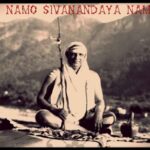
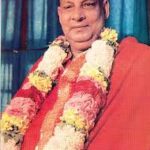
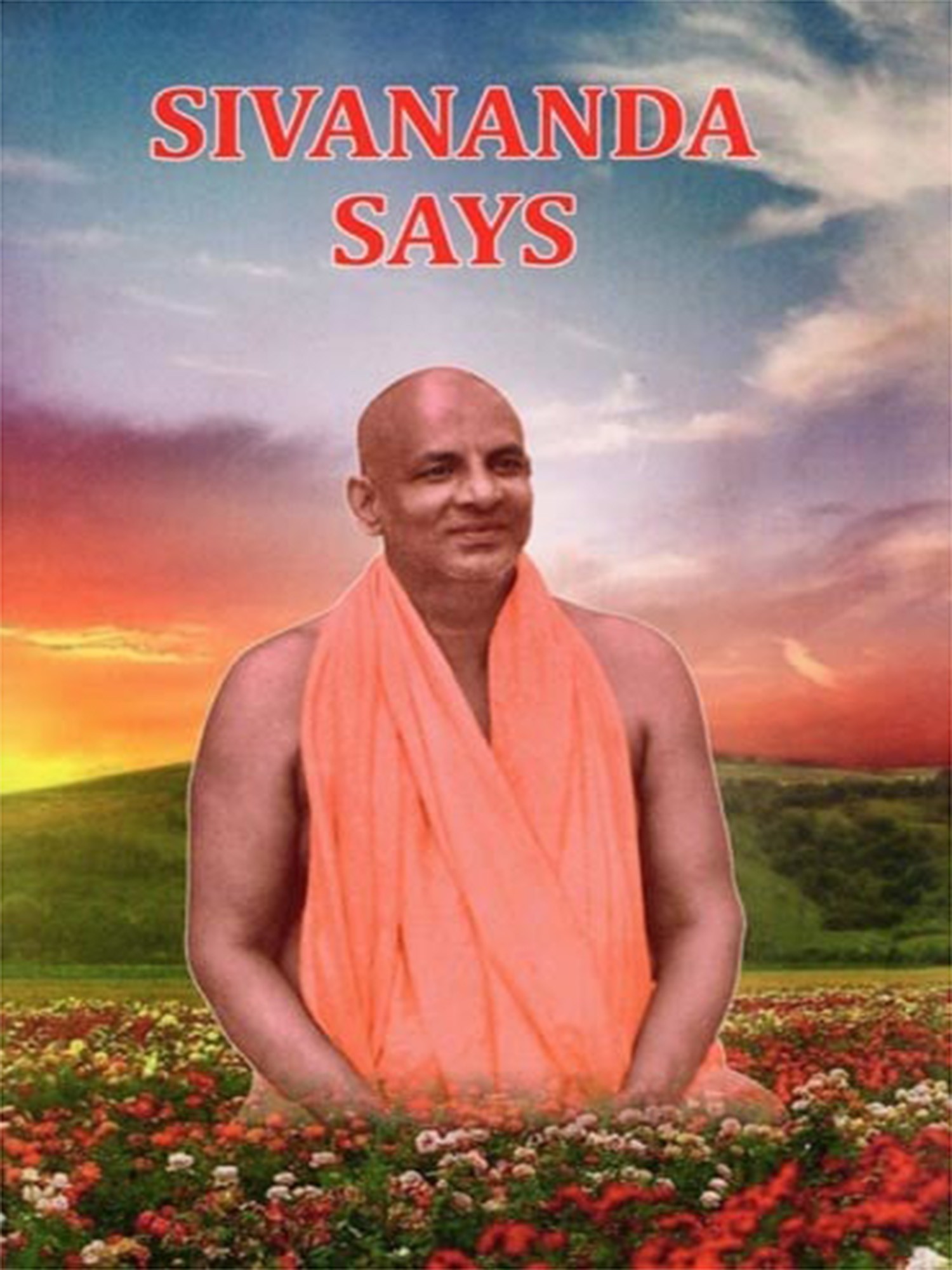
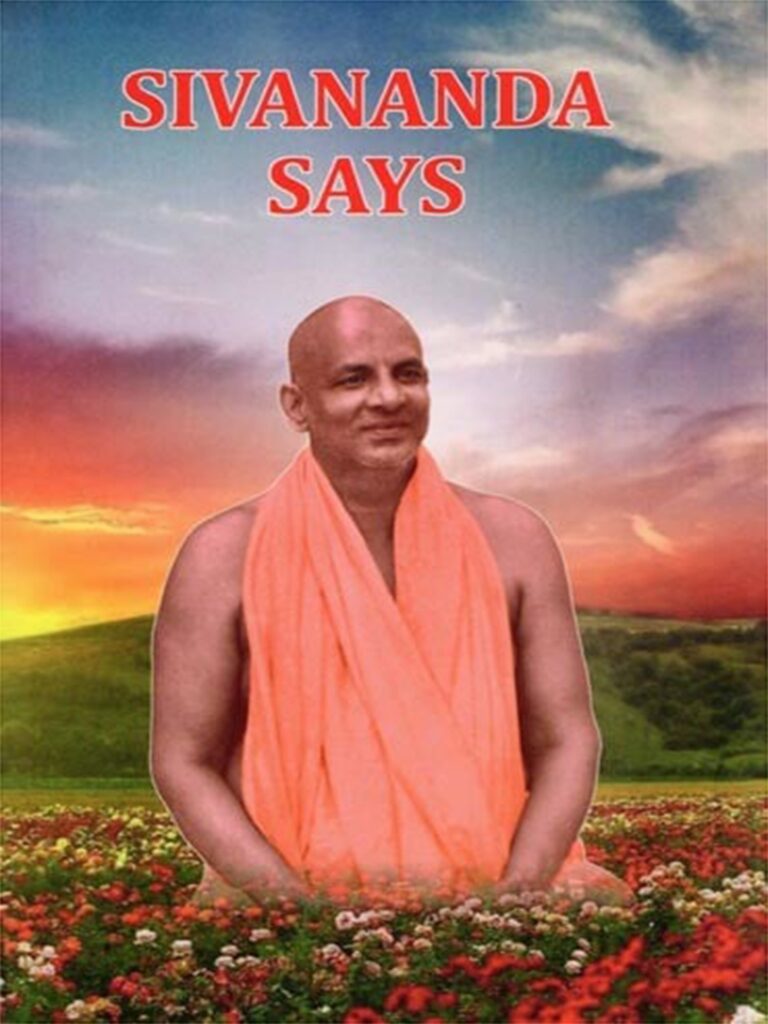
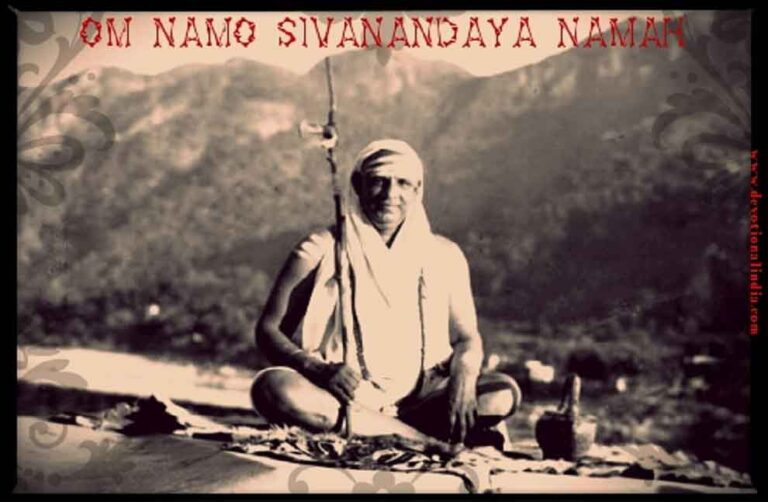
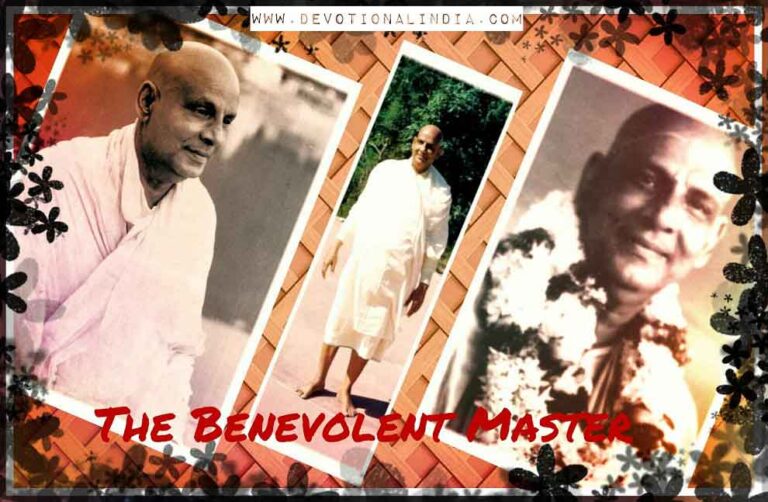
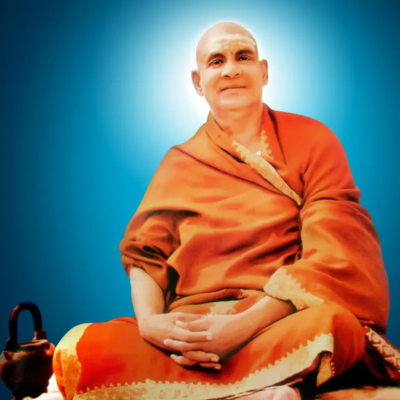
Swami Sivananda Saraswati ~ 𝗔 𝗗𝗶𝘃𝗶𝗻𝗲 𝗕𝗹𝗶𝘀𝘀𝗳𝘂𝗹 𝗣𝗿𝗮𝘆𝗲𝗿 𝘁𝗼 𝗟𝗼𝗿𝗱 𝗦𝗵𝗶𝘃𝗮 ~ 𝘉𝘺 𝘚𝘸𝘢𝘮𝘪 𝘚𝘪𝘷𝘢𝘯𝘢𝘯𝘥𝘢 The leaves of life are falling off.Youth is fading. The days are rolling on. Time, the destroyer, lays his hands on the whole world. Existence in this world is as momentary as a bubble or lightening. O lord Shiva ! Protect me. O Lord Shiva! Who holds the begging bowl of the skull of Brahma ! Control this monkey mind which jumps at its sweet will on the branches of desires in the forest of Lust and keep it with Thee for ever. The leaves of life are falling off.Youth is fading. The days are rolling on. Time, the destroyer, lays his hands on the whole world. Existence in this world is as momentary as a bubble or lightening. O lord Shiva ! Protect me. O Lord Shiva! Who holds the begging bowl of the skull of Brahma ! Control this monkey mind which jumps at its sweet will on the branches of desires in the forest of Lust and keep it with Thee for ever. “ Swami Sivananda Saraswati was a renowned spiritual leader, yoga master, and philosopher, whose teachings continue to inspire millions around the world. As the founder of The Divine Life Society (DLS) and an advocate of selfless service, meditation, and spiritual discipline, Swami Sivananda played a pivotal role in reviving yoga and Vedantic philosophy in the modern era. His mission was to spread spiritual awareness and the message of unity, peace, and self-realization.Early Life and Medical Career Born as Kuppuswami Iyer on September 8, 1887, in Pattamadai, Tamil Nadu, Swami Sivananda was inclined towards spirituality from an early age. However, before embracing monastic life, he pursued a career in medicine. After obtaining his medical degree, he worked as a doctor in Malaysia, where he selflessly served the poor and needy. His deep compassion and experiences with human suffering led him to seek a higher purpose in life—one rooted in spirituality and self-realization. Spiritual Awakening and Monastic Life In 1923, he renounced his medical career and traveled to Rishikesh, the spiritual heart of India, where he met his guru, Swami Vishwananda Saraswati. Under his guidance, he underwent rigorous spiritual training, practicing intense meditation, yoga, and self-discipline. He was later initiated into sannyasa (monastic life), taking the name Swami Sivananda Saraswati. Establishing The Divine Life Society In 1936, Swami Sivananda founded The Divine Life Society (DLS) in Rishikesh to spread spiritual knowledge and the principles of Vedanta, Yoga, and selfless service. Through his organization, he offered guidance on living a balanced and virtuous life, blending spiritual practice with social service. Teachings and Philosophy Swami Sivananda’s philosophy was based on the integral approach to yoga and spirituality, summarized by his famous motto: “Serve, Love, Give, Purify, Meditate, Realize.” His teachings emphasized: Hatha Yoga (Physical and Mental Discipline): Using yoga postures and breath control for a healthy and balanced life. Karma Yoga (Path of Selfless Service): Serving humanity as a form of worship. Bhakti Yoga (Path of Devotion): Surrendering to the divine with love and faith. Jnana Yoga (Path of Knowledge): Seeking truth through wisdom and self-inquiry. Raja Yoga (Path of Meditation): Practicing meditation for self-realization. Contributions to Yoga and Spiritual Literature Swami Sivananda was a prolific writer, authoring over 200 books on spirituality, health, and yoga. Some of his most notable works include: Influence and Disciples Swami Sivananda’s teachings spread far and wide, influencing countless seekers and spiritual leaders. Among his prominent disciples were: Legacy and Passing Swami Sivananda dedicated his life to the upliftment of humanity through yoga, spirituality, and selfless service. He attained Mahasamadhi (left his physical body) on July 14, 1963, but his spiritual presence continues to guide seekers worldwide.

, ,

Swami Sivananda Read Post »