





Hari Om

Menu

Saints

JGB and Shivapuri Baba interview visit
Mahatmas

Shivapuri Baba

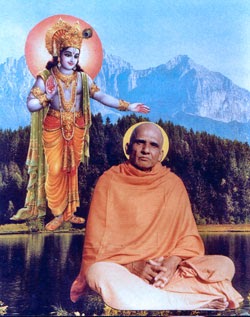
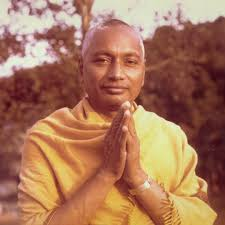
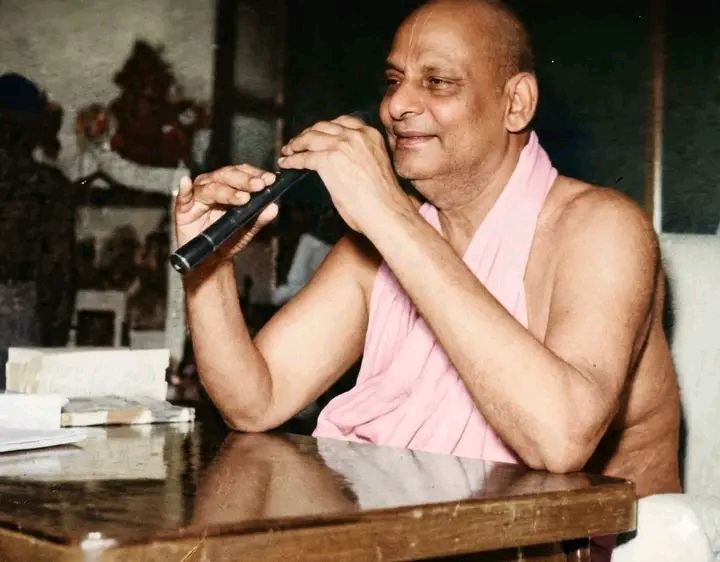
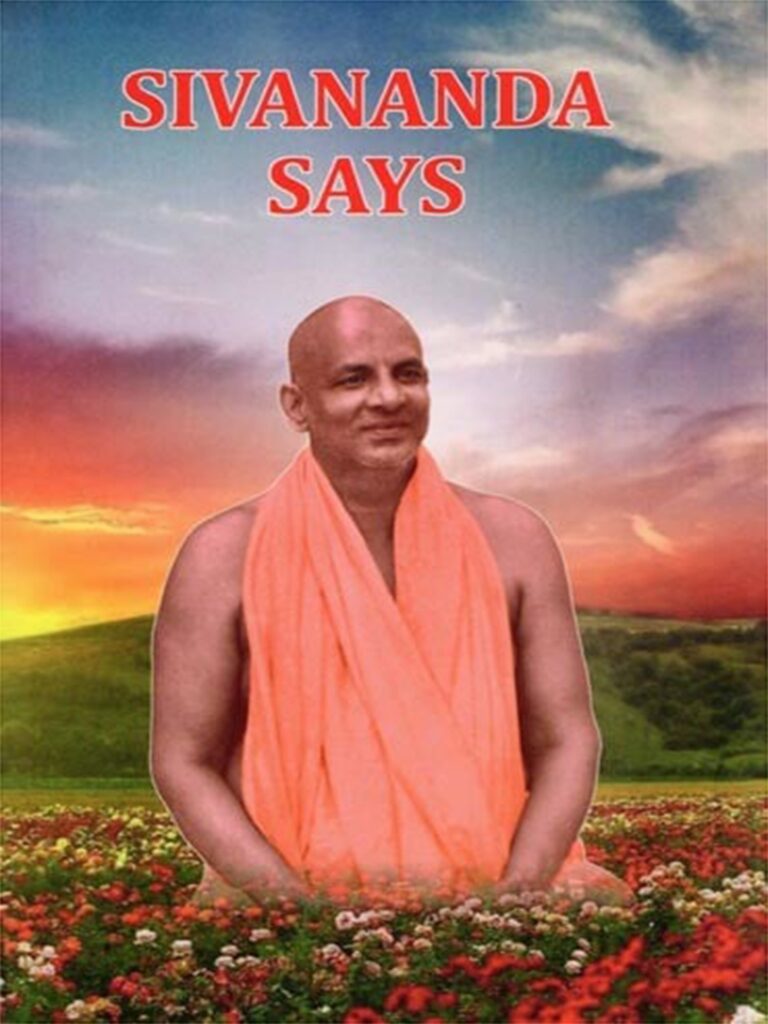
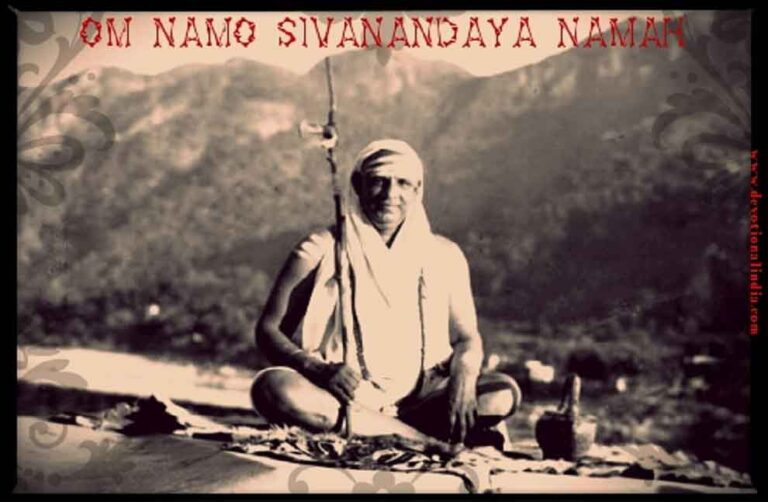
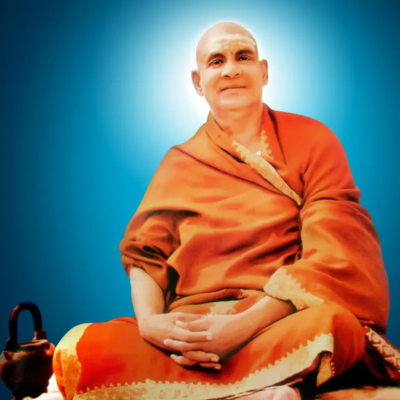
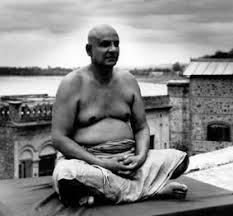
Shivapuri Baba DEPARTURE OF THE GREAT EMPEROR. Shivapuri Baba used to drink a glass of milk every night before going to bed, and he would leave one third of the milk in the glass as prasad for Mahdav Baje. The night before Baba left his body, Baje brought him the glass of milk as usual. Baba drank his share and handed over the glass to Baje. Seeing that Baba looked extremely week, Baje told him to drink all the milk. Baba smiled and said, “Shall I drink it all?” Baje answered, “Yes drink it all.” That night Baba drank the full glass of milk. At midnight, Baba called Baje and told him to put a spoonful of water in his mouth. Baba swallowed the water and slept using his arm as a pillow as usual, and said to Baje, “Son, live Right Life. Now I am gone.” Baba used to wake at three every morning, but since he was not out of bed even by six, Madhav Baje checked on him then, to find that the great emperor of a saint had already left his body, and was free from the circle of birth and death for ever. Osho remembered Shivapuri Baba with great respect. When he talked about the books he loved, he talked about The Long Pilgrimage, a book written by J. G. Bennett about Shivapuri Baba. In Osho’s words Shivapuri Baba is a rare flowering, and to find a person like him is either out of great luck or the result of a tremendous search. Bennett was lucky. It was he who introduced Shivapuri Baba to the West. He also made George Gurdjieff well known to the world. The essence of Baba’s teaching is what he calls “Right Life.” It has two parts — Discrimination and Devotion. He says that a seeker practicing ‘Right Life’ needs to have physical, moral and spiritual discipline. To understand his teachings further, I request that you read The Long Pilgrimage by John G. Bennett, Right Life by Professor Renu Lal Singh, and Right Living by Dr. Yogendra Bhakta Shrestha. Govindananda Bharati entered the deep forest near the banks of the Narmada River and lived there for more than twenty years, without seeing a single human being, sustained by self-grown vegetables, without counting the seasons coming and going… absolute solitary living. Shivapuri Baba never spoke about his life during that time and the years of deep meditation. If there is a phenomenon like enlightenment, we have to assume that he left the forest after achieving it. He then embarked on a long walk; literally, he was walking for almost forty years across the world and only on very few occasions travelled by ship or train. He headed first to the northern part of India, from there to Afghanistan, to Persia, to Mecca, then to Jerusalem, walking 800 miles through a semi-desert. Further on to Istanbul, and from there through the Balkans into Greece. When he arrived in Rome coming from Athens, he visited the Vatican and continued through Italy and almost all European countries. He crossed the Channel to England and from there took a ship to North America where he spent two or three years. In 1904, he made his way on foot towards Mexico. He continued towards the Andes through Columbia and Peru. He explored a route by the side of Lake Titicaca. Till that time, it is said, that highest great lake was unknown to the world! And from South America he travelled to the Pacific Islands, New Zealand, Australia, Japan; through Xinjiang in China he came back to the Himalayas and reached Benares. (According to him, following the ancient pilgrims’ way, he discovered the ascending route to Mount Everest and much later that same route was taken by John Hunt and his party in 1952. It was John Hunt who led Edmond Hillary and Sherpa Tenzing in 1953 to reach the summit.) The details of his world tour, which were briefly revealed by Shivapuri Baba himself, are simply incredible, and cannot be brought to a small write-up like this. But still, some remarkable personalities he met during his journey are mentioned by Bennet: He met Bal Gangadhar Tilak,  the first leader of the Indian Independence Movement. . He met George Bernard Shaw who sneered at him, “You Indian saints are the most useless of men; you have no respect for time.” Unruffled, Shivapuri Baba replied, “It is you who are slaves of time. I live in Eternity.” He also had a talk with Albert Einstein.  He explored a route by the side of Lake Titicaca. Till that time, it is said, that highest great lake was unknown to the world! The details of his world tour, which were briefly revealed by Shivapuri Baba himself, are simply incredible, and cannot be brought to a small write-up like this. But still, some remarkable personalities he met during his journey are mentioned by Bennet: He met Bal Gangadhar Tilak,  the first leader of the Indian Independence Movement.  Source: tapoban

Shivapuri Baba Read Post »

Valmiki ji
Mahatmas

Valmiki

Valmiki Writing Ramayana. Narada visited Maharishi Valmiki in his ashram once and there: he narrated the story of Lord Rama. After that, he received a vision from Lord Brahma in which the Lord instructed him to write Ramayana in shlokas, which the sage readily followed. Valmiki had the fortuity of receiving Lord Ram along with his wife Goddess Sita and younger brother Lakshman at his ashram. On Valmiki’s request, Lord Rama built his hut on Chitrakut hill, near his ashram. Over the course of the epic, Rāmā maintains a firm and, some would say, uncompromising, allegiance to duty—to his mother, his father, his brothers, his wife, and, most importantly as a ruler, his subjects. Performance of duty in the right spirit is essential to virtuous governance, and Rāmā exemplified this for the people of his age and clime. Vālmīkī is an ancient poet-sage to whom the Rāmāyana is often attributed, though it is worth noting that there are myriad versions of the Rāmāyana on the Indian subcontinent in various languages. The Sage Valmiki Describing the Origin of the Verse Form He Later Used to Compose the Rāmayanā to His Pupil Bharadvaja, Folio from the “Shangri” Rāmāyana (Adventures of Rāmā) India, Jammu and Kashmir, Bahu, circa 1700-1710. The most ancient language in which it was rendered, however, was Sanskrit, the language of the Indo-Aryans. In his 1900 to the Shakespeare Club in Pasadena on the Rāmāyana, the Hindu monk Swami Vivekananda observed that “a great many poetical stories were fastened upon that ancient poet; and subsequently, it became a very general practice to attribute to his authorship very many verses that were not his.” As the French poet Leconte de Lisle put it in his poem “La mort de Valmiki,” The Rāmāyana is divided into seven kāndas or sections: Bala Kānda, Ayodhya Kānda, Aranya Kānda, Kishkindhā Kānda, Sundara Kānda, Yuddha Kānda, and Uttara Kānda. Each kānda depicts a major episode in the life of Rāmā. Bāla Kānda narrates the story of Rāmā’s auspicious birth and his childhood and his marriage to Sītā. Ayodhya Kānda depicts their life in Ayodhya. Here, the maid Manthara poisons Rāmā’s stepmother Kaikeyi’s mind on the eve of his coronation, when she convinces Kaikeyi that her son Bharatā should be ruling instead. Rāmā’s father Dasaratha banishes him to the forest, where he is joined by his wife Sītā and his younger brother Lakshmanā. Aranya Kānda focuses on the journey of the three exiles into the forest, where they encounter various personages, including demons (rākshasas) who are attacking the hermitages of sages (rishis). Sītā is abducted by Rāvana, king of these rākshasās. Kishkindā Kānda is about Rāmā and Lakshamā’s search for Sītā, which leads them to the Vānara kingdom, where they enlist the aid of the chieftain, Sugrīva. Sugrīva is himself besieged by his brother’s usurpation of his throne. Rāmā and Lakshamā’s powerful ally Hanumān bravely ventures in search of Sītā with the Vānara army. Sundara Kānda focuses on Hanumān’s discovery of Sītā’s location in Rāvana’s kingdom in Lanka. Yuddha Kānda relays the great battle between Rāmā and Rāvana, culminating in the death of Rāvana and the victory of Rāmā. Rāmā returns with Sītā and Lakshmana to rule Ayodhyā, the subject of the Uttara Kānda. Many interpretations of the Rāmāyana understand Rāmā to be an avatar, specifically the seventh avatar of Vishnu, the deity presiding over the principle of preservation in the cosmic cycle of creation, preservation, and destruction.  Though his divinity is recognized by many characters in the story, Rāmā retains a profound sense of his humanity, simply for the benefit of imparting dharma in human relations. Performance of duty in the right spirit is essential to virtuous governance, and Rāmā exemplified this for the people of his age and clime. Source: apnisanskriti

Valmiki Read Post »

download 2
Mahatmas

Sant Durvasa Rishi

Sant Durvasa Rishi Role In The Churning Of The Ocean The story in the Vishnu Purana goes that Durvasa, while wandering the earth in a state of ecstasy due to a vow he was observing, came by a Vidyadhari (a nymph of the air) and demanded of her a heavenly wreath of flowers she was wearing. The nymph respectfully gave the garland to the sage, whereupon he wore it on his brow. Resuming his wanderings, the sage came across Indra riding his elephant, Airavata, attended by the gods. Durvasa, still in his state of frenzy, threw the garland at Indra, who caught it and placed it on Airavata’s head. The elephant was irritated by the fragrance of the nectar in the flowers, so it threw the garland to the ground with its trunk. Durvasa was enraged to see his gift treated so callously and cursed Indra that he would be cast down from his position of dominion over the three worlds, just as the garland was cast down. Indra immediately begged Durvasa’s forgiveness, but the sage refused to retract or even soften his curse and went on his way. Because of the curse, Indra and the Devas were diminished in strength and shorn of their lustre. Seizing this opportunity, the asuras led by Bali waged war against the Devas. The Devas were routed and turned to Brahma for help. Brahma directed them to seek refuge with Vishnu. Vishnu in turn, advised them to call a truce with the Asuras and work together with them to churn Kshira Sagar, the ocean of milk and obtain the Amrita (nectar of immortality), on the pretext of sharing it with them. Vishnu promised that he would ensure only the Devas drank Amrita and reobtain their former power so they could once again defeat the Asuras. The Devas took Vishnu’s advice and called their truce with the asuras and thus did the Devas and Asuras begin planning their great enterprise. Meeting With Ambarisha In the Bhagavata Purana, Ambarisha was a great devotee of Vishnu who adhered firmly to the truth. He performed a Yajna with such great devotional fervour that Narayana was pleased to bless him with his Sudarshana Chakra (“Sudarshana” meaning “good-looking” or “beautiful”), as a shield of protection over him. Once, Ambarisha performed a religious rite known as the Ekadashi and Dvadashi Vrata, for 1 year (i.e. the king would fast on the 11th day of every half lunar month and break his fast the next day). After observing this practice for a year, he took up a final fast of 3 days and nights to conclude the rite. As the moment for breaking this fast drew near, sage Durvasa arrived where Ambarisha was and the king received him with due respect. Durvasa agreed to the king’s request to be his honoured guest and asked the king to wait until he had finished his bath in the river Yamuna. The auspicious moment soon arrived when the king had to break his fast to fulfill his vow, but Durvasa had not yet returned from his bath. Ambarisha was in a dilemma, as, on the one hand, it was impolite to take food before serving a guest, but on the other, the time had come for the fast to be broken. After consulting his priests, the king broke his fast by taking a sip of water and awaited Durvasa’s arrival to offer him food. Durvasa felt that Ambarisha had violated the respect due to a guest by breaking his fast before the guest had taken his meal and in his rage created a demon to kill Ambarisha, out of a strand of his hair. Narayana’s Sudarshana Chakra intervened, destroyed the demon and started chasing Durvasa himself. Durvasa went to Brahma and Shiva for protection. Both pleaded their inability to save him. Durvasa next went to Narayana himself, who said that he could do nothing as he was bound by the blemishless devotion of Ambarisha and suggested that the sage seek the king’s pardon. Durvasa took this advice and returned to Ambarisha, who prayed to Vishnu to recall the Sudarshana and save the sage, whereby the discus ceased to afflict him. In the Uttara Kanda of Valmiki’s Ramayana, Durvasa appears at Rama’s doorstep and seeing Lakshmana guarding the door, demands an audience with Rama. After invoking Surya, the son god, she bore her first son, Karna. Fearing the fate of an unwed mother, she placed the newborn in a basket and set him afloat down a river. The infant Karna was later found and raised by Adhiratha, a charioteer for the monarch of Hastinapur, and his wife Radha. Soon after this episode, Kunti was married to Pandu, the king of Hastinapur, and, by invoking those same mantras taught to her by Durvasa, she bore the three eldest of Pandu’s five sons. Karna would go on to become an accomplished warrior and a formidable adversary of the Pandavas. This enmity would eventually culminate in his death on the battlefield of Kurukshetra at the hands of Arjuna, his younger brother, who was unaware of their fraternal bond. Source – vyasaonline

Sant Durvasa Rishi Read Post »

Sitaramdas Omkarnath ji
Mahatmas

Sitaramdas Omkarnath

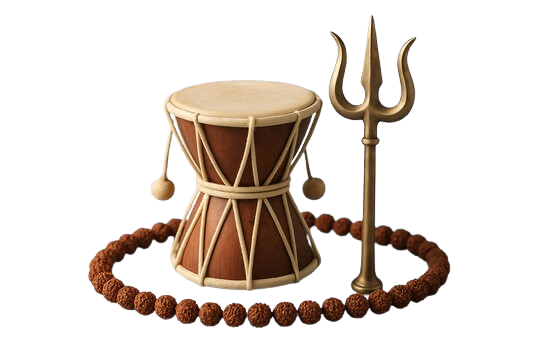
Sitaramdas Omkarnath Education. ln 1898. at the usual age, he was admitted to the Primary School and then he moved on to Bandel Church School. While at school his performance was excellent in Bengali, but his record in English grammar was far from satisfactory. It was obvious that the curriculum of the school did not interest him as he was not keen on pursuing English education. In the circumstances father decided that his son should be sent to an indigenous seminary, so that he could devote himself to oriental learning and stay at home and faithfully perform obligatory religious duties such as the worship of the familly deity Brajanath In 1905, when he reached thirteen years of age, he was invested with the sacred thread which bestowed on him the status of a Brahmin. From then on, he was entitled to perform “Sandhya Vandana”, worship of the Sun at the time of sunrise, noon and at the sunset. The “Sandhya Vandana” included the recitation of the most sacred Mantra of Vedas, namely, Gayatri. Also, this enabled him to undertake the arduous spiritual exercises for his upliftment. Thereafter, in 1909, after making several attempts he got his admission from residential school of Sri Dasarathi Bhattacharya, free of cost. This type of education has been prevalent since Vedic times in India, where, student would stay with his Master and serve him in all possible ways and in return receive education without incurring any expenditure. Thus, his career as a student formally commenced in the instituton of Sri Dasarathi Bhattacharya, at the age of seventeen. Just as trees bear flowers and fruits only when the spring sets in, so also the devotion bear fruit only when one is blessed by the Guru. While he was studying at Digsui, a proposal was mooted at the instance of his Guru for his marriage with a girl, named Siddheswari. But Prabodh Chandra was not keen in getting married, as his health was in a bad shape. A severe attack of Pneumonia had permanently impaired his health. As a result of this attack, a wheezing sound from his chest was always audible. He did not want to marry, as he was not inclined to ruin the life of a young girl leaving her a widow. This showed his consideration for others and his innate unwillingness to inflict any sort of pain or sorrow on others. When the pressure mounted on him, the only course that was left open for him was to leave Dumurdaha. He left his native village and after considerable effort, reached Puri in Orissa, which is a sacred place of Lord Jagannath. One of his friends, Sri Naren was aware of the fact that Prabodh Chandra was a very devoted disciple of Sri Dasarathi Yogeswar and prevailed upon him to return to Dumurdaha, as his Guru was interested in the aforesaid alliance and was eager to celebrate his marriage. After a gap of fortnight or so, Prabodh Chandra returned to Dumurdaha. In the meantime the bride’s house at Digsui, the mother asked her daughter as to whether she should fix her marriage elsewhere, as “Prabodh had fled”. In reply, she affirmed that if she had had to marry, it could only be with Prabodh Chandra Chattopadhyaya or else she need not be married at all. After his return to Dumurdaha, there was great rejoicing and he was married to Siddheswari Devi. In December 1916, the marriage took place at Digsui. After the marriage, the couple were on their way to Dumurdaha. They crossed the Ganges by boat and then travelled by a palanquines. In the palanquin, Prabodh Chandra enquired of her: These were the words from a little girl of ten or eleven. The strength of her conviction was tremendous. She had resolved to put an end to her life, in case the marriage had not materialised. Her words took the load off his mind. On her arrival at Brajanath’s house, Siddheswari Devi changed into Kamala Devi of Dumurdaha. Even after his marriage, Prabodh Chandra continued his Guruseva and the spiritual exercises. He regularly studied two books, namely, “Vedantasar” , that is, essence of Vedanta and the “Bhagavad Gita”. Besides, he recited “Chandi” daily as a matter of routine. ” श्रीप्रिया-वदन छबि-चन्द्र मनौं, प्रीतम-नैंन-चकोर | प्रेम-सुधा-रस-माधुरी, पान करत निसि – भोर “. In addition to his usual sittings for meditation in the morning, mid-day and evening, he sat at midnight also. The year 1918 was a memorable year in the life of Prabodh Chandra in many respects and particularly because of the following extraordinary spiritual experiences, which occured in his life in quick succession. On 7th of January, 1918, all of a sudden he had a wonderful spiritual experience. As usual, he sat for prayers at midnight in the normal posture and he closed his eyes and meditated intensely, fixing his mind at the heart. He was surprised to see Lord Shiva appear with a trident in one hand and tabor in another. “I am your Guru”, Lord Shiva replied, “I came to you in your childhood. You could not recognise me. I have come again”. Shiva then began the Japa of his Ishta Mantra with each of his five mouths. From his shoulder, a female form descended. — “Who are you?”, enquired Prabodh Chandra.  “I am your mother”, she answered. She took the astral body of Prabodh Chandra, which resided within him and began to recite his Ishta Mantra into his ears. Shiva went on reciting the Mantra, dancing and playing on the Damaru (tabor). The next day Prabodh Chandra hastened to his Guru at Digsui. The Guru congratulated him on his experience and observed that as he had the Darshan of the Supreme God, he should be gratified. The same year on the Saraswati Pooja day, when he was engaged in Japa, the memory of his previous life flashed vividly before him.  Source: amritananda

Sitaramdas Omkarnath Read Post »

00001 Ugrasrava and Saunaka
Mahatmas

Shaunaka Maha Muni

Sant Shaunaka Maha Muni Purana and Itihasa (epic history) Śaunaka (शौनक) was the chief of the sages at the great sacrifice in Naimiṣa forest to whom the Mahābhārata and the Purāṇas were recited by the Sūta in the reign of Adhisīmakṛṣṇa, the great-grandson of Janamejaya and the sixth in generation from Arjuna in the Paurava line.—Vāyu-purāṇa 1.12; 99, 255-8; Padma-purāṇa 1a) Śaunaka (शौनक).—A son of Śunaka; a great sage of the Ṛg Veda school. A kulapati; addressed Sūta as to the circumstances of the composition of the bhāgavata purāṇa;1 had his residence in Naimiṣālaya; taught knowledge of astra and kriyā to Śatānīka;2 a pupil of Pathya; divided the Atharva Samhitā between his two disciples Babhra and Saindhavāyana.3 A Kṣatropetadvija; four castes were formed under him;4 a mantrakṛt and a madhyamādhvaryu;5 asked Vaiśampāyana for a śānti ritual;6 initiated Śatānīka into ātmajñāna.7 Śaunaka (शौनक) the name of a Sage and devotee of Śiva, according to the 10th century Saurapurāṇa: one of the various Upapurāṇas depicting Śaivism.—It states that once some great sages Śaunaka and others, who were all devotees of Śiva, were performing a long continued sacrifice for the pleasure of this deity in the Naimiṣa forest. In the meantime Sūta Romaharṣaṇa came there. Vaishnavism (Vaishava dharma) Śaunaka (शौनक) is the name of an ancient teacher (ācārya) of Vāstuśāsta (science of architecture) according to the Matsyapurāṇa.—All these great teachers cannot be said to be legendary. Some used to be propagated in ancient India. No nation can flourish without its care for its material prosperity. All this technique and training and their systematic and successful teaching and transmission were of equal importance. Most of the treatises of Vāstuśāstra carry many of these names [i.e., Śaunaka], yet a good many of them are quoted as authorities, yet still others are honoured with actual passages being quoted from their works. The location of the Gurukul was Nimisharanya. It is said that Shaunaka performed a 12-year-long Yajna at his ashram, which attracted a large number of learned men, who held incessant discussions about religion and philosophy. He wrote Shaunaka Grihasutra, Shaunaka Grihyaparishit, and Vastushastra Granth. He helped sages Romaharsha and Ugrasrava Sutha to spread the Puranas and Itihasa among a large masses.[grashravas was an auditor at Takshila. He travelled to Naimiṣāraṇya forest. There he met with the sage Shaunaka and a large group of Brahmins studying at the Shaunaka Mahashala. The Shaunaka Mahashala is considered as the ancient form of university in the Indian Subcontinent by scholars. It is also known as Naimishyaranya University.The Brahmin scholars in the ashram asked about Janamejaya’s snake sacrifice with the sage Ugrashravas. Then Ugrashravas recited the story of the Mahabharata as recited by Vaishampayana to him with some additional materials] This is the place where Shrimad Bhagavatam was preached. The life of the university is mentioned in Adi Parva of the Mahabharata.The philosophical conversation between the sage Pippalada and the sage Shaunaka at the Shaunaka Mahashala was recorded as Brahma Upanishad or Brahmopanishad Alternate name or names include:- Asuracharya, Shukra, Shukra Rishi, Shukra Muni, Shukra Bhrigu, Shukra Dev, Shukra Kavi, Shukra Jyotish, Shukra Bhagavan, Shukra Vaidya, Sukhra sage. he other half became the knowledge source of the asuras (demons).[5] Shukra, in the Puranas, is blessed by Shiva with Sanjeevini Vidhya after performing tapas to propitiate Shiva. Sanjeevini Vidhya is the knowledge of raising the dead back to life, Rishi Shaunaka (Sanskrit: शौनक, IAST: śaunaka) is the name applied to teachers, and to a Shakha of the Atharvaveda. It is especially the name of a celebrated Sanskrit grammarian, author of the Ṛgveda-Prātiśākhya, the Bṛhaddevatā, the Caraṇa-vyūha and six Anukramaṇīs (indices) to the Rigveda. He is claimed as the teacher of Katyayana and especially of Ashvalayana, and is said to have united the Bashkala and Shakala Shakhas of the Rigveda. In legend, he is sometimes identified with Gritsamada, a Vedic Rishi. According to the Vishnu Purana, Shaunaka was the son of Gritsamada and invented the system of the four levels of human life. Sūta maha muni narrated mythological stories to a group of sages headed by Shaunaka maha mu Source – Acharyaa

Shaunaka Maha Muni Read Post »