







Hari Om

Menu

| Bhagavan Sri Sathya Sai Baba Answers

Etherlands 1
| Bhagavan Sri Sathya Sai Baba Answers

The Renaissance of Dharma

The Renaissance of Dharma (Bhagavan’s Letter to Teachers) Camp: Prasanthi Nilayam, 18‑1‑74 Dear Votaries of Dharma! Receive my blessings. Ever since I came here, at Prasanthi Nilayam, I have been thinking of writing to you this important letter. Since a large number of devotees had come from very distant parts of the country and were waiting here for many days, I was engaged in granting them spiritual solace and sending them back home. Hence, this delay in sending you this message. Embodiments of the Divine Atma!Open your eyes and look around with some circumspection. Ponder over the hei­ghts we had attained in ancient times and the present pitiable predicament of mankind. What an abysmal descent! Isn’t our situation very much like that of a man who has tum­bled down from a mountain peak to the depths below? We had, by observing and upholding Dharma [righteousness], reached the pinnacle of perfection in every sphere, spiritual, materi­al, scientific, economic. We followed with great veneration the principles and guidelines laid down in the sacred scriptures, the Shruti [what is heard] and the Smriti [texts containing traditional teachings], which embody the commands of God Himself, and as a result we were bound together by mutual love and affection, and our culture shone with supreme excellence. But today we are in quite a terrible situation—the very opposite of the glory of the past. Wherever we look, we find men sunk in utterly low moral and material conditions. The Dharmic duties prescribed by the Lord in the Shrutiand Smriti in order to save mankind from these very evils have been discarded. Infected by mutual animosity and distrust, we are spouting the fire of violence and cruelty and jeopardizing world peace. Violation of the laws ordained by God is the chief factor responsible for the absence of abiding peace in the world. Is not the transgression of Dharma (which is another name for the Commands of God to man) the sole cause for the poverty, the despondency, the despair, and the lack of spiritual knowledge and effort that are so rampant at the present time throughout the world? It is heartening for us all to note that a few people, at least now, have disco­vered the reason for the crisis through a study of the sequence and the negation, and are striving to resuscitate Dharma, which alone can confer prosperity and peace on the world. If the annihilation of something is causing injury to something else, then the only method for the regeneration of the latter is the revival of the former. Isn’t this prin­ciple universally acceptable and applicable? We are noticing that the decline of Dharma has caused the destruction of world peace. When we plan to bring about prosperity and peace to the world, isn’t it our paramount duty to restore this Divine Dharma? Teachers!It is your imperative duty to wake up and strive at least now without further delay for the preservation and fostering of Dharma. For, today some persons are endeavoring to destroy Bharatiya Dharma by attacking it and plucking it by its very roots. If we fail to resist their attempts, Dharma is in danger of being completely uprooted. Some persons enamored of modern civi­lization and bearing the respected designation of social reformers and re-constructors, are trying in manifold deceptive attractive ways to pollute society itself by depriving it of Dharma. The Dharma, for upholding which we have been all along willing and ready to sacrifice wealth, honor, and even lives, is the Dharma named Sanathana Dharma. Sana­thana means eternal, existing, and effective for all time. Wake up. Get ready. The moment has arrived when you have to demonstrate your indomitable valor and irrepressible heroism. You are born in the ever‑effulgent land of Bharat. You are the valiant and invin­cible descendants of heroic Hindu warriors, who were worthy embodiments of courage, fortitude, valor, and moral integrity. You are scions of the holy and lofty lineage of Rishis like Bhargava, Kausika, Vasishta, Bharadwaja, and Kasyapa who forced even the `three worlds’ to tremble in fear at their spiritual might and majesty, won through severe penance. You will be un­worthy of such great ancestry if you remain indifferent, slothful, and apathetic like cow­ards when the Dharma that is as essential as the very breath to our lives is being undermined. Resolve to engage yourself in the task of promoting the welfare of the world; be assured that Bhagavan will be your unfailing support. As days pass by, the process of reshaping and reforming affect each field. Naturally, it is being applied to the educational system also. In former times, children were initia­ted in the spiritual path at the proper age and their studies began thereafter under the guru or preceptor. In course of time, when Westerners became the rulers, many were lured to the study of their language, for thereby they could secure the ‘second’ of the four goals of man, namely, riches. Thus, they were transformed into supporters of the Western system of education. In the past, teachers saw to it that the pupils were equipped with devotion to God in addition to the curricular training. So the students were well-versed in spiritual disci­pline and knowledge; every act of theirs was motivated by the yearning for salvation and spiritual joy. Boys and girls were instructed by gurus who had full knowledge of the country—its history and traditions—and the principles of religion and culture. Now since the teachers are themselves woefully ignorant of what culture means, what spirituality con­sists of, and what the significance of religion is, the pupils are deprived of the wisdom that alone can confer peace and joy to their hearts. The propaganda for atheism, the decla­ration that the Vedas [scriptures] have no historical validity, and the teaching through history that Hinduism is destroyed—these are the activities of the teachers who suffer from the mania for Western culture and civilization. Can we call such a system of instruction education? Can we call those who instruct these things gurus? Vidya or education is the communication of the knowledge of the Divine power and the inner reality of the Atma. This alone justifies the claim to be educated. Since they have no spiritual awareness, students are taking part in disorders and disturbances. They become easy targets to mob violence, unworthy of

The Renaissance of Dharma Read Post »
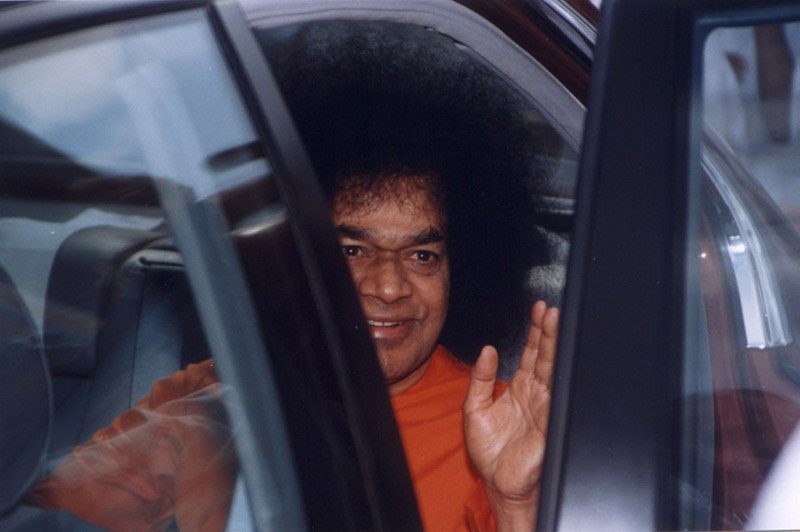
Bhagwan Shri Sathya Sai Baba sacred radiant portrait image
| Bhagavan Sri Sathya Sai Baba Answers

How Do We See Our Divinity

How Do We See Our Divinity Hislop: Eyes see body. How does one see God Himself? Sai: In order to see the moon, does one need a torch? It is by the light of the moon that one sees the moon. In like fashion, if one wishes to see God, it is by love, which is the light of God, that one may see Him. Hislop: Swami says that like the blind man, who has no eyes to see, we are blind and unable to see our own divinity. With what vision does one see his own divinity? Sai: A blind man cannot see his body. You can, because you have eyes. But you have no eyes to see your spiritual body. You have a spiritual body that is omnipresent. That body can be seen with the spiritual eye. Hislop: Would Swami describe the spiritual eye? Sai:Oh, yes. The spiritual eye is God. Attain Him and the spiritual eye will open. Hislop: What does Swami mean when He says, ‘To look within oneself’? What is meant by ‘look’? Sai: ‘Looking within’ does not mean looking into the body of flesh and bones. It means transcending the senses, as in deep meditation. Hislop: As one turns inward, he encounters feeling. Women talk of the heart. Swami puts emphasis on the heart. What is meant by the word, ‘heart’? Sai: ‘Heart’ is the inside. ‘Art’ is outside. Heart is inside. Hislop: Swami says that ‘the heart is the reflection of the atma’, and also that ‘the heart is the best mirror for reflecting truth.’ What is that ‘heart’? What does Swami refer to? Sai: Heart is the consciousness. Hislop: Is the ‘heart’ that women talk about the same as what Swami means? Sai: No. That is the subconscious mind mixed up with their desire. Hislop: Just under my skin, about an inch, there seems to be a mirror. When I see Baba outside, I also see Him in that ‘mirror.’ The ‘mirror’ reflects Baba’s every move. Of these two, the Baba I see with my two eyes, and the Baba of the inside reflection, which is the most real? Sai: Consciousness is a reflection. If pure, it is a clear reflection. It is by the sankalpa (divine will) of Baba that the reflection is seen. Hislop: Is it to the ‘inside’ Baba that prayers and devotion should be addressed? Sai: When Baba is found within, He will be seen everywhere outside. Source: Conversations with Bhagavan Sri Sathya Sai Baba

How Do We See Our Divinity Read Post »

Shri Sathya Sai Baba divine teachings photo
| Bhagavan Sri Sathya Sai Baba Answers

Swami’s Views on Meat

Swami’s Views on Meat Visitor: How does one get devotion to God? Sai: Confidence is necessary. Food is the start. The body is made from food. Without health, it is very hard to do anything. The stomach is of four parts: 1/4 part air, 1/4 part food, and 1/2 part water. Too much food is taken nowadays; there is no room for water. In India, rice and wheat are standard. They are all right if taken in moderation. But people eat too much and get dull. Too much food results in dullness of mind. Food in moderation does not result in sickness. Swami travels to various parts of India and does not get sick from food. Swami becomes sick only when taking on the sickness of a devotee. Otherwise, never. Too much milk is bad. It is rajasic [too active or passionate]. Visitor: Sai Baba, this is for me, this is not for anybody, just for myself, my food. Meat is important. Meat is my food. Sai: Food is important for the body. Even for being born, food is the reason. Mother and father have been nourished with food and they then give birth to a child. The parents have grown up on food. The whole body is a food bundle. The type of food you eat, that kind of thoughts will come to your mind. If you have satwic [pure] food, there will be a satwic effect. Fruit and milk, everything that is cool, and not hot like strong onions. Meat gives the blood its effect, like passion and similar qualities. Dirty thoughts come with fish. Although fish is always in water, it has a bad smell. Visitor: How about lamb? Sai: Meat is all right for those who concentrate on the body and want to have strength, but for spiritual aspirants it is not good. Visitor: But the proteins that come from meat? Sai: Yes, with meat the body will get the proteins, but mental proteins will not be there. If you are keen on spiritual life, eating meat is not worthwhile; but if you are keen on worldly life, it is all right. There is another spiritual reason. When you kill an animal you give him suffering, pain, and harm. God is in every creature, so how can you give such pain? Sometimes when someone beats a dog, he cries, he feels so much pain. How much more pain then in killing. Animals did not come for the purpose of supplying food to human beings. They came to work out their own life in the world. When a human being is dead, the foxes and other animals may eat, but we have not come to provide food for those that eat the human body; we have not come for that purpose. Similarly, man eats the animal, but the animal has not come to provide man with food. But we have taken to eating meat as a habit. Visitor: But we take milk, which is animal. Sai: Anything that comes from the cow, a little milk, butter, cheese, is all right for the spiritual aspirant. There is no harm to the cow, and it is of benefit to take it. In Dwapara Yuga, before Kali Yuga, 5680 years back, milk came into favor. Source: Conversations with Bhagavan Sathya Sai Baba

Swami’s Views on Meat Read Post »

kumbh article
| Bhagavan Sri Sathya Sai Baba Answers

Worldly Desires Versus Desire for God

Worldly Desires Versus Desire for God Hislop: One very strong tendency is in the tongue, the problem of taste, which gives rise to craving for more. How do we overcome that? Sai: The body is like a boil. Water is for cleansing the wound. Food is the medicine. Clothing is the bandage. Consid-ering the body so, reduces the strength of taste. But what is taken in by seeing, hearing, and talking is the more important food. Gross food for the body is like digging a well. Whereas pure and subtle impressions taken in by the other senses is like building a wall high into the heavens. It is building of the wall high that should have the major emphasis. Hislop: Swami says that when the senses leave their place and mix with worldly objects, pain and pleasure are produced. What is the proper place of the senses? Sai: It is all the play of desire. Desire for worldly objects produces pleasure and pain, whereas desire for God confers bliss and does not produce pain. Hislop: But Swami, most of our actions arise from worldly desires. We see, hear, think, feel, and smell. Then there is some desire and that leads to action. Sai: God works through you as desire. Hislop: Swami! Does God prompt even the bad desire? Sai: There is the strong thrust of life force, the desire to live. If it goes into action in a favorable field, it becomes love; otherwise, it remains as desire. If desire is expressed in a favorable field, it is expressed as love. Then knowledge arises; then bliss. The force, the strength, the energy, the motivation in desire is God. Whether the desire is good or bad is related to time, place, and person. In early years, a desire for worldly achievement might be good. In later years, the same desire might be bad. Fruit that is good one day may be rotten several days later. One side of an apple may become good, the other side rotten. Discrimination says eat the good side and discard the bad. There is another force in you through which God works, and that is discrimination. That force must be used to put aside wrong action. The power of discrimination knows what is right and what is wrong. The wrong desire is God overshadowed by maya [illusion], whereas discrimination is God less overshadowed by maya. Hislop: Swami! This really explains the whole problem of good and evil. Sai: Yes. The story of Valmiki is an illustration. He was a ruthless killer and robber without any doubt about his actions. He, at one time, listened to the five sages, and started repeating ‘Rama.’ The same strength and force that made him a terrible criminal was turned to Godly desire and action, and he gained God-realization. As Valmiki gained speed in repeating the name ‘Rama,’ it became jumbled up with ‘Ma’ and ‘Mara.’ In this he lost body sense and transcended the senses. Losing body sense should be like that, natural and not forced. Source: Conversations with Bhagavan Sri Sathya Sai Baba

Worldly Desires Versus Desire for God Read Post »

Bhagwan Sathya Sai Baba meditation moment
| Bhagavan Sri Sathya Sai Baba Answers

Traits of Character to Be Avoided

Traits of Character to Be Avoided Q. Swami! What are the traits of character that we have to avoid, that is to say, which are the obstacles in the path of one who seeks liberation from the cycle of birth and death? A. The six, the arishadvarga [six fold beast]: kama, krodha, lobha, moha, mada, and matsarya; these are to be avoided. Q. What exactly is kama? A. Desire for riches, property, honor, status, fame, children; why list the lot? [It is] attachment to all things of this sensory world, this false, temporary, impure world. Q.  Krodha? A. Yearning to harm others and cause ruin to them. Q. And lobha? A. Determination that no one else should partake of even a small fraction of what one has earned or what one has. Also, that even in times of distress, one’s possessions should not be diminished by use. Q. What is the meaning of moha? A. The delusion that some people are nearer to one than others and the desire to please them more than others, leading to exertions for earning and accumulating for their sake. Q. Mada? A. Mada means the swagger that develops when one feels that he has either scholarship or strength or riches or fame, more than others. Even when one has not got these, mada makes men move about without reverence for elders and consideration for others’ feelings and craving only for one’s own comfort and security. Mada is extreme egoism. Q. The last that you mentioned is matsarya. What does that mean, Swami? A. When others are as happy as yourself, matsarya makes one miserable; one cannot tolerate it. Q. There are certain other traits, too, called dambha and darpa. What do they indicate? A. Dambha prompts people to do yaga and yajna, to give away vast sums in charity, in order to win the applause of the world. Darpa is the pride that haunts man when he is rich and happy. Q. What is the meaning of ershya? A. The desire that others should get the grief, the misery, and the worry that one is suffering from. Q. So, it is different from asuya? A. Yes, asuya means thinking always of doing evil to others; the preparedness to put up with any trouble in order to satisfy this desire to harm others. All these are called inner foes. So long as man is caught in this net of delusion spread by these foes, the yearning for liberation will not dawn in his mind. Source: Prasnottara Vahini

Traits of Character to Be Avoided Read Post »

Sathya Sai Baba blessing devotees image.
| Bhagavan Sri Sathya Sai Baba Answers

Christmas

Christmas Hislop: The crucifixion of Christ, the metal figure of Christ on the cross that Swami created; the metal, when strongly magnified, appears to be more or less covered with small bumps. What are they? Sai: They are blood, knots of blood. The body was in bad condition. It had been hurt and injured over the entire body. At death, the blood came to a sudden stop, and the bumps are clots of blood. Hislop: Swami, on the photo enlargements of the statue, it also looks as if a sort of slice off the nose had been removed. Sai: The nose is whole. That is a heavy bloodstain. When the face itself is enlarged, it is seen as a dead face. Swami made the metal image of the body after its death. Hislop: Because of pictures being around, and the story and pictures being in books, the little figure on the cross is becoming quite famous. What should be done with it? Should it be placed in the new Sathya Sai Museum? Sai: For the museum, Swami will make a big image of Christ. The small one was for you. You keep it. Sai: What do you make of Christmas? Hislop: I was never really interested in Christianity, but I have paid more attention since Swami made the crucifix. Sai: I mean, what does Christmas represent? Hislop: The birth of Christ is represented. Sai: The 25th is not the birth. It was on the 24th, near midnight. Hislop: Not long ago, I found out something very interesting about the Christian religion. The early Christian fathers of the Eastern Church knew something of which modern Christians have no idea. The early Fathers taught that one should constantly say, ‘Lord Jesus Christ, have mercy on me.’ There is constant repetition of Christ’s name until the name goes into the heart where the repetition continues without cessation. Along with the repetition of the name, the form of Christ is visualized in the mind. I learned of this through reading an old book, The Way of the Pilgrim, translated from the Russian. Sai: As time goes on, the significant factors of the spiritual path are lost. The Christian mystics took up the repetition of the name of Christ starting about 19 years after his death. As time goes on, human nature comes to the front and the divine is put aside and forgotten. That which was known of the spiritual path after the time of Rama was no longer there at the time of Krishna. And that which Krishna taught was gone when Sai came. It is the same with the Buddhists, the Moslems and the Jains. Source: Conversations with Bhagavan Sri Sathya Sai Baba

Christmas Read Post »

Shri Sathya Sai Baba humanity photo
| Bhagavan Sri Sathya Sai Baba Answers

What is Dharma

What is Dharma Hislop: What is the meaning of the word dharma [righteousness]? Sai: The word dharma does not mean duty. In duty there is no freedom; in reason there is freedom; and in religious obligation there is the union between duty and reason. Dharma, then, refers to religious obligation and in that word are the concepts of both duty and reason. Visitor: There is a difficulty that arises in doing honor to two different aspects of the Lord. For example, Mother in Sri Aurobindo’s ashram, and Swamiji here. Sai: There are two ways: one in which the Divine is seen everywhere, and there is then no conflict whatsoever; and the other way in which one feels strong devotion to one single person and is happy in that devotion. In the latter case, one should hold strictly to that guru and have nothing to do with other gurus. When one works at a task one needs to give that task full attention and concentration and cannot be thinking of the Lord while doing that task. But the principle involved is the attitude of dedicating everything to the Lord and not doing work because of the fruit to be gained from that work. On the contrary, [it means] doing the work because it is one’s duty to do it very well. A Visitor: Can I wear shorts while here at the ashram? Sai: No. That should not be. Sai: In spiritual life, the fastest progress is made when the boat sails with the wind, and if the boat has to sail against the wind, progress is slower. A Visitor: Well, Swami, the trouble is to determine which way the wind is blowing. Sai: That is really very simple. With practice, a driver of a car learns to be so skilful at driving that a wide boulevard or a narrow road makes no difference to him, he drives both with equal confidence. In the same way, a guru is necessary in order to learn how to take advantage of the wind in the sea of the spirit. The trouble is that nowadays it is very difficult to find a guru. As soon as a person puts on a yellow robe he considers himself a guru and wants to teach people. The best way to determine whether or not a guru is genuine is [to see] if his words are full of wisdom, and if in his life his practices are the same as his words. If the guru only speaks words of wisdom, and this is an age where people speak wisdom without being wise, the words of wisdom will produce no result whatsoever and are useless. The best guru today is God. In the spiritual world, the guru is a doctor who takes the temperature of the aspirant and from the temperature is able to gauge his condition and what is best for him. But if the guru himself has a temperature, then the temperature of the aspirant would be distorted by the tempera-ture of the guru. So the best guru today is God. Source: Conversations with Bhagavan Sri Sathya Sai Baba

What is Dharma Read Post »

devotionalindia vedas hindu scriptures 103
| Bhagavan Sri Sathya Sai Baba Answers

Swami’s Teachings

Swami’s Teachings Hislop: What is the subtlest point of Swami’s teaching, and then in the circle around that point, what are the things to do in order to realize that subtlest aspect of His teaching? Sai: The subtlest aspect of Swami’s teaching is love. The circle around that subtle point, in order to realize it, is the spiritual practices such as meditation, repetition of the name of the Lord, talking with good people, directing the mind away from harmful thoughts, and so on. In themselves, these spiritual practices are of no value. The only thing of real value is love itself. In dealing with people, Swami looks to the good and ignores the bad so as to intensify the good. Swami’s teaching, in a way, is like one going into a store to buy sugar. Then one looks at the sugar and buys the sugar and does not bother to become acquainted with all the other details present in the circumstances of the store: the history and character of the storekeeper, his personal relationship with other people, his personal looks, whether he is tall or short or old or young, and so on. The central part of Swami’s teaching in regards to living in the world is to see in other people that essential quality that is God and to love that quality and not be bothered by all the other actions, qualities, misbehavior, and characteristics of the person. The love of God in the person with whom one is dealing is spiritual love and not physical love. That does not mean in terms of the worldly nature of the being in whom one sees the Lord, and it does not mean that one condones or admires, or does not scold the misbehavior of the worldly part of that person. Even though one sees and loves and really pays attention to God in that person; nevertheless, that person, should be scolded, his attention called to his failures and misbehavings, and so on. And such is not really cruelty. The factor there is the intention; just as in a street fight amongst laborers, one man might scratch the hand of another man with a penknife and cause no wound at all, and yet the police would come and take that man to jail. Whereas in a nearby hospital, a surgeon might take a sharp knife and cut a five-inch gap into a man’s body in order to remove an appendix, and that action would be highly rewarded. So in one case the doctor is severely wounding a person and getting praise; and in the other case, a laborer merely scratching a person gets a jail sentence. The whole thing is the intention of the person. Swami sometimes finds it advisable to operate on a person, that is to wound that person, to say something to that person that may hurt him, or to reveal the bad points of that person instead of just looking at the good points. But when Swami does that, the intention behind it is to help the person, and not hurt or harm the patient. Source: Conversations with Bhagavan Sri Sathya Sai Baba Hislop: What is the subtlest point of Swami’s teaching, and then in the circle around that point, what are the things to do in order to realize that subtlest aspect of His teaching? Sai: The subtlest aspect of Swami’s teaching is love. The circle around that subtle point, in order to realize it, is the spiritual practices such as meditation, repetition of the name of the Lord, talking with good people, directing the mind away from harmful thoughts, and so on. In themselves, these spiritual practices are of no value. The only thing of real value is love itself. In dealing with people, Swami looks to the good and ignores the bad so as to intensify the good. Swami’s teaching, in a way, is like one going into a store to buy sugar. Then one looks at the sugar and buys the sugar and does not bother to become acquainted with all the other details present in the circumstances of the store: the history and character of the storekeeper, his personal relationship with other people, his personal looks, whether he is tall or short or old or young, and so on. The central part of Swami’s teaching in regards to living in the world is to see in other people that essential quality that is God and to love that quality and not be bothered by all the other actions, qualities, misbehavior, and characteristics of the person. The love of God in the person with whom one is dealing is spiritual love and not physical love. That does not mean in terms of the worldly nature of the being in whom one sees the Lord, and it does not mean that one condones or admires, or does not scold the misbehavior of the worldly part of that person. Even though one sees and loves and really pays attention to God in that person; nevertheless, that person, should be scolded, his attention called to his failures and misbehavings, and so on. And such is not really cruelty. The factor there is the intention; just as in a street fight amongst laborers, one man might scratch the hand of another man with a penknife and cause no wound at all, and yet the police would come and take that man to jail. Whereas in a nearby hospital, a surgeon might take a sharp knife and cut a five-inch gap into a man’s body in order to remove an appendix, and that action would be highly rewarded. So in one case the doctor is severely wounding a person and getting praise; and in the other case, a laborer merely scratching a person gets a jail sentence. The whole thing is the intention of the person. Swami sometimes finds it advisable to operate on a person, that is to wound that person, to say something to that person that may hurt him,

Swami’s Teachings Read Post »

devotionalindia vedas hindu scriptures 66
| Bhagavan Sri Sathya Sai Baba Answers

Rama Embodies Dharma

Rama Embodies Dharma Q: Swami! Is it right on the part of Rama to kill Tataka, a woman? Bhagavan:Rama embodies dharma [righteousness]. Along with Lakshmana, He went to the forest led by Vishvamitra only to destroy the demons. Defiling yajnas and yagas and killing great sages, these demons turned hermitages into cremation grounds. In fact, the very purpose of Vishvamitra’s request to Dasaratha, viz., sending Rama and Lakshmana to the forest, was the destruction of the demons. The sage, if he so desired, could have himself put an end to the demons. But, as he was under the vow of yajna, he was prohibited from resorting to violence. Moreover, the mission of the incarnation of Rama awaited fulfillment. Everything has to proceed according to the Master Plan. The actions of the demons were extremely cruel. In order to wipe out this pitch of cruelty and to protect dharma, the demons had to be destroyed. Tataka may be a woman. But, her actions were demonic, weren’t they? Therefore, killing Tataka was just, and fully in consonance with righteousness. In this matter, whether the agents of wickedness are men or women is immaterial. What is crucial is the usefulness of their deeds. Because of his unrighteous conduct, Vali the king of the monkeys, though a male, was not spared, was he! Tara did advise Vali, “Lord! Sugriva was only a few days ago mortally wounded and he fled. How come he is now brave enough to challenge you? He has the support of Rama, don’t you know? Rama is, indeed, no ordinary man. Though you are very valiant, Rama is bent on assisting Sugriva and killing you because of your unrighteous deeds. Seek refuge at Rama’s feet!” Vali paid no heed to her words and fell a prey to Rama’s arrow. Thus, the primary criterion is restoration of dharma. Gender is irrelevant. Q:Swami, Kaikeyi, so it goes, loved Rama more intensely than even Kaushalya, his own mother. How is it then that she could ask such a boon to be granted to her by King Dasaratha that resulted in Rama’s exile for 14 years? Was it not her mistake? Bhagavan:Pleased with Kaikeyi’s services to him, Dasaratha had already granted two boons to Kaikeyi, of which you are aware. Dasaratha had told her that she could ask for the fulfillment of the boons according to her own wish at any point of time that she would like to choose. He did not himself specify the time. It only meant that she could ask for anything at any time. So, it is the mistake of Dasaratha to have given her a blank check like that, authorizing her to ask for anything at any time. On the other hand, had he asked her to let him know at the time of his conferring the boons what exactly she would do with them, we would have every reason to find fault with Kaikeyi for demanding such a treacherous thing. Now, it must have been very clear to you that you have to blame Dasaratha and not Kaikeyi for sending Rama to the forest. Source: Satyopnisad, Vol. 2

Rama Embodies Dharma Read Post »

Shri Sathya Sai Baba peaceful smile
| Bhagavan Sri Sathya Sai Baba Answers

Mantra

Mantra Q. Is there any mantra or japa that will give us this shanti state that you spoke about just now? If there is any, which is the important one? A. Mantra and japa are essential for all types of men. What is a mantra? Ma means manana and tra means saving; so mantra means that which can save you if you meditate on it. Mantra will save you from being caught up in the coils of this worldly life that is infested with death, grief, and pain. Of all mantras, the Pranava [primordial sound Om] is the highest and the best. It is the very head and crown of all of them. Q.Suppose each one does the japam of the name of the Ishtadevata according to his own light, I believe it is not wrong. Or is it? A. You mean that however savage or foolish a man may be, he cannot but call on the Lord! Well, if the name is recited along with the Pranava, it is bound to be beneficial. Just as the waters of the ocean are raised into the sky by the rays of the sun and then, falling as rain, they form rills and rivers and rush toward the ocean to become once again the waters of the ocean, all sounds and mantras that were once only Pranava, reach the Pranava through the japa and other disciplines and rites. They all get merged in the Pranava, their source. Q. Swami! Some elders have said that the more bija-aksharas a mantra has, the more effective it is. Are such mantras to be preferred to others that have only a few bija-aksharas? A.  I don’t agree with the view that when the number of bija-aksharas diminishes, there is less chance for concentration in dhyana [meditation]. Sadhakas [spiritual aspirants] would be benefitted more if they repeat the panchakshari [5 syllables] or ashtakshari [8 syllables] with the Pranava added in the beginning. When they have proceeded some distance thus, they can give up even the words and concentrate on the form depicted through the sound and transform the mantra into the Devata [Lord] Himself. That is why the shruti [scriptures] says, “Nissabdo Brahma uchyathe—Brahma is silence, absence of sound.” Q. How are we to create a vacuum of sound? How can that be Brahmam? A.The shrutis declare that this objective world, this prakriti [nature], is maya; they also say that He who has all this maya under His control is Easwara [God]. So, try to have all this creation under control and become Easwara yourself. The stage when, so far as you are concerned, the objective world has come to naught, is the stage when you attain Brahmam. Until that is set at naught, you cannot attain Brahmam; that is certain. Like the snake that discards its skin and assumes a new skin, the sadhaka discards the old skin, puts on the skin of the deity indicated by the mantra that he concentrates upon. Q. Pardon me, Swami! I cannot understand all this. Make it clear through some more examples. A. You have seen an egg, is it not? When the bird sits on the egg for some time, the chick grows inside it to its full stature and then, when the shell of the egg is broken it emerges and assumes its real form. In the same way, when the sadhaka, with purified consciousness dwells on the mantra and its meaning, and revolves its significance in his mind without break, the vision grows in his mind without break, the shell of ajnana [ignorance] breaks and he shines in the splendor of the divinity that he has formed in his consciousness. Source: Prasanottara Vahini

Mantra Read Post »