













Hari Om

Menu

The Ultimate Goal of Mankind – Self Realization

Swami Krishnananda Saraswati Rishikesh
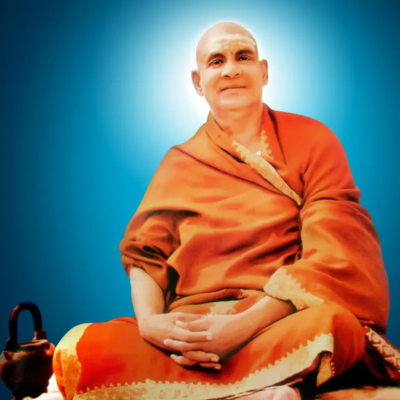
Swami Sivananda, The Ultimate Goal of Mankind - Self Realization

The Call of the Absolute

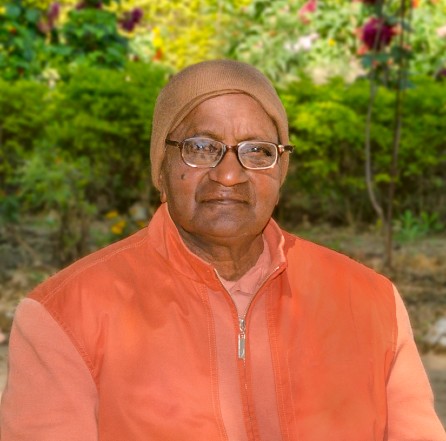
The Call of the Absolute Teachings from Swami Krishnananda Introduction by Swami Bill Eilers of the Sivananda Ashram in Rishikesh, India “The next time you come to Rishikesh you must stay here at Sivananda Ashram.” So exclaimed Swami Krishnananda, the long-time General Secretary of the Divine Life Society, to Andrew Cohen when Andrew visited him earlier this year. Deciding to accept the invitation sooner rather than later, Andrew changed his travel plans for the interval between his teachings in Bodhgaya and Kathmandu, and on January 24, accompanied by about a dozen of his students, returned to Rishikesh to spend five memorable days at the ashram. Sivananda Ashram, the world headquarters of the Divine Life Society, is huddled on a bank of the Ganges River two miles north of the “City of Saints,” Rishikesh. This area, in the foothills of the Himalayas, with its many ashrams and temples, is considered to be one of the holiest parts of India. For thousands of years, seekers after God realization have come here to do penance, austerities and deep meditation, and the very atmosphere is charged with the power of the realizations of bygone seers. The ashram was founded in 1932 by the great saint and sage Swami Sivananda, who passed away in 1963. Since then his ashram and the Divine Life Society have continued to grow. The society has about 10,000 members and over 200 branches in India and abroad. The ashram, with its large library, teaching academy and thirty-bed hospital, has around 300 residents including about 100 monks, and feeds over 500 people a day. It is a spiritual oasis for many sincere seekers from all over the world who feel at home in an atmosphere where English is spoken and where people of all faiths are welcomed. Swami Krishnananda was born in South India in 1922. At the age of twenty-two he joined the budding Sivananda Ashram and two years later donned the ocher-colored monastic robes. Many years of study followed as his photographic memory absorbed not only the Indian scriptures but the entire range of Western philosophy. His semireclusive life ended in 1957, and he was named General Secretary of the Divine Life Society in 1959. Since then he has performed the difficult task of balancing numerous administrative duties with lectures, spiritual discussions and writing. Although some of his writings are in difficult philosophical language, Swami Krishnananda has a genius for giving simple and highly original answers to questions from seekers. For example, he once defined Self-realization as “where thought expires into experience.” He recently revealed an aspect of his personal philosophy when he explained to a distinguished visitor, “Swami Chidananda [President of the Divine Life Society] and I are more interested in how we live our lives than we are in teaching.” As often as not, comments such as these are interspersed with signing official papers, answering administrative queries, making casual jovial remarks, and suddenly, brilliantly, expounding a profound Vedantic truth.Vedanta is the crown jewel of Indian spiritual thought. The word Vedanta itself means “the end of the Vedas” or “the end of all knowledge.” The Vedas, among the most ancient scriptures known to humankind, are the roots of the entire Hindu tradition. Vedanta, based upon later but still ancient Hindu scriptures (the Upanishads, the Bhagavad Gita and the Brahma Sutras of Vyasa), boldly asserts that atman and Brahman, or the individual soul and the Absolute, are one–You are That! And at the end of the eighth century A.D., the great Shankara in his exposition of Advaita Vedanta, or absolute nonduality, declared, “I will tell you within half a verse the essence of all the scriptures: Brahman alone is real. The world is unreal. The individual self is not other than Brahman.” This does not mean that the world does not exist, but that it is unreal if it is understood to be different from the sole reality, Brahman, which is both immanent and transcendent, and finally beyond any categorization whatsoever. While Andrew was in Bodhgaya, Swami Krishnananda was asked whether there was any reason in particular that he had given Andrew the special invitation to the ashram. In the humblest way he answered simply, “I just want to give him honor.” And when Andrew approached him the first morning of his return, Swami Krishnananda welcomed him and said, “We want to do everything for you. We want nothing from you.” Having been asked if he could make himself available if people would like to meet him, Andrew inquired if it would be all right to hold some public meetings. “Of course, you don’t even need to ask,” was Swami Krishnananda’s quick response, “You will help bring sanity into the lives of your listeners.” Someone then asked if it would be possible for Swamiji to spare a little time each day for the visiting group. “Please come at 6 p.m. just after my group meditation and I’ll be glad to see you,” Swamiji replied. Thus was initiated a double series of fascinating meetings that were an inspiration to those who were privileged to attend. For the following three afternoons, Andrew held deeply meaningful dialogues usually preceded and followed by meditation, and in the evenings the visiting group met with Swami Krishnananda for a series of passionate and illuminating encounters.

The Call of the Absolute Read Post »

989977 228444
Swami Sivananda, The Ultimate Goal of Mankind - Self Realization

Ayurveda–Theory and Practice

Ayurveda–Theory and Practice By Sri Swami Sivananda The Importance and Value of the Ancient Indian System of Medicine The ancient intuitive India that brought to being thebrightest and the most inspired of eternal spiritual songs on the struggles andproblems of active life in this terrestrial world in relation to the highest Endof Existence which Self-realisation is, and embodied them in the four Vedas,could not resist its native many-sided tendency not merely to subject the entirenature of man to a process of dynamic spiritualisation, but literally to seekthe health, strength, vim, vitality, longevity of the third of the triune aspectof man,–the physical body, which is recognized as the indispensable andperfectible vehicle for both the enjoyment of temporal happiness and supremespiritual felicity. This tendency of an essentially intuitive mind, towards anintegral development of life, towards a complete blossoming of the whole maneven while living in a physical form in this material world, this impassionedaffirmation of positive living, this acceptance of the body as the bestinstrument for the realization here on earth, of the best blessings of theprofound spiritual realms, resulted in the obtainment of the yet unmatched,deepest insights, the subtle determining vital powers and secrets in the humansystem that govern its radiant health and longevity and in the creation of a yetanother Veda, the Ayurveda. Ayurveda is a perfect science of life andconsists of a body of most remarkable knowledge on the internal mechanism ofhuman health and longevity, on medicinal herbs and therapeutic roots, on theefficacious treatment of human ills by eradicating from the human system thevery sources of their causation. This great medical science and humanity’smost ancient and finest preventive school of practical medicine, which has beenpractised in India, century after century for over four thousand years, byexpert Vaidyas well-versed and highly trained in its lore, should now receive,as a matter of immediate practical necessity, the increasing and the bestinterest of modern free India. To those who claim to have a knowledge of thisancient medicinal science enriched by the happy results of the researches andadvancement made by eminent Vaidyas in succeeding ages, its superior merits overthe Western systems of medicine, and its immense value, do not need anydelineation. Such names of the great pioneers who added to the development ofthe science of Ayurveda, as Vagbhata, Madhava, Jivaka and Bhava Mishra ofBanaras are well-known, and the almost miraculous results that the medicinalherbs prescribed by Ayurveda have brought into the systems of those who haveused them, are more than sufficient proof of its unique value. The amazinglywide scope and the genuine scientific nature of Ayurveda received muchenthusiastic appreciation by such Westerners as Sri William Hunter, too, and therecent researches show that the early Greeks owed much of their knowledge on thephysiology of man and medicine, to Ayurveda. The interest of Government ofIndia, in Ayurveda is indeed most encouraging, but the private bodies and thepublic too should come to an increasing recognition of its importance and value,and as a first step begin trying its drugs. Origin of Ayurveda The Lord Himself is the first divine physician. He is thebest among physicians. When the body is afflicted with senility and diseases, theholy water of Mother Ganga is the medicine and Lord Narayana, from whose holyfeet Ganga emanates, is the great physician. –Lord Dhanwantari. Once upon a time some distinguished sages happened to meet onthe Himalayan mountains, among them being Agastya, Ashvalyana, Asita,Badarayana, Balikhya, Bharadwaja, Chyavana, Devala, Dhaumya, Galaya, Garga,Gautama, Gobhila, Harita, Hiranyaksha, Jamadagni, Kamya, Kankayana, Kapinjala,Kashyapa, Katyayana, Kaundinya, Kushika, Langakshi, Maitreya, Markandeya,Narada, Parashara, Parikshaka, Pulasthya, Sankhya, Sankritya, Shakuneya,Shandilya, Sharaloma, Shaunaka, Vaijapeya, Vaikhanasa, Vamadeva, Vasishtha,Vishwamitra and many others. All of them were well-versed in philosophy andpractised religious austerities. The subject of their conversation was the ‘illsthat the flesh is heir to’. They began to complain: “Our body, which isthe means of attaining the four aims of life, viz., virtue, worldly pursuits,pleasure and liberation, is subject to diseases which emaciate and weaken it,deprive the senses of their functions, and cause extreme pains. These diseasesare great impediments to our worldly affairs and bring on premature death. Inthe face of such enemies, how can men be happy? It is necessary, therefore, tofind remedies for such diseases.” They turned to sage Bharadwaja, and thusaddressed him: “O Sage! Thou art the fittest person among us. Go thouto the thousand-eyed Indra, who has systematically studied the Ayurveda, and byacquiring from him the knowledge of that science, free us, O sage, from thescourge of diseases.” “So be it,” said the sage, who at once went toIndra and thus accosted him: “O Lord, I have been deputed by the parliamentof sages, to learn from you the remedies for the direful diseases that afflictmankind; I pray you, therefore, to teach me the Ayurveda.” Indra was pleased with the object of his mission, and taughthim the Ayurveda in all its parts. Bharadwaja recounted the precepts he hadacquired to the other sages who had deputed him, and with the knowledge of thisscience they were able to live in health and happiness. Indra taught the science to his pupil Atreya, who wroteseveral works. Atreya Samhita is a celebrated book. Atreya is one of the oldestauthorities on Hindu medicine. Brahma propounded the healing art first. He composed theAyurveda consisting of one hundred chapters of one hundred stanzas each. It isthe oldest medical book of the Hindus. It is divided into eight parts: (1) Shalya: Surgery. (2) Shalaka: Treatment ofdisease of the eye, nose, mouth, ears, etc. (3) Kaya Chikitsa: Treatmentof general diseases affecting the whole body, such as, fever, diabetes, etc. (4)Bhoota-vidya: Treatment of diseases caused by evil spirits. (5) KumaraBhritya: Treatment of infants and of puerperal state. (6) Agada: Antidotesto poisons: (7) Rasayana: Treats of medicines which promote health andlongevity, which preserve vigour, restore youth, improve memory, cure andprevent diseases in general. (8) Vajikarana or aphrodisiac: Describes themeans of increasing the virile power, of giving tone to the weakened organs ofgeneration. Nidane Madhava Shreshthah, Sutra Sthane Tu Vagbhatah;Sharire Sushrutah Proktah, Charakastu Chikitsake. It means Madhava is unrivalled in Diagnosis. Vagbhata inprinciples and practice of Medicine. Sushruta in Surgery and Charaka inTherapeutic. In his old age Madhava became an ascetic and assumed the name ofVidyaranya

Ayurveda–Theory and Practice Read Post »

yogi sivananda html d290e898
Swami Sivananda, The Ultimate Goal of Mankind - Self Realization

Ayurveda–Although Ancient It Can Be Ever New

Ayurveda–Although Ancient It Can Be Ever New By Sri Swami Sivananda Source of Knowledge In addition to the methods of experiment and observation, which are the sources of knowledge in the Modern Sciences, Ayurveda accepts concentrated meditation and intuition (Yoga) as a method of acquiring knowledge. He who relies solely on observation, thinks more of differences than of similarities. The methods of investigation in Ayurveda are more synthetic leading to oneness, Adwaita, whereas the tendency in Modern Medicine is more analytical leading to dissipation of ideas. The mechanistic view of man prevailed progressively during the last two or three centuries, and any disease was considered to be a breakdown in the machine, which should be set right by adjusting or repairing the damaged parts. The attention to the part or organ assumes greater importance than the consideration of the whole man. Ayurveda considers man as a complex and inseparable combination of the material body, the senses, the mind and the soul. Happiness in life depends upon the control of the senses and contentment. (Charaka Sutra-I) The Factor of Personality Unlike the machine, man has mind, Manas. Manava is one who has a mind. He has the power of thinking and deciding his future conduct. The decision depends upon the personality of every individual, which is unborn in all living creatures and persists as long as the organism lives. It is often transmitted to the offspring. Triguna Theory Constitutional traits or inborn tendencies or qualities are classified in Ayurveda into three categories called Trigunas. The constitutional factors leading to emotions are due to Rajoguna. The constitutional factors leading to inertia are due to Tamoguna. The constitutional factors leading to equilibrium or harmony are due to Sattwaguna. The mental and physical characteristics of every individual in health and disease are determined by the predominance of one or the other of these three qualities, Trigunas. Tridosha Theory Vata, Pitta and Kapha are the nutritive fluids that feed the living organisms through the nervous, digestive and lymphatic systems respectively. Vata is constituted predominantly of Rajas, Pitta of Sattwa and Kapha of Tamas. Their equilibrium is health and imbalance is disease. Clinically, these theories are very helpful to the diagnosis and successful treatment of the multifarious diseases of the mind and the body. These theories represent the synthetic psychosomatic conception of man, which deals with his mental and physical states including the effects of the vitamins, hormones, toxins, antibodies and all factors relating to the self and the environments of time and place. The physiology of Ayurveda begins where the physiology of Modern Science ends. This means that the Ayurveda deals with both the known and the unknown as well, through its philosophy. The theories of Ayurveda have not been so far verified by modern research, because the instruments of Science have their own limitations, when they have to deal with living matter. Further research is sure to establish the truth of these assumptions, which are like axioms as Ayurveda is concerned. Even the illiterate people and particularly women in India understand theories which they apply in their daily life. The practitioner of Modern Medicine refuses to understand them, because he has lost his moorings in the Indian Culture on account of the bias that he has been taught to acquire by his new education. Domestic Medicine It is not always that the aid of the physician is sought in our country immediately after the appearance of the first symptoms of disease. The people are able to classify the symptoms of the predominance of Vata, Pitta and Kapha respectively and apply some domestic remedies such as ginger, pepper, garlic, Neem, asafoetida and musk, whose properties are well-known to them, to check the respective fault in the earliest stage (Kriyaakaala) of the disease. This brings about the equilibrium which makes the invading agent powerless to grow in the unsuitable soil. Immunity is thus acquired in many instances. Modern Research should help to enlighten us on the rationale of these domestic remedies, some of which are not yet recorded in the text books on Ayurveda. According to Ayurveda, there is nothing in this world which may not be used as a medicine–Na Jagati Anoushadham (Charaka). It all depends upon the capacity of the physician to discover and utilise the available material as a medicine or as an article of diet or otherwise. Modern Medicine appears to be concerned with advertisement of more and more medicines of doubtful value to cure diseases, whereas the long term purpose of the medical science should be to empty the hospitals. For this reason, Ayurveda was traditionally taught to every man and woman in India. Valuable aids to health such as massage, sweating, oil baths, regulated exercises and walks, Asanas, manual labour, games, recreation and prayer are in Ayurveda, included in the daily routine (Dinacharya) of every citizen. Physiotherapy which promotes positive health is badly neglected in modern hospitals. Colossal Ignorance and Pride Even after the advance of Science, our ignorance of the secrets of nature is colossal. Many medical practitioners do not seem to realise the vastness of their ignorance. Instead of feeling humiliated by his utter powerlessness in many situations in his daily life, the proud young doctor is full of egoism (Ahamkara), due to his materialistic mentality. Emotions Cause Disease Emotions like anger, greed and hurry are potent sources of disease. Desire produces anger. Anger results in infatuation; both have their origin in Rajas (Gita). The senses, mind and intellect are the seats for these emotions. Therefore one should develop control over these emotions which are the worst enemies of man. Otherwise, all material and spiritual knowledge will be useless–Jnana Vijnana Nashanam. In Ayurveda prevention of disease is effected through strict discipline of man to develop self-control. Ayurveda teaches not only how to live a happy life, but also how to die a happy death with detachment, contentment and peace. Ayurveda advocates Varnashrama Dharma, a system of organisation of the whole human life into definite self-adjusting socio-economic units, so that, all people may be happy without any strife for

Ayurveda–Although Ancient It Can Be Ever New Read Post »

image 26 e1771868728971
Swami Sivananda, The Ultimate Goal of Mankind - Self Realization

Approaching the Guru

Approaching the Guru By SRI SWAMI PARAMANANDA Many a young aspirant who wishes to tread the path of spirituality, first does so with very many ideas–may be helpful or otherwise–and does not allow himself to be moulded by the Guru. He forms variedly wrong notions as to what spirituality is. He thinks that spirituality is living in seclusion in an Himalayan cave or growing a beard and matted locks or roaming throughout the length and breadth of the land. Anyhow, he retains the individuality in thought and cannot hopefully surrender his ego at the lotus feet of the Guru, which alone can see him well off in the spiritual path. I, for one, first approached Swami Sivananda with a clean slate so that he might write on it all that he thinks will benefit me. I had no idea of my own. If Swamiji says, a trip to Badrinath or Mt. Kailas will help in realising the Lord, I will do it at once. As a matter of fact, Sri Swamiji has never told me that, and I, too, have never visited those places. I remember, only once he asked me to get by heart the eighteen Mantras of Isavasyopanishad. I at once crammed it day and night with word for word meaning. The whole of it was at my fingers’ ends, and I was in a position to repeat it in my dream also. But, somehow, I failed to recapitulate when Swamiji asked me to recite it. Let it be. Apart from that particular Upanishad, I have never got by heart the Brahma Sutras, or the Gita or any other Upaniahad; for, Swamiji has not asked me till now. If he says, to get through all those books day and night will give me realisation, I will do it. Here I can tell you one or two incidents in the life, of some Sadhaks who went to do what Swamiji had not told them to do. In those days (1924-34) while Swamiji was living in Swargashram, there was a Sannyasi-disciple by name Swami V. Without the instructions of Swamiji he began to practise Hatha Yogic Kriyas. He was doing Vastra Dhauti. He began to complain that Swamiji did not give him a bottle of ghee (clarified butter) while his throat was bruised owing to the Kriyas. He went on abusing Swamiji. Mind you, it was a time when Swamiji himself was living on Kshetra food (alms). Who asked the disciple to perform the Kriyas? Without procuring a bottle of ghee first, why should he start doing the Kriyas? Sivanandaji never asked him to do so. Had Swami V. surrendered his individuality to Swamiji, the latter would have guided him correctly, and put him on an easy path. This the disciple never cared to do. He had his own individual ideas about spirituality and never gave a chance to Swami Sivananda, his Guru, to mould him. And as a consequence he had to suffer for having followed a wrong path without being instructed by the Guru. I remember, in those days, while at Swargashram, Sri Swamiji would save every possible minute and add it to his Sadhana. He would keep old rotties (breads) in his room, dry them in the sun every day, and soak them in water an hour before his meal-time and this he would have for his meals along with gud (jaggery). In this way, he was able to save more than an hour which he would have spent in going to Kshetra for Bhiksha (alms). This was Swamiji’s food at a time when Vivekananda abused him for not supplying ghee. Another instance. A young Sannyasin, a disciple of Swami Sivanandaji, met me, at Madras. He related his miserable life at that moment. He came to South India to lead a Parivrajak-life after visiting Badrinath and other places in Uttarakhand. The first thing I asked of him was, whether he had taken Sri Swamiji’s permission and whether Sri Swamiji had instructed him to undertake a Yatra (pilgrimage). To both questions, he replied ‘no’. Further, he related how he slept on roadsides and railway platforms, how he met with physical violence for travelling without ticket and so on. Such was his miserable life. Why should he suffer? The answer is simple: he did not take instruction from Swamiji and neither did he allow Swamiji to mould him. He gave full freedom to his individuality and, therefore, reaped the consequences thereof, suffering. To a further question he replied, that he had no plans. I fully remember Sri Swamiji having remarked in a meeting at Colombo during the All India-Ceylon Tour (in 1950) the importance of chalking out a plan to guide us in our actions. I replied to that Sannyasin, that I had a well-chalked out plan confirmed by the Guru and so I do not suffer. I can tell you with all assurance that I am the happiest man not only now when there is a kitchen to cater to all individual whims and tastes, but I was also the happiest man when I had to receive Bhiksha from Nepali-Kshetra, as also Sri Swamiji had to. It is because I had no individuality, no idea or plan of my own; I allowed myself to be moulded by Sri Swamiji. There was one Swami Jagadeeswarananda with us whom Sri Swamiji trained as a good lecturer. Sri Swami Jagadeeswaranandaji’s lectures on Concentration and Meditation were simply grand and eloquent. Again there is Swami Narayanji. In those days he was sweeping the Ashram and keeping it clean. Today also he does the same work. He finds immense pleasure in it. He derives supreme happiness from that work. How is it? He had no idea of his own. He allowed Sri Swamiji to shape his career. Sri Swamiji, too, has made him a good Sankirtanist. Swami Narayanji has written a wonderful English commentary on Vivekachudamani. You should not ignore highly evolved souls like Swami Narayanji and Swami Poornabodhji as some insignificant personalities. They are the happiest persons. You should

Approaching the Guru Read Post »

images 2026 02 23T230115.474
Swami Sivananda, The Ultimate Goal of Mankind - Self Realization

Advice To Sannyasins

Advice To Sannyasins By Sri Swami Sivananda Every religion has a band of anchorites who lead the life of seclusion and meditation. There are Bikshus in Buddhism, Fakirs in Islam, Sufistic Fakirs in Sufism, Fathers and Reverends in Christianity. The glory of a religion will be absolutely lost if you remove these hermits or Sannyasins or those who lead a life of renunciation and divine contemplation. It is these people who maintain the religions of the world. It is these people who give solace to householders when they are in trouble and distress. They are the harbingers of divine wisdom and peace. They are the messengers of Atmic knowledge and heavenly messages. They are the disseminators of Adhyatmic (spiritual) science and Upanishadic revelations. They heal the sick, comfort the forlorn, nurse the bed-ridden. They bring hope to the hopeless, joy to the depressed, strength to the weak, courage to the timid by imparting the knowledge of Vedanta and the significance of the ‘Tat Tvam Asi‘ Mahavakya. A real Sannyasin is the only mighty potentate on this earth. He never takes anything. He always gives. It was Sannyasins only who did glorious, sublime work in the past. It is Sannyasins only who can work wonders in the present and in the future also. Sri Sankara’s name can never be obliterated so long as the world lasts. It was Ramakrishna Paramahamsa, Swami Vivekananda, Swami Dayananda, and Swami Rama Tirtha who disseminated the sublime teachings of the scriptures and preserved Hindu religion. A Sannyasin alone can do real Lokasangraha, because hehas divine knowledge, he is a whole-timed man. One real Sannyasin can change the destiny of the whole world. It was one mighty Sankara who established the doctrine of Kevala Advaita philosophy. He still lives in our hearts. Just as there are research scholars or post-graduate students in Science, Psychology, Biology, Philosophy, etc., so also there should be post-graduate Yogins and Sannyasins who will devote their time in study and meditation, in research over the Atman. These post-graduate Yogins will give to the world their experiences and realisations in the field of religion and spirituality. They will train students and send them into the world for preaching. It is the duty of householders, zamindars and the administration of the nation to look after the wants of these Sannyasins. These Sannyasins will take care of their souls and in turn they will have to take care of their bodies. Thus the wheel of the world will revolve smoothly. There will be Peace in the land. Sannyasins should, on their part, be rooted in Advaitic Consciousness. Mere study of Vichara Sagar or Panchadasi cannot bring in the experience of pure, Advaitic Consciousness. Vedantic gossiping and idle, dry talk on Brahma Sutras and Upanishads cannot help one in feeling the unity or oneness of life. There is no hope for him to feel the Advaitic unity of consciousness–‘Sarvam Khalvidam Brahma’–‘all indeed is Brahman’, unless the aspirant destroys ruthlessly all sorts of Ghrina, hatred, petty-mindedness, jealousy, envy, ideas of superiority, and all barriers that separate man from man, by incessant, protracted service of humanity with the right mental attitude or Divine Bhava. Practical Vedanta is rare in these days. There are only dry discussions and meaningless fights over the non-essentials of various religions. The central teaching of the Gita is Self-realisation in and through the world. The same thing is preached by sage Vasishtha to Sri Rama. To serve humanity,–God in manifestation,–and to think of God while living in the world amidst various activities, is superior to a cave life. Selfless work is Yoga. Work is Atma Pooja. There is no loss in Nishkamya Karma. Real spiritual progress starts with Nishkamya Karma Yoga. Glorious Sannyasin! Serve everyone with intense love, without the idea of agency, without expectation of fruits, reward or even appreciation. Utilise this body-machine in selfless works. Feel that you are only Nimitta (instrument) in the hands of God or a Sakshi (witness) of Prakriti’s activities when you do Karma Yoga. Have no attachment to any place, person or thing. Keep up the mental poise amidst the toil and moil of the world without consideration of success or failure, gain or loss, victory or defeat, respect or disrespect, pleasure or pain. Have always a balanced mind. Have the mind firmly rooted in the Self amidst all activities. Then you will become a true Karma Yogi. Work elevates, when done in the right spirit. Even if people scoff at you, revile, beat, kill or taunt you, always be indifferent. Be steady in your Sadhana. This Sadhana demands constant practice, steadfastness, patience, perseverance and endurance. Practice of combined Karma and Jnana Yoga in the world is far more difficult than the practice of pure Jnana Yoga in the cave of Himalayan retreats. The former Yogi will have no Vikshepa or tossing of the mind, while the latter will be easily disturbed by a little sound, or bustle of the city. To keep up meditation while performing actions is a different kind of difficult Sadhana. That Yogi who keeps up the meditation while performing actions is a powerful Yogi indeed. He has a different mind altogether. Sannyasins do not want to remove Mala (impurities) by Nishkamya Karma Yoga. They think that service and Bhakti are nothing. They at once shave their heads, put on coloured clothes, remain in a cave and pose as great Munis or Yogins. They study a few books on Vedanta and style themselves as Jivanmuktas. This is a serious mistake. Even if there is one real Jivanmukta, he is a great dynamic force to guide the whole world. Some Sannyasins of the old, orthodox school think that a Jivanmukta is without powers. He can change or alter the destiny of the whole world. A Sannyasin should understand that this body which is supported by the pillars of bones, bound by ligaments, which is plastered over with flesh and blood, and covered with skin, as the foul-smelling refuge of urine and excreta. He shall have to quit this bodily frame which

Advice To Sannyasins Read Post »

11 ms sv etc study
Swami Sivananda, The Ultimate Goal of Mankind - Self Realization

Advice To Householders

Advice To Householders By Sri Swami Sivananda The Ashramas or stages of life are four, viz., Brahmacharya, the stage of student life; Grihastha, the stage of householder life; Vanaprastha, the stage of seclusion (forest-living); and Sannyasa, the stage of total renunciation. Each order of life has its own duties. In none of these stages must a man grasp at the special duties of the other three. At the present moment, it is difficult to maintain or observe the exact details of the ancient rules, as the conditions have changed very much. But, if we can have a clear idea of the fundamental duties of each, we shall still be able to shape the life through a regulated course of development and steady growth. The student, after finishing his studies, enters the order of Grihastha, when he is ready to take up the duties and responsibilities of household life. Of all Ashramas, that of the householder is the highest as he verily supports the other three. As all the streams and rivers flow to rest in the ocean, even so all the Ashramas flow to rest in the householder. This household life is the field for developing various virtues such as mercy, love, generosity, patience, tolerance, purity, prudence, right judgment, etc. It is highly lamentable to note that the grandeur, solemnity and dignity of this stage of life is not fully realised these days. A householder has duties to do towards the society, his neighbours, country, friends, relations, wife, children and parents. He must serve religious or social institutions for some hours daily in a disinterested manner with the spirit of Karma Yoga. This will purify his heart and prepare the Antahkarana for the descent of divine light. He must treat his neighbours as his own self. He should share what he has,–material, mental and spiritual–with others. He must give good education to his sons and daughters and treat his wife well as she is his partner in life and religious performances (Ardhangini). Parents are veritable gods on earth. Therefore he should serve them nicely, and carry out their behests to their entire satisfaction. He should perform Sraddha (annual rites to the departed souls) every year and offer Tarpana to his Pitrus or ancestors. Every householder should perform the following Yajnas. The fire place, the water pot, the cutting, grinding and sweeping apparatuses are the five places where injury to life is committed, daily. The sins committed here are said to be washed away by the five Maha Yajnas which every Dwija (householder) ought to perform and which are intended to satisfy the Bhutas, the Rishis, the men, the gods and the Pitrus. The five great Yajnas (Pancha Maha Yajnas) are: (1) Deva Yajna: This consists of offering oblations unto Devatas or gods with recitation of Vedic Mantras; (2) Rishi Yajna: This consists of study of Vedas and teaching of Vedas to students and offering of oblations to Rishis; (3) Pitru Yajna: It consists of Tarpana or oblations to departed souls and Sraddha or annual religious rites performed for departed souls; (4) Bhuta Yajna: This is distribution of food to cows, crows and animals. This develops cosmic love and an Advaitic feeling of oneness; and (5) Atithi Yajna: This consists of giving food to guests and honouring them. The Pitrus are forefathers who dwell in Pitru-loka. They possess clairvoyance and clairaudience. Recitation of Mantras exercises tremendous influence through their vibration. The Pitrus hear the sounds through the power of clairaudience and they are pleased. They bless those who offer the oblation. In Sraddha, the essence of food offerings is taken up by sun’s rays to Suryaloka and the departed souls are pleased with the offerings. Even in the West many persons perform Tarpana and Sraddha. They have scientifically investigated into the beneficial effects of such oblations. It is the imperative duty of all householders to perform Sraddha and Tarpana to please the Rishis and the Pitrus. It is only the deluded souls with perverted intellects who misconstrue things and neglect to perform the sacred ceremonies and consequently suffer. The worldly duties are not ties. The world is the best teacher. You are not required to renounce the world and take shelter in the Himalayan caves to claim back your lost divinity. The world cannot stand in the way of your God-realisation. Live in the world but allow not the world to live in you. He who living in the midst of temptations of the world attains perfection is the true hero. A householder should earn money by honest means and distribute it in the proper manner. He should spend one-tenth of his income in charity. He should enjoy sensual pleasures within the limits of the moral law. Householders have got a very responsible duty in training their children. If they want to shirk this responsibility, they ought to have checked their itching sensation caused by lust, and should have stopped procreation by becoming Naishthika Brahmacharis. Serious punishment is awaiting them in the other world if they leave their children untrained in this world. They themselves should lead an ideal life. Then alone their children can copy them. If they have wrong evil habits, their children will also try to imitate them. Children have got the power of imitation. Parents should watch the habits and ways of their children, and take care not to allow them to join evil company. If they speak lies, they should be punished. They should not be allowed to utter any slang or obscene words. They should not be allowed to smoke and chew betels. They should not be allowed to go to cinemas and read novels. Parents should give them Sanskrit education. The study of Sanskrit is very essential. Even girls should be made to study Sanskrit. They should be able to understand the Gita. Father and mother are only responsible for the character of their children. If the parents are irreligious, their children also become irreligious. It is the onerous duty of the parents to give their children religious training in their boyhood. They should themselves lead the divine life. When religious

Advice To Householders Read Post »

images 2026 02 17T145616.905
Swami Sivananda, The Ultimate Goal of Mankind - Self Realization

Advice to Children

Advice to Children By SRI SWAMI SIVANANDA God created you, your brother, sister, father, mother, friend and your relatives. He created the sun, moon and the stars. He created the animals and the birds. He created the mountains, rivers and trees. He created the whole world. He dwells in your heart. He is everywhere. He is all-pervading. He is all-knowing. He is all-powerful. He is all-merciful. He is all-loving. He is all-blissful. Your body is the moving temple of God. Keep the body pure, strong and healthy. God is Love. God is Truth. God is Peace. God is Bliss. God is Light. God is Power. God is Knowledge. Realise Him and be free. Do Kirtan daily morning and night. Pray daily. Offer flowers to Him. Prostrate before Him. Offer sweetmeats to Him and then eat. Place light before Him. Burn camphor before Him. Do Arati. Put garland on Him. Pray to Him daily. He will give you everything. Keep a picture of God in your room. Worship Him daily. All your desires will be fulfilled. Offer this morning prayer to God, everyday:“O Lord of this world! Prostrations unto Thee! Thou art my Guru, real Mother, real Friend and real Guide. Protect me. I am Thine. All is Thine. Thy Will be done.”“O Adorable God! Salutations unto Thee. Give me pure intellect. Make me pure. Give me light, strength, health and long life. Make me a good Brahmachari.”“O Almighty Lord! Remove all my evil qualities. Make me virtuous. Make me a patriot. Let me love my mother-country.” Before you retire to bed at night, offer this prayer to God:“O Sweet God! Forgive my sins and wrong actions. I thank You for all Your gifts. You are very kind to me. Let me remember You always.”“Make me dutiful. Give me success in my examination. Make me a good, brilliant boy. (Make me a good, brilliant girl.) Adorations unto Thee.”“Give me good memory. Let me love all. Let me serve all. Let me see You in all. Make me prosperous. Protect me, my father, mother, grandfather, grandmother, brothers and sisters. Glory unto Thee!” Dear Govinda! Do not fight with your brother, sister or classmates. Obey your parents and teachers. Do not smoke. This is a bad habit. You will get disease from smoking. Give up bad company. Do not use vulgar words. Do not abuse anybody. Be kind to all. Serve all. Love all. Respect elders. Do not steal anything. Do not hurt anybody. Speak gently. Speak sweetly. Be punctual in your school. Study your daily lessons well. Stand first in the class. Do not play much. Do not kill bugs and scorpions. Do not waste time. Don’t play cards. Playing cards will make you a wicked boy. Do not go to cinema. But do go to the temple daily and worship the Lord. Take flowers, camphor and fruits when you go to the temple. Don’t hate anybody, but do love all. Give a pie to a blind man. Wash the clothes of your parents. Never become angry towards your parents and others. Anger is very bad. It will spoil your health. You will spoil your name. You will do wrong actions if you become angry. God watches your thoughts. Don’t hide your thoughts. Be frank. Be pure in your thoughts, words and actions. Worship Lord Surya, the Sun-God, on Sundays. Repeat ‘Om Mitraya Namah’, ‘Om Suryaya Namah’, ‘Om Adityaya Namah’. Lord Surya will give you good health and vigour and good eyesight. Worship Lord Siva on Mondays. Worship Devi on Tuesdays and Fridays. Worship Guru on Thursdays. Worship Hanuman on Saturdays. You will get plenty, peace, prosperity and success! Lord Brahma is the creator of this world. Sarasvati, Goddess of learning, is His Sakti or energy or wife. Lord Vishnu is the preserver of this world. Goddess Lakshmi is His Sakti, energy or wife. She is the Goddess of wealth. Lord Siva is the destroyer of this world. Uma or Parvati is His Sakti, energy or wife. Lord Ganesa is His eldest son. Lord Subrahmanya is His second son! Lord Ganesa removes all obstacles. Lord Subrahmanya gives all success and strength. Worship them with faith and devotion. You will get Bhakti (devotion), Bhukti (happiness) and Mukti (liberation). God loves you. He gives you many good things. He gives you food to eat and clothes to wear. He has given you ears to hear, eyes to see, a nose to smell, tongue to taste, hands to feel and work, and legs to walk. You cannot see God with your fleshy eyes but He sees you. He takes care of you. He knows all that you do. He is very kind to you. Love Him. Praise Him. Sing His Name and glory. Pray to Him to keep you away from all sins. He will be pleased with you. He will bless you. O David! Look at the rose! How beautiful it is! What a fine fragrance it has. You love it. You pluck it and smell it. Can a scientist produce a rose? You can make a paper-flower which may look beautiful but it has no sweet smell. The rose soon fades and loses its beauty and fragrance. You throw it away. It is perishable. Its beauty lasts for a few minutes. Who has created the beautiful flower? This Creator is God. He is Beauty of beauties. He is everlasting Beauty. Attain Him. You also will possess eternal beauty. Beauty is God. Always discriminate between the real and the unreal. There is only one God. But His names and aspects are endless. Call Him by any name and worship Him in any aspect that pleases you. You are sure to see Him and get His grace and blessings. Brahma, Vishnu and Siva are the three Forms of the one God of the Hindus. Allah is the God of Muslims. Jehovah is the God of the Jews. The Father in Heaven is the God of Christians. Ahura Mazda is the God of the Zoroastrians. God is the Aim of all religions. Every religion points

Advice to Children Read Post »

two handsome businessman make business 260nw 2606087661 e1771866908192
Swami Sivananda, The Ultimate Goal of Mankind - Self Realization

Advice to Businessmen

Advice to Businessmen By SRI SWAMI SIVANANDA There is a business ethics and a businessman should practice this ethics. Only then he will not be affected by sin. Only then he will prosper. People say that one will have to tell lies in business if he wants to prosper. This is a serious mistake. Those who are strictly honest and truthful will flourish in business. More customers will go to them only, as they are truthful in their dealings. Falsehood first entered a cloth-merchant’s shop. If you enter a cloth- merchant’s shop, he says first, the one yard costs Rs. 8/-, then bargaining or haggling goes on for one or two hours. At last he comes to Rs 1.50 per yard. This sort of business goes on in most of the business-houses. Cheating and falsehood are the basic traits of a businessman. His conscience has been blunted by covetousness and dishonesty. He is miserable in this world despite his wealth and possessions and will be unhappy in the next world also, because he is not leading a moral life. He does not know what he is exactly doing, as his understanding is clouded. Immorality does not mean sexual depravity and illegal adultery only. He who tells lies and cheats others is also leading an immoral life. He is also an immoral man in the broad sense of the term. A manufacturer pits a spurious preparation in the market. One man mixes small stones in the wheat. One businessman adulterates ghee, flour and other foodstuffs. The carpenter uses inferior quality if wood and charges as for the best wood. A contractor uses third-class bricks and charges for first- class bricks, etc. These are all instances of cheating. What is this glittering prosperity in the business, after all? To eat a little delicious food, to move in a car, to become a Municipal Councilor cannot give you everlasting happiness. This is not the goal of life. This is a foolish man’s idea of happiness. Quite puerile indeed! These are all toys of ignorant children. Wise people will laugh at these things. Earn your bread by honest means. Dishonesty and cheating will bring on you incurable diseases like cancer, tuberculosis, ulcer in the stomach, fistula, deafness, dumbness, blindness, burning in the heart and feet, and deformity of limbs in your next birth. Action and reaction are equal and opposite. You will have to suffer in your next birth for every wrong deed you commit in this birth. Be careful in your thought, speech and action. Be good and do good. Understand the law of cause and effect. Spend one-tenth of your income in charity. Charity covers multitude of sins. Do regular charity. Merely giving a few rupees in charity occasionally when you are in distress, is not praiseworthy. Take a moderate and reasonable profit. Be truthful and honest in your dealings. Do not smother and kill your conscience. Keep your conscience ever clean and pure. Do abundant charity. You can prosper in your business. You will not be tainted and corrupted by business. Goddess Lakshmi will ever dwell with you. Do Satyanarayana Katha every full-moon day. Help social and religious institutions. Open Sanskrit schools and Ayurvedic dispensaries, hospitals, girls’ schools, free primary schools. Dig wells in the villages. Construct Sankirtan Bhavans. Let your profit be well utilised in charitable purposes. You will earn great merit. You will be happy here and in the next world. If you are ever conscious that the Lord or the Indweller is witnessing your thoughts and actions, if you really have understood the law of cause and effect, you will not dare to do any wrong deed, you will try to avoid evil action and gradually minimise your wrong deeds. If you have really understood the Vedantic truth of oneness you will not try to deceive others. In deceiving others you deceive yourself. In helping others you help yourself. There is only one Self in all beings. That is the only Reality.

Advice to Businessmen Read Post »

unnamed 1
The Ultimate Goal of Mankind - Self Realization

Advice To Brahmacharis

Advice To Brahmacharis By Sri Swami Sivananda Brahmacharya means celibacy. A Brahmachari is one who is a celibate, one who observes chastity or celibacy. The term ‘Celibacy’ is from the Latin word ‘Caelebs’, which means ‘unmarried’ or ‘single’ and signifies the state of living unmarried. It means control of not only the reproductive Indriya but also control of all senses; it means purity in thought, word and actions. The life of a Brahmachari begins with the Upanayana ceremony, the investiture of the sacred thread, his second birth. The Brahmachari should direct his entire attention solely to study and acquiring of such knowledge as would enable him to become a worthy member of society. During this period of study let him live either with his parents or at the place of his study under the supervision of teachers. He should not live by himself, with friends and acquaintances, nor with relatives. A Brahmachari is one who is attempting to realise Brahman by his conducting a life of absolute celibacy. Brahmacharya is the conduct of leading a celibate life. A Brahmachari should study religious books till he reaches the age of twenty-five. If he has taken the vow of celibacy till the end of life, if he wants to become a Naishtika Brahmachari, he need not enter the stage of householder. He should have real lasting Vairagya and Viveka (dispassion and discrimination). Then only he will be really benefited. He can devote his whole life to spiritual pursuits. A Brahmachari should worship his Guru, worship cows and gods with due reverence. Guru is the embodiment of all Vedas and all Devas. Therefore God and Guru should be taken as one and he should worship his Guru daily. He should serve his Guru with faith and devotion for complete twelve years. The Brahmachari should have Japa as his highest possession. He should never leave Japa. Through Japa alone the Brahmachari attains success, no matter whether he performs any other Vedic sacrifice or not. Through the contact of his senses with their objects of gratification, he undoubtedly acquires sin. Hence, by controlling them, he achieves success. Control of the senses is possible for the Brahmachari only through Japa. Brahmacharis should do their Sandhya Vandana daily at the proper time,-morning, noon and evening. ‘Sandhya’ is the point of junction of two periods of time. There is a special manifestation of force or purity at Sandhyas. The student will derive immense benefit by doing prayers at this particular meeting point of two periods of time. Arghya (offering libation) with repetition of the Gayatri should be given to the sun at the proper time. You will have wonderful health, vigour and vitality and a pure, sharp intellect. At the present moment students have entirely neglected their Sandhyas. Their minds have been charged with materialistic poison. They have become slayers of Atman. “Eat, drink and be merry, for tomorrow we may die” has become their philosophy! Poor, self-deluded souls! How long will you continue this state of affairs? Do not kill the soul within. Awake, arise and purify yourself. Do Sandhya. Understand and realise its potency and efficacy. Do some form of worship or other and realise the splendours of the Atman. Regain your lost divinity. A true Brahmachari only can cultivate Bhakti. A true Brahmachari alone can practise Yoga. A true Brahmachari only can acquire Jnana. Without Brahmacharya no spiritual progress or success in worldly affairs is possible. Brahmacharis should entirely give up betel-chewing, cigarettes, tobacco, snuff, tea, coffee, etc. Tobacco produces nicotine poisoning, tobacco-heart (irritable heart), nervous diseases and tobacco-amblyopia (eye disease). O bold Brahmachari, practice of Brahmacharya gives good health, inner peace, strength, peace of mind and long life. It invigorates the mind and nerves. It helps to conserve physical and mental energy. It augments strength, vigour and vitality. It gives power to face the difficulties in the daily battle of life. It is the master key for opening the realm of health and happiness. It is the corner stone of bliss and unalloyed felicity. It is the only specific that keeps up true manliness. Therefore keep up Brahmacharya by all means. Brahmacharya is freedom from sexual thoughts and desires. Preserve the vital fluid. It is the life-force in you. You will enjoy supreme bliss. A perfect Brahmachari can move the world, can command the five elements, like Sant Jnana Deva. Brahmacharya is the basis for acquiring immortality. Brahmacharya brings material progress and psychic advancement. It is the substratum for a life of peace in the Atman. It is a potent weapon for waging war against the internal Asuras, viz., Kama, Krodha, Lobha, etc. It contributes perennial joy, uninterrupted and undecaying bliss. It gives tremendous energy, clear brain, gigantic will-power, bold understanding, retentive memory and good Vichara Sakti. Through Brahmacharya and Brahmacharya alone you can get physical, mental and spiritual advancement in life. The vital energy, the Virya, supports your life. It is the Prana of Pranas which shines in your sparkling eyes, which beams in your blooming cheeks. It is a great treasure for you. It is the quintessence of blood. One drop of semen is manufactured out of forty drops of blood. Mark here how valuable this fluid is! Brahmacharya or spotless chastity is the best of all panaceas. One who has perfect control over the sexual energy attains powers unobtainable by any other means. The door to Nirvana or perfection is complete Brahmacharya. Complete celibacy is the master-key to open the realms of elysian bliss. The avenue to the abode of supreme peace begins from Brahmacharya or purity. Ojas is spiritual energy that is stored up in the brain. By sublime thoughts, meditation, Japa, worship and Pranayama, sexual energy can be transmuted into Ojas Sakti and stored up in the brain. This energy can be utilised for divine contemplation and spiritual pursuits. That man in whom the sex-idea is deep-rooted can never dream of understanding Vedanta and realising Brahman even in one hundred crores of births. Sexual Vasanas (subtle desires) are more powerful than other Vasanas. Therefore you will

Advice To Brahmacharis Read Post »