




















Hari Om

Menu

THE Glory of Saints – The Self Realized Masters of Bharat – The Jivanmuktas

yogi sivananda html d290e898
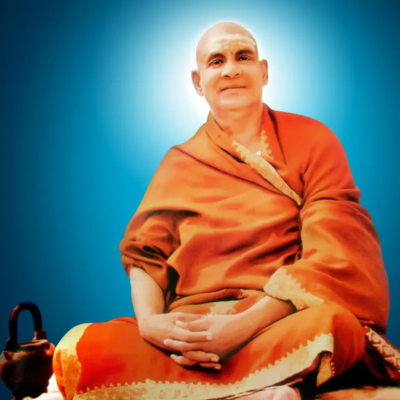
Swami Sivananda, THE Glory of Saints - The Self Realized Masters of Bharat - The Jivanmuktas

Divine Life

Divine Life Divine Life movement is a plan of life and a goal that is common and acceptable to all upon earth, who wish to rise above sorrow and obtain lasting Bliss. More than to strive to reach heaven after this life, the followers of the Divine Life try to make conditions of Heaven prevail upon earth… The basis of this movement is adherence to the triple ideals of truth, non-violence and purity—the common fundamental tenets of all the religions throughout the world. —Swami Sivananda We have been trying to know about Gurudev’s life and his teachings, what he taught us. One of the very, very important, most significant insight that Holy Master Swami Sivanandaji brought into our life and into our understanding is the truth that the spiritual striving, the Yoga-Sadhana cannot be diverted from daily living. You cannot treat them as two things apart having no interconnection. They cannot be treated as watertight compartments. It is impossible that what is going on here has no relevance there. Because, whatever striving you make, whatever Yoga, whatever prayer, whatever meditation or worship you make is within the framework of your life you are living. You are engaged in your spiritual Sadhana within the framework of that life itself, it is the scope of your Sadhana. Your daily life is the receptacle or the ground on which your Sadhana is to rest. So these two are inextricably and inseparably bound up together and are closely interconnected; whatever you are doing in living your daily life has necessarily its effect on your inner life, on your Sadhana life. Also, whatever Sadhana you are doing in the inwardness of your own spiritual subjectivity has its impact on your daily living. If the inner spiritual life you are living within the spiritual interior of your own subjectivity, does not have a corresponding effect on your outer, normal, day-to-day living, then you better sit up, and take a second look at yourself. There is something fundamentally wrong. Something has been wrong somewhere. The Guru will not be able to tell you what. God may try to make you aware of it in direct and indirect ways, but he does not come and correct you. Therefore, it is up to you to take a look at yourself, with very great seriousness, earnestness, sincerity, impartiality and total honesty, and find out what is wrong. If I am entering into that vast silence, that vast Peace in my meditation why do I not have the same peace when I come out of meditation and relate myself to the life around me? What has gone wrong? Why do I not project that Peace outside? I am talking about only one quality of the great Reality. It implies various qualities, fundamental among them are Purity, Truth, Compassion, Sat-Chit-Ananda, Joy, Cheerfulness and Auspiciousness. That is an expanded blessed state of the mind when you are content to be alone, you do not require anything to be added onto you, you are full. When you are alone, company of your own self is more than enough for yourself. You have no desire, no inclination to come out of yourself and to get into some company or relationship. Our scriptures call it Swatmarama Avastha or the state of abiding and rejoicing in the Self. This is your permanent ground. This is your continuous, unbroken normal state. Let this grow and you will overcome all your problems. You cannot burn an incense stick and yet not have the room filled with its fragrance. If no fragrance is there, there must be something wrong with the incense stick. It is not a genuine one. Right from the ancient times down to the medieval age, the spiritual ministers, the great devotees and the mystics have given their Experiences and teachings in songs. In this great land, there have been innumerable such devotees and mystics. All of them have reiterated the same truth and spiritual values. If you have a genuine, authentic spiritual life, if you are a real Sadhaka, a devotee of the lord, your interior life must have its inevitable influence and impact on every thought, word and action in the living of your day-by-day life. And that is the test for you. If there is a dichotomy between your outer life and inner life something is wrong. Find out its reason. Reflect upon it: “If my interior life is genuine and honest, authentic and real, then why is the link, the relationship not there? I am really a wonderful child of God. I am with God inside. But the moment I come in contact with God’s other children, I become something else, something different. So either there is something wrong with my interior spirituality or with my external normal dealings with God’s world and God’s creatures. Why the two behaviours are not connected? Why there is a sort of a break?” Holy Master Gurudev Swami Sivanandaji regarded the living of your daily life as important, if not more important than the practice of your spiritual Sadhana. He gave, not without any reason, a very significantly true message of ‘Divine Life’. His institution is The Divine Life Society, itsmagazine is The Divine Life and he gave the name Divine Life to his message. He did not call it this Yoga or that Yoga or transcendental meditation or any other name. This name that he gave has very much relevance, very much connection and relationship with your life. Gurudev regarded the living of your life equally important as the practice of your spiritual Sadhana, your Yoga, Vedanta and meditation. Perhaps he regarded the former more important than your spiritual life. Because if your life, your daily living is proper, then alone your Sadhana will proceed unhampered and be progressive and it will yield fruits, and it will go on yielding fruits. You don’t have to wait till it culminates in spiritual Realisation. It would go on yielding fruits right now. It would go on giving flowers and yielding fruits step by


Divine Life Read Post »

images 2026 02 18T001829.837
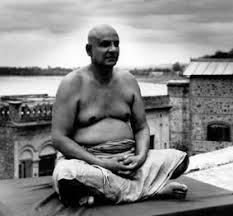
Swami Sivananda, THE Glory of Saints - The Self Realized Masters of Bharat - The Jivanmuktas

Dissemination of Knowledge

Dissemination of Knowledg The habit of giving was ingrained in Sivananda. As a boy at Pattamadai, he shared with other children the sweets his mother gave him. At school and college, he went to help his classmates with their lessons. After he left the medical institute, he ran the Ambrosia, to earn no doubt, but equally to share his considerable knowledge of health problems with an ignorant public. Later, in Malaya, he put to maximum use his medical knowledge by treating the sick, by contributing useful articles to periodicals, and by training the ward boys in his hospital for better jobs elsewhere. When he gained wealth and influence, he utilised both for the benefit of people in distress, who needed money, a job, a place to stay. This trait, this desire to share what he had with others, intensified after he became a Sannyasin. Around him sprang the Satya Sevashram Dispensary. Sivananda used his past savings to buy medicines for the sick Sadhus and pilgrims. When the Swargashram Kshettar gave him curd and Ghee for his consumption, he distributed them among convalescent Mahatmas in Lakshmanjhula. When the Yatris who came to have his Darshan made him offerings of sweets and fruits, he once again redistributed them. He gave his only blanket to a needy pilgrim, himself shivering in the cold. When Sivananda advanced in his spiritual practices, began meditating for hours on end, underwent various experiences, tapped the mine of spiritual wisdom at greater and ever greater depths, he put down those experiences on paper and grew eager to share the new-found knowledge with others. Thus were born his early spiritual tracts. Pilgrims who met Swamiji in Swargashram began to correspond with him when they returned home. Others who read his tracts began to write to him. Sivananda replied those letters and gave spiritual advice. This Jnana Dan or gift of knowledge possessed a characteristic which other gifts failed to have. Sivananda reasoned it thus. “Give food to the hungry” he told himself, “After a while, they will again be hungry. Give clothes to the naked; after a while, they will again be so. Give money to the needy; and when they have spent it, they will again be in want. But give knowledge to all; and you would have given them the wherewithal to take care of themselves”. His face brightened. The gift of knowledge, indeed, was the greatest gift. And what could be greater than spiritual knowledge? Sivananda began to share the wealth of his spiritual experience with others through conversation, lectures, letters, leaflets and articles in periodicals. In this regard, Swamiji utilised the printing press more than the platform. What was heard might be forgotten in a day, but the recorded knowledge would be of lasting benefit. While at Swargashram, Sivananda gave impetus to some Meerut publishers to start the magazines Sudarshan, Sankirtan and Swa-dharma, himself contributing articles to them. He began to send articles also to the Kalyan and the Kalyana Kalpataru of the Gita Press, Gorakhpur and to a long list of smaller journals. If an editor asked for one article, Sivananda sent four or five. He would say: “Even if they are not published, at least some of the editorial staff in charge of selection will go through them. I am satisfied even if one person reads the articles. If the editors like, they may publish one among the five or six. Even then, much good can be done to the public”. Among the magazines to which Swamiji contributed, there were some which carried much undesirable reading matter. Critics remarked: “Why should Sivananda send articles to magazines containing advertisement on sex matters? This is not good”. Swamiji replied: “I will continue to send articles to such papers first. The minds of those who go through sex matters will be purified by going through spiritual articles. Spiritual lessons and sexual advertisements will occupy different pans of the same scale and the reader will one day find that spiritual lessons weigh much heavier than the other pan. He will become spiritually minded. The readers will then preserve the pages on spiritual lessons for repeated study. I try to change the mentality of atheists and agnostics. Others are already religious minded. I need not struggle hard to change them”. Subsequent events verified the correctness of Sivananda’s standpoint. There was a magazine from Madras, the My Magazine of India, which had a large circulation not only in India, but also in Ceylon, Malaya, Burma and other countries. A reason for its popularity was the fact that with each issue the magazine carried many pages of romantic writing and many more pages of sex advertisement. Now, besides other journals, Sivananda chose this My Magazine too for contributing his articles. And when from 1931 onwards his powerful spiritual lessons began to appear regularly in its pages, not one or two or a dozen or a hundred, but literally thousands turned into avid readers of Swamiji’s articles and became his students and devotees. The persons who thus benefited by Swamiji’s writings were fired by an unmistakable spiritual enthusiasm, and in that mood, they wrote to Swamiji. They told Sivananda their joys and sorrows, placed before him their problems and perplexities, and sought his help. And help came with lightning speed. To a devotee who wrote a long letter detailing the miserable condition he was in, Sivananda sent an immediate reply asking him not to be desperate and assuring him that every moment he was changing and becoming a new man. And Swamiji ended the letter with these words: “Come and stay with me. I will help you, serve you and make you a dynamic Yogi”. “To the end of my life I shall remember this invitation of Sivananda” said the grateful devotee at a later date, “It was so bold, so unconventional and so very generous”. Sivananda’s letters were simple, but they appealed to the sense of inner certitude, and not to the surface rambling of the intellect. The first contact with Sivananda was, to many, like a shower of cool rain on a bit of

Dissemination of Knowledge Read Post »


