Hari Om

Menu

The Divnity in Religions

rebirth 1480578303
Swami Sivananda, The Divnity in Religions

A Call To Rebirth

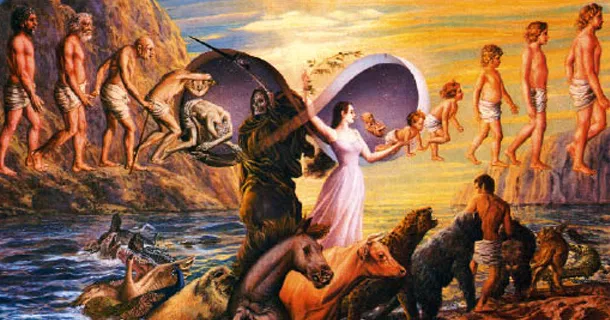
A Call To Rebirth By Sri Swami Chidananda When Nicodemus came to Jesus Christ secretly one night He said: “Except a man be born again, he cannot see the Kingdom of God.” Nicodemus asked: “How can a man be born when he is old? Can he enter a second time into his mother’s womb and be born?” The great teacher answered; Truly, I say to you, unless one is born of water and the Spirit, he cannot enter the Kingdom of God.” Water is a universal cleansing and purifying agent. So it means getting rid of mala (impurity) and having chitta shuddi (purity of mind). You have to emerge as purified being. That is also the symbol behind baptism – a cleansing of and getting rid of all sin and emerging sinless, spotless, pure. Fire is also a universal purifying agent. Our fire ceremony also symbolises thorough burning away of all dross – of all that is impure, of all that is contrary to Divinity – and emerge as pure Spirit. This is why it is a symbol of the same rebirth Jesus referred to. It is rebirth from passion to purity; and then from material consciousness into a state of spiritual consciousness to emerge as a new being, aware of oneself as connected with the Supreme Universal Soul, as a spiritual being beyond time and space, without birth and death, name and form, ever pure, ever free, ever full, ever Divine. It is a rebirth of your very identity – a dying to the old self and being born into a new identity where you know of yourself only as related to the eternal Being. It is rebirth into the Spirit, plunging once again into Satchidananda. When you wake up from deep sleep, you wake up into a new reality. Waking up should constitute a rebirth into divine life – a rebirth into total truthfulness. For a spiritual aspirant, there should be a daily rebirth – a leaving behind of all that is dross, gross, undivine – and emerging into a new state of shining purity, spirituality and total divinity. Again and again there should be a rebirth until you become like the pure Cosmic Being, partaking of His total purity, partaking of His glorious Divine nature. Each daybreak should constitute a call to rebirth. This is the invariable condition for the realisation of Reality. It is a call to each one of you to truthfulness, absolute purity in conduct and character, to a continuous compassion and a reluctance to hurt or harm anything created by God. May we be reborn again and again! May you shine with Divinity! God bless you!

A Call To Rebirth Read Post »

the mythic origins of christianity true or false
Swami Sivananda, The Divnity in Religions

Christianity

Christianity By Sri Swami Sivananda Christianity derives its name from Christ. Christianity speaks of a personal God. There is not much deep philosophy or Yoga Sadhana in Christianity. There is reason for this. Jesus had to deal with the illiterate fishermen of Galilee. He gave them only moral precepts and showed them the way of righteous living. Christianity is based chiefly on Judaism and partly on Buddhism. The doctrines of the Christian religion are all taken from Judaism. Jesus never professed to abolish Judaism and to set up a new religion of his own. He says, “Do not think that I came to destroy the Law or the Prophets. I did not come to destroy but to fulfill. For verily I say unto you: Till heaven and earth pass, one jot or one title shall in no means pass from the law, till all is fulfilled. Whosoever , therefore, shall break one of these least commandments and shall teach men so, he shall be called the least in the Kingdom of Heaven; but whosoever shall do and teach them, the same shall be called great in the Kingdom of Heaven.” (Matthew 5:17-19) Christian faith sprung from the wisdom of India overspread the old trunk of Judaism. Buddhism prevailed in Palestine when Christ was born. Christ himself came in contact with it through John the Baptist. There is a striking resemblance between Buddhism and Christianity in their precepts, in their forms and ceremonies, in the architectural style of their temples, and even in the account of the lives of their founders. The dogmas or metaphysical doctrines of Christianity are the same as those of Judaism but its moral precepts are much higher and nobler than those of the Jewish prophets. Christianity owes to Buddhism that higher morality which distinguishes it from Judaism. The moral precepts and teachings of Buddhism have much in common with those of Christianity. Christ himself taught no dogmas. The teaching of Jesus which is chiefly ethical is embodied in the Sermon on the Mount, the Lord’s Prayer and certain parables known as the parables of the Good Samaritan, the Prodigal Son, and the Sheep and the Goats. Lord Jesus Lord Jesus was born in Bethlehem of Judea in the days of Herod the King. He was the son of a carpenter of Nazareth, a large village in Galilee, the northern Province of Palestine. Jesus was a Palestine Jew of the first century. He lived with Joseph and Mary and a large family of brothers or half-brothers in the house of the carpenter of Nazareth. He was baptized by John the Baptist on the banks of the river Jordan. Now he saw a vision of God’s spirit descending like a dove on him. He heard a voice say unto him: “Thou art my beloved son. I am well pleased with thee.” John the Baptist was the Preceptor of Jesus. Jesus was an incarnation of the Hebrew God Jehovah. Jesus is the Greek transliteration of an Aramic name pronounced Yeshua, according to Hebrew Scholars. It was altered into Jesus in English. He was also called Messiah, the anointed one, or the Saviour of the World. Between his 18th and 32nd years of age, Jesus spent his life in India and lived like a Hindu or Buddhist monk. He had burning Vairagya (dispassion) and spirit of renunciation. In India he assimilated Hindu ideals and principles. (Jesus in India) The Cross Lord Jesus totally surrendered himself at the lotus feet of the Lord. He had intense faith in Him. It was the faith that sustained him throughout his life. The Cross of Jesus will remain forever the supreme example of love and suffering without returning evil for evil. The Cross symbolizes a great principle of life. In the Christian theology, the Cross has a wonderful halo. It is not a common cross of wood. The Cross of Jesus is a classic instance of love resisting evil and overcoming it. When Lord Jesus was put to the Cross, he said: “My Lord! They do not know what they are doing. Please forgive them.” What a large heart and wonderful power of endurance Jesus had! He who has control over the flesh, who has crucified the flesh, who has subdued the life-passions, who has self-control, who has mortified the lower nature, can bear the Cross. Jesus’s Qualities Jesus was holy. He was God-man, the incarnation of God. Jesus called himself the Son of God. In Jesus we see perfect holiness, goodness, kindness, mercy, gentleness and justice. He said: “I am the Truth, the Way and the Life.” He is embodiment of all that is best, sublimest and most beautiful. He is the most perfect type and ideal of humanity. He is the embodiment of all his teachings. He is a philosopher, prophet, teacher, reformer. He always practiced what he taught. Jesus was truthful. His thoughts were very pure. There was no hypocrisy or deception in his thoughts. He risked his own life in uttering the truth. The spirit of Jesus is the spirit of Truth. He is called the Sun of Righteousness. He went about doing good. The words of Jesus still elevate people. They still live as a fountain of inspiration. Christ took the sins of humanity on himself, suffered for their sins and made them free. This is the theory of Atonement of Christ. His Philosophy and Teachings Nearly two thousand years have passed since Lord Jesus, the Prophet of Palestine taught the way, the truth and the life to mankind. The words of Jesus were not collected till some generations after they were uttered. Christianity was essentially a radiant way of life, a way of happy and victorious living in this world. There is no record of the life of Jesus until he was fully grown up. He astonished people by his insight when discussing religion with the religious leaders of his day. For three years he explained his claim as the “Only Son of God” and taught people

Christianity Read Post »

What is Rabbinic Judaism JR 02
Swami Sivananda, The Divnity in Religions

Judaism

Judaism By SRI SWAMI SIVANANDA Judaism constitutes the religious doctrines and rites of the Jews as enjoined in the laws of Moses. Judaism is based on Zoroastrianism. It has given rise to two great religions of the world, i.e., Christianity and Islam. The Muslims admit that their religion is founded on Judaism. The Koran also is very clear on this point. Zoroastrian conception of Ahura Mazda as the Supreme Being is perfectly identical with the idea of Elohim (God) Jehovah which we find in the books of Old Testament. Abraham, the Prophet, was the first man who has revealed God to all humanity. He is the Founder of the Hebrew race. Hebrew is one of the descendants of Jacob, an Isralite, a Jew. Isaac had two sons, viz., Essan and Jacob and their descendants are the Christians and Jews respectively. Abraham had two sons (one from Sarah and one from Hagar, the Egyptian woman), viz., Isaac and Ismael who are the fathers of Jews and Muslims respectively. OLD AND NEW TESTAMENT The Old Testament contains the sacred writings of the ambient Jewish race. The newer portion is known as the New Testament which was begun after the coming of Jesus Christ, more than nineteen hundred years ago. Long before Jesus came to this world, the Jews wrote and studied their sacred books. These were written in their Hebrew tongue. The old Hebrew books were translated into Greek about two hundred years before the Christian era. The books of the Jews were arranged into three main divisions. The first was called “The Law”. It dealt with the laws of the world. These books are now the first part of the Bible, viz., Genesis, Exodus, Leviticus, Numbers, and Deuteronomy. The second class was that of the Prophets. It included Joshua, Isaiah, and Jeremiah. Psalms and Proverbs constituted third class. The Old Testament contains 39 books. The New Testament contains 27 books. The first four books are Gospels which describe the life of Christ on this earth. The next book tells us of the Acts of the Apostles, particularly of the important Apostle Paul. The twenty-one shorter books give out the ideas underlying the Christian faith of the early Christians. The last book is the book of Revelations. It gives a description of the series of visions, viz., the lamb of God and the heavenly city. The author is John, the favourite Apostle of Jesus. All these books were written in Greek, which was the language of educated men at the beginning of the Christian era. JEWISH SECTS The Law was set forth as a complete system by which men should live. By the Law was understood in a special sense the Pentateuch. Every word of Pentateuch was considered as inspired and an immediate revelation of Moses. (a) There was a need for explanation of the Law. The Scribes were the interpreters of the Law. They explained and applied the rules of the Torah to special cases. The Scribes were recognised as the legislators and the judges of Israel. Their decisions had the force of Law. The first Scribes were priests. (b) The fraternity of the Pharisees were the popular or nationalist party. They believed in the doctrine of immortality, resurrection of the body, the existence of angels and spirits. As religious teachers, they upheld the authority of oral tradition as of equal validity with the written Law. They were inclined to fatalism in the question of the freedom of the will. The Zealots represented one extreme side of the Pharisaic movement. (c) Sadducus were aristocratic priests. They held to the letter of the Mosaic revelation. They denied the authority of the oral tradition as interpreted by the Pharisees. They taught complete freedom of the will in moral action. They had no belief in angels or spirits. They did not accept the doctrine of immortality as a deduction from the Pentateuch. (d) The Essenes followed celibacy, isolation, silence, ceremonial ablutions, and abstinence from animal food. They practised asceticism. They did worship of the sun and the angels. They believed in the dualistic theory of good and evil and the symbolism of light. They abstained from sacrifices and temple worship. TORAH The Prophets of Israel were the great religious leaders who brought great progress in Behraic thought. Rabbis also were authoritative teachers. They worked very hard in the field of Torah. They produced the massive Talmudic literature. They were the representatives of Pharisiasm. Talmud is indispensable, for a knowledge of Hebraic thought. The Torah was given in ten words. Each word became a voice. Every voice was divided into 70 voices all of which shone and glittered before the eyes of all Israel. Torah denotes the divine revelation to Israel on Mount Senai as embodied in the five Books of Moses. The Torah (Law) as given to Moses consists of 613 commandments which are the essence of the divine and terrestrial mysteries. Torah indicates a way of life rather than a form of belief. Moses received the Torah (Law, direction, instruction) on Senai and handed it down to Joshua, Joshua to the elders, the elders to the prophets and the prophets handed it down to the men of the Great Synagogue, a synod of zealous men created by Ezra, the Scribe in the fifth century B.C. The function of the synagogue was to study and teach Torah. The Synagogue was a church, a school, and a court of justice. It was a house of instruction. The unity of God, the Incorporeality of God, and the Holiness of God are the main features of Judaism. God gave His ten commandments to Moses on the Mount Senai. The Lord called unto him out of the mountain and said: “Thus shall thou say to the house of Jacob and tell the children of Israel”. THE TEN COMMANDMENTS I am the Lord Thy God, which have brought thee out of the land of Egypt, out of the house of bondage. Thou shalt have no other gods before

Judaism Read Post »

harmony
The Divnity in Religions

Jainism

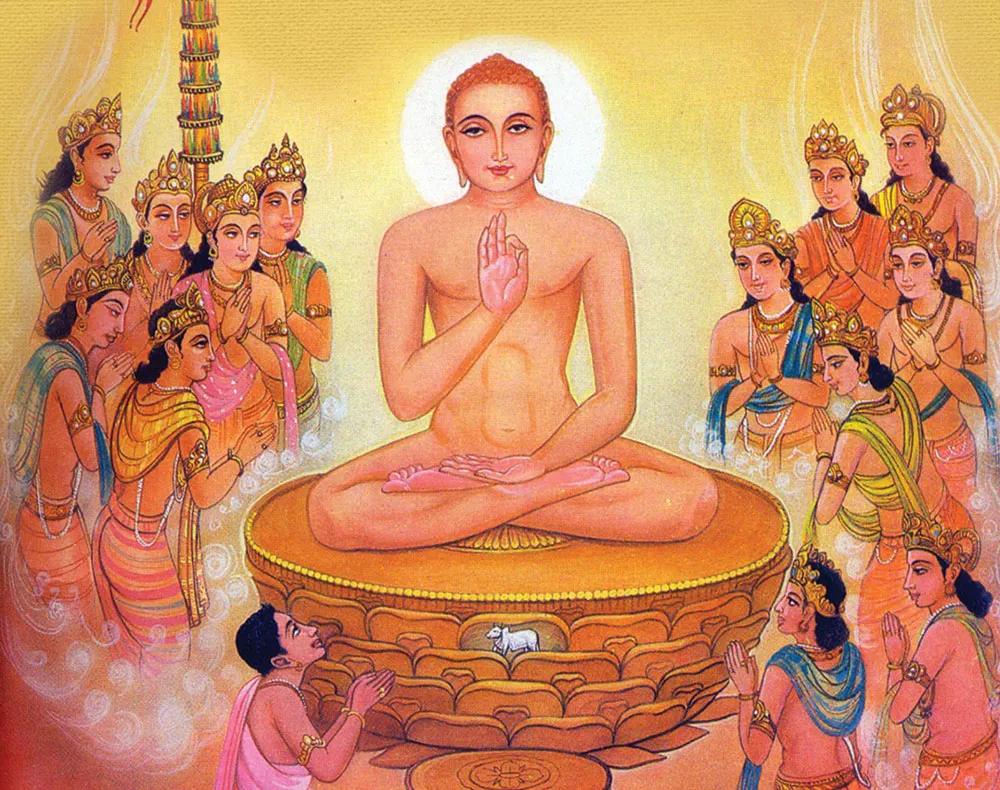
Jainism By SRI SWAMI SIVANANDA “Jain” or more properly speaking “Jaina” means a follower of Jina, which is applied to those persons who have conquered the lower nature, passion, hatred, etc. The word ‘Jain’ comes from the word ‘Jina’ which means a conqueror. ‘Jina’ comes from the root ‘Ji’–‘to conquer’. It means conquering the passions. It does not mean conquering nations. The passions are considered as enemies of the soul. They taint the natural qualities of the soul, obscure right belief, cause false knowledge and wrong conduct. Lust, anger, pride and greed are considered as the major passions. The chief point in the Jaina creed is the reverence paid to holy men, who have raised themselves to divine perfection through long discipline. The Jina or the ‘conquering saint’, who has conquered all worldly desires is with Jains what the Buddha or the perfectly enlightened saint is with Buddhas. He is also called Jineswara (chief of the Jinas), Arhat, “the venerable”, Tirthankara or the saint who has made the passage of the world, Sarvajna (omniscient), Bhagavat (holy one). ‘Tirtha’ literally means a ford, a means of crossing over. It metaphorically denotes a spiritual guide or philosophy which enables one to cross over the ocean of recurring births in this world. ‘Kara’ means ‘one who makes’. The word Tirthankara means a ‘Jain Holy Teacher’. According to the belief of the Jains, only the omniscient are able to give a right code of rules of life. These teachers or Tirthankaras are not creators or rulers of the world. They are pure divine souls, who have attained perfection. They never again take human birth. Mahavira is not the founder of Jainism. He revived the Jain doctrines. He was more a reformer than the founder of the faith. He was the first active propagator. He was the twenty-fourth Tirthankara. He is claimed to have been omniscient. ‘Maha’ means ‘great’ and ‘Vira’ means ‘a hero’. Parasvanath was the twenty-third. The first of these twenty-four was named Rishabha Dev. The idols which represent the Tirthankaras are like that of Buddha in a meditative posture, Jainism is a representative of Buddhistic ideas. It has much in common with Buddhism. It is a near relative of Buddhism, if not its actual descendant. The Jain theory is based on reason. It is based on right faith, right knowledge, right conduct, tempered with mercy. Jainism is not a theistic system in the sense of the belief in the existence of a God as the Creator and the Ruler of the world. The highest being in the Jain philosophy is a person and not a Being without attributes like the Brahman of the Vedanta. JAIN PHILOSOPHY The Jain philosophy bases its doctrine on the absolute necessity of conquering the lower nature for the realisation of Truth. The Jains do not accept the authority of the Vedas. Jainism divides the whole universe into two main divisions viz., sentient beings (Chetana, also called Jiva or Soul) and non-sentient things (Jada, also called Ajiva or non-soul). Soul is that element which thinks, knows and feels. It is the divine element in the living being. The true nature of the soul is right knowledge, right faith and right conduct. The soul is undergoing evolution and involution, so long as it is subject to transmigration. Whatever is not soul is non-soul (Ajiva). The combination of the Jiva and the Ajiva causes all diversities in this universe. Their interaction or interplay is the cause of the world-process or evolution. When the soul is stripped of all its Ajiva bondage, it becomes pure and attains its ultimate Mukti. GOD Jainism does not regard God as a Creator. God in the sense of an extra cosmic personal Creator has no place in the Jain philosophy. But there is a subtle essence underlying all substances, conscious and unconscious, which becomes the cause of all modifications. This is termed God. The Jain idea of Godhood is the perfected Soul (Siddha), the liberated soul (Mukta). The Jains worship these liberated souls (Tirthankaras) who have destroyed all Karmas and attained salvation, as their God. They accept those enlightened souls only, who have abandoned all worldly connections, who lead the life of true Sadhus, who have controlled all selfish desires, as their spiritual teachers. They accept that only as the true religion, which is promulgated by them. The Jain Tirthankara is free from faults. He is true God. He is the knower of all things and the revealer of Dharma. He is free from the 18 kinds of blemishes viz., hunger, thirst, senility, disease, birth, death, fear, pride, attachment, aversion, infatuation, worry, conceit, hatred, uneasiness, sweat, sleep and surprise. The Jain philosophy teaches that each soul is a separate individuality, uncreated and eternal in existence. It has lived from time immemorial in some embodied state. It evolves from the lower to the higher condition through the Law of Karma, or cause and effect. It takes fresh bodies after death so long as the Karmas or forces generated in previous lives have not been fully worked out. Eventually it unfolds its absolute purity by breaking the bonds of Karma and attains perfection, Nirvana or Mukti. The individuality is not merged into anything. It is not annihilated also. It attains right realisation, right knowledge and right life. The perfected soul is neither masculine, feminine, nor neuter. Every soul is potentially omniscient. Consciousness is the very nature of the soul. Soul is a pure embodiment of knowledge. The soul has infinite potentialities. It has infinite capacity for removing Karma-bondages. WORLD The world is beginningless and endless. There is no extra cosmic creator or ruler of the world. There are six real substances which constitute the world. These six are space, time, matter, souls, Dharmastikaya (fulcrum of motion) and Adharmastikaya (fulcrum of stability, or rest). Space serves as a receptacle for the other substances. It is infinite. Time is real. It is beginningless and endless. Material objects consist of atoms.DOCTRINE OF KARMA AND REINCARNATIONThe only enemy of the

Jainism Read Post »

secular buddhism
Swami Sivananda, The Divnity in Religions

Buddhism

Buddhism By Sri Swami Sivananda ‘Om Namo Tassa Bhagavato Arahato Samma-Sambuddhasa!’ ‘Honour to the Blessed One, the Holy One, All-Wise!’ Buddham saranam gacchami:Dhammam saranam gacchami:Sangham saranam gacchami: To the Buddha for Refuge I go:To the Teaching for Refuge I go:To the Order for Refuge I go: Buddha was born on the border of Nepal about 620 B.C. and died about 543 B.C. at Kusinagara in Oudh. Buddhism was founded by Gautama Sakya Muni, the rebel child of Hinduism. It sprang up directly from Hinduism. Buddha never thought of founding a new religion. He made no new discovery. He was proclaiming only the ancient and pure form of religion which had prevailed among the Hindus. The pure and noble religion of the Vedas and the Upanishads had degenerated into dead forms, unmeaning rites and ceremonies. The Brahmins claimed honour merely by their birth. They neglected the study of the Vedas and the practice of virtue. The Brahmins were treated with undue leniency, and the Sudras (the servant class) with undue severity. In order that flesh-eating might have the sanction religion, animals were slaughtered and sacrificed in Yajnas (ceremony where sacrifice is offered). Such was the state of society at the time when Buddha appeared. His tender and loving heart could not bear the shedding of so much innocent blood in the sacred name religion. Buddha declared that merit, and not birth, determined the position of a man in society. The persecuted Sudras joined him in large numbers and he unconsciously became the founder of a new faith. Buddhism is the religion of earnest, undaunted effort. Buddha demands from you faith in your own Self, in your own latent forces. Without this faith, nothing can be achieved. The first words of Buddha, after his Enlightenment, were: “Wide open are the gates of Immortality. Ye that ears to hear, release your faith.” Buddha, The Apostle of Ahimsa and Love Buddha was the greatest benevolent man or humanitarian which the world has ever produced. He is one without a second. Benevolence and humanitarianism are the key-notes of all religious movements of the world; but, the benevolence and humanitarian spirit and work of Buddha stand unrivalled in the religious history of the world. Buddha abandoned his kingdom and went about begging his bread through the streets of India, and preached for the good of men and animal. He had a heart as wide as the sky or the ocean. He did not want heaven. He did not want money or throne. What an exalted selfless Yogi he was! Many Rishis and prophets have preached the doctrine of love and Ahimsa, but there has never been, in the entire history of the world’s ethical thought, a greater affirmation of the principle of Ahimsa and love than has been done by Buddha. No one has possessed such a tender, kind and merciful heart as Buddha. Hence, he is enshrined even now in the hearts of millions of people. His heart throbbed severely and melted when he saw a little suffering in an ant or a worm or a dog. He gave up his body as food for a hungry ferocious animal in his previous birth. Several acts of kindness done in several births made him a Buddha in his last birth. The Noble Eightfold Path The gospel of Buddha is simple, and yet wonderfully profound. Buddha analyzed all experiences, and the world process as it appears to all of us, with a scientific frame of mind. He found out that everything is mutable, changing, and impermanent or transitory. There is suffering, disharmony, discord and discontent everywhere in life, on account of the impermanence or transitoriness of things around. This universal experience of sorrow or Dukka is the starting point in Buddha’s thought. Buddha did not preach pessimism. He was wonderfully optimistic. He emphatically asserts that there is a way out of sorrow, and a heaven of eternal bliss, within the reach of every man. The four cardinal truths or principles which Buddha preached are: that there is suffering in the world; that the cause of suffering is Tanha or craving; that the extinction of craving leads to cessation of suffering; and that this extinction of craving can be achieved by the Noble Eightfold Path. Buddha lays great emphasis on the way of life. He avoids the two extremes of self-indulgence and self- mortification, and prescribes the Middle Way. He said: “There is a Middle Way, O recluses, avoiding these two extremes, discovered by the Tathagata (epithet for the Buddha)-a path which opens the eyes and bestows understanding, which leads to peace of mind, to the higher wisdom, to full enlightenment, to Nirvana.” What is this Middle Way? It is the Noble Eightfold Path which constitute, so to say, the entire ethical code of Buddha. The Noble Eightfold Path consists of the practice of: Right belief or right understanding or right views; Right aspiration; Right speech; Right conduct or right action; Right living or right means of livelihood; Right exertion; Right mindfulness or attentiveness; and Right concentration or meditation. These are the eight steps in the Way of Life presented by Buddha which annihilates suffering of all kinds and leads to the attainment of Nirvana or emancipation. The Noble Eightfold Path destroys lust, anger, greed, malice and other evils, and purifies the heart. Then dawns Bodhi or Enlightenment which bestows perfect everlasting peace, eternal bliss and immortality. The word ‘Nirvana’ literally means ‘going out’. It signifies a spiritual experience full of peace and bliss, which is characterized by the ‘going out’ from the heart of the three fires of lust, ill-will and dullness. Nirvana is not utter annihilation. Nirvana is total extinction of all that is base in us. Buddha insisted upon the inexorable Law of Cause and Effect. He said to the people that they lived in a world in which causes always produce their natural and necessary effects and that the consequences of their conduct would, therefore, follow them wherever they went. He said that virtue has its own reward and vice its own punishment

Buddhism Read Post »

Om
Swami Sivananda, The Divnity in Religions

Hinduism

Hinduism Sri Swami Sivananda Hinduism is the religion of the Hindus. It is the oldest of all living religions. Hinduism is not a man-made religion. It was not founded by any single person. It is not based on a set of dogmas preached by a particular set of teachers. It was not started as a system, like Islam or Christianity. It is the product of the seers of the Vedas. It was developed from age to age by the teachings of Avataras, Rishis, Vedas, the Upanishads, the Gita and the Itihasas. It will exist as long as the world lasts. There is a peculiar, mysterious spiritual force that is ingrained in the heart of every Hindu. Hinduism is also known by the names Sanatana Dharma and Vaidika Dharma. Sanatana Dharma means eternal religion, the Ancient Law. Vaidika Dharma means the religion of the Vedas. The Vedas are the foundational scriptures of Hinduism. A Religion of Freedom Hinduism allows absolute freedom to the rational mind of man. Hinduism never demands any undue restraint upon the freedom of human reason, the freedom of thought, feeling and will of man. Hinduism is a religion of freedom. It allows the widest freedom in matters of faith and worship. It allows absolute freedom to the human reason and heart with regard to questions such as the nature of God, soul, creation, form of worship, and goal of life. It does not force anybody to accept particular dogmas or forms of worship. It allows everybody to reflect, investigate, enquire and cogitate. Hence, all sorts of religious faiths, various forms of worship or Sadhana, diverse kinds of rituals and customs, have found their honourable place side by side within Hinduism, and are cultured and developed in harmonious relationship with one another. Hinduism, unlike other religions, does not dogmatically assert that the final emancipation is possible only through its means and not through any other. It is only a means to an end, and all means which will ultimately lead to the end are equally approved. The religious hospitality of Hinduism is proverbial. Hinduism is extremely catholic and liberal. This is the fundamental feature of Hinduism. Hinduism pays respects to all religions. It does not revile any other religions. It accepts and honours truth, wherever it may come from and whatever garb it may put on. Hindu Mythology In every religion, there are three parts, viz., philosophy, mythology and ritual. Philosophy is the essence of religion. It sets forth its basic principles or fundamental doctrines or tenets, the goal, and the means of attaining it. Mythology explains and illustrates philosophy by means of legendary lives of great men or of supernatural beings. Ritual gives a still more concrete form of philosophy so that everyone may understand it. Ritual consists of forms and ceremonies. Mythology is a part of every religion. Mythology is concretized philosophy. Mythology is the science which investigates myths or fables or legends founded on remote events, especially those made in the early period of a people’s existence. Mythology inspires the readers through precepts and laudable examples, and goads them to attain perfection or the highest ideal. The abstract teachings and subtle ideas are made highly interesting through the garb of stories, parables, legends, allegories and narratives. The sublime and abstract philosophical ideas and ideals of Hinduism are taken straight to the heart of the masses through impressive stories. Mythology is slightly mixed up with a little history. It is difficult to make a fine distinction between history and mythology. There are great truths behind the ancient mythology of Hinduism. You cannot ignore a thing simply because it has a garb of mythology. Do not argue. Keep your intellect at a reasonable distance when you study mythology. Intellect is a hindrance. It will delude you. Give up arrogance, vanity. Cultivate love for imagery. Sit like a child and open your heart freely. You will comprehend the great truths revealed by mythology. You will penetrate into the hearts of the Rishis and sages who wrote the mythology. You will really enjoy mythology now. You study geography through maps. There is no real country or town in a map, but it helps you to know a great deal about the different countries. Similar is the case with myths. You can grasp the subtle, philosophical truths through myths only. The object of myth and legend is merely to lure the mind to the truths of religion. Emphasis on Practice Hinduism is not a religion of mere theories. It is eminently practical. In no religion will you find such a variety of Yoga practiced, and such sublime unique philosophy expounded. Hinduism provides spiritual food and Yoga Sadhana for all sorts of people to suit their temperaments, capacities, tastes, stages of spiritual development, and conditions of life. It prescribes Yoga Sadhana even for a scavenger or a cobbler to attain God-realization, while doing his ordinary avocation in the world. Hindu Yoga and Vedanta teachers lay great stress on self-restraint, Tapas, renunciation and practical Sadhana, which are best calculated to control the mind and the senses and unfold the Divinity within or attain Self-realization. Religion is the practical aspect of philosophy. Philosophy is the rational aspect of religion. The philosophy of Hinduism is not armchair philosophy. It is not meant for intellectual curiosity and vain discussion. Hindu philosophy is a way of life. The philosopher of Hinduism seriously reflects after hearing the Srutis (Vedas), does Atma-vichara (enquiry into the nature of the Self), constantly meditates, and then attains Self-realization or Atma-sakshatkara. Moksha (liberation from birth and death) is his goal. He attempts to attain Jivanmukti (liberated being) now and here. Law of Karma The Law of Karma is one of the fundamental doctrines of not only Hinduism, but also of Buddhism and Jainism. As a man sows, so shall he reap. This is the law of Karma. Desire produces Karma. You work and exert to acquire the objects of your desire. Karma produces its fruits as pain and pleasure. You will have

Hinduism Read Post »

images 2026 02 21T122429.747
Swami Sivananda, The Divnity in Religions

Yoga and Christianity

Yoga and Christianity By SRI SWAMI CHIDANANDA I shall speak to you at some length upon the subject of ‘Yoga and the Christian Religion’ because most of you are from a Christian background, very pious and very religious. Some are only Christian because they are born Christian, but some are halfway going to the Church once in two months, but all are from a Christian background, may be some Roman Catholic, may be not, may be Protestant, may be Methodist, may be some other. Some of you are Jews. Whatever religion you belong to, when I speak about Yoga and the Christian religion, it could equally apply to Yoga and any other religion. So, what is the connection between Yoga and one’s religion? One takes it for granted that Yoga is of the Hindu religion, and asks: ‘What is the connection between, this Hindu thing and my religion?’ Anyone belonging to another religion must wonder. So, it is worth-knowing how to relate Yoga to religion. Is it like other religions or are there sharp divergences between Yoga and other religions? If these things are not clear, may be some would feel a sense of guilt. ‘O, I am a Christian, am I doing the right by coming and taking to Yoga? Perhaps, I am being a little irreligious in the particular area of my interest in Yoga.’ Thus, a vague sort of uneasiness may be felt. First and foremost, it has to be known that Yoga has arisen from a background or basis of the Hindu religion. It has its origin in India and it is part of the Hindu religion. But it is not Hindu. It is a universal science that has arisen out of the Hindu religious ground-a science that has risen above religion. It is a universal technique. Because in Yoga, as it is given in the Yoga-Darsana of Patanjali, one of the six systems of philosophy, no particular dogma is laid down and no particular God is pointed out for your worship. Yoga doesn’t say that you must worship Rama or Siva or meditate upon Krishna, or you must worship Kaali or Durga, or Hanuman; Yoga has nothing to say upon all these things. Yoga doesn’t say that you must repeat any particular Name of God. Yoga only says that repetition of one of the Divine Names is one of the ways of concentrating the mind. It says repetition of the Divine Name. You may repeat the Divine Name, you may say the prayer of Jesus, you may say Allah, you may say Rama, you may say the name of Siva, or you may say some other Name if you are in some other religion, but it does not specify that Name and also whom to worship. The All-perfect Divine Being, who is ever-free, ever-perfect, free from all the imperfections, ever-free beyond Maya, the Supreme Purusha, means the Supreme Being, Almighty Father in Heaven, Allah, Jehovah, you can call it by any name, it does not matter, the ever-free Being is not bound by Maya, and who is free from affliction, who is of the nature of Bliss-Absolute, Consciousness-Absolute; that is the object of meditation to be attained, that is the goal of Yoga. So, it does not give for you a goal other than the goal of Yoga; it does not give for you a goal other than the goal of your religion. It does not point out a God different from the one pointed by your own religion–Christianity, Islam, etc.–and it does not give a special name of that God so that you will have to change Gods. It does not give any special name to the one God. Emerging from the ground of Hinduism, it goes beyond religion. Yoga is a Religious Science, which means that it goes beyond religion, and assumes a universal characteristic. Secondly, Yoga is a science for Man. It is not a science either for an Easterner or a Westerner, an Oriental or an Occidental. Yoga is for man on earth. It was given to mortal man on this earth of birth, pain and death. It was given to man on earth, no matter what he is or who he is; and it is given to man for all times. It was not given to an ancient man or medieval man or a modern man, or anyone who might come, wanting to go beyond all sorrow, pain and suffering, go beyond bondage and delusion. If he takes to this path, it brings him to the place of supreme experience. So it is the answer to the need of mortal man, on this earth plane. So it is something that is the property, the heritage of humanity–Yoga is the heritage of humanity. It does not interfere with religion. What does Yoga do? Yoga supplies to the life of man and makes up for certain lack brought about by religion failing man or man failing religion. There is a condition created by the failure of religion administering to man’s highest needs, or the failure of man to take advantage of religion or properly utilise his religion which it is, we cannot say. Some say religions have failed. I say, no. Man has failed to follow religion. It is not due to religion that man suffers. It is due to the neglect of religion, the ignoring of religion and its teachings and its wisdom. Mostly, this is the situation. But in some places where religion has become totally institutionalised, it has become a great impersonal structure, and lost living contact with the individuals. Under it, then, it becomes barren of real spirit. It becomes only a pattern for dogma and ritual, and ceremony and belief. You are a Christian; if you say ‘I believe in salvation through the blood of Christ’. Yes, I believe, then you are a Christian. You are a very good Christian; so go your way. Do what you like, drink, smoke, break all the ten commandments, but

Yoga and Christianity Read Post »

Untitled design 1
Swami Sivananda, The Divnity in Religions

What is Religion?

What is Religion? SWAMI KRISHNANANDA New Year is fast approaching and we will be in another year within a couple of hours. Years have come and years have gone; we have celebrated the ushering in of the New Year many a time. But we are no better than what we were many years back. Why so? Religion, which is supposed to help us in this respect, does not seem to be of much avail, because we have not understood what religion is. So let us now ponder over this very important subject, “What is religion?” In a broad way, religion may be regarded as pure commonsense. It is not a compulsion or an imposition that is inflicted upon one by people from outside. It is something which we cannot avoid, due to the very set up of things. We know there are certain things in life which we cannot avoid because of the circumstances under which we are placed. Sometimes people start saying, “What can I do? I cannot avoid it the situation is such”. We are placed under such circumstances sometimes that we have to do something, whether we like it or not, want it or not. Likewise, religion is something which we are obliged to accept as something unavoidable, which we can never entirely turn a deaf ear to, under the conditions in which we exist in this world. As long as we are in this world, there is religion. And we shall be always in some world, which is a name we give to the universal atmosphere in all its planes or levels of expression. Thus, the world is not going to vanish. Religion, then, is going to be eternal, it can never cease to be, if religion can be defined as the duty that we owe to the Universe. The other question that arises as a sort of corollary from this position is, “what is meditation?” The same answer holds good to this question also in essence. If we know what religion is, we will also know what meditation is. Because, meditation is nothing but the contemplation of the fact of religion. So, when religion is known, meditation also is known. The duty that we owe to the Universe is our religion. Can there be, then, many religions in the world? This question also is automatically answered in this small aphoristic answer: “Religion is the duty of man to the Universe”. Can there be many kinds of duty towards the Universe? This query can only be answered by an analogy. There is a family consisting of many members-father, mother, brother, sister, children, and so on. Each member of the family owes a duty towards every other member of the family. Now, does this duty vary from member to member, or not? It varies, and it does not vary. Both answers hold good here. It varies in the sense that the capacity of each person is different from that of the other persons. It does not vary in the sense that the duty of each member of the family works towards the fulfilment of the common purpose of the family. One member may wash the vessels every day. Another member may wash the clothes. A third member may go for shopping. A fourth may receive visitors and guests, and a fifth may cook dinner. Now, these are all different functions which each member of the family performs. But, what is the purpose behind all these different activities or functions? It is to keep the solidarity of the family and to keep the family alive as a ‘Whole’, and not to keep each individual member alive separately, like unconnected bricks in a heap. The family is not merely the members, but it is something more than each individual member, just as a government is not any governmental official, merely. Every official is a part of the government. Yet no single official can be said to be the government, as such. The government is invisible to the eyes. You cannot see it anywhere. If you search for the government, you cannot see it. You will only see persons, and yet, all these persons put together do not make the government. Then what is the government? It is the ‘principle’ behind the operations of these people. The ‘principle’ is not seen, only the people are seen. You can see the President, you can see the Prime Minister, you can see the Ministers, and many others. All these people put together, as different individuals, also, do not constitute what you mean by government. The officials are the limbs of the organism or the body called the government. In a similar manner, we may conceive and understand religion. So is also any kind of organisational set up, a Society, for instance. An Organisation is not people and buildings. Rather, it is a “Principle” which everything else has to subserve. There is a principle operating behind all the things that you see. That principle is the law, the nation, the cultural cohesion of kindred aspirations. This is government. This is society. This is Organisation. This is family. This is religion’, wherein the principle of organisational living reaches its cosmical climax. There is also a principle operating behind the variegated duties that you owe to the Universe. This principle is to be the object of your meditation. I said, when you know what religion is, then you know what meditation is. Meditation is the contemplation on the foundational principle of religion. Religion is a principle. Please remember this. It is not a formality. It is not a cult or a creed, or an action or an activity of individuals. It is a cementing force in human society, even as the governmental system cements officials as well as the citizens. Hence, going to the temple, offering worship, reading the scripture, doing charity and rolling of beads-all these, while they look like religion,-do not make religion as such, because religion is more a state of

What is Religion? Read Post »

budhathe authentic
Swami Sivananda, The Divnity in Religions

Authentic Religion

Authentic Religion Authentic Religion Offered to the delegates of the 1993 Parliament of World Religions with respectful greetings and loving good wishes – Swami Chidananda Esteemed Friend, Just as the different or various paths of Yoga are but varied approaches to the Divine through one or another facet or aspect of your human nature, even so, the various religious systems that exist and prevail in this world today are ever so many ways of approaching the one Supreme Cosmic Reality, who is transcendental and cannot be encompassed within the confines of the limited experience of our finite senses or our finite inner cognising instrument of mind, intellect, etc. He is known as “Para”, in the Sanskrit language meaning that which transcends, that which goes beyond, that which is beyond. There are many effective, equally valid religions. They are, therefore, to be equally reverenced, equally recognized and equally loved and cherished – not merely tolerated. They speak of religious tolerance. The word tolerance smacks of a sense of condescending to allow something to be, condescending to recognize the authenticity or validity or bonafides of something else from a relative or comparative point of view. It is a term that should be gradually eased out. For it is not so much a question of tolerating another’s point of view, but rather being able to understand that view from the other’s viewpoint. If you are able to look through the eyes of the one with whom you are not able to agree, then you will understand why that person is seeing it in that particular manner. “Ye yathaa mam prapadyante taamstathaiva bhajaamyaham” – In whatsoever way men approach Me, even so do I go to them. (Bhagavad-Gita Chp. 4-11) This is the motive or maxim par excellence for people of all religions to adopt in their approach to the so-called different religions of this world. Religions are apparently different, but they are essentially one. There is a non-difference in religions in that they all exist with one objective to fulfill, with one great process or one great spiritual purpose. And that great purpose is religare – once again to bind yourself back unto the supreme Cosmic Source of your being. You were bound unto the Supreme in the beginning. But there now seems to have been a loosening of that bond, not bondage but a bond, which is a desirable thing, a necessary thing, an indispensable thing. That bond has been loosened, so a connection has been broken, as it were. There is never any loosening of the bond or breaking of the connection between you and that being. Ever you abide in him. It is because you have lost your spiritual awareness that you are regarding yourself as some other being, non-spiritual, material, physical, gross, phenomenal. Due to this lesser consciousness, obscured consciousness, you are not able to experience and feel that essential spiritual connection between you and that supreme source of your being. But, again and again, the scriptures declare that there never has been a separation. It is impossible, for He abides within you as the innermost Self of your being. And you abide in Him. Why ? Because you cannot abide anywhere else. For, He is infinite and thus everywhere present, omnipresent. It is not only that He brought you into existence, but also, there is an essential non-difference between the essence of your being and that Supreme Being. The sages and seers of yore who realized That Being within the deepest depth of their spiritual consciousness were given the supreme inner experience that That Supreme Being is one and non-dual. That Being alone exists. That Being alone is the one, sole, eternal Reality. They realized: “ekameva advitiyam brahma” (Brahman (God) is one only and non-dual), “nehananasati” (There is no diversity here). Therefore, “sarvam khalvidam brahma” (All this is verily Brahman (God)) became a fact. It had to be recognized. It was truth. And because that Supreme Essence or Principle or Being is one and non-dual, then the many that we see must necessarily, in essence, be the outcome of that one Supreme Being. In a home there are so many different items such as bedsheets, pillowcases, table cloths, shirts, towels, handkerchiefs, napkins, etc. But one who sees a little beyond says that they are all cotton only, no matter what shape, form or color they may be. A lady may wear a variety of ornaments such as a necklace, bracelets and rings. We see many things, each one different from the other, but the goldsmith sees only one thing – gold. In a pottery factory you can see innumerable different items of pottery in all shapes and sizes. We see the great variety, but the owner of the factory knows that they all consist of a single element-clay. So, even as various kinds of cloth of different sizes and shapes and colors are constituted of but one material, namely cotton, even as different types of gold ornaments worn on various parts of the body are made only of gold, and even as different kinds of pottery are but one material, clay, even so, the entire universe of innumerable variegated names and forms are, in essence, but one Being in a glorious cosmic manifestation. Therefore, the appearance of the many does not invalidate the non-duality of the one Supreme Principle. IT alone prevails, non-dual, one without a second. All religions have come into existence in global human society, in this phenomenon of man, in order to take man back to the eternal source of his being, and not only take him back, but bind him back, bring about a firm relationship. How ? Either by love of your heart, through devotion, prayer, adoration, glorification; or by the penetrating analysis of the intellect, constantly dwelling upon it, enquiring about it, analyzing it, trying to approach it, to grasp it through understanding it from all various facets; or by concentrating all the scattered rays of your mental powers into one powerful, single unified ray
Authentic Religion Read Post »

venkates
Swami Sivananda, The Divnity in Religions

His Holiness Sri Swami Venkatesananda Saraswati Maharaj

His Holiness Sri Swami Venkatesananda Saraswati Maharaj Swami Venkatesananda with beloved Gurudev on his right. Parthasarathy (as Swami Venkatesananda was called before he entered the holy order of Sannyasa) was born to the pious and noble parents, Sri Srinivasan and Srimati Lakshmi Devi, in a village called Koil Venni in Tanjore District, South India, on 29th December 1921. Many incidents happened in his childhood and boyhood which reveal his inborn divine qualities. The boy’s mind began to turn to devotion and love towards Lord Venkatesa of the famous shrine of Holy Tirupati. When Parthasarathy was a boy of twelve years, he came across books written by Swami Sivananda who was destined to become his spiritual Master and Living God. In course of time Parthasarathy held a responsible position at Delhi as a personal assistant to highly influential Secretary to the Government of India. But the call of the spirit was irresistible. His contact with Swami Sivananda through books had developed into contact through frequent letters. Then it flowed into regular visits to the holy Ananda Kutir, whenever Parthasarathy managed to get leave from his office duties. The personal contact with the Master soon overwhelmed Parthasarathy and he cut off all bonds that bound him to the secular life, renounced a promising career and offered himself as a dedicated Sevak (servant) at the lotus-feet of his Divine Master Swami Sivananda. Coming thus into the spiritual fold of Swami Sivananda at a very young age, Parthasarathy took to the renunciate in the year 1945 when he resigned the excellent position he was holding. He came with the specific intention of placing himself entirely at the service of Gurudev’s Universal Spiritual Mission, with intense devotion, utter dedication and unparalleled spirit of service. He soon made himself indispensable to worshipful Gurudev, especially, in his global spiritual dissemination work. From early 1945 up to the time when he breathed his last, his entire life was whole-souled absorption in the sublime good work of Gurudev Sivananda. Parthasarathy was ordained as a monk on 8th of September, 1947, the sacred Diamond Jubilee of Sri Gurudev. He became Swami Venkatesananda. The Swami was a versatile personality. He placed his great talent in the service of the holy Master. He was one of the pillars of the Divine Life spiritual movement. At a certain period he was the very right hand of worshipful Gurudev. Such was the great confidence reposed on him by worshipful Gurudev, that every morning, when Gurudev stepped out of his little cottage on the banks of the holy Ganga, he would first go directly to Swami Venkatesananda’s room situated right in front and sitting there, he would many a time consult him and seek his opinion on matters concerning Jnana Yagna (dissemination of spiritual knowledge) and publishing activities of the Society and at times on other important matters as well. He was a tower of strength to Sri Gurudev during the latter’s unique “ALL INDIA SPIRITUAL AWAKENING TOUR OF 1950” which had electrified the entire nation and powerfully stirred up the spiritual consciousness of millions of people creating a wave of religious awakening and inspiration throughout the country. Gurudev declared about Swami Venkatesananda: “He is the Crest-Jewel of my Mission. He is the resplendence of my work. Will I see anyone else shine brighter than him! Surely none have I seen so far. He is a tower of strength to me and my Mission.” During the tour he took down notes of every word spoken by Sri Gurudev at each centre and has brought a voluminous work “Sivananda’s Lectures: All India Tour.” He came especially to work vigorously in the correspondence section of the Ashram. One can say that volumes of typewritten material connected with correspondence is to be turned out, even during night hours by this Swami. The entire career of his in the Ashram was devoted to writing, recording of Gurudev’s speeches and editing the day-to-day messages and conversations of Gurudev which he did to the point of perfection and perhaps most of the Sivananda: Day-to-Day that we have these days recorded are the works of Swami Venkatesananda, principally. After tireless service and winklessly working in the Ashram for Sri Gurudev’s glory, his main mission was to bring glory around the aura of Gurudev’s Centre, The Divine Life Society, which task he fulfilled very commendably. He has produce a superb work entitled “Gurudev Sivananda” which is not merely a detailed biography of Swami Sivananda but also an authentic record of the history of the Divine Life Society, – a reference book involving great labour. The Indian devotees in South Africe, headed by Swami Sahajanandaji Maharaj, required a powerful spirit of the Divine Life Society to enthuse them and Swami Venkatesananda was the man chosen by Sri Gurudev for the fulfilment of this Mission there. Thus in 1961 Swami Venkatesananda was deputed to South Africa, where he did a marvellous work. Reports came from there Swami Venkatesananda shook the whole of South Africa and he hoisted the banner of Sri Gurudev’s Mission. After working there for some years, he moved to other countries – Mauritius, Madagascar, and some countries in Europe, – and later on to the East, particularly to Australia. Most of his later days were spent in South Africa only, where again he did vigorous literary work, writing and compiling excellent text books on philosophy, Yoga and scriptures. He produced more than 50 books covering a wide range of subjects pertaining to philosophy, religion, metaphysics, ethics, self-development, spiritual Sadhana (spiritual practice), the different Yoga paths, Gurudev’special teachings, comparative religion, psychology and the different scriptures like the Ramayana, Srimad Bhagavata Purana, Yoga Vasishtha, the Gita, the Devi Mahatmya, etc., the very latest volume being a compilation of the teachings of Lord Buddha, entitled “Buddha Daily Readings.” No other single disciple of worshipful Gurudev has made such an admirable, substantial contribution on such a scale to the great Master’s world-wide spiritual ministry of the present-day mankind. The crowning glory of his contribution was the spade-work he prepared of the “Complete Work
His Holiness Sri Swami Venkatesananda Saraswati Maharaj Read Post »