













Hari Om

Menu

The Divnity in Religions

religion 1
Swami Sivananda, The Divnity in Religions

Shintoism

Shintoism By Sri Swami Sivananda Shinto is an all-pervading indefinable way which is quite universal. Shinto or Kaminomichi or the way of the Kami or the Gods is the name of the religion observed by the Japanese from time immemorial. ‘Kami’ means God or deity, or sometimes soul. Shinto implies spontaneous following of the ‘Way of the Gods’. Shinto is not really an ‘ism’. It is only a teaching. It is not a set of verbal theories or concepts. It is the all-pervading way. It is very difficult to translate ‘Shinto’ into English. ‘Shinto’ means ‘The way of the Gods’ or the ‘God-like way’ or ‘The way from the Gods’. There is no proper equivalent for the term ‘Shinto’ in English. Shinto is an all-pervading, indefinable way which is quite universal. Shinto is divided into two classes, viz., the Sectarian Shinto, which is sub-divided into 13 sects; and the Shinto of the national faith of the Japanese, or the State Shinto Religion. A perfect understanding of Shinto will enable one to have proper understanding of the Japanese nation and their culture. There is neither much grand philosophy nor complicated ritual in Shintoism. Shinto is not a religion adopted by the State. It is a religion of the heart. Shinto is a natural and real spiritual force which pervades the life of the Japanese. Shinto is a creative or formative principle of life. The Shinto principle is the background of Japanese culture, code of ethics, fine arts, family and national structure. Shinto is the chief agent which has rejuvenated, vitalised and reinforced the social and religious life of Japan. The system of Shinto resembles more the system of Hinduism than that of Confucianism or Buddhism. It is a kind of personal religion. It ascribes divine attributes to every being. It is a kind of pantheism. For the Japanese, nation means a harmonious complex of individuals, Kuni-hito. Salvation, for the Japanese, means the Salvation of the whole nation instead of salvation of a few individuals. Shinto Theology According to Shinto theology, Ame-no-mi-naka-nushi is the Absolute Universal Self. This corresponds to Hiranyagarbha or the thread-Soul (Sutratman) of the Hindus. The visible universe (Ken Kai) and the invisible world (Yu Kai) have come into being from Ame-no-mi-naka-nushi through the activities of the three deities of Musubi, Principle of Creation, Completion and the Controlling Bond between the spiritual and the material, the invisible and the visible, the real and the ideal. These contradictory attributes are functional only. The Absolute Universal Self is not affected by these contradictory attributes. It is beyond these attributes. It-corresponds to the Nirguna Brahman (Attributeless Absolute) of Hinduism. The idea of time has come into existence from the attributes. Absolute loyalty to the Sovereign Emperor, who is regarded as a direct descendant and representative of the highest God, respect for ancestors, profound feeling of piety towards the parents and love for children form the fundamental structure of the Great Universal Way. The mirror, the sword and the jewel have a figurative meaning in the course of the development of Shinto. They symbolise wisdom, courage and benevolence or intelligence, will and love in Shinto theology. These three are the holy ensigns of royalty of the Sovereign Emperor. They are supposed to symbolise the dynamic working of the Great Way and so they are found in the forefront of every Shinto shrine, popularly known as Mistu-tomo-e or the three big commas. There are many Gods in Shinto, but the ancestral Sun-God, Anaterasu-omi Kami, stands supreme above them. Susano-o-no-Mikoto is the impetuous divine brother of the Sun-God. He is the God of rainstorm. Tsukiyomi-no-Mikoto is the Moon-God. These three constitute a divine triad. They preside, respectively, over the plane of High Heaven, the vast ocean, and the realm of Night. Shinto Ethics Purity is one of the fundamental virtues of Shinto ethics. There are two significations of purity. One is outer purity or bodily purity and the other inner purity or purity of heart. If a man is endowed with true inner purity of heart, he will surely attain God-realisation or communion with the Divine. Sincerity is also the guiding ethical principle of Shinto. Ten Precepts Of Shinto i) Do not transgress the will of the gods. ii) Do not forget your obligations to ancestors. iii) Do not offend by violating the decrees of the State. iv) Do not forget the profound goodness of the, gods, through which calamity and misfortunes are averted and sickness is healed. v) Do not forget that the world is one great family. vi) Do not forget the limitations of your own person. vii) Do not become angry even though others become angry. viii) Do not be sluggish in your work. ix) Do not bring blame to the teaching. x) Do not be carried away by foreign teachings. Shinto Sayings The heart of the person before you is a mirror. See there your own form. Even the wishes of an ant reach to heaven. Leave the things of this world and come to me daily with pure bodies and pure hearts. A single sincere prayer moves heaven. You will surely realise the divine presence through sincere prayer. Where you have sincerity, there also is virtue. Sincerity is a witness to truth. Sincerity is the mother of knowledge. Sincerity is a single virtue that binds Divinity and man in one. Retribution for good or ill is as sure as the shadow after substance. To do good is to be pure. To commit evil is to be impure. To admit a fault is the beginning of righteousness. The first and surest means to enter into communion with the Divine is sincerity. If you pray to a deity with sincerity, you will surely feel the divine presence. Common Shinto Prayer Our eyes may see some uncleanliness, but let not our mind see things that are not clean. Our ears may hear some uncleanliness, but let not our mind hear things that are not clean. Conclusion Shinto is the ‘Way to God’. ‘Tao’ of

Shintoism Read Post »

cbb05f f8699eca87684aa08d6488abfa55e8f5mv2
Swami Sivananda, The Divnity in Religions

Confucianism

Confucianism By Sri Swami Sivananda Confucius was born in 551 B.C. in the feudal State of Lu, a portion of what is now the province of Shangtung on the north-eastern seaboard of China. The name of Confucius in Chinese is Kung-fu-tse, i.e., the statesman-philosopher Kung. The first European scholars who visited China found that name hard to pronounce. So they turned it into Latin and called him Confucius. There are three religions in China, viz., Confucianism, Taoism and Buddhism. Confucius and Lao-Tze founder of Taoism, were contemporaries. They are sages and philosophers. They are not regarded as Saviours. Lao-Tze was fifty-three years older than Confucius. They met each other. Socrates and Buddha also were the contemporaries of Confucius. Confucianism is not a religion in the customary sense. It has neither priesthood nor any monastic order. It existed in China long before the time of Confucius. In one of his recorded sayings he speaks of himself as a ‘transmitter’ and not a ‘maker’ or ‘originator’. He did not give a new religion to the world or a new ethical code. What he gave to the world was only a powerful restatement of the fundamental principles of human morality or ethics. He issued a new and improved edition of the old one. The moral code he framed was most admirable. It contained grand ethical truths. Some say that Confucianism is no religion in reality, because Confucius is a philosopher, moralist, statesman and educationist, but no religionist. They say that the thoughts and teachings of Confucius are ethical philosophy, political and educational principle, but not religious philosophy. Confucius had a deep study of his country’s literature and history. He had a strong conviction that just and righteous rulers only can protect the State and make the people virtuous. His ideal was to create a race of wise rulers like King Janaka. It was with this view he wandered from State to State in search of a good ruler. Confucius devoted himself to the improvement of Society. He ever thought of the well-being of the Society. He tried his level best to contribute much to the social welfare. ‘The Analects’ or collection of sayings treats mainly of social welfare, human peace and harmony in Society. He strained his every nerve in giving moral training to people. He laid very great emphasis on cultivation of ethical virtues. He tried to remove the discordant or disturbing elements in Society. He had a strong conviction that if the superiors and elders had a blameless character, others would follow them and there would be love and universal peace everywhere. As these social thoughts ever occupied his mind, he had no time to discuss on God and life after death. Moreover, he did not find it necessary also to dwell on these subjects. Books The following four books are intimately concerned with the principles of Confucianism, viz., Ta-Hsueh, the Great Learning or learning for adults; Chung Yung, The Doctrine of the Mean; Lun Yu, the Confucian Analects in twenty books; and Meng Tzu, the Philosophy of Mencius. Ta-Hsueh is a politico-ethical treatise. Chung Yung was written by Kung Chi, a grandson of Confucius. It is a purely philosophical book. It treats of some general principles that concern the nature of mean and right conduct. Lun Yu, the Confucian Analects, contains sayings and conversations between the Teacher and his disciples. Meng Tzu, the philosophy of Mencius, is written by an ardent Confucianist. It deals with various questions raised by his disciples. It gives advice to rulers of feudal states. It treats of psychology, political theory and economics. Sayings What the superior man seeks is in himself; what the small man seeks is in others. The superior man is dignified, but does not wrangle; social, but not a partisan. He does not promote a man simply because of his words, nor does he put good words aside because of the man. Have sufficient self-control even to judge of others in comparison with yourself, and to act towards them as you would wish them to act to you. This is what one may call the ‘doctrine of humanity’, and there is nothing beyond this. The way to become a superior man is to set one’s affections on what is right, to love learning, which is the source of knowledge and virtue, with which nothing else can be compared. When righteousness is pursued with sincerity and a mind free from self-deception, the heart becomes rectified. Up to this stage the individual has been busy only with his own improvement; but the cultivation of the person influences primarily those around him, and ultimately the whole empire. Everyone, therefore, should carefully cultivate his person, having a due regard for others besides himself. Each man must guard his words and watch his conduct. He must fly all that is base and disquieting, and must take benevolence as his dwelling-place, righteousness as his road, propriety as his garment, wisdom as his lamp, and faithfulness as his charm. Dignity, reverence, loyalty and faithfulness make up the qualities of a cultivated man. His dignity separates him from the crowd, being reverent he is beloved; being loyal, he is submitted to; and, being faithful, he is trusted. Teachings Confucius gave a great impetus to education and learning, and the study of rules of right conduct with a view to their practical application. According to his teaching, man’s chief end is to know and make the most of himself as a member of Society. He preached to his disciples and the people the principles of good life and social harmony. His teaching was largely concerned with the problems of good government. He said, “The Ruler himself should be virtuous, just, honest and dutiful. A virtuous ruler is like the Pole-star which, by keeping its place, makes all other stars to evolve round it. As is the Ruler, so will be the subjects.” What was Confucius’ idea of virtue? His word for it was ‘Jen’. The proper understanding of his ethical doctrine

Confucianism Read Post »

GettyImages 902520284 26a45ec5da474facaa4e0c5782b56d0e
Swami Sivananda, The Divnity in Religions

Taoism

Taoism By Sri Swami Sivananda ‘Tao’ is a Chinese word meaning ‘way’, ‘way of Heaven’, ‘Path’ or ‘road’ or ‘method’. It indicates a line or principle of conduct. There is no proper English term for ‘Tao’. It means the ‘Eternal Being’. The Founder of Taoism was Lao-Tze. Lao-Tze was born in 604 B.C. in the village of Chu-Jhren, in Li country, belonging to the Ku province of the State Chu. He was born under the plum tree (in Chinese ‘Li’). He adopted it as his surname. The hair of the head was white when he was born. Hence he was called Lao-Tze (old boy) or philosopher, one who is child-like even when old. He was popularly called Lao-Tze. His name was Er (ear). He was called Tan after his death. ‘Tan’ means ‘long lobe’. He had peculiar long ears. His appellation was ‘Po Yang’ or “count of positive principle”. He was a keeper or recorder of the secret Archives in the Royal court of Chore. He was a State Historian. Tao Lao-Tze says: Tao is one. It was in the beginning. It will remain for ever. It is Impersonal, eternal, immutable, omnipresent, bodiless, immaterial. It cannot be perceived by the senses. It is nameless. It is indescribable. It is the first cause from which all substances take their origin and all phenomena flow. The great Tao is all-pervading. All things depend on it for life. It is the mother of all phenomena, of heaven and earth. It existed before the Personal God. It is the father of God. It is the producer of God. It is the originator of heaven and earth. It is the mother of all things. You will find that there is an aroma of Indian Vedantic philosophy in the teachings of Lao-Tze. Tao is everywhere. It is in the ant. It is in the grass. It is in the earthen-ware vessel. It is in excrement. It is in the highest place but is not high. It is in the, lowest place, but is not low. It is in ancient times, but itself is not ancient. It is in old age but itself is not old. It is everywhere, but appears to be nowhere. Tao is the sanctuary where all things find refuge. It is the good man’s priceless treasure. It is the guardian and saviour of him who is not good. Tao overspreads and sustains all things. The Tao which can be expressed in word is not the Eternal Tao. The name which can be uttered is not its Eternal Name. Whatever is contrary to the Tao soon ends. When the great Tao prevails, the outer doors need not be closed. All will be virtuous. There will be no theft. If Tao perishes, then virtue will perish. If virtue perishes, then charity will perish. If charity perishes, then righteousness will perish. If righteousness perishes, then ceremonies will perish. The man who achieves harmony with Tao enters into close union with external objects. No object has the power to harm or hinder him. Tao does nothing. It has no bodily form. It cannot be seen. It has its root in Itself. From Tao came the mysterious existence of God. It produced heaven and earth. It was before the primordial ether. Tao produces all things and nourishes them. It presides over all. Tao is the fundamental principle of the philosophy and religion of Lao-Tze. The way of the Tao is to act without thinking of acting, to taste without discerning any flavour, to consider what is small as great, and a few as many, and to react to injury by kindness. The Means For Attaining The Tao Purity, humility, contentment, compassion, kindness towards all living creatures, higher knowledge and self-control are the means for attaining the Tao. Concentration and Pranayama (breathing exercises) are helpful in the path of Tao. Sayings Of Lao-Tze Tao Te Ching (canon of Tao and its manifestation) contains the sayings and teachings of Lao-Tze. Lao-Tze himself wrote this book in the sixth century B.C. This title was given by Emperor Ching. He issued an imperial decree that Lao-Tze’s work on Tao should be respected as a canonical book. He who acts, destroys. He who grasps, loses. Therefore, the sage does not act and so does not destroy. He does not grasp and so he does not lose. Without going out of doors, one may know the entire universe; without looking out of the window, one may see the way of heaven. The further one travels, the less one may know. Thus it is that without moving you shall know; without looking you shall see; without doing you shall attain. Sincere words are not fine; fine words are not sincere. If you would contract, you must first expand. If you would weaken, you must first strengthen. If you would overthrow, you must first raise up. If you would take, you must first give. This is called the dawn of intelligence. To the good I would be good. To the not good, I would also be good in order to make them good. He who humbles himself shall be preserved entire. He who bends shall be made straight. He who is empty shall be filled. He who is worn out shall be renewed. He who has little shall succeed. He who has much shall go astray. Some things are increased by being demolished and others are diminished by being increased. Those who know, do not speak; those who speak, do not know. To know when one does not know is best. To think one knows when one does not know is a dire disease. Only he who recourses this disease as a disease can cure himself of the disease. I have three precious things which I hold fast and prize. The first is gentleness; the second is frugality; the third is humility, which keeps me from putting myself before others. Be gentle, and you can be bold; be frugal and you can be liberal. Avoid

Taoism Read Post »

ultra hd 4k desktop wallpaper 2 3 1
Swami Sivananda, The Divnity in Religions

Zoroastrianism

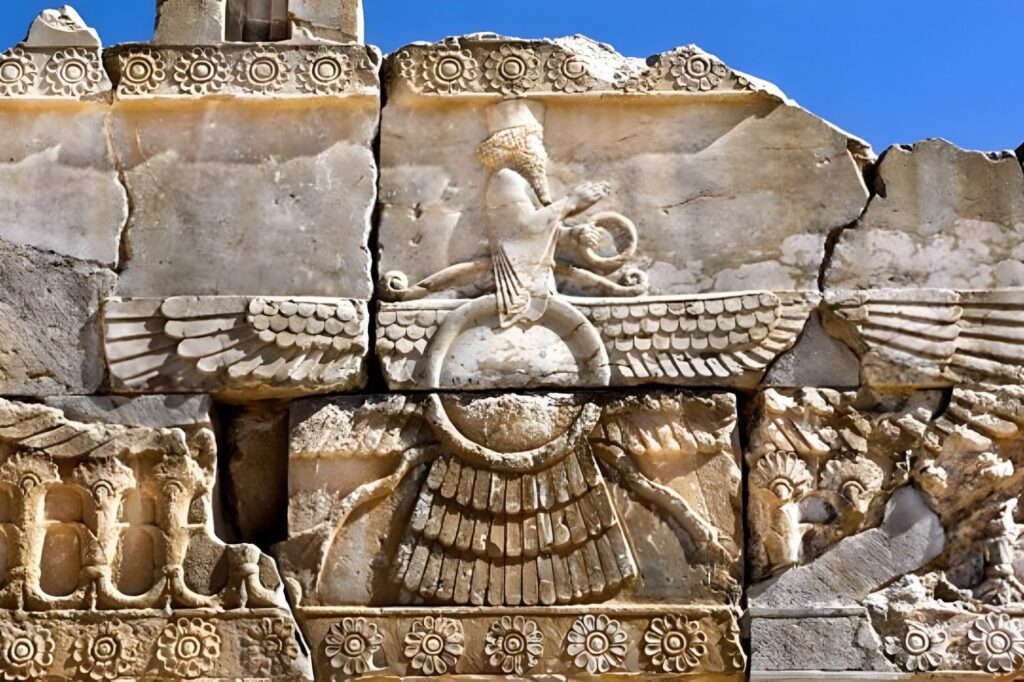
Zoroastrianism By Sri Swami Sivananda  Hinduism, Christianity, Buddhism are world religions but Zoroastrianism is just a national religion now though it was a world religion in days of yore. It is the religion of the Parsees. The correct name for the religion established by Zoroaster is Mazdayasnism which means the worship of Mazda or the Lord. Mazdayasnism was first revealed by Homa to King Jamshid. Afterwards it was revealed to King Fiedoon. Then it was revealed to Thirta. Lastly it was revealed to Zoroaster. After the death of Zoroaster his son in-law Jamaspa became his successor. Jamaspa wrote down the teachings of Zoroaster which are known as Zend Avesta, the scriptures of the Zoroastrians. Frashaoshtra, father-in-law of Zoroaster, was the first apostle of this faith. He expounded the tenets of this religion. Zoroastrianism became the state religion of Persia. After the time of Zoroaster, Zoroastrianism underwent many changes at the hands of the priests who were called Magi. The priests re-introduced ritualism and the worship of the old nature-deities in a new garb by making them archangels of Ahura Mazda. Persia is now a Mohammedan country. A few Zoroastrians are found there. They were persecuted and driven out of Persia. They took refuge in India. They are called the Parsees. They have become a self-contained community in India. Zoroaster was not a philosopher or a metaphysician. He was only a Prophet who had the divine revelation. Zoroastrianism is not a system of philosophy. It is a revealed religion of faith and devotion. During the days of Zoroaster there was an urgent need for ethics and virtuous life. The need for philosophy did not arise. At all times the need to lead a virtuous, divine life is far more imperative for the vast majority than the need to understand the various philosophical problems. If one leads the divine life according to the instructions of sages and scriptures, he will find a solution for all the philosophical problems from within through the voice of the Indweller. Originally there was a common religion among the Aryans in Central Asia. There is similarity between the Vedic and Zend languages. Even the versification of the Zend Avesta is closely related to that of the Vedas. There is identity of divine names in the Zend Avesta and the Vedas. The principal truths taught by Zoroaster were based on and derived from the Vedas. Zoroastrianism is based on the Vedic religion. The doctrines and ceremonials of the Zoroastrians have a mostly remarkable similarity to those of the Vedas. Zoroastrian Scriptures The Yasna and the Visparad are the Vedas of Zoroastrianism. The first part of Yasna consists of Gathas or hymns which came from the mouth of the prophet. The Gathas are five in number. The Gathas are written in metres which correspond to the metres of the Sama Veda. The second part of Yasna contains prayers addressed to the Supreme Lord and other deities who form the spiritual hierarchy. Visparad is a collection of invocations or litanies which are recited before other prayers and scriptures. The twenty-one Nasks deal with all kinds of Sciences, viz., medicine, astronomy, agriculture, botany, etc. They correspond to the Vedangas of Hinduism. Then there is the Khordah Avesta or little Avesta which contains Yashts (invocations) and prayers for the use of lay persons. The modern Parsees recite these prayers daily. Zoroastrian scriptures are called Zend Avesta. They contain three parts. The first is Vendidad. This contains religious laws and ancient mythical tales. The second is Visparad. The third is Yasna. The Avesta contains direct conversations between Zoroaster and Ahura Mazda, the Supreme Lord. Fire, The Symbol Of God People believe that the religion of Zoroaster was fire-worship. This is a mistake. “Do not say that the Iranians were fire-worshippers. They were worshippers of one God.” These are the utterances of the great Firdusi. Fire is a sacred and supreme symbol of God. It is a sacred symbol in the Avesta. Fire is considered as the son of Ahura Mazda. The prophet of Iran did not teach fire-worship. He taught the worship of the one Supreme Lord of the universe, Ahura Mazda. Fire is the symbol of divine in all sacrifices. It is a sacred object. It is the symbol of divine life. It is the sacred symbol most reverenced by the Zoroastrians of today. In every religion, fire has been the symbol of the Supreme Lord. Brahman is fire in Hinduism. Ahura Mazda is fire. The Jews worship their God as a pillar of fire. The Christians declare that their God is a consuming fire. Fire symbolised the brilliance of the Lord. It is purifying. Fire stands for effulgence, illumination. The worship of Agni or Fire comes in the Vedas also. In the Bible it is said, “God is light.” Upanishads declare “Brahman is Jyotirmaya (full of light).” In every religion fire finds a place in rituals. Fire brings the message that God is Light of lights. Zoroaster himself held Fire in great sanctity as a noble gift from God. He summoned Fire from the sky and pointed it to heaven. The Heavens burst into fire. Some of the flames darted downwards and fired the altar at his side. Sacred fire in the altar of a temple is a symbol that reminds the Parsee of the glory of Ahura Mazda. It is called Atar in the Avesta. Fire is declared to be the most helpful of all the spiritual intelligences or archangels. He is the most friendly. He comes down from Ahura Mazda. He is acquainted with all heavenly secrets. The Jews received for the first time the ideas of heaven and hell, of angels and archangels of Messiah, of the resurrection and the last day of judgment from Zoroastrianism. These have laid the foundation to the doctrines of Christianity and Islam also. Ahura Mazda Ahura Mazda is the Supreme Universal Lord. He is All-pervading. He is the source and the fountain of life. He corresponds to the Hiranyagarbha of the Hindus. He

Zoroastrianism Read Post »

is sufism part islam
Swami Sivananda, The Divnity in Religions

Sufism

Sufism By Sri Swami Sivananda  Sufism is liberal Islam, with a colouring of Vedanta. Sufism is Islamic in origin. Sufism is the religion of love with Madhurya Bhava, with the concepts of the lover and the Beloved. Sufism is not considered as an integral part of orthodox Islam. Other scholars have traced an Indian origin of the movement. Indian mysticism and Christian mysticism have affected the later developments of Sufism. Indian Sufism is a blend of Persian Sufism and Hindu mysticism. Sufistic Saints Lal Shahbaz, Mansoor, Shams Tabriez, Sachal, Rohal, Dalpat, Shah Inayet, Shah Latif, Bulleh Shah, Hafiz, Rumi and Jami were all Sufistic mystics. The Sufistic saints are as liberal and catholic as the Vedantic Sannyasins. They are mystic saints. They are devotional. Their utterances or sayings have a wonderful directness, freshness, spontaneous loveliness and charm. The Sufi mystic sees the Lord in all. He experiences cosmic vision. He beholds his Beloved everywhere and in all objects. He has no sense of possession. He is free from egoism, lust, greed, anger and pride. He is perfectly passionless and enjoys perfect peace and poise. His state is beyond description. He is like the Jivanmukta, or liberated sage. He calls the heart as the palace of the Beloved. He does not care for dogmas or doctrines, creeds or sects. He has attained Para Bhakti or supreme devotion. Doctrines Asceticism is an essential feature of Sufism. The Sufi consecrates all his acts,–physical, mental and spiritual,–to the will of God. Unity of God, brotherhood of man and self-surrender to the Lord are the most vital doctrines of Sufism. In Sufism God has form. The Sufis recognise His formless aspect too. Tasawwuf (Sufism) combines ecstasy and service of man. A Sufi wants to remain in the world and serve humanity, but to be above worldliness. The Sufi language of ecstasy describes the divine experience in a variety of ways such as sweetness, intoxication, perfume, sleep and death. Wine is a symbol of divine intoxication. In Sufism, Beauty leads to Love and Love to Bliss. All duality melts. The Lover and the Beloved become one. The Sufi strives to attain Absolute Beauty, Absolute Love and Absolute Bliss. For a Sufi, music is a means to ecstasy. Music plays a very important part in Sufi religious exercise. Sufis worship beauty. ‘Nasut’ means the finite human qualities. ‘Lahut’ means the infinite qualities of God. Survival of individuality is ‘baqa.’ ‘Fana’ means complete annihilation of the lower self or the mystical realisation of union with God. It means dying alive or the sublimation of the ego by annihilating it. Sadhana Concentration, meditation, obedience to a Guru (Pir), poverty, discipline, fasts, penances, Japa or recitation of the sacred word (Zikr), the use of rosary, rhythmic and controlled breathing, prayer, universal love, non-injury, detachment, introspection, dispassion, purity of heart and self-control are the means to attain God or the Beloved through divine grace. The Sufi aspirant looks in a mirror and concentrates on the Trikute or the space between the two eye-brows in his own reflection in the mirror. It is very difficult to practise the Bhava of the lover and the Beloved. This sort of Sufistic Sadhana proves dangerous in the case of unregenerate, passionate practitioners and leads to corruption. They mistake the intoxication caused by the drink of wine for Divine Intoxication and indulge themselves in drinking and sensuality. The aspirant should remain under the strict guidance of a Guru during his Sadhana period. Words Of Wisdom Prayer carries us half-way to Allah; fasting, takes us to the door of His palace; charity gains us admission. He needs no other rosary whose thread of life is strung with beads of love, service, charity and renunciation. Righteousness is not that you turn your faces towards the east or the west, but a righteous man is one who believes in God, the last day, the angels, the Book and the prophets, who does charity to the poor, who is steadfast in prayer. Happy are the believers, who humble themselves in prayer and who keep aloof from vain words, who do charitable acts, and who restrain their appetites. Your God is one God, there is no God but He, the Merciful, the Compassionate. Do good, because God loveth those who do good.

Sufism Read Post »

file 18913 2d11cab24467c01f935f83fa8ec58bf8
Swami Sivananda, The Divnity in Religions

The Spiritual Significance of Ramzan

The Spiritual Significance of Ramzan By Sri Swami Chidananda The Prayer “Asato Maa Sat-Gamaya, Tamaso Maa Jyotir-Gamaya, Mrityor Maa Amritam-Gamaya” epitomises the purpose of the Lord’s Creation, the grand culmination of going back into that Transcendence out of which these countless names and forms have been evolved as a blissful act of play by the One without a second. The plan of the Divine Will is that out of the One infinite names and forms may flow out and for a time there may be a blissful play of this divine multiplicity and then once again, when the Divine wills, there may be a going back into the pristine glorious source. Multiplicity is the antithesis of eternal Truth which is ever one. It is unreal. It is in the nature of darkness. This cycle of becoming and perishing, birth and death, is the characteristic of this world-play. Thus, a going back into the original grandeur of Brahman means an ascent from this unreality into that Supreme Reality, from this darkness of ignorance to the Light of Knowledge, from this cycle of birth and death into that state where there is Immortality. This process is being worked out by all evolved beings. From time to time great ones have come who have systematised this Cosmic plan and formulated a method so that individuals in whom this purpose has been awakened may make use of this method and reach the goal quickly, that they may consciously achieve this process in themselves. These methods have come to be the various religions of humanity. Gradually, these religions have had a greater and ever-widening group of followers. These great groups exist all over the world as the great section of Hindus, Buddhists, Muslims, Christians and so on. But the one inescapable fundamental fact about these religions remains that all these various religions are but methods which seek to work out in some way or other the ascent of man from birth and death to Immortality. Islam is one of those great brotherhoods, which has been given to mankind by prophet Muhammad of hallowed memory. There must be some common basis which underlies all these religions which seek to work out the same result. Even the inner anatomy of the process must be the same, however much it may seem to differ from religion to religion in details–and this difference could be very easily understood if we try to look at the following points–viz., the historical background, the state or the condition of the community in which the prophet first appeared, as also the geographical conditions existing in that area where the Prophet had his birth and gave out his teachings. One of the Sadhanas laid down by Muhammad for the faithful was the Sadhana of fasting and prayer. This you will find to be the common Sadhana in every religion of the world. The fasting laid down by Muhammad is carried out in a special manner in one of the months of the year. That month is called the month Ramzan. All the days of that month are observed as days of fasting. The name Ramzan is given to this entire one month’s fasting. The last day of Ramzan is a very momentous day. In the religion of Islam as well as in the life of the Prophet. Muhammad was a great soul. He was born with the temperament of a saint. His time was one of violence. He was mortified by the way in which people were living. He was struggling to find out some way by which he could enlighten these people. In great disgust he used to seclude himself and go away from Mecca into the wilderness. One of his special haunts was a mountain called Hijra. There in a cave he used to spend long periods in fasting and prayer. On one occasion, he was given no encouragement from Above. For an entire month he gave himself up to fasting and prayer and in supplication to the Lord. The Lord gave him some Light. This corresponds to Ramzan. On the last day there appeared the celestial being before Muhammad; and it spoke to him and gave him a message from the Highest. It commissioned Muhammad to go forth amongst his brethren and spread the gospel of true life, by which people may be led away from the path of evil and may come to walk upon a path of goodness, truth, purity, forgiveness, brotherhood and thus attain the Highest Bliss. This last day is the great day of the Muhammadans–Id. It is a day of intense prayer. Muhammadans congregate in lakhs everywhere, offer prayers and also have Darshan of the moon, which is symbolic of the Light which appeared to Muhammad from the Highest Throne of the Almighty. They fast from sunrise to sunset throughout the month. They are obliged to take something immediately after sunset, at the given hour. They sound some signal both at the time the fast is to commence and when it is to be broken. It is severely enjoined that all should take food at a particular time. They are to take something before commencing the fast in the early morning (Brahmamuhurtha), and this should be of such a nature that at no time during the fasting period will any wind be passed and no belching experienced. If there is belching the person has to make some expiation! This is to ensure that they do not overeat at night. So strict is the injunction to fast during the day-light hours that Muhammadans spit out their spittle; they do not swallow the saliva even. Muhammad gave this Sadhana with a deep significance attached to it. In the Gita we have a Sloka: Yaa Nishaa Sarva-bhutaanaam Tasyaam Jaagarti SamyameeYasyaam Jaagrati Bhutaani Saa Nishaa Pashyato Muneh. “That which is night to all beings, then the self-controlled man is awake; when all beings are awake, that is night for the sage who sees.” This gives the entire significance of Ramzan

The Spiritual Significance of Ramzan Read Post »

images 2026 02 21T184323.236
Swami Sivananda, The Divnity in Religions

Thy Kingdom Come

Thy Kingdom Come By Sri Swami Chidananda Christmas Message from the book Awake! Realise Your Divinity! We are fortunate to have conceived of a way of life where each day starts with the Divine Name, prayer and divine contemplation. By the grace, love and goodwill of beloved and worshipful Gurudev Swami Sivanandaji, in this holy ashram of his there is scope to constantly be in a state of God-remembrance, to start the day with God, fill the day with God and end the day with God. For in this God-filled atmosphere, in every direction, one encounters something connected with God. In numerous places, with numerous persons, upon numerous occasions one is brought into bhagavat-chintana, atma-chintana, tattva-chintana, one is brought into the remembrance of God, into awareness of our higher goal, into awareness of a greater reality, and into the awareness of a deeper purpose in our life, into the awareness of the significance of our human status. In this Iron Age, when adharma (unrighteousness), bhagavat-vismriti (forgetfulness of God), vimukhi-drishti (view against God), atyachara (irreligious conduct) is the order of the day, consider the meaningfulness of this unique God-filled way of life. Consider the normal trend of Kali Yuga and consider the trend of your life. And to whom do you owe it? What is its value and how best to utilise it? How best to benefit by it? These are things which should be very much on our minds as we approach the advent of the New Year and the advent of a great avatara, a great descent of Divinity, who proclaimed: “Seek ye first the Kingdom of Heaven” and “What availeth it a man if he gains the whole world but loses his own soul?” He proclaimed the secondariness of all things in comparison to the attaining of God, the attainment of the great Goal, which is the fulfilment of the central destiny of man, the central purpose of life. His greatest commandment was to adore God with all your heart, with all your mind, with your entire being. Let your life be whole-souled devotion to God, parabhakti. He not only proclaimed this message, preached this teaching, but He lived this teaching. He was perpetually and continuously engaged in doing good, helping others, relieving suffering. At the same time, inwardly, He was permanently rooted in God, perpetually in a state of God-communion inwardly. He literally lived, moved and had His being in God. He was the epitome of the Gita jnana upadesa. In Him we find the very embodiment of Gita jnana and the Gita yoga. “Yogasthah kuru karmani (Perform action, being steadfast in yoga), mam anusmara yuddhya cha (Remember Me and fight).” Be rooted in God and do good to your fellow beings. He taught this and said that the secret of this is to always be in a state of prayer within. Prayer is a state of being linked up with God. Prayer is a state of being connected in spirit with God inwardly. The apparent outer part of you flows outwards towards prapancha, towards samsara, towards the aneka, the many, towards the manifestation. The superficial part of you is ever moving outwards because the mind and the senses are outgoing; whereas, simultaneously, the essence of your being is constantly moving inwards towards God, constantly flowing Godward in a continuous, unbroken stream. Even as the rivers keep on flowing towards the ocean or the sea, even so your antah-chetana, your inner spiritual consciousness, is in a state of constant flow towards the source and origin of its being. Inwardly your life is God-oriented. It is a continuous, unbroken flow towards God, a current of consciousness flowing towards God unceasingly. Externally, to fulfil obligations, do your duty and play your part, you apparently flow outwards. But that which flows outwards towards prapancha, towards samsara, towards the many, aneka, is not your real being. It is something temporarily added on to you that flows towards prapancha because it belongs to prapancha. Your real being that belongs to God ever keeps on moving towards God. Your authentic, true life, genuine life, is a constant Godward flow–through remembrance, through prayer, through invoking His Name and grace. “It is not by bread alone that man lives, but by the Name of God.” Thus Jesus taught us this yoga of God-centred living in the midst of activity. And He Himself personified this state, the outer state of constantly doing good and the inner state of constantly being rooted in God through prayer, remembrance, the Name and dedication. Our Father who art in heaven,Hallowed be Thy Name.Thy kingdom come, Thy will be done,    On earth as it is in heaven.Give us this day our daily bread;And forgive us our debts,    As we forgive our debtors;And lead us not into temptation,    But deliver us from evil. Thus He taught His disciples to pray. “Thy kingdom come” means “May Your kingdom come into my heart. May You reign over my heart; not anything else–not gross passions, not selfishness, not worldliness, not desire, but may You be the monarch of my heart. You who are the ruler of Your kingdom, establish Your kingdom here, as it is already established there in the inner dimension of the Spirit, the unseen world of the Spirit.” That was the call to the Lord–to come and take charge. “Rule over me. Rule over my life. Be my centre. May You alone prevail and not my ego, not my ego-consciousness, not my ignorance, ajnana, not my avichara, not my lack of perception, but Your wisdom, Your light, Your divinity. Let that alone prevail in the interior of my being. Let me be thus filled with God, filled with Thee, filled with Divinity.” That was the prayer. Upon the eve of the advent of this great teacher, let us try to know, assess and understand the meaning of His teachings and the place of His teachings in the living of our daily lives. This would be the most significant and important part of our celebration of the day of His advent. Let us try to find out the place and role that His teaching has to play in our lives as spiritual beings, leading a spiritual life in a spiritual atmosphere, in a God-filled atmosphere. This then is the

Thy Kingdom Come Read Post »

images 2026 02 21T184323.236
Swami Sivananda, The Divnity in Religions

Essence Of Christianity

Essence Of Christianity By Sri Swami Chidananda To be rooted in the Divine, to be guided by the Divine, to recognise the reality of the Divine and the Divine alone, and to give secondary place to all that is other than the Divine is the sadhana,that is the great abhyasa. It is for this that strength has to be prayed for: “Deliver us from evil. Lead us not into temptation of succumbing to the influences, pulls and pressures of that which is other than the Divine, that which is other than your ideal, that which is other than the direction of your goal.” In the midst of the many pulls and many pressures from other directions, to be what Jesus the Christ wished you to be, what Gurudev Swami Sivanandaji has clearly asked us to be, is the acid test of the authenticity and genuineness of our spirituality. The relevance of the teachings of Jesus is not merely the church nor merely the words of the Bible. The relevance of the teachings of Jesus is the fact that He is an ever-present Presence, that He is an eternal witness, a companion who walks by us, who lives with us and who notes every movement, every thought, within and without us. It is this presence of His divine personality that has outlived His own contemporary times and is powerfully present. Jesus the Christ is not dead; great ones who have merged in Brahman do not die. They step out of the body and continue to prevail, pervading all space as a Presence that is relevant to everyone who recognises kinship with them. The guru is eternal. The divine teachers are eternal. The relevance of Jesus and the Christianity that He taught is His divine presence here and now, and always unto worlds without end. One who is a believer, one who makes his life, words and actions a response to the call “Follow Me,” keep as one’s touchstone or criterion for action: “If Jesus was by my side, what would I do in this particular situation? How would He have me behave at this moment, in this situation?” Your life should be an answer to this question. One should mould one’s character and conduct, life and actions on the basis of this criterion. That is the essence of Christianity. Ponder this truth on the day of Christmas Eve. May Jesus be a living factor in our lives. Then indeed Christmas will become a turning point into a new life of light and wisdom.

Essence Of Christianity Read Post »

christ consciousness
Swami Sivananda, The Divnity in Religions

Christ-Consciousness

Christ-Consciousness By SRI SWAMI KRISHNANANDA ‘Empty thyself and I shall fill thee.’ This is a wondrous single sentence message of Jesus the Christ. The Spirit is not a quantity and it is opposed to all quantitative measurements and conceptions. ‘Blessed are the poor in spirit,’ is another suggestive statement of the Christ. We cannot understand what is meant to be poor. For us, to be poor is not to have money, grains and gold, not to have a field, a house and friends, and not to be recognised in society. That would be poverty, economically. We cannot think of poverty except in an economic, material and social sense. Likewise, the idea of emptying oneself, as far as our minds can understand, is a physical displacement of content. Far from this is the idea of the Spirit, which is implied in the above single-sentence message. The Christ-Consciousness, and not the personality of Christ, is what is to be taken into account here in our understanding of this statement. There is a difference between Christ and Christ-Consciousness. This fact was repeatedly emphasised by the Christ himself in many of His declarations as recorded in the New Testament. He never regarded Himself as a person, nor did He ever indicate that a person was speaking when He spoke. He always referred to ‘Him that sent me’. He was very much fond of referring to ‘Him that sent me’. He said: ‘I am here to proclaim the Law of Him who sent me here. It is not my law that I am demonstrating or proclaiming to the world.’ The Spirit that spoke through Him was not a creature of time. There is a very humorous and most significant statement of His. “Before Abraham was, I am.” What does it mean? “Before Abraham was, I am”, is a contradiction, grammatically. It conveys no sense. It is a blunder of grammar to say, ‘I am before Abraham was.” But that is the real Christ that spoke. And it is from the standpoint of that reality of Christ, the ‘present’ was precedent even to the ‘past’. The present precedes the past. How could it be? And that is what is implied in saying, “Before Abraham was, I am.” The Spirit is a present and not an event or a content or a creature in the passage of time which is usually dissected into the past, present and future. The Spirit has no past, no present and no future. And this is the Christ-Consciousness. From the above point of view, what would it mean to empty oneself and what would it also mean to be filled by It? This is the great philosophy of the Spirit. We are heading towards real Yoga when we speak about these things. Christ was a great Yogin, Master Yogin, one of the greatest Yogins the world has produced, an Yogin in the true sense of the term. He was perpetually in unison with the Spirit, drew sustenance from the Spirit and operated upon the Law of the Spirit in the world or the realm of matter. Mathematics was not his way of thinking. Otherwise how could a single loaf become basketful, over-flowing, flooding and capable of feeding thousands and yet remaining after the feeding was over. It was not arithmetic that worked there, because one cannot become many and many are not the same as the one. Our consciousness has grown upon it several accretions or layers of material concrescence. The philosophical way of thinking is slightly different from the ordinary way of thinking of the man in the street. I do not mean that you should be philosophers. But you should know the techniques of philosophical thinking, i.e., the art of thinking in a peculiar manner which differs entirely from the give-and-take, economic or commercial attitude of thinking which man usually entertains in his mind. All our thinking is commercial. We cannot think in any other way. But the Spirit is non-commercial, because it is non-material. Anything that we speak of in regard to the Spirit has to be metempirical and we have to shed the prejudice of earthly ways of thinking even before we take the first step in the practice of the way of the Spirit. All prejudices have to be shed. This is one of the conditions of emptying yourself. It does not mean that we have to vomit what we have eaten. We have to vomit the prejudices of the, mind. Hard it is to overcome a prejudice. And prejudice has grown like a fungus or a mushroom on our very consciousness itself. We take for granted many things. Unproved hypotheses are taken for granted; and they become the byword of the street, of the home, of society, of administration and of even international understanding. Everything is based on certain prejudices. But the Spirit does not care for either the nation or the international set-up. It is something superior in its value and content. To be spiritual is hard even to think and conceive; more difficult it is to practise the way of the Spirit. Personal and logical attempts and the so-called scientific attitudes do not help us here. Science itself has become a dogma, though it parades its knowledge of non-dogmatism. Logic is based again on a dogma, of certain presupposed values which themselves cannot be proved by logic itself. There is no such thing as non-dogmatic thinking as far as the ordinary man is concerned. Everything is a dogma. You take for granted that the world is. Who told you that the world is? It is something taken for granted. It is a hypothesis. You cannot prove it by logic, except by saying that you see it. And that you see it, is not a great proof, for, you can see even phantasmagoria, if your head is reeling. That the world is, that the body is a content thereof and that the world is ruled by the quantitative measurements of arithmetic and commercial laws, are hypotheses on which we

Christ-Consciousness Read Post »

images 2026 02 21T183833.260
Swami Sivananda, The Divnity in Religions

Behold Jesus In Thy Midst

Behold Jesus In Thy Midst By Sri Swami Sivananda Prostrations, prostrations; crores of times at the Holy Feet of Lord Jesus, the Saviour of mankind, the Eternal Beacon-light that shines to guide man along the path of Rectitude to the Destination of Supreme Beatitude. Lord Jesus is the incarnation of Bold Understanding, Determined Will and Resolute Action. Study the Gospels again. Meditate on the resplendent, spiritually glowing Divine Form of Lord Jesus. How sweet, how compassionate, how gentle and loving He was! And yet, He showed no leniency towards Himself; He turned resolutely away from Satan–not that He could ever be tempted, but to set an example before us–and He had no patience with the unrighteous impostors and hypocrites. Could anyone on earth declare in more unequivocal, unambiguous and definite terms the rules of moral conduct, the Regulations that govern entry into the Kingdom of God, than Lord Jesus has done? Can we profess allegiance to Him and yet ignore His commands? Let every Christian today remember the flaming words of the Lord: “Not everyone that saith unto me, Lord, Lord, shall enter into the Kingdom of Heaven, but he that doeth the Will of my Father, which is in heaven.” And that Will of the Divine Father, Lord Jesus had not only stated in the plainest language, intelligible to the least intelligent among men, but what is even more, has demonstrated in an unforgettably graphic manner in the heart-rending, soul-inspiring life. Lord Jesus declared that it was worse than useless to run after the things of the world, ignoring the supremely important Spirit within. He knew the form of Satan, and therefore, He had forewarned His followers not to let Satan enter any part of their being, and if Satan is detected as having tainted any, to “pluck that part out and cast it out”, in order that the entire being may not be tainted, as heedlessness is sure to cause. We see the wisdom of His Wise Words today. And, what a painful sight it is! True, Lord Jesus bled on the Cross for the redemption of His people. Today, from His Eternal Seat in the Kingdom of God, His Divine Compassionate Heart bleeds even more profusely, for the people of His time were ignorant of the Law and they erred, but the people of the modern world have the resplendent light of Lord Jesus’s life and teachings shining and illumining the path of righteousness, and yet they want only to walk the path of darkness, ignorance, sin, selfishness, sensuousness and misery. If His Merciful Heart bled for the ignorant sinners, how much more would it bleed for the sins of those who err, ignoring His Light! Is this the way in which you would like humanity to show its gratitude to the Saviour? No, a thousand times No. It is never too late to mend. And, there are today thousands of pious, devout, righteous men and women in all parts of the globe; in whose hearts Lord Jesus is reincarnate as one or more of the divine virtues that He had idealised in His own Divine Personality. These men are not publicised in your newspapers; throw away these papers. These men are not in your limelight, but it is nothing but crime-light, the light in which dance the disciples of Satan. But these pious men of God, many of them, walk the humble path, unnoticed by the pleasure-seeker, the glamour-adorer, and the sin-blinded “civilised” man. But they are the salt of the earth; they are the sustainers of real life upon earth; it is their presence that brings down the Lord’s richest blessings upon all men; it its their presence that maintains, sustains, the world. It is they that unostentatiously, but all the same powerfully, radiate peace and happiness. And, if today there is even this much of peace, and this much of happiness that mankind enjoys, it is due to the presence of these divine souls in whose heart the Eternal Jesus has reincarnated in all His spiritual radiance and divine splendour. They have known that Lord Jesus is the Way, the Truth and the Life. Worship them. Adore them. Follow in their footsteps. They are not the footsteps of these men, they are in fact the Eternal Footsteps that the Lord Jesus has left on the sands of time. Study the lives of these saints. Reflect over their divine traits. How heroically they have reached in the most trying situations! Emulate them. Christianity is not an arm-chair religion, in fact, no religion can afford to recline on the armchair, if it is to live. Christianity is a Living Religion, a religion which is dynamic and vibrant. So long as there is one pious and devout follower of Christ, Christianity would live, there was only one Lord Jesus, who is today adored by millions all over the world. Even today Lord Jesus lives in our hearts, because, in the worst crises, in the greatest of temptations, he triumphed, holding aloft by his own life and actions the glory of truth and righteousness. He was not a speculative philosopher, but a Living God. Unless this Living God is worshipped in a living manner by living His Life, in our own life, all the speculations of philosophy will vanish into the thin air in which alone, in the vain intellects of the philosophers where alone they had their birth and where alone they existed. Trials and temptations come but to be overcome by the brave. Tests and trying situations are spiritual Vitamin tablets. They come to strengthen your mind and to purify your heart. They are, as it were, the wise men that discover Jesus in you. To succumb to these trials is weakness. To fast, to pray, to discriminate and to overcome these obstacles with the help of the Grace of the Lord is spiritual heroism. When the victory is achieved, to feel, to realise and to proclaim that it was the Lord’s Grace that enabled

Behold Jesus In Thy Midst Read Post »