



















Hari Om

Menu

How to Concentrate and Meditate

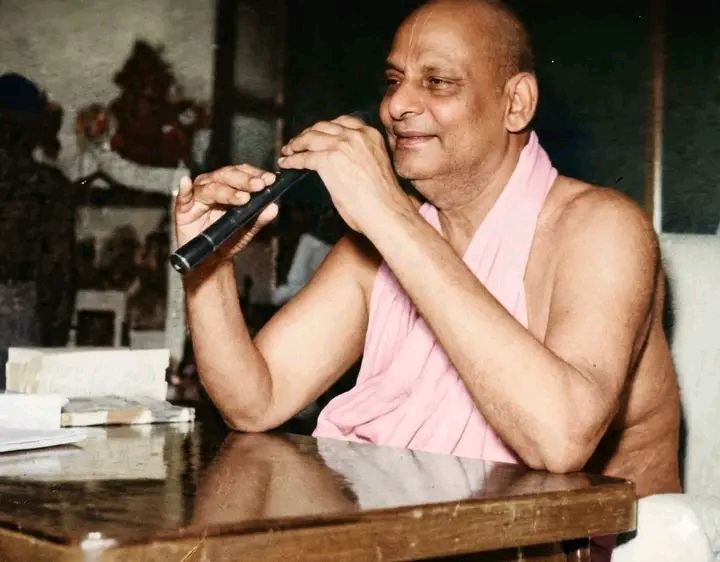
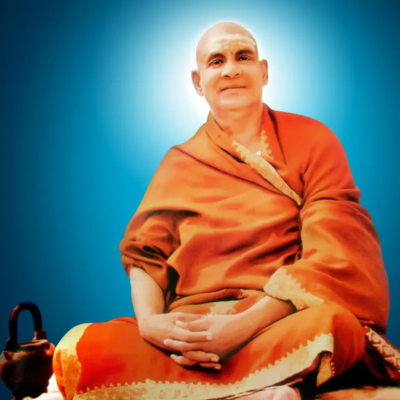
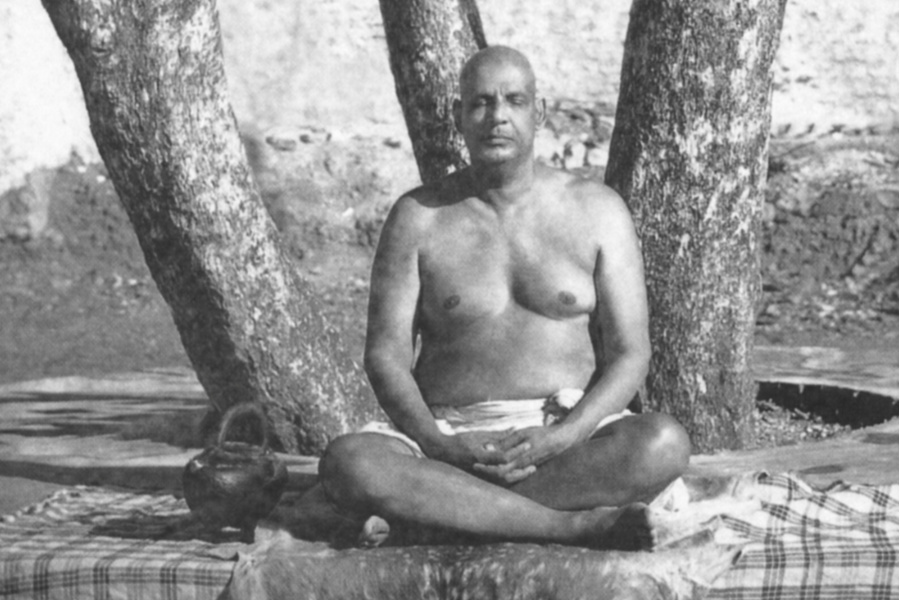
swami sivananda meditating
How to Concentrate and Meditate, Swami Sivananda

Meditation–Your Only Duty

Meditation–Your Only Duty By Sri Swami Sivananda Meditation is your only duty. You must realise the goal of your life: God-Realisation. Then only would your life be fruitful. There are several stages in the path to God-Realisation. Purification, concentration, reflection, meditation, illumination, identification, absorption and salvation. Through service you should purify yourself and then proceed through concentration, meditation, etc.; finally you reach the goal of Salvation. Time for Meditation You must do Brahma Vichara in Brahmamuhurtha. You must enquire “Who am I” in Brahmamuhurtha. Meditation performed for an hour in Brahmamuhurtha is equal to meditation performed for six hours during other periods of the day. If you get up at 4 a.m. you will have time in the early morning for your prayers and meditation. You will charge yourself with Sattva. You will get strength to face the daily battle of life. Morning time is most suitable for meditation. The mind then is not filled with Raga-Dvesha as at other times. You can fill it with Sattva, through meditation, by recitation of Stotras and hymns, or of Slokas like “Ajo Nitya Sasvatoyam Puraano Na Hanyate Hanyamaane Shareere.” You must ever dwell on these thoughts. It is only for beginners: the instruction to meditate a little. You must meditate much. But you must increase the period gradually. Particularly retired people should meditate more. But, if I at once say, ‘Meditate more’. beginners will be frightened. Therefore, I say Meditate a little’ This is only to tempt people to meditate first of all. Method of Meditation The mind is duping you every moment. Therefore, wake up now at least and cultivate this discrimination through enquiry into the nature of the Self, through Satsanga, study and meditation. Meditate on OM. ‘Tad Japastadarthabhavanam’. OM is Satchidananda. OM is infinity. Om is perfection and freedom. Meditate on these divine attributes of Nirguna Brahman. Meditate on the nature of the Self. ‘I am Satchidananda—Existence-Knowledge-Bliss Absolute’. Meditate on divine qualities. If you are not able to practise this abstract meditation, then meditate on the Sun, the light, or the all-pervading ether or air. Meditate on the light that is shining in your heart; meditate on those dream pictures that you sometimes get. Meditate on the form of your Guru or Saints. Meditate on anything your mind likes best. Meditate on the form of your father, on his qualities. Do common meditation for a few minutes. From that common meditation, you will know that real peace and bliss are within. Collect all the rays of your mind—Pratyagatmanam Ishat Avrita Chakshuh—repeatyour Ishta Mantra; the mind should not move towards the sense-objects, there is no Vritti; Therefore, you enjoy perfect peace and bliss. Regularly practise such meditation. Nama Rupam Na Te Na Me Aham Atma Nirakara Sarvavyapi Svabhavata. Again and again meditate on these formulae. They will give you strength. Even if you meditate once, it gives you some strength. You are not the body composed of the five elements. Again and again remember this. Meditate on this. You must find the Atman through reflection and meditation. “Atman knows everything else; and knows itself, too.” That is your real Svaroopa. There is no such object in this world. Meditate and sing: ‘Sivoham Sivoham Sivoham Soham. Satchidananda Svaroopoham.’ Practise Yoga Asanas and Pranayamas, which will purify the body and mind, remove all diseases and help in concentration and meditation. You should get up in Brahmamuhurta and meditate. This is the best time for divine contemplation. The mind is calm. It is like a blank sheet of paper. You can mould it in any way you like. The worldly currents of Raga-Dvesha have not entered it at this time. You can chant Om (long or Deergha Pranava) 10 or 12 times. When you so repeat Om all the Koshas will begin to vibrate harmoniously. Meditate intensely, ceaselessly. It will be difficult to meditate ceaselessly in the beginning. Practise. You will grow in cheerfulness and joy. Increase the period of meditation. Gradually you will come to meditate ceaselessly, intensely. Meditate on the abstract qualities like Existence, Knowledge and Bliss Absolute. Keep these thoughts always before your mind. This is the abstract background of thoughts. Or, you can meditate on the form of the Lord: Saguna Upasana. Mentally visualise the picture of the Lord. Now look at His Face, now at His Chakra, now at His Feet. The mind will not run. The mind must not run out. If you try to find the mind on the Lord dwelling in the chambers of your heart you will be an introvert. You can meditate on the Jyotis in the heart. You can meditate on the divine objects seen in dreams or visions. You can meditate on the form of a Saint who is free from Raga-Dvesha. ‘Yatha Abhimatha Dhyaanaad vaa.’ Or, meditate on anything you like best. An aspirant once approached his Guru and asked for instruction on meditation. The Guru asked him to meditate on Lord Rama. The disciple said: I find it very difficult to meditate on Lord Rama.’ ‘Why?’ ‘Because I have got inordinate affection for my buffalo.’ Then the Guru said: ‘Then meditate on the picture of a buffalo.’ The disciple sat in deep meditation. One, two, three days passed. The Guru called on the disciple to come out. The disciple said: ‘I am not able to come out. I am myself a buffalo. I cannot pass through the door.’ The Guru found out that the disciple had perfect concentration of mind. He then gave him the form of Lord Vishnu to meditate upon. Then the disciple entered into deep Samadhi. There are many obstacles on the path. All these obstacles should be got over. Sleep always disturbs the aspirant. Take light food at night; dash cold water on the face when sleep tries to overpower you; stand up, and do Japa standing for some time; practise Bhastrika—these practices will drive off sleepiness during meditation. Chant OM 10 to 12 times. You will be fit for good concentration. You can

Meditation–Your Only Duty Read Post »

image 50
How to Concentrate and Meditate, Swami Sivananda

The Meaning of Meditation

The Meaning of Meditation By SRI SWAMI KRISHNANANDA “Meditation is the art of uniting with Reality.” – Swami Krishnananda The art of meditation is not a job to be performed as one does the duties of one’s profession in life, for all activities of life are in the form of a function of ones individuality or personality which is to a large extent extraneous to one’s nature, due to which there is a fatigue after work and there are times when one gets fed up with work, altogether. But meditation is not such a function and it differs from activities with which man is usually familiar. If sometimes one is tired of meditation, we have only to conclude one has only engaged oneself in another kind of activity, calling it meditation, while really it was not so. We have to make a careful distinction between one’s being and the action that proceeds from one’s being. What sometimes fatigues the person is the latter and not the former. We may be tired of work, but we cannot be tired of our own selves. So it naturally follows that whenever we are tired of a work or a function, it is not part of our nature but extraneous to it. If meditation is also to become a work or a function of our being, it too would fall outside our nature. And one day we shall not only be tired of it but also be sick of it, since it would impose itself as a foreign element upon our being or nature, and it is the character of essential being to cast out every foreign body by various methods. Aspirants on the spiritual path are generally conversant with the fact that meditation is the pinnacle of Yoga and the consummation of spiritual endeavour. But it is only a very few that really gain access into the centrality of its meaning and mostly its essentiality is missed in a confusion that is usually made by equating it with a kind of work or activity of the mind, which is precisely the reason why most people find it difficult to sit long in meditation and are overcome either by sleep or a general weariness of the psycho-physical system. It is curious that what one is aiming at as the goal of one’s life should become the cause of fatigue, frustration and even disgust on occasions. People seek to know the secrets of meditation on account of dissatisfaction with the normal activities of life and detecting a lacuna in the value of earthly existence. And if even this remedy that is sought to fill this gap in life is to create a sense of another lacuna, shortcoming or dissatisfaction and if there should be factors which can press one into a sense of ‘enough’ even with meditation and make one turn to some other occupation as a diversion away from it, it has to be concluded that there is a serious defect in one’s concept of meditation itself. When we carefully and sympathetically investigate into meditation as a spiritual exercise, we come face to face with certain tremendous truths about Nature and life as a whole. Before engaging oneself in any task, a clear idea of it is necessary, lest one should make a mess of what one is supposed to do. The question that is fundamental is: ‘How does one know that meditation is the remedy for the short-comings of life?’ An answer to this question would necessitate a knowledge of what it is that one really lacks in life, due to which one turns to meditation for help. Broadly speaking, one’s dissatisfaction is caused, by a general feeling which comes upon one, after having lived through life for a sufficient number of years, that the desires of man seem to have no end; that the more are his possessions, the more also are his ambitions and cravings; that those who appear to be friends seem also to be capable of deserting one in crucial hours of life; that sense-objects entangle one in mechanical complexities rather than give relief from tension, anxiety and want; that one’s longing for happiness exceeds all finitudes of concept and can never be made good by anything that the world contains, on account of the limitation brought about by one thing excluding another and the incapacity of one thing to include another in its structure; that the so- called pleasures of life appear to be a mere itching of nerves and a submission to involuntary urges and a slavery to instincts rather than the achievement of real freedom which is the one thing that man finally aspires for. If these and such other things are the defects of life, how does one seek to rectify it by meditation? The defects seem to be really horrifying, more than what ordinary human mind can compass and contain. But nevertheless, there rises a hope that meditation can set right these shortcomings and, if this hope has any significance or reality, the gamut of meditation should naturally extend beyond all limitations of human life. Truly, meditation should then be a universal work of the mind and not a simple private thinking in the closet of one’s room or house. This aspect of the nature of meditation is outside the scope of the notion of it which many spiritual aspirants may be entertaining in their minds. An analysis of the nature of meditation opens up a deeper reality than is comprised in the usual psychological processes of the mind, such as thinking, feeling and understanding, and it really turns out to be a rousing of the soul of man instead of a mere functioning of the mind. The soul does not rise into activity under normal conditions. Man is mostly, throughout his life, confined only to certain aspects of its manifestations when he thinks, understands, feels, wills, remembers, and so on. All this, no doubt, is partial expression of the human individuality, but it is not in any way near to

The Meaning of Meditation Read Post »

How to Concentrate and Meditate, Swami Sivananda

How to Meditate

How to Meditate By Sri Swami Venkatesananda So many textbooks are available on meditation nowadays that everyone has some idea of what it is all about. In brief, meditation is the most wonderful adventure: ‘Discovery of self’. Meditation enables us to enjoy consciously the peace, happiness and revitalisation that we unconsciously have in sleep. Meditation lifts us above the cares and anxieties of our daily life, it enables us to overcome our moral weaknesses and evil habits and thus transform our very life. By dispelling ignorance, meditation removes all our morbid and childish fears and leads us to the hall of divine light, where we perceive our self as the immortal essence of all existence, where we realise that we are at once linked in a bond of eternal love with all creation. By enabling us to get in tune with this cosmic substratum and so with others, meditation gives us supernatural powers. Unless these powers (of whose existence we are not conscious and which we shall not deliberately use) become natural to us, they should be shunned as distractions. ‘An ounce of practice is better than tons of theory’. The following simple procedure will in due course enable you to enjoy deep meditation 1. Select a calm, quiet, clean and secluded spot or a room or corner of a room in your house reserved for this purpose. Sit there (preferably facing east–the sun rises in the east–or north–there is a great power in the north pole), with a symbol of God or a lighted lamp or candle, placed at eye-level. The best posture is, of course, the lotus posture; if you cannot do this, sit in any comfortable posture with your body erect. The yogi wants you to keep the back straight. All sorts of interesting reasons have been given, and one might be of interest to you. If the small of the back is held in, your back is naturally straighter than before. It seems to promote alertness of the mind. The moment you slouch and the small of the back shoots backwards and the spine curves forward your alertness is gone. The best time to meditate is from 4 to 6 a.m., but if this is not possible do this as soon as you wake up. It is good to have a quick bath; if this is not possible (without loss of the good morning hour), have a quick wash of hands, feet and face. 2. Chant a few hymns or offer your own prayer (audibly) to the lord: this is like switching the radio on and tuning it. Raise the mind to a higher level. Imagine you are in the presence of god. This may appear to be self-hypnotism, but the results are astounding. 3. Become aware that you are seated in your room or wherever it is. You are now aware of even your body’s contact with the seat. The knowledge ‘I am sitting here’ ensures that the mind is also here and does not wander away. If the attention tends to wander, gently but firmly bring it back: ‘I am sitting here.’ Become aware of the sensation of the hands resting on your knees or in your lap. Immediately the attention is brought within the body and once the attention is narrowed down, the whole inside seems to be illuminated. You realise that just one thing is happening–breathing. You are breathing. 4. Chant ‘om’ deeply, concentrating on the solar plexus, feeling that the sound vibrations arise from there. Feel that these sound vibrations travel upwards towards the crown of the head, through the vagus nerve. They actually will. When they reach the throat-region close your lips and continue ommmmmmm and let the sound fade out at the crown of the head. Do this three or six times. 5. It is one of those ironies of life that we seem to be interested in so many wonderful things in this world without paying the least attention to the greatest wonder which is breathing. It is because we are breathing that we are alive, that we are able to enjoy life. It is a supreme wonder. Ask yourself: “What makes you breathe out and having exhaled–what makes you inhale again?” What makes one take the next breath, or in other words, how does the breathing go on? When you pay attention to this you have forgotten where you are sitting. That is, the attention has gone still deeper within yourself and is now ready to go even deeper down. Breathe normally, effortlessly. At the same time, close the glottis a little bit, so that the breath itself produces some sound. (It is not the vocal cords but the glottis that helps to produce this sound.) Let this sound also fade away and not stop abruptly. You will find that your mind follows this sound and “goes inwards.” You may do ujjayi or bhramari pranayama. 6. Breathe gently now. Watch the breath. Try to listen to it without producing any sound even with the throat. It is good to use a visualisation of the nadis in conjunction with the breathing to bring about more intense concentration of the mind. Visualise the inhaled breath flowing down the ida and the pingala nadis on both sides of the spine. Hold the breath (Kumbhaka) for just a moment. (Kumbhaka literally means ‘pot-like’, which alludes to the abdominal cavity being filled by the inhaled breath.) Visualise the exhaled breath ascending up the sushumna (the central channel), at the same time drawing the abdomen in and up, as in uddiyana bandha. 7. Now the only thing you are doing is breathing. That is the only action, motion, movement. Become aware of this. Let there be the inner awareness, “I am breathing,” and let this stop the mind from doing something else. Gently but firmly hold on to the awareness, “I am breathing” 8. Repeat your mantra (any name of god or sacred formula or ‘om’) as you breathe in and out,

How to Meditate Read Post »

image 2
How to Concentrate and Meditate, Swami Sivananda

Concentration

Concentration By Sri Swami Sivananda If you focus the rays of the sun through a lens, they can burn cotton or a piece of paper; but, the scattered rays cannot do this act. If you want to talk to a man at a distance, you make a funnel of your hand and speak. The sound-waves are collected at one point and then directed towards the man. He can hear your speech very clearly. The water is converted into steam and the steam is concentrated at a point. The railway engine moves. All these are instances of concentrated waves. Even so, if you collect the dissipated rays of the mind and focus them at a point, you will have wonderful concentration. The concentrated mind will serve as a potent searchlight to find out the treasures of the soul and attain the supreme wealth of Atman (the Self), eternal bliss, immortality and perennial joy. Real Raja Yoga starts from concentration. Concentration merges in meditation. Concentration is a portion of meditation. Meditation follows concentration. Samadhi (superconscious state) follows mediation. The Jivanmukti (liberated being) state follows the attainment of Nirvikalpa Samadhi which is free from all thoughts of duality. Jivanmukti leads to emancipation from the wheel of birth and death. Therefore, concentration is the first and foremost thing a Sadhaka or aspirant should acquire in the spiritual path. You are born to concentrate the mind on God after collecting the mental rays that are dissipated on various objects. That is your important duty. You forget the duty on account of Moha (infatuation) for family, children, money, power, position, respect, name and fame. Concentration of the mind on God after purification can give you real happiness and knowledge. You are born for this purpose only. You are carried away to external objects through attachment and infatuated love. WHAT IS CONCENTRATION? Once a Sanskrit scholar approached Kabir and asked him, “O Kabir, what are you doing now?”. Kabir replied, “O Pundit, I am detaching the mind from worldly objects and attaching it to the lotus-feet of the Lord”. This is concentration. Concentration or Dharana is centering the mind on one single thought. Vedantins try to fix the mind on the Atman. This is their Dharana. Hatha Yogins and Raja Yogins concentrate their mind on the six Chakras (energy centres). Bhaktas concentrate on their Ishta Devata (tutelary diety). Concentration is a great necessity for all aspirants. During concentration, the various rays of the mind are collected and focussed on the object of concentration. There will be no tossing of the mind. One idea occupies the mind. The whole energy of the mind is concentrated on that one idea. The senses become still. They do not function. When there is deep concentration, there is no consciousness of the body and surroundings. When you study a book with profound interest, you do not hear if a man shouts and calls you by your name. You do not see a person when he stands in front of you. You do not smell the sweet fragrance of flowers that are placed on the table by your side. This is concentration or one-pointedness of mind. The mind is fixed firmly on one thing. You must have such a deep concentration when you think of God or the Atman. Everybody possesses some ability to concentrate. Everybody does concentrate to a certain extent when he reads a book, when he writes a letter, when he plays tennis, and in fact, when he does any kind of work. But, for spiritual purposes, concentration should be developed to an infinite degree. There is great concentration when you play cards or chess, but the mind is not filled with pure and divine thoughts. The mental contents are of an undesirable nature. You can hardly experience the divine thrill, ecstasy, and elevation when the mind is filled with impure thoughts. Every object has its own mental associations. You will have to fill up the mind with sublime, spiritual thoughts. Then only the mind will be expurgated of all worldly thoughts. The picture of Lord Jesus or Buddha or Lord Krishna is associated with sublime, soul-stirring ideas; chess and cards are associated with ideas of gambling, cheating and so forth. OBJECTS OF CONCENTRATION Sit on any comfortable pose. Place a picture of your Ishta Devata in front of you. Look at the picture with a steady gaze. Then close your eyes and visualise the picture in the centre of your heart or in the space between the eyebrows. When the picture fades out in your mental vision, open the eyes and gaze at the picture again. Close your eyes after a few seconds and repeat the process. It is easy to concentrate the mind on external objects. The mind has a natural tendency to go outwards. In the beginning stage of practice, you can concentrate on a black dot. on the wall, a candle flame, a bright star, the moon, or any other object that is pleasing to the mind. The mind should be trained to concentrate on gross objects in the beginning; and later on, you can successfully concentrate on subtle objects and abstract ideas. There is no concentration without something to rest the mind upon. Concentrate on anything that appeals to you as good or anything which the mind likes best. It is very difficult to fix the mind, in the beginning, on any object which the mind dislikes. Practise various sorts of concentration. This will train or discipline your mind wonderfully. Now concentrate on the Himalayas, a very great object. Then concentrate on a mustard or a pin-point. Now concentrate on a distant object. Then concentrate on a near object. Now concentrate on a colour, sound, touch, smell, or taste. Then concentrate on the ‘tik-tik’ of a watch. Now concentrate on the virtue ‘mercy’. Then concentrate on the virtue ‘patience’. Now concentrate on the Sloka, “Jyotishamai Tat Jyotih”. Then concentrate on “Satyam Jnanam Anantam”. Now concentrate on the image of Lord Siva. Then concentrate on the “Aham Brahmasmi” Mahavakya. AN UPHILL TASK FOR

Concentration Read Post »



