













Hari Om

Menu

⁠Festivals in Sanathan Dharam and Hinduism

image 25
⁠Festivals in Sanathan Dharam and Hinduism, Swami Sivananda

Sri Hanuman

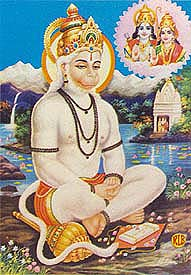
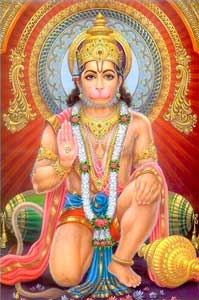
Sri Hanuman By SRI SWAMI SIVANANDA Sri Hanuman was born of Anjani from Pavana, the wind-god. He was named Hanuman after the name of the city of Hanumpur over which his maternal uncle Parti Surya ruled. Hanuman’s body was hard as a stone. So Anjani named him Vajranga. He is also known by the names “Mahavir” or mightiest hero (because he exhibited several heroic feats), Balibima and Maruti. The world has not yet seen and will not see in future also a mighty hero like Sri Hanuman. During his life he worked wonders and exhibited superhuman feats of strength and valour. He has left behind him a name which, as long as the world lasts, will continue wielding a great influence over the minds of millions of people. He is one of the seven Chiranjivis. He was the only learned scholar who knew the nine Vyakaranas. He learnt the Sastras from the sun-god. He was the wisest of the wise, strongest of the strong and bravest of the brave. He was the Sakti of Rudra. He who meditates on him and repeats his name attains power, strength, glory, prosperity and success in life. He is worshipped in all parts of India, particularly in Maharashtra. He was born at the most auspicious hour of the morning of the 8th of the Lunar month, Chaitra, at 4 o’clock on the most blessed day, Tuesday. He had the power to assume any form he liked; to swell his body to an enormous extent and to reduce it to the length of a thumb. His strength was superhuman. He was the terror of Rakshasas. He was well versed in the four Vedas and other sacred books. His valour, wisdom, knowledge of the scriptures and superhuman strength attracted everybody who came near him. He had extraordinary skill in warfare. He was the chosen messenger, warrior and servant of Sri Rama. He was the votary and devotee of Lord Rama. Rama was his all in all. He lived to serve Rama. He lived in Rama. He lived for Rama. He was a minister and intimate friend of Sugriva. From his very birth he exhibited extraordinary physical strength and worked many miracles. When he was a child he put the sun into his mouth. All the gods were very much troubled. They came with folded hands to the child and humbly entreated him to release the sun. The child set free the sun at their request. Hanuman saw Sri Rama for the first time in Kishkindha. Sri Rama and Lakshmana came there in the course of their search of Sita whom Ravana had carried away. A Rishi pronounced a curse on Hanuman for his wrong action, that he would remain unconscious of his great strength and prowess till he met Sri Rama and served him with devotion. As soon as Hanuman beheld Sri Rama he became conscious of his strength and power. In Lanka, Hanuman exhibited his immense strength and extraordinary powers. He destroyed the beautiful grove which was a pleasure resort of Ravana. He uprooted many trees and killed many Rakshasas. Ravana was very much infuriated at this. He sent Jambumali to fight against Sri Hanuman who took the trunk of a tree and hurled it against Jambumali and killed him. Ravana sent his son Aksha to fight against Hanuman. He was also killed. Then he sent Indrajit. Hanuman threw a great tree upon Indrajit. Indrajit fell down senseless on the ground. After some time Indrajit recovered his consciousness. He threw the noose of Brahma on Hanuman. Hanuman allowed himself to be bound by the noose. He wanted to honour Brahma. Indrajit ordered the Rakshasas to carry the monkey to his father’s court. Even a hundred Rakshasas were not able to lift Hanuman. Hanuman made himself as light as possible. The Rakshasas then lifted him up. When they placed him over their shoulders he suddenly became heavy and crushed them to death. Then Hanuman asked the Rakshasas to remove the rope. They removed the rope and Hanuman proceeded to the council hall of Ravana. Ravana said, “O mischievous monkey, what will you say in your defence? I will put you to death.” Hanuman laughed and said, “O wicked Ravana, give back Sita to Lord Rama and ask his pardon; otherwise you will be ruined and the whole of Lanka will be destroyed.” These words of Hanuman made Ravana very furious. He asked the Rakshasas to cut off the head of Hanuman. Vibhishana intervened and said, “O brother, it is not lawful and righteous to kill a messenger. You can inflict some punishment only.” Ravana consented. He wanted to deprive Hanuman of his tail and make him ugly. He ordered the Rakshasas to wrap Hanuman’s tail with cloths soaked in oil and ghee. Hanuman extended his tail to such length and size that all the cloths in Lanka would not cover it. Then he reduced his tail of his own accord. The Rakshasas wrapped the tail with cloths soaked in oil and ghee and lighted the cloths. Hanuman expanded his body to an enormous size and began to jump from place to place. The whole of Lanka caught on fire. All the palatial buildings were burnt down to ashes. Hanuman then jumped into the sea in order to cool and refresh himself. A drop of his perspiration fell into the mouth of a great fish which gave birth to a mighty hero named Makara Dhvaja. Makara Dhvaja is considered the son of Hanuman. Thereupon Hanuman went to the Asoka grove and told Sita all that he had done. Then he crossed the sea through the air and came to the place where his army was placed. He told them all that had happened. Thereupon they all marched quickly to carry the good news to Sri Rama and Sugriva. They reached the city of Kishkindha. Hanuman gave Sita’s ring to Lord Rama. Sri Rama rejoiced heartily. He praised Hanuman and embraced him saying, “O mighty hero I
Sri Hanuman Read Post »

image 24
⁠Festivals in Sanathan Dharam and Hinduism, Swami Sivananda

Hanuman

Hanuman By Sri Swami Sivananda O Lord Hanuman!Servant of Lord Rama!Son of Anjana DeviAnd Wind-God!O mighty Hero!O learned Nava-vyakarana-Pundit!O wise Sage!Prostrations unto Thee. SRI HANUMAN is worshipped everywhere in India, alone or together with Sri Rama. Every temple of Lord Rama has the Murti of Sri Hanuman. Hanuman is the Avatara of Lord Siva. He was born of Wind-God and Anjana Devi. Birth of a Hero Anjana, known also as Punjikasthala, was the wife of the Kapi chief Keshari. She was the daughter of Kunjara. Spotless Anjana was reputed for her beauty in the three worlds. There was none like her on the earth. On account of a curse, she was born as a Vanara woman. She could assume any form at her will. She was endowed with heavenly virtues. Once Anjana was strolling about over the green hills. The Wind-God gently wafted her garment. Her body was exposed. He was charmed by her beauty. He embraced her in love. Anjana was frightened by this. She asked, “Who is molesting me like this?” The Wind-God replied, “Do not be afraid, O Anjana. I am not doing you any harm. I am entering your body in thought. You will bear in your womb a strong and intelligent boy. He will possess the power of moving like me.” Anjana was very much delighted at these words of the Wind-God. She delivered Hanuman in a cave. As soon as He was born, He saw the sun rising in the sky. He sprang up three hundred Yojanas, and yet, He was not affected by the heat of the sun. Indra became angry and hurled his thunderbolt at Hanuman. As He was struck by it, He fell down on a rock. His left jaw was broken. When the Wind-God saw that Hanuman was struck by Indra, He ceased to blow. The people of the three worlds became frightened by this. The gods tried to please the Wind-God. Brahma said, “Your son Hanuman will not be destroyed by arms on account of my blessings.” Indra was struck with astonishment when he saw that Hanuman survived even though He was struck by the thunderbolt. He blessed Hanuman and said, “The Son of Wind-God will die only at His will on account of my blessing.” Hanuman was named after the city Hanumpur over which His maternal uncle Parti Surya ruled. Hanuman’s body was hard as a stone. So Anjana named Him Vajranga. He is also known by the name Mahavir or mightiest hero, because He exhibited several heroic feats. His other names are Pavana Suta, Marut-Suta, Pavan Kumar, Bajrangabali, Balibima and Maruti. His Greatness and Glory The world has not yet seen, and will not see in future also, a mighty hero like Sri Hanuman. During His life-time, He worked wonders and exhibited superhuman feats of strength and valour. He has left behind Him a name which, as long as the world lasts, will continue wielding a mighty influence over the minds of millions of people. Hanuman is one of the seven Chiranjivis. He is the only learned scholar who knows the nine Vyakaranas. He learnt the Shastras from the Sun-God. He is the personification of Brahmacharya. He is the wisest of the wise, strongest of the strong, and bravest of the brave. He is the Sakti of Rudra. He who meditates on Him and repeats His Name attains power, strength, glory, prosperity, and success in life. He is worshipped in all parts of India, particularly in Maharashtra. He had the power to assume any form He liked, to swell His body to an enormous extent, and to reduce it to the length of a thumb-nail. His strength was superhuman. He was the terror of Rakshasas. He was well-versed in the four Vedas and other sacred books. His valour, wisdom, knowledge of the scriptures, and superhuman strength attracted everybody who came near Him. He had extraordinary skill in warfare. Hanuman is the chosen messenger, warrior, and servant of Sri Rama. He is the votary and devotee of Lord Rama. Rama was His all-in-all. He lived to serve Rama. He lived in Rama. He lived for Rama. He was a minister and intimate friend of Sugriva. Hanuman saw Sri Rama for the first time in Kishkindha. Sri Rama and Lakshmana came there in the course of their search of Sita whom Ravana had carried away. A Rishi had pronounced a curse on Hanuman for His wrong action in leaping at the sun that He would remain unconscious of His great strength and prowess till He met Sri Rama and served Him with devotion. As soon as Hanuman beheld Sri Rama, He became quite conscious of His strength and power. His Superhuman Exploits In Lanka, Hanuman exhibited His immense strength and extraordinary powers. He destroyed the beautiful grove which was a pleasure resort of Ravana. He uprooted many trees and killed many Rakshasas. Ravana was very much infuriated at this. He sent Jambumali to fight against Sri Hanuman, who took the trunk of a tree and hurled it against Jambumali and killed him. Ravana sent his son Aksha to fight against Hanuman. He was also killed. Then he sent Indrajit. Hanuman threw a great tree upon Indrajit. Indrajit fell down senseless on the ground. After some time, Indrajit recovered his consciousness. He threw the Noose of Brahma on Hanuman. Hanuman allowed Himself to be bound down by the noose. He wanted to honour Brahma. Indrajit ordered the Rakshasas to carry the monkey to his father’s court. Even hundred Rakshasas were not able to lift Hanuman. Hanuman made Himself as light as possible. The Rakshasas lifted Him up. When they placed Him over their shoulders, He suddenly became very heavy and crushed the Rakshasas to death. Then Hanuman asked them to remove the rope. They removed the rope. Hanuman proceeded to the council-hall of Ravana. Ravana said, “O mischievous Monkey! What will You say in Your defence? I will now put You to death.” Hanuman laughed and said, “O wicked

Hanuman Read Post »

image 23
⁠Festivals in Sanathan Dharam and Hinduism, Swami Sivananda

Ganesha

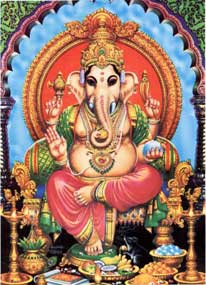
Ganesha By Sri Swami Sivananda Remover of all obstacles,Pranava Swaroopi,Embodiment of wisdom,Devata of Muladhara Chakra!O Lord Vinayaka,The bestower of happinessWho has Modaka in hand!O Elephant-headed Lord!Salutations unto Thee.Om Gam Ganapataye Namaha. Lord Ganesha is the elephant-headed God. He is worshipped first. His Names are repeated first before any auspicious work is begun, before beginning any kind of worship. He is the Lord of power and wisdom. He is the eldest son of Lord Siva, and the elder brother of Skanda or Kartikeya. He is the energy of Lord Siva, and so He is called the son of Sankara and Uma. By worshipping Lord Ganesha, mothers hope to earn for their sons the sterling virtues of Ganesha. The Elephant-Head The following story is narrated about Lord Ganesha’s birth and His having the head of an elephant. Once upon a time, at bathing time, the Goddess Gauri, the spouse of Rudra, created Ganapati as a Suddha, or pure white being, out of the mud of Her body, and placed Him at the entrance of the house. She told Him not to allow anybody inside and went for a bath. Lord Siva Himself returned home quite thirsty and was stopped by Ganesha at the gate. Siva got angry and cut off Ganesha’s head, taking Him for an outsider. Gauri came to know of this and grieved much. Siva ordered His servants to bring the head of any creature that might be sleeping with its head northwards. The servants made a thorough search and found only an elephant in that position. The head of the elephant was cut off and brought before the Lord. Siva joined the head of the elephant to the body of Ganapati. Lord Siva made Ganapati worthy of worship by men at the beginning of all their undertakings–marriages, journey, expedition, study, etc. He ordained that the annual worship of Ganesha, should take place on the fourth day of the bright half of Bhadrapada (August-September). Symbolic Philosophy of Lord Ganesha’s Form Lord Ganesha is an embodiment of wisdom and bliss. He is the Lord of Brahmacharins. He is the foremost among Brahmacharins or celibates. He rides on the Vahana, the small mouse. He is the Presiding Deity of the Muladhara Chakra. He is the Lord who removes all obstacles in the spiritual path and brings worldly success. So He is called Vighna Vinayaka. His Bijakshara is Gang. He is the Lord of harmony and peace. Lord Ganesha represents OM or the Pranava. Pranava is the chief Mantra of the Hindus. Nothing can be done without uttering it. Hence the practice of invoking Lord Ganesha before beginning any rite or work. The two feet are His Jnana Sakti and Kriya Sakti. Lord Ganesha has the elephant-head as that is the one figure in nature which is of the form of Pranava. Riding on the mouse represents that He has killed egoism. He holds Ankusa. This represents that He is the Ruler of the world. This is the emblem of Divine Royalty. Ganesha is the first God, Adi-Deva. Mouse is a small creature. Elephant is the biggest of all animals. Riding on a mouse and wearing the head of an elephant denote that He is the Creator of all creatures, from the biggest elephant to the smallest mouse. Elephants are very wise. Wearing the head of an elephant indicates that Lord Ganesha is an embodiment of wisdom. It also denotes the process of evolution. The mouse gradually evolves into an elephant and finally becomes a man. That is the reason why Ganesha has a human body, the head of an elephant, and mouse as His vehicle. This is the symbolic philosophy of His form. He is the Lord of Ganas or groups, such as the group of elements, the group of senses, the group of Tattwas. He is the head of the followers of Siva. The Vaishnavas also worship Lord Ganesha. They have given Him the name of Thumbikkai Alwar, i.e., Alwar with the proboscis. Lord Ganesha’s two Saktis are Kundalini Sakti and Vallabha Sakti. Legends Connected With Lord Ganesha Lord Ganesha is very fond of Modaka, sweet balls made of rice. On one Ganesha Puja Day, He was going from house to house, accepting the offerings of Modaka. Having eaten a good number of these offered to Him, He set out moving on a mouse at night. Seeing a snake, the mouse got afraid and stumbled, with the result that Ganapati fell down. The stomach burst open and the Modakas came out, but Ganappati stuffed the Modakas into the stomach, and catching the same snake, tied it round His belly. Seeing all this, the moon in the sky heartily laughed. Ganapati was annoyed at the behaviour of the moon and pulled out one of His tusks and hurled it against the moon and cursed that no one should look at the moon on the Ganesha Puja Day. If anyone looks at the moon, he will earn bad name or censure or ill repute. If anyone happens to see the moon on that day by mistake or by chance, if he repeats or hears the story of Lord Krishna’s clearing His character in respect of the Syamantaka jewel, he will be free from that ill-repute or blame. Lord Ganesha was pleased to ordain thus. Glory to Lord Ganesha! How kind and merciful He is unto His devotees! Ganesha and His brother Lord Subrahmanya or Kartikeya had once a dispute as to who was the elder of the two. The matter was referred to Lord Siva for final decision. Lord Siva decided that whoever would make a tour round the world and come out first to the starting point had the right to be the elder. Lord Subrahmanya flew off at once on His vehicle, the peacock, to make a circuit of the world. But Ganesha went round His parents and asked for the prize of victory. Lord Siva said: “Beloved and wise -Ganesha! You did not go round the world”. Ganesha replied:

Ganesha Read Post »

datta 1
⁠Festivals in Sanathan Dharam and Hinduism, Swami Sivananda

Dattatreya

Dattatreya By Sri Swami Sivananda O Lord Dattatreya!Trimurti Avatara!Child of Anusuya and Atri!Prostrations unto Thee.Thou art the Adi-GuruOf Sannyasins.Thou art an embodiment of Tyaga.Thou art an Avadhuta.Dattatreya Dattatreya Pahimam.Datta Guru Datta Guru Rakshamam. ANUSUYA is generally quoted as the model of chastity and she was the wife of Atri Maharshi, a great sage and one of the Sapta Rishis. She was well established in Pativrata Dharma. She served her husband with intense devotion. She did severe Tapas for a very long time in order to beget sons equal to Brahma, Vishnu and Siva. Once, Narada took a small ball of iron–the size of a gram grain–to Saraswati and said to her: “O Saraswati Devi! Please fry this iron ball. I will eat this iron-ball-gram during my travel.” Saraswati laughed and said: “O Rishi Narada! How can this iron ball be fried? How can this be eaten?” Narada afterwards went to Mahalakshmi and Parvati, and requested them to fry the iron ball. They also laughed at Narada Rishi. Then Narada said: “O Devis! See, I will get it fried by Anusuya, wife of Atri Maharshi, a great Pativrata who lives in the earth-plane.” The Power of Anusuya’s Chastity Then Narada came to Anusuya and requested her to fry the iron-ball-gram. Anusuya put the iron ball in the frying pan, meditated on the form of her husband, and put a few drops of water which were used in washing the feet of her husband, on the iron ball. The iron ball was at once fried. Narada went to Saraswati, Lakshmi and Parvati, ate before them the fried iron-ball-gram, and gave them also a little of it. He greatly praised the glory of Anusuya and her chastity. Then Narada resolved to fulfil the wish of Anusuya in her begetting sons equal to Brahma, Vishnu and Siva. He said to Saraswati, Lakshmi and Parvati: “You also could have fried the iron ball, if you all had done service to your husbands with faith, sincerity and devotion. Make a request to your husbands to test Anusuya’s Pativrata Dharma.” Then Saraswati, Lakshmi and Parvati requested their husbands to test the Pativrata Dharma of Anusuya, wife of Atri Maharshi, and ask her to give them Nirvana Bhiksha, i.e., giving alms in a naked condition. The Tri-Murtis came to know through Jnana Drishti of the action of Narada, and the Tapas and the wish of Anusuya. They agreed. The Tri-Murtis put on the garb of Sannyasins, appeared before Anusuya, and asked her to give them Nirvana Bhiksha. Anusuya was in a great dilemma. She could not say ‘No’ to the Bhikshus. She had to maintain her Pativrata Dharma also. She meditated on the form of her husband, took refuge in his feet, and sprinkled over the three Sannyasins a few drops of water which were used for washing the feet of her husband. The Tri-Murtis were converted into three children on account of the glory of the Charanamrita water. At the same time, there was accumulation of milk in the breast of Anusuya. She thought that these children were her own children and fed them with the milk in a nude state and put them in the cradle. She was eagerly expecting the arrival of her husband who had gone for taking his bath. Lord Dattatreya’s Avatara As soon as Atri Rishi came back home, Anusuya related to her husband all that had happened during his absence, placed the three children at his feet, and worshipped him. But Atri knew all this already through his divine vision. He embraced all the three children. The three children became one child with two feet, one trunk, three heads and six hands. Atri Rishi blessed his wife and informed her that the Tri-Murtis themselves had assumed the forms of three children to gratify her wish. Narada went to Brahma Loka, Vaikuntha and Kailasa and informed Saraswati, Lakshmi and Parvati that their husbands had been turned into children through the power of the Pativrata Dharma of Anusuya when they asked her Nirvana Bhiksha, and that they would not return unless the Devis asked for Bhartri Bhiksha (Bhiksha of husband) from Atri. Saraswati, Lakshmi and Parvati assumed the forms of ordinary women, appeared before Atri, and asked for Pati Bhiksha: “O Rishi, kindly give us back our husbands.” Atri Rishi duly honoured the three ladies and with folded hands prayed to them that his wish and the wish of Anusuya should be fulfilled. Then the Tri-Murtis appeared in their true form before Atri and said: “This child will be a great sage according to your word and will be equal to us according to the wish of Anusuya. This child will bear the name of Dattatreya.” Then they disappeared. The Greatest of Avadhutas Dattatreya attained manhood. As He had the rays of the Tri-Murtis, and as He was a great Jnani, all Rishis and ascetics worshipped Him. He was gentle, peaceful and amiable. He was always followed by a great multitude of people. Dattatreya tried to get rid of them, but His endeavours were all in vain. Once, when He was surrounded by many people, He entered a river for bathing and He did not come out of it for three days. He entered into Samadhi inside the water. On the third day, He came out, and found that the people were still sitting on the banks of the river awaiting His return. He did not succeed in getting rid of the people by this method. He adopted another plan. He created a beautiful girl and a bottle of wine out of His Yogic power. He came out of the waters holding the girl in one hand and the bottle of wine in the other. The people thought that Dattatreya had fallen from His Yoga and so they left Him and went away. Dattatreya threw away all His personal possessions, even the scanty clothing He had, and became an Avadhuta. He went out preaching and teaching the truths of Vedanta. Dattatreya taught

Dattatreya Read Post »

images 2026 02 23T161223.165
⁠Festivals in Sanathan Dharam and Hinduism, Swami Sivananda

Theology

Theology By Sri Swami Krishnananda The contemplation of the Absolute is the highest form any religion can take. But this enterprise of the mind requires of it an understanding of the universal situation far beyond normal human comprehension. The popular minds of the masses need a religion they can appreciate and absorb into their daily life, and they demand a religious goal which they can intelligibly plant in the soil of their feelings. The Epics and Puranas have the avowed purpose of providing the average man with a religion which he can practise with ease and confidence. It is almost impossible to visualise the transcendental Being of the Upanishads. Its manifestations in terms of Creation alone seem to be possibly accessible to the common mind. God as related to the Universe in the various phases of his revelation becomes the theme of the theological teachings and discourses in the Puranas, risen out of the subjects dealt with in the Epics, especially the Mahabharata. The theology of the Puranas mainly centres round the Trinity,–Vishnu, Brahma and Siva,–as also the incarnations of Vishnu and the Saktis of the Trinity,–Lakshmi, Sarasvati and Durga,–and the two sons of Siva. Though the worship of the gods and goddesses had its origin in the Epics, and the Puranas only amplify the religious aspect of this manifold adoration of God, there is some difference between the Epic concept of these divinities and its religious magnification in the Puranas. The Epics, for example, look upon the three gods as on an equal footing and the notion of superiority or inferiority among them is a development later than the time of the Epics. The Epic religion is thus more catholic and dignified and it appears to be the first movement of the religious ideology descended from the notion of the Universal Being of the Upanishads. It is likely that there have been several intereferences with the contents of the Puranas from zealots of the religious dogma which diversified itself into many cults and creeds as time advanced. In our treatment of the nature of the different gods of the Indian pantheon, we shall confine ourselves to what, in our opinion, is the genuine essence of the religious ideal behind these developments of religious thought, as prior to and different from the subsequent degradations of the purely spiritual religion of the Upanishads and the Epics into various sectarian ramifications in the form of cults of segregated and even contending gods. As it is in the case of every religion in the world, certain sections of Hinduism had their own immature and fanatical adherents who tended to bring about an ideological dissension among people, rather than unify hearts into a single whole of spiritual fervour, which is the central aim of religion. NARAYANA OR VISHNU According to the Epics, the primeval God from whom the Universe emanated through the creative will is Narayana, a term signifying, according to these texts, the divine being who reposes on the universal waters of the primordial condition of the Universe, or one who is the goal, ideal and destination of all individuals. There are references which make out that Narayana is prior to the division of the phases of God into Brahma, Vishnu and Siva, though, later on, Narayana got slowly identified with Vishnu. It is this identification that has been the source of disagreement among the Vaishnavas and Saivas as to the nomenclature of the One God, the one group asserting that it is Vishnu and the other affirming that it is Siva. It does not appear that originally the scripture had any intention of giving rise to a contention between the devotees of Vishnu and Siva, because this difference seems to be a later travesty of an initially great religious urge to name the original God. As we have noticed earlier, the Upanishads, at least the older ones, do not designate God by any name that would create a sense of partiality in the minds of the followers of religion. As it was found that the popular mind could not grasp the too lofty concept of the Upanishads, the Epics attempted to make God’s relation to man more personal, so that the human heart may yearn for him through its own limited feelings for the Creator. Though the word ‘Brahman’ is retained both in the Epics and the Puranas as an epithet of the Supreme Being, and the supermental glory of God is still sung in the spirit and tone of the Upanishads, the need for making religion a practical affair of day-to-day life was a greater concern of these later scriptures than merely an enunciation of Truth as it is. In addition to the term Brahman, God is now addressed and referred to as ‘Paramatman’, ‘Purusha’, ‘Ishvara’, ‘Bhagavan’, and the like. The name ‘Narayana’, therefore, as applied to God was not meant to be in opposition to the possibility of God being called ‘Siva’. The bigoted differences of later times in religious policies and practices were due to a gross anthropomorphism of the idea of God and a bringing down of the higher God-ideal into the lower rung of a humanised God whom ardent followers were eager to utilise as an instrument in fulfilling their own pious wishes circumscribed to a nationality, a community, or even a single family. Religion, thus, got diluted into petty, private notions and communal cults which ended many a time in battles and wars, a consequence which is far from the religious ideal, as the poles of the earth standing apart. The name Narayana may be safely taken to be an impartial reference to the Supreme Creator, as larger than and prior to the manifestations of Brahma, Vishnu and Siva, and not affiliated to the specialised Vaishnava doctrine in any way. This non-dogmatic attitude is substantiated by the descriptions of God in the Srimad-Bhagavata. God may equally be called Paramasiva, in the terminology of some of the Puranas. The Supreme Being, for the sake of sustenance of the world, appears as Brahma, Vishnu and Siva,–Brahma creating, Vishnu preserving and Siva,

Theology Read Post »

lord vishnu banner img 68b58d0a61ac7ac6c8d881e2 32409117
⁠Festivals in Sanathan Dharam and Hinduism, Swami Sivananda

The Esoteric Meaning of the Ten Avataras

The Esoteric Meaning of the Ten Avataras By Sri Swami Chidananda The prayer “Asato Maa Sat-Gamaya, Tamaso Maa Jyotir-Gamaya, Mrityor Maa Amritam-Gamaya” epitomises the purpose of the Lord’s Creation, the grand culmination of going back into that Transcendence out of which these countless names and forms have been evolved as a blissful act of play by the One without a second. The plan of the Divine Will is that out of the One infinite, names and forms may flow out and for a time there may be a blissful play of this divine multiplicity and then once again, when the Divine Wills, there may be a going back into the pristine glorious source. Multiplicity is the antithesis of eternal Truth which is ever One. It is unreal. It is in the nature of darkness. This cycle of becoming and perishing, birth and death, is the characteristic of this world-play. Thus, a going back into the original grandeur of Brahman means an ascent from this unreality into that Supreme Reality, from this darkness of ignorance to the Light of Knowledge, from this cycle of birth and death into that state where there is Immortality. This process is being worked out by all evolved beings. From time to time great ones have come, who have systematised this Cosmic plan and formulated a method so that individuals in whom this purpose has been awakened may make use of this method and reach the goal quickly, that they may consciously achieve this process in themselves. These methods have come to the various religions of humanity. Gradually, these religions have had a greater and ever-widening group of followers. These great groups exist all over the world as the great section of Hindus, Buddhists, Muslims, Christians, and so on. But the one inescapable fundamental fact about these religious remains that all these various religions are but methods which seek to work out in some way or other the ascent of man from birth and death to Immortality. The ten Avataras of the Lord, which are described in the scriptures, are an order calculated to teach us a sublime spiritual lesson. As you know the first of the ten Avataras is Matsya (Fish) Avatara. The fish lives in water, shut out from the two elements that we consider as most important for the preservation of life–pure air and sunlight. And yet if you liberate the fish from its aquatic prison and place it in life-giving sunshine surrounded by fresh air, it is greatly distressed and would die in a few minutes. Similarly, the man who is sunk in worldliness, who is worse than a beast, cannot bear the sunlight of godliness and fresh, pure air of divine life. He revels in his own dark region deprived of all spiritual light. The next Avatara is the Kurma (Tortoise) Avatara. The tortoise lives in water; but is able, to an extent, to live on the shore, too. This corresponds to the first-stages of man’s career from bestiality to humanity and from humanity to divinity. He likes to live sunk in ignorance, but does not seriously mind the light of truth. Then comes the Varaha (Boar) Avatara. Here the evolution has taken the Jiva completely away from this worse-than-beast stage, away from the aquatic prison, and the boar, though considered as the lowest among the animals, is yet an animal and lives on mother earth, basking in sunshine and breathing fresh air. The Nrisimha (the Man-lion) Avatara represents the crown of animal-creation; the lion is the king among animals. And, the composite personality of Nrisimha (the man-lion) is suggestive of the beast in man. What is the great characteristic of this Avatara? It was taken with the only purpose of killing; it was a great violent Avatara. Here we have the man who is trying to transcend the bestiality; but who is yet so gross in his nature that violence and the spirit of destruction characterise him. Then comes the Vamana (the Dwarf) Avatara. The animal nature is completely gone now. The person is completely human. But he is greatly limited. He is a dwarf. His capacities are greatly limited. He got himself lodged in such narrow limits that he goes to a king and begs of him three foot-measures of land. Vamana’s assumption of the universal form suggests to us that the same man is capable Of transcending all limitations and realising his unity with Brahman. Next we have the Parasurama Avatara where we have the Man. Now bestiality is completely shed; and humanity has supervened. We get three object-lessons from Parasurama’s life. You know how, in obedience to his father’s command, he cut off his mother’s head. His brothers had refused to do this. But, Parasurama had perfect faith in his father. This faith gave birth to implicit obedience and perfect subservience to the higher will. In the spiritual path, the Guru is our father. We should learn to subserve our will to his will. We should have implicit obedience as our great motto. This can come only out of perfect faith, faith in the divinity of our Guru. Parasurama had it. And, therefore, pleased with his obedience, when his father asks him to choose a boon, Parasurama without hesitation says: “Let my mother live.” She gets back her life. Then Parasurama killed many great kings, who were proud, haughty and were inimical to Brahmins. In this description we have the perfect picture of a mixture of Rajas and Tamas. This is the very antithesis of Sattva, represented by the Brahmins. In our Yoga Sadhana we should never forget that a certain amount of destruction is absolutely necessary. Unless we destroy the weeds, the beautiful crops will not grow. Unless we annihilate our bestial nature and sublimate the human nature, we cannot rise into our divine nature. Are kings bad then? Is Rajas bad then? No. Just as righteous kings are as essential to the world as pious Brahmins, Rajas properly directed and canalised is as important to Sadhana as Sattva. Unrighteous kings can cause havoc. Rajas mixed with Tamas not

The Esoteric Meaning of the Ten Avataras Read Post »

2017 2largeimg20 Feb 2017 122614313
⁠Festivals in Sanathan Dharam and Hinduism, Swami Sivananda

Avatara

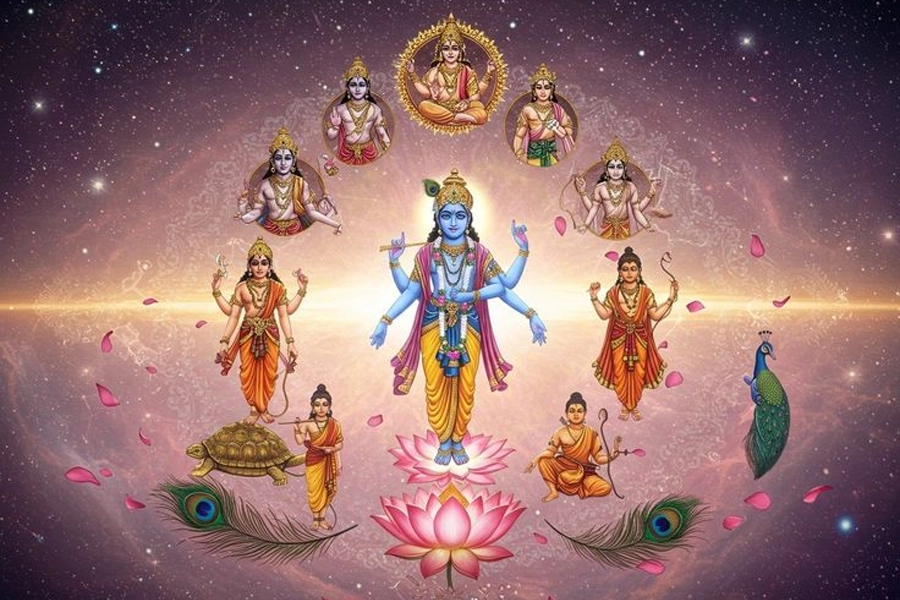
Avatara By Sri Swami Sivananda When Lord Jesus was born, the angels sang a beautiful song in praise of the Lord and, in so doing, revealed the purpose of His descent:     Glory to God in the highest,    And on earth peace, goodwill toward men. Lord Jesus had come into this world of men in order to re-establish the true and the highest glory of God–peace on earth, and goodwill in the hearts of men towards all fellow-beings. Law Governing the Lord’s Descent The law governing the Lord’s descent upon earth is the same all times, everywhere. There is descent of God for the ascent of man. The aim of every Avatara is to save the world from some great danger, to destroy the wicked and protect the virtuous. Says Lord Krishna: “Whenever there is decay of righteousness, then I myself come forth. For the protection of the good, for the destruction of the evil-doers, for the sake of firmly establishing righteousness, I am born from age to age”. When unrighteousness grows and righteousness is on the wane, when the forces of undivine seem to be stronger than the divine forces, when world of God or Commandments of His Messengers is forgotten or disobeyed, when religious fanaticism follows the letter of the scriptures killing their spirit, it is then that Lord incarnates Himself on earth, to save man, to save righteousness. He takes human form when He comes down on the physical plane. He is called an Avatara. Difference Between a Jivanmukta and an Avatara A simple Jivanmukta is like a star that glitters at night. He throws a little light only. Somehow or the other, he has crossed to the other shore through some Tapas and Sadhana. He cannot elevate a large number of people. Just as the waters of a small spring can quench the thirst of a few pilgrims only, so also, this Kevala-jnani can bring peace to a few persons only. Whereas, an Avatara is a mighty person. He is like a big Manasarovar lake. He removes the veil of ignorance of thousands of men and women, and takes them to the land of eternal rest, bliss and sublime. The Avataras are one with the Supreme. They are not parts like the individual souls. Avataras or Incarnations are rays of the Lord. When the work of Loka-sangraha is over, they disappear from the world. Kinds of Avataras Avataras are of various kinds. There are Purna-avataras, with full Kalas or rays. There are Amsa-avataras or partial incarnations. There are Lila-avataras. Lord Krishna was a Purna-avatara. Sri Sankaracharya was an Amsa-avatara. Matsya, Kurma, Varaha, Narasimha, Vamana, Rama and others were Lila-avataras. Krishna and Rama were the Avataras of Lord Vishnu. Dakshinamurthy was an incarnation of Lord Siva. Dattatreya was the Avatara of the Trimurtis–Brahma, Vishnu and Siva are three aspects of God. Brahma is the creative aspect; Vishnu is the preservative aspect; and Siva is the destructive aspect. There is no polytheism in the Hindu religion. Siva, Vishnu, Brahma and Sakti are different aspects of the one Lord. The Ten Avataras of Vishnu The Bhagavata Purana is a chronicle of the various Avataras of Lord Vishnu. There are ten Avataras of Lord Vishnu. There are: Matsya (the Fish), Kurma (Tortoise), Varaha (the Boar), Narasimha (the Man-lion), Vamana (the Dwarf), Parasurama (Rama with the Axe), Ramachandra (the hero of the Ramayana), Sri Krishna, Buddha (the prince-ascetic, Founder of Buddhism) and Kalki (the Hero on a white Horse who is to come at the end of the Kali Yuga). The object of the Matsya Avatara was to save Vaivasvata Manu from destruction by a deluge. The object of the Kurma Avatara was to enable the world to recover some precious things which were lost in the deluge. The tortoise gave its back for keeping the churning-rod when the gods and the Asuras churned the Ocean of milk. The purpose of the Varaha Avatara was to rescue, from the waters, the earth which had been dragged down by a demon named Hiranyaksha. The purpose of Narasimha Avatara, half-lion and half-man, was to free the world from the oppression of Hiranyakasipu, a demon, the father of Bhakta Prahlada. The object of Vamana Avatara was to restore the power of the gods which had been eclipsed by the penance and devotion of King Bali. The object of Parasurama Avatara was to deliver the country from the oppression of the Kshatriya rulers. Parasurama destroyed the Kshatriya race twenty one times. The object of Rama Avatara was to destroy the wicked Ravana. The object of Sri Krishna Avatara was to destroy Kamsa and other demons, to deliver His wonderful message of the Gita, and to become the centre of the Bhakti Schools of India. The object of Buddha Avatara was to prohibit animal sacrifices. The object of Kalki Avatara, who will appear before the end of the Kali Yuga, is the destruction of the wicked and the re-establishment of virtue. Degree of the Lord’s Manifestation in Different Avataras The Rishis of yore have expounded the doctrine that Lord of the universe exists in sixteen expanding Kalas or digits of manifestation, that one digit of His life manifestation in the vegetable kingdom, two in the animal, and from five to eight in the human, according as we pass from the savage at one end of the scale to the highest evolved state at the other. The Lord’s manifestation in His Avataras ranges from nine to sixteen digits or rays. The full or Purna Avataras are those in whom all sixteen rays are present. Lord Krishna was a Purna-Avatara, with sixteen rays, Lord Rama was an Avatara of fourteen rays. Theosophists also make mention of seven rays, and so on, when they describe the stage of spiritual development of their Masters and Adepts. The Divine Form of an Avatara Some people say: “How can we take Krishna as the Lord or Bhagavan? He took birth and died. He is only a man”. This is a false

Avatara Read Post »

586px MotherdurgaCrop
⁠Festivals in Sanathan Dharam and Hinduism, Swami Sivananda

Vasanta Navaratri

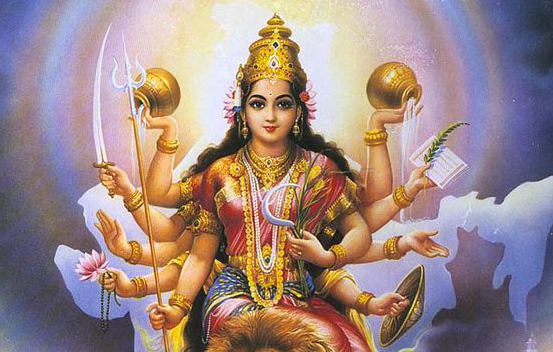
Vasanta Navaratri By Sri Swami Sivananda THE DIVINE MOTHER or Devi is worshipped during the Vasanta Navaratri. This occurs during the spring. She is worshipped by Her own command. You will find this in the following episode in the Devi Bhagavata. In days long gone by, King Dhruvasindu was killed by a lion when he went out hunting. Preparations were made to crown the prince Sudarsana. But, King Yudhajit of Ujjain, the father of Queen Lilavati, and King Virasena of Kalinga, the father of Queen Manorama, were each desirous of securing the Kosala throne for their respective grandsons. They fought with each other. King Virasena was killed in the battle. Manorama fled to the forest with Prince Sudarsana and a eunuch. They took refuge in the hermitage of Rishi Bharadwaja. The victor, King Yudhajit, thereupon crowned his grandson, Satrujit, at Ayodhya, the capital of Kosala. He then went out in search of Manorama and her son. The Rishi said that he would not give up those who had sought protection under him. Yudhajit became furious. He wanted to attack the Rishi. But, his minister told him about the truth of the Rishi’s statement. Yudhajit returned to his capital. Fortune smiled on Prince Sudarsana. A hermit’s son came one day and called the eunuch by his Sanskrit name Kleeba. The prince caught the first syllable Kli and began to pronounce it as Kleem. This syllable happened to be a powerful, sacred Mantra. It is the Bija Akshara (root syllable) of the Divine Mother. The Prince obtained peace of mind and the Grace of the Divine Mother by the repeated utterance of this syllable. Devi appeared to him, blessed him and granted him divine weapons and an inexhaustible quiver. The emissaries of the king of Benares passed through the Ashram of the Rishi and, when they saw the noble prince Sudarsana, they recommended him to Princess Sashikala, the daughter of the king of Benares. The ceremony at which the princess was to choose her spouse was arranged. Sashikala at once chose Sudarsana. They were duly wedded. King Yudhajit, who had been present at the function, began to fight with the king of Benares. Devi helped Sudarsana and his father-in-law. Yudhajit mocked Her, upon which Devi promptly reduced Yudhajit and his army to ashes. Thus Sudarsana, with his wife and his father-in-law, praised Devi. She was highly pleased and ordered them to perform Her worship with havan and other means during the Vasanta Navaratri. Then She disappeared. Prince Sudarsana and Sashikala returned to the Ashram of Rishi Bharadwaja. The great Rishi blessed them and crowned Sudarsana as the king of Kosala. Sudarsana and Sashikala and the king of Benares implicitly carried out the commands of the Divine Mother and performed worship in a splendid manner during the Vasanta Navaratri. Sudarsana’s descendants, namely, Sri Rama and Lakshmana, also performed worship of Devi during the Vasanta Navaratri and were blessed with Her assistance in the recovery of Sita. It is the devout Hindu’s duty to perform the worship of Devi for both material and spiritual welfare during the Vasanta Navaratri and follow the noble example set by Sudarsana and Sri Rama. He cannot achieve anything without the Divine Mother’s blessings. So, sing Her praise and repeat Her Mantra and Name. Meditate on Her form. Do worship. Pray and obtain Her eternal Grace and blessings. May the Divine Mother bless you with all divine wealth!

Vasanta Navaratri Read Post »

The Divine Life Society Rishikesh Swami Sivananda Saraswati 1 1 e1770971002548
⁠Festivals in Sanathan Dharam and Hinduism, Swami Sivananda

Thaipusam

Thaipusam By Sri Swami Sivananda Thaipusam which falls in the month of Thai (January – February) is celebrated with intense devotion by a very large section of the Tamil  people throughout the world. It is celebrated on the full moon when the constellation Pusam is on the ascend. Lord Skanda is the spiritual son of Lord Siva. On this day the Lance (Vel) was given to him by His mother. The origin of Lord Skanda, the purpose of His avatara and its significance are of much importance to all seekers after Truth. During the battle between the Asuras and the Devas, the latter were defeated several times by the former. The Devas were unable to resist the onslaught of the Asuric forces. In despair, they approached Lord Siva and entreated to give them an able leader under whose heroic leadership they might obtain victory over the Asuras. They surrendered themselves completely and prayed to Lord Siva sincerely. The gracious Lord granted their request by creating mighty divine warrior, Lord Skanda, out of his own power or Achintya Sakti. This great son of Lord Siva at once assumed leadership of the celestial forces, originated them, inspired them and attacked the asuric forces. The asuras were routed and a glorious victory was gained by the Devas. Make a whole hearted surrender at the feet of the Divine even as the Devas surrendered to Lord Siva. And like them, pray earnestly with Bhava and sincerity. The Divine help will surely come, and in your heart will spring up the routing torrent of Divine Sakti. The Lord’s grace will become manifest to you in the form of inner soul force. This is the Divine power of Jnana symbolised by the Vel which vanquishes all undivine forces that attack you on the spiritual path and emerge triumphant and victorious. Kavadi–The Symbol of Tapasya And Courage Lord Shanmukha is the Pratyaksha Devata (visible God) of this Kali Yuga. He is readily pleased with His devotees to whom He grants both Bhukti and Mukti (enjoyments here and Moksha hereafter). Millions are still living who can narrate instances in their own lives to show the miracles brought about by propitiation of Lord Shanmukha. Perhaps the most potent propitiatory rite that a devotee of Shanmukha undertakes to perform is what is known as the Kavadi. The benefits that the devotee gains from offering a Kavadi to the Lord are a millionfold greater than the little bit of pain that the devotee inflicts upon himself. Generally people take a vow to offer a Kavadi to the Lord for the purpose of tiding over or averting a great calamity. For instance, if the devotee’s only son is laid up with a fatal disease, he would pray to Shanmukha to grant the boy a lease of life in return for which the devotee would take a vow to dedicate a Kavadi to Him. Though this might, on the face of it, appear materialistic, a moment’s reflection will reveal that it contains in it the seed for the Supreme God-Love. The worldly object is achieved; and the devotee offers the Kavadi. After the ceremony, he gets so much intoxicated with the love of God that his spiritual, inner chamber is opened now. This, too, ultimately leads to Para Bhakti. Kavadi: From the simple shape of a weighing balance, or the street hawker’s storehouse–a heavy wooden stick to rest on the shoulder, to the two ends of which are tied two baskets enclosed in cloth–the Kavadi varies in its shape and type to the costly palanquin superstructure, profusely flower-bedecked and interwoven with peacock feathers (a feather that is of very great significance in Shanmukha worship). In all cases the Kavadi has a good many brass bells adorning it and announcing it as the Kavadi-bearer moves along. As, very often, the Kavadi-bearer observes Mouna or the vow of silence, the bell alone is eloquent of the Kavadi-procession. Now, the two pots hanging at either end of the Kavadi might contain rice, milk or other articles which the devotee has vowed to offer to Lord Shanmukha. The more devout among the Kavadi-bearers and especially those who offer the Kavadi to the Lord as a measure of propitiating the Lord for spiritual development, as a part of their Sadhana, collect these articles by begging. On foot they travel from village to village, and beg from house to house. The people offer the articles direct into the pots of the Kavadi. The Kavadi-bearer continues this way till the pots are full or until the avowed quantity is reached and then offers the Kavadi to the Lord. Sometimes the devotee takes the vow that he would walk barefooted from his home to one of the shrines of Lord Shanmukha, bearing the Kavadi and collecting the materials for the offering. He has sometimes to walk nearly one hundred miles! Those who offer milk, rice or any article into this Kavadi also receive the Lord’s blessings. Kavadi-bearer: The Kavadi-bearer has to observe various Niyamas(rules) between the time he takes up the Kavadi and the day of offering. He has to perform elaborate ceremonies at the time of assuming the Kavadi and at the time of offering it to the Lord. He also puts on the dress of aPandaaram–or Saivite mendicant. It consists of a saffron-coloured cloth, a scarlet conical cap and a cane silver capped on both ends. Lord Siva Himself is a Supreme Pandaaram. He Himself loves to wander in this dress. Therefore the dress is holy for the Saivite. The Pandaaram has to live on Bhiksha (alms) only. The Kavadi-bearer’s bare chest is covered over with several Rudraksha-malas. The Kavadi-bearer observes celibacy. He takes Sattvic food; and abstains from all sorts of intoxicating drinks and drugs. He continuously dwells in the thought of the Lord. Many of the Kavadi-bearers, especially those who do it as Sadhana, impose various sorts of self-torture upon themselves. They pass a sharp, little ‘Vel’ (Shanmukha’s Spear) through their tongue which is made to protrude out of the

Thaipusam Read Post »

1 lcZqy2mibRjkvMeBdwVz w
⁠Festivals in Sanathan Dharam and Hinduism, Swami Sivananda

The Sport of the Infinite

The Sport of the Infinite By SRI SWAMI KRISHNANANDA There has always been a perpetual, unceasing, ceaseless emanation of light, heat and warmth from the sun, ever since ages. So is God’s manifestation in the world as the incarnations. We use the term incarnation to denote the manner in which spiritual forces work in the temporal world. The spiritual forces are the messengers of God, the arms of God moving in the world of space and time, the eyes of God operating in the empirical process of perception, the majesty of God proclaiming itself in all its grandeur, whether invisibly manifest or visibly demonstrated before our physical eyes. Such are the incarnations or Avataras. This divine manifestation is not limited to places, times and persons. As God is all-pervading, His action is also all-pervading. It is an omnipresent, incomprehensible abundance of God’s kindness, goodness, knowledge and power which occasionally enters into the world of space and time and makes itself felt in palpable form. Though God’s revelations are perennial, perpetual, endless and beginningless, though it is a ceaseless activity like the flow of the Ganga or the radiance of the sun; yet these manifestations are sometimes too subtle to be capable of being perceived by human eyes. We have various gradations of frequency in light rays and sound waves; but the higher frequencies are not capable of being perceived by the eyes or heard by the ears. We have what we call cosmic rays, X-rays, Beta-rays, Gamma-rays, Alpha-rays and many others, which are not perceptible forms of light rays, although they are more powerful than the visible, gross light rays, such as those emanating from the sun, moon, a candle or a torch light. They are more penetrating in their action, more pervasive in their nature and more effective in the results they produce, and yet they are invisible to the physical eyes and the physical senses of man, inasmuch as our senses work under low frequency of operation while these light rays are of a higher frequency. There cannot be any physical communion between the lower frequency and the higher frequency. You know very well radio waves do not clash with one another if the frequencies are different. But if all the broadcasting stations are to send messages in sound waves of the same frequency, there will be collision and confusion, and nothing will be known or understood. Different frequencies do not collide with each other and, therefore, we have no such conflict among the broadcasting stations in the world. Likewise, different frequencies of energy in the cosmos work in different realms for different purposes. And this is one of the reasons why we are unable to come in contact with super-physical forces that operate even now under our very nose. Hell and heaven, the seven worlds, the Svargaloka, the Satyaloka and such other supernormal levels of existence, which we hear from the scriptures, are existent even here and now. But, we cannot contact them just as we cannot see with our physical eyes the X-rays and the cosmic rays. They are just here and not far off, physically speaking. But, for our purposes they are almost non-existent, because simultaneous contact with different frequencies of force is impossible. Hence, often, manifestations of God and supernormal Avataras, which take place nevertheless, remain incomprehensible to human perceptions. But, sometimes, those invisible rays get grossened into visible forms, such as sun’s rays, then we begin to see them. We can feel their presence and then be benefited by the power of these rays, physically speaking. We do not know how we are influenced by the cosmic rays, for example. We neither know them, nor see them, nor can understand them. But we can see visibly how we are benefited by the rays of the sun. We feel the sun is indispensable. The sun is our life, our breath and our existence. This is because the frequency of the light rays of the sun are co-extensive and uniform with the frequencies in which our senses operate. We see a physical world before us, because the physical particles of nature that we see with our eyes are of a similar frequency as the constitution of our own sense-organs. That is why we can see the Bhuloka, but not the Bhuvarloka, Svarloka, Maharloka, Janaloka, Tapoloka or Satyaloka. We cannot similarly see Patala and the other nether worlds, as they range beyond our sense-capacity. The physical world is not the only world that exists in the cosmos. It is only one level of frequency of power, energy and force, on account of which we can see only one world at a time and not two worlds. Neither we can see anything above us nor anything below us. We see only horizontally and that is the physical world of the five elements,–earth, water, fire, air and ether. So you know why we see only one world, though scriptures speak of many worlds. You know also why we see only human beings and not the Devas, gods and celestials. We cannot see them, because they are in a higher level of frequency of consciousness, even as we cannot hear radio-waves through our own physical ears. We want a transistor for that, because the physical eardrum is gross compared to the subtle, ethereal waves sent by the broadcasting stations in the different parts of the world. So all this is to explain scientifically and understand logically, the reason why we are bound to the physical level of perception and experience and why we are completely oblivious of the existence of supernormal powers and divine manifestations of God. But God’s manifestations are perpetual, endless and beginningless, whether we know them, see them or not, even as the other frequencies of energy like light and sound do exist whether we are able to contact them physically or not. As I have already mentioned, when these frequencies become more and more gross, for reasons we cannot understand, we begin to see the world and feel the forces of nature. Likewise, God sometimes can take incarnations of a

The Sport of the Infinite Read Post »