Hari Om

Menu

Sadhana

Image 22
Sadhana, Swami Sivananda

Various Methods of Mind-Control

Various Methods of Mind-Control by Swami Sivananda The mind can be controlled by Abhyasa and Vairagya. Abhyasa is constant effort to fix the mind on God or Atman. Vairagya is dispassion or non-attachment to sensual objects. Enquire “Who am I?” Do Vichara. Do mental Japa of Om and meditate on Atman. All thoughts will die by themselves. You will rest in Sat-Chit-Ananda Atman. Sit alone and watch the Vrittis (thought-waves) of the mind. Be indifferent. Remain as a Sakshi (witness). Don’t identify yourself with the Vrittis. The mind will then be under your control. Destroy the fuel of desire, and the fire of thought will be extinguished. With the annihilation of Sankalpa, the reality of Brahman will shine. Cultivate divine qualities such as friendliness, mercy, gladness and indifference towards happiness, pain, virtue and vice. You will get peace of mind. Don’t think of the past. Don’t plan for the future. Don’t allow the mind to build images. Live in the solid present. Do a thing which the mind does not want to do. Don’t do a thing which the mind wants to do. Don’t try to fulfil your desires. Don’t hope. Don’t expect anything. Destroy the vicious desires through virtuous desires and destroy the virtuous desires also through one strong desire for liberation. Practice of Pranayama destroys Rajas and Tamas, makes the mind steady and one-pointed. Study of religious books, Tapas, charity and Satsanga with Mahatmas, Sadhus and Sannyasins overhaul worldly vicious Samskaras (latent impressions) and pave a long way in the control of mind. Japa of any Mantra and Upasana (worship of God) destroy the impurities of the mind, makes the mind inwards, induce Vairagya, help concentration and eventually lead to control of mind and attainment of God-consciousness. “Kalau Kesavakirtanam.” “In this Kali Yuga the easiest way for controlling the mind and attaining Moksha is Kirtan or singing the Name of the Lord.” Food has influence over the mind. Sattvic food (milk, fruits, etc.) calms the mind. Rajasic food (meat, alcohol, etc.) excites the mind. Take Sattvic food; have Mitahara (moderation in diet). Destroy evil habits by establishing new good habits. Control the lower instinctive mind through the higher Sattvic mind. Constant selfless service with Atma-Bhava is highly efficacious in purifying and controlling the mind. Don’t wrestle or struggle with the mind. Be regular in your concentration and meditation.

Various Methods of Mind-Control Read Post »

blessing
Sadhana, Swami Sivananda

Sadhana for Mastering the Mind

Sadhana for Mastering the Mind by Swami Sivananda You take great care of the body. You desire that it should be clean, healthy, beautiful and strong. You take bath with sweet soaps and hot water. You regularly feed it with nourishing food. If there is the least pain or disease medicine is given. Doctor is consulted. But you never give a thought to the much more important thing-MIND. Body is only the outward appearance, a projection of the mind. Mind operates through the senses and the sense-organs. If the mind is well then the body is well. If the mind is sick the body becomes ill. Mind is everything. It controls your whole life. Upon it depends your happiness or misery, success or failure. “Mana eva Manushyanam Karanam Bandhamokshayoh” thus say the Upanishads. Again, ‘Yena Manojitam Jagat Jitam Tena’ is the great truth. As you think, so you become. Do you fully realise now the great importance of controlling, training and overcoming the mind? So long you have neglected the care of the mind. Attend to this vital subject from now. Mastery of mind means success in all fields of life. To achieve this mastery you must study the mind. You must understand its nature, habits, tricks and the effective methods of bringing it under restraint. Mind is a bundle of desires, thoughts, feelings and emotions. It is nothing but a collection of Samskaras, desires arising from contact of the sense-organs with different objects, feeling aroused by worldly botherations, ideas gathered together from various different objects. These desires, feelings and ideas are not steady-they will be constantly changing. Suddenly some will subside and some others will occupy their places like the waves in the seas. Some old ones will depart from the storehouse, the mind and some new ones will replace them at once. It is also a bundle of habits. The bad habits and prejudices, although hidden by one’s own nature will come up and occupy the surface of the mind as and when opportunity occurs. According to the Vedantic school of philosophy mind is of middling size (same size as that of the body), it is atomic (Anu) as per Nyaya school and Patanjali Maharshi says in Raja Yoga that it is Vibhu (all-pervading). Most of the western doctors, who are still groping in utter darkness, say that it is an excretion of the brain, like bile from liver. Lord Krishna says, “The senses of which the mind is the sixth (Manah-shashtanindriyani)”-Gita, Chap. XV-7. Here the five senses are the five Jnana Indriyas, viz., the ear, the skin, the tongue, the nose, the eye; and the mind is termed as the sixth. Mind is the common sensory and an aggregate of the five senses. As all the five senses are mingled with it, the mind is able to see, hear, smell, taste and feel independently of the senses. Mind assumes the shape of any object instantly it thinks upon it. If it thinks of a mango, it assumes the form of a mango. Then it gets an attachment with the mango. Now a desire arises in the mind to taste it. Then the mind makes a firm determination to eat that mango and satisfy itself. One thought follows another. The thought of the mango invites instantaneously the thought of the mango-fruit seller, the tree, the garden where the tree is and so on and so forth. This is the expansion of thoughts or Sankalpas. The whole world is nothing but the expansion of Sankalpas. This expansion of Sankalpas of mind towards the various objects is called Bondage. The present-day people have no right understanding, discriminative power between unreal and real. They are completely deluded by Maya. They are under the firm grip or crocodile catch of Maya. They have fallen prey to worldly desires and enjoyments. Therefore they are victims to this bondage, forgetting totally their divine birthright-liberation from the dire disease of births and deaths and attainment of Immortality, the Life Eternal and final Beatitude! Mind is a monkey which jumps from one place to another. It is like the air, which is always moving (Chanchala). Just as the quick-silver it scatters its rays over various objects. It can also be compared to a furious elephant, because of its passionate impetuosity. Like the fish out of the water, it will always be thirsting to run after evil habits and entertain bad and vicious thoughts. It is also known as a “Great Bird” because it skips from one object to another just as the bird wanders from one tree to another tree, one twig to another, and one place to another. The last thought determines the next birth. “Whosoever at the end leaves the body, thinking upon any being, to that being only he goes, O Kaunteya! because of the constant thought of that being”-Gita, Chap. VIII-6. Whatever thought you entertain at the last breath, accordingly you take your next birth. This thought entirely depends upon the constant desires and ideas you entertained throughout your whole life. Every man has a definite outlook of life; due to the power of the mind he has got a definite thinking, definite craving, desire and hope and definite character, temperament, taste and attitude. For the gratification of the mind these desires, cravings etc., are constantly repeated again and again, and these acts leave definite impressions upon the subconscious mind. The impressions take indelible forms in the subconscious mind. At the time of death the whole storehouse, the subconscious mind which is full of various thoughts, feelings, ideas etc., is churned out and the strongest and most cherished desire comes to the surface of the subconscious mind or the field of mental consciousness. This churned up butter or cream (cherished desire) arrests his attention for immediate gratification. You will think of this desire only at the time of death. If you are much attached to your pet dog, the thought of the dog will come at the time of death and

Sadhana for Mastering the Mind Read Post »

images 2026 02 17T150744.038
Sadhana, Swami Sivananda

The Essence of Sadhana

The Essence of Sadhana by Swami Sivananda A Raja Yogi slowly ascends the Yogic ladder along the eight steps, viz., Yama, Niyama, Asana, Pranayama, Pratyahara, Dharana, Dhyana and Samadhi. He gets ethical training in the beginning to purify himself by the practice of Yama and Niyama. Then he steadies his posture, Asana. Then he practises Pranayama to steady his mind and purify the Nadis. Then by the practice of Pratyahara, Dharana and Dhyana he gets Samadhi. Through Samyama he gets different Siddhis. He restrains all the mental modifications that arise from the mind. Hatha Yoga concerns with the physical body and control of breath. Raja Yoga deals with the mind. Raja Yoga and Hatha Yoga are interdependent. Raja Yoga and Hatha Yoga are necessary counterparts of each other. No one can become a perfect Yogi without a knowledge of and the practice of both. Proper Raja Yoga begins where properly practised Hatha Yoga ends. A Hatha Yogi starts his Sadhana with his body and Prana, while a Raja Yogi with his mind; a Jnana Yogi with his Buddhi and will. This is the chief difference. To get success in Raja Yoga, one should have a thorough knowledge of the mysteries of the mind and the way by which it is controlled. The student of Hatha Yoga should try to awaken the Kundalini Sakti that lies dormant in the Muladhara Chakra by Asana, Pranayama, Mudra and Bandha. He should try to unite the Prana-Apana and send the united Prana-Apana through the Sushumna Nadi. Heat is increased by retention of breath and Vayu ascends up along with Kundalini to the Sahasrara Chakra through the different Chakras. When Kundalini is united with Lord Siva at the Sahasrara Chakra, the Yogi attains Samadhi and enjoys supreme peace, bliss and immortality.

The Essence of Sadhana Read Post »

images 2026 02 17T112027.908
Sadhana, Swami Sivananda

Some Secerets of Sadhana

Some Secerets of Sadhana by Swami Sivananda Through the practice of Pranayama, the Sadhaka can attain long life. A healthy man takes 14 or 16 breaths in a minute. The number of breaths increases during sleep, exercise, running etc. Retention of breath through the practice of Kumbhaka bestows longevity to the Yogic student. The lesser the number of breaths, the more is the duration of life. The number of breaths is more in a dog and a horse. It is nearly fifty in a dog and so its duration of life is about 14 years. It is thirtyfive in a horse. So its duration of life is 29 to 30 years. An elephant breathes about 20 times in a minute and so it lives about a hundred years. A tortoise breathes five times in a minute and therefore it lives about four hundred years. A snake breathes twice or thrice in a minute. It lives for 500 to 1000 years. The fewer the desires and wants, the lesser the number of breaths and vice versa. He who practises Japa, meditation, Brahmacharya and studies religious books or holy scriptures will have lesser number of breaths and more concentration. Lesser number of breaths means increase in concentration, rich inner spiritual life in Atman and more peace. The Surya Mandal or the fire is in the Nabhi or the navel. The Chandra Mandal or the sphere of Amrita is a little below Ajna Chakra. Amrita or nectar dribbles and the Agni devours it, consumes it. So you have a short duration of life. If you practise Vipareetakarani Mudra or Sarvanga Asana you can conquer death, you can attain long life. In this posture the fire Mandal comes above. The nectar that dribbles from the Chandra Mandal cannot be swallowed by the Agni. Hence the nectar nourishes the Nadis and the body, and life is prolonged. Therefore it is essential that everybody should practise this vital Asana for keeping up good health and attaining longevity. This is physical Vipareetakarani Mudra. Through the practice of Jnana Vipareetakarani Mudra you can attain immortality and eternal bliss. You can have Brahma Jnana. What is the Jnana Vipareetakarani Mudra? Have a changed angle of vision. Have a changed outlook. Behold Brahman or the one Self everywhere by negating the names and forms. Practise this again and again. Man cannot have a strong mind unless the rays of the mind which go in diverse ways are stopped and made to converge to a point, as in the case of the rays of the sun through a magnifying glass. You can burn many things by centralising the rays of the sun through the magnifying glass. In the same way by centralising the scattered or dissipated rays of the mind and converging them on one point, through dispassion, discrimination and concentration, you can work wonders. You can perceive the marvels of the hidden innermost Self or the Supreme Atman. Decrease in urine, faeces and phlegm, Tejas or brilliance in the eyes and face, beautiful complexion, lightness of body, sweet voice, abundance of vigour, visions of lights, freedom from disease and sloth are the fist signs of progress in Yoga (Prathama Lakshana). Clairvoyance, clairaudience are the signs that indicate the second stage in the onward march in the path of Yoga (Dviteeya Lakshana). The Yogi can walk over the fire, water and a sharp sword. He can move in the skies. He has knowledge of the three periods of time (Trikala Jnana). These indicate that he is in the third, fourth and fifth stage of Yoga. Eventually he frees himself from Prakriti and the three Gunas and attains Kaivalya or Absolute Independence through Nirvikalpa or Nirbhaya Samadhi.



Some Secerets of Sadhana Read Post »

images 65 1
Sadhana, Swami Sivananda

Easy Method of Sadhana in Worldly Environment

Easy Method of Sadhana in Worldly Environment by Swami Sivananda It is due to the veil of ignorance that man has forgotten his essential Divine Nature-Sat-Chit-Ananda State. It is not necessary for him to renounce the world and hide himself in the Himalayan caves to regain his lost Divinity. Here I present a very easy method of Sadhana by which, he can attain God-consciousness even while he is living in the world amidst multifarious activities. You need not have a separate place or room and time for meditation. Close your eyes for a minute or two once in every two or three hours and think of God and His Divine Qualities such as Mercy, Love, Peace, Joy, Knowledge, Purity, Perfection and so forth during work and repeat mentally Hari Om or Sri Ram, or Rama Rama or Krishna Krishna or any Mantra according to your taste. You should do this even during night time, whenever you happen to get up from bed to pass urine or on any other account. Though you are unable to get up during sleep specially for this purpose, you should do this practice at least occasionally when you slightly change your posture of sleep. This sort of habit will come only by practice. Feel that the body is a moving temple of God, your office or business house is a big temple or Brindavan, and every activity, walking, talking, writing, eating, breathing, seeing, hearing etc., are offerings unto the Lord. Work is worship. Work is meditation. Give up expectation of fruits and idea of agency, the feeling of “I am the doer,” “I am the enjoyer.” Feel that you are an instrument in the hands of God. He works through your organs. Feel also that this world is a manifestation of the Lord or Visva Brindavan and your children, wife, father, mother are the images or children of the Lord. See God in every face and in every object. Have a cool, balanced mind always. If you develop this changed angle of vision and Divine Bhava in daily life by protracted and constant practice all actions will become Yogic activities. All actions will become worship of the Lord. This is quite sufficient. You will get God-realisation quickly. This is dynamic Yoga. This is very a powerful Sadhana. I have given you a very easy Sadhana. Hereafter you should not bring your lame excuse and say, “Swamiji, I have no time to do spiritual practices.” Even if you have a little practice of the above Sadhana for three months you will notice that you are a changed being altogether. Write daily for half an hour in a notebook your Ishta Mantra observing Mouna and without turning to the other sides. Write down in bold types in slips of paper “Speak Truth,” “OM Courage,” “OM Purity,” “I must realise God now,” “Time is most precious,” “I will be a true Brahmachari,” “Brahmacharya is Divine Life,” “I am an embodiment of Courage, Purity, Mercy, Love and Patience” and fix them in the bedroom, dining hall, front-rooms and verandahs. Keep some slips in your pocket and diary also. This is an easy way for developing virtuous Divine Qualities.

Easy Method of Sadhana in Worldly Environment Read Post »

images 2026 02 17T151634.126
Sadhana, Swami Sivananda

Sadhana: Its Techniques of Applied Psychology

Sadhana: Its Techniques of Applied Psychology by Swami Sivananda Watch all your feelings very carefully. Suppose you get a gloomy feeling. Take a small cup of milk or tea. Sit calmly. Close your eyes. Find out the cause for the depression and try to remove the cause. The best method to overcome this feeling is thinking of the opposite. Positive overcomes negative. This is a grand effective Law of Nature. Now think strongly of the opposite of gloom. Think of cheerfulness. Feel that you are in the actual possession of this quality. Again and again repeat this formula: ‘Om Cheerfulness’ mentally. Feel “I am ever cheerful.” Begin to smile and laugh several times. Sing; sometimes that can elevate you quickly. Singing is very beneficial to drive off gloom. Chant OM loudly several times. Run in the open air. The depression will vanish soon. This is the Pratipaksha Bhavana method of Raja Yogins. This is the easiest method. The method of driving gloom by force-by willing, by assertion, by command-taxes the ‘will’ very much although it is the most efficient method. It demands great strength of will. Ordinary people will not succeed. The method of displacing or dislocating the negative feeling by substituting the opposite, positive feeling, is very easy. Within a very short time, the undesirable feeling vanishes. Practise this and feel. Even if you fail several times, continue. You will be successful after some sittings and some practice. You can treat in the same manner other negative feelings as well. If there is the feeling of anger, think of love. If there is harshness of heart, think of mercy. If there is dishonesty, think of honesty, integrity. If there is miserliness, think of generosity and generous persons. If there is Moha (infatuation), think of discrimination and ATMIC VICHARA. If there is pride, think of humility. If there is hypocrisy, think of frankness and its invaluable advantages. If there is jealousy, think of nobility and magnanimity. If there is timidity, think of courage, and so on. You will drive off the negative feelings and will be established in a positive state. Practice of a continued type is essential. Be careful in the selection of your companions. Talk very little and that, too, on useful matters.

Sadhana: Its Techniques of Applied Psychology Read Post »

images 2026 02 17T150933.529 e1771321235768
Sadhana, Swami Sivananda

Aspects of Spiritual Sadhana

Aspects of Spiritual Sadhana by Swami Sivananda I When your house is on fire how daringly you enter the house to take your child who is sleeping in the room. Even so you must be very courageous when you tread on the spiritual path. You must be absolutely fearless. You must not have the least attachment to your body. Then only you will have Self-realisation quickly. Timid people are absolutely unfit for the spiritual line. If there are mangoes on the top of a big tree you do not jump all at once to pluck them. It is impossible. You gradually climb up the tree by getting hold of different branches and then reach the top of the tree. Even so you cannot jump all at once to the summit of the spiritual ladder. You will have to place your foot with caution in each rung of the ladder. You will have to practise Yama, Niyama, Asana, Pranayama, Pratyahara, Dharana and Dhyana. Then only you will reach the highest rung of the ladder of Yoga viz., Samadhi. If you are a student of Vedanta you will have to equip yourself with the four means first. Then you will have to do Sravana, Manana and Nididhyasana. Then only you will attain Brahma-Sakshatkara. If you are a student of Bhakti Yoga, you will have to practise the nine modes of Bhakti viz., Sravana, Kirtana, Smarana, Padasevana, Archana, Vandana, Dasya, Sakhya and Atma-Nivedana. Then only you will attain the state of Para-Bhakti. If the chicken and fowl run hither and thither to eat various sorts of rubbish, what does the owner of the poultry do? He gives a slight tap on their heads and throws before them some grains to eat. Gradually they leave their habit of eating filth. Even so this mind runs hither and thither to eat filthy things and enjoy the five kinds of sensual objects. Give a tap on its head and make it taste gradually the spiritual bliss by practice of Japa and Meditation. A Jivanmukta or a Bhagavata has lustrous eyes. He has a protrusion on the top of the head and Trikuti, the space between the two eyebrows. Whatever he says will be indelibly impressed in your mind. You cannot forget it till the end of your life. He possesses tremendous power of attraction. He will clear all your doubts in a marvellous manner. You will enjoy a peculiar joy and peace in his presence. All your doubts will be cleared in his presence. Silence is his language. He is very compassionate and free from selfishness, anger, greed, egoism, lust and pride. He is an embodiment of truth, peace, knowledge and bliss. It takes a long time for the charcoal to catch fire but gun-powder can be ignited within the twinkling of an eye. Even so it takes a long time for igniting the fire of knowledge for a man whose heart is impure. But an aspirant with great purity of heart gets knowledge of the Self within the twinkling of an eye, within the time taken to squeeze a flower by the fingers. Maya is a very huge saw. Lust, anger, greed, delusion, pride, jealousy, hatred, egoism etc., are the teeth of this huge saw. All-worldly minded persons are caught up in the teeth of this saw and are crushed. Those who are endowed with purity, humility, love, dispassion, devotion and enquiry are not hurt. They escape through the divine grace. They pass smoothly below the saw and reach the other side of immortality. A piece of ordinary white paper or coloured paper has no value. You throw it away. But if there is the stamp or the picture of the Asoka Chakra on the paper (currency notes) you keep it safe in your money purse or trunk. Even so an ordinary piece of stone has no value for you. You throw it away. But if you behold the stone-Murthy of Lord Krishna at Pandarpur or any other Murthy in shrines, you bow your head with folded hands, because there is the stamp of the Lord in the stone. The devotee superimposes on the stone-Murthy, his own Beloved and all the attributes of the Lord. Image-worship is very necessary for beginners. II Some Sadhakas do constant Sadhana in a mild manner; some do intense Sadhana for two hours in the morning and two hours at night. If you want to attain Self-realisation quickly you must do intense and constant Sadhana for a protracted period. You may have Darshan of Lord Krishna face to face. You may talk to Him also several times. You may play and eat with Him also. But if you want to have final liberation you must have Atma-Sakshatkara. Nama Deva had Darshan of Lord Krishna several times and yet he was declared to be a half-baked saint by the potter-saint Gora Kumbhar. He had to go to Vishoba Khesar for attaining perfection and Kaivalya. When you sit on an Asana for meditation you want to get up soon, not on account of pain in the legs but on account of impatience. Conquer this undesirable negative quality by developing patience gradually. Then you will be able to sit for three or four hours at a stretch. During meditation you will be frequently talking to somebody mentally. Stop this evil habit. Have a careful watch over the mind. An aspirant writes to me: “Somebody tapped at my door at 3 a.m. I woke up and opened the door. I saw Lord Krishna with crown on His head. He disappeared soon. I went through the lane in search of Him. I was not able to find Him out. Then I came back to my house and sat in front of my door till day-break to see Him again.” Cases of somnambulists or sleep-walkers are not uncommon. They dream even while standing and walking also. The above case might have been a pure case of somnambulism. You will have to be very careful in

Aspects of Spiritual Sadhana Read Post »

The Divine Life Society Rishikesh 12
Sadhana, Swami Sivananda

Primary Principles of Sadhana and Their Perversions

Primary Principles of Sadhana and Their Perversions by Swami Sivananda The path of the spiritual aspirant verily lies through a bewildering jungle of difficulties and dilemmas of problems and paradoxes. One of such vexing paradoxes is that your mind is both your best friend as also your bitter enemy. Mind becomes a true friend only after being gradually trained to be so. Mind begins to be really helpful after the aspirant has progressed sufficiently in spiritual Sadhana. Until then it should be regarded as a troublesome and treacherous enemy inside us. It is extremely diplomatic, cunning and crooked. It is an arch-deceiver. One of the master-strokes of the mind’s artfulness is to make the aspirant feel and smugly imagine that he knows his mind perfectly well and cannot be led away by it and at the same time to delude him totally. The mind has the knack of making the unwary aspirant confidently think himself its master, while it makes a hopeless fool of him. Its deceptions are subtle. You have heard the saying, “The devil can quote scriptures for its purpose.” Similarly the mind can use a virtue to indulge in a vice. It has an inborn inclination to perversion. It can even take the support of a perfectly good principle seemingly to justify the most unprincipled sort of action. Unless it is scrutinised dispassionately its tricks are never fully discovered. Certain of the perversions usually noticeable are described below. This will be valuable to sincere aspirants who are eager to study their minds and eliminate defects and shortcomings. These are extremely useful tips specially in the working field, for aspirants engaged in active Seva in the midst of other people. Sadhakas are told, “Keep up Matri-bhava or Devi-bhava when you move with women.” This is a grand principle to safeguard your purity and spiritual progress. But this does not tell you, “Move with women;” nor does this advice mean that if you try to have this attitude then you may go on freely mixing with the opposite sex without any limit or restraint. The mind will ask, “Why not? What if I do? To retreat from their presence is sheer timidity. No fear when you do so with Devi-Bhava!” Beware, O Aspirant, beware of this tendency! Divine Bhava is not a licence to throw away all restrictions of the Sadhaka’s path. The permanent injunction for Sadhakas is to totally eschew all contact with the opposite sex. When unavoidably such contact becomes necessary, then, “Have Matri-bhava; have Devi-bhava” etc, are prescribed. Also this is to caution the aspirant not to hate women or become a misogynist. Women should be reverenced but from a safe distance. Let not Devi-bhava, etc., be taken to mean that you should be all the time in the midst of them. Watch your mind! Then there is the advice which says, “You may hiss but not bite.” This safe counsel was given to a fabulous snake which in a too extreme excess of piety became so totally docile and harmless that it got severely man-handled by a set of mischievous urchins. It was given as an example to over-timid householders and people struggling in the very midst of the harsh realities of competitive ‘Vyavaharic’ life. Here an overdose of ‘Avanty-brahmin’-like humility might well make life impossible amidst the Asuric elements abounding in the world. Therefore, just an outward show of pugnacity may be countenanced in so far as this does not affect your basic goodness and brotherhood. But this policy is not for the spiritual aspirant in the path of Sadhana and Nivritti. Definitely no. Let aspirants take heed of these words. The Sadhaka is neither to ‘bite’ nor is he to ‘hiss’ even. This ‘hissing’ business will soon become a part of your nature. You will soon find yourself hissing for everything, at everything, at everyone, in and out of season. This hiss will include every variety of rudeness ranging from hot argument, sharp retort, curt reply to angry glaring, shouting and abuse. Thus, short of physical violence and fight, every type of verbal brutality will be put into the “hissing” category. This will ultimately lead to spiritual ruin. The mind is ever waiting to take advantage of even the least concession shown to it. Its natural tendency is to go downward. O Aspirant, do not bite or even ‘hiss.’ Be humble, be sweet, be gentle. Be firm but be soft, polite and courteous. If you wish to ‘hiss’ then ‘hiss’ at your own mind. Thrash the ego. Fight the Shadripus. Watch the mind! Another victim to perversion is the piece of advice: “Be resolute. Stick to your principles. Never budge an inch”-the best possible advice to a sincere Sadhaka, but unfortunately often made the basis for the worst possible trait, i.e., obstinacy. This is a Tamasic trait. But the mind will make believe that you are manifesting Atma-bala or a divine determination. This is its work-to make him cling tightly to his ego. Hence this deception. But the careful aspirant must discern the difference between Sattvic Nishtha and sheer stubbornness. Atma-bala is not a cheap commodity to be got without a great deal of earnest struggle, discipline and will-culture. Determined adherence is advocated in respect of truly high and noble principles and not of self-conceited notions. By all means stick to spiritual Yogic Niyamas but avoid becoming obdurate in nature. Do not be deceived. Watch your mind! “Speak the truth always. Be frank.” Thus is the Upadesa. This means when you are required to talk then speak only the truth. It does not at all mean that you must go about telling everyone to his face what exactly you think of him or her. This is unwarranted behaviour. Under the garb of frankness to give free expression of opinions without caring for other peoples’ feelings is not ‘Arjava’ or frankness or straightforwardness. At the least it is thoughtlessness; at its height it is sheer brutality. It does not bespeak well of an

Primary Principles of Sadhana and Their Perversions Read Post »

images 2026 02 17T174702.995
Sadhana, Swami Sivananda

Bases of Spiritual Sadhana

Bases of Spiritual Sadhana by Swami Sivananda A man abandoning society and activity as evil and shutting himself up in seclusion, isolated from mankind so that he might grow in virtue and into sainthood through meditation, will in all probability be found to be less ready to overlook the transgressions of an erring brother than a practical humanitarian earnestly exerting himself in the field of sincere selfless service. If a monkey or a stray dog happens to enter his Kutir and upset his water-pot or run away with his rottis, the Ekantavasi Virakta will perhaps shout and curse the animal and nurse a grudge against it to the end of his days! Then, again, the admirable virtue of adaptability comes only by mixing and moving among men in many moods and dealing with different peoples of diverse temperaments. It is through selfless activity and service that one acquires the ability to accommodate oneself to the peculiarities of personalities and of places. If, thinking to experience oneness of Self and to feel universal brotherhood, you confine yourself to a solitary cell and take to repeating Vedantic formulae, you run the risk of becoming Tamasic instead and turning eccentric and intolerant. Slowly you will lose what good traits you had previously. It is to guard against this risk that we have the wise counsel “Let not virtue wither for want of its exercise.” It is evident that the recluse in retreat and the Sannyasi in seclusion may well learn a useful point or two from the Nishkama Karma Yogi and the humble Svayam Sevak. No doubt through the method of meditation one may develop several virtues of a subjective type, subjective in that they centre round and concern the Sadhaka’s own immediate personality. Through constant contemplation subjectively one may acquire non-attachment to one’s body, and imperviousness to environment or a victory over the Rajasic urge to wander aimlessly, etc. Restraint and self-denial too could be acquired to some degree. On the other hand, it is only through selfless activity, unattached work and loving service that one can acquire precious gems of purity, patience and humility. Humility especially comes through service alone. In this connection it is of a great profit to remember one point of immense practical value, i.e., of all virtues humility forms the basis. It is only when a man is humble and feels that there is much that he does not possess and has to acquire that there arises in him the eager desire to grow into those noble qualities he is deficient in. Here begins his systematic endeavour and attempt to acquire and possess them. The proud and arrogant man has little scope for growth, because he feels he knows everything. There is that self-sufficiency in his pride which leads him to think that there remains nothing for him to strive for and to acquire. Therefore it is said that humility is the fruitful source of all virtues and that everything that is kind and good naturally grows from it. Generosity and kindness too are the outcome of active contact with the suppliant and the needy, the helpless, the wretched and the distressed. Herein lies the unique distinctive quality of Nishkamya Karma, works reverently done as worship of the Almighty. Moreover, certain noble traits exist in man in dual aspects, latent and manifest. For example, the latent quality of purity is manifest as chastity in actual life. Fearlessness becomes manifest as positive courage when a sudden crisis calls it forth, when a dangerous emergency arises. A habitual state of self-restraint manifests itself as a deliberate act of self-control in the face of an actual temptation or trait. So far as complete and balanced development of both the aspects is concerned, Karma Yoga becomes indispensable. Again subjective virtues developed by a life of seclusion and isolation, to attain to fullness and perfection should be actively exercised. One must not rest satisfied in merely eliminating evil, in being virtuous in a negative way. There must be a positive passion for putting into practice the good in us for the enhancement of the joy and welfare of all creatures. Then alone these virtues justify themselves; they become, as it were, ripe fruits, fully blossomed flowers. They will then expand in their breadth and from the individual circle gradually extend to all humanity, then of the whole universe and finally become all-embracing and cosmic. Development and progress if they are to extend thus into infinity must be dynamic. On the path of moral and spiritual happiness, a life of quiescence carries with it the danger of stagnation setting in at some stage or other. This is the reason why many fail to reach ethical perfection even after years of seclusion and meditation. Selfless activity and loving service should therefore never be underestimated and neglected. Finally one would do well to bear in mind an important point. It has been seen how humility forms the fundamental basis of all good. Then, to the virtues that are acquired with great toil and patient effort, it is humility, again, that acts as the sustainer and vigilant preserver. Humility is the shield and armour against the arch-enemy of the aspirant, moral and spiritual pride. For having progressed considerably in the path of virtue the virtuous man will unconsciously fall a prey to vanity. An insidious feeling of self-approbation will creep in unnoticed. This will later manifest itself in the form of a sort of indulgent attitude and a lofty contempt for those who are not following a similar life. A constant humility kept alive by a ceaseless exercise of it in service is the only sure armour against this foe. It vigilantly protects the striving seeker in his quest after true and abiding happiness. He who effaces his little “self” through a life of motiveless, humble and loving service with Narayana Bhava obtains a unique happiness and bliss. Who can gauge the exquisite joy that he experiences! May all therefore realise the supreme importance of

Bases of Spiritual Sadhana Read Post »

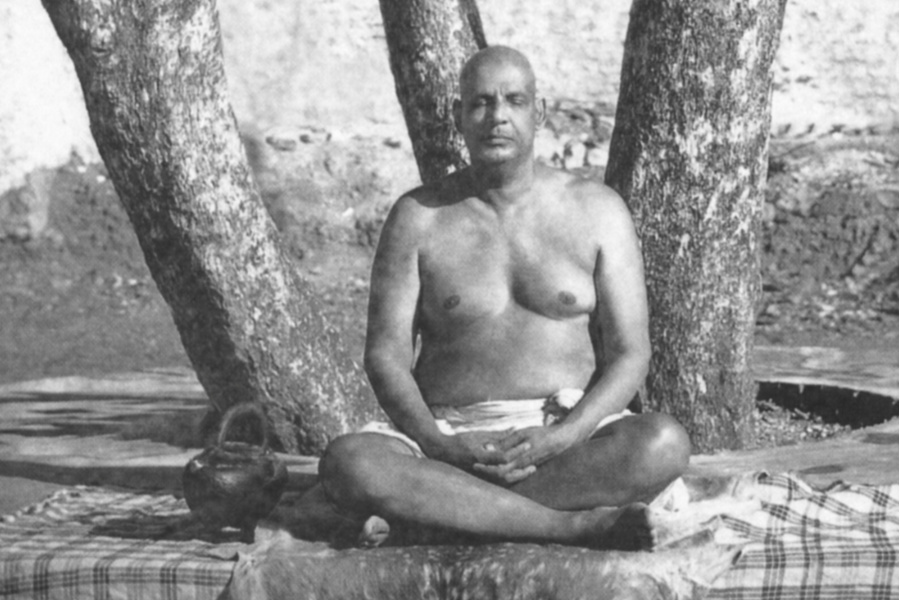
swami sivananda meditating
Sadhana, Swami Sivananda

Abhyasa: The First Phase Of Sadhana

Abhyasa: The First Phase Of Sadhana By Swami Sivananda Abhyasa or practice is the effort to secure steadiness of the modifications of the mind. The effort to restrain all the Vrittis of the mind and to make the mind steady like the jet of a lamp in a windless place is called Abhyasa. To drive back the mind to its source-Hridaya Guha and get it absorbed in Atman is Abhyasa. To make the mind inward and to destroy all its outgoing tendencies is Abhyasa. And this practice should be done for a long time without any break and with perfect devotion. Through Abhyasa you will have to change the outgoing Vishaya Vrittis of the mind. Without the Vrittis of the mind you cannot enjoy sensual objects, and if the Vrittis along with Samskaras are controlled Manonasa or the annihilation of the mind follows. Abhyasa becomes fixed and steady when practised for a long time without any break and with perfect devotion. Constant, steady application is indispensable for perfect control of the mind and attainment of Asamprajnata Samadhi which alone can fry all the seeds of Samskaras. Therefore, constant and intense practice is needed for a long time. Then alone the wandering mind will come under your perfect control. Then alone wherever it is directed it will be ever at rest. Without practice nothing can be achieved. The practice should be accompanied by perfect faith and devotion. If there is no faith and regularity, success is impossible. Abhyasa should be continued till you get perfection. FOUR POINTS FOR MEMORY IN SADHANA REMEMBER THE PAINS OF SAMSARA. REMEMBER DEATH. REMEMBER THE SAINTS. REMEMBER GOD. 1 and 2 will produce Vairagya. 3 will bring inspiration. 4 will cause attainment of God-consciousness. Every aspirant should constantly bear these most important four points in memory.

Abhyasa: The First Phase Of Sadhana Read Post »