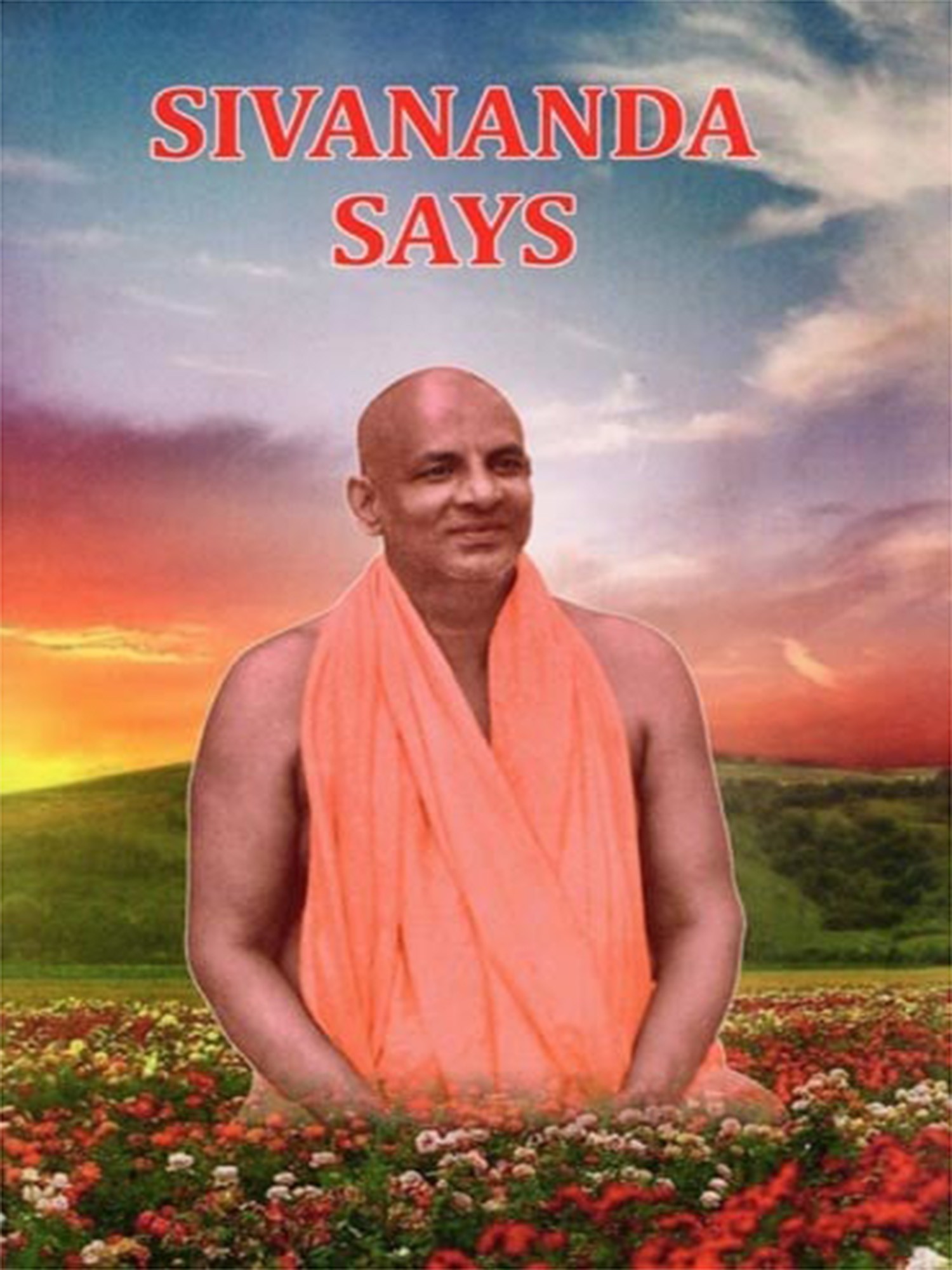
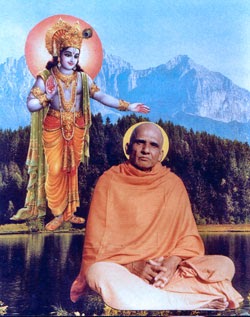
Vidyas from the Upanishads by Swami Sivananda 1. Sat-Vidya This Vidya occurs in the Chhandogyopanishad, VI. 2. 1 & 2, where Uddalaka instructs Svetaketu on the nature of Existence. In the beginning O son, this was mere Exis�tence, one only without a second. Regarding this some others sayat first this was mere non-exis�tence, one alone without a second. From that non-existence proceeds existence. But verily, O son, how can this be? How can existence come from non-existence? Hence, O son, this was existence only in the beginning, one alone without a second. From non-existence existence cannot come out, for, even non-existence is an existence, a being. As regards the sentence in the Taittiriyopanishad which says that existence came from non-existence, it is explained that here non-existence refers to the state of Avyaktam where the manifold world does not exist and from which the existence of the world is evolved. Meditation on Sat-Vidya enables one to assert the reality of the Sat aspect of the Absolute whose essential nature is Chit and Ananda. In con�tinuation of this, Uddalaka asserts the great dictum of identity, Tat Tvam Asi, That thou art. 2. Bhuma Vidya This Vidya occurs in the Chhandogyopani�shad, VII. 24, where Sanatkumara instructs Narada in the nature of the Unconditioned Infinite Plenum or the Fullness of Being. Where one sees nothing else, hears nothing else, understands nothing else, that is called the Infinite Plenum. But where one sees something else, hears something else, understands something else, that is called the little finite. That which is Infinite is Immortal, and that which is finite is mortal This is perhaps the greatest of all the Upanishadic Vidyas, for it sums up the entire result of all philosophies and Vedantic enquiries. It treats of the most exalted Absolute State of unlimited bliss and immortal life after attaining which one returns not to mortal existence. In continuation of this, Sanatku�mara mentions that the Infinite, the Self, the I are all identical and that this One Being alone is the Truth. The knower of this Vidya becomes the Self-Emperor and exists as the Infinite whole. 3. Maitreyi Vidya This Vidya occurs in the Brihadaranyakopani�shad, II. 4 and IV. 5. Sage Yajnavalkya instructs his Brahmavadini wife, Maitreyi, on the nature of the Highest Self. O Dear, not for the love of this all, this all is dear, but for the love of the Self, this all is dear. This Atman (Self), O Maitreyi, is to be seen, heard of, reflected upon and meditated upon. O dear, through the seeing of hearing of reflecting upon and knowledge of this Self, all this becomes known. Where there is duality as it were, there one sees the other, smells the other, hears the other, speaks to the other, thinks of the other, understands the other. But where one’s Self alone exists everywhere, then through what can one see what, through what can one smell what, through what can one hear what, through what can one speak to what, through what can one think of what, through what can one understand what? Through what can one under�stand that by which everything else is understood? O dear, through what can one understand the understander? The Bhuma Vidya and the Maitreyi Vidya form the culmination of the entire philosophy of the Upanishads. The Absolute Reality is affirmed and declared in boldest terms in these two Vidyas. The non-existence or the illusory nature of the world-phenomenon and the truth of the One Indivisible Essence is asserted. When cause and effect are di�fferent from one another there arises the concept of duality. When cause and effect are blended into one, everything becomes One without a second. These two Vidyas are useful for the highest Advaitic Medita�tion on the unconditioned Absolute. 4. Sandilya Vidya This Vidya occurs in the Chhandogyopanishad, III, 1. This Vidya is ascribed to the sage Sandilya. Verily all this is Brahman; Tranquil, one must worship it as that from which this comes forth, as that into which this will be dissolved, as that in which this lives. This, the Soul of mine within the heart, is Brahman. Into Him I shall enter on departing hence. This Vidya further extends its form of meditation by conceiving of the Self as smaller than an atom and bigger than the universe, containing all works, desires, mind, life, odours, tastes, as being unspeaking and unconcerned, etc. Thus the Vidya is suited to Saguna Meditation, though by divesting it of such particular attributes it may be used for Nirguna Advaita Meditation also. 5. Dahara Vidya This Vidya occurs in the Chhandogyopanishad, VIII. 1. This abode, the small lotus that is here within this city of Brahman, and the small space within that lotuswhat is there within this space, that is to be searched out, that certainly is to be known. Verily, as extensive as the external Akasa, is this eternal Akasa. Within it are contained the hea�ven and the earth, both fire and wind, both Sun and moon, lightning and stars, both what exists here and what does not exist; everything here is contain�ed within it. This is one of the greatest of the Vidyas. The all-pervading and all-inclusive nature of the Self is stressed upon in this Vidya. In this meditation, the meditator feels the whole universe as his Self and excludes nothing from the One Self. This Vidya further explains the identity of the external and the internal, the objective and the subjective, the macrocosmic and the microcosmic, the universal and the individual. Brahman and Atman. 6. Vaisvanara Vidya This Vidya occurs in the Chhandogyopanishad, V. 12 to 18. Asvapati Kaikeya describes the Vaisvanara Vidya to Uddalaka and five other seekers after knowledge of the Vaisvanara Self. Its head is heaven, its eye Surya, its breath Vayu, its trunk Akasa, the Apas its bladder, its feet the earth, its breast the sacrificial altar, its hand the sacrificial grass, its heart the Garhapatya fire, its mind the Anvaharyapachana fire (Dakshinagni), its mouth the Ahavaniya fire. Thus the Vaisvanara