






ॐ साईं राम

तत् त्वम् असि • Love is God • अयम् आत्मा ब्रह्म • Help Ever Hurt Never • ब्रह्मन् • Omnipotent • सर्वं खल्विदं ब्रह्म • Vedas are Breath of God • यद् भावं तद् भवति • Omniscient Love All Serve All • प्रज्ञानम् ब्रह्म • अहम् ब्रह्म अस्मि • God is Love  • Omnipresent

Edit Content

Latest Post

swami-sri-sathya-sai-baba-classic-photos-selected-original-download-free (13)
Divine Words of wisdom by Sathya Sai Baba - With India
Divine Words of wisdom by Sathya Sai Baba – With India 1. India always prayed for the welfare of...
sathya-sai-baba-rare-photographs-of-darshans-old-delightful-photos (13)
Divine Words of wisdom by Sathya Sai Baba - With Health and healthcare
Divine Words of wisdom by Sathya Sai Baba – With Health and healthcare 1. Health confers salvation...
cc1ea939-a4d4-468c-bb83-215254917014
Divine Words of wisdom by Sathya Sai Baba - With God
Divine Words of wisdom by Sathya Sai Baba – With God 1. God is very soft, even to melt the butter...
sathya-sai-baba-rare-photographs-of-darshans-old-delightful-photos (20)
Divine Words of wisdom by Sathya Sai Baba - With Festivals
Divine Words of wisdom by Sathya Sai Baba – With Festivals 1. Yagna signifies discarding bad qualities...
IMG-20251026-WA0007
Divine Words of wisdom by Sathya Sai Baba - With Doctors
Divine Words of wisdom by Sathya Sai Baba – With Doctors 1. Doctors are verily God Your browser...
IMG-20251026-WA0222
Divine Words of wisdom by Sathya Sai Baba - With Dharma
Divine Words of wisdom by Sathya Sai Baba – With Dharma 1. All our acts must be done righteously...
IMG-20251026-WA0018
Divine Words of wisdom by Sathya Sai Baba - With Desire
Divine Words of wisdom by Sathya Sai Baba – With Desire 1. Limitless human desires are the cause...
generated-image (10)
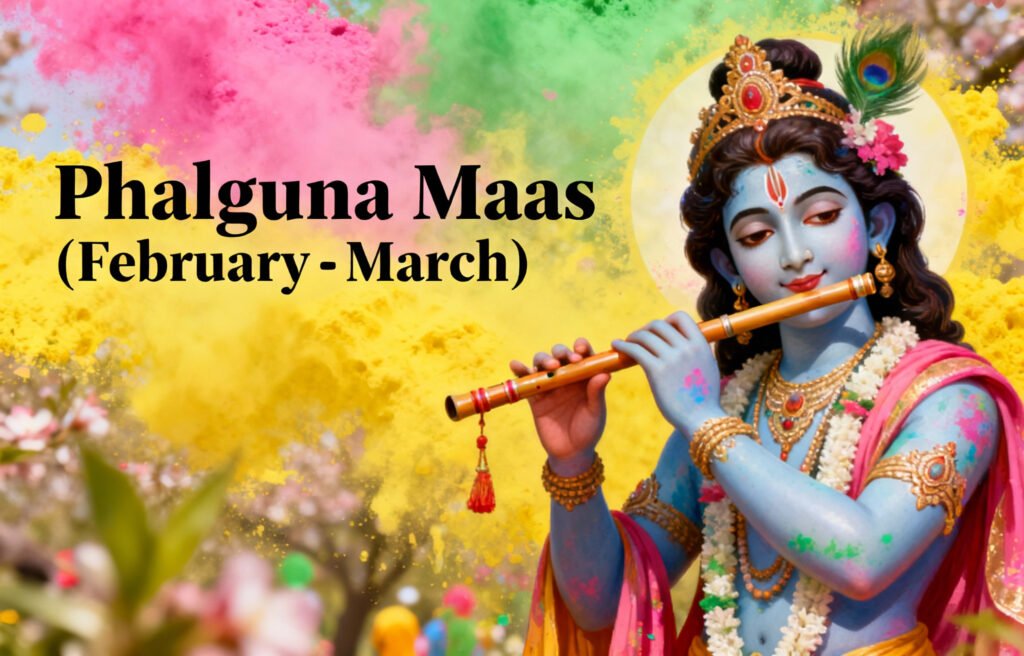
Phalguna (February–March)
Ekadashi In The Month Phalguna (February–March) 🌙 Vijaya Ekadashi – Krishna Paksha (Phalguna Month) Vijaya...
generated-image (9)
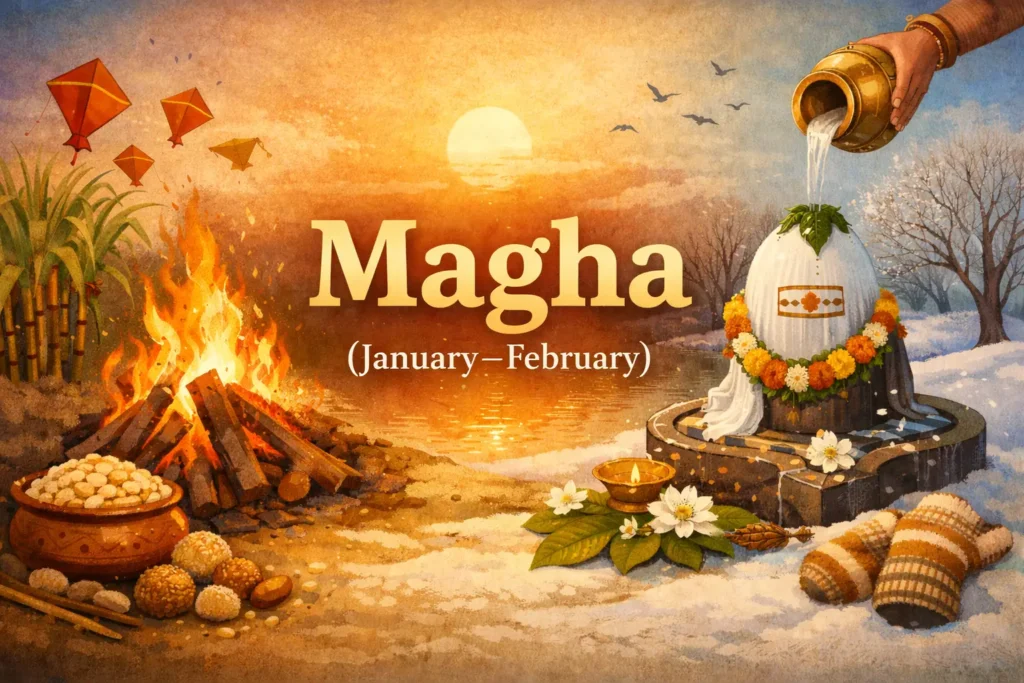
Magha (January–February)
Ekadashi In The Month Magha (January–February) 🌙 Shattila Ekadashi – Krishna Paksha (Magha Month) Shattila...
swami-sri-sathya-sai-baba-classic-photos-selected-original-download-free (15)
Divine Words of wisdom by Sathya Sai Baba - With Compassion
Divine Words of wisdom by Sathya Sai Baba – With Compassion 1. Compassion is what is important...

Social Share

Vedas & Upanishad

Mantra & Hyms

Edit Content

Latest Post

swami-sri-sathya-sai-baba-classic-photos-selected-original-download-free (13)
Divine Words of wisdom by Sathya Sai Baba - With India
Divine Words of wisdom by Sathya Sai Baba – With India 1. India always prayed for the welfare of...
sathya-sai-baba-rare-photographs-of-darshans-old-delightful-photos (13)
Divine Words of wisdom by Sathya Sai Baba - With Health and healthcare
Divine Words of wisdom by Sathya Sai Baba – With Health and healthcare 1. Health confers salvation...
cc1ea939-a4d4-468c-bb83-215254917014
Divine Words of wisdom by Sathya Sai Baba - With God
Divine Words of wisdom by Sathya Sai Baba – With God 1. God is very soft, even to melt the butter...
sathya-sai-baba-rare-photographs-of-darshans-old-delightful-photos (20)
Divine Words of wisdom by Sathya Sai Baba - With Festivals
Divine Words of wisdom by Sathya Sai Baba – With Festivals 1. Yagna signifies discarding bad qualities...
IMG-20251026-WA0007
Divine Words of wisdom by Sathya Sai Baba - With Doctors
Divine Words of wisdom by Sathya Sai Baba – With Doctors 1. Doctors are verily God Your browser...
IMG-20251026-WA0222
Divine Words of wisdom by Sathya Sai Baba - With Dharma
Divine Words of wisdom by Sathya Sai Baba – With Dharma 1. All our acts must be done righteously...
IMG-20251026-WA0018
Divine Words of wisdom by Sathya Sai Baba - With Desire
Divine Words of wisdom by Sathya Sai Baba – With Desire 1. Limitless human desires are the cause...
generated-image (10)
Phalguna (February–March)
Ekadashi In The Month Phalguna (February–March) 🌙 Vijaya Ekadashi – Krishna Paksha (Phalguna Month) Vijaya...
generated-image (9)
Magha (January–February)
Ekadashi In The Month Magha (January–February) 🌙 Shattila Ekadashi – Krishna Paksha (Magha Month) Shattila...
swami-sri-sathya-sai-baba-classic-photos-selected-original-download-free (15)
Divine Words of wisdom by Sathya Sai Baba - With Compassion
Divine Words of wisdom by Sathya Sai Baba – With Compassion 1. Compassion is what is important...

Social Share

Ekadashi

Ekadashi

Phalguna (February–March)

Ekadashi In The Month Phalguna (February–March) 🌙 Vijaya Ekadashi – Krishna Paksha (Phalguna Month) Vijaya Ekadashi falls during the Krishna Paksha (waning phase of the Moon) in the month of Phalguna (February–March).As its name suggests, “Vijaya” means Victory — this Ekadashi is believed to bestow success in all endeavors, remove obstacles, and ensure spiritual as well as worldly triumph. It is mentioned in the Skanda Purana and Padma Purana, where Lord Rama Himself observed this Ekadashi before crossing the ocean to reach Lanka. Hence, it is also regarded as the Ekadashi of Victory and Divine Grace. 🕉️ Legend of Vijaya Ekadashi Once, King Yudhishthira asked Lord Krishna to describe the glory of this Ekadashi. The Lord narrated a story from the Skanda Purana. When Lord Rama, along with Lakshmana and the Vanara army, was preparing to cross the ocean to reach Lanka, He sought the blessings of Sage Bakadalbhya. The sage advised Rama to observe the Vijaya Ekadashi Vrat to gain success and divine support in His mission. Under the sage’s guidance, Rama: The next morning, after offering food and charity to Brahmins and the needy, Rama broke His fast.Soon after, the sea god blessed Him, and a bridge (Rama Setu) was miraculously formed over the ocean — allowing Rama’s army to cross and ultimately win victory over Ravana. Hence, it is said that whoever observes Vijaya Ekadashi with sincerity attains victory in all righteous undertakings. 🌺 Significance of Vijaya Ekadashi 🪔 Rituals and Observances 1. Dashami (Day Before Ekadashi) 2. Ekadashi (Main Day of the Fast) 3. Dwadashi (Breaking the Fast) 📜 Scriptural Reference In the Skanda Purana, Lord Krishna says: “O King, one who observes Vijaya Ekadashi with full faith will achieve success in all undertakings, destroy all sins, and attain My supreme abode.” It is also said that the merit of observing Vijaya Ekadashi equals performing thousands of Ashwamedha and Rajasuya Yajnas. 🌿 Spiritual Meaning The deeper symbolism of Vijaya Ekadashi lies in conquering the inner enemies — lust, anger, greed, pride, and ignorance.True victory (Vijaya) is achieved when the soul triumphs over ego and connects with the divine essence within. It reminds us that with devotion, purity, and surrender to God, even the greatest challenges can be overcome — just as Lord Rama attained victory through faith and righteousness. ✨ Essence of Vijaya Ekadashi Symbolizes faith, courage, and righteousness leading to triumph. A day for spiritual strength and success. Brings victory over difficulties and evil forces. Purifies the mind and heart. Connects the devotee to Lord Vishnu’s divine power. 🌳 Amalaki Ekadashi – Shukla Paksha (Phalguna Month) Amalaki Ekadashi, also known as Amla Ekadashi, falls in the Shukla Paksha (waxing phase of the moon) during the month of Phalguna (February–March).It is one of the most sacred and auspicious Ekadashis, dedicated to the worship of Lord Vishnu and the Amalaki (Indian Gooseberry) tree, which is revered in Hinduism as a divine manifestation of purity and healing. This Ekadashi is said to destroy all sins, enhance longevity, and bring prosperity and good health. 🌿 Mythological Significance of Amalaki Ekadashi The story of this Ekadashi is described in the Brahmanda Purana. Once, King Chitraratha, a great devotee of Lord Vishnu, ruled over a prosperous kingdom called Vaidhisha. His people lived virtuous lives, following dharma and worshipping Vishnu regularly. During the Phalguna Shukla Ekadashi, the king and his citizens performed a grand ritual under an Amalaki tree, offering prayers, lighting lamps, and fasting with deep devotion. That night, a demon named Vayasura attacked the city, intending to destroy the holy gathering. However, as he approached, the divine energy emanating from the Amalaki tree and the Lord Vishnu idol incinerated the demon instantly. In the morning, the people were astonished to see the demon’s ashes. The divine voice of Lord Vishnu echoed through the sky, saying: “By observing the Amalaki Ekadashi fast with devotion, all sins are destroyed, enemies are defeated, and one attains My eternal abode.” Since then, devotees have observed this Ekadashi with reverence, worshipping the Amalaki tree as the embodiment of Vishnu’s divine energy. 🍃 Spiritual Importance of the Amalaki Tree The Amla (Indian Gooseberry) is considered sacred in Hinduism — it is believed to be the dwelling place of Lord Vishnu and Goddess Lakshmi.It symbolizes health, vitality, and purity. Worshipping it on this day bestows spiritual merit (punya), good fortune, and protection from illness. In Ayurveda, Amla is known for its exceptional healing properties — it purifies the body, enhances immunity, and rejuvenates the mind and soul. Thus, its presence in this Ekadashi signifies both spiritual and physical cleansing. 🪔 Rituals and Observances 1. Dashami (Day Before Ekadashi) 2. Ekadashi (Main Day of the Fast) 3. Dwadashi (Breaking the Fast) 📜 Scriptural Reference In the Brahmanda Purana, Lord Krishna says to Yudhishthira: “He who observes Amalaki Ekadashi attains freedom from sin, enjoys good fortune, and ultimately reaches My divine abode, Vaikuntha.” It is also said that: “A person who worships the Amla tree on this day gains the fruit of performing countless sacrifices and charities.” 🌸 Benefits of Observing Amalaki Ekadashi 🌼 Spiritual Essence Amalaki Ekadashi symbolizes the harmony of nature and divinity.The Amalaki tree, representing purity and healing, stands as a reminder that the divine resides in every aspect of nature. By fasting, meditating, and offering devotion to Lord Vishnu on this day, devotees cleanse both body and soul, attaining inner balance and divine grace. ✨ Essence of Amalaki Ekadashi Leads to victory over sin and attainment of Vaikuntha (heavenly abode). Dedicated to Lord Vishnu and the sacred Amla tree. Brings purity, prosperity, and spiritual health. Promotes harmony between humans and nature.

Phalguna (February–March) Read Post »
Ekadashi

Magha (January–February)

Ekadashi In The Month Magha (January–February) 🌙 Shattila Ekadashi – Krishna Paksha (Magha Month) Shattila Ekadashi, also known as Tilda Ekadashi or Magha Krishna Ekadashi, falls during the Krishna Paksha (waning phase of the Moon) in the month of Magha (January–February).The word “Shat-tila” comes from Sanskrit, where “Shat” means six and “Tila” means sesame seeds. Thus, this Ekadashi involves six ways of using sesame seeds — for purification, worship, charity, and nourishment — to obtain spiritual merit and protection from sins. This sacred Ekadashi is celebrated as a day of charity, purification, and selflessness, symbolizing the importance of giving with love and faith. 🕉️ Spiritual & Mythological Significance The story of Shattila Ekadashi is described in the Bhavishya Purana.Once, a pious woman devotedly worshiped Lord Vishnu and performed many fasts and rituals. However, despite her devotion, she never offered food or charity to Brahmins, devotees, or the needy. As a result, although she attained a heavenly abode after her death, her celestial home was barren and devoid of food or wealth. Seeing her plight, she approached Lord Vishnu and asked why her merits had not brought her joy. The Lord explained, “O noble woman, you performed many fasts and rituals, but never shared your food with others. Charity is the essence of true devotion. Without compassion, all austerities remain incomplete.” He advised her to observe the Shattila Ekadashi Vrata, using sesame seeds (tila) in six sacred ways: She followed the Lord’s instructions with complete devotion, and soon her home became abundant with divine light, prosperity, and peace. Thus, Shattila Ekadashi came to represent the power of charity, purity, and sharing as the foundation of spiritual life. 🌼 Importance of Shattila Ekadashi 🪔 Rituals and Observances 1. Dashami (Day Before Ekadashi) 2. Ekadashi Day (Main Fast) 3. Dwadashi (Breaking the Fast) 📜 Scriptural Reference In the Bhavishya Purana, Lord Krishna tells Yudhishthira: “O King, one who observes Shattila Ekadashi with devotion is freed from all sins committed by the body, speech, and mind.By giving sesame seeds, offering food, and chanting My name, one attains divine prosperity and eternal happiness.” 🌺 Spiritual Meaning Shattila Ekadashi teaches that charity done with love and humility purifies the heart and pleases the Divine.Even the smallest offering, when made with faith, becomes sacred. Sesame seeds symbolize purity, nourishment, and divine energy — the sustenance that supports both the body and soul. This Ekadashi reminds us to share what we have — food, compassion, and time — to make life truly fruitful (Saphala). ✨ Essence of Shattila Ekadashi Teaches that selfless giving is the highest form of devotion Promotes charity, purity, and compassion Purifies mind and body through the six uses of sesame (Shat-Tila) Brings prosperity, spiritual energy, and liberation 🌙 Jaya Ekadashi – Shukla Paksha (Magha Month) Jaya Ekadashi, also known as Bhoumi Ekadashi, falls in the Shukla Paksha (waxing phase of the Moon) during the month of Magha (January–February).It is considered one of the most spiritually powerful and sin-destroying Ekadashis, mentioned in the Padma Purana and Bhavishya Purana. This sacred day is devoted to Lord Vishnu, the protector of the universe. Observing the Jaya Ekadashi Vrat frees one from all sins, even from the gravest of transgressions, and grants moksha (liberation) from the endless cycle of birth and death. 🕉️ Spiritual & Mythological Significance The legend of Jaya Ekadashi was narrated by Lord Krishna to Yudhishthira in the Padma Purana.Once, in the court of Lord Indra, the King of Heaven, the celestial musicians (Gandharvas) named Malyavan and Pushpavati performed before the divine assembly. During the performance, Pushpavati, enchanted by Malyavan, became distracted. Their music faltered, and Indra became enraged. In his anger, he cursed them: “Because you disrespected the sanctity of the divine court, you shall both be born as demons on earth, losing your heavenly form and glory.” Instantly, they were transformed into horrifying demon forms, dwelling in the snow-clad Himalayas, tormented by cold, hunger, and sorrow. They remembered none of their past. One day, by divine will, it was Magha Shukla Ekadashi. The couple had no food and, unknowingly, they fasted the entire day and night, suffering in silence. In the morning (Dwadashi), they died and were instantly released from their demonic bodies, regaining their celestial forms. When they returned to heaven, Lord Indra was astonished and asked how they were freed. Lord Vishnu revealed: “They observed Jaya Ekadashi Vrata, unknowingly fasting in My remembrance. Therefore, their sins were destroyed, and they attained liberation.” From that day, the Jaya Ekadashi fast became a sacred means to destroy even the most dreadful sins and grant eternal freedom. 🌼 Importance of Jaya Ekadashi It is said that even hearing the glory of this Ekadashi grants the merit of performing a thousand Ashwamedha Yajnas. 🪔 Rituals and Observances 1. Dashami (Day Before Ekadashi) 2. Ekadashi (Main Day of Fasting) 3. Dwadashi (Breaking the Fast) 📜 Scriptural References In the Padma Purana, Lord Krishna says to Yudhishthira: “He who observes Jaya Ekadashi with full devotion is freed from even the sin of killing a Brahmin or destroying one’s lineage.This sacred fast bestows happiness in this world and salvation in the next.” 🌺 Spiritual Meaning Jaya Ekadashi teaches that no sin is permanent when repentance and devotion are sincere.Even the darkest karma can be cleansed by fasting, prayer, and surrender to God. This Ekadashi is symbolic of victory over the lower self — conquering inner demons of anger, greed, lust, and ignorance.By following the path of faith and discipline, one attains true “Jaya” — victory of the soul over illusion. ✨ Essence of Jaya Ekadashi Brings peace, prosperity, and blessings from Lord Vishnu. Symbol of victory (Jaya) over sin, ego, and darkness. A day for atonement, self-purification, and divine grace. Removes all forms of bondage and leads to moksha (liberation).

Magha (January–February) Read Post »

Ekadashi

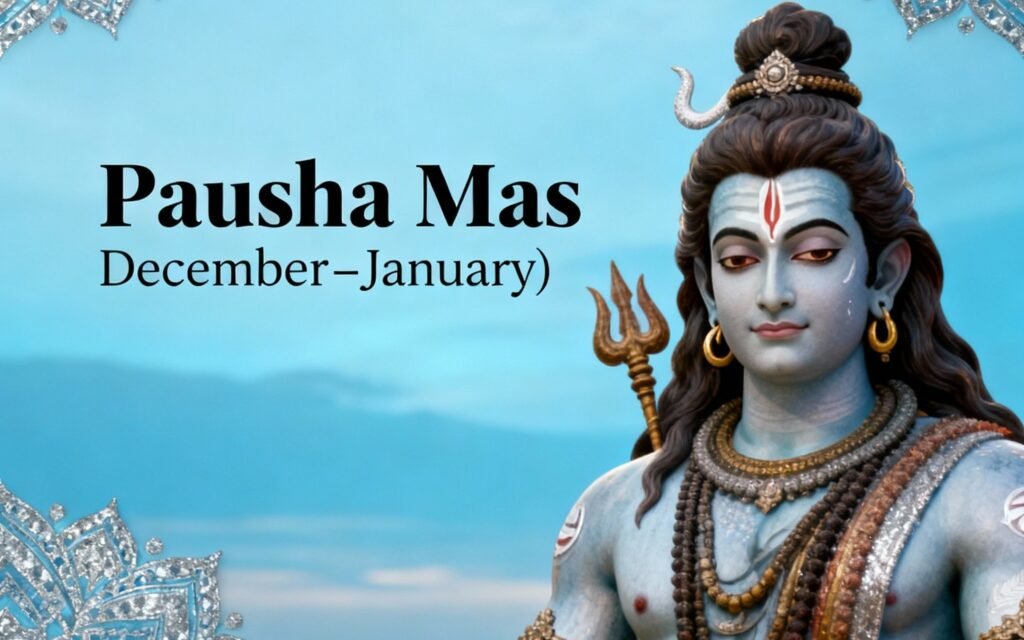
Pausha (December–January)

Ekadashi In The Month Pausha (December–January) 🌙 Saphala Ekadashi – Krishna Paksha (Pausha Month) Saphala Ekadashi (also spelled Safala Ekadashi) falls during the Krishna Paksha (waning phase of the Moon) in the month of Pausha (December–January). The word Saphala means “fruitful” or “successful.” Hence, this Ekadashi is believed to make one’s life successful, desires fulfilled, and sins destroyed through sincere devotion to Lord Vishnu. It is one of the most auspicious Ekadashis, symbolizing how a life of faith and virtue leads to true success (saphalta) — both material and spiritual. 🕉️ Spiritual & Mythological Significance The story of Saphala Ekadashi is narrated in the Brahmanda Purana. Once, there was a powerful and prosperous king named Mahaishmata, who had four sons. His eldest son, Lumpaka, was wicked, greedy, and disrespectful toward both his father and the divine laws. Due to his sinful behavior — theft, indulgence, and disrespect toward the gods — the king banished Lumpaka from his kingdom. He began living in the forest, surviving by stealing from travelers. One day, unknowingly, Lumpaka observed the Saphala Ekadashi fast. It was the Ekadashi tithi during which he could not find food and remained without eating or drinking throughout the day and night. The next morning, he collected some fruits and offered them to a sacred banyan tree (which symbolized Lord Vishnu). Though he performed this act unintentionally, Lord Vishnu was deeply pleased with his simple offering and pure heart. The divine Lord appeared before Lumpaka and said: “By observing the Saphala Ekadashi fast and worshipping Me, you have destroyed all your sins. Return to your father’s kingdom; rule it with righteousness and devotion.” Lumpaka returned home, was forgiven by his father, and later became a wise and just ruler who devoted his life to Lord Vishnu. Thus, the Saphala Ekadashi came to symbolize forgiveness, renewal, and transformation through the Lord’s grace. 🌼 Importance of Saphala Ekadashi 🪔 Rituals and Observances 1. Dashami (Day Before Ekadashi) 2. Ekadashi Day (Main Fast) 3. Dwadashi (Breaking the Fast) 📜 Scriptural Reference In the Brahmanda Purana, Lord Krishna explains to Arjuna: “He who observes Saphala Ekadashi with devotion obtains success in all undertakings. All sins are destroyed, and the devotee attains the highest abode — Vaikuntha.” 🌺 Spiritual Meaning Saphala Ekadashi teaches that true success is not found in wealth or power but in devotion, righteousness, and humility. Even a sinner like Lumpaka can be purified and blessed when he turns toward Lord Vishnu with faith and sincerity. The Ekadashi inspires us to awaken the divine within, to let go of arrogance, and to live a life of gratitude and purity. ✨ Essence of Saphala Ekadashi Leads to moksha (liberation) and freedom from sins Symbol of success, forgiveness, and renewal Brings prosperity and peace through devotion to Lord Vishnu A day to transform one’s heart and seek divine grace 🌙 Putrada Ekadashi – Shukla Paksha (Pausha Month) Putrada Ekadashi — also known as Pavitropana Ekadashi or Pausa Putrada Ekadashi — occurs during the Shukla Paksha (waxing phase of the Moon) in the month of Pausha (December–January).The word “Putrada” literally means “giver of sons” or “bestower of progeny.” It is believed that observing this Ekadashi with faith brings blessings for children, family happiness, and continuity of lineage. However, the deeper spiritual meaning of Putrada is the bestowal of divine virtues and spiritual heirs — meaning that Lord Vishnu blesses devotees with the spiritual strength and wisdom to lead a righteous life and pass dharma (virtue) to the next generation. 🕉️ Spiritual & Mythological Significance The story of Putrada Ekadashi is narrated in the Bhavishya Purana.Once upon a time, there was a pious king named Suketuman who ruled the kingdom of Bhadravati. Despite his wealth and devotion, he was deeply saddened because he had no children. His queen Shaibya too shared his sorrow, as they feared their dynasty would end without an heir. One day, tormented by grief, the king left his palace and wandered into the forest. After some time, he reached the ashram of several wise sages, who were performing penance on the banks of Manasarovar Lake. Seeing the king’s despair, the sages inquired about his suffering. When he revealed his sorrow of being childless, the sages compassionately told him that it was Putrada Ekadashi, a most auspicious day dear to Lord Vishnu. They instructed him to observe a strict fast, worship Lord Vishnu with devotion, and pray for a worthy child. The king and queen observed the fast as advised. Pleased with their devotion, Lord Vishnu appeared in the king’s dream and blessed him, saying: “Because you have observed Putrada Ekadashi with pure faith, you shall be blessed with a virtuous son who will continue your lineage and bring glory to your name.” In due course, a radiant son was born to them — intelligent, righteous, and devoted. Thus, this Ekadashi came to be known as Putrada Ekadashi, the one that fulfills the heartfelt prayers of parents. 🌼 Importance of Putrada Ekadashi 🪔 Rituals and Observances 1. Dashami (Day Before Ekadashi) 2. Ekadashi Day (Main Fast) 3. Dwadashi (Breaking the Fast) 📜 Scriptural Reference In the Bhavishya Purana, Lord Krishna tells King Yudhishthira: “He who observes Putrada Ekadashi with devotion is freed from all sins. By My grace, he obtains a virtuous child, happiness, and ultimately attains My eternal abode.” 🌺 Spiritual Meaning Though this Ekadashi is often associated with the desire for children, its deeper essence lies in the birth of divine wisdom within the devotee.Lord Vishnu, the sustainer of the universe, grants spiritual progeny — pure thoughts, selfless deeds, and inner strength that carry forward the light of Dharma. Putrada Ekadashi reminds us that the greatest inheritance we can give is not material wealth, but spiritual knowledge and devotion. ✨ Essence of Putrada Ekadashi Leads to purification and liberation through Lord Vishnu’s grace Symbol of fertility, blessings, and spiritual renewal Ensures continuity of dharma and righteous legacy Bestows peace, happiness, and family prosperity

Pausha (December–January) Read Post »

Ekadashi

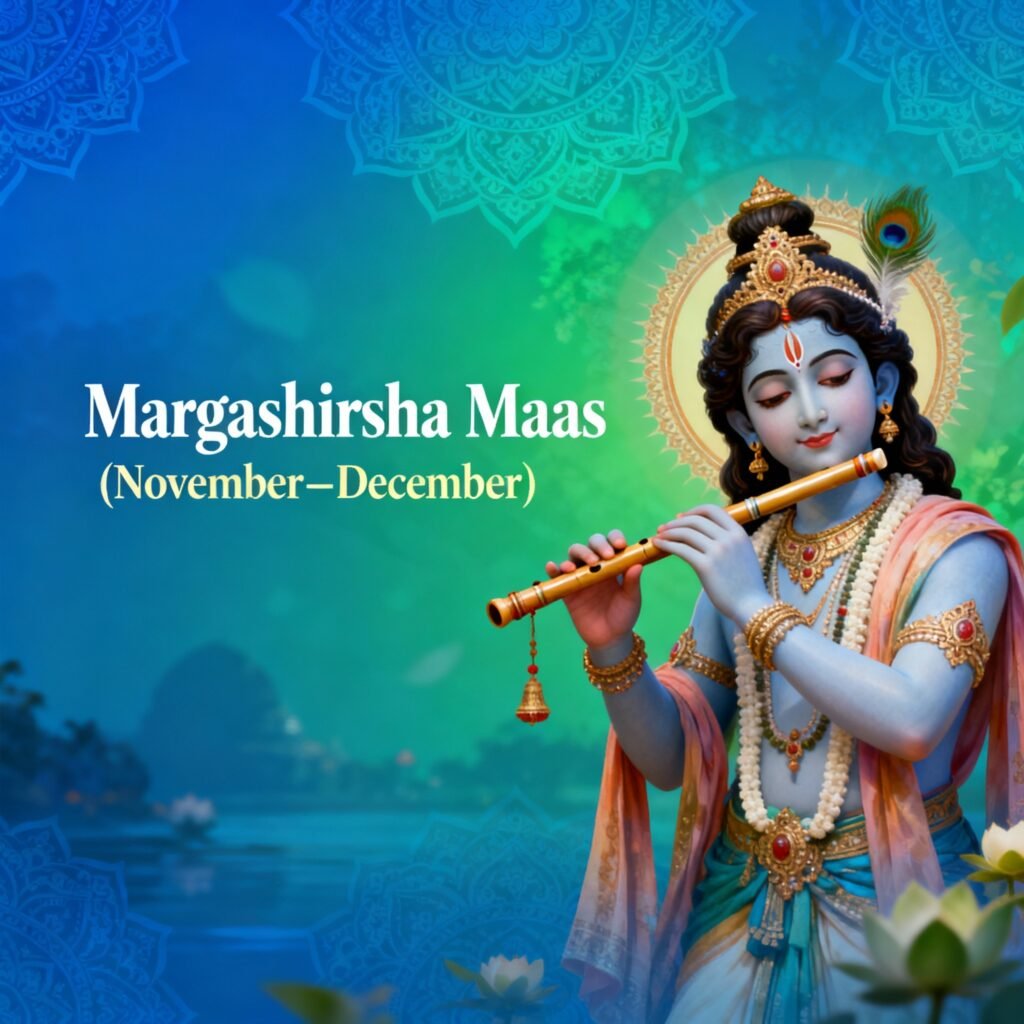
Margashirsha (November–December)

Ekadashi In The Month Margashirsha (November–December) 🌙 Utpanna Ekadashi – Krishna Paksha (Margashirsha Month) Utpanna Ekadashi is one of the most significant and spiritually powerful Ekadashis in the Hindu calendar. It falls during the Krishna Paksha (waning phase of the moon) in the month of Margashirsha (November–December).This Ekadashi is celebrated as the first Ekadashi that originated from Ekadashi Devi, who manifested from Lord Vishnu’s divine energy to destroy evil and protect righteousness. It marks the beginning of the Ekadashi fasting tradition, which is why it holds a very special place among all 24 (or 26) Ekadashis of the year. 🕉️ Spiritual & Mythological Significance According to the Bhavishya Purana and Padma Purana, long ago, a powerful demon named Murasura terrorized the gods. He resided in Chandravati Nagari and performed severe austerities to gain invincibility. When his tyranny grew unbearable, the Devas (gods) sought refuge in Lord Vishnu. Lord Vishnu fought Mura for thousands of years. During the battle, the Lord entered a cave to rest for a moment. Seeing Him asleep, Mura tried to attack. Suddenly, from Vishnu’s divine energy, a radiant female warrior emerged — a goddess glowing with celestial light. She battled and destroyed the demon instantly. When Lord Vishnu awoke, He was pleased and named her “Ekadashi Devi,” saying: “You were born on the eleventh day (Ekadashi) of the lunar fortnight. Whoever observes this day with devotion and fasting shall be freed from sins and attain My abode.” Thus, Utpanna Ekadashi commemorates the birth of Ekadashi Devi, the divine energy of spiritual discipline, purity, and protection. 🌼 Importance of Utpanna Ekadashi 🪔 Rituals and Observances 1. Dashami (Day Before Ekadashi) 2. Ekadashi Day (Main Fasting Day) 3. Dwadashi (Breaking the Fast) 📜 Scriptural Reference In the Bhavishya Purana, Lord Krishna tells Arjuna: “O Arjuna, Utpanna Ekadashi is the destroyer of sins. By observing this fast, one attains the merit equal to performing a thousand Ashwamedha Yajnas. Whoever observes it faithfully attains My eternal abode.” 🌺 Spiritual Meaning Utpanna Ekadashi symbolizes the awakening of divine consciousness within us — the birth of awareness that destroys ignorance and ego (represented by the demon Mura).It teaches that through discipline, devotion, and purity, we can conquer negative tendencies and align with the divine will of Lord Vishnu. ✨ Essence of Utpanna Ekadashi Leads to freedom from karmic bondage and attainment of Moksha (liberation) Birth of Ekadashi Devi, the Goddess of spiritual strength First and foremost Ekadashi that began the sacred tradition of fasting Day of renewal, purification, and devotion 🌙 Mokshada Ekadashi – Shukla Paksha (Margashirsha Month) Mokshada Ekadashi is one of the most sacred and spiritually uplifting Ekadashis in the Hindu calendar. It occurs during the Shukla Paksha (waxing phase of the moon) in the month of Margashirsha (November–December). This Ekadashi is highly revered as it bestows moksha (liberation) upon the soul and helps devotees attain freedom from the cycle of birth and death. It is also believed that observing a fast on this day liberates the souls of ancestors who may be suffering in the afterlife, granting them peace and heavenly abode. 🕉️ Spiritual & Mythological Significance The significance of Mokshada Ekadashi is described in the Brahmanda Purana. The legend begins in the ancient kingdom of Champak Nagari, ruled by a wise and just king named Vaikhanasa. One night, the king had a troubling dream in which his late father appeared to him, suffering greatly in the realms of Yama (the god of death). Distressed, the king sought guidance from his royal priest, who advised him to visit the Sage Parvata Muni, a great seer living in the Himalayas. The sage revealed that the king’s father was enduring punishment due to his past misdeeds, but there was a divine remedy — observing the Mokshada Ekadashi Vrata with full devotion. Following the sage’s advice, the king and his family observed the fast and performed the rituals. Pleased by their devotion, Lord Vishnu granted liberation to the king’s father, freeing his soul from suffering. Since that day, this Ekadashi has been celebrated as Mokshada Ekadashi, the sacred day that grants salvation and liberation. 🌼 Spiritual Importance 🪔 Rituals and Observances 1. Dashami (Day Before Ekadashi) 2. Ekadashi Day (Main Fast) 3. Dwadashi (Breaking the Fast) 📜 Scriptural Reference In the Brahmanda Purana, Lord Krishna explains to Yudhishthira: “O King, Mokshada Ekadashi is the destroyer of all sins. Observing this fast with devotion liberates not only the devotee but also their forefathers. It grants the highest abode — Vaikuntha.” 🌺 Spiritual Essence The word Mokshada itself means “that which grants Moksha (liberation).”This Ekadashi reminds us of the eternal truth — that all worldly pleasures are temporary, but the soul’s union with the Divine is everlasting. It encourages us to lead a pure, disciplined, and selfless life, centered on devotion (bhakti) and detachment (vairagya). ✨ Essence of Mokshada Ekadashi A day for spiritual cleansing, charity, and divine remembrance Symbol of divine liberation and peace Bestows salvation for ancestors and oneself Observing this Ekadashi helps attain Vaikuntha, the abode of Lord Vishnu

Margashirsha (November–December) Read Post »

Ekadashi

Kartika (October–November)

Ekadashi In The Month Kartika (October–November) 🌼 Rama Ekadashi – Krishna Paksha (Kartik Month) Rama Ekadashi, one of the most revered Ekadashis, falls during the Krishna Paksha (waning phase of the moon) in the Kartik month (October–November). This sacred day is dedicated to Lord Vishnu and his divine consort Goddess Lakshmi (Rama Devi), who blesses devotees with prosperity, peace, and spiritual liberation. It is believed that observing the Rama Ekadashi Vrat destroys past sins, fulfills righteous desires, and ensures divine grace in this life and the next. 🕉️ Mythological Significance The Brahmavaivarta Purana narrates the greatness of Rama Ekadashi through a conversation between Lord Krishna and King Yudhishthira. Once, there lived a righteous king named Muchukunda, a great devotee of Lord Vishnu. In his kingdom lived a pure-hearted Brahmin named Shobhana, who was married to King Muchukunda’s daughter, Chandrabhaga. When Rama Ekadashi approached, Chandrabhaga urged her husband to observe the fast, as it was mandatory in her father’s kingdom. Though Shobhana was physically weak, he agreed out of respect and devotion. Unfortunately, due to weakness, he died during the fast. However, because he had observed Rama Ekadashi Vrat faithfully, he was blessed to rule a divine kingdom in the heavenly realm. Later, when Chandrabhaga learned of his celestial status, she too performed the same vrat and joined him in Vaikuntha. Thus, Rama Ekadashi came to be known as the destroyer of sins and liberator of souls, named after Goddess Rama (Lakshmi) — the giver of divine fortune and salvation. 🌺 Spiritual Significance The word Rama in this context refers to Goddess Lakshmi, who resides eternally with Lord Vishnu. Observing Rama Ekadashi symbolizes seeking balance between material prosperity (Lakshmi) and spiritual enlightenment (Vishnu). It teaches that through devotion, purity, and control over desires, one can attain both worldly happiness and eternal peace. This Ekadashi is particularly powerful for removing negative karma, granting forgiveness, and uplifting the soul toward moksha (liberation). 🪔 Rituals and Observances 🌅 1. Dashami (Day Before Ekadashi) 🌞 2. Ekadashi Day (Main Observance) 🌄 3. Dwadashi (Breaking the Fast) 🌸 Benefits of Observing Rama Ekadashi 📜 Scriptural Reference In the Brahmavaivarta Purana, Lord Krishna tells Yudhishthira: “O King, among all fasts, the fast on Rama Ekadashi is most purifying. By observing it with faith and devotion, even a sinner is freed from all bondage and attains the eternal abode of Vishnu.” 🌻 Essence of Rama Ekadashi Rama Ekadashi is not only a day of fasting but also a celebration of divine grace and purity. It reminds devotees that through truth, faith, and devotion, one can rise above worldly limitations and attain the eternal presence of the Divine Couple — Sri Vishnu and Sri Lakshmi. ✨ “Rama Ekadashi washes away sins, awakens the heart, and opens the door to eternal bliss in Vaikuntha.” 🌸 Devutthana (Prabodhini) Ekadashi – Shukla Paksha (Kartik Month) Devutthana Ekadashi, also known as Prabodhini Ekadashi, Dev Uthani Ekadashi, or Hariprabodhini Ekadashi, falls in the Kartik month during the Shukla Paksha (waxing phase of the moon) — usually in October–November.This Ekadashi marks a highly auspicious and spiritually powerful day when Lord Vishnu awakens from His four-month cosmic slumber (Yoga Nidra), which began on Devshayani Ekadashi in the month of Ashadha. It symbolizes the awakening of divine energies, renewal of righteousness, and the beginning of auspicious activities, including marriages, temple festivals, and spiritual vows. 🕉️ Spiritual and Mythological Significance According to the Padma Purana and Skanda Purana, on Devshayani Ekadashi, Lord Vishnu goes into deep rest (Yoga Nidra) on the cosmic serpent Sheshanaga in the Kshirasagara (Ocean of Milk). During this period, known as Chaturmas, no major auspicious ceremonies are performed. After four months, on Prabodhini Ekadashi, the Lord awakens (Prabodhan) to resume the sustenance of the universe. This event is celebrated as Dev Uthani — “the awakening of the gods.” It is believed that Goddess Lakshmi and Tulsi Devi rejoice at this moment, and the Tulsi Vivah (divine wedding of Tulsi and Vishnu) is performed on this day, signifying the start of the marriage season in Hindu tradition. The day also marks the completion of Chaturmas Vrata, a period of spiritual discipline and restraint observed by devotees and saints. 🌿 Legends Associated with Prabodhini Ekadashi 1. Lord Vishnu’s Awakening After resting for four months, Lord Vishnu awakens on this day to bless all living beings. Devotees believe that offering prayers on this day eradicates sins and grants moksha (liberation). 2. Tulsi Vivah According to legend, Tulsi (the holy basil) was once a woman named Vrinda, who was devoted to Lord Vishnu. After her mortal life ended, the Lord blessed her by transforming her into the sacred plant Tulsi, vowing to marry her each year on this day.This divine union of Tulsi and Vishnu (as Shaligram) is celebrated with grandeur and marks the beginning of auspicious events and marriages. 3. King Prithu’s Salvation King Prithu is said to have attained salvation by observing Prabodhini Ekadashi Vrat, as mentioned in scriptures. 🪔 Rituals and Observances 🌅 1. Dashami (Day Before Ekadashi) 🌞 2. Ekadashi Day (Main Observance) 🌄 3. Dwadashi (Breaking the Fast) 🌼 Significance of Devutthana Ekadashi 📜 Scriptural Reference In the Padma Purana, Lord Krishna tells Yudhishthira: “O King, the merit gained by observing Devutthana Ekadashi equals that of performing a thousand Ashwamedha Yajnas. Whoever observes this Ekadashi with devotion awakens divine consciousness within and attains my eternal abode.” 🌻 Essence of Devutthana (Prabodhini) Ekadashi Devutthana Ekadashi is a festival of divine awakening, devotion, and renewal.It reminds devotees to awaken their own inner consciousness — to rise from ignorance and inertia to spiritual light and action. As Lord Vishnu awakens, so should the soul awaken to truth, virtue, and love. ✨ “When the Lord awakens, the world awakens — and the heart blossoms with divine light.”

Kartika (October–November) Read Post »

Ekadashi

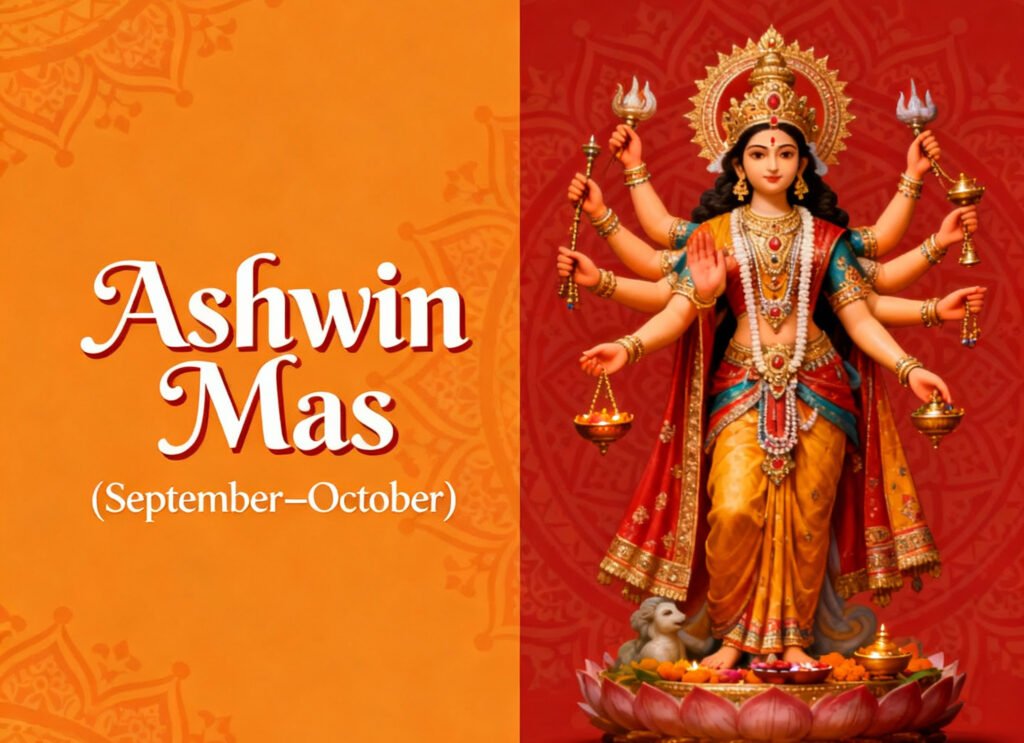
Ashwin (September–October)

Ekadashi In The Month Ashwin (September–October) 🌿 Indira Ekadashi – Krishna Paksha (Bhadrapada Month) Indira Ekadashi, one of the most significant Ekadashi observances, falls during the Krishna Paksha (waning phase of the moon) in the Bhadrapada month (August–September). This sacred day is dedicated to Lord Vishnu, and it holds immense spiritual importance for both the living and the departed souls (Pitru devatas). It is observed during the Pitru Paksha (Shraddha fortnight) — a period dedicated to honoring ancestors — making this Ekadashi particularly auspicious for liberating souls from earthly bondage and ensuring their peace in the afterlife. 🕉️ Mythological Significance The story of Indira Ekadashi is narrated in the Brahmavaivarta Purana. Once, there was a noble king named Indrasena, a great devotee of Lord Vishnu who ruled the kingdom of Mahishmati. One day, the great sage Narada Muni visited him and revealed that the king’s late father was suffering in the Pitru Loka due to certain sins committed in his previous life. The sage advised King Indrasena to observe Indira Ekadashi Vrat with utmost faith and devotion. Following Narada’s instructions, the king performed all rituals — fasting, prayers, and offerings to Lord Vishnu — and dedicated the merit (Punya) to his father’s soul. As a result, his father was liberated from suffering and attained the divine abode of Lord Vishnu (Vaikuntha). Since then, it is believed that observing Indira Ekadashi helps not only the devotee but also their ancestors attain peace and moksha. 🌸 Spiritual Essence Indira Ekadashi symbolizes freedom from the bondage of karma and material attachments. It is a time to remember and offer gratitude to our forefathers, while also purifying one’s own soul through fasting, devotion, and charity. This Ekadashi bridges the living and the departed, reminding us of the eternal connection between generations through faith and dharma. 🪔 Rituals and Observance 🌅 1. Dashami (Day Before Ekadashi) 🌞 2. Ekadashi Day (Main Fast) 🌄 3. Dwadashi (Breaking the Fast) 🌼 Significance of Indira Ekadashi 📜 Scriptural Reference In Brahmavaivarta Purana, Lord Krishna says to King Yudhishthira: “O King, one who observes the Indira Ekadashi fast with devotion and offers its merits to the ancestors, liberates them from the bonds of karma. Such a person attains the eternal abode of Vishnu, where there is no sorrow or suffering.” 🌻 Essence of Indira Ekadashi Indira Ekadashi is a day of devotion, remembrance, and liberation.It reminds us that spiritual progress is not only for ourselves but also a path of gratitude for those who came before us. By observing this sacred fast with faith and sincerity, devotees gain peace, prosperity, and blessings for both their family and ancestors, ultimately leading the soul closer to divine realization. ✨ “Through faith, fasting, and remembrance, the chain of karma is broken — and the soul rises toward eternal light.” 🌺 Papankusha Ekadashi – Shukla Paksha (Ashwina Month) Papankusha Ekadashi is a sacred observance that falls during the Shukla Paksha (waxing phase of the moon) in the Ashwina month (September–October). Dedicated to Lord Padmanabha, a manifestation of Lord Vishnu, this Ekadashi is believed to destroy all sins (Papankusha means “destroyer of sins”) and grant salvation, peace, and divine protection. It is said that observing this Ekadashi with sincerity and devotion leads one to Vaikuntha, the abode of Lord Vishnu. 🕉️ Mythological Significance The Padma Purana narrates the story of Papankusha Ekadashi. Once, Lord Krishna told King Yudhishthira about the greatness of this day, explaining that fasting on Papankusha Ekadashi removes the burden of all past sins and ensures spiritual upliftment. The story mentions a man named Krodhana, who lived a life full of violence, sin, and injustice. However, in his last days, he met a sage named Angira Rishi, who advised him to observe the Papankusha Ekadashi Vrat and chant the name of Lord Vishnu. By sincerely performing this vrat and surrendering himself to God, Krodhana was forgiven of all his sins and attained Vaikuntha after death. From then on, it was believed that even the most sinful person could be redeemed by following this sacred fast with devotion. 🌼 Spiritual Significance Papankusha Ekadashi signifies inner purification and divine forgiveness.It is a reminder that through faith, discipline, and surrender to Lord Vishnu, one can rise above ignorance, ego, and sin. The Ekadashi also emphasizes self-transformation — replacing negative thoughts and actions with devotion, compassion, and truth. 🪔 Rituals and Observances 🌅 1. Dashami (Day Before Ekadashi) 🌞 2. Ekadashi Day (Main Observance) 🌄 3. Dwadashi (Breaking the Fast) 🌙 Benefits and Blessings of Papankusha Ekadashi 📜 Scriptural Reference In the Padma Purana, Lord Krishna says to Yudhishthira: “By observing Papankusha Ekadashi, one is freed from all sins. Whoever fasts on this day with full faith and devotion attains a place in Vaikuntha and receives the divine grace of Lord Padmanabha.” 🌻 Essence of Papankusha Ekadashi Papankusha Ekadashi is a day to reflect, repent, and realign with the path of righteousness.It teaches that no soul is beyond redemption — even a person burdened with countless sins can find liberation through true devotion and surrender. By observing this Ekadashi, devotees purify the body, mind, and soul, paving the way for spiritual awakening and eternal peace. ✨ “In the name of Vishnu, sins perish, and the heart blooms with divine purity.”

Ashwin (September–October) Read Post »

Ekadashi

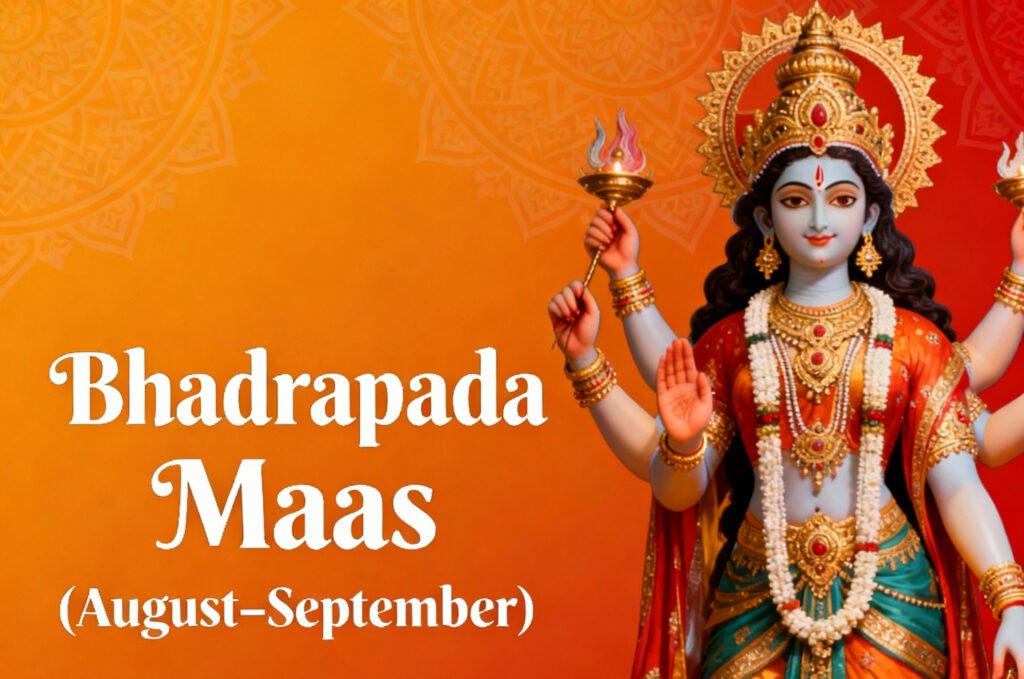
Bhadrapada (August–September)

Ekadashi In The Month Bhadrapada (August–September) 🌿 Aja Ekadashi – Krishna Paksha (Bhadrapada Month) Aja Ekadashi falls during the Krishna Paksha (waning phase of the moon) in the month of Bhadrapada (August–September). This sacred Ekadashi is devoted to Lord Vishnu, the preserver of the universe, and is believed to cleanse all sins, destroy negative karma, and lead the devotee to liberation (moksha). The term Aja means “unborn” or “eternal,” symbolizing the imperishable nature of the soul and the divine. Observing this Ekadashi helps devotees detach from worldly illusions and realize their true spiritual nature. 📜 Mythological Significance The greatness of Aja Ekadashi is mentioned in the Brahma Vaivarta Purana, where Lord Krishna narrates its significance to King Yudhishthira. Once there lived a great ruler named King Harishchandra, renowned for his truthfulness and virtue. However, due to the curse of destiny, he lost his kingdom, wealth, and family, and was forced to serve as a cremation ground keeper. Despite immense suffering, he never abandoned truth. One day, the sage Gautama Rishi met the king and advised him to observe Aja Ekadashi Vrat. The king fasted with devotion, worshipped Lord Vishnu, and stayed awake all night chanting His name. As a result, his sins were destroyed, his suffering ended, and he regained his kingdom, wife, and son. Ultimately, King Harishchandra attained moksha through the divine grace of Lord Vishnu. Thus, Aja Ekadashi is known to grant liberation and remove all karmic debts, symbolizing the power of truth, faith, and devotion. 🌼 Rituals and Observance 1. Dashami (Day Before Ekadashi) 2. Ekadashi Day 3. Dwadashi (Breaking the Fast) 💫 Spiritual Significance 📖 Scriptural Reference In the Brahma Vaivarta Purana, Lord Krishna says: “He who observes Aja Ekadashi with full faith and devotion will never fall into the cycle of birth and death. Even hearing about its glory destroys sins equal to those of killing a Brahmin or committing other grave acts.” 🌙 Essence of Aja Ekadashi Aja Ekadashi symbolizes the victory of truth, devotion, and purity over worldly illusion. It teaches that even in times of great hardship, one must hold fast to righteousness and faith in God. By observing this Ekadashi with love, humility, and sincerity, devotees receive freedom from all sins, divine grace, and spiritual fulfillment. It is not only a ritual of fasting but a sacred journey of the soul toward inner awakening and divine truth. 🌸 Parivartini (Vamana) Ekadashi – Shukla Paksha (Bhadrapada Month) Parivartini Ekadashi, also known as Vamana Ekadashi or Jayanti Ekadashi, occurs during the Shukla Paksha (waxing phase of the moon) in the month of Bhadrapada (August–September). This sacred day is dedicated to Lord Vishnu’s Vamana (Dwarf Brahmin) Avatar, the fifth incarnation among the Dashavatara. It is a spiritually powerful Ekadashi marking the divine turning point (Parivartan) of Lord Vishnu during His Chaturmas rest (Yoga Nidra). On this day, it is believed that Lord Vishnu changes His sleeping position on the cosmic serpent Shesha Naga, signifying transformation and the approach of auspicious times. 📜 Mythological Significance The story of Parivartini (Vamana) Ekadashi is narrated in the Brahmavaivarta Purana and Vishnu Purana. Once, the demon king Bali, grandson of Prahlada, performed intense penance and became so powerful that he conquered all three worlds — Heaven, Earth, and the Netherworld. Seeing this, the Devas (celestial beings) prayed to Lord Vishnu for help. In response, the Lord incarnated as Vamana, a dwarf Brahmin boy. Vamana approached King Bali during a grand Yajna and asked for three paces of land. The generous Bali agreed. Instantly, Vamana expanded into a gigantic form — Trivikrama, covering Heaven and Earth with two strides. When nothing was left for the third step, Bali humbly offered his own head. Pleased by his devotion and truthfulness, Lord Vishnu blessed Bali and granted him the boon of ruling Sutala Loka (a heavenly realm) and promised to guard him personally. This divine incident took place on Parivartini Ekadashi, hence it is also known as Vamana Ekadashi. 🌼 Spiritual Meaning of “Parivartini” The term Parivartini means “to turn” or “to change”. It symbolizes: This Ekadashi also marks the preparation for Lord Vishnu’s awakening on Prabodhini Ekadashi (after two months). 🪔 Rituals and Observance 🌅 1. Dashami (Day Before Ekadashi) 🌞 2. Ekadashi Day (Main Observance) 🌄 3. Dwadashi (Breaking the Fast) 🌙 Significance of Parivartini Ekadashi 📖 Scriptural Quote In the Vishnu Purana, Lord Krishna tells King Yudhishthira: “O King, the merit obtained by observing Parivartini Ekadashi is greater than that of a thousand Ashwamedha Yajnas. On this day, Lord Vishnu turns in His sleep, and those who worship Him attain liberation from the cycle of birth and death.” 🌻 Essence of Parivartini (Vamana) Ekadashi Parivartini Ekadashi signifies divine transformation, humility, and devotion. Lord Vishnu’s Vamana Avatar teaches that ego and pride must surrender to truth and dharma. By observing this Ekadashi with sincerity and discipline, devotees experience inner change, spiritual upliftment, and divine blessings from the Lord who maintains the balance of creation. ✨ It marks a time to reflect, renew, and realign the soul with divine consciousness — the perfect Parivartan (change) toward the light of truth and virtue.

Bhadrapada (August–September) Read Post »

Ekadashi

Shravana (July–August)

Ekadashi In The Month Shravana (July–August) Kamika Ekadashi – Krishna Paksha (Shravana Month) 🌿 Kamika Ekadashi – Krishna Paksha (Shravana Month) Kamika Ekadashi is one of the most powerful and spiritually uplifting Ekadashis, observed during the Krishna Paksha (waning phase of the moon) in the month of Shravana (July–August). Dedicated to Lord Vishnu, the sustainer of the universe, this Ekadashi is said to wash away all sins, destroy negativity, and grant liberation (moksha). The word Kamika means “one who fulfills desires,” and it is believed that fasting and worship on this sacred day fulfill both spiritual and worldly aspirations of devotees. 📜 Mythological Significance The glory of Kamika Ekadashi is described in the Brahma Vaivarta Purana, where Lord Krishna explained its importance to King Yudhishthira. He stated that observing this Ekadashi removes sins as vast as the Himalayas and brings blessings equal to performing great sacrifices (Yajnas). In ancient times, a pious devotee named Chandrachuda, who had unknowingly committed a sin, observed Kamika Ekadashi with deep devotion. By fasting and offering prayers to Lord Vishnu, he was freed from all his past karma and attained salvation. The Lord granted him liberation, showing that faith and sincerity can purify even the gravest wrongs. Kamika Ekadashi also has a deep connection with the worship of Tulsi Devi (the sacred basil plant). Offering Tulsi leaves to Lord Vishnu on this day is said to bring immense merit. Even touching or watering a Tulsi plant on Kamika Ekadashi destroys negative karma and invites divine blessings into one’s home. 🌼 Rituals and Observances 1. Preparation on Dashami (Day Before Ekadashi) 2. Fasting and Worship on Ekadashi Day 3. Dwadashi (Breaking the Fast) 🌺 Spiritual Meaning and Benefits Kamika Ekadashi is considered a symbol of divine purification. By observing this sacred fast, one removes deep-rooted negative tendencies such as anger, greed, jealousy, and ego. It helps align the devotee’s mind and heart with truth, humility, and devotion. Spiritual Benefits: Material Benefits: 🌿 Scriptural Quotes In the Brahma Vaivarta Purana, Lord Krishna says to Yudhishthira: “O King, the merit earned by observing Kamika Ekadashi is greater than that gained by bathing in sacred rivers, offering charity, or performing sacrifices. He who worships Me on this day with devotion attains freedom from all sins and reaches My divine abode.” 💫 Essence of Kamika Ekadashi Kamika Ekadashi teaches us that pure devotion and repentance are more powerful than any ritual or sacrifice. When one sincerely surrenders to the Divine and lets go of worldly desires, the heart becomes a temple of peace. Through fasting, prayer, and acts of goodness, Kamika Ekadashi allows devotees to awaken their inner light and experience the divine presence of Lord Vishnu within themselves. It is not merely a ritual — it is a reminder that the path to God begins with self-purification, compassion, and faith. Pavitra (Putrada) Ekadashi – Shukla Paksha Pavitra Ekadashi, also known as Putrada Ekadashi, is one of the most auspicious Ekadashis observed in the Hindu lunar calendar. It falls during the Shukla Paksha (waxing phase of the moon) in the Shravana month (July–August). This sacred day holds great spiritual significance, as it is believed to bless devotees with purity, progeny (children), prosperity, and liberation from past sins. The term Putrada means “giver of sons,” but in a broader spiritual sense, it represents the giver of virtues, spiritual growth, and blessings of continuity in family and dharma. On this Ekadashi, devotees worship Lord Vishnu, the protector and sustainer of the universe, with great devotion. He is especially worshipped in his form as Lord Janardana, who grants righteousness and fulfills pure desires. It is said that observing the Pavitra Ekadashi fast with sincerity and devotion cleanses the heart of impurities and strengthens one’s connection with the divine. Legend and Significance According to the Bhavishya Purana, there was once a king named Mahijit who ruled the city of Mahishmati. Despite all his virtues and devotion, he and his queen were childless, which caused them great sorrow. A saint named Lomesh Rishi advised the king to observe the Pavitra Ekadashi fast with full devotion. The king and queen followed his guidance, and by Lord Vishnu’s grace, they were blessed with a wise and virtuous son. From that day onward, this Ekadashi became known as Putrada Ekadashi, symbolizing divine blessings for progeny and happiness. Rituals and Observances On this day, devotees wake up early before sunrise and take a holy bath, preferably in a sacred river or by adding Ganga Jal (holy water) to their bath. After purifying themselves, they perform Lord Vishnu Puja, offering Tulsi leaves, sandalwood paste, flowers, fruits, and incense sticks. Devotees chant Vishnu mantras and read the Putrada Ekadashi Vrat Katha, which recounts the story of King Mahijit. The fast observed on Pavitra Ekadashi can be either Nirjala (without water) or Phalahar (only fruits and milk), depending on one’s capacity. The main principle is to maintain purity, devotion, and self-control throughout the day. Many devotees spend the day in chanting Vishnu Sahasranama, reading scriptures, and engaging in seva (selfless service). Spiritual Meaning Pavitra Ekadashi symbolizes the purification of the mind, body, and soul. The fast teaches discipline and reminds devotees to detach from worldly desires and focus on spiritual elevation. It is believed that observing this Ekadashi destroys sins, strengthens faith, and opens the path to Moksha (liberation). Couples desiring children observe this Ekadashi with deep devotion, as it is said to remove all obstacles in parenthood. Moreover, the vrat brings peace, prosperity, and spiritual harmony to the household. Conclusion Pavitra (Putrada) Ekadashi is not merely a ritual but a spiritual celebration of purity, faith, and divine blessings. By following this vrat with sincerity, devotees can experience spiritual rejuvenation and divine grace from Lord Vishnu. It inspires one to live a righteous life filled with devotion, compassion, and gratitude toward the divine.

Shravana (July–August) Read Post »

Ekadashi

Ashadha (June–July)

Ekadashi In The Month Ashadha (June–July) 🌿 Yogini Ekadashi – Krishna Paksha (Ashadha Month) Yogini Ekadashi is a sacred fasting day observed during the Krishna Paksha (waning phase of the moon) in the month of Ashadha (June–July). It is one of the most significant Ekadashis in the Hindu calendar, dedicated to Lord Vishnu, the preserver and protector of the universe. Observing this Ekadashi with devotion is believed to destroy sins, remove diseases, and grant freedom from worldly sufferings. It is also said to bring good health, prosperity, and spiritual upliftment. 📜 Mythological Significance The greatness of Yogini Ekadashi is mentioned in the Brahma Vaivarta Purana, where Lord Krishna explains its importance to King Yudhishthira. In ancient times, there lived a powerful King named Kubera, a great devotee of Lord Shiva. He employed a gardener named Hema Mali, who was responsible for collecting flowers to offer in the daily worship of the Lord. Hema Mali was deeply devoted but was also very attached to his beautiful wife, Vishalakshi. One day, he neglected his duty and failed to bring flowers for the king’s offering because he was lost in pleasure with his wife. Angered by this disrespect toward Lord Shiva, King Kubera cursed him to suffer from a terrible disease and be separated from his wife. Due to the curse, Hema Mali fell from his royal position and lived in misery in a forest, suffering from leprosy. After wandering for many years, he met Sage Markandeya, who advised him to observe Yogini Ekadashi Vrat to atone for his sins. Following the sage’s instructions with complete faith, Hema Mali fasted and prayed to Lord Vishnu on this sacred day. Through divine grace, his sins were destroyed, his disease was cured, and he was reunited with his wife. Hence, it is believed that those who observe Yogini Ekadashi sincerely are freed from sins and gain health, happiness, and divine blessings. 🌼 Rituals and Observance 💫 Spiritual and Health Benefits 🕉️ Essence of Yogini Ekadashi Yogini Ekadashi teaches the value of duty, devotion, and discipline. Just as Hema Mali was redeemed through faith and fasting, devotees are reminded that no sin is too great when one sincerely turns to God. This Ekadashi symbolizes inner purification and the power of repentance and divine forgiveness. Fasting on Yogini Ekadashi is not only a religious act but also a way to align the body, mind, and soul with higher consciousness — leading to a life filled with purity, gratitude, and devotion to Lord Vishnu. 🌞 Nirjala Ekadashi🌙 Devshayani Ekadashi – Shukla Paksha (Ashadha Month) Devshayani Ekadashi, also known as Ashadhi Ekadashi, Hari Shayani Ekadashi, or Padma Ekadashi, falls during the Shukla Paksha (waxing phase of the moon) in the month of Ashadha (June–July). It marks one of the most significant Ekadashis in the Hindu calendar — the day when Lord Vishnu, the preserver of the universe, goes into a divine slumber (Yoga Nidra) in the Ksheer Sagar (cosmic ocean of milk). This period of rest continues for four months, known as the Chaturmas, and ends on Dev Uthani Ekadashi (Prabodhini Ekadashi) in the month of Kartika (October–November). During this time, all major auspicious activities such as marriages, housewarmings, and large rituals are usually postponed. 📜 Mythological Significance According to the Bhavishya Purana and Padma Purana, Lord Vishnu once decided to rest after creating and sustaining the universe. On this sacred day of Ashadha Shukla Ekadashi, He lay down on the divine serpent Adi Shesha in the Ksheer Sagar, surrounded by Goddess Lakshmi and other celestial beings. While Lord Vishnu is in this yogic sleep (Yoga Nidra), Lord Shiva and Goddess Parvati take over the responsibility of maintaining cosmic balance. It is believed that the gods, sages, and humans also use this period for spiritual reflection, devotion, and purification. Another legend states that King Mandata, who once lost his prosperity and peace due to the sins of his subjects, observed this Ekadashi with faith. Pleased by his devotion, Lord Vishnu restored prosperity and harmony to his kingdom. 🌺 Spiritual Meaning of Devshayani Ekadashi This Ekadashi represents rest, renewal, and surrender. As Lord Vishnu rests, devotees are reminded to pause, reflect, and strengthen their spiritual foundation. The four months of Chaturmas that begin from this day symbolize an inward journey — a time to cultivate self-control, purity, and devotion. During this time, devotees are encouraged to engage in spiritual activities like: 🌼 Rituals and Observances 1. Dashami Preparation (Day Before Ekadashi) 2. Ekadashi Day (Main Fast and Worship) 3. Dwadashi (Breaking the Fast – Next Day) 🕉️ Spiritual Benefits of Devshayani Ekadashi ✨ Removes Sins and Negative Karma: It purifies the soul and eliminates the burden of past misdeeds.✨ Brings Prosperity and Peace: Observing this vrat ensures wealth, harmony, and happiness in the family.✨ Protection and Blessings: Lord Vishnu’s grace protects devotees from evil influences and misfortune.✨ Leads Toward Moksha: The fast helps in detaching from material life and progressing toward liberation.✨ Initiates Chaturmas Vrat: This Ekadashi marks the beginning of the holy four-month period of intense devotion. 📖 Scriptural Reference In the Padma Purana, Lord Krishna tells Yudhishthira: “He who observes Devshayani Ekadashi with devotion and sincerity attains all happiness in this life and liberation after death. This day marks My sleep in Yoga Nidra, and whoever worships Me now gains the merit of a thousand sacrifices.” 🌞 The Four Sacred Months – Chaturmas During these four months, devotees focus on self-discipline, vegetarian diet, chanting, charity, and divine contemplation. 🌼 Essence of Devshayani Ekadashi Devshayani Ekadashi is a reminder to pause and turn inward — just as Lord Vishnu rests, devotees are encouraged to rest from worldly desires and rejuvenate spiritually. It marks the beginning of a sacred phase of reflection, faith, and devotion. By observing this Ekadashi, one receives the boundless blessings of Lord Vishnu and Goddess Lakshmi, gains inner peace, and moves closer to ultimate liberation (Moksha).

Ashadha (June–July) Read Post »

Ekadashi

Jyeshtha (May–June)

Ekadashi In The Month Jyeshtha (May–June) 🌙 Apara Ekadashi – Krishna Paksha (Jyeshtha Month) Apara Ekadashi, also known as Achala Ekadashi, is a highly auspicious fasting day that falls in the Krishna Paksha (waning phase of the moon) during the month of Jyeshtha (May–June). The term “Apara” means “boundless” or “immeasurable”, signifying the infinite spiritual merit (punya) that one attains by observing this sacred Ekadashi. It is a day of deep purification, repentance, and divine connection to Lord Vishnu, who grants forgiveness and spiritual upliftment to His devotees. 📜 Mythological Significance The greatness of Apara Ekadashi is described in the Brahmanda Purana, where Lord Krishna reveals its glory to King Yudhishthira. Lord Krishna explains that those who observe this Ekadashi with devotion are freed from all sins and gain results equivalent to performing great religious acts such as: Lord Krishna further narrated that even severe sins like deceit, falsehood, or disrespect toward parents and gurus are washed away by sincerely observing this vrat. Another story from the Skanda Purana mentions a warrior named Mahatapa, who was once burdened with the sin of violence committed during battles. On the advice of Sage Vasishta, he observed Apara Ekadashi with full devotion and was liberated from his past misdeeds. After death, he attained Vishnuloka, the divine abode of Lord Vishnu. 🕉️ Spiritual Essence Apara Ekadashi is not merely a day of fasting but a time to awaken one’s inner consciousness. The word Apara also implies “unseen merit.” It is said that the benefits of this vrat are so vast that they cannot be measured — hence, it is called Apara. It encourages devotees to let go of pride, greed, and ego, helping them seek the Lord’s grace through humility and repentance. Observing this day with pure devotion helps one overcome ignorance and walk toward moksha (liberation). 🌺 Rituals and Observances 1. Dashami Preparation (Day Before Ekadashi): 2. Ekadashi Day (Main Fasting Day): 3. Dwadashi (Next Morning – Breaking the Fast): 🌿 Benefits of Apara Ekadashi Vrat ✅ Material and Spiritual Prosperity:Observing Apara Ekadashi brings abundance, peace, and happiness in family life. ✅ Forgiveness of Sins:It absolves one from the effects of negative karma, freeing the soul from past misdeeds. ✅ Protection from Evil:It shields the devotee from evil influences, diseases, and misfortune. ✅ Salvation (Moksha):Those who observe this fast with full faith attain Vishnuloka — the abode of Lord Vishnu. ✅ Peace and Purity:It helps cultivate mental clarity, emotional balance, and spiritual wisdom. ✨ Do’s and Don’ts on Apara Ekadashi ✅ Do’s: 🚫 Don’ts: 📖 Scriptural Reference In the Brahmanda Purana, Lord Krishna says to Yudhishthira: “He who observes Apara Ekadashi with devotion will never fall into the darkness of ignorance. Even great sins are erased, and the soul attains the supreme abode.” 💫 Essence of Apara Ekadashi Apara Ekadashi teaches that true freedom comes through humility, faith, and repentance. Just as Lord Vishnu protects and uplifts all beings, this sacred vrat protects devotees from misfortune and leads them to divine light. It is a reminder that no matter how grave one’s past mistakes may be, sincere devotion and selfless fasting can wash away all impurities, guiding the soul toward eternal peace and union with the Supreme Lord Vishnu. 🌞 Nirjala Ekadashi – Shukla Paksha (Jyeshtha Month) Nirjala Ekadashi, also known as Pandava Ekadashi or Bhima Ekadashi, is one of the most powerful and spiritually significant Ekadashis in the Hindu calendar. It is observed during the Shukla Paksha (waxing phase of the moon) in the month of Jyeshtha (May–June). The word “Nirjala” means “without water,” and this Ekadashi is unique because devotees observe a strict fast without food or even a single drop of water for 24 hours, dedicating the day entirely to Lord Vishnu. It is believed that observing this single fast with utmost devotion grants the same spiritual merit as observing all the other 24 Ekadashis of the year combined. 📜 Mythological Significance The Nirjala Ekadashi Vrat Katha is described in the Brahma Vaivarta Purana and the Mahabharata. According to the legend, Bhima, the second of the Pandava brothers, loved to eat and found it difficult to fast twice a month on Ekadashi days like his brothers. Feeling guilty about breaking the sacred practice, he approached Sage Vyasa for guidance. The sage advised Bhima to observe one Ekadashi fast in the year without food or water — the Nirjala Ekadashi — which would offer him the same merit as observing all the other Ekadashis. Bhima, with strong determination, observed the Nirjala fast and received Lord Vishnu’s blessings. From that time, this Ekadashi became known as Bhima Ekadashi or Pandava Ekadashi. This sacred fast is said to free devotees from all sins, grant long life, good health, prosperity, and ultimately lead the soul to Vaikuntha, the divine abode of Lord Vishnu. 🌼 Rituals and Observance 1. Preparation (Dashami – Day Before Ekadashi) 2. Main Day (Ekadashi) 3. Parana (Breaking the Fast – Dwadashi Day) 🌿 Spiritual Benefits of Nirjala Ekadashi 🌺 Do’s and Don’ts on Nirjala Ekadashi ✅ Do’s: 🚫 Don’ts: 📖 Scriptural Reference In the Brahma Vaivarta Purana, Lord Krishna tells Bhima: “O Bhima, the Nirjala Ekadashi is the most powerful among all Ekadashis. One who observes it with faith and devotion attains the merit of all other Ekadashis combined. Such a soul becomes pure and reaches My divine abode.” 💫 Essence of Nirjala Ekadashi Nirjala Ekadashi represents ultimate devotion, sacrifice, and discipline. By giving up even water — the most essential element of life — devotees express their unshakable faith in Lord Vishnu. It teaches that true devotion lies not merely in ritual fasting but in surrendering one’s ego and desires to the Divine. This Ekadashi inspires self-control, inner strength, and unwavering faith, helping devotees transcend physical limitations and attain the highest spiritual consciousness. By observing Nirjala Ekadashi with a pure heart, one is blessed with purity, strength, and eternal peace, along with the supreme grace of Lord Vishnu — the protector of all beings.

Jyeshtha (May–June) Read Post »

Scroll to Top