













Hari Om

Menu

stotram

maxresdefault 7
Adi Shankaracharya, stotram

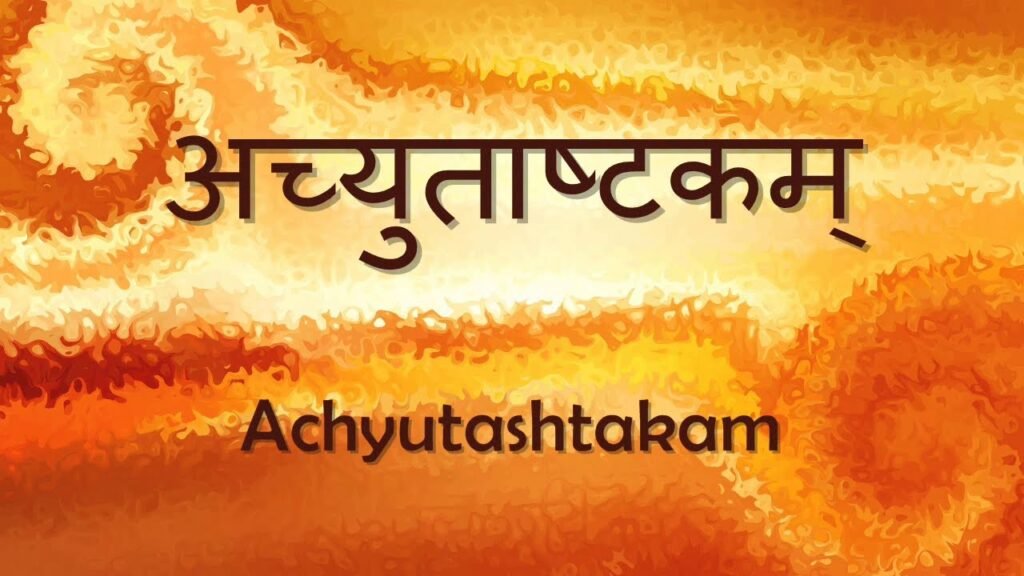
Achyuta Ashtakam Stotram

Achyuta Ashtakam The Achyuta Ashtakam is a profound and melodious hymn consisting of eight verses (ashtakam) composed by Adi Shankaracharya, the great philosopher and spiritual teacher of Advaita Vedanta. This stotra is addressed to Lord Vishnu, affectionately called Achyuta, meaning “the infallible one” — one who never falls from his divine nature. In the hymn, the Lord is also addressed by various other names like Ananta (the infinite), Govinda (protector of cows and the Earth), Madhava, Damodara, and Mukunda, each highlighting a different aspect of his divine personality. The Achyuta Ashtakam is a beautiful blend of devotion (bhakti) and poetry, filled with heartfelt adoration for the Lord and a longing for spiritual union. Though Adi Shankaracharya is primarily known for his non-dualistic philosophy, in hymns like this, he shows that deep devotion and love for God are not separate from spiritual knowledge — in fact, they are complementary paths to the same truth. Each verse of the Achyuta Ashtakam is suffused with vivid imagery and tender emotions. The devotee expresses adoration for the Lord’s enchanting form — with his lotus eyes, peacock-feathered crown, yellow garments, and playful smile. The hymn describes how the Lord walked in Gokula, played his flute, lifted the Govardhana Hill, and engaged in divine leelas (pastimes) with Radha and the gopis. These descriptions are not mere poetic expressions but serve as meditations for the devotee to contemplate the Lord’s qualities — his sweetness (madhurya), his power (aishwarya), and his boundless compassion (karunya). The refrain “Achyutam Keshavam Rama Narayanam” is repeated at the beginning of each stanza, emphasizing the many names of the Supreme Being and invoking the presence of the Lord in various forms — whether as Krishna, Rama, Narayana, or Keshava. This repetition helps the devotee to internalize the divine name and focus the mind on the Lord. Importantly, the Achyuta Ashtakam is not just about praising Vishnu’s outer form or mythological deeds — it is also about the surrender of the ego, the longing for divine love, and the realization of God’s ever-present nature. In the final verse, the devotee prays that whoever recites this hymn with a pure heart and unwavering devotion will be freed from sins, attain peace, and ultimately reach the Lord’s eternal abode. Thus, the hymn is both a devotional offering and a spiritual practice. Many devotees sing the Achyuta Ashtakam daily as a way to center themselves in divine consciousness, especially during the early morning or evening hours, or on special days dedicated to Vishnu or Krishna like Ekadashi or Janmashtami. The melody, rhythm, and emotional depth of the hymn make it a beloved part of devotional life in many Hindu households and temples. In conclusion, the Achyuta Ashtakam is a radiant gem of Sanskrit devotional poetry that captures the essence of loving surrender to God, serving as a bridge between the heart and the eternal divine.

Achyuta Ashtakam Stotram Read Post »
1f6ef2031eb02ec5285590702054162b
Adi Shankaracharya, stotram

Shiva Namavalyashtakam (Namavali Ashtakam)

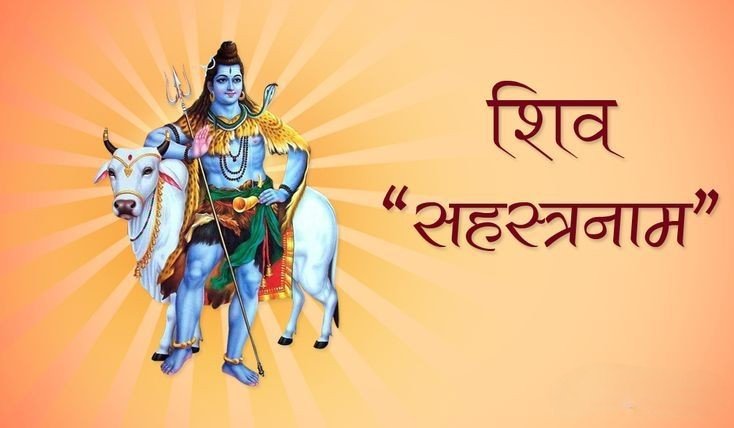
Shiva Namavalyashtakam hē chandrachūḍa madanāntaka śūlapāṇēsthāṇō girīśa girijēśa mahēśa śambhō ।bhūtēśa bhītabhayasūdana māmanāthaṃsaṃsāraduḥkhagahanājjagadīśa rakṣa ॥ 1 ॥ हे चन्द्रचूड़, कामदेव का संहार करने वाले, त्रिशूलधारी, स्थिरस्वरूप, गिरिराज के ईश्वर, गिरिजा के पति, महेश, शम्भु!हे भूतों के ईश्वर, भय का नाश करने वाले मेरे स्वामी! संसार के दुखरूप घने अरण्य से मुझे बचाइए, हे जगदीश्वर। O Chandrachūḍa (moon-crested one), destroyer of Kāma, trident-bearer, eternal one, Lord of the mountains, consort of Pārvatī, great Lord, auspicious Śambhu!O Lord of beings, destroyer of fear, my master, protect me from the dense forest of worldly sorrows, O Lord of the universe. hē pārvatīhṛdayavallabha chandramauḻēbhūtādhipa pramathanātha girīśachāpa ।hē vāmadēva bhava rudra pinākapāṇēsaṃsāraduḥkhagahanājjagadīśa rakṣa ॥ 2 ॥ हे पार्वती के हृदय के प्रिय, चन्द्रमौली, भूतों के अधिपति, प्रमथगणों के स्वामी, गिरिश!हे वामदेव, भव, रुद्र, पिनाकधारी! संसार के दुखरूप घोर अरण्य से मेरी रक्षा कीजिए। O beloved of Pārvatī’s heart, O moon-crested one, ruler of spirits, Lord of Pramathas, mighty Lord of the mountains!O Vāmadeva, Rudra, Bhava, bearer of the bow Pināka! Protect me from the dense forest of worldly sorrows. hē nīlakaṇṭha vṛṣabhadhvaja pañchavaktralōkēśa śēṣavalaya pramathēśa śarva ।hē dhūrjaṭē paśupatē girijāpatē māṃsaṃsāraduḥkhagahanājjagadīśa rakṣa ॥ 3 ॥ हे नीलकण्ठ, वृषभध्वजधारी, पंचवक्त्र, लोकों के ईश्वर, शेषनाग से परिवेष्टित, प्रमथों के स्वामी, शर्व!हे जटाजूटधारी, पशुपति, गिरिजापति! संसार के दुःखरूप गहन वन से मेरी रक्षा कीजिए। O blue-throated Lord, bull-bannered one, five-faced one, Lord of the worlds, encircled by Śeṣa, master of Pramathas, Śarva!O matted-haired one, Paśupati, husband of Girijā! Save me from the dense forest of worldly miseries. hē viśvanātha śiva śaṅkara dēvadēvagaṅgādhara pramathanāyaka nandikēśa ।bāṇēśvarāndhakaripō hara lōkanāthasaṃsāraduḥkhagahanājjagadīśa rakṣa ॥ 4 ॥ हे विश्वनाथ, शिव, शंकर, देवों के देव, गंगाधर, प्रमथनायक, नंदीकेश!हे बाणेश्वर, अंधकासुर के शत्रु, हर, लोकनाथ! संसार के दुःखरूप गहन अरण्य से मेरी रक्षा करें। O Viśvanātha, Śiva, Śaṅkara, god of gods, Gaṅgā-bearer, leader of Pramathas, Lord of Nandi!O Lord of Bāṇa, enemy of Andhaka, Hara, Lord of the worlds! Protect me from the dense forest of worldly sufferings. vārāṇasīpurapatē maṇikarṇikēśavīrēśa dakṣamakhakāla vibhō gaṇēśa ।sarvajña sarvahṛdayaikanivāsa nāthasaṃsāraduḥkhagahanājjagadīśa rakṣa ॥ 5 ॥ हे वाराणसीपुरीश्वर, मणिकर्णिकेश्वर, वीरों के स्वामी, दक्षयज्ञ का संहार करने वाले, गणेश्वर!हे सर्वज्ञ, सभी हृदयों में निवास करने वाले प्रभु! संसार के दुःखरूप घोर सागर से मेरी रक्षा कीजिए। O Lord of Vārāṇasī, Lord of Maṇikarṇikā, master of heroes, destroyer of Dakṣa’s sacrifice, Lord of Gaṇas!O all-knowing one, dweller in every heart, O master! Protect me from the ocean of worldly sufferings. śrīmanmahēśvara kṛpāmaya hē dayāḻōhē vyōmakēśa śitikaṇṭha gaṇādhinātha ।bhasmāṅgarāga nṛkapālakalāpamālasaṃsāraduḥkhagahanājjagadīśa rakṣa ॥ 6 ॥ हे श्रीमहेश्वर, कृपामय, दयालु, व्योमकेश, शीतकण्ठ, गणों के अधिपति!हे भस्म से अङ्गों को रँगने वाले, नरकपालों की माला धारण करने वाले प्रभु! संसार-दुःखों से मेरी रक्षा कीजिए। O Mahēśvara, full of grace, merciful one, Vyomakēśa, blue-throated Lord, master of Gaṇas!O one adorned with sacred ash and a garland of skulls! Save me from the dense forest of worldly sufferings. kailāsaśailavinivāsa vṛṣākapē hēmṛtyuñjaya trinayana trijagannivāsa ।nārāyaṇapriya madāpaha śaktināthasaṃsāraduḥkhagahanājjagadīśa rakṣa ॥ 7 ॥ हे कैलाशशैलवासी, वृषभध्वजधारी, मृत्युञ्जय, त्रिनयन, त्रिजगनिवासी!हे नारायणप्रिय, मदनाशक, शक्तिनाथ! संसार-दुःखों से मेरी रक्षा कीजिए। O dweller of Mount Kailāsa, bull-bannered one, conqueror of death, three-eyed Lord, indweller of the three worlds!O beloved of Nārāyaṇa, remover of pride, master of Śakti! Save me from the dense forest of worldly sorrows. viśvēśa viśvabhavanāśaka viśvarūpaviśvātmaka tribhuvanaikaguṇādhikēśa ।hē viśvanātha karuṇāmaya dīnabandhōsaṃsāraduḥkhagahanājjagadīśa rakṣa ॥ 8 ॥ हे विश्वेश्वर, विश्वविनाशक, विश्वरूप, विश्वात्मा, त्रिभुवनगुणाध्यक्ष!हे विश्वनाथ, करुणामय, दीनबन्धु! संसार-दुःखों से मेरी रक्षा कीजिए। O Lord of the universe, destroyer of the worlds, universal form, soul of all, ruler of the three worlds!O compassionate Viśvanātha, friend of the helpless! Protect me from the dense forest of worldly sorrows. gaurīvilāsabhavanāya mahēśvarāyapañchānanāya śaraṇāgatakalpakāya ।śarvāya sarvajagatāmadhipāya tasmaidāridryaduḥkhadahanāya namaḥ śivāya ॥ 9 ॥ गौरीविलासभवन के स्वामी महेश्वर, पंचानन, शरणागतों के कल्पवृक्ष, शर्व, सम्पूर्ण जगत् के अधिपति!जो दारिद्र्य और दुःख का दहन करते हैं, उन शिव को मेरा प्रणाम। To Mahēśvara, who dwells with Gaurī, the five-faced Lord, the wish-fulfilling tree to those who surrender, Śarva, ruler of all worlds!To Him who burns away poverty and sorrow, salutations to Lord Śiva.

Shiva Namavalyashtakam (Namavali Ashtakam) Read Post »

hq720 2
Adi Shankaracharya, stotram

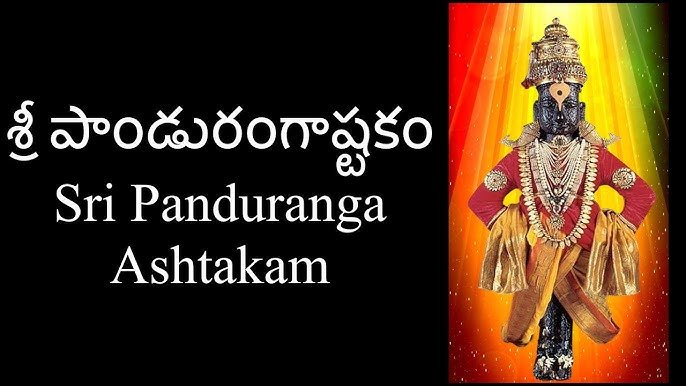
Panduranga Ashtakam Stotram

Panduranga Ashtakam The Panduranga Ashtakam is a beautiful and soul-stirring hymn composed by Adi Shankaracharya in praise of Lord Panduranga, also known as Vitthala or Vithoba, the presiding deity of Pandharpur in Maharashtra. This hymn, made up of eight melodious verses (ashtakam means “eight”), captures the essence of deep bhakti (devotion) and philosophical realization, blending the emotional and spiritual longing of a devotee with the non-dualistic wisdom that Shankaracharya is renowned for. Lord Panduranga is depicted in this hymn as standing on a brick (vit) with arms akimbo, patiently waiting for his devotees, especially his greatest devotee, Sant Pundalik, who is said to have invoked the Lord with selfless service to his parents. The imagery used in the Ashtakam reflects both the intimate personal devotion and the grandeur of the Lord’s divine form — his lotus feet, his shining crown, the yellow garments like those of Krishna, and his charming yet serene face. In the first verse, the Lord is hailed as the “ocean of mercy,” the “refuge of the helpless,” and the “destroyer of fear.” Shankaracharya calls out to Panduranga not as a distant God but as the indweller of the devotee’s heart, present within and without. The subsequent verses describe how the Lord transcends name and form, yet lovingly assumes a form to bless the devotees. He is the one who resides in Pandharpur, a holy town that has become synonymous with bhakti marga (the path of devotion), especially through the lives of saints like Tukaram, Namdev, Dnyaneshwar, and others who saw Panduranga as both God and friend. The Panduranga Ashtakam reflects this same intimacy and surrender. Each verse highlights how the Lord uplifts those who surrender to him, bestows fearlessness, and grants liberation. What makes this hymn particularly powerful is its repetitive structure and the use of Nama smarana (chanting the name) — invoking “Panduranga” repeatedly builds a meditative rhythm and emotional connection with the deity. The language is devotional yet filled with Vedantic depth. For instance, the Lord is described as “beyond maya (illusion), yet playing within it,” and as the “witness of all,” aligning with the Advaita (non-dual) philosophy that the Supreme Being is both immanent and transcendent. Devotees recite the Panduranga Ashtakam daily, particularly during the Ashadhi Ekadashi and Kartiki Ekadashi pilgrimages to Pandharpur, believing it brings peace of mind, devotion, and liberation from the cycle of birth and death. This hymn is not just a poetic expression but a doorway into deeper spiritual realization, affirming that even the highest truths can be accessed through loving devotion to the Lord. In conclusion, the Panduranga Ashtakam is both a heartfelt song and a spiritual meditation — one that brings the devotee closer to the compassionate and ever-waiting Lord of Pandharpur, who stands eternally ready to bless those who approach him with sincerity and love.

Panduranga Ashtakam Stotram Read Post »

cb874eee16dd3e02ba003b00da4d5d47
Adi Shankaracharya, stotram

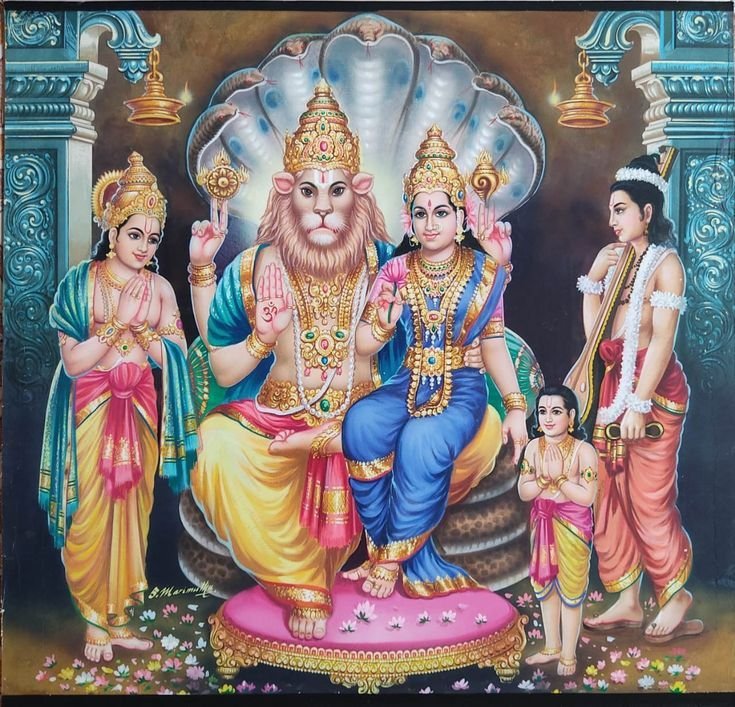
Sri Lakshmi Narasimha karunarasa stotra

Sri Lakshmi Narasimha karunarasa Sri Lakshmi Narasimha Karavalamba Stotram (also called Lakshmi Narasimha Karunarasa Stotram) is a sacred hymn composed by the great sage‑philosopher Adi Shankaracharya, in deep devotion to the form of Lakshmi‑Narasimha — Vishnu’s half‑man, half‑lion incarnation (Narasimha), accompanied by his consort Lakshmi. The word Karavalamba means “lend me your protecting hand,” and “Karunarasa” refers to the “essence of mercy,” so each of the 17 verses ends with the refrain “Lakshmi Nrsimha Mama Dehi Karavalambam” — “O Lord Lakshmi‑Narasimha, grant me your hand of protection.” From the very start, the hymn sets a tone of humble surrender and urgent plea: recognizing Lakshmi‑Narasimha as the refuge from suffering, the protector of devotees, and the destroyer of fear and adversity. Its imagery is rich: the Lord is described as dwelling in the “ocean of milk,” adorned with the discus (Sudarshana chakra), wearing the gem‑decked serpent Ananta (Adhisesha), the source of merit, the rescue of sages, the boat to cross the ocean of worldly misery. In various verses the devotee acknowledges fears born of samsara (worldly existence), the torment of desire, the heat of envy, the burden of sin, and the darkness of ignorance. In each, the refrain reminds the devotee: in such predicament, shelter comes only through the Lord’s compassionate hand. Over time this stotram has become treasured among Vaishnava devotees for its ability to calm inner fear and anger, pacify one’s mind, and bring peace into the home when chanted with faith and regularity. The hymn does not merely extol divine power in mythic acts; more importantly, it emphasizes personal transformation — the devotee’s inner fear, ego, and ignorance are to be brought under the Lord’s merciful gaze. It’s a prayer of surrender: not requesting material gains primarily, but seeking protection, grace, inner purity, and spiritual endurance. Also, it is said to pacify the fierce, “ugra” aspect of Lord Narasimha, turning it into a compassionate presence. In terms of structure, the stotram is methodical: each verse paints a facet of the divine — form, attributes, cosmic role, compassionate response — and then the refrain brings it back to the devotee‑Lord relationship. Reciting it is believed to uplift the devotee’s consciousness, reduce fear, anxieties, anger, inner conflict, and bring serenity. When one chants Lakshmi Nrsimha Mama Dehi Karavalambam with sincerity, it is said that the mind becomes stabilized, the heart calmed, and protection is felt not just externally but in one’s inner life. Thus the Karunarasa Stotram stands as both a devotional masterpiece and a spiritual balm: in seeking Lakshmi‑Narasimha’s hand, the devotee seeks refuge, redemption, and renewal.

Sri Lakshmi Narasimha karunarasa stotra Read Post »

78b959d00bb066c9832ca5aa076607d8
Adi Shankaracharya, stotram

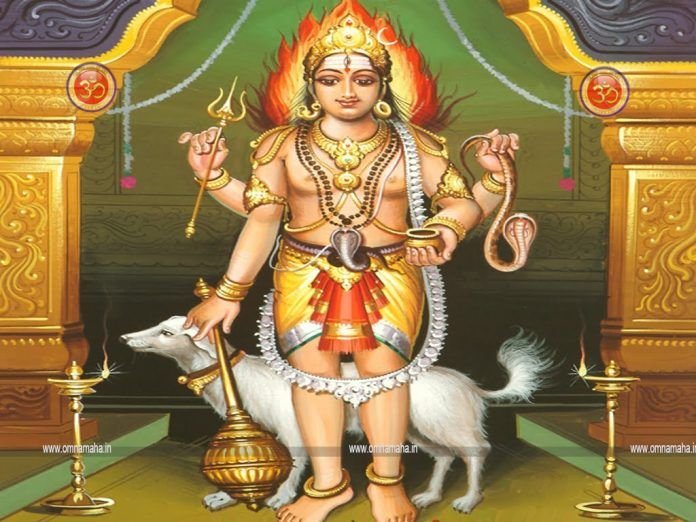
Kala Bhairava Astakam

Kala Bhairava Astakam (कालभैरवाष्टकम्) देवराजसेव्यमानपावनांघ्रिपङ्कजंव्यालयज्ञसूत्रमिन्दुशेखरं कृपाकरम् ।नारदादियोगिवृन्दवन्दितं दिगंबरंकाशिकापुराधिनाथकालभैरवं भजे ॥१॥Deva-Raaja-Sevyamaana-Paavana-Angghri-PangkajamVyaala-Yajnya-Suutram-Indu-Shekharam Krpaakaram |Naarada-[A]adi-Yogi-Vrnda-Vanditam DigambaramKaashikaa-Pura-Adhinaatha-Kaalabhairavam Bhaje ||1|| Meaning:1.1: (Obeisance to Sri Kalabhairava) Whose Lotus-Feet is Served by Indra, the King of the Devas.1.2: Who has a Snake as His Sacrificial Thread, Moon on His Head and Who is Extremely Compassionate.1.3: Who is Praised by sage Narada and other Yogis, and Who is Digambara (Clothed by Sky, signifying that He is Ever-Free).1.4: Obeisance to Sri Kalabhairava Who is the Supreme Lord of the City of Kashi. भानुकोटिभास्वरं भवाब्धितारकं परंनीलकण्ठमीप्सितार्थदायकं त्रिलोचनम् ।कालकालमंबुजाक्षमक्षशूलमक्षरंकाशिकापुराधिनाथकालभैरवं भजे ॥२॥Bhaanu-Kotti-Bhaasvaram Bhavaabdhi-Taarakam ParamNiila-Kannttham-Iipsita-Artha-Daayakam Trilocanam |Kaala-Kaalam-Ambuja-Akssam-Akssa-Shuulam-AkssaramKaashikaa-Pura-Adhinaatha-Kaalabhairavam Bhaje ||2|| Meaning:2.1: (Obeisance to Sri Kalabhairava) Who has the Brilliance of a Million Suns, Who Rescues us from the Ocean of Worldly Existence and Who is Supreme.2.2: Who has a Blue Throat, Who Bestows us with Worldly Prosperity which we Wish for and Who has Three Eyes.2.3: Who is the Death of the Death [i.e. beyond death], Who is Lotus-Eyed, Whose Trident Supports the Three Worlds and Who is Imperishable.2.4: Obeisance to Sri Kalabhairava Who is the Supreme Lord of the City of Kashi. शूलटङ्कपाशदण्डपाणिमादिकारणंश्यामकायमादिदेवमक्षरं निरामयम् ।भीमविक्रमं प्रभुं विचित्रताण्डवप्रियंकाशिकापुराधिनाथकालभैरवं भजे ॥३॥Shuula-Ttangka-Paasha-Danndda-Paannim-Aadi-KaarannamShyaama-Kaayam-Aadi-Devam-Akssaram Nir-Aamayam |Bhiimavikramam Prabhum Vicitra-Taannddava-PriyamKaashikaa-Pura-Adhinaatha-Kaalabhairavam Bhaje ||3|| Meaning:3.1: (Obeisance to Sri Kalabhairava) Who has Trident, Hatchet, Noose and Club in His Hands and Who is the Primordial Cause of the Universe.3.2: Whose Body is Dark, Who is the Primordial Lord, Who is Imperishable and Who is beyond Diseases [of the World],3.3: Who is the Lord with Terrific Prowess and Who Loves the Strange, Vigorous Tandava Dance.3.4: Obeisance to Sri Kalabhairava Who is the Supreme Lord of the City of Kashi. भुक्तिमुक्तिदायकं प्रशस्तचारुविग्रहंभक्तवत्सलं स्थितं समस्तलोकविग्रहम् ।विनिक्वणन्मनोज्ञहेमकिङ्किणीलसत्कटिंकाशिकापुराधिनाथकालभैरवं भजे ॥४॥Bhukti-Mukti-Daayakam Prashasta-Caaru-VigrahamBhakta-Vatsalam Sthitam Samasta-Loka-Vigraham |Vi-Nikvannan-Manojnya-Hema-Kingkinnii-Lasat-KattimKaashikaa-Pura-Adhinaatha-Kaalabhairavam Bhaje ||4|| Meaning:4.1: (Obeisance to Sri Kalabhairava) Who is the Giver of Worldly Prosperity and Liberation and Who has an Auspicious Pleasing Form.4.2: Who is Kind and Loving to His Devotees and Who Stands Firm as the Deity of All the Lokas.4.3: Who has Shining Golden Bells around His Waist which Jingles Creating a Variety of Pleasing Sounds.4.4: Obeisance to Sri Kalabhairava Who is the Supreme Lord of the City of Kashi. धर्मसेतुपालकं त्वधर्ममार्गनाशकंकर्मपाशमोचकं सुशर्मदायकं विभुम् ।स्वर्णवर्णशेषपाशशोभिताङ्गमण्डलंकाशिकापुराधिनाथकालभैरवं भजे ॥५॥Dharma-Setu-Paalakam Tu-Adharma-Maarga-NaashakamKarma-Paasha-Mocakam Su-Sharma-Daayakam Vibhum |Svarnna-Varnna-Shessa-Paasha-Shobhitaangga-MannddalamKaashikaa-Pura-Adhinaatha-Kaalabhairavam Bhaje ||5|| Meaning:5.1: (Obeisance to Sri Kalabhairava) Who Guards the Established Institution of the Eternal Dharma and Destroys the Path of Adharma which are averse to the Eternal Dharma (by leading the devotee towards the Eternal Dharma).5.2: Who is the Lord who Frees us from the Fetters of Karma (binding impressions of work on our minds accumulated during several births) thereby Giving us [by Revealing] the Great Joy [of the Soul].5.3: Who is Adorned with Golden-Coloured Serpents encircling His Body.5.4: Obeisance to Sri Kalabhairava Who is the Supreme Lord of the City of Kashi. रत्नपादुकाप्रभाभिरामपादयुग्मकंनित्यमद्वितीयमिष्टदैवतं निरंजनम् ।मृत्युदर्पनाशनं करालदंष्ट्रमोक्षणंकाशिकापुराधिनाथकालभैरवं भजे ॥६॥Ratna-Paadukaa-Prabhaabhi-Raama-Paada-YugmakamNityam-Advitiiyam-Isstta-Daivatam Niramjanam |Mrtyu-Darpa-Naashanam Karaala-Damssttra-MokssannamKaashikaa-Pura-Adhinaatha-Kaalabhairavam Bhaje ||6|| Meaning:6.1: (Obeisance to Sri Kalabhairava) Whose Charming Beautiful Pair of Feet Shine with Sandals Studded with Gems.6.2: Who is the Eternal, Non-Dual, Ishtha Devata and Who is Stainless and Pure.6.3: Who Destroys the Pride of Death (manifested as Fear within us) and Whose Large Terrible Fangs Liberate us (from the Fear of Death).6.4: Obeisance to Sri Kalabhairava Who is the Supreme Lord of the City of Kashi. अट्टहासभिन्नपद्मजाण्डकोशसंततिंदृष्टिपातनष्टपापजालमुग्रशासनम् ।अष्टसिद्धिदायकं कपालमालिकाधरंकाशिकापुराधिनाथकालभैरवं भजे ॥७॥Atttta-Haasa-Bhinna-Padmaja-Anndda-Kosha-SamtatimDrsstti-Paata-Nasstta-Paapa-Jaalam-Ugra-Shaasanam |Asstta-Siddhi-Daayakam Kapaala-Maalikaa-DharamKaashikaa-Pura-Adhinaatha-Kaalabhairavam Bhaje ||7|| Meaning:7.1: (Obeisance to Sri Kalabhairava) Whose Loud Terrific Laughter Shatters the Continuity of the Sheath of Creation (delusion of our mind) of the Lotus-Born Brahma from the Primeval Egg.7.2: Whose Terrific Glance Destroys the Net of the Powerful and Mighty Rule of Sins (in our mind).7.3: Who Bestows the Eight Siddhis and Who Wear a Garland of Skulls.7.4: Obeisance to Sri Kalabhairava Who is the Supreme Lord of the City of Kashi. भूतसंघनायकं विशालकीर्तिदायकंकाशिवासलोकपुण्यपापशोधकं विभुम् ।नीतिमार्गकोविदं पुरातनं जगत्पतिंकाशिकापुराधिनाथकालभैरवं भजे ॥८॥Bhuuta-Samgha-Naayakam Vishaala-Kiirti-DaayakamKaashi-Vaasa-Loka-Punnya-Paapa-Shodhakam Vibhum |Niiti-Maarga-Kovidam Puraatanam JagatpatimKaashikaapuraadhinaathakaalabhairavam Bhaje ||8|| Meaning:8.1: (Obeisance to Sri Kalabhairava) Who is the Ruler of Ghosts and Goblins and Who Bestows Great Glory to us (by revealing the Glory of the Self).8.2: Who is the Lord who Purges both the Merits and the Sins of the Persons Dwelling in Kashi (thus revealing the Self in its pristine beauty).8.3: Who is Skilled in Guiding us in the Path of Righteousness and Who is the most Ancient (i.e. Eternal) Lord of the Universe.8.4: Obeisance to Sri Kalabhairava Who is the Supreme Lord of the City of Kashi. कालभैरवाष्टकं पठंति ये मनोहरंज्ञानमुक्तिसाधनं विचित्रपुण्यवर्धनम् ।शोकमोहदैन्यलोभकोपतापनाशनंप्रयान्ति कालभैरवांघ्रिसन्निधिं नरा ध्रुवम् ॥९॥Kaalabhairavaassttakam Patthamti Ye ManoharamJnyaana-Mukti-Saadhanam Vicitra-Punnya-Vardhanam |Shoka-Moha-Dainya-Lobha-Kopa-Taapa-NaashanamPrayaanti Kaalabhairava-Amghri-Sannidhim Naraa Dhruvam ||9|| Meaning:9.1: (Obeisance to Sri Kalabhairava) Those who Read the Eight Verses on Sri Kalabhairava with Devotion which is Heart-Stealing and Charming,9.2: Will be Lead straight to the Goal of Knowledge and Liberation and Will result in the Rise of Various Auspicious Qualities.9.3: And Which Destroys (mental) Sorrows and Afflictions, Delusions and Infatuations, Wretchedness and Depressions, Passions and Anger and (mental) Heat and Burns.9.4: And after Death the Devotee will Surely Attain the Feet of Sri Kalabhairava.

Kala Bhairava Astakam Read Post »

b3791a7dd5c78d136237ea6eaa36db94
Adi Shankaracharya, stotram

Lakshmi Narasimha pancharatnam Stotram

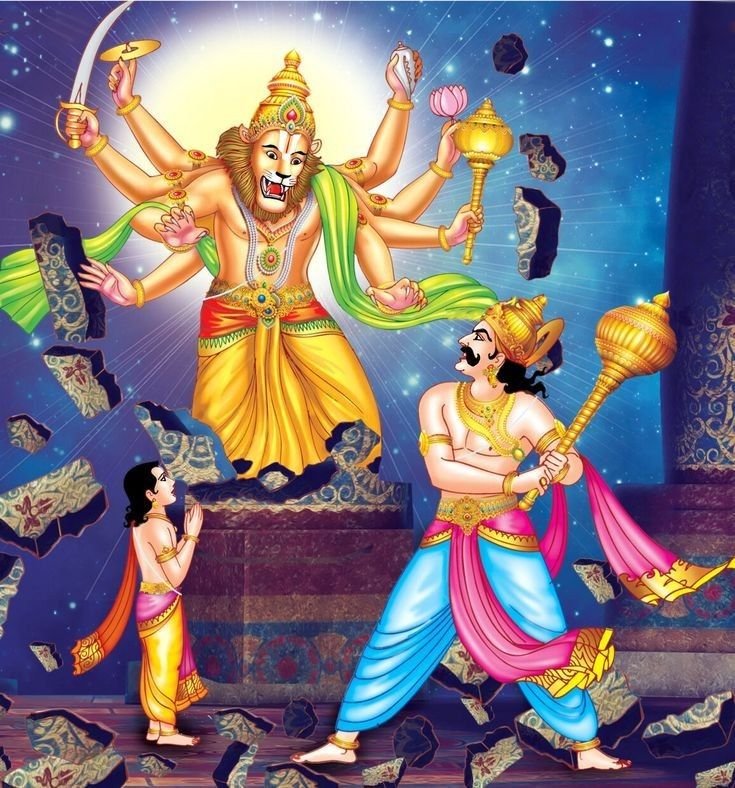
Lakshmi Narasimha pancharatnam The Lakshmi Narasimha Pancharatnam is a revered five-verse hymn composed by the great saint and philosopher Adi Shankaracharya in praise of Lord Narasimha, the fierce and compassionate man-lion incarnation of Lord Vishnu, along with his divine consort Goddess Lakshmi, the goddess of wealth and grace. The word “Pancharatnam” means “five jewels,” and indeed, each of the five verses in this stotra is a radiant jewel of devotion (bhakti), protection (raksha), and spiritual knowledge (jnana). Lord Narasimha is best known for his appearance in the Bhagavata Purana, where he emerged from a pillar to protect his young devotee Prahlada and to destroy the demon king Hiranyakashipu, who had become arrogant and denied the supremacy of God. This form of Narasimha — half-man, half-lion — represents divine rage against injustice, yet also divine grace for the sincere devotee. In the Lakshmi Narasimha Pancharatnam, Shankaracharya praises not only the terrifying majesty of Narasimha but also his tender compassion as Lakshmi-Narasimha, the Lord who is softened and balanced by the presence of Goddess Lakshmi. The first verse begins by invoking the Lord as the ocean of compassion (karuṇārṇavaṃ), the one who protects the fallen (pattaṭṭakāṃ), and as the refuge for those tormented by worldly sufferings. It is a prayer of surrender, recognizing Narasimha as both protector and liberator. The second verse glorifies the beauty and majesty of the Lord’s form — shining like gold, radiating fire-like brilliance, holding weapons to destroy evil, and adorned with jewels and garlands. Yet, despite this fearsome form, the Lord is gentle to his devotees, and his embrace of Lakshmi signifies divine balance. The third verse reflects on the inner symbolism of Narasimha. He is not just an external deity but the very truth within, the destroyer of ego, and the light that removes darkness from the heart. The hymn acknowledges that worshipping Narasimha leads to the dissolution of fear, doubt, and worldly attachments. The fourth verse is a direct appeal: the devotee cries out in pain and confusion, lost in the ocean of worldly existence (samsāra sāgara), and begs the Lord to pull them out — just as he saved Prahlada. This verse shows the deep emotional surrender of the devotee and faith in the Lord’s rescuing power. The fifth and final verse declares that whoever chants this Pancharatnam with devotion will be free from fear, attain peace, and ultimately reach liberation (moksha). The stotra becomes both a hymn of praise and a practical spiritual tool for overcoming suffering, fear, and ignorance. In essence, Lakshmi Narasimha Pancharatnam is not just about venerating a fierce deity but about understanding the divine union of power and grace, of strength and compassion, of protection and liberation. For devotees, this hymn offers spiritual refuge, emotional healing, and divine assurance that no matter how dark life becomes, the Lord — in his compassionate form as Lakshmi-Narasimha — is always ready to protect, uplift, and bless those who sincerely seek him.

Lakshmi Narasimha pancharatnam Stotram Read Post »

f1675f16312782cc5f86ac9f07357b86
Adi Shankaracharya, stotram

hanuman pancharatnam Stotram

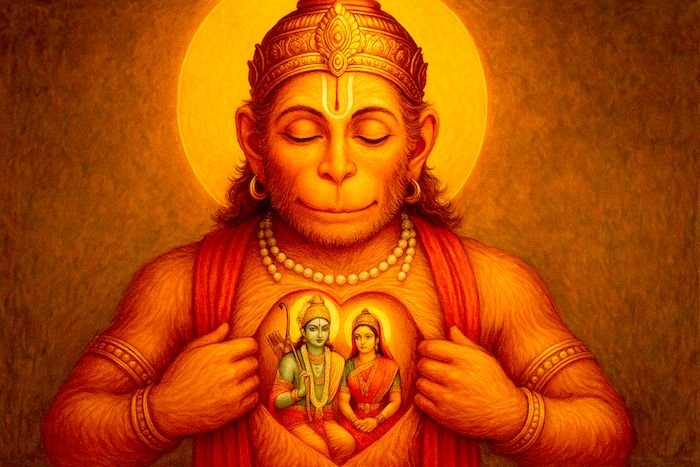
hanuman pancharatnam The Hanuman Pancharatnam is a beautiful and powerful five-verse hymn composed by the great philosopher-saint Adi Shankaracharya in praise of Lord Hanuman, the divine servant of Lord Rama and one of the most revered figures in Hinduism. The term “Pancharatnam” means “five gems”, and indeed, each verse of this hymn is like a precious jewel, filled with devotion, strength, humility, and wisdom. Unlike lengthy epics or prayers filled with complex rituals, this stotra is short, simple, and deeply moving, making it suitable for daily chanting by devotees of all ages. The Hanuman Pancharatnam does not merely praise Hanuman’s physical strength or heroic deeds, but it also highlights his unmatched devotion (bhakti), purity of heart, unshakable faith, and spiritual wisdom. In the very first verse, Hanuman is described as one who constantly chants the names of Lord Rama and shines with the brilliance of countless suns due to his deep devotion. His mind, free of pride and impurity, is constantly focused on Rama, and through such devotion, he has attained immortality and glory. The second verse describes Hanuman’s qualities — his control over the senses, his courage, and his loyalty. It shows how he is the supreme among the celestials not because of brute power, but because of his humility, dedication, and unwavering love for Lord Rama. The third verse praises Hanuman’s role in the Ramayana: as the one who leapt across the ocean to find Sita, burned down Lanka with his tail, and comforted Sita in her sorrow. More than just a hero, Hanuman becomes the messenger of hope and divine will. The fourth verse calls him a great scholar of the Vedas, a yogi beyond all desires, and the one whose mind is always soaked in the nectar of Rama’s name. Here, Hanuman is not just a warrior but a jnani, a bhakta, and a yogi, representing the highest spiritual ideals. The fifth and final verse is a humble prayer by the devotee, asking Hanuman to reside in their heart, to remove their ignorance and fear, and to guide them toward the divine path of Rama-bhakti. The devotee sees Hanuman not just as a mythological character, but as a living presence, an inner strength, and a compassionate guide. Chanting the Hanuman Pancharatnam daily is believed to bring courage, clarity of mind, protection from evil, and most importantly, deep devotion. It is especially meaningful in times of difficulty, when one seeks strength and fearlessness. It is said that just as Hanuman crossed the vast ocean with the power of Rama’s name, so too can we cross the ocean of samsara (worldly suffering) by invoking his name with sincerity. In conclusion, the Hanuman Pancharatnam is more than a hymn—it is a complete expression of devotion, strength, wisdom, and surrender. In just five verses, Adi Shankaracharya encapsulates the essence of Lord Hanuman’s divine character, offering devotees a simple yet profound path to connect with him and, through him, with Lord Rama and the ultimate truth.

hanuman pancharatnam Stotram Read Post »

Kashi Panchakam 1
Adi Shankaracharya, stotram

Kasi panchakam Stotram

Kasi panchakam Kasi Panchakam (also Kashi Panchakam) is a brief but profound hymn of five verses composed by Adi Shankaracharya that reveals the essence of Vedanta through the symbolism of Kashi (Varanasi), the holy city on the banks of the Ganga, not merely as a pilgrimage place but as the very nature of one’s own consciousness. In these verses, Shankara equates Kashi not to an external geography or ritual destination, but to the inner realm of peace, knowledge, the witnessing Self, and devotion. The first sloka begins with “Mano nivrttiḥ paramopaśāntiḥ, sā tīrthavaryā maṇikarnikā ca…” describing supreme peace in the mind, the sacred waters (like Manikarnika ghat) and the pure flow of knowledge like the Ganga; and then declares, “sā kāśikāhaṃ nija bodharūpā” — “that Kasi am I, in the form of my own true awareness.” The second verse goes on to point out that what appears as the created world of moving and unmoving (chara‑achara), the play of mind (manovilāsa), and the illusion or magic (indra‑jāla) are illumined, and ultimately the Self is sat‑cit‑sukha rūpa — existence, consciousness, bliss; again identity is with one’s own awareness. The third verse internalizes this further: the “five koshas” (sheaths) that envelop the individual, the body (deha), with Bhavani (knowledge or prakriti energy) playing its part, the witnessing Shiva (sākṣī) as the inner soul permeating all beings. This ushers the idea that the body is the “temple” or “field” of Kashi when the inner Self or Witness is established. The fourth verse emphasizes that Kashi shines, is bright, that it is radiant — “sarva prakāśikā” — and that by knowing this one attains Kasi. It draws attention to the light or illumination aspect of awareness. And the fifth verse beautifully ties together the external pilgrimage symbols (holy place, the Ganga, devotion, guru’s feet, yogic meditation) with the inner realization: the body becomes the Kasi‑field, the mind of every being turns into the faithful pilgrim, if within we abide in awareness. If one’s inner guru‑consciousness, devotion, yoga, faith, and knowledge flow, then what external tirtha (holy place) is needed? In sum, Kasi Panchakam transcends the idea of geography or ritual pilgrimages: it invites the seeker to see that the essence of Kashi is inner — peace of mind, vivifying knowledge (jnana), witnessing Self (sakshi), faith and devotion, meditation on the guru — and that by realizing one’s own awareness, one has reached the highest pilgrimage. The city of Kashi thus becomes a metaphor for the awakening Self, and Kasi Panchakam offers liberation not by journeying outward, but by deeply seeing inward.

Kasi panchakam Stotram Read Post »

682cee94ff91ce7b8781bef239cf7466
Adi Shankaracharya, stotram

Dwadasa Jyotirlinga Stotram

Dwadasa Jyotirlinga Shiva, where he is worshipped in the form of a Jyotirlinga — a column of divine light symbolizing the infinite nature of Shiva. These twelve shrines are scattered across India and hold deep religious and mythological significance for millions of devotees. According to the Shiva Purana, when a devotee worships any of these Jyotirlingas with faith and devotion, they are granted spiritual merit, the removal of sins, and ultimately liberation (moksha). Each Jyotirlinga represents a different manifestation of Shiva, linked to various legends that describe his appearance, miracles, or divine intervention. The twelve Jyotirlingas are: Somnath in Gujarat, Mallikarjuna in Andhra Pradesh, Mahakaleshwar in Madhya Pradesh, Omkareshwar also in Madhya Pradesh, Kedarnath in Uttarakhand, Bhimashankar in Maharashtra, Kashi Vishwanath in Uttar Pradesh, Trimbakeshwar in Maharashtra, Vaidyanath (also known as Baidyanath) in Jharkhand, Nageshwar in Gujarat, Rameshwaram in Tamil Nadu, and Grishneshwar in Maharashtra. Each of these temples has its own unique history and spiritual power. For instance, Somnath, considered the first among the Jyotirlingas, is said to have been rebuilt multiple times after being destroyed by invaders, symbolizing resilience and faith. Kedarnath, situated in the Himalayas, is revered as the place where Shiva granted salvation to the Pandavas. Rameshwaram is where Lord Rama worshipped Shiva to atone for killing Ravana, a Brahmin by birth, during the Ramayana. The Mahakaleshwar temple in Ujjain is one of the rare Jyotirlingas facing south, representing Shiva’s aspect as the Lord of Time and Death. Worship at these Jyotirlingas is considered highly auspicious, especially during the month of Shravan, on Maha Shivaratri, and other Shiva-centric festivals. Pilgrims often take on a spiritual journey, known as Jyotirlinga Yatra, to visit all twelve temples — a path that is physically demanding yet spiritually uplifting. The Jyotirlingas are not just architectural marvels but centers of profound energy and devotion, where mantras like “Om Namah Shivaya” reverberate continuously, creating a sacred atmosphere. Philosophically, the Jyotirlinga represents the formless, infinite reality of Shiva, beyond birth and death, form and name. Unlike idols or anthropomorphic images, the Linga points to the cosmic principle — the unmanifest source from which the universe arises. Devotees believe that worshipping these sacred Lingas aligns them with divine vibrations, purifies the soul, and brings blessings in worldly and spiritual life. Over the centuries, saints, sages, and kings have visited, maintained, and sung praises of these shrines, embedding them into the cultural and spiritual fabric of India. The Dwadasa Jyotirlingas serve not only as destinations of pilgrimage but as guiding lights for those on the path of devotion, self-realization, and eternal truth.

Dwadasa Jyotirlinga Stotram Read Post »

fea25b4271ae3f587c8df6cd140e5fe0
Adi Shankaracharya, stotram

Shiva Panchakshara Nakshatramala Stotram

Shiva Panchakshara Nakshatramala The Shiva Panchakshara Nakshatramala Stotram is a sacred hymn attributed to Adi Shankaracharya, composed of twenty‑seven verses corresponding to the twenty‑seven lunar nakshatras (stars) of the Hindu calendar, each verse ending with the refrain “Namah Shivaya.” It weaves together rich imagery of Lord Shiva’s attributes, cosmic functions, and benevolent compassion, combining devotion with philosophical symbolism. Central to the stotram is the Panchakshara mantra (“Na‑Ma‑Shi‑Va‑Ya”), the five syllables that represent Shiva and are believed to encompass the five primal elements—earth, water, fire, air, and space. The hymn is structured so that while invoking different qualities, pastimes, and cosmic roles of Shiva (his destroyer aspect, preserver of dharma, compassionate protector of devotees, remover of sins, and embodiment of pure consciousness), the devotee is also led into deeper reflection on the manifold nature of reality and the underlying unity that Shiva represents. For example, certain verses refer to his form smeared with ashes, his tranquil yet majestic presence, his role in safeguarding the cosmos, his power to absorb sins, and his compassion towards the suffering. Because each verse is mapped to a star (nakshatra), there is a cosmological dimension: the hymn gives a sense that Shiva is present in every part of cosmic time, every star, and every moment. Through this, the hymn invites devotees to see Shiva not only as a personal deity but as the pervasive ground of all existence. Chanting or reciting the Nakshatramala is said to confer spiritual merit, to protect from fears, to burn away past transgressions, to uplift the heart, to align the devotee with cosmic rhythms, and to deepen one’s devotion. Its language, imagery, and repetitive invocation of “Namah Shivaya” serve both poetic aesthetic and meditative purpose: they calm the mind, focus the attention on devotion, and increase sensitivity to Shiva’s presence in every aspect of life. In sum, the Shiva Panchakshara Nakshatramala Stotram is not just praise, but a spiritual tool: by uttering or hearing its verses, a devotee moves through inner landscapes of fear, desire, death, time, ignorance, and emerges with greater peace, clarity, and surrender. For those who regularly recite it, its melody, structure, and star‑associations become a living tapestry of Shiva in cosmic and personal dimensions.

Shiva Panchakshara Nakshatramala Stotram Read Post »